March 9, 2020
by Joseph Fitsanakis
 The coronavirus (COVID-19) is quickly becoming the greatest security challenge of our time. The ease of transmission and high death rate of this disease, coupled with the asymmetric challenges it poses to our planet’s social, economic and political structures, threaten the very cohesion of our global system. This is especially true of Western societies, whose highly sophisticated organizational features make them especially susceptible to all forms of large-scale disruption. Few of those of us who are alive today in the West have ever faced a threat with the all-encompassing characteristics, disruptive capacity and persistent nature of COVID-19.
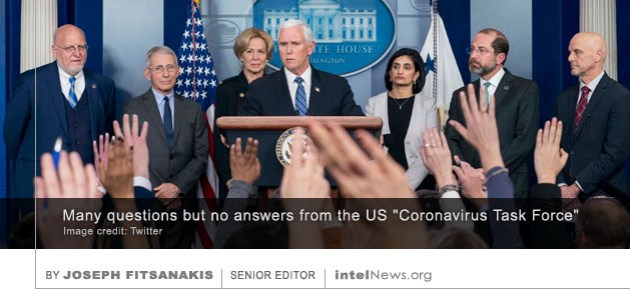
But no American would get this impression by watching the daily briefings of the so-called White House “Coronavirus Task Force”. The uncomfortable smiles and awkward acquiescence of its members, part of an unconvincing effort to assure Americans that “all is well”, coupled with their seemingly unending competition to offer lavish praises to each other, make for a truly uncomfortable viewing experience. Such astounding manifestations of mediocrity would be somewhat tolerable if they came alongside actionable information that Americans could use to protect themselves and the future of their country —preferably something beyond “washing your hands for at least 20 seconds”.
On February 26, Americans were told by their president that “within a couple of days [COVID-19 cases in the US would] be down close to zero, that’s a pretty good job we’ve done”. By that time, China was feverishly implementing the largest quarantine in human history. Ten days later, Italy began to quarantine 16 million people —a quarter of its population— in its northern regions. Meanwhile, Britain has begun re-hiring retired nurses to prepare for the coming unprecedented wave of medical emergencies, while France has banned all large meetings in its territory. But in America it’s business as usual: the National Collegiate Athletic Association (NCAA) announced on Sunday that all its tournament games nationwide will be held with fans despite growing concerns about the coronavirus. Not a single senior government official has stepped forward to address Americans’ growing anxiety about the potentially unprecedented degree of disruption that the US economy, including the nation’s supply chain, healthcare, transportation, education, entertainment, and services sectors are going to be experiencing in the coming months.
Additionally, Americans expect the so-called “Task Force” to provide non-politicized explanations of the ongoing failures of the US government’s treatment to the COVID-19 crisis, which continue to allow the virus to spread in our communities unabated. For instance, why did the US decline to use the World Health Organization’s diagnostic test for the disease, which had been made available to dozens of nations by the end of January? Or why does access to testing kits remain at alarmingly low levels, so much so that a frustrated New York Governor Andrew Cuomo recently described the US Centers for Disease Control and Prevention’s response to COVID-19 as “flat-footed”? So grave is this situation, that on March 8 The Washington Examiner —arguably America’s leading conservative publication— opined that COVID-19 “is exposing how deeply unsuited [Donald Trump] is to deal with a genuine crisis that he can’t bluff his way through”.
The American government’s tragically incompetent response to COVID-19 (at this point just slightly better than the Islamic Republic of Iran’s) hurts even more when one compares it with that of Taiwan —an island nation of 23 million, which the US often views as a client state. In January, when COVID-19 began making news headlines, experts predicted that Taiwan would end up with the world’s second-highest number of COVID-19 cases. This was primarily due to the country’s geographical proximity to mainland China —just 81 miles from the Chinese shore— as well as the  extensive transportation network that links the two nations. Over 1.2 million Taiwanese either live permanently or work in China, while nearly 3 million Chinese citizens visit Taiwan every year. Even more ominously, the COVID-19 outbreak occurred right before the Lunar New Year, which is the busiest travel season for both Chinese and Taiwanese holidaymakers.
But Taiwan has managed to spectacularly defy all early predictions about a potential COVID-19 epidemic. As a group of researchers from the University of California Los Angeles, Stanford University, RAND Corporation and the Koo Foundation in Taiwan, explain in The Journal of the American Medical Association, the reason dates back to 2003. That year’s severe acute respiratory syndrome (SARS) outbreak prompted the Taiwanese government to establish the National Health Command Center (NHCC). Since then, the NHCC has operated as a central command system that coordinates the activities of Taiwan’s Central Epidemic Command Center, the Biological Pathogen Disaster Command Center, the Counter-Bioterrorism Command Center, and the Central Medical Emergency Operations Center. Intelligence collected and analyzed by these centers is quickly distributed to central, regional and local authorities in all parts of the country.
The authors explain that, on December 31, the day when the World Health Organization notified national authorities of the first accounts of a severe pneumonia with unknown causes in the Chinese city of Wuhan, NHCC personnel began to board planes arriving from Wuhan. They began testing all passengers and crew on those planes for flu-like symptoms before allowing them to deplane. By January 5, NHCC personnel were reaching out to anyone who had traveled to Wuhan in the past fortnight and testing them for flu-like symptoms. By that time, the NHCC had already set up a nationwide toll-free hotline, which has since become decentralized to serve individual regions.
On January 27, the NHCC worked in collaboration with Taiwan’s National Health Insurance Administration (NHIA) to integrate the database containing the recent travel history of passengers with their NHIA identification card data. They also integrated the same database with national tourism and immigration data. Within 24 hours, the NHCC was reaching out to all citizens of Taiwan, as  well as tourists and immigrants, who had traveled to the Wuhan region during the previous month. Using this big-data analytics approach, Taiwanese authorities were able to generate real-time alerts that were sent to individual doctors for use during clinical visits, so that clinical symptoms could be matched with patients’ travel histories.
Those who had traveled to regions of China that were considered high-risk, were immediately quarantined at home for 14 days. Their movements were tracked through their mobile phones to ensure compliance with quarantine instructions. Meanwhile, all those who exhibited flu-like symptoms but had tested negative for influenza in weeks prior, were re-tested for COVID-19.
Considering the above, it is hardly surprising that, by March 9, Taiwan —located just 81 miles off the coast of China— had just 45 confirmed COVID-19 cases, with a single death. Importantly, this is not because the Taiwanese are not testing their citizens —unlike the US or, even more outrageously, Turkey, which continues to report zero cases of COVID-19. Taiwan has tested more people than all of the nations of the Americas combined. The low number of COVID-19 cases in Taiwan is due to one thing, and one thing alone: a preemptive approach to the security of the nation by an enlightened leadership and a forward-thinking government system. Which is precisely what the US lacks at this grave time for the nation’s future.
* Dr. Joseph Fitsanakis is associate professor in the Intelligence and National Security Studies program at Coastal Carolina University in the United States.
► Author: Joseph Fitsanakis | Date: 09 March 2020 | Permalink
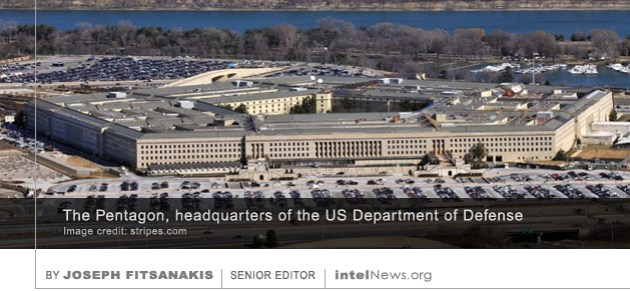 The United States Department of Defense has insisted that it can continue to function uninterrupted, despite claims by some media outlets that American military readiness may soon begin to degrade as a result of the coronavirus (COVID-19) outbreak.
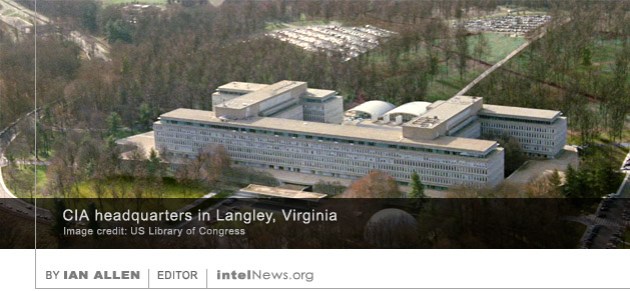 A leading Chinese cybersecurity firm has accused the United States Central Intelligence Agency of using sophisticated malicious software to hack into computers belonging to the Chinese government and private sector for over a decade.
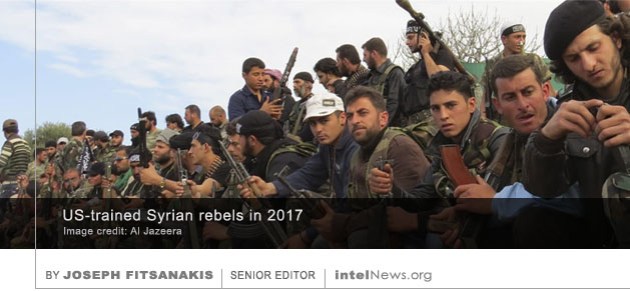 The United States government is unable to account for nearly $716 million in weapons it gave to various Syrian groups during the war against the Islamic State, according to a Department of Defense audit. The weapons were procured under the Counter Islamic State of Iraq and Syria Train and Equip Funds (CTEF) program, which was administered by the US Pentagon in 2017 and 2018. The CTEF program cost the US taxpayer a total of $930 million.
 The United States Federal Bureau of Investigation has arrested a Mexican man, who is accused of spying in the city of Miami on behalf of the Russian government. Local media reports suggest that the target of the man’s spying was a Russian defector who gave American authorities information about Russian espionage activities on US soil.
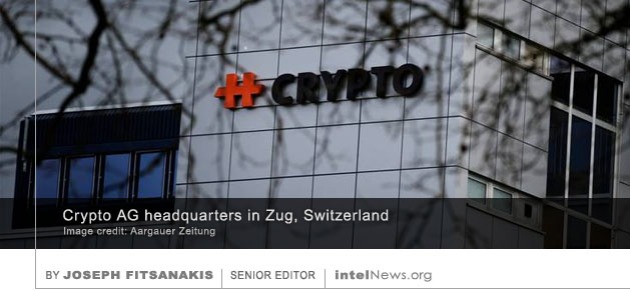 Switzerland is reeling from the shock caused by revelations last week that Crypto AG, the world’s leading manufacturer or cryptologic equipment during the Cold War, whose clients included over 120 governments around the world, was a front company owned by the United States Central Intelligence Agency.
 The United States has threatened to pull its funding for an Africa-wide disease control program if the African Union decides to accept an offer from China to build the program’s new headquarters. The dispute accentuates a growing competition between Washington and Beijing to exert political control in Africa and places the African Union at the center of a difficult dilemma.
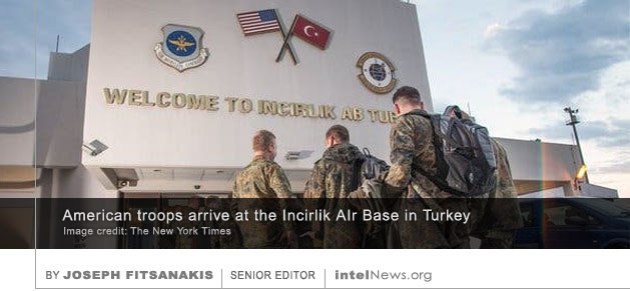 The United States has indefinitely suspended a longstanding military intelligence-sharing program with its North Atlantic Treaty Organization ally Turkey. The program, which targets a Kurdish separatist group, is believed to have been in place since 2007. According to the Reuters news agency, which published the story on Wednesday, it has never before been reported on by news media.
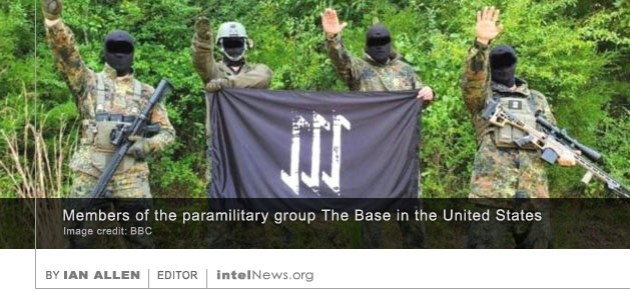 The mysterious leader of an American far-right paramilitary group, which authorities say is seeking to overthrow the United States government, runs the organization from Russia, according to a probe conducted by the BBC. The group, which calls itself The Base, is thought to have been formed in the summer of 2018. Since then, it is believed to have recruited dozens of members using encrypted messaging applications.
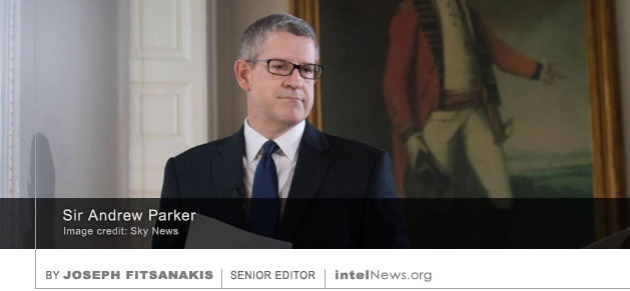 The director of Britain’s domestic intelligence agency has dismissed warnings by the United States that intelligence sharing between the two allies will be impeded if London decides to use Chinese-made telecommunications hardware. The British government has come under relentless pressure by Washington to bar Huawei Technologies, one of the world’s leading telecommunications hardware manufacturers, from competing for contracts to build the United Kingdom’s 5th generation cellular communications infrastructure.
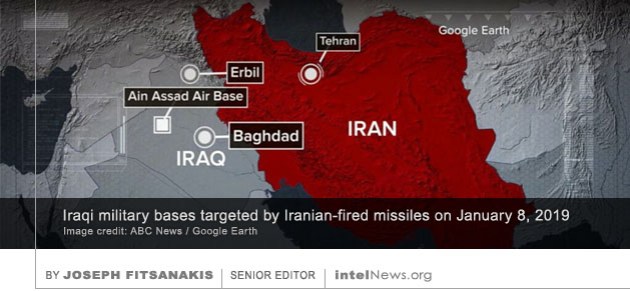 The missiles that targeted American troops in Iraq a few hours ago offer significant clues about the evolving confrontation between Iran and the United States. The attack appears to have been largely symbolic —a somewhat rushed attempt to restore some of Iran’s wounded prestige following the assassination of its military commander, Qasem Suleimani. At the same time, however, it is also the prelude to a broader regional conflict that appears increasingly unavoidable.
 Soleimani’s killing is viewed by Tehran as too insulting to be responded to indirectly. This does not mean that Tehran will not revert to its standard method of employing proxies in the future. But the fact that it consciously chose to deviate from that time-tested method is in itself extremely important.
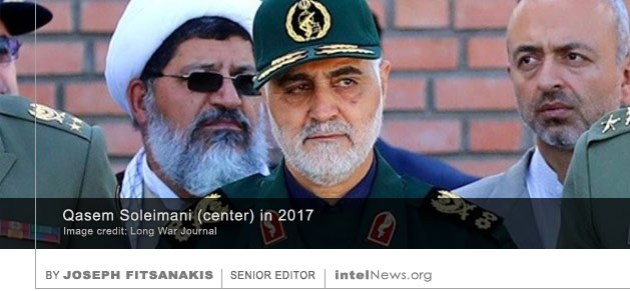 In an act whose implications are impossible to overstate, the United States has assassinated General Qasem Soleimani, arguably Iran’s second most powerful official. In the early hours of this morning, the entire Middle East stood on the verge of a regional war as the US Department of Defense
  why US President Donald Trump made the decision to kill Soleimani, and why he did so now.
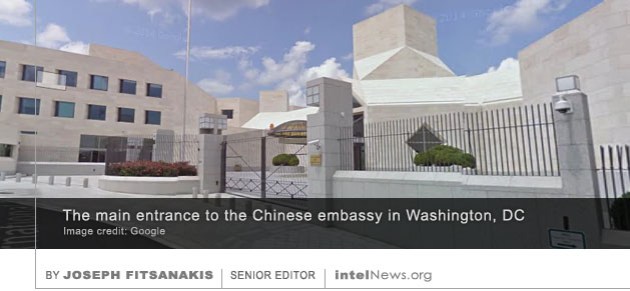 The United States quietly expelled two Chinese diplomats in October of this year, a move that neither Washington nor Beijing chose to make public, according to a report published on Sunday. If true, the incident would signify the first known expulsions of Chinese diplomatic personnel from the US since 1987.
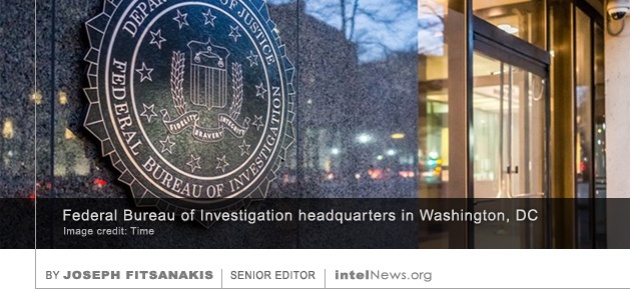 The United States Federal Bureau of Investigation says it is examining possible counterintelligence threats in connection with the popular online application FaceApp, which is headquartered in Russia. The application first made its appearance in January of 2017 and quickly became popular among smartphone users around the world. It allows users to upload a photograph of their face and then edit it with the help of artificial-intelligence software. The software can change the user’s photograph to make it look younger or older, or make it look as if it is from the opposite gender. The result can be impressively realistic and life-like.
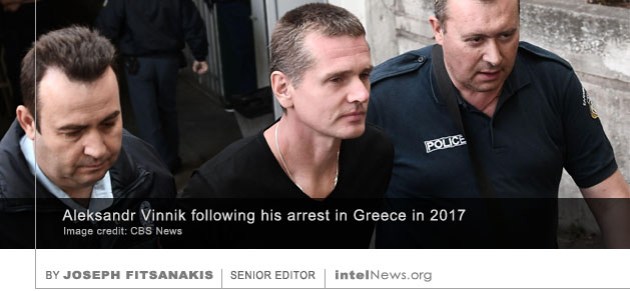 An intense fight between the United States and Russia over the extradition of a Russian cryptocurrency tycoon being held in Greece, is raising questions about the possible use of cryptocurrencies by spies. The tycoon in question is Aleksandr Vinnik, 39, who in 2011 co-founded BTC-e, an international cryptocurrency-trading platform. BTC-e allowed users to buy or sell several popular cryptocurrencies, including bitcoin and litecoin, using Russian rubles, United States dollars, or European Union euro currencies. Although headquartered in Russia, BTC-e’s servers were located in Bulgaria, while its operations were conducted through its offshore components in Cyprus and the Seychelles.








Coronavirus: Comparing America’s bungling fiasco with Taiwan’s stunning success
March 9, 2020 by Joseph Fitsanakis 3 Comments
But no American would get this impression by watching the daily briefings of the so-called White House “Coronavirus Task Force”. The uncomfortable smiles and awkward acquiescence of its members, part of an unconvincing effort to assure Americans that “all is well”, coupled with their seemingly unending competition to offer lavish praises to each other, make for a truly uncomfortable viewing experience. Such astounding manifestations of mediocrity would be somewhat tolerable if they came alongside actionable information that Americans could use to protect themselves and the future of their country —preferably something beyond “washing your hands for at least 20 seconds”.
On February 26, Americans were told by their president that “within a couple of days [COVID-19 cases in the US would] be down close to zero, that’s a pretty good job we’ve done”. By that time, China was feverishly implementing the largest quarantine in human history. Ten days later, Italy began to quarantine 16 million people —a quarter of its population— in its northern regions. Meanwhile, Britain has begun re-hiring retired nurses to prepare for the coming unprecedented wave of medical emergencies, while France has banned all large meetings in its territory. But in America it’s business as usual: the National Collegiate Athletic Association (NCAA) announced on Sunday that all its tournament games nationwide will be held with fans despite growing concerns about the coronavirus. Not a single senior government official has stepped forward to address Americans’ growing anxiety about the potentially unprecedented degree of disruption that the US economy, including the nation’s supply chain, healthcare, transportation, education, entertainment, and services sectors are going to be experiencing in the coming months.
Additionally, Americans expect the so-called “Task Force” to provide non-politicized explanations of the ongoing failures of the US government’s treatment to the COVID-19 crisis, which continue to allow the virus to spread in our communities unabated. For instance, why did the US decline to use the World Health Organization’s diagnostic test for the disease, which had been made available to dozens of nations by the end of January? Or why does access to testing kits remain at alarmingly low levels, so much so that a frustrated New York Governor Andrew Cuomo recently described the US Centers for Disease Control and Prevention’s response to COVID-19 as “flat-footed”? So grave is this situation, that on March 8 The Washington Examiner —arguably America’s leading conservative publication— opined that COVID-19 “is exposing how deeply unsuited [Donald Trump] is to deal with a genuine crisis that he can’t bluff his way through”.
The American government’s tragically incompetent response to COVID-19 (at this point just slightly better than the Islamic Republic of Iran’s) hurts even more when one compares it with that of Taiwan —an island nation of 23 million, which the US often views as a client state. In January, when COVID-19 began making news headlines, experts predicted that Taiwan would end up with the world’s second-highest number of COVID-19 cases. This was primarily due to the country’s geographical proximity to mainland China —just 81 miles from the Chinese shore— as well as the extensive transportation network that links the two nations. Over 1.2 million Taiwanese either live permanently or work in China, while nearly 3 million Chinese citizens visit Taiwan every year. Even more ominously, the COVID-19 outbreak occurred right before the Lunar New Year, which is the busiest travel season for both Chinese and Taiwanese holidaymakers.
But Taiwan has managed to spectacularly defy all early predictions about a potential COVID-19 epidemic. As a group of researchers from the University of California Los Angeles, Stanford University, RAND Corporation and the Koo Foundation in Taiwan, explain in The Journal of the American Medical Association, the reason dates back to 2003. That year’s severe acute respiratory syndrome (SARS) outbreak prompted the Taiwanese government to establish the National Health Command Center (NHCC). Since then, the NHCC has operated as a central command system that coordinates the activities of Taiwan’s Central Epidemic Command Center, the Biological Pathogen Disaster Command Center, the Counter-Bioterrorism Command Center, and the Central Medical Emergency Operations Center. Intelligence collected and analyzed by these centers is quickly distributed to central, regional and local authorities in all parts of the country.
The authors explain that, on December 31, the day when the World Health Organization notified national authorities of the first accounts of a severe pneumonia with unknown causes in the Chinese city of Wuhan, NHCC personnel began to board planes arriving from Wuhan. They began testing all passengers and crew on those planes for flu-like symptoms before allowing them to deplane. By January 5, NHCC personnel were reaching out to anyone who had traveled to Wuhan in the past fortnight and testing them for flu-like symptoms. By that time, the NHCC had already set up a nationwide toll-free hotline, which has since become decentralized to serve individual regions.
On January 27, the NHCC worked in collaboration with Taiwan’s National Health Insurance Administration (NHIA) to integrate the database containing the recent travel history of passengers with their NHIA identification card data. They also integrated the same database with national tourism and immigration data. Within 24 hours, the NHCC was reaching out to all citizens of Taiwan, as well as tourists and immigrants, who had traveled to the Wuhan region during the previous month. Using this big-data analytics approach, Taiwanese authorities were able to generate real-time alerts that were sent to individual doctors for use during clinical visits, so that clinical symptoms could be matched with patients’ travel histories.
Those who had traveled to regions of China that were considered high-risk, were immediately quarantined at home for 14 days. Their movements were tracked through their mobile phones to ensure compliance with quarantine instructions. Meanwhile, all those who exhibited flu-like symptoms but had tested negative for influenza in weeks prior, were re-tested for COVID-19.
Considering the above, it is hardly surprising that, by March 9, Taiwan —located just 81 miles off the coast of China— had just 45 confirmed COVID-19 cases, with a single death. Importantly, this is not because the Taiwanese are not testing their citizens —unlike the US or, even more outrageously, Turkey, which continues to report zero cases of COVID-19. Taiwan has tested more people than all of the nations of the Americas combined. The low number of COVID-19 cases in Taiwan is due to one thing, and one thing alone: a preemptive approach to the security of the nation by an enlightened leadership and a forward-thinking government system. Which is precisely what the US lacks at this grave time for the nation’s future.
* Dr. Joseph Fitsanakis is associate professor in the Intelligence and National Security Studies program at Coastal Carolina University in the United States.
► Author: Joseph Fitsanakis | Date: 09 March 2020 | Permalink
Filed under Expert news and commentary on intelligence, espionage, spies and spying Tagged with Analysis, biosecurity, biosurveillance, Coronavirus, COVID-19, Joseph Fitsanakis, Newstex, Opinion, Taiwan, United States, US Coronavirus Task Force