US sees Russian weapon behind US diplomats’ mystery ailments, say officials

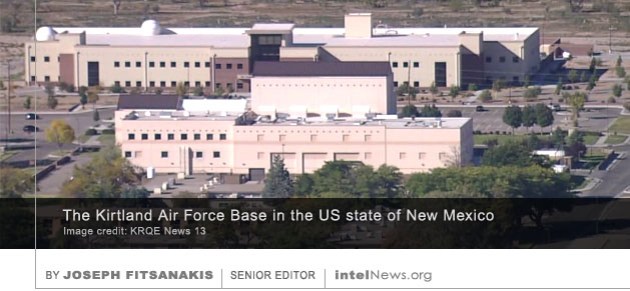
Kirtland Air Force BaseA Russian-made device caused the mystery ailments that affected more than two dozen American diplomats in Cuba and China, according to United States government officials who have been briefed on the matter. Since September of last year, Washington has recalled the majority of its personnel from its embassy in Havana and at least two more diplomats from its consulate in the Chinese city of Guangzhou. The evacuees reported experiencing “unusual acute auditory or sensory phenomena” and “unusual sounds or piercing noises”. Subsequent tests showed that they suffered from sudden and unexplained loss of hearing as well as from various forms of brain injuries. In April of this year the Canadian embassy evacuated all family members of its personnel stationed in the Cuban capital over similar health concerns. More recently, the US issued a travel warning advising its citizens to stay away from the island and accused Cuba of neglecting to ensure the safety of US diplomatic personnel stationed there.

In early September, Douglas H. Smith, who heads the team of scientists tasked by the US government to examine the matter, said that microwave radiation was almost certainly responsible for the diplomats’ ailments. He added that microwaves were considered “a main suspect” and that his team of scientists was now “increasingly sure” that the diplomats had suffered brain injuries caused by microwave radiation. Now the US news network NBC reports that Russia is viewed as the primary culprit behind the mystery ailments that plagued US diplomats. Reporting on Tuesday the news network cited three unnamed officials in the administration of US President Donald Trump, as well as “congressional aides and others briefed on the investigation”. Specifically, NBC reported that the Russian connection was supported by “evidence from communications intercepts” (signals intelligence or SIGINT), though it did not elaborate on their precise nature. It also said that the ongoing investigation into the purported weapon involves the Federal Bureau of Investigation, the Central Intelligence Agency among other US intelligence and security agencies. Another leading actor in the investigation is the US Air Force, said NBC, stating that experts in its directed energy research program at the Kirtland Air Force Base near Albuquerque, New Mexico, are trying to reverse-engineer the alleged weapons based on the symptoms that they cause.

But NBC noted that the evidence remains relatively inconclusive and is not yet sufficient to allow Washington to openly accuse Moscow of having masterminded the alleged microwave attacks on the US diplomats. The news network said it reached out to the Office of the Director of National Intelligence but received no response. A spokeswoman from the US Department of State said that the investigation into the diplomats’ ailments was ongoing and that the Department had made “no determination of who or what is responsible for the health attacks” on its personnel.

Author: Joseph Fitsanakis | Date: 13 September 2018 | Permalink
Trump officials ‘discussed secret coup plans’ with Venezuelan army officers

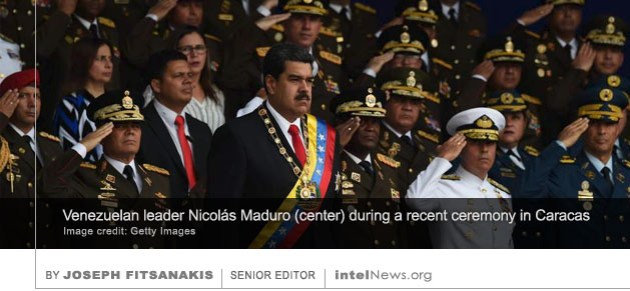
Nicolas MaduroUnited States President Donald Trump authorized American officials to attend secret meetings held by Venezuelan military officers who conspired to launch a military coup against President Nicolás Maduro. The claim was made on Saturday by The New York Times, which cited “interviews with 11 current and former American officials” and information from an unnamed Venezuelan former military commander. The former commander claims to have attended the secret talks, which allegedly were held over several meetings during the past year.
According to The Times, the meetings were sparked by a comment made by President Trump in August of 2017, that he did not rule out a “military option” to “restore calm” in Venezuela. That comment reportedly prompted at least three groups of Venezuelan military officers opposed to the rule of President Maduro to reach out to the White House. One of these groups, said The Times, had one of its representatives contact American diplomats in an unnamed European country. That outreach led to “a series of covert meetings abroad”, according to The Times, the first of which took place in the fall of 2017. The meetings continued until recently, and were held with a number of Venezuelan military officers who claimed to represent the views of several hundred members of the National Bolivarian Armed Forces. The rebellious officers allegedly told the US government’s representative that they planned to launch a military coup aimed at deposing President Maduro and installing a transitional government that would guarantee peaceful elections. They reportedly asked the White House representative to supply them with secure communications equipment, which they could use to coordinate their operations.

However, the White House eventually decided that backing a military coup in Venezuela would be too risky due to the potential for spiraling bloodshed. It thus distanced itself from the plan. Additionally, some US government officials were alarmed by the composition of the rebel officers: at least one of them was a serious violator of human rights who had previously been accused by the US of involvement of participating in drugs smuggling and having close links with the Revolutionary Armed Forces of Colombia, which is on Washington’s official list of foreign terrorist organizations. Eventually the plotters canceled their plans for a coup, having assessed it would be met by fierce resistance by pro-Maduro forces.

The Times reached out to the White House, which rejected the paper’s report, saying it was important to “dialogue with all Venezuelans who demonstrate a desire for democracy”. But it refused to respond to specific questions about the allegations of a possible coup in Venezueal with Washington’s backing. President Maduro has already blamed the US for two attempts to assassinate him in the past 18 months, with the most recent one involving the use of an exploding drone. In 2002, Maduro’s predecessor, the late Venezuelan President Hugo Chávez, was briefly deposed by a military putsch. Chávez was able to beat back the rebels with the help of his civilian and military supporters, and then accused Washington of having had direct involvement with the attempt to remove him from power. The US has strongly denied Chávez’s charges.

Author: Joseph Fitsanakis | Date: 10 September 2018 | Permalink

US delegation met secretly with Syrian intelligence chiefs, newspaper claims

Ali MamloukA delegation of senior American government officials met secretly with Syria’s spy chiefs in an effort to lay out the terms of a possible deal between Washington and Damascus, according to a Lebanese newspaper. Relations between the United States and Syria have been strained since the late 1950s, when Damascus blamed Washington for a failed coup and expelled America’s ambassador there. In 2012, the US shut down its embassy in the Syrian capital in response to the government’s violent suppression of protests. Since then, Washington has carried out missile strikes on Syrian soil at least twice, while openly supporting armed groups that are opposed to the government of President Bashar al-Assad.
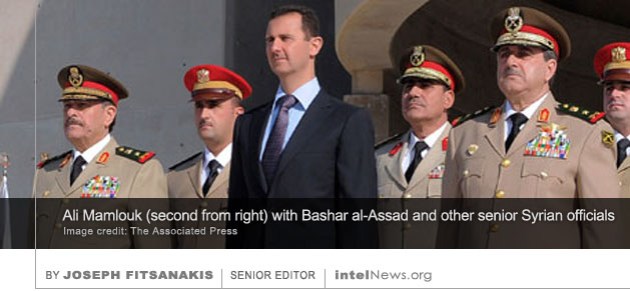
But according to the Lebanese newspaper Al-Akhbar, a group of senior American officials held a secret meeting in Damascus with Syrian spy chiefs. If true, the move could signify a major shift in US-Syrian relations. The paper, which supports the pro-Assad Shiite paramilitary group Hezbollah, and is close to the Syrian government, published news of the alleged meeting on Tuesday. It said that the meeting took place in complete secrecy during the last week of June and that it was facilitated by intermediaries from Russia and the United Arab Emirates. The latter used a UAE government airplane to fly the US delegation —whose names Al-Akhbar did not reveal— to the Syrian capital. The visiting delegation, which according to the paper “included [senior] officers from many US intelligence and security agencies”, was transported to a secret Syrian government facility in the dead of night by “a huge procession of black SUVs”, said the paper. The Syrian delegation at the meeting was reportedly headed by Ali Mamlouk, special security adviser to President al-Assad and head of the National Security Bureau of the governing Ba’ath Party. Other participants from the Syrian side included Mohammed Dib Zeitoun, director of the General Security Directorate, and Muwaffaq Asaad, the deputy chief of staff of the Syrian Armed Forces, said Al-Akhbar.

During the meeting, the two sides allegedly attempted to lay out the foundations of a possible post-civil war deal between Washington and Damascus. According to the Lebanese paper, the US delegation offered to withdraw American Special Forces from Kurdish-controlled northern Syria. In return, they allegedly asked for the removal of Iranian troops from Syrian regions that are adjacent to the Israeli border. The two sides also discussed the resumption of intelligence sharing on matters relating to Sunni radicals operating in Syria. No decisions were taken during the meeting, said Al-Akhbar, but the two sides decided to continue to share proposals and ideas about a possible bilateral agreement.

The French news agency Agence France Presse said on Tuesday that it could not independently confirm Al-Akhbar’s claims, as its attempts to contact the US departments of State and Defense were not fruitful. It noted, however, that both Mamlk and Zeitoun feature on the US government’s list of sanctions against Syrian government officials that are believed to have directly participated in human-rights abuses against political opponents since the outbreak of the civil war in 2011.

Author: Joseph Fitsanakis | Date: 29 August 2018 | Permalink

Russia, US, deny conducting mystery airstrikes in Tajikistan

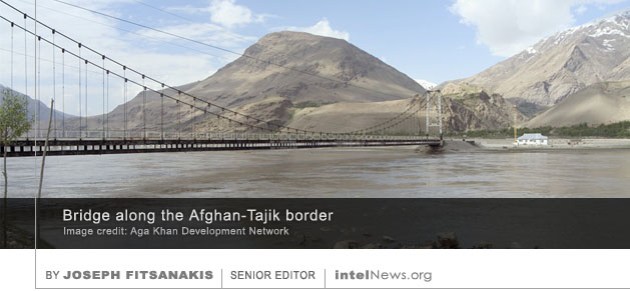
Afghanistan TajikistanRussia, the United States and Tajikistan have all denied that they were behind a series of mystery airstrikes that took place along the Tajik-Afghan border on Sunday, while the identity of the targets also remains unknown. The 800-mile border between Afghanistan and Tajikistan consists of mountainous terrain. Unlike the Afghan-Pakistani border, which is rife with skirmishes and firefights, the Afghan-Tajik border is usually peaceful and sparsely guarded. But on Sunday, August 26, local officials from both sides of the Afghan-Tajik border reported that fighter jets conducted a series of airstrikes. News media in Tajikistan’s capital Dushanbe said that Tajik border guards exchanged fire with Taliban fighters, killing as many as eight, but losing two officers in the process. However, on Monday a Tajik border police official denied media reports and said that the border incident involved Tajik lumberjacks who were attacked by unknown assailants from Afghanistan.
Adding to the mystery, Afghan officials said on Sunday that fighter jets bombed Afghan territory adjacent to the Tajik border. They added that they did not know if the fighter jets were Russian or Tajik. However, Tajikistan has a nominal air force consisting of no more than four Czech-made light-attack aircraft, which have not been used in over a decade. That leaves Russia, which maintains an air base in the suburbs of Dushanbe, 100 miles from the Afghan border. But on Monday, Moscow denied any involvement in the incident, as did Tajikistan. Russian officials placed the blame on the US, saying that the American-led North Atlantic Treaty Organization (NATO) force in Afghanistan is known to regularly launch airstrikes throughout Afghanistan. But US Pentagon officials said that they were not involved. When asked by reporters in Kabul, Afghan government representatives said that Afghanistan lacked the ability to monitor its airspace due to a lack of radar equipment. They called on the US-led NATO force to investigate Sunday’s incident.

Meanwhile, the identity of the persons targeted in the alleged airstrikes is also in doubt. On Monday, the Taliban denied that they had engaged with either Afghan or Tajik government forces along Afghanistan’s northern borderlands, saying that they had not authorized their fighters to operate in the area. Additionally, the Taliban have not been known to engage Tajik government troops in the past. Some observers have opined that the border skirmish may have been caused by drug smugglers who regularly transport drugs from Afghanistan to Russia or the Caspian Sea region through Tajikistan and Uzbekistan. However, there are no prior reported incidents of Russian, American or Tajik fighter jets having been deployed along the Afghan-Tajik border to combat drug traffickers.

Author: Joseph Fitsanakis | Date: 28 August 2018 | Permalink

CIA informants inside Russia are going silent, say US sources

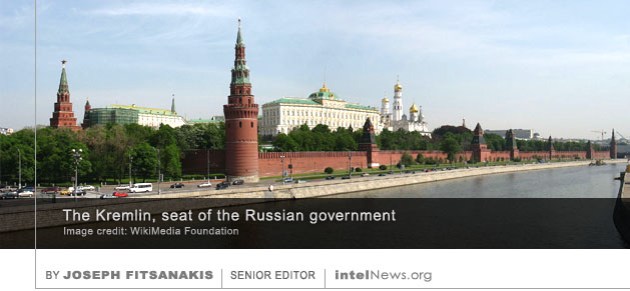
Kremlin, RussiaSecret informants inside the Russian government, which the United States has relied on in recent years for tips about Moscow’s strategy and tactics, have gone silent in recent months, according to sources. Over many years, US intelligence agencies have built networks of Russian informants. These consist of officials placed in senior positions inside the Kremlin and other Russian government institutions, who can help shed light on Russia’s political maneuvers. These informants were crucial in enabling the US Intelligence Community to issue warnings of possible Russian meddling in the American presidential elections of November 2016. Since then, US spy agencies have largely relied on these informants to produce detailed assessments of Russian intelligence activities targeting the US, and propose measures against those involved.
But on Friday, The New York Times said in an article that these vital sources of information in Moscow have been going silent in recent months. Citing “current and former officials”, the paper said that US officials did not believe that the informants have been captured or killed. Instead, they have voluntarily “gone underground” because of “more aggressive counterintelligence” practiced by Russian security agencies. Moscow has stepped up attempts to detect spies operating inside Russia since the Sergei Skripal incident, when relations between it and most Western countries sank to their lowest point since the Cold War. In turn, Western informants operating in Russia have “decided it is too dangerous to pass information” and have gone “silent for their own protection”, said The Times.

This situation, however, has left the Central Intelligence Agency and other US spy agencies “in the dark” about the intentions of Russian President Vladimir Putin, just as America is nearing its mid-term elections. The lack of information has been exacerbated by the expulsion of dozens of American diplomats from Russia in March of this year. Moscow announced the expulsions in response to Washington’s decision to expel 60 Russian diplomats in protest against the attempt —allegedly by Russia— to kill Sergei Skripal in England. Many of the diplomats who were expelled from Russia were in fact intelligence officers operating under diplomatic cover. Few of those are now left on Russian soil and, according to The Times, “are under incredible surveillance” by Russian counterintelligence agencies. Washington is still collecting information from Russia through other channels, including communication intercepts, which, according to The Times, “remain strong”. But the paper cited anonymous American officials who “acknowledged the degradation in the [overall flow of] information collected from Russia.

Author: Joseph Fitsanakis | Date: 27 August 2018 | Permalink

US announces arrest of two men charged with spying for Iran

Mujahedin-e KhalqAuthorities in the United States have announced the arrests of two men who have been charged with spying on American soil on behalf of the Islamic Republic of Iran. The men were reportedly arrested on August 9, but information about them was only released on Monday by the US Department of Justice. In a press statement published online, John Demers, US Assistant Attorney General for National Security, said the men were arrested because of concerns that they “acted on behalf of Iran”. They were identified as Ahmadreza Mohammadi Doostdar, 38, and Majid Ghorbani, 59. Doostdar is reportedly a dual citizen of the US and Iran, while Ghorbani is an Iranian citizen who lives in the US state of California. The two men are not believed to be diplomats.
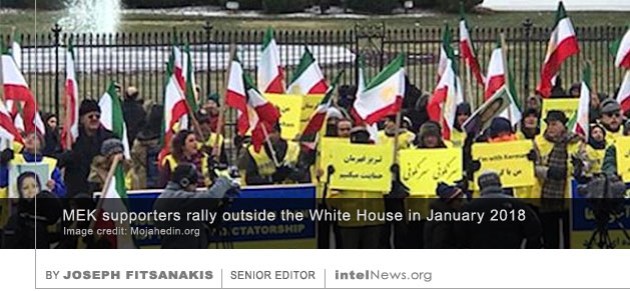
According to the US government, the men were observed “conducting surveillance of political opponents and engaging in other activities that could put Americans at risk”. The press statement alleges that Doostdar carried out surveillance of a Jewish center in Chicago, while Ghorbani attended meetings and rallies organized by Iranian opposition groups operating in the US. The press release identifies one such group as the Mujahideen-e Khalq (MEK), a militant faction that has roots in radical Islam and Marxism. Between 1970 and 1976, the group assassinated six American officials in Iran and in 1970 tried to kill the United States ambassador to the country. It initially supported the Islamic Revolution of 1979, but later withdrew its support, accusing the government of Ayatollah Khomeini of “fascism”. It continued its operations in exile, mainly from Iraq, where its armed members were trained by the Palestine Liberation Organization and other Arab leftist groups. Until 2009, the European Union and the US officially considered the MEK a terrorist organization. But the group’s sworn hatred against the government in Iran brought it close to Washington after the 2003 US invasion of Iraq. By 2006, the US military was openly collaborating with MEK forces in Iraq, and in 2012 the group was dropped from the US Department of State’s list of foreign terrorist organizations. Today the group enjoys open protection from the EU and the US.

On June 30 of this year, authorities in Belgium arrested a married Belgian couple of Iranian descent, who were found to be carrying explosives and a detonator. On the following day, July 1, German police arrested an Iranian diplomat stationed in Iran’s embassy in Vienna, Austria, while a fourth person was arrested by authorities in France, reportedly in connection with the three other arrests. All four individuals were charged with having planned a foiled plot to bomb the annual conference of the MEK-affiliated National Council of Resistance of Iran (NCRI) that took place on June 30 in Paris, France. It is not known whether the arrests in Europe are in any way connected with the cases of the two men held in the US.

Crowdfunding campaign seeks release of CIA’s mind control program files

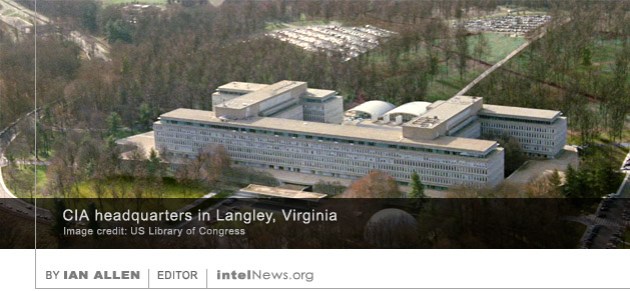
CIA headquartersAn online fundraising campaign is seeking to secure the release of over 4,000 pages of documents relating to a controversial mind control program developed by the United States Central Intelligence Agency. The project, referred to as MKNAOMI/MKULTRA in US government files, was a joint effort by the CIA and the US Department of Defense to study the effects of substances such as heroin and LSD on the human brain. It began in 1953 and over the years involved the work of hundreds of scientists, many of whom were not aware they were working on a CIA project. But it was hurriedly shut down in 1976, once post-Watergate investigations by the US Congress revealed that it led to the death of at least one person and involved the application of drugs on hundreds of nonconsenting subjects. Several lawsuits relating to MKULTRA have been filed in US courts in recent years.
In 2004, the Black Vault, a volunteer website specializing in publishing declassified government documents, released tens of thousands of pages that were released by the CIA following a lengthy Freedom of Information Act (FOIA) application. The agency released the file along with an 85-page index that listed the file’s contents. But in 2016, a Black Vault reader noticed that some of the listings contained in the file were missing from the documents. Working through the news aggregation and discussion website Reddit, a group of readers identified all the irregularities in the released documents and notified Black Vault’s owner, John Greenwald. Greenwald then contacted the CIA and, following a two-year exchange with the agency’s FOIA desk, he was told that the missing pages would require a separate FOIA request. The reason, according to the CIA, is that the original FOIA request had requested documents pertaining to “mind control”, whereas the missing pages related to “behavioral modification”, which is a separate topic.

The CIA told Greenwald that releasing the pages pertaining to “behavioral modification” would require a payment of $425.80, at 10 cents per page. After failing to convince the CIA that it should release the pages for free, because they should have been included in the original 2004 FOIA petition, Greenwald decided to launch a crowdfunding campaign. He used the popular crowdfunding website GoFundMe to request $500 toward a new FOIA and related expenses. By Wednesday night, the campaign had exceeded the amount requested by Greenwald. The owner of the Black Vault website now says that he is preparing to file a FOIA for 4,358 pages about MKULTRA that are missing from the original 2004 document release.

Author: Ian Allen | Date: 16 August 2018 | Permalink

ISIS remains strong with 30,000 members in Iraq and Syria, experts warn

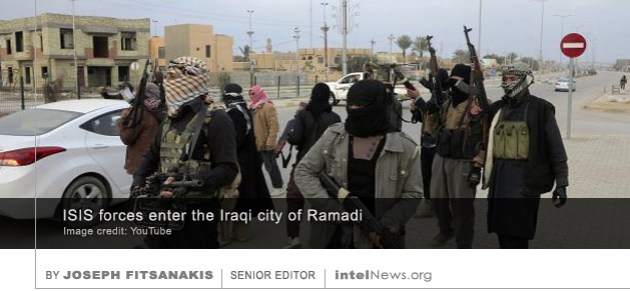
ISIS forces in RamadiThe Islamic State has recovered from some of its recent defeats in the battlefield and has as many as 30,000 committed members in Iraq and Syria, according to two reports by American and United Nations experts. Last month, the Iraqi government announced that the war against the group, which is also known as the Islamic State of Iraq and Syria (ISIS) had been won. The statement was echoed by the United States President Donald Trump, who said that the war against the militant Sunni group was “98 percent” over. But now two new reports, one produced by the United States Department of Defense and the other by an expert UN panel, warn that both ISIS and al-Qaeda remain powerful, popular and dangerous in Iraq, Syria, and many other regions of the world.
The UN report was published on Monday by the organization’s Analytical Support and Sanctions Monitoring Team, which is tasked with monitoring the impact of UN-imposed international sanctions. The report recognizes that ISIS has suffered unprecedented military defeats in Iraq and Syria in the past year, and that many of its most hardened fighters are dead or have abandoned the conflict zones in the region. But it warns that the militant organization is now morphing into a “covert version” of its former self and that its organizational core remains mostly intact in both Iraq and Syria. What is more, ISIS’ center is backed by as many as 30,000 unreconstructed members, who are split roughly equally between the two countries. The US Pentagon report, which was delivered this week to Congress states that ISIS has as many as 17,100 fighters in Iraq and another 14,000 in Syria. Many of those surviving fighters are citizens of dozens of different countries around the world, according to the report. Some of them are still engaged in armed fighting, while others are “hiding out in sympathetic communities and urban areas”, mostly in Iraq, the UN report states.

There are also tens of thousands of ISIS fighters and supporters in Libya, Afghanistan, Egypt, and in several West African and Southeast Asian countries, according to the reports’ authors. These fighters are led by commanders who remain in contact with senior ISIS leaders and continue to revere Abu Bakr al-Baghdadi as the group’s central figure. In addition to ISIS, al-Qaeda also remains strong and dangerous, according to the UN report. Its regional structure “continues to show resilience” and in some regions of the world it is far stronger than ISIS. These include several regions of Africa, including areas of Somalia and the Sahel, as well as in Yemen, where al-Qaeda is believed to command as many as 7,000 armed fighters at the moment.

Author: Joseph Fitsanakis | Date: 15 August 2018 | Permalink

US-backed alliance in Yemen war bribes, recruits al-Qaeda warlords, report finds

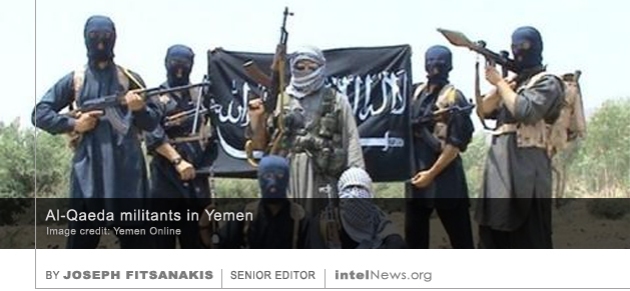
Al-Qaeda in YemenYemeni militias backed by Saudi Arabia, the United States and the United Arab Emirates are actively paying off al-Qaeda-allied factions to abstain from the fighting, and are recruiting al-Qaeda members to fight against Shiite rebels, according to a new investigative report. Ever since 2015, when the civil war in Yemen broke out, the US, along with its Arab allies UAE and Saudi Arabia, has supported Sunni troops in their war against Shiite Houthi rebels. The latter are believed to be supported by Iran, and the US-backed coalition is engaged in an effort to curtail what it sees as Iranian expansionism in the Middle East.
But Iranian-supported fighters are just one of the many well-armed factions involved in the Yemeni Civil War, which Washington is ostensibly against. Another such faction is Al-Qaeda in the Islamic Peninsula (AQAP), believed to be the strongest surviving branch of the group that carried out the attacks of September 11, 2001. For several years now, the US-led coalition in Yemen has argued that its forces have severely limited AQAP’s strength and ability to fight, and that the group’s territorial control has been shattered. But a new investigative report published on Monday by the Associated Press argues that the reason why AQAP’s activities appear to have decreased in Yemen, is that its commanders are being bribed by US-backed Sunni militias and that its fighters are being recruited to fight against the Houthis. As strict Sunni Salafists, AQAP members view the Shiite Houthis as apostates and enemies of Islam. They are therefore “effectively on the same side as the Saudi-led coalition” in Yemen, note the editors of the Associated Press report. Citing “interviews with two dozen officials, including Yemeni security officers, militia commanders, tribal mediators and […] members of al-Qaeda”, the report’s authors say that US-backed Sunni militias “actively recruit al-Qaeda militants […] because they’re considered exceptional fighters”.

The Associated Press report also claims that the Sunni coalition has struck a series of secret agreements with AQAP, under which it paid off its fighters to abandon several Yemeni towns that were under their control. Upon leaving, these AQAP fighters were allowed to take with them tons of military equipment and valuables, including cash. In one case, AQAP was bribed to abandon the port city of Mukalla, Yemen’s fifth-largest urban center, and its fighters were allowed to keep their weapons and up to $100 million in looted cash deposits, said the Associated Press. In another case, AQAP militants were paid off to leave several towns in Yemen’s Abyan province, and 250 of them were incorporated into the so-called Security Belt, a Sunni militia backed by the government of the UAE. The AQAP fighters reportedly told their Security Belt commanders that they would “unite with the devil [himself] in the face of Houthis”.

The Associated Press notes that there is no evidence that funds supplied to Yemeni Sunni militias by the US have ended up into the hands of AQAP. Additionally, the US government has repeatedly denied accusations by Russia, Syria, and others that it supports various al-Qaeda factions. However, the Associated Press argues that the US Pentagon has been privy to the secret agreements between the Sunni militias and AQAP, which some say may end up strengthening al-Qaeda’s most formidable local branch anywhere in the world.

Author: Joseph Fitsanakis | Date: 08 August 2018 | Research credit: M.A. | Permalink

US fired Moscow embassy employee who may have spied for Russia

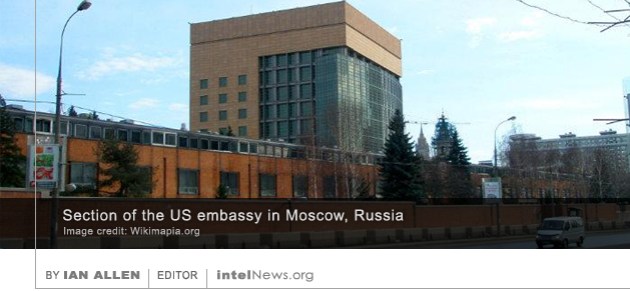
US embassy in RussiaA female Russian national who worked for the United States Secret Service in Moscow was quietly dismissed in 2017, amidst concerns that she was spying for Russia. British newspaper The Guardian, which broke the story last week, did not name the Russian woman. But it said that she had worked at the US Embassy in Moscow “for more than a decade”, most recently for the Secret Service –a federal law enforcement agency that operates within the Department of Homeland Security. The Secret Service has several missions, the most important of which is to ensure the physical safety of America’s senior political leadership.
Throughout her Secret Service career, the Russian woman is thought to have had access to the agency’s email system and intranet network, said The Guardian, citing “an intelligence source”. She could also potentially have had access to “highly confidential material”, said the paper, including the daily schedules of America’s past and current presidents and vice presidents, as well as their family members’ schedules.

The unnamed Russian national first came under suspicion in 2016, said The Guardian, during a routine security review conducted by two counterintelligence staff members at one of the Department of State’s Regional Security Offices (RSO). These reviews usually take place every five years and scan the background and activities of employees at American embassies abroad. The review showed that the unnamed Russian national was holding regular meetings with officers of the Federal Security Service (FSB), Russia’s domestic intelligence service. In January of 2017, the Department of State reportedly shared its findings with the Secret Service. But the latter waited until several months later to fire the Russian woman, having decided to do so quietly, said The Guardian.

According to the paper, instead of launching a major investigation into the State Department’s findings, the Secret Service simply dismissed the woman by revoking her security clearance. The paper said that the Russian national’s dismissal took place shortly before the US embassy in Moscow was forced to remove or fire over 750 employees as part of Russia’s retaliation against economic sanctions imposed on it by Washington. That coincidence helped the Secret Service “contain any potential embarrassment” arising from claims of espionage, said The Guardian. The paper contacted the Secret Service and was told that “all Foreign Service nationals” working for the agency “are managed accordingly to ensure that […US] government interests are protected at all times”. Their duties, therefore, are “limited to translation, interpretation, cultural guidance, liaison and administrative support. This is of particular emphasis in Russia”, said a Secret Service spokesman, who refused to discuss specific cases.

Author: Joseph Fitsanakis | Date: 07 August 2018 | Research credit: S.F. | Permalink

Facebook says efforts to subvert upcoming US elections resemble ‘new arms race’

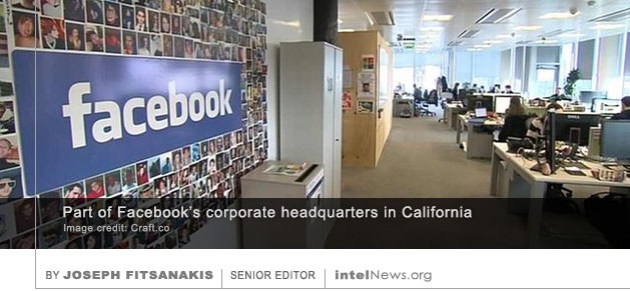
FacebookFacebook has said it is involved in an “arms race” against “bad actors” as it announced on Tuesday the removal of accounts that allegedly tried to subvert the upcoming mid-term elections in the United States. The social-media giant said its security division had identified 32 profiles and pages that were set up for the sole purpose of disrupting, subverting or otherwise influencing the American political process. At least seven more accounts were shut down on the Instagram platform –which is also owned by Facebook– for the same reasons. In the past 14 months, the suspect accounts generated nearly 10,000 posts and were liked or followed by over 290,000 users, said Facebook.

In addition to producing memes that aimed to stir existing racial, political and religious tensions in American society, the suspect accounts are also believed to have generated approximately 150 paid advertisements, spending around $11,000 for that purpose. Moreover, close to 30 public events were organized, advertised and hosted by the suspect pages throughout the US in the past 14 months. One such event was subscribed to by 4,700 users, with another 1,400 users stating that they would attend.

In a preliminary report posted on its online newsroom, Facebook said it was too early in the investigation to identify the party or parties behind the alleged effort to influence the US mid-term elections. Its security team had detected “one instance” of a connection between this latest operation and the Russian-based Internet Research Agency (IRA), which Facebook identified as being one of the main sources behind efforts to influence the 2016 US presidential elections. But the report cautioned that the instigators of this latest attempt to influence the US political process had gone to great pains to hide their identities, affiliations and geographical coordinates. For instance, they routinely employed virtual private networks in order to disguise their internet protocol addresses. They also used third parties to purchase advertisements on Facebook and Instagram. These and many other tactics severely limited the ability of security technicians to attribute these efforts to specific countries, governments or companies, said Facebook.

Using unusually strong language to describe its ongoing probe, Facebook said that the exploitation of its platform for sinister political purposes resembled “an arms race” and that constantly changing tactics were needed to combat it. In addition to removing the suspect accounts, Facebook said it was working closer with law enforcement and leading online security firms in order to analyze and eliminate threats from what it described as “bad actors”. It added that it was “investing heavily” in more people and better technology in order to eliminate those who were trying to weaponize its communication platform for sinister goals.

Author: Joseph Fitsanakis | Date: 01 August 2018 | Permalink

US diplomats secretly met with Taliban without Afghan government

TalibanIn a dramatic change to longstanding policy, senior United States diplomats have reportedly held secret meetings with Taliban leaders without the presence –and presumably knowledge– of the Afghan government. For over a decade, the Taliban have refused to negotiate with the Afghan government, which they view as a puppet regime controlled by Washington. They have instead sought to speak directly with the United States, without Kabul’s mediation. In 2015, the United States sought to initiate peace talks with the Taliban in the Qatari capital Doha, but the effort collapsed after the Afghan government denounced it and demanded a seat at the table. The negotiation process has remained dormant since then.

Last week, however, The Wall Street Journal reported that a series of unannounced meetings have been taking place between a delegation of senior Taliban officials and an American team led by Alice Wells, principal deputy assistant secretary of the US Department of State’s Bureau of South and Central Asian Affairs. On Saturday, The New York Times confirmed the story, saying that meetings between the two sides were being held in Qatar, where the Taliban maintain an informal diplomatic mission. Citing “two senior Taliban officials”, The Times said that the American diplomats have been meeting with members of the Taliban’s political commissariat. But the paper said it had no information about the substance or progress of the talks. If The Times’ claims are accurate, they would mark a dramatic reversal of longstanding US policy on the Taliban. Since 2001, Washington has consistently argued that any negotiation process involving the Taliban would be “Afghan-owned and Afghan-led”. Therefore, direct talks between Washington and the Taliban without Kabul’s mediation would mark a major shift in America’s security strategy in Afghanistan and beyond.

The New York Times said it contacted the US Department of State in Washington, seeking clarification about the alleged talks. But a spokesman refused to discuss the claims and insisted that “any negotiations over the political future of Afghanistan will be between the Taliban and Afghan government”. However, The Times noted that the spokesman did not expressly deny the existence of the talks with the Taliban.

Author: Joseph Fitsanakis | Date: 31 July 2018 | Permalink

Iran warns of repercussions as US intensifies campaign against Tehran

IRGC IranIranian military officials have warned of extracting “revenge from foreign intelligence services”, as Reuters reported that an aggressive campaign against Tehran has been launched by Washington. On Sunday, the Reuters news agency said that senior officials in the administration of US President Donald Trump had launched a concerted offensive “meant to foment unrest” in the Islamic Republic. Citing information from “more than half a dozen current and former officials”, Reuters said that the US offensive is directly supported by President Trump’s Secretary of State Mike Pompeo and his National Security Adviser John Bolton. Both officials are known for their aggressive stance against the Iranian government.
The campaign, said Reuters, is meant to “work in concert” with President Trump’s push to “economically throttle Iran”. The US leader announced a series of economic sanctions on the Islamic Republic and has intensified his critical statements against Tehran after May of this year, when Washington pulled out of the Iran nuclear agreement. Known as the Joint Comprehensive Plan of Action (JCPOA), the international agreement was reached in 2015 between Iran and a group of nations known as the P5+1, namely the five permanent members of the United Nations Security Council plus Germany. As part of the deal, Iran agreed to halt its nuclear weapons program in exchange for an end to economic sanctions by the West. But President Trump abandoned the agreement, saying it was a form of appeasing Tehran.

According to Reuters, Washington’s campaign involves the spreading of information that “paints Iranian leaders in a harsh light” and in some cases makes claims about Tehran that are “exaggerated”. For example, said Reuters, some social media posts by the US Department of State’s Farsi-language news service claim that Iran is close to al-Qaeda, despite the fact that Shiite Islam, which is Iran’s state religion, is viewed as a heresy by Sunni members of al-Qaeda. Other –perhaps more believable– accusations include claims that the leaders of Iran are wasting funds released by the JCPOA instead of using it for their people’s welfare, and that Tehran funds the Taliban in Afghanistan.

Meanwhile, a spokesman for the Islamic Revolutionary Guard Corps (IRGC), arguably the most powerful branch of the Iranian Armed Forces, issued a warning on Sunday against “foreign intelligence services”. The spokesman, Brigadier General Ramezan Sharif, said Iran would take revenge on foreign spy services “who try to disrupt the security of Iran’s borders”. He was referring to an armed attack that took place on Saturday in Iran’s northwestern Marivan region, near the Iran-Iraq border. The attack concentrated on an Iranian military compound in the village of Dari and culminated with the bombing of an IRGC arms depot. According to Iranian media reports, the explosion killed 11 Iranian border guards. Reuters said it contacted the White House and the Department of State about the alleged campaign against Iran, but that both declined to comment.

Author: Joseph Fitsanakis | Date: 23 July 2018 | Permalink

US intelligence officials called to resign despite Trump’s Russia retraction

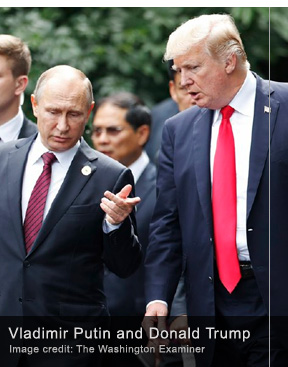
Putin and TrumpSeveral American former intelligence officials have called on their active colleagues to resign despite President Donald Trump’s retraction of his remarks about Russia’s alleged meddling in the 2016 presidential elections. On Tuesday, the US president issued an unusual retraction and correction of his public statement on Monday in Helsinki, Finland, in which he appeared to side with the Kremlin over his own Intelligence Community’s views. The Office of the Director of National Intelligence (ODNI), which is the coordinating body of the US Intelligence Community, has said that Russia tried to systematically interfere in the 2016 US presidential elections. According to the ODNI, the Kremlin’s goal was to augment the already heightened discord in American political life and deepen the mistrust between the electorate and state institutions, including Congress and the White House.


But President Trump dismissed those conclusions on Monday, while speaking alongside Russian President Vladimir Putin following the US-Russia summit in the Finish capital. During the joint press conference of the two leaders, the US president was asked to publicly adopt the US Intelligence Community’s conclusion that Russia interfered in the 2016 elections. But instead of doing so, Trump said his Russian counterpart had strongly denied the American accusations. “My people came to me”, said Trump, referring by name to his Director of National Intelligence (DNI) Dan Coats, and “said they think it’s Russia”. However, Trump continued, “President Putin […] just said it’s not Russia. I will say this, I don’t see any reason why it would be”. Following strong criticism of that comment, much of it from his own supporters, the US president retracted it on Tuesday in Washington, saying he misspoke in Helsinki. According to Trump, he said “would” when he meant to say “wouldn’t”.

The US president’s odd retraction came just hours after DNI Coats –a Trump appointee– issued a rare public statement rejecting Trump’s comments in Helsinki. “We have been clear in our assessments of Russian meddling in the 2016 election and their ongoing, pervasive efforts to undermine our democracy”, said Coats, adding that his office’s conclusion had been based on “unvarnished and objective intelligence”. Coats’ predecessor, former ODNI James Clapper, said during an interview with CNN on Tuesday that, if he still led the ODNI and had been “publicly thrown under the bus” by the president in that manner, he “would have stepped down in a heartbeat”. Read more of this post

Judge rules that Trump’s tweet did not disclose top-secret CIA operation in Syria

Free Syrian ArmyA United States federal judge ruled on Monday that a tweet by President Donald Trump did not inadvertently disclose a top-secret program by the Central Intelligence Agency to aid rebel groups in Syria. The lawsuit, brought by The New York Times, centered on news reports published in 2017 by Reuters, The Washington Post, and others, claiming that the US president had terminated an extensive CIA program that provided assistance to rebel forces engaged in the Syrian Civil War. The program was reportedly initiated by US President Barack Obama, who in 2015 instructed the CIA to assist armed groups operating under the umbrella of the Free Syrian Army. Aside from training, the CIA assistance reportedly included the provision of light and heavy ammunition, such as antitank missiles, mines and grenades.

But President Trump allegedly terminated $1 billion program soon after he took office. Last July, the president openly disputed an account by The Washington Post’s Greg Jaffe and Adam Entous, which claimed that Trump had ended the program as a concession to Russia. In a tweet, Trump said: “The Amazon Washington Post fabricated the facts on my ending massive, dangerous, and wasteful payments to Syrian rebels fighting Assad”. Shortly afterwards, another newspaper, The New York Times, filed a Freedom of Information Act (FOIA) request, arguing that the president’s tweet had effectively disclosed the existence of the covert CIA program and seeking full details from the government. But the CIA rejected the The New York Times’ rationale, at which point the paper took the case to court.

But on Monday, US District Court Judge Andrew Carter Jr. dismissed the paper’s argument. In a 20-page decision, posted online by the US-based news website Politico, Judge Carter said that President Trump’s tweet had been too vague and ambiguous to be considered as effectively declassifying the secret CIA program. At no point did the US president “make an unequivocal statement, or any statement for that matter, indicating that he was declassifying information”, said the judge. Additionally, Trump’s tweet and other public statements on the matter did not undermine the legal authority of the US government to continue to keep details about the CIA program under wraps. According to Politico, which reported on Judge Carter’s decision, this development will make it difficult for other FOIA filers to use Trump’s tweets as justification for seeking information about secret government programs. Meanwhile, The New York Times said on Monday that it would seek to appeal Judge Carter’s decision.

Author: Joseph Fitsanakis | Date: 04 July 2018 | Permalink