US diplomats secretly met with Taliban without Afghan government
July 31, 2018 2 Comments
 In a dramatic change to longstanding policy, senior United States diplomats have reportedly held secret meetings with Taliban leaders without the presence –and presumably knowledge– of the Afghan government. For over a decade, the Taliban have refused to negotiate with the Afghan government, which they view as a puppet regime controlled by Washington. They have instead sought to speak directly with the United States, without Kabul’s mediation. In 2015, the United States sought to initiate peace talks with the Taliban in the Qatari capital Doha, but the effort collapsed after the Afghan government denounced it and demanded a seat at the table. The negotiation process has remained dormant since then.
Last week, however, The Wall Street Journal reported that a series of unannounced meetings have been taking place between a delegation of senior Taliban officials and an American team led by Alice Wells, principal deputy assistant secretary of the US Department of State’s Bureau of South and Central Asian Affairs. On Saturday, The New York Times confirmed the story, saying that meetings between the two sides were being held in Qatar, where the Taliban maintain an informal diplomatic mission. Citing “two senior Taliban officials”, The Times said that the American diplomats have been meeting with members of the Taliban’s political commissariat. But the paper said it had no information about the substance or progress of the talks. If The Times’ claims are accurate, they would mark a dramatic reversal of longstanding US policy on the Taliban. Since 2001, Washington has consistently argued that any negotiation process involving the Taliban would be “Afghan-owned and Afghan-led”. Therefore, direct talks between Washington and the Taliban without Kabul’s mediation would mark a major shift in America’s security strategy in Afghanistan and beyond.
The New York Times said it contacted the US Department of State in Washington, seeking clarification about the alleged talks. But a spokesman refused to discuss the claims and insisted that “any negotiations over the political future of Afghanistan will be between the Taliban and Afghan government”. However, The Times noted that the spokesman did not expressly deny the existence of the talks with the Taliban.
► Author: Joseph Fitsanakis | Date: 31 July 2018 | Permalink
 Iranian military officials have warned of extracting “revenge from foreign intelligence services”, as Reuters reported that an aggressive campaign against Tehran has been launched by Washington. On Sunday, the Reuters news agency said that senior officials in the administration of US President Donald Trump had launched a concerted offensive “meant to foment unrest” in the Islamic Republic.
 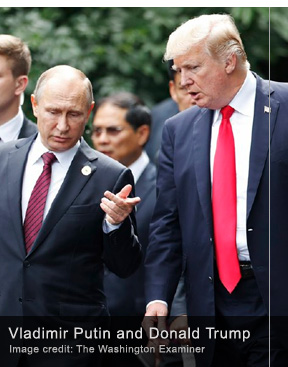 Several American former intelligence officials have called on their active colleagues to resign despite President Donald Trump’s retraction of his remarks about Russia’s alleged meddling in the 2016 presidential elections. On Tuesday, the US president issued an unusual retraction and correction of his public statement on Monday in Helsinki, Finland, in which he appeared to side with the Kremlin over his own Intelligence Community’s views. The Office of the Director of National Intelligence (ODNI), which is the coordinating body of the US Intelligence Community, has said that Russia tried to systematically interfere in the 2016 US presidential elections. According to the ODNI, the Kremlin’s goal was to augment the already heightened discord in American political life and deepen the mistrust between the electorate and state institutions, including Congress and the White House.
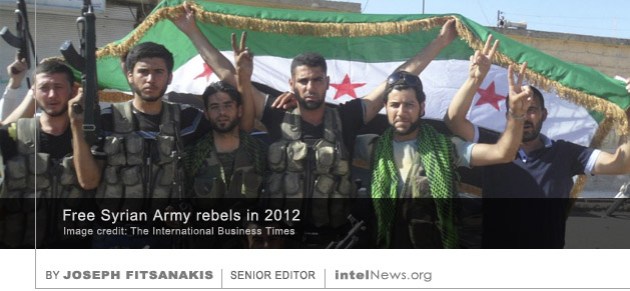 A United States federal judge ruled on Monday that a tweet by President Donald Trump did not inadvertently disclose a top-secret program by the Central Intelligence Agency to aid rebel groups in Syria. The lawsuit, brought by The New York Times, centered on news reports published in 2017 by
 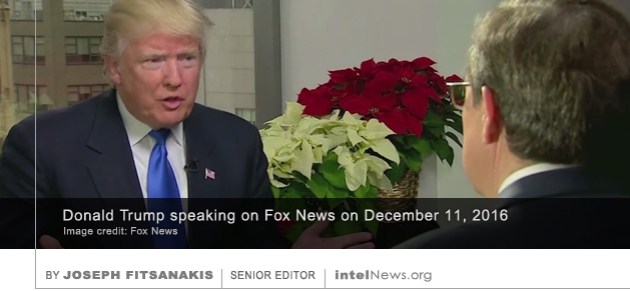 With nearly 53 million Twitter followers, United States President Donald Trump could easily be described as the most social-media-friendly American leader in our century. It is clear that Trump uses Twitter to communicate directly with his followers while circumventing mainstream media, which he views as adversarial to his policies. However, according to former Central Intelligence Agency analyst Nada Bakos, foreign intelligence agencies are among those paying close attention to the president’s tweets. Bakos spent 20 years in the CIA, notably as the Chief Targeter of the unit that tracked down Abu Musab al-Zarqawi, the founder of al-Qaeda in Iraq, which later evolved into the Islamic State of Iraq and Syria. In a June 23
 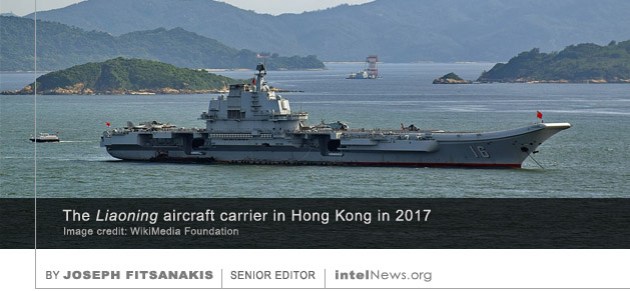 One of China’s most senior shipbuilding executives, who has not been seen in public for nearly two weeks, has been charged with giving secrets about China’s aircraft carriers to the United States. Sun Bo, 57, is general manager of the China Shipbuilding Industry Corporation (CSIC), China’s largest state-owned maritime manufacturer, which leads nearly every major shipbuilding project of the Chinese navy. Most notably, Sun headed the decade-long retrofitting of the Liaoning, a Soviet-built aircraft carrier that was commissioned to the Chinese Navy’s Surface Force after the collapse of the Soviet Union.
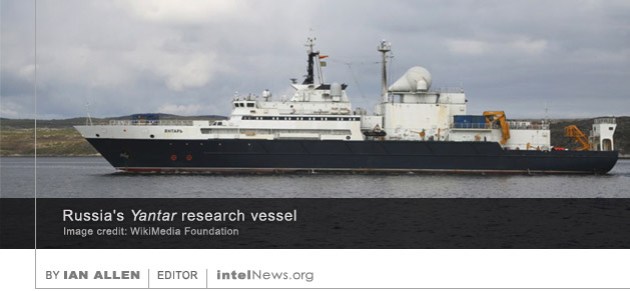 The United States has for the first time imposed economic sanctions on a number of Russian companies, which it says helped the Kremlin spy on targets in North America and Western Europe. On Monday, the US Department of the Treasury said it would apply severe economic restrictions on a number of Russian firms that work closely with the Kremlin. One of the companies was
 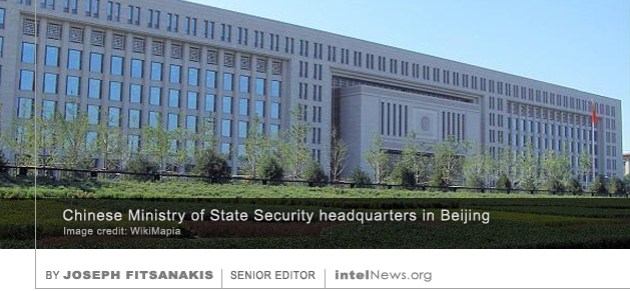 Chinese intelligence operatives gave a former officer of the United States Central Intelligence Agency “hundreds of thousands of dollars in cash” in exchange for carrying out espionage, according to court papers. The Federal Bureau of Investigation
 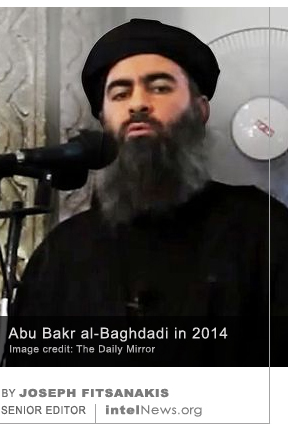 An joint operation conducted by American and Iraqi intelligence officers employed a popular messaging app on the phone of a captured Islamic State commander to apprehend four very senior figures in the organization, according to reports. The Reuters news agency
  A case officer in the United States Central Intelligence Agency, who was arrested in January of this year for violating the Espionage Act, shared classified information with China, according to an official indictment. The Federal Bureau of Investigation
 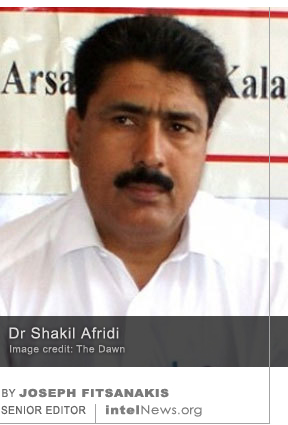 Authorities in Pakistan have dismissed rumors that a medical doctor who helped the United States Central Intelligence Agency find and kill al-Qaeda founder Osama bin Laden in 2011 is to be released from prison. Dr. Shakil Afridi was
 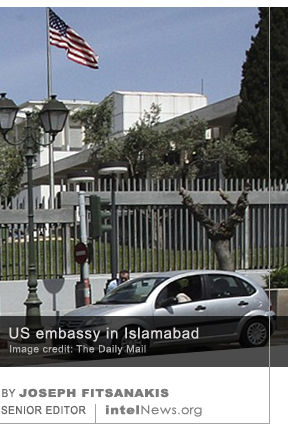 Another American diplomat was detained in Pakistan last week, following the second serious traffic accident involving United States diplomatic personnel in Islamabad in less than a month. The incidents are said to be contributing to ongoing diplomatic tensions between the United States and Pakistan. Many in the South Asian country remain angry about a controversial episode in 2011, when a Central Intelligence Agency officer serving at the US consulate in Lahore killed two men by shooting them in the head with a Glock pistol. The CIA officer,
 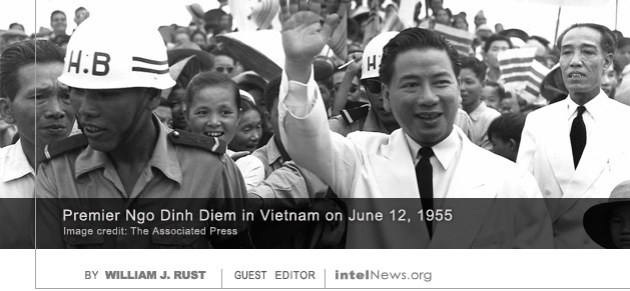 A newly declassified report by the Inspector General of the United States Central Intelligence Agency reveals that the South Vietnamese generals who overthrew President Ngo Dinh Diem in 1963 used CIA money “to reward opposition military who joined the coup”. Acknowledging that “the passing of these funds is obviously a very sensitive matter”, the CIA Inspector General’s report contradicts the sworn testimony of Lucien E. Conein, the CIA liaison with the South Vietnamese generals. In 1975, Conein told a United States Senate committee that the agency funds, approximately $70,000 or 3 million piasters, were used for food, medical supplies, and “death benefits” for the families of South Vietnamese soldiers killed in the coup.
 The government of Canada has announced plans to evacuate family members of its diplomats serving in Cuba, because of medical issues caused by an alleged espionage-related technological device. These concerns have persisted among United States and Canadian diplomatic staff since the fall of 2016, when several members of staff at the US embassy in Havana








Facebook says efforts to subvert upcoming US elections resemble ‘new arms race’
August 1, 2018 by Joseph Fitsanakis Leave a comment
In addition to producing memes that aimed to stir existing racial, political and religious tensions in American society, the suspect accounts are also believed to have generated approximately 150 paid advertisements, spending around $11,000 for that purpose. Moreover, close to 30 public events were organized, advertised and hosted by the suspect pages throughout the US in the past 14 months. One such event was subscribed to by 4,700 users, with another 1,400 users stating that they would attend.
In a preliminary report posted on its online newsroom, Facebook said it was too early in the investigation to identify the party or parties behind the alleged effort to influence the US mid-term elections. Its security team had detected “one instance” of a connection between this latest operation and the Russian-based Internet Research Agency (IRA), which Facebook identified as being one of the main sources behind efforts to influence the 2016 US presidential elections. But the report cautioned that the instigators of this latest attempt to influence the US political process had gone to great pains to hide their identities, affiliations and geographical coordinates. For instance, they routinely employed virtual private networks in order to disguise their internet protocol addresses. They also used third parties to purchase advertisements on Facebook and Instagram. These and many other tactics severely limited the ability of security technicians to attribute these efforts to specific countries, governments or companies, said Facebook.
Using unusually strong language to describe its ongoing probe, Facebook said that the exploitation of its platform for sinister political purposes resembled “an arms race” and that constantly changing tactics were needed to combat it. In addition to removing the suspect accounts, Facebook said it was working closer with law enforcement and leading online security firms in order to analyze and eliminate threats from what it described as “bad actors”. It added that it was “investing heavily” in more people and better technology in order to eliminate those who were trying to weaponize its communication platform for sinister goals.
► Author: Joseph Fitsanakis | Date: 01 August 2018 | Permalink
Filed under Expert news and commentary on intelligence, espionage, spies and spying Tagged with Facebook, influence operations, Instagram, Internet Research Agency, News, psyops, social networking, United States