Diplomat involved in fight with US embassy guard is CIA spy, says Russia

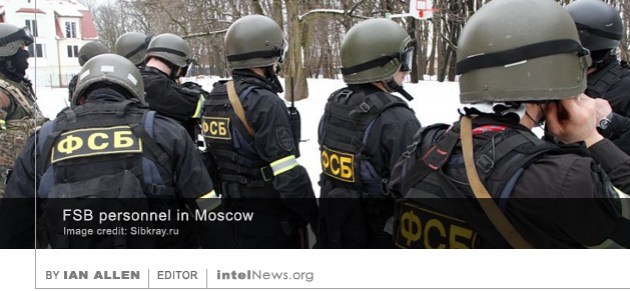
FSB - IAThe Russian government says that an American diplomat, who was allegedly beaten up by a Russian security guard outside the United States embassy compound in Moscow, is an undercover spy. The man, who has not been named, was stationed in the Russian capital by the State Department as an accredited diplomat with immunity from prosecution in Russia. However, The Washington Post reported earlier this week that the American diplomat was severely beaten by a Russian government employee while attempting to enter the US embassy compound.

The alleged incident is reported to have taken place in the early hours of Monday, June 6. The American diplomat was making his way to the front entrance of the US embassy complex, which is located in the Presnensky District in downtown Moscow. According to American sources, the diplomat was approached by an employee of the Russian Federal Security Service, the FSB, which regularly stations security personnel around the sizeable US embassy complex. The FSB claims that the guards are there to protect US diplomats, though it is common knowledge that the Russian agency, which is responsible for counterespionage, is primarily there to monitor activities in and around the US embassy. American sources claim that the diplomat presented the Russian guard with proof of identification when asked to do so. But he was then physically attacked and struck repeatedly by the FSB officer, which left him with several injuries, including a broken shoulder. According to The Washington Post, the diplomat managed to enter the embassy grounds and had to be flown out of the country for urgent medical treatment. He has not returned to Russia.

The US government believes the attack was intentional. But what caused it? One theory entertained by The Washington Post is that the diplomat was in fact an officer of the Central Intelligence Agency working in Moscow under official cover, pretending to be a State Department employee. According to this theory, the FSB was chasing the American diplomat through the streets of Moscow after a spy operation that went awry. The Russians then tried unsuccessfully to prevent him from entering the US embassy, which constitutes American soil.

On Thursday, Russian Foreign Ministry spokeswoman Maria Zakharova alleged that the diplomat in question was an intelligence officer. “It is well known”, said Zakharova, “that this very diplomat was in fact an agent of the CIA and was returning [to the US embassy], in disguise, after conducting an intelligence operation the previous night”. She also said that the Russian government employee involved in the altercation was a “police officer” who was attacked by the alleged spy when he asked to be shown proof of identification. Instead of supplying identification documents, the American diplomat “struck the guard in the face with his elbow before disappearing into the embassy”, said Zakharova. The US State Department and the CIA refused to comment on Zakharova’s allegations.

Author: Ian Allen | Date: 01 July 2016 | Permalink

German cabinet approves spy service reform in wake of NSA controversy

BND - IAThe senior executive body of the German government has approved draft legislation that reforms the country’s intelligence services, following revelations that Germany helped the United States spy on European states. The legislation is seen as a response by the German government to a number of recent public controversies involving the Bundesnachrichtendienst, Germany’s Federal Intelligence Service, known as BND.
In 2015, the BND was found to have secretly collaborated with the US National Security Agency (NSA) in spying on several European governments and private companies. According to German investigative magazine Der Spiegel, the BND used its facilities at Germany’s Bad Aibling listening station to help the NSA spy on, among other targets, the palace of the French president in Paris, the headquarters of the European Commission in Brussels, and the France-based European conglomerate Airbus. In response to the revelations, Airbus filed a criminal complaint against the German government, while Belgium and Switzerland launched official investigations into the joint BND-NSA activities.

The extent of the BND-NSA collaboration prompted widespread public criticism in Germany. In response to the criticism, German Chancellor Angela Merkel promptly fired the director of the BND in April of this year, in a move that surprised many. Gerhard Schindler, who had headed the BND since 2012, was replaced by Bruno Kahl, a senior official in the German Federal Ministry of Finance, who did not come from within the ranks of the BND. Additionally, the German chancellor authorized a parliamentary inquiry into the operations of the BND, which was completed last spring. The resulting 300-page report forms the basis of the draft legislation that was approved on Tuesday by the German cabinet.

The new legislation bans the BND from spying on foreign governments or corporations for the benefit of German companies. It also prevents it from spying on targets within the European Union, unless the operation pertains to “information to recognize and confront threats to internal or external security”. This is taken to mean operations relating to suspected terrorist activity that directly threatens German national security. The legislation also calls for the establishment of a new independent oversight body consisting of senior judges and representatives of the Office of the Federal Prosecutor, whose job will be to evaluate and approve the BND’s proposed espionage activities against foreign targets.

The legislation will need to be finalized through its approval by the German Federal Parliament, known as the Bundestag. The body is expected to approve the legislation before the beginning of its official summer break in mid-July.

Author: Ian Allen | Date: 29 June 2016 | Permalink

Harassment of diplomats is part of escalating US-Russian ‘gray war’

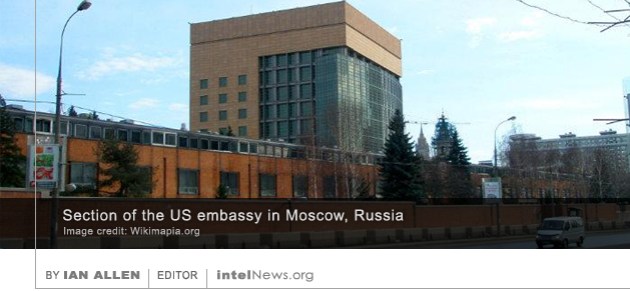
US embassy in RussiaA notable increase in incidents of harassment of American diplomats stationed in Europe by Russian intelligence personnel appears to be part of what some officials describe as an escalating “gray war” between the US and Russia. For over a year now, American State Department personnel stationed in Europe have been complaining of a systematic campaign of “harassment and intimidation” against them and their families by Russian intelligence operatives. The campaign is allegedly being waged in Moscow and other European capitals, and has prompted one US diplomat to say that he and his colleagues were “feeling embattled out there in the embassy”. The Washington Post, which published the story on Monday, said that the diplomats’ concerns about the Russian campaign of intimidation were raised again at a recent meeting in Washington of US ambassadors serving in Europe and Russia.
According to The Post, some of the harassment can be characterized as routine, and involves Russian intelligence personnel conducting surveillance of American diplomats, taunting them at social events, or bribing local journalists to report negatively on their activities. But these pranks have allegedly become uglier and even criminal after 2014. The Post said that it had read “a series of secret memos” sent to the State Department by US embassies and consulates in Russia and Europe, which suggest that the increasing harassment of American diplomats is connected to the sanctions imposed by the US on Russia after its military intervention in Ukraine. In some instances, Russian intelligence operatives broke into the homes of American diplomats at night and rearranged the furniture, or turned on all the lights and electronic equipment before leaving. In another case, a US diplomat’s children were followed to school, while another’s car tires were slashed repeatedly, said the paper.

The State Department’s press secretary John Kirby told The Post that incidents of overt harassment of US diplomatic personnel by Russian government employees had indeed increased. Norm Eisen, America’s former ambassador to the Czech Republic, told the paper that the intimidation was part of “the gray war” between Washington and Moscow, which has escalated following Russia’s intervention in the Ukraine.

A statement from the Russian embassy in Washington denied that the Russian government was behind the alleged incidents. But it went on to state: “In diplomatic practice there is always the principle of reciprocity and, indeed, for the last couple of years our diplomatic staff in the United States has been facing certain problems”. This statement can be seen to imply that Russia is responding to instances of intimidation of its diplomats by US authorities. The statement added: “The deterioration of U.S.-Russia relations […] was not caused by us, but rather by the current [US] administration’s policy of sanctions and attempts to isolate Russia”. The Post said that US Secretary of State John Kerry raised the issued directly with Russian President Vladimir Putin during his visit to Moscow in March, but that the harassment has continued. US President Barack Obama is apparently aware of the situation, but has ordered US intelligence agencies “not to respond with similar measures against Russian diplomats”, said the paper.

Author: Ian Allen | Date: 26 1 June 2016 | Permalink

US, UK, had secret plan to bomb Middle East oil facilities if Soviets invaded

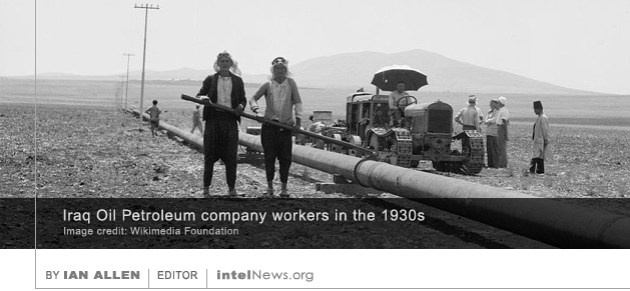
Iraq Oil Petroleum CompanyRecently uncovered documents shed further light on an ultra-secret plan, devised by the British and American governments, to destroy oil facilities in the Middle East in the event the region was invaded by Soviet troops. The documents, published on Thursday by George Washington University’s National Security Archive, were found in the British government archives and date from 1951 to 1955. They describe a top-secret United States plan known as NSC 26/2, which was approved by the National Security Council in 1949 and authorized by President Harry Truman. The plan aimed to prevent the use of Middle East oil facilities by Soviet troops if the latter were able to successfully invade the region.

American documents from the 1950s describe NSC 26/2 as a “denial policy”, which called for a secret collaboration between Middle East-based American and British oil companies. The goal was to sabotage or completely destroy oil facilities and equipment that were in British and American hands, before the Soviets could take them over. The most sensitive part of the plan was the need to keep it secret from the governments of Middle Eastern countries like Iran, Iraq, and Saudi Arabia, even though most of them were allies of the West at the time.

The existence of NSC 26/2 was first revealed in 1996, when the American newspaper Kansas City Star published an extensive article about it, written by Steve Everly. But the recently unearthed British documents shed more light than ever before on the intelligence aspects of the secret plan. Specifically, they reveal the leading role played by the Central Intelligence Agency in implementing the details of the plan in nearly every Middle Eastern country, including Kuwait, Bahrain, Qatar, Iran, Iraq, and Saudi Arabia. As part of the plan, the CIA systematically inserted what the National Security Archive describes as “undercover operatives” into posts in American and British oil companies. Their mission was to collect inside information and recruit other oil employees to facilitate the requirements of NSC 26/2. In essence, says the National Security Archive, the CIA created “a paramilitary force ready to execute the denial policy”.

Some of the documents also show that American and British leaders discussed the possibility of bombing —in some cases using nuclear weapons— some oil facilities in countries like Iraq and Iran that were state-owned and thus had no Western connections. In 1953, NSC 26/2 was updated and replaced with NSC 176, which was later renamed NSC 5401. The plan continued to call for the destruction of oil facilities in the Middle East, using “direct action”, if they were close to being seized by Soviet troops.

Author: Ian Allen | Date: 24 June 2016 | Permalink

American spy for Israel released after 30-year sentence ‘still a threat to US’

Pollard - aSenior United States intelligence officials have filed parole documents arguing that an American Navy analyst, who was recently released from prison after serving a 30-year sentence for spying for Israel, continues to pose a threat to national security. Jonathan Jay Pollard is a former intelligence analyst for the United States Navy, who has was jailed in 1985 for selling American government secrets to Israel. During his trial, the US government successfully argued that Pollard was one of the most damaging spies in American history, having stolen a high volume of classified documents in a relatively short period of time.

But Pollard was recently released from prison, having served his full 30-year sentence. However, as part of the conditions of his release, Pollard must consent to the US government having constant access to the hard drive of his personal computer and internet browsing history. He is also obligated to wear a GPS device at all times, which tracks his daily movements in New York, where Pollard has been living since his release from prison. Some intelligence observers, including Newsweek correspondent Jeff Stein, have voiced concerns that Pollard may be tempted to travel abroad in order to collect funds that his Israeli spy handlers may have deposited for him in offshore bank accounts as payment for his past acts of espionage.

Now Pollard’s lawyers have filed a legal brief arguing that his parole conditions are unnecessary and excessive, and that the US government should ease them considerably. However, documents filed late last week with the US Parole Commission by senior intelligence officers acting on behalf of the US Intelligence Community, make the case that Pollard’s parole conditions should continue unchanged. In a report published on Tuesday, the Daily Beast’s Shane Harris says the intelligence officers argue “forcefully” in the documents that Pollard “still poses a risk to national security”. One of the documents (.pdf), filed by Jennifer Hudson, Director of the Information Management Division at the Office of the Director of National Intelligence, uses particularly stark language in support of maintaining Pollard’s parole conditions. Hudson argues that “some of the sources and methods used to develop some of the intelligence exposed by Mr. Pollard not only remain classified but are still in use by the Intelligence Community today”.

Harris quotes an unnamed “former senior US intelligence official familiar with Pollard’s case”, who argues that the spy may have known which “up-and-coming” Israeli or other Middle Eastern leaders US intelligence had recruited or was trying to recruit as agents in the early 1980s. These individuals may today be in positions of prominence, and Pollard may be able to harm them. In her declaration filed with the Parole Commission, the ODNI’s Hudson argues that Pollard could also compromise information gathered from US agents in Israel and elsewhere, which could potentially reveal their identities. “Even in cases where [these agents are] no longer alive, such disclosure can place in jeopardy the lives of individuals with whom the source had contact”, she writes.

There is, of course, another reason too, says Harris, for the resistance put up by the US Intelligence Community against easing Pollard’s restrictions: “US spies don’t easily forgive, and they don’t forget”, he says. Pollard’s former colleagues are still angry about his monumental betrayal. The Daily Beast says it contacted one of Pollard’s lawyers for a comment, but there was no response.

Author: Ian Allen | Date: 22 June 2016 | Permalink

Former CIA, NSA directors, retired generals, launch gun control group

HaydenFormer directors of the Central Intelligence Agency, the National Security Agency, as well as several 3- and 4-star generals and admirals have launched a new effort to control the sales of guns in the United States. The effort is certain to attract attention after last weekend’s deadly mass shooting in Orlando, Florida. The group, which calls itself Veterans Coalition for Common Sense, is led by former CIA Director David Petraeus, former CIA and NSA Director Michael Hayden, and US Army General (ret.) Stanely McChrystal. The group’s advisory committee includes recognizable figures such as that of Admiral Eric Olson, who led US Special Operations Command from 2007 to 2011 and was the first US Navy SEAL to be appointed to four-star rank. Other advisory committee members include high-ranking veterans from every branch of the US Armed Forces, such as R. Adm. Jamie Barnett, Brig. Gen. Stephen Cheney and Air Force commander Lt. Gen. Norman Seip.
The group was formally launched at a press conference in Washington, DC, on Friday, just hours before Sunday morning’s mass shooting in Orlando. The organizers of the new effort said it came out of the 120,000-member strong Veterans for Responsible Solutions, a project spearheaded by USN R. Adm. Barnett in 2013, after the mass shooting at the Washington Navy Yard, which killed 15 people. Another group that has offered support for the new effort, and will act as its parent organization, is Americans for Responsible Solutions, a non-profit organization that promotes gun control in compliance with the US Constitution. It was founded shortly after the 2012 shooting at the Sandy Hook Elementary School in Newtwon, CT, which killed 28. The organization’s founders are former NASA astronaut Mark Kelly and his wife, Gabrielle Giffords, whose Congressional career was cut short in January 2011, after she and 18 other people were shot in Tucson, AZ.

During their press conference on Friday, Veterans Coalition for Common Sense leaders said each had “swore an oath to protect our Constitution and the homeland”. But they were now “asking our leaders to do more to protect our rights and save lives”, they added. The group said they aimed to encourage their elected representatives to “do more to prevent gun tragedies”, including closing legal loops on gun background checks, strengthening gun control laws more broadly, and focusing on the mental health component that appears to be part of many mass shootings. In a separate development, another former Director of the CIA, John McLaughlin, said on Monday that “an assault weapons ban makes sense, at least to me”. In an interview with news site OZY, McLaughlin said that, in his personal view, “it is way past time for an assault weapons ban”.

Author: Ian Allen | Date: 14 June 2016 | Permalink

Revealed: Iran’s Khomeini had secret dealings with US in 1979

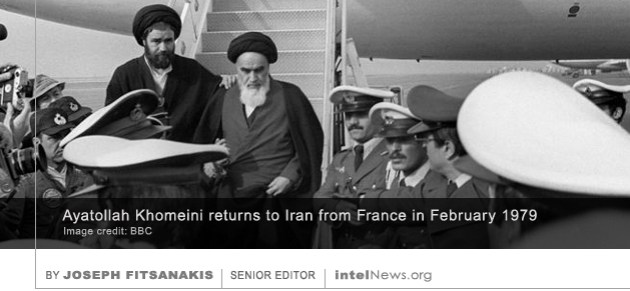
KhomeiniNewly declassified files show that Ayatollah Khomeini, who led Iran after the 1979 Islamic Revolution, had a secret channel of communication with the United States, and even sent a personal letter to US President Jimmy Carter. On January 16, 1979, after nearly a year of street clashes and protests against his leadership, the king of Iran, Mohammad Reza Shah Pahlavi, fled the country for the US. His decision to leave was strongly influenced by his American advisors, who feared that Iran was heading toward a catastrophic civil war. The Shah’s departure did little to calm tensions in the country. Protesters —many of them armed— engaged in daily street battles with members of the police and the military, who remained loyal to Pahlavi. Meanwhile, a national strike had brought the Iranian oil sector to a standstill, thereby threatening to bring about a global energy crisis. Moreover, the country was home to thousands of American military advisors and the Iranian military was almost exclusively funded and supplied by Washington. The Carter administration worried that the weaponry and technical knowledge might fall into the hands of a new, pro-Soviet government in Tehran.
It was in that tense and highly unpredictable context that the White House opened a secret channel of communication with Ayatollah Khomeini. Newly declassified US government documents show that these secret contacts began on January 15, 1979, just days before Khomeini returned to Iran from France, where he had been living in exile. The files have been accessed by the BBC’s Persian service, and allegedly contain “diplomatic cables, policy memos, meeting records” and other documents. They show that the first meeting between US government officials and Khomeini’s team took place in Neauphle-le-Château, a small village located a few miles west of Paris. It was led by Warren Zimmermann, a political secretary at the US embassy in Paris, and Ebrahim Yazdi, an Iranian-American physician who was Khomeini’s chief of staff in France. Through these secret meetings, Washington signaled to Khomeini on January 18 that American advisors in Tehran would not oppose a discussion about changing the Iranian constitution in order to abolish the monarchy and turn the country into a republic.

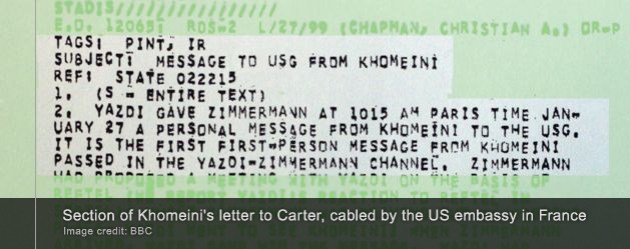
Khomeini letterNine days later, on January 27, Dr. Yazdi gave Zimmerman a letter written by Khomeini and addressed to President Carter. The letter, which addressed Carter in the first person, was cabled to the Department of State from the US embassy in Paris and, according to the BBC, reached the US president. In the letter, Khomeini promises to protect “America’s interests and citizens in Iran” if Washington pressured the Iranian military to stand aside and allow him and his advisers to return to Iran. Khomeini’s fear was that the royalist Iranian military would not allow a new government to take hold in Tehran. But the exiled cleric was aware of America’s influence in Iranian military circles, which at the time were effectively under the command of General Robert Huyser, Deputy Commander of US Forces in Europe, who had been dispatched to Tehran by President Carter. Before answering Khomeini’s letter, the White House sent a draft response to the embassy in Tehran for input and advice. But Khomeini did not wait for Washington’s response. On February 1, he returned to Iran, where he was greeted by millions of people in the streets and welcomed as the next leader of the country. Meanwhile, Washington had already instructed General Huyser to rule out the so-called “option C”, namely a military coup carried out by the Iranian armed forces.
The documents unearthed by the BBC show that, despite their apparent recalcitrance, the US government and Ayatollah Khomeini were far more engaged with each other than has generally been assumed. The revelations would appear to especially affect the official narrative of the Islamic Republic, which claims that Khomeini managed to take command of the Islamic Revolution despite frantic attempts by Washington to stop him. Perhaps not surprisingly, Tehran has dismissed the BBC’s revelations, calling the documents “fake” and denouncing what it described as “hostility from the British”. The Department of State has refused comment on the BBC’s revelations.

Author: Joseph Fitsanakis | Date: 06 June 2016 | Permalink

Late Taliban leader’s regular trips to Iran helped US spies track him down

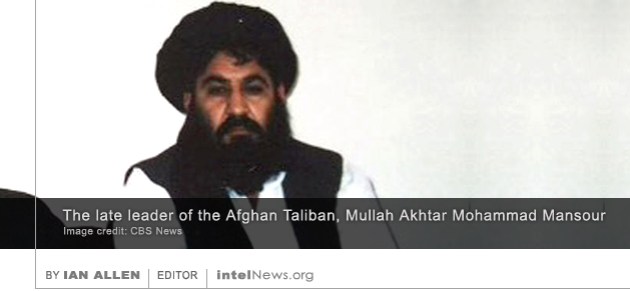
Mullah Akhtar Mohammad MansourFrequent trips to Iran caused the demise of the late leader of the Afghan Taliban, Mullah Akhtar Mohammad Mansour, who was killed in a secret American operation on May 21. The death of Mansour, who had led the Afghan Taliban since July 2015, when he succeeded Mullah Mohammad Omar, was announced by the Taliban on May 26. Early reports stated that Mansour was killed while traveling to the Pakistani city of Quetta from Iran. He is believed to have been visiting family or seeking medical treatment in Iran, which he appears to have entered using a forged passport.
According to The Wall Street Journal, the United States found out in February that Mansour made regular trips to Iran, as well as the precise route that the Taliban leader took to enter the country. American intelligence agencies also received “details about the devices [Mansour] used for communications” while in Iran. They then intercepted communications from Iran that matched Mansour’s electronic signature and followed these signals across the border into Pakistan. The Taliban leader entered Pakistan’s Baluchistan province on Saturday, May 21. Once in Pakistan, Mansour entered a Toyota Corolla, believed to be a taxi, and made his way through the N-40 National Highway, heading to Quetta.

The Journal report states that the Taliban were aware that Baluchistan’s airspace is outside the Central Intelligence Agency drones’ operational area, and thus “felt more comfortable there”. Indeed, the paper claims that no CIA drones were actively targeting Mansour at the time. However, US President Barack Obama had given ordered the Joint Special Operations Command to have the Taliban leader killed. Reaper drones were deployed to launch two Hellfire missiles at Mansour’s car, which was totaled, killing the Taliban commander and his driver. According to the Journal, the White House had decided to ambush Mansour before he entered the city of Quetta, in order to prevent civilian casualties. After firing at it, the American drones hovered over the remains of Mansour’s vehicle to ensure that there were no survivors, before exiting Pakistani airspace.

Author: Ian Allen | Date: 30 May 2016 | Permalink

Russian deep-cover spy sentenced in New York court

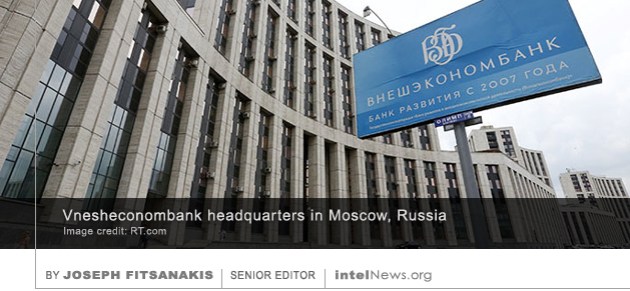
VnesheconombankA Russian intelligence officer, who posed as a banker in the United States, has been handed a prison sentence by a court in New York. Evgeny Buryakov, 41, posed as an employee of the New York branch of Vnesheconombank, a Russian state-owned bank headquartered in Moscow. However, in January 2015, the Federal Bureau of Investigation arrested Buryakov along with Igor Sporyshev, 40, and Victor Podobnyy, 27, who were employees of the trade office of the Russian permanent mission to the United Nations in New York. According to their indictment, Sporyshev and Podobnyy were in fact employees of the SVR, Russia’s Foreign Intelligence Service, one of the direct institutional descendants of the Soviet-era KGB. The FBI said the two were employed by the SVR’s ‘ER’ Directorate, which focuses on economics and finance. Operating under diplomatic guise, they regularly met with Buryakov, who the FBI said was the third member of the alleged spy ring.

However, unlike Sporyshev and Podobnyy, Buryakov was operating under non-official cover, posing as a bank employee. Non-official-cover operatives, or NOCs, as they are typically referred to in the US Intelligence Community, are usually high-level principal agents or officers of an intelligence agency, who operate without official connection to the diplomatic authorities of the country that employs them. They typically pose as business executives, students, academics, journalists, or non-profit agency workers, among other covers. Unlike official-cover officers, who are protected by diplomatic immunity, NOCs have no such protection. If arrested by authorities of their host country, they can be tried and convicted for conducting espionage.

The court documents also reveal that Sporyshev and Podobnyy broke basic rules of intelligence tradecraft by contacting Buryakov using an unencrypted telephone line and addressing him by his real name, rather than his cover name. These conversations, which occurred in April 2013, turned out to be monitored by the FBI’s counterintelligence division, which promptly recorded them. The three SVR officers were arrested following a successful FBI sting operation, which involved an undercover FBI agent posing as an American investor offering to provide Buryakov with classified documents from the US Treasury. In March of this year, Buryakov pleaded guilty to working in the US as unregistered agent of Russia’s SVR. He has been sentenced to 2 ½ years in prison and ordered to pay a $10,000. Sporyshev and Podobnyy, who held diplomatic immunity, were expelled from the US following their arrest.

Author: Joseph Fitsanakis | Date: 27 May 2016 | Permalink

Analysis: Mullah Mansour’s killing will shape future of Afghan War

Mullah MansourThe American operation that killed the leader of the Afghan Taliban, Mullah Akhtar Mohammad Mansoor, on May 21, was unprecedented in more ways than one. It marked the first known effort by the United States to neutralize the leadership of the Afghan Taliban. It was also the first US drone strike in Pakistani Baluchistan, a region that is far removed from the Federally Administered Tribal Areas, where American operations have traditionally focused. Mullah Mansour’s killing also marked the most high-profile American incursion into Pakistani territory since the May 1, 2011 attack that killed al-Qaeda co-founder Osama bin Laden. Q QuoteIronically, just hours before killing Mansour, Washington was calling the Taliban to join the negotiation table for peace talks with the Afghan government. So what exactly was America’s intention in killing the leader of the Afghan Taliban?

PROSPECTS FOR A MODERATE SUCCESSOR

There is no question that Mansour represented the most intransigent and militant segment of Afghanistan’s militant Pashtuns. He consistently dismissed efforts by Washington and Kabul to strike a deal with his forces as a ploy designed to weaken the Taliban’s role in Afghan politics. So the primary outcome that the US is seeking from his death is the possibility that a more moderate figure will emerge from within the ranks of the Taliban. That, however, is far from guaranteed. Even if it does happen, it will probably come after a period of leadership struggle between different factions and tribes within the Taliban, much like the heated infighting that broke out after the announcement of the death of the Taliban’s founding leader, Mullah Mohammad Omar. There are even some who believe that the death of two successive Taliban leaders in such a short period may split the group into three or more factions.

To avoid such a prospect, the Afghan Taliban have already begun internal consultations in order to quickly enthrone a new emir. Major candidates include the late Mullah Omar’s son, Mullah Yakoub, and his brother, Mullah Abdul Manan Akhund. The list of contenders also features the late Mullah Mansour’s deputies, including Sirajuddin Haqqani, head of the Haqqani Network, which recently consolidated its forces with those of the Afghan Taliban. Many observers believe that Haqqani is Mansour’s most likely successor, as well as the most militant of all contenders for the group’s leadership.

THE END OF PEACE NEGOTIATIONS?

If the Afghan Taliban are led by Haqqani, a man described by the White House as a terrorist mastermind, the chances of seeing Afghanistan’s militant Pashtuns join peace negotiations with Kabul are slim to none. The country’s President, Ashraf Ghani, said last week that he hoped that the death of Mansour would weaken the Taliban hardliners and open the path to negotiations with his government. It is difficult to see, however, how the Taliban could sit at the table with the Afghan government and its American allies, namely the same people who just Q Quotekilled the group’s leader.

They only way that could possibly happen is if Pakistan, which is the Afghan Taliban’s state patron, compels them to do so. But such a prospect is unlikely. In the hours after Mansour’s assassination, the US Secretary of State John Kerry described it as an “action that sends a clear message to the world that we will continue to work with our Afghan partners”. Indeed, Mansour’s killing was a source of jubilation in Kabul. But there were no celebrations in Islamabad, which was notified about the US drone strike on its soil after its completion. The Pakistani position has always been that military action against the Afghan Taliban will only push them further underground. Instead, Pakistan argues that the Taliban should be brought to the table to sign a comprehensive peace treaty that will ensure ethnic rights for Afghanistan’s Pashtun population. But the prospect of that happening after Mansour’s assassination are slim, even if a more moderate figure succeeds him at the helm.

THE FUTURE OF THE AFGHAN WAR

What are, then, the prospects for peace in Afghanistan? A notable rise in violence should be expected, as various Taliban factions lash out against the government in Kabul with the aim of augmenting their standing against internal competitors. The Taliban now control more territory in Afghanistan than at any other point following the 2001 US invasion. If their alliance with the Haqqani Network survives, they will continue to be a formidable force in the country and the surrounding region, and will become increasingly difficult to defeat militarily. The group will continue to operate with considerable force even if Mansour’s position is not filled soon, as local Taliban forces have shown that they are capable of taking unilateral initiative in times like this. In the meantime, observers in Kabul and Islamabad, as well as the Afghan Taliban’s leadership in Quetta, will be wondering whether the assassination of Mansour marks the beginning of a more aggressive approach by Washington in the ongoing Afghan war. The answer to that question remains elusive, but will likely shape the future of the 40-year-old Afghan war.

Author: Joseph Fitsanakis | Date: 24 May 2016 | Permalink

Chile will ask US to extradite three men wanted in killing of UN diplomat

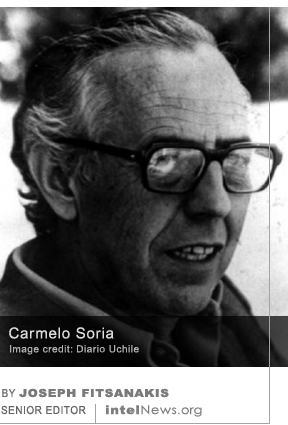
Carmelo SoriaThe Supreme Court of Chile will request that the United States extradites three individuals, including an American former professional assassin, who are implicated in the kidnapping, torture and murder of a United Nations diplomat. Carmelo Soria was a Spanish diplomat with dual Chilean nationality, who in the early 1970s was employed in the United Nations Economic Commission for Latin America and the Caribbean. In 1971, when the leftist Popular Unity party won Chile’s elections and became the nation’s governing coalition, Soria became an advisor to the country’s Marxist President, Salvador Allende. After the 1973 violent military coup, which killed Allende and overthrew his government, Soria used his diplomatic status to extend political asylum to a number of pro-Allende activists who were being hunted down by the new rightwing government of General August Pinochet.
Soria’s activities made him a target of the Dirección de Inteligencia Nacional (DINA), Chile’s domestic security service, which was a leading implementer of Operation CONDOR, a widespread anti-communist program that began in 1968 with the participation of most Latin American governments. CONDOR, which ended in 1989, included psychological operations, kidnappings and assassinations that targeted leftwing organizations and activists. On July 14, 1976, Soria, who had by then resumed his previous UN post, was kidnapped by agents of the DINA. He was tortured and murdered under detention. His body was found on July 16 inside a car that had been dumped in a river in Santiago de Chile. The Pinochet government refused to investigate the incident, saying that Soria had been driving under the influence of alcohol.

Last Tuesday, however, after an investigation that dates back to 1991, the Supreme Court of Chile said that an extradition request will be sent to the United States for three individuals who were allegedly directly implicated in the murder of Soria. They are: Michael Townley, a US citizen; Armando Fernandez Larios, of Chile; and Cuban Virgilio Pablo Paz Romero, all of whom were agents of DINA at the time of Soria’s murder. Townley is a former professional assassin who was hired by DINA for a series of murders. In 1978, a US court convicted him for his participation in the assassination of Orlando Letelier, former Chilean ambassador to the US, who was killed in 1976, when his car exploded in Washington, DC. Since his release from prison, Townley has been living in the US under the Witness Protection Program.

Larios, a Chilean national, was also convicted of being “an accessory after the fact” in the Letelier assassination and is also living in the US, having struck a plea bargain with Washington. The third individual, Paz Romero, was sentenced to 12 years in prison in 1991, after admitting that he personally detonated the remote-controlled car bomb that killed Leteler. He was paroled after serving half of his sentence and was ordered to be deported to his home country of Cuba. However, due to the absence of a bilateral deportation agreement between Washington and Havana, Romero remained in the indefinite custody of the US Immigration and Naturalization Service. In 2001, the US Supreme Court ruled that indefinite detentions were unconstitutional, so Romero was released and has been living freely in the US since that time.

Author: Joseph Fitsanakis | Date: 23 May 2016 | Permalink | News tip: R.W.

CIA tip led to Mandela’s fateful 1962 arrest, claims US ex-diplomat

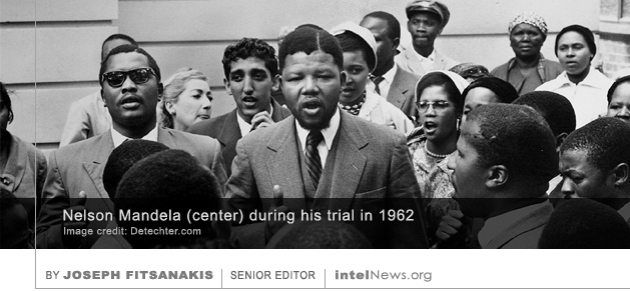
MandelaThe arrest of Nelson Mandela in 1962, which led to his 28-year incarceration, came after a tip from the United States Central Intelligence Agency, according to an American diplomat who was in South Africa at the time. At the time of his arrest, Mandela was the head of uMkhonto we Sizwe (MK), an organization he founded in 1961 to operate as the armed wing of the anti-apartheid African National Congress (ANC). But the white minority government of South Africa accused Mandela of being a terrorist and an agent of the Soviet Union. The US-Soviet rivalry of that era meant that the ANC and its leader had few supporters in America during the early stages of the Cold War.
Mandela was arrested on August 5, 1962 in the KwaZulu-Natal town of Howick by members of the South African Police. He was pretending to be the chauffeur of Cecil Williams, a white member of the ANC who was riding in the back seat of the car that Mandela was driving that night. The details of what led to Mandela’s arrest have always been mysterious, and the ANC has long suspected that the MK leader was betrayed by informants placed within the organization by the apartheid government. But an article in the London-based Sunday Times has said that it was the CIA that tipped off the South Africans about Mandela’s whereabouts that night. The claim is based on an interview with Donald Rickard, an American diplomat —now dead— who was serving as Washington’s vice-consul in Durban at the time of Mandela’s arrest. Some believe that Rickard was actually a CIA officer posing as a diplomat until his retirement from the service in 1978, and he himself never denied it.

Two weeks before he died, Rickard gave an interview to British filmmaker John Irvin, who was filming for his latest documentary, entitled Mandela’s Gun, about Mandela’s role in the MK. According to The Times, the former US diplomat told Irvin that in the early 1960s Mandela was “the most dangerous communist anywhere outside the USSR”. This is despite Mandela’s repeated denials that he had ever been a member or sympathizer of the South African Communist Party, which at the time was actively supporting the ANC. Rickard allegedly told Irvin: “I found out when [Mandela] was coming down and how he was coming […]. That’s where I was involved and that’s’ where Mandela was caught”. In his interview, Rickard insisted that Mandela was “completely under the control of the Soviet Union [and effectively] a toy for the communists”. Moreover, he said the CIA believed that he was planning to organize the large Indian population of Natal Province and incite them into an uprising led by communists, which, according to Rickard, could have prompted an armed Soviet invasion of South Africa. The former diplomat is quoted as telling Irvin: “We were teetering on the brink here and it had to be stopped, which meant Mandela had to be stopped. And I put a stop to it”.

Following his arrest, Mandela served nearly 30 years in prison on terrorism charges, until his eventual release in 1990. In 1994, he was elected as South Africa’s first black president, a post he held until his retirement in 1999. The US, which officially designated Mandela a terrorist in the 1980s under the administration of US President Ronald Reagan, kept the ANC leader on its terrorism watch list until 2008.

The US government has refused comment on Rickard’s claims.

Author: Joseph Fitsanakis | Date: 16 May 2016 | Permalink

British, Irish citizens who fought the Islamic State are released from prison

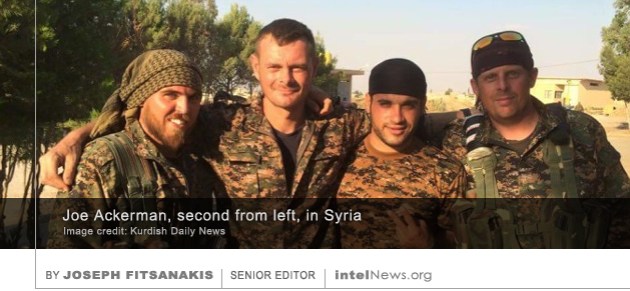
Joe AckermanTwo British and one Irish citizen, who fought with Kurdish units against the Islamic State in Iraq and Syria, but were imprisoned in Iraqi Kurdistan while they were trying to return to Europe, have been freed. The three men are Joshua Molloy, from County Laois in the Republic of Ireland, Jac Holmes from Bournemouth, England, and Joe Ackerman (pictured), from the West Yorkshire city of Halifax in England’s northern region. All three joined Kurdish militias and saw action in Syria and Iraq in recent months.
Holmes, a former information technology manager, had no military experience when, in early 2015, aged 22, he entered Syria, aiming to join Kurdish forces. He soon enlisted in the Kurdish People’s Protection Unit (YPG), a Kurdish group that serves as the armed wing of the Kurdistan Workers’ Party (PKK) in northern Syria. The Englishman from Bournemouth participated in several battles, but returned to the United Kingdom in June 2015, in order to recover from a bullet wound to the shoulder, which he suffered while in the battlefield. As soon as he was cured, he returned to Syria and rejoined the YPG. His compatriot, Joe Ackerman, is a former member of the British armed forces who traveled to Kurdistan last year and joined the YPG after entering Syria illegally. He too was eventually injured when his patrol was struck by a roadside bomb. The third man, Irishman Joshua Molloy, is also a former soldier, having served in the British Royal Irish Regiment, an infantry regiment of the British Army.

Many Western governments, including the British and Irish governments, maintain that their citizens who fight in the Syrian civil war may be prosecuted under counterterrorism legislation, even if they have fought against the Islamic State. But that has not stopped hundreds of Westerners from traveling to Syria and Iraq to join mostly Kurdish, Assyrian and other forces. Last December, intelNews reported on a study that identified over 108 American citizens who had enlisted in the various militias and armed groups fighting against the Islamic State. Nearly half of them had joined the YPG in Syria, while others had enlisted in the peshmerga forces of the Patriotic Union of Kurdistan (PUK) in Iraq, as well as in an assortment of Christian militias, including the Nineveh Plains Protection Units and the Dwekh Nawsha.

According to reports, Holmes, Ackerman and Molloy were on their way back to Europe and trying to cross from Syria into northern Iraq, when they were captured by Iraqi Kurdish government forces. They were jailed for over a week in the Kurdish city of Irbil while their captors tried to verify that they were not Islamic State volunteers. They were released on Sunday. In a statement issued last weekend, the British Foreign Office said it was helping its two citizens return to England as soon as possible.

Author: Joseph Fitsanakis | Date: 25 April 2016 | Permalink

Were Pakistani spies behind 2009 attack that killed seven CIA employees?

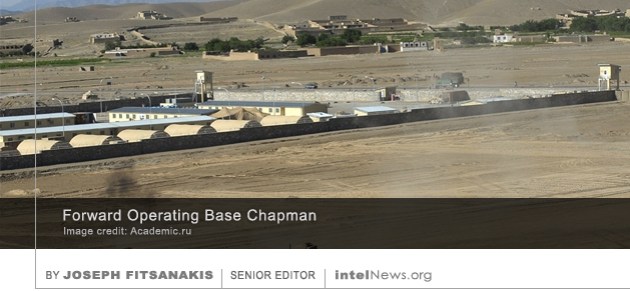
FOB ChapmanTwo recently declassified United States government documents suggest that Pakistani intelligence officers may have been behind a suicide attack that killed seven employees of the Central Intelligence Agency in Afghanistan. The attack took place at the Forward Operating Base Chapman, a US military outpost in Khost, Afghanistan. It was carried out by Humam al-Balawi, a Jordanian doctor who posed as a disillusioned member of al-Qaeda and had convinced his CIA handlers that he could lead them to the whereabouts of al-Qaeda’s deputy Emir, Ayman al-Zawahiri. During a scheduled visit to FOB Chapman on December 30, 2009, al-Balawi detonated a suicide vest, instantly killing himself and nine other people, including a Jordanian intelligence officer and seven CIA employees. The bloody incident, which marked the most lethal attack against the CIA in nearly three decades, was widely blamed on al-Qaeda and the Pakistani Taliban.

However, a set of newly released US State Department cables seem to suggest that Pakistani intelligence may have been behind the attack. The documents were released by George Washington University’s National Security Archive through a Freedom of Information Act request. One document, dated January 11, 2010, discusses the FOB Chapman attack in association with the Haqqani network, a Taliban-aligned Pashtun militant group that operates in Afghanistan but is headquartered in Pakistan. Western security observers have long considered the Haqqani network to be a paramilitary arm of Pakistan’s Inter-Services Intelligence (ISI) directorate. The January 11 State Department cable suggests that senior Haqqani network operatives met with their ISI handlers at least twice in the weeks prior to the FOB Chapman attack. Another cable, dated February 6, 2010, suggests that the ISI gave the Haqqani operatives $200,000 to step up attacks against Western forces in Afghanistan. A specific order was given at the meeting to carry out “the attack on Chapman [and] to enable a suicide mission by an unnamed Jordanian national”, presumably al-Balawi.

But an unnamed US intelligence official, who read the declassified documents, told the Associated Press news agency that the documents were “information report[s], not finally evaluated intelligence”. The material was thus “raw, unverified and uncorroborated”, said the official, and clashed with the broad consensus in the US Intelligence Community, which was that the attack was planned by al-Qaeda, not by the Haqqani network. The Associated Press contacted the Pakistani embassy in Washington, DC, about the National Security Archive revelations, but received no response.

Author: Joseph Fitsanakis | Date: 19 April 2016 | Permalink

Further arrests in Edward Lin spy case ‘possible’, says US official

Edward LinAn American official has told Newsweek magazine that the possibility of further arrests in the espionage case of United States Navy flight officer Edward Lin should not be ruled out. Last Sunday, the US Navy reported the arrest Lt. Cmdr. Lin, who faces two counts of espionage and three counts of attempted espionage, among other charges. Aside from a three-page, heavily redacted charge sheet released by the Navy, almost nothing is known about this case. However, as intelNews opined earlier this week, there are several clues that point to the seriousness of the charges against Lin, and their potential ramifications for US national security, which are likely to be extensive.

On Thursday, longtime intelligence and security correspondent Jeff Stein wrote in Newsweek magazine that Lin appeared to have “scores of friends in sensitive places” in the US and Taiwan. That is not surprising, given that Lin served as the Congressional Liaison for the Assistant Secretary of the Navy, Financial Management and Comptroller, between 2012 and 2014. A cursory survey of Lin’s LinkedIn page, said Stein, shows endorsements by a senior commander at the US Naval Air Station at Guantanamo, Cuba, as well as the US Pacific Fleet’s senior intelligence analyst on Southeast Asia. Other endorsers include Congressional liaison officers for the US Navy, a Taiwanese military attaché, and a former official in Taiwan’s Ministry of Defense.

It is believed that Lin was arrested over eight months ago, but Stein says the investigation, which is being conducted jointly by the Naval Criminal Investigative Service and the Federal Bureau of Investigation is still underway. He quotes an unnamed “US official who asked for anonymity in exchange for discussing some details of the case” as saying that, given Lin’s extensive contacts in the US intelligence establishment, the possibility of further arrests in the case should not be ruled out. Lin is currently being held in the Naval Consolidated Brig in Chesapeake, Virginia.

Author: Joseph Fitsanakis | Date: 15 April 2016 | Permalink