French-US spy cooperation continues despite WikiLeaks revelations

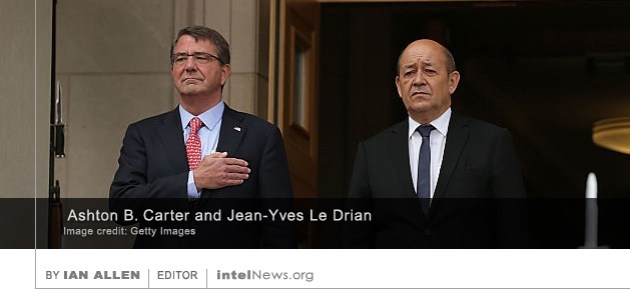
 Ashton B. Carter and  Jean-Yves Le DrianA fortnight ago, I gave an interview to Spanish newspaper La Razón, in which I argued that last month’s WikiLeaks revelations about American espionage against France would not cause any drastic disruption in the intelligence cooperation between the two countries. I added that “the two countries depend on each other to address a number of international issues that affect both, such the worrying situation in Syria and Iraq, the continuing crises in Ukraine and in Libya, as well as the financial meltdown in Greece. So there is a recognition that their intelligence agencies must continue to work together on several pressing issues”.

This was confirmed on Monday morning, as the American and French defense secretaries met in the US. French Minister of Defense Jean-Yves Le Drian paid his first visit to the Pentagon since Ashton B. Carter was appointed Secretary of Defense, in February of this year. After an extensive meeting behind closed doors, the two men told reporters gathered at the Pentagon that America’s security cooperation with France “has never been stronger”. Secretary Carter pointed to France’s leading military involvement in several African nations, including Mali, Chad, and Niger, and said that French forces deployed there could expect “more intelligence-sharing with the United States”. He added that actions had been taken during that morning’s meeting to “increase that [intelligence-sharing] yet further”.

The French Defense Minister agreed with his American counterpart and added that the “multiplication of international crises” were bringing the defense and intelligence establishments of France and the US closer. Both men pointed to examples of ongoing French-American security collaboration in Mali and Chad, where the Pentagon is providing French military forces with aerial cargo delivery and refueling facilities. They also mentioned the FS Charles de Gaulle, France’s flagship aircraft carrier, which has been deployed to the Arabian Gulf since March of this year. Secretary Carter told reporters that the Charles de Gaulle had “integrated seamlessly” with American forces in the region, and was helping the Pentagon launch airstrikes against Islamic State forces in Iraq.

The two men declined comment on last month’s claims by WikiLeaks that the US National Security Agency wiretapped three successive French presidents, including the country’s current head of state, Francois Hollande.

Author: Ian Allen | Date: 08 July 2015 | Permalink: https://intelnews.org/2015/07/08/01-1731/
Cold War files show secret war between CIA and KGB in Canada

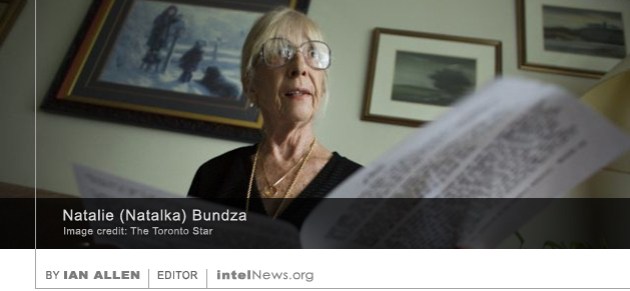
Natalie (Natalka) BundzaA set of declassified intelligence documents from the 1950s and 1960s offer a glimpse into the secret war fought in Canada between American and Soviet spy agencies at the height of the Cold War. The documents were authored by the United States Central Intelligence Agency and declassified following a Freedom of Information Act request filed on behalf of the Canadian newspaper The Toronto Star. According to the paper, they show that Toronto was a major hub of a prolonged espionage conflict fought between the CIA and the Soviet KGB.
Much of the espionage activity by the two spy agencies concentrated on Toronto’s sizable Eastern European expatriate community, especially on immigrants with Ukrainian and Polish roots. In one document dating from 1959, a CIA officer details the profiles of 18 Canadian citizens, most of them Toronto residents, who were suspected by Langley to be working for the KGB. Most of them were believed to be non-official-cover operatives, or NOCs, as they are known in the US Intelligence Community. The term typically refers to high-level principal agents or officers of an intelligence agency, who operate without official connection to the diplomatic authorities of the country that employs them. The declassified document explains that the suspected NOCs had secretly traveled to the USSR after being recruited by the KGB. They were then trained as spies before returning to Canada years later under new identities.

Others, like a naturalized Canadian identified in the documents as Ivan Kolaska, were believed by the CIA to have immigrated to Toronto as part of a broader KGB effort to infiltrate the ranks of the anti-communist Eastern European expatriate community in Canada. Some of these infiltrators were able to settle in Canada, marry locals, get jobs and have families, while living a double life. The Star spoke to one Ukrainian immigrant to Canada whose name features in the declassified CIA files. Natalie Bundza, now 78, worked as a travel agent in 1950s’ Toronto and regularly led tourist groups to communist countries. She was a Ukrainian nationalist and anticommunist, but the CIA believed she was pretending to have these beliefs in order to infiltrate the Ukrainian expatriate community in Toronto. The American agency kept tabs on her and was able to compile a sizable file with information about Bundza’s friends and associates, her travel itineraries, and even the contents of her suitcases she took with her on international trips.

Author: Ian Allen | Date: 3 July 2015 | Permalink: https://intelnews.org/2015/07/03/01-1728/

US spies voiced concerns about Fed database prior to massive hack

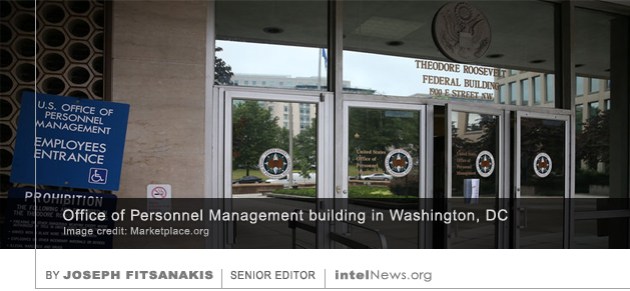
Office of Personnel ManagementUnited States intelligence officials expressed concerns about a federal database containing details of security-clearance applications in the years prior to a massive cyber hacking incident that led to the theft of millions of personnel records. Up to 18 21 million individual files were stolen last month, when hackers broke into the computer system of the US Office of Personnel Management (OPM), which handles applications for security clearances for all agencies of the federal government. The breach gave the unidentified hackers access to the names and sensitive personal records of millions of Americans who have filed applications for security clearances –including intelligence officers.
Until a few years ago, however, Scattered Castles, the database containing security clearance applications for the US Intelligence Community, was not connected to the OPM database. But in 2010, new legislation aiming to eliminate the growing backlog in processing security-clearance applications required that Scattered Castles be merged with the OPM database. The proposed move, which aimed to create a unified system for processing security clearances made sense in terms of eliminating bureaucratic overlap and reducing duplication within the federal apparatus. But, According to the Daily Beast, US intelligence officials expressed concerns about the merging of the databases as early as 2010. The website said that security experts from the Intelligence Community expressed “concerns related to privacy, security and data ownership” emerging from the impending merge. One official told the Daily Beast that there were fears that the “names, Social Security numbers, and personal information for covert operatives would be exposed to hackers”.

However, the merge went ahead anyway, and by 2014 parts of the Scattered Castles databases were gradually becoming accessible through the OPM network. The Daily Beast cited an unnamed US official as saying that there was “no connection between Scattered Castles and the OPM hack”. But when asked whether Scattered Castles was linked to the OPM system, he referred the website to the Federal Bureau of Investigation, which is probing last month’s hack attack.

Author: Joseph Fitsanakis | Date: 1 July 2015 | Permalink: https://intelnews.org/2015/07/01/01-1726/

New documents show US spied ‘on every major French company’

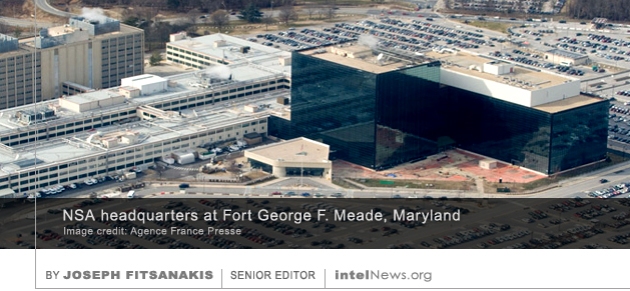
NSANew information published by international whistleblower website WikiLeaks seems to suggest that the United States National Security Agency (NSA) collected information on export contracts by French companies and sought inside information on France’s position in international trade negotiations. According to the website, which published the new material on Monday, the documents appear to suggest concerted efforts by Washington to obtain secret information about the economic policies of the French government and the country’s financial sector.

The WikiLeaks release contains a list of “Information Needs” (IN), which signifies collection requirements on France that are part of the US National Signals Intelligence Requirements List. The latter is updated regularly to reflect wide-ranging intelligence requirements put to the NSA by its customers, who include US policy makers and other members of the US Intelligence Community. The IN list is labeled “2002-204”, which means it was created in 2002 and has been updated ever since. The documents also include an “Essential Elements of Information” (EEI) list, which points to more narrow areas of interest that the NSA’s collection teams are instructed to focus on. The EEI list released by WikiLeaks includes France’s economic relations with the US and other Western countries and France’s dealings with international financial agencies and institutions. It also includes France’s international economic and trade policies, as well as its policy maneuvers in the G-8 and G-20 group of nations.

At one point, the EEI list appears to instruct NSA collection units to target every French-registered company involved in negotiations for international projects or other sales contracts valued at over $200 million. According to WikiLeaks, the target list would inevitably include every major French company, including car makers Peugeot and Renault, banking conglomerate BNP Paribas, as well as Credit Agricole, one of Europe’s leading agricultural credit unions.

Representatives of the US Intelligence Community do not deny spying on foreign companies. But they insist that Washington does not use information collected from such operations to benefit American companies competing for international contracts. However, the latest WikiLeaks revelations are bound to fuel speculation in Europe that US intelligence-collection priorities may include an economic component. Last week, US President Barack Obama had to personally assure his French counterpart, Francois Hollande, that he was not being spied on by the NSA, after WikiLeaks released documents showing that the American spy agency had targeted the communications of three successive French presidents.

Author: Joseph Fitsanakis | Date: 30 June 2015 | Permalink: https://intelnews.org/2015/06/30/01-1725/

Calls in France to offer asylum, citizenship, to Snowden and Assange

Assange and SnowdenLeaders from all sides of the French political spectrum urged the French government on Thursday to offer political asylum, and even French citizenship, to the American defector Edward Snowden and to WikiLeaks founder Julian Assange. The calls were made in response to news earlier this week that the United States National Security Agency spied on the personal communications of three French presidents from the 1990s to at least 2012. The files were published on Tuesday by the international whistleblower website WikiLeaks. They consist of what the website described as “top secret intelligence reports and technical documents”, which detail NSA spying operations against the French presidency, as well as espionage directed at several French government ministers and at France’s ambassador to the US. As intelNews predicted on Wednesday, the French government’s response to the revelations has been relatively muted. But many French politicians, including one minister in the government of French President Francois Hollande, called for Paris to extend offers of political asylum, and even French citizenship, to Assange and Snowden.

The initial call was issued by Laurent Joffrin, the influential managing editor of Libération, the Paris-based newspaper that partnered with WikiLeaks to release the NSA documents earlier this week. In a leading editorial published in the paper on Thursday, Joffrin said that French protests against NSA spying “have no more effect than scolding a rude toddler”, and added that by offering asylum to Snowden, France would “stand up [to America] and send a clear and effective message to Washington”.

Shortly after Joffrin’s editorial, Jean-Christophe Lagarde, president of the centrist Union of Democrats and Independents in the French Parliament, said that France should have given Snowden political asylum back in 2013, when he originally requested it. Lagarde was quoted in the French press as saying that “the French nation has already been dishonored by refusing to accept Edward Snowden’s request for political asylum when he asked for it in 2013”. Jean-Luc Mélenchon, the leftist member of the European Parliament, agreed with Lagarde, adding that Assange and Snowden must not only receive political asylum in France, but also be given “the French nationality”.

On Thursday afternoon, Jean-Pierre Mignard, a close friend and longtime political advisor to President Hollande, said that “given the service they have rendered to the cause of human freedom, France could accommodate a request for asylum from Assange and Snowden, should they request it”. Mignard added that “French law allows the Republic to grant asylum to any foreign subject who faces persecution for taking action in favor of human freedom”.

When asked by BFM TV, France’s most popular news channel, whether political asylum could be extended to Snowden and Assange, France’s Justice Minister Christiane Taubira said that she was “absolutely shocked by the idea”, because such a course of action would drive a powerful wedge between France and the US, two countries with deep historical ties. But she added that such a move would constitute a strong “symbolic gesture” against espionage, and thus remained on the table as a possible policy maneuver to be adopted by the government of France.

Late on Thursday, however, France’s Prime Minister Manuel Valls indicated that any discussion of an offer of asylum to Assange and Snowden by the government of France was premature. Speaking at a hastily organized press conference to discuss the NSA espionage revelations during an official visit to Colombia, Valls told reporters that the question of offering asylum to the two men “did not arise” during internal government talks. “And in any case”, said Valls, such an initiative “would not address the issue at hand”, namely American espionage against the French presidency. France’s goal is to extract guarantees from Washington that all espionage against French officials would stop, noted the French prime minister. If France offered asylum to Assange and Snowden, American espionage against French targets would likely reach unprecedented levels, he added.

Author: Joseph Fitsanakis | Date: 26 June 2015 | Permalink: https://intelnews.org/2015/06/26/01-1723/

Analysis: French are upset, but not surprised, by news of US spying

Before Edward Snowden, the revelation that the United States National Security Agency spied on three successive French presidents would have shocked many. But in the post-Snowden era, the news came and went without much tumult. The French President, Francois Hollande, called two emergency meetings of senior government officials at the Élysée Palace; the American ambassador to France was summoned for an official protest; but nothing more came of it. It was reported that US President Barack Obama spoke directly with his French counterpart on Wednesday, and assured him in no uncertain terms “that the US is no longer spying on France”.

The French leader, who is one of three French presidents mentioned in the WikiLeaks documents as a target of the NSA, is genuinely upset. And there will be some in his government who will push for a harder response than simply summoning the American envoy in Paris to file an official protest. But nobody in Paris or Washington thinks that Mr. Hollande, or indeed any other senior French official, was shocked or even surprised by the revelations of American espionage against France. Nor will the revelation cause any drastic disruption in the intelligence cooperation between France and the US. The two countries depend on each other to address a number of international issues that affect both, such the worrying situatioQ Quoten in Syria and Iraq, the continuing crises in Ukraine and in Libya, as well as the financial meltdown in Greece. So there is a recognition that their intelligence agencies must continue to work together on several pressing issues.

However, the French response may become a lot more direct if WikiLeaks publish further revelations about US espionage against French officials. The whistleblower website noted on Tuesday that “French readers can expect more timely and important revelations in the near future”. Unlike Edward Snowden, who is known to release progressively more damning documents in stages, WikiLeaks does not have a history of aiming for a crescendo through progressive releases of classified information. But there is speculation that Edward Snowden may in fact be the source of this latest WikiLeaks disclosure. If that is the case, we should not exclude further releases of relevant documents, and thus a more robust French response.

And what about America’s retort? Washington has suffered considerable diplomatic blowback from revelations in 2013 and 2014 that it spied on the leaders of Germany, Brazil and Argentina. Is the NSA still spying on America’s allied leaders? I am of the opinion that the NSA is not currently targeting the personal communications of allied government leaders as a matter of Q Quoteroutine practice. However, I do believe that this regimen can easily be changed to address particular needs, through what is called a “presidential finding”, basically a direct order issued by the president of the United States to target an individual foreign leader.
In the past two years, we have witnessed the diplomatic fallout that can result from publicly revealing these practices. However, for an intelligence agency like the NSA, having access to the personal communications of a foreign head of state is a temptation that is simply too difficult to resist. Moreover, it should not be assumed that political leaders are always completely in the know about the practices of their country’s intelligence agencies. American intelligence history amply demonstrates this truism. Finally, I would point to the well known maxim that intelligence agencies do not typically distinguish between adversaries and allies. All targets are considered fair game. This will admittedly do little to appease the French, but it will at least give them an accurate impression of what to expect in the brave new world of wholesale communications interception.

* This editorial is based on an interview given by the author to the Spanish newspaper La Razón.

Author: Ian Allen | Date: 25 June 2015 | Permalink: https://intelnews.org/2015/06/25/01-1722/

French president calls crisis meeting to discuss US spy revelations

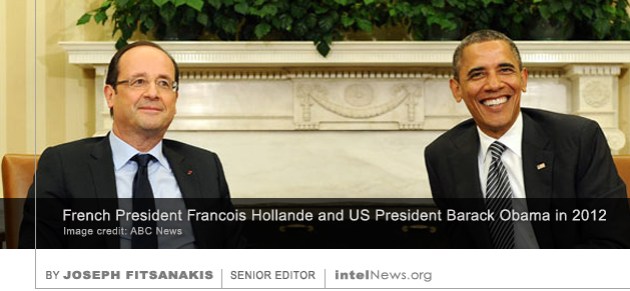
France Hollande ObamaThe president of France has convened an emergency meeting of the country’s highest national security forum in response to revelations that the United States spied on three French presidents. The Conseil de la Défense is to convene in Paris on Wednesday to discuss the emergence of documents that appear to implicate the US National Security Agency (NSA) in spying on Jacques Chirac and Nicolas Sarkozy, who ruled France from 1995 to 2012. The documents further indicate that the NSA may have also targeted the personal communications of Francois Hollande, France’s current head of state.
The files were published on Tuesday by the international whistleblower website WikiLeaks. They consist of what WikiLeaks described as “top secret intelligence reports and technical documents”, which detail NSA spying operations against the French presidency, as well as espionage directed at several French government ministers and at France’s ambassador to the US. WikiLeaks would not indicate whether it acquired the documents from American defector Edward Snowden, who is currently living in Russia. But it said that “French readers can expect more timely and important revelations in the near future”.

The material –termed “Espionnage Élysée” by WikiLeaks– features a list of “selectors”, which includes French government telephone numbers targeted for interception. One of the numbers is identified as belonging to the president of France. The document collection also includes a handful of intelligence briefs, which are presumably based on intercepted communications from the telephone lines listed among the “selectors”. They detail the thoughts and diplomatic maneuvers by French presidents and other senior officials on subjects such as the Greek economic crisis, the Israeli-Palestinian dispute, and the United Nations.

French newspaper Liberation, which partnered with WikiLeaks to release the NSA material, said on Tuesday that the revelation should not surprise anyone in the post-Snowden era, but that it was still likely to cause a significant rift in French-American relations. In 2014, Germany expelled the station chief of the Central Intelligence Agency in Berlin –essentially the highest-ranking American intelligence officer in the country– over revelations that the US spied on the personal communications of Chancellor Angela Merkel.

Liberation contacted the NSA but was told by its spokesman, Ned Price, that the Agency was “not going to comment on specific intelligence allegations”. A spokesman from the Élysée Palace told the paper that an official statement would be issued following the Conseil de la Défense meeting on Wednesday.

Author: Joseph Fitsanakis | Date: 24 June 2015 | Permalink: https://intelnews.org/2015/06/24/01-1721/

CIA chief paid secret visit to Israel ahead of Iran nuclear deal

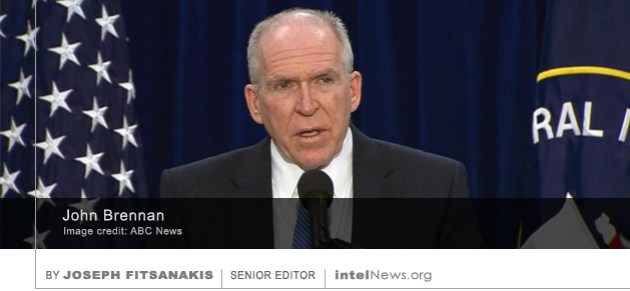
John BrennanThe director of the United States Central Intelligence Agency visited Israel in secret last week to discuss the Jewish state’s refusal to endorse an emerging deal with Iran over its nuclear program. Citing “two senior Israeli officials”, the Tel Aviv-based Israeli newspaper Haaretz said on Tuesday that CIA Director John Brennan arrived in Israel last Thursday. Although he was officially hosted by Tamir Pardo, director of Israeli intelligence agency Mossad, Brennan used the opportunity to hold secret meetings with several senior Israeli officials, said Haaretz. Among them were Prime Minister Benjamin Netanyahu, National Security Adviser Yossi Cohen, as well as Major General Hartzl Halevi, who heads Israel’s Military Intelligence Directorate.
According to Haaretz, Brennan’s visit to Israel had been planned “long ahead of time”, and should not be interpreted as a sudden diplomatic move from Washington. However, it came just weeks ahead of a deadline for a far-reaching settlement next month between Iran and six world powers over the Islamic Republic’s nuclear program. If successful, the much-heralded deal will mark the conclusion of ongoing negotiations between the Islamic Republic and a group of nations that have come to be known as P5+1, representing the five permanent members of the United Nations Security Council plus Germany. Israel, however, has strongly criticized the negotiations, referred to as ‘the Geneva pact’. Last year, the Israeli Prime Minister called the pact a “historic mistake” that would enable “the most dangerous regime in the world” to get closer to “attaining the most dangerous weapon in the world”.

It is not known whether Brennan brought with him a message from US President Barack Obama addressed to the Israeli Prime Minister, said Haaretz. On Monday, just 72 hours after Brennan’s departure, another senior American official landed in Tel Aviv —openly this time. It was General Martin Dempsey, Chairman of the US Joint Chiefs of Staff, who was hosted by his Israeli counterpart, General Gadi Eisenkot. Like Brennan before him, General Dempsey met with Prime Minister Netanyahu and Minister of Defense Moshe Yaalon. Haaretz contacted the CIA about Brennan’s secret visit to Israel, but an Agency spokesperson refused to comment.

Author: Joseph Fitsanakis | Date: 10 June 2015 | Permalink: https://intelnews.org/2015/06/10/01-1712/

Belgium launches official probe into alleged German-US espionage

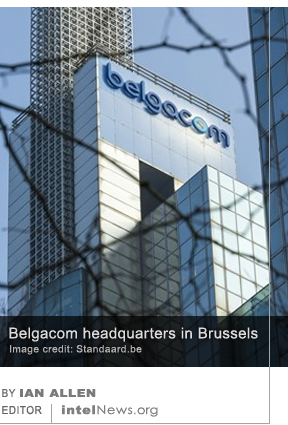
BelgacomThe Belgian government has announced the start of an official investigation into allegations that the country’s tele- communications networks were spied on by a consortium of German and American intelligence agencies. A press release issued Friday by the Belgian Ministry of Justice said the minister, Koen Geens, had authorized an examination of claims of espionage by the United States National Security Agency and Germany’s Bundesnach-richtendienst (BND). The statement was referring to EIKONAL, an alleged collaboration between the NSA and the BND, which was revealed last month by Austrian politician Peter Pilz. Pilz told a press conference in Bern, Switzerland, that EIKONAL had targeted European telecommunications carriers for at least four years, from 2005 to 2008. The governments of Switzerland and the Netherlands have already launched their own investigations into EIKONAL.

After speaking with Pilz, Belgian politician Stefaan Van Hecke told Belgian media last month that the BND-NSA consortium had penetrated the network of Proximus, the mobile subsidiary of Belgacom, Belgium’s national telecommunications carrier. Speaking anonymously about the investigation, a Belgian official told the country’s largest French-language newspaper, Sud Presse, that if the alleged espionage is confirmed, it would have “not only legal implications, but will also affect relations between Belgium, Germany and the US”. A Justice Ministry spokeswoman said on Friday that if the allegations of espionage were confirmed “the government would take appropriate action”, but she refused to elaborate.

IntelNews regulars will remember the last time Belgacom surfaced in the news: in 2013, we reported that the company’s technicians had detected an “unidentified virus” that had infected several dozen mainframe computers. The virus specifically targeted telecommunications traffic carried by Belgacom’s international subsidiaries in Africa and the Middle East. Belgium’s Federal Prosecutor’s Office said at the time that the malware’s complexity, coupled with its grand scale, “pointed towards international state-sponsored cyber espionage”.

Author: Ian Allen | Date: 8 June 2015 | Permalink: https://intelnews.org/2015/06/08/01-1710/

Switzerland to probe claims it was spied on by US, German agencies

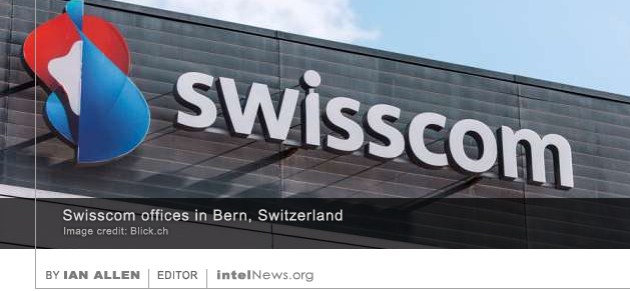
SwisscomThe office of the Swiss Federal Prosecutor has launched an investigation into claims that the country’s largest telecommunications provider was spied on by a consortium of German and American intelligence agencies. The spy project was reportedly a secret collaboration between Germany’s BND (Bundesnachrichtendienst) and America’s National Security Agency (NSA). According to Austrian politician Peter Pilz, who made the allegations on Wednesday, the BND-NSA collaboration was codenamed EIKONAL and was active from 2005 to 2008. Speaking during a press conference in Bern, Switzerland, Pilz said many European phone carriers and Internet service providers were targeted by the two agencies.

Among EIKONAL’s targets, said Pilz, was Swisscom AG, Switzerland’s largest telecommunications provider and one of the successor companies to the country’s national carrier, the PTT (short for Post, Telegraph, Telephone). The government of Switzerland still retains a majority of Swisscom shares, which makes the Bern-based company the closest thing Switzerland has to a national telecommunications carrier. Under the EIKONAL agreement, the BND accessed Swisscom traffic through an interception center based in Frankfurt, Germany. From there, said Pilz, the intercepted data was transferred to a BND facility in Bad Aibling to be entered into NSA’s systems. Pilz shared numerous documents at the press conference, among them a list of key transmission lines that included nine Swisscom lines originating from Zurich and Geneva.

Switzerland’s Office of the Federal Prosecutor said on Wednesday that a criminal investigation was already underway into Peter Pilz’s claims, and that the Swiss Federal Intelligence Service was in contact with Swisscom and other actors targeted by EIKONAL. Meanwhile, Pilz refused to answer questions about where he got the documents about the alleged spy operation. He said, however, that he did not think Swisscom was aware of the BND-NSA actions against it. The company issued a statement on Wednesday saying it had “no agreements with the NSA, the BND, or any other foreign intelligence agency that permit eavesdropping” on company lines.

Author: Ian Allen | Date: 28 May 2015 | Permalink: https://intelnews.org/2015/05/28/01-1705/

German spies helped US find bin Laden, claims German newspaper

BND headquarters in BerlinBy JOSEPH FITSANAKIS | intelNews.org
German intelligence gave the United States a tip of “fundamental importance” about the whereabouts of al-Qaeda founder Osama bin Laden, which helped the Americans locate him in Pakistan, according to a German media report. Germany’s leading tabloid newspaper, Bild am Sontag, said in its Sunday edition that the tip allowed the Central Intelligence Agency to corroborate separate intelligence tips pointing to the possibility that the wanted Saudi terrorist may have been hiding in the Pakistani city of Abbottabad. Citing an unnamed “American intelligence official”, Bild said the tip was given to the CIA by its German equivalent, the Bundesnachrichtendienst, known in Germany as BND. It said the critical information originated from an agent handled by the BND inside Pakistan’s Inter-Services Intelligence directorate (ISI). The agent was an officer of the ISI but had secretly worked as an agent of the BND “for years”, said the German newspaper.

The tip was eventually communicated by the Germans to the CIA, and was used by the American agency to corroborate information from a number of other sources, which eventually led to the decision to send a Special Forces team to kill the al-Qaeda leader. According to the German paper, the CIA was already leaning toward the view that bin Laden was hiding in Abbottabad. However, the BND tip was “of fundamental importance” in enabling the CIA to make up its mind as to bin Laden’s whereabouts, said Bild. Moreover, the BND’s Pakistani agent allegedly told the German agency that the ISI leadership was protecting bin Laden while holding him under house arrest. If true, the Bild information would seem to confirm allegations made by American reporter Seymour Hersh and security expert R.J. Hillhouse that Pakistani leaders had secretly imprisoned the al-Qaeda founder in Abbottabad. The Bild article goes on to claim that German intelligence used its Bad Aibling Station listening posts to monitor the Pakistani government’s communications so as to help ensure that the planned American attack on bin Laden’s compound was not being anticipated by Islamabad.

However, in reporting on Bild’s allegations, German newsmagazine Der Spiegel questions the validity of the tabloid newspaper’s argument. Why, it asks, would the BND’s Pakistani agent approach his German handlers with the information about bin Laden’s whereabouts, instead of going directly to the Americans? Had the agent followed the latter course of action, he or she could have been able to claim the lucrative reward offered by the US Department of State in exchange for information that would help locate the al-Qaeda founder.

Hersh: Pakistanis gave CIA permission to kill bin Laden

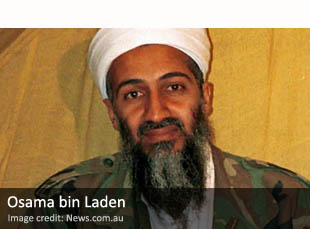
Osama bin LadenBy JOSEPH FITSANAKIS | intelNews.org
Journalist Seymour Hersh has cited senior American intelligence officials in claiming that the killing of Osama bin Laden was a joint operation between the United States and Pakistan. In a lengthy article published over the weekend in The London Review of Books, the veteran investigative reporter suggests that Pakistan had kept the al-Qaeda founder in prison for several years in the city of Abbottabad. Pakistan’s Inter-Services Intelligence Directorate —known commonly as ISI— had planned to turn bin Laden over to the US in its own time, in a quid-pro-quo move. But the Pakistanis’ plan had to be scrapped when bin Laden’s hideout was betrayed to the Central Intelligence Agency by a former ISI officer, says Hersh. His assertion agrees with previous accounts of the US raid against bin Laden, offered by security expert R.J. Hillhouse in 2011, and earlier this year by Lt. Gen. Asad Durrani, who led the ISI from 1990 to 1992.

The unnamed sources behind Hersh’s claims are an American “retired senior intelligence official” who was privy to early intelligence concerning bin Laden’s compound in Pakistan. Hersh also cites “information from inside Pakistan”, as well as two other sources from America, who have been “longtime consultants to the [US] Special Operations Command”.

The initial tip about bin Laden’s whereabouts came to the CIA in the form of a ‘walk-in’ —a term used to denote someone who voluntarily contacts an intelligence outpost, usually by simply walking into an embassy or consulate and asking to speak to the intelligence officer on duty. Hersh says the walk-in was a former high official in the ISI, who told the Agency’s Islamabad station that he could lead them to the al-Qaeda founder’s location. The retired official was successfully polygraphed and was eventually able to claim the $25 million reward offered by the US Department of State for bin Laden’s head. He and his family are now living in the Washington, DC, area, says Hersh.

The walk-in told the CIA that the compound in Abbottabad where bin Laden was living was “not an armed enclave”, as Langley had initially assumed. Instead it was a prison and was under the complete control of the ISI. The latter had managed to capture bin Laden in the Hindu Kush Mountains in 2006, by paying off some of the local tribesmen who were sheltering him. Hersh also reiterates information previously reported by intelNews, namely that the government of Saudi Arabia had entered into an agreement with Islamabad to finance the construction and maintenance of bin Laden’s prison-compound in Abbottabad.

According to Hersh, the US government eventually informed Pakistan that it had uncovered and was incessantly monitoring bin Laden’s location. Along with threats, Washington offered the ISI commanders, who were in charge of bin Laden’s security, “under-the-table personal incentives” to agree to stand aside during a US raid on the compound. Under the final agreement, struck at the end of January 2011, the Americans promised to send in a small force that would kill bin Laden, thus sparing Islamabad and Riyadh the embarrassment of the al-Qaeda founder speaking out about his previously close relations with both governments. The Pakistanis even provided the CIA with accurate architectural diagrams of the compound. Accordingly, when the US forces went into Abbottabad in May of that year, “they knew where the target was —third floor, second door on the right”, says the retired US intelligence official quoted by Hersh.

The veteran journalist adds that the American planners of the operation knew well that bin Laden had been held in virtual isolation from the outside world for years, and that he was not “running a command center for al-Qaeda operations” from Abbottabad, as the White House later claimed. Consequently, the stories about “garbage bags full of computers and storage devices” that the US Navy SEALs brought back from the compound were false. Some of the SEALs took with them some books and papers found in bin Laden’s bedroom. But most of the material that was eventually acquired by the CIA was voluntarily provided to the Americans by the Pakistanis, who took control of the compound immediately after the SEALs left and eventually razed it.

Airbus to sue Germany for helping US spy on its operations

By JOSEPH FITSANAKIS | intelNews.orgBND headquarters in Berlin
European conglomerate Airbus has announced it will file a criminal complaint over allegations that German intelligence services collaborated with their American counterparts to spy on the aerospace firm. The impending lawsuit stems from allegations made last week in the German media that Berlin colluded with Washington to carry out industrial espionage in several European countries. The alleged collaboration involved Germany’s Bundesnachrichtendienst, known as BND, and the United States’ National Security Agency. According to German media reports, the two agencies joined forces at the request of the NSA, in order to determine whether European companies were breaking international trade embargoes. For that purpose, the two agencies launched a joint communications interception project that targeted telephone, email and other online exchanges involving a host of governmental and corporate targets in Europe. German newsmagazine Der Spiegel said last week that the BND used its Bad Aibling listening station to spy on, among other targets, the palace of the French president in Paris, the headquarters of the European Commission in Brussels, as well as Airbus, which is headquartered in Toulouse.

A statement by Airbus, which was quoted by the Reuters news agency, said that the company was well aware that large firms competing for international contracts worth hundreds of millions of euros “are often targets of espionage”. However, said the company, the recent case involving the alleged BND-NSA collaboration caused it considerable alarm, “because there are firm reasons for suspicion”. The company added that it did not wish to speculate further and noted that it had communicated with German federal authorities requesting further information on the allegations of corporate espionage. Meanwhile, Germany’s Minister of the Interior, Thomas de Maiziere, who supervises the BND, denied rumors that Berlin had tried to cover up the collaboration between the BND and the NSA, and called for the espionage allegations to be investigated by parliament.

The news comes amidst a rocky period in the bilateral relationship between Germany and the United States. In July of last year, Germany expelled the CIA station chief —essentially the top American spy in the country— from its territory. The unprecedented move was prompted by a series of extraordinary disclosures made by US defector Edward Snowden, concerning extensive American intelligence operations against Germany.

Declassified report points to flaws in post-9/11 NSA wiretapping

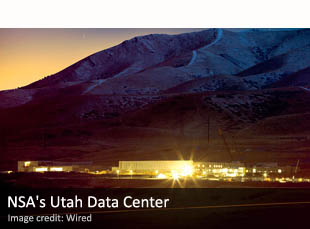
NSA's Utah Data CenterBy JOSEPH FITSANAKIS | intelNews.org
A lengthy United States government report into the post-9/11 communications interception program by the National Security Agency says it was limited in both usefulness and effectiveness. The report examines the controversial NSA program codenamed STELLAR WIND, initiated in the wake of 9/11 on direct orders by the then-President George W. Bush. It instructed the NSA to launch an extensive program of data mining of American citizens’ information, as well as monitor their telephone conversations, Internet activity and financial transactions. The existence of STELLAR WIND was revealed in 2005 by The New York Times, based on allegations by a US government whistleblower, who three years later identified himself as US Justice Department official Thomas M. Tamm. By that time, Congress had stepped in to formally legalize the program, which many criticized as unconstitutional.

Last Friday, The New York Times received an internal report on STELLAR WIND that was produced jointly in 2009 by the inspectors general of five American law enforcement and intelligence agencies. A short, unclassified summary of the document had been published by the Department of Justice when the report had first came out. But The Times have now received a complete —albeit redacted— version of the report, following a Freedom of Information lawsuit it filed last year. According to the paper, the report includes “several paragraphs” describing “success” cases that ensured from the information derived from STELLAR WIND. However, these are all redacted. But the report also points out that the program’s secrecy made it extremely obscure even within the US Intelligence Community and thus it “hampered its effectiveness” by making it less useful. It appears that only a small, select group of Central Intelligence Agency analysts even knew of the program’s existence, while Federal Bureau of Investigation analysts and agents were effectively unable to use the program due to its “highly classified status”.

The report also states that, as of 2009, senior American intelligence officials “struggled to identify any specific terrorist attacks that had been thwarted” by STELLAR WIND. Additionally, it appears that none of the counterterrorist leads derived from the program between August 2004 and January 2006 proved useful in FBI investigations.

Macau authorities deny CIA tried to assassinate Snowden

PLA Macao GarrisonBy JOSEPH FITSANAKIS | intelNews.org
Authorities in the Chinese region of Macau have denied news reports that Chinese Special Forces averted an attempt by the United States Central Intelligence Agency to kill or capture American defector Edward Snowden. The reports were initially published on March 8 on the website of China News Service, China’s second-largest state-owned news agency after Xinhua. The news agency, which serves China’s Special Administrative Regions of Hong Kong and Macau, said that a secretive unit of the Chinese People’s Liberation Army held a private function to celebrate its success against an alleged attempt by the CIA to kill Snowden. The American former computer expert worked for the CIA and the National Security Agency before defecting to Russia in the summer of 2013. Prior to arriving in Russia, however, Snowden first sought refuge in Hong Kong, where he stayed until June 23.

According to Chinese media reports, the US sent a CIA assassination squad to Hong Kong in mid-June 2013, in an effort to either abduct or kill Snowden. However, the defector’s life was allegedly saved by men from the so-called “Sharp Swords” Special Forces unit of the PLA’s Macao Quick Reaction Platoon. The latter, which is part of the PLA’s Macau Garrison, had reportedly been urgently dispatched to Hong Kong by the Chinese government, in order to guard the high-profile American defector. Some reports suggest that a fierce firefight took place between the Chinese Special Forces troops and the CIA hit squad, which eventually left four CIA officers dead, including “a senior member of the CIA’s network in Hong Kong”. When Snowden transferred to Russia, the PLA unit returned to its base in Macau, where it remains today. Chinese news media alleged that a special “special event” was held in honor of the PLA unit, during which several of its members received “first-class merit awards” for protecting Snowden and neutralizing the alleged CIA operatives.

On Monday, however, the First Secretary of the Security Office of Macau, Wong Sin Chat, told local media that the reports of a PLA award ceremony were “nothing more than rumors”. He added that there had been no attempt by anyone to assassinate Snowden, and noted that, on behalf of Macau’s state authorities, he could “absolutely confirm” that the news reports had been inaccurate. Washington has yet to comment on the allegations.