Biden stopped Obama from granting clemency to Israel spy

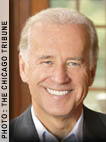
Joe Biden

Joe Biden

By JOSEPH FITSANAKIS | intelNews.org |
The President of the United States considered clemency for an American Navy analyst who spied on the US for Israel, but was stopped by his Vice President, Joe Biden, according to a report in The New York Times. The report claims that Barack Obama gave in to concerted pressure from the Israeli government and members of the pro-Israel lobby in the US, and proposed that Jonathan Pollard, who was jailed for life in 1986 for handing over classified US government documents to Israeli spies, be released. But Joe Biden rejected Obama’s proposal, reportedly telling the President that “over my dead body are we going to let [Pollard] out before his time”. The information appears to have come from Joe Biden himself, who revealed it during a recent meeting with rabbis in Boca Raton, Florida. The Times reports that, “according to several people at the meeting”, Biden was asked by one of the rabbis why it was that Pollard remained in prison, despite a lengthy campaign in Israel to have him released, or transferred to an Israeli jail. Biden responded that Obama had proposed releasing Pollard, but his suggestion never reached the heads of America’s intelligence community, because it was blocked by Biden himself. The Vice President said he told Obama that, if it were up to him, Pollard “would stay in jail for life”. The Times article does not relay the reaction to Biden’s forceful answer at the meeting; but the paper states that Biden appears to be on a mission to improve Obama’s image with Jewish voters in the United States. Although Jewish Americans traditionally tend to vote for the Democratic Party, they are currently being aggressively courted by the Republicans, worrying some Democratic electoral strategists. By answering the way he did in response to the question about Pollard, Biden “took a punch meant for his boss”, argues the paper. Read more of this post

Analysis: Ex-CIA WMD director warns of ‘morphed’ Islamist groups

Charles S. Faddis

Charles S. Faddis

By JOSEPH FITSANAKIS | intelNews.org |
In recent months, the heads of the United States Pentagon and the Central Intelligence Agency have opined that the United States may be close to “strategically defeating al-Qaeda”. These were the words used by former CIA Director and current Defense Secretary, Leon Panetta in July, to describe the current state of Washington’s ‘war on terrorism’. Shortly afterwards, General David Petraeus, who replaced Panetta at the helm of the CIA, echoed his predecessor, arguing that the situation following the death of Osama bin Laden “hold[s] the prospect of a strategic defeat […], a strategic dismantling, of al-Qaeda”. But do such optimistic projections correspond to reality on the ground? In a new column for Homeland Security Today, former CIA operations officer Charles S. Faddis, who retired from the Agency in 2008 as the chief of its weapons of mass destruction counterterrorism unit, agrees that al-Qaeda has been “severely battered” in the ten years since 9/11. But he warns that, while America insists of engaging in “large-scale conventional military operations” in Afghanistan, and essentially “a strategic bombing campaign” in Pakistan, a new generation of terrorist groups appears to have “shifted, morphed and evolved”. In light of this reality, the recent comments by Panetta and Petreaus may suggest “the possibility of a loss of focus” in American counterterrorist operations, says Faddis. The former CIA covert operations officer, who has written several books since his retirement, goes on to discuss the rapid rise of several ethnic or regional militant Islamist groups, including Nigeria’s Boko Haram. The organization made macabre headlines earlier this month, when it launched a massive suicide attack against a United Nations office complex in the Nigerian city of Abuja, killing and injuring over 100 people. He also mentions the Islamic State of Iraq, a notorious outfit whose most recent strikes display an operational sophistication that often surpasses that of Boko Haram’s. Read more of this post

US spy Pollard tried to spy for Australia before spying for Israel

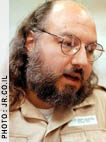
Jonathan Pollard

Jonathan Pollard

By JOSEPH FITSANAKIS | intelNews.org |
Lobbyists campaigning for the release of jailed spy Jonathan Pollard portray him as a genuine Jewish patriot, who risked his freedom to spy on the United States for Israel. But in her first-ever public interview, Pollard’s FBI interrogator has revealed that he also spied for South Africa and tried to spy for Australia, before working as an agent for Israel. Lydia Jechorek was the FBI agent assigned to the case of Jonathan Pollard, after the United States Navy analyst was arrested for spying against his country, by handing countless classified documents over to his Israeli handlers. She spent countless hours with Pollard, interrogating him in jails in Washington, DC, and Lewisburg, PA. On Monday, Jechorek, who has never publicly commented about her role in the Pollard case, spoke to Newsmax, after having received clearance from the FBI to do so. She told the website that, during his FBI interrogation sessions, Pollard said that, before spying for Israel, he had attempted to spy on the United States for a “friendly country”. Jechorek did not mention the “friendly country” by name. But John L. Martin, who supervised the Pollard case on behalf of the Counterespionage Division of the United States Department of Justice, told Newsmax that the “friendly country” was Australia. It appears that Pollard approached Australian officials in the United States and offered to provide them with classified US government documents. It was only after they rejected his offer that Pollard accosted Israeli intelligence officers and began spying for Tel Aviv. Read more of this post

US openly accuses Pakistan of waging ‘proxy war’ in Afghanistan

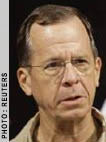
Mike Mullen

Mike Mullen

By JOSEPH FITSANAKIS | intelNews.org |
For the first time a senior American official has openly accused the intelligence services of Pakistan of using Taliban-linked groups to wage a “proxy war” in neighboring Afghanistan. United States Admiral Mike Mullen, Chairman of the Joint Chiefs of Staff, has described the Haqqani Network, an insurgent group closely allied with the Taliban, as Pakistan’s proxy-army in Afghanistan. The Haqqani Network, which is considered by US military commanders as “the most resilient insurgent force in Afghanistan”, is widely seen as responsible for the massive attack on the US embassy and several other targets in Kabul, earlier this month. Some military observers have compared the attacks to the 1968 Tet Offensive by the Viet Cong. Speaking on Tuesday at an event hosted by the Carnegie Endowment for International Peace, Admiral Mullen said he had pressed the government and intelligence agencies of Pakistan to break their links with the Haqqani Network. He did so during a recent meeting with the chief of Pakistan’s armed forces, which reportedly lasted over four hours. By “intelligence services”, Mullen means the Inter-Services Intelligence directorate (ISI), Pakistan’s most powerful spy agency. According to Admiral Mullen, the meeting centered on “the need for the […] ISI to disconnect from [the] Haqqani [Network] and from this proxy war that they’re fighting” in Afghanistan. He also said that “the ISI has been […] supporting proxies for an extended period of time” and described the ISI-Haqqani collaboration as “a strategy in the country”, rather than simply a series of isolated incidents by shadowy groups operating within the Pakistani intelligence services. Read more of this post

Al Jazeera director resigns amidst ‘US intelligence links’ row

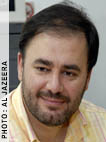
Wadah Khanfar

Wadah Khanfar

By JOSEPH FITSANAKIS | intelNews.org |
The senior executive of the Middle East’s most recognizable news television network has resigned following revelations that he met with American intelligence officials and complied with their requests to alter the content of news reports. A brief news report  posted today on the Al Jazeera website said that Wadah Khanfar, the news network’s Palestinian-born director, had announced his resignation, eight years after assuming the station’s leadership. In a public statement, Khanfar, whose brother is a Hamas activist in the Gaza Strip, said that Al Jazeera “stands as a mature organization” and that he is “confident that [the station] will continue to maintain its trailblazing path”. But he did not mention the incident that might have led to his resignation: namely the recent revelation that he was in constant contact with US intelligence officials during much of his executive career, and that he agreed to alter the content of some Al Jazeera news reports at their request. According to American diplomatic cables leaked by whistleblower website WikiLeaks, Khanfar came in contact with officials from the US Defense Intelligence Agency (DIA, the Pentagon’s premier spy organization) through the Ministry of Foreign Affairs of Qatar —the Gulf country that owns and operates Al Jazeera. The leaked cables mention that the Palestinian-born executive attended several meetings with DIA personnel in Doha, Qatar, and even agreed to “remove” news content when requested to do so. In one instance, he reportedly directed his editorial staff to remove strong images of injured Iraqi children lying on hospital beds and of a woman with extensive facial injuries. Read more of this post

News you may have missed #596

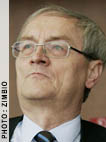
August Hanning

August Hanning

►►Analysis: China’s growing spy threat. Extensive and well-research analysis by Alex Newman in The Dipomat magazine. The article contains input by –among others– Charles Viar, of the Center for Intelligence Studies, Larry Wortzel, formerly of the US-China Economic and Security Review Commission, and intelNews’ own Joseph Fitsanakis.
►►Dutch court orders compensation for Indonesian massacre widows. The Dutch state is responsible for executions committed by colonial troops at an Indonesian village in 1947 and relatives of victims should be compensated, a Dutch court has ruled. Eight widows and one survivor from the town of Rawagedeh, east of Jakarta, took the Dutch state to court in 2008 to claim compensation for the execution of men and boys on December 9, 1947 by Dutch colonial troops.
►►Bush official says Germany partly responsible for Iraq War fiasco. A few weeks ago, August Hanning, the former Director of Germany’s foreign intelligence service, the BND, accused the Bush administration of consciously falsifying intelligence supplied by Germany in order to justify going to war in Iraq. Hanning’s charges related to ‘Curveball’, an Iraqi defector to Germany who supplied the CIA with false information about Iraq’s alleged weapons of mass destruction, in order to justify his political asylum. But now the American side is fighting back. Larry Wilkerson, Colin Powell’s former chief of staff has told German newspaper Die Welt that the Germans were “at least partly responsible” for the war (article in German).

News you may have missed #595

Bruce Carlson

Bruce Carlson

►►US commander sees proliferation threat in Libyan chemicals. Libya’s stockpile of chemical warfare materials remains a potential source of proliferation, General Carter Ham, the US military commander for Africa, told reporters on Wednesday. In addition to chemical materials, Ham said he is concerned about shoulder-fired missiles falling into the hands of al-Shabaab, al-Qaeda in the Islamic Maghreb, or Boko Haram, the continent’s three major extremist organizations.
►►NRO spy satellites on time and on budget. Bruce Carlson, director of the US National Reconnaissance Office, has told reporters in Washington that every one of his agency’s programs is on time and on budget. This is seen as a success for the US intelligence community, which is known for botched and grossly over-budget programs outsourced to industry.
►►Watchdog says Canadian spies must follow same rules abroad. A new report by the watchdog body for the Canadian Security Intelligence Service argues that rules governing the conduct of Canadian spies do not relax once they leave Canada. While it cleared CSIS of complicity in any detainee abuse in America’s ‘war on terrorism’, the report did criticize the country’s spymasters for lax record keeping and for sending CSIS officers overseas without sufficient guidance.

Colombian ex-spy chief gets 25 years for aiding death squads

Jorge Noguera

Jorge Noguera

By JOSEPH FITSANAKIS | intelNews.org |
In a continent dominated by leftwing governments, Colombia is one of Washington’s few remaining allies. It is therefore unfortunate that the US-supported conservative government of Álvaro Uribe, which ruled Colombia from 2002 to 2010, has been one of the most corrupt regimes in recent Latin American history. The disgraced Colombian Administrative Department of Security (DAS) appears to have been the cornerstone in the Uribe administration’s corruption complex. Last Wednesday, Colombia’s Supreme Court convicted Jorge Noguera, Director of DAS from 2002 to 2005, to 25 years in prison, for systematically collaborating with illegal far-right death-squads. Noguera’s conviction was based on evidence recovered from the computer of a former death-squad commander, which led to a revealing testimony from former DAS director of information technology, Rafael Garcia. According to Garcia, Noguera routinely provided rightwing paramilitaries with lists of leftist politicians and activists, labor union leaders, and even journalists, who were then targeted for intimidation, blackmail or —in several instances— assassination. One such murdered victim was the late Dr Alfredo Correa de Andreis, who was shot by a death-squad in 2004. The court ordered Noguera to pay Professor Correa’s family nearly US$100,000 in restitution fees, as well as another US$2 million to the state for illegally destroying and expropriating confidential government documents. It is worth noting that at least one of Noguera’s predecessors, Miguel Maza Marquez, who directed DAS in the late 1980s, turned himself in to the authorities in 2009, and is now facing charges of ordering the 1989 assassination of reformist Colombian presidential candidate Luis Carlos Galán —a self-styled enemy of Colombia’s drug cartels. Noguera’s successor at DAS, Maria Pilar Hurtado, is also wanted for her part in a nationwide wiretapping scandal that targeted several of Uribe’s political opponents, as well as labor leaders, journalists and academics. Read more of this post

Declassified documents reveal US-Libyan spy war in Malta

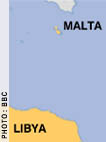
Libya and Malta

Libya and Malta

By JOSEPH FITSANAKIS | intelNews.org |
A batch of declassified CIA reports from the late 1980s point to the Mediterranean island-nation of Malta as a major battlefield between American and Libyan intelligence operatives. According to the reports, which date from between 1988 and 1991, Malta served as a “primary launching point” for Libyan intelligence and paramilitary units on their way to Germany, Britain, and other countries in Western Europe. Most of the reports, which number over 250 pages in total, contain intelligence from a CIA informant named Abdul Majid Giaka. Referred to as “P/1” in the CIA documents, Giaka was a Libyan employee of Libyan Arab Airlines stationed in Malta. In 1988, however, he walked in the American embassy in the Maltese capital Valetta, and offered to work as an agent-in-place for the CIA. In exchange for his services, he requested regular financial compensation, as well as a promise of eventual relocation to the United States for him and his Maltese wife. Eventually, the intelligence collected by Giaka formed a major component of the prosecution’s case in the Lockerbie bombing court hearings. Giaka’s testimony directly led to the conviction of Abdelbaset al-Megrahi, a Libyan intelligence officer, who was released from a British prison in August of 2009 on compassionate grounds and is now in Tripoli. The declassified documents show that, in return for Giaka’s services, the CIA arranged a fake surgery for him in 1989, in order to help him secure an exemption from serving in the Libyan armed forces. The CIA’s initial assessment of Giaka was that he was dependable “intelligent, serious and fairly well composed”. Later, however, Giaka’s CIA handlers began questioning his commitment after he started appearing with new information only when in need of money. Read more of this post

Covert war in Somalia involves CIA, European mercenaries

Richard Rouget

Richard Rouget

By JOSEPH FITSANAKIS | intelNews.org |
Regular readers of this blog will remember Jeremy Scahill’s report in The Nation last July, about the US Central Intelligence Agency’s expanding operations in Somalia. Since the 2006 US-led Ethiopian invasion, the Western-backed Somali government has been engaged in a brutal war with al-Shabaab, the youth wing of the Islamic Courts Union, which ruled most of the country in the years after 9/11. Scahill revealed that the CIA maintains a growing security complex in the country, located right behind Mogadishu’s Aden Adde International Airport. The complex allegedly contains over a dozen buildings, as well as several metal hangars, which house CIA aircraft. Now a new report by United Press International claims that the clandestine American campaign in the horn of Africa “appears to be growing daily”, and that the CIA complex contains a prison for renditioned militant suspects. The latter are routinely interrogated by members of a Mogadishu-based CIA team consisting of approximately 30 case officers, analysts, linguists, and others. The UPI article suggests that the growing CIA presence in the Somali capital is part of a wider expansion of America’s counter-terrorist campaign in countries like Pakistan, Afghanistan, Yemen, Indonesia, and the Philippines. However, the instances when CIA personnel venture outside Mogadishu are few and far between. For this purpose, the Somali government is using American financial aid to hire European private security firms, including Bancroft Global Development, a combat consulting group with a growing presence in Mogadishu. Bancroft’s 40-member team consists of Scandinavian, South African, and French former special forces members, including Richard Rouget (also known as ‘Colonel Sanders’), a former officer in the French Army who has recent combat experience in several African countries. Read more of this post

News you may have missed #591

David Irvine

David Irvine

►►UK Prime Minister criticizes Russia over murdered spy. British Prime Minister David Cameron criticized Russia on Monday over its refusal to hand over Andrei Lugovoy, a former KGB agent suspected in the 2006 poisoning death of former Russian spy Alexander Litvinenko in London. He also rejected a call from Russia for the restoration of links between the two countries’ intelligence agencies. But the two sides did “set aside their political differences […] to sign multi-million dollar business deals”. Oh, well.
►►Aussie spy agency investigating more terror threats than ever. The Australian Security Intelligence Organization has trebled in size over the past decade and now has unprecedented powers. In a rare interview, ASIO Director General David Irvine says he is worried about the potential of an attack similar to the recent shootings and bombings in Norway.
►►‘Cuban Five’ spy member seeks return home after prison. Rene Gonzalez, a former Cuban intelligence officer convicted of spying in the US, wants a federal judge to permit his return to Cuba after his release from prison next month. But US government prosecutors say Gonzalez never showed remorse for his crimes and that there’s no justification for him to go to Cuba.

Analysis: CIA retains special operations role in post-9/11 era

CIA HQ

CIA HQ

By JOSEPH FITSANAKIS | intelNews.org |
Despite its ‘shoot ’em-up’ image in popular culture, the Central Intelligence Agency is predominantly responsible for collecting and analyzing intelligence for the benefit of US policymakers. The Agency’s paramilitary tasks —also known as ‘special operations’— form a somewhat smaller part of its overall mission. The CIA is America’s only government agency that can legally authorized by the President to perform special operations. The question is, should it? One of the 9/11 Commission Report’s chief recommendations was that the CIA should be stripped of its special operations function, and that the latter should be surrendered to the Department of Defense, in the form of the Joint Special Operations Command (JSOC). Clearly, JSOC has played an important role in post-9/11 counterterrorist operations. Yet it is equally clear that, not only has the CIA not been stripped of its paramilitary tasks, but the latter have actually been drastically augmented by the Obama administration —not least through the continuing unmanned drone program in Afghanistan and Pakistan. A well-written analysis by Politico’s Josh Gerstein correctly notes that recommendations to eliminate the CIA’s paramilitary role and transfer it to the Pentagon “remain unpopular in the highest echelons”. The article quotes Philip Zelikow, a University of Virginia professor and former executive director of the 9/11 Commission, who is one of the few intelligence planners that favor transferring special operations from the CIA to the Department of Defense. He says that military functions “ought to be performed by trained military organizations […]. Do you want the CIA operating a combatant command responsible for fighting our twilight wars, especially in a world when twilight wars are the wars we mainly fight?”. The argument seems to be that, as special operations become increasingly central in America’s ‘war on terrorism’, they should be commanded by a military, rather than a civilian, agency. An unnamed former CIA official puts forward the Agency’s view in the article: what do you do “if you have a [host] country that wants to deny a program”? In other words, how do you exercise plausible deniability through the Department of Defense? “[T]he CIA is going to [have to] move to the front of the queue”, he answers. Read more of this post

News you may have missed #589

James Risen

James Risen

►►US lawmakers want audit of Colombia intelligence aid. Two US lawmakers on Wednesday requested the White House to scrutinize US assistance to Colombia’s intelligence agency DAS, after media reports that American money and training was used by the DAS for the illegal spying on government opponents.
►►Judge quashes subpoena to reporter in CIA leaker case. New York Times investigative reporter James Risen will not have to reveal the identity of his confidential source when he testifies in the criminal trial of Jeffrey Sterling, an alleged CIA leaker, a US federal judge recently held in a case involving the highest-profile journalist subpoena in recent years.
►►Ex-White House scientist pleads guilty in spy case tied to Israel. Stewart D. Nozette, a former senior government scientist who held the highest US security clearances, pleaded guilty to espionage on Wednesday and agreed to a 13-year prison term for selling top-secret information on military satellites and other technology to an FBI agent posing as an Israeli spy.

News you may have missed #587 (Libya edition)

Abdel Hakim Belhaj

Abdel Belhaj

►►Inside Libyan spy overlord’s low-tech HQ. “Handwritten notes prepared for officials over the past months show that Libya’s spooks had a good grasp of who was sending weapons to the rebels. However, its contacts with MI6 and the CIA had clearly disintegrated, as a series of despairing pleadings reveal”.
►►UK government to investigate Libyan rendition claims. British Prime Minister David Cameron said yesterday that an independent inquiry should investigate evidence that British intelligence agencies were complicit in the rendition of terrorist suspects to Libya, where they were tortured by the Gaddafi regime.
►►Libyan rebel says female MI6 spy ignored his pleas for help. Abdel Hakim Belhaj, who is commander of Libya’s rebel military, says a female MI6 spy was among the Britons who flew to Tripoli to interrogate him, after the CIA abducted him in Malaysia, and delivered him to the hands of the Libyan regime.

White House reinstalls visas for 2009 Honduran coup plotters

Manuel Zelaya

Manuel Zelaya

By JOSEPH FITSANAKIS | intelNews.org |
On June 26, 2009, a clandestine meeting of the Honduran Supreme Court issued a secret warrant for the arrest of the country’s democratically elected President, Manuel Zelaya. Less than 48 hours later, in the early hours of June 28, uniformed officers of the Honduran Army stormed the Presidential Palace in Tegucigalpa and arrested Zelaya. Shortly afterwards, the deposed President was placed on a plane and sent into enforced exile. It was the first coup d’état in the Central American country since 1978, and the first in Latin America in several years. The US administration of President Barack Obama almost immediately condemned the coup and halted American military aid to Honduras; but it failed to officially designate Zelaya’s ouster as a ‘military coup’, which would have required Washington to outlaw and terminate nearly all forms of government —and some private— aid to Honduras. In August, after several weeks of heavy criticism from Latin American governments, the Obama White House proceeded to “temporarily suspend” non-immigrant visas for over 1,000 Honduran military and civilian leaders, who had endorsed President Zelaya’s unconstitutional ouster. Many of whom had participated in the first post-coup government of former Speaker of the Honduran Congress, Roberto Micheletti. But a news report by the Associated Press suggests that Washington may now be quietly reinstating visas to Micheletti government officials, and that some of them are already travelling to and from the United States. The article quotes a “US embassy spokesperson”, who “spoke on condition of anonymity”, as saying that “the Department of State has determined that some of the Hondurans whose eligibility for visas was restricted following the June 2009 coup d’etat are again eligible to be considered for visas”. Read more of this post