News you may have missed #587 (Libya edition)

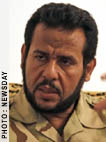
Abdel Hakim Belhaj

Abdel Belhaj

►►Inside Libyan spy overlord’s low-tech HQ. “Handwritten notes prepared for officials over the past months show that Libya’s spooks had a good grasp of who was sending weapons to the rebels. However, its contacts with MI6 and the CIA had clearly disintegrated, as a series of despairing pleadings reveal”.
►►UK government to investigate Libyan rendition claims. British Prime Minister David Cameron said yesterday that an independent inquiry should investigate evidence that British intelligence agencies were complicit in the rendition of terrorist suspects to Libya, where they were tortured by the Gaddafi regime.
►►Libyan rebel says female MI6 spy ignored his pleas for help. Abdel Hakim Belhaj, who is commander of Libya’s rebel military, says a female MI6 spy was among the Britons who flew to Tripoli to interrogate him, after the CIA abducted him in Malaysia, and delivered him to the hands of the Libyan regime.

White House reinstalls visas for 2009 Honduran coup plotters

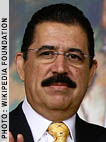
Manuel Zelaya

Manuel Zelaya

By JOSEPH FITSANAKIS | intelNews.org |
On June 26, 2009, a clandestine meeting of the Honduran Supreme Court issued a secret warrant for the arrest of the country’s democratically elected President, Manuel Zelaya. Less than 48 hours later, in the early hours of June 28, uniformed officers of the Honduran Army stormed the Presidential Palace in Tegucigalpa and arrested Zelaya. Shortly afterwards, the deposed President was placed on a plane and sent into enforced exile. It was the first coup d’état in the Central American country since 1978, and the first in Latin America in several years. The US administration of President Barack Obama almost immediately condemned the coup and halted American military aid to Honduras; but it failed to officially designate Zelaya’s ouster as a ‘military coup’, which would have required Washington to outlaw and terminate nearly all forms of government —and some private— aid to Honduras. In August, after several weeks of heavy criticism from Latin American governments, the Obama White House proceeded to “temporarily suspend” non-immigrant visas for over 1,000 Honduran military and civilian leaders, who had endorsed President Zelaya’s unconstitutional ouster. Many of whom had participated in the first post-coup government of former Speaker of the Honduran Congress, Roberto Micheletti. But a news report by the Associated Press suggests that Washington may now be quietly reinstating visas to Micheletti government officials, and that some of them are already travelling to and from the United States. The article quotes a “US embassy spokesperson”, who “spoke on condition of anonymity”, as saying that “the Department of State has determined that some of the Hondurans whose eligibility for visas was restricted following the June 2009 coup d’etat are again eligible to be considered for visas”. Read more of this post

US spies on Israel (shock, horror)

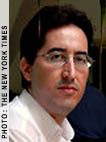
Shamai Leibowitz

Shamai Leibowitz

By JOSEPH FITSANAKIS | intelNews.org |
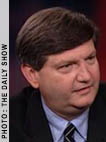
Ever since Monday, when The New York Times exposed the reason behind the May 2010 incarceration of FBI linguist Shamai Leibowitz, US and international media have been buzzing with prominent headlines like: “US government spied on Israel’s Washington embassy”. Although these headlines are accurate, they —like the articles themselves— miss the actual story behind the revelations: namely the extent of Israeli covert propaganda operations inside the United States. As intelNews reported in May 2010, Leibowitz, a lawyer with dual American-Israeli citizenship, who worked as a translator for the FBI, was sentenced to right under two years in prison, for leaking classified information. The government disclosed no further information at the time of Leibowitz’s conviction, saying only that he had been jailed for “having unlawfully disclosed classified documents to an unidentified blogger”. Now the “unidentified blogger” has come forward to reveal the details of Leibowitz’s court case, and to defend the former FBI linguist “as an American patriot and a whistle-blower”. Richard Silverstein, a Jewish American scholar, who writes a blog called Tikun Olam, said that Leibowitz gave him about 200 pages containing transcripts of conversations intercepted by the FBI in its monitoring of the Israeli Embassy in Washington, DC. Most of the transcripts contain what appear to be telephone exchanges between staff at the Israeli embassy and outside contacts, though some appear to be the products of eavesdropping of face-to-face conversations conducted inside the Israeli embassy premises. This may be seen as evidence that the FBI’s Operational Technology Division, which is responsible for maintaining interception systems targeting foreign embassies on US soil, conducts extensive monitoring of the goings on at the Israeli embassy. Read more of this post

White House considering covert operations against Iran

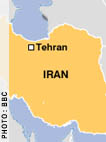
Iran

Iran

By JOSEPH FITSANAKIS | intelNews.org |
One of the major strategic objections to the US invasion of Iraq in 2003 was the near-certain prospect that removing the Sunni-dominated Ba’ath Party from power would increase Iranian-Shiite influence in the country. As the US military exit strategy gradually unfolds in Iraq, the administration of US President Barack Obama is faced with precisely this prospect. While US troops are leaving Iraq, Iran is doing what any logical regional power would do: namely strengthening its clandestine footprint inside Iraq and preparing Tehran-allied Iraqi groups for the impending showdown with Sunni power centers. An article that appeared in today’s Wall Street Journal notes that “growing concern [about regional] influence from Iran” has prompted the Obama administration to explore covert ways of countering it. According to the article, US intelligence agencies have detected “increased arms smuggling [by Iran] to its allies” in Iraq, Bahrain and Syria (and, one would suppose, Lebanon, though this is not mentioned in the piece). The administration has therefore “pushed the military and intelligence communities to develop proposals to counter Tehran”, says the Journal. The push has prompted American intelligence and military planners to request “greater authority to conduct covert operations to thwart Iranian influence in neighboring Iraq”. This essentially implies an appeal for a Presidential “finding”, a secret executive authorization that —under the National Security Act— would provide the required legal basis for covert operations conducted abroad. Read more of this post

CIA Helped Gaddafi Torture Libyan Dissidents, Documents Show

Abdel Hakim Belhaj

Abdel Belhaj

By JOSEPH FITSANAKIS | intelNews.org |
Back in February, when Libyan leader Muammar al-Gaddafi blamed the popular revolt against him on al-Qaeda, he was ridiculed in the international media. But documents discovered at an abandoned Libyan government office complex show that the Libyan rebels’ supreme military commander was abducted in 2004 by the CIA, which suspected him of links to al-Qaeda. Abdel Hakim Belhaj, also known as Abdullah al-Sadiq, was snatched by a CIA team in Malaysia, and secretly transported to Thailand, where he says he was “directly tortured by CIA agents”. The CIA then renditioned him to Libya, where he says he was tortured routinely until his release from prison, in 2010. In the 1980s, Belhaj was a member of the foreign Mujahedeen summoned by Osama bin Laden’s al-Qaeda to fight the Russians in Afghanistan. Upon returning to Libya in the early 1990s, he led the Libyan Islamic Fighting Group, an al-Qaeda-inspired armed organization that unsuccessfully sought to assassinate Colonel Gaddafi. Ironically, Belhaj is now the Tripoli-based military commander of the Libyan National Transitional Council, and says that he wants a full apology from the United States and Britain “for the way he was transported to prison in Libya in 2004”. But the former Mujahedeen is one of several terrorism suspects delivered to Libya by Western intelligence agencies in the years after 9/11, according to Libyan government documents discovered by Human Rights Watch (HRW) workers at the office of Libyan former intelligence chief and foreign minister Moussa Koussa. The documents show that Libya’s External Security Organization maintained extremely close relations with German, Canadian, British, and American intelligence services. Read more of this post

News you may have missed #582

John Yoo

John Yoo

►►US government conceals Bush surveillance memos. The Justice Department is refusing to release legal memos by lawyer John Yoo, which the George W. Bush administration used to justify its warrantless surveillance program, one of the most contentious civil liberties issues during the Republican president’s time in office.
►►Ex-CIA bin Laden Unit boss wants rendition back. Michael Scheuer, a former insider and vocal critic of the US intelligence establishment, has described the Arab revolutions as “an intelligence disaster for the US and for Britain, and other European services”. Speaking from Scotland, he also urged for a return to the Bush administration’s rendition program, in order to gather new intelligence on Middle Eastern and North African groups.
►►French firm helped Gaddafi spy on opposition. We have written before about technical intelligence support provided by Western firms to some of the world’s most brutal regimes, including Iran and Bahrain. We can no add Libya to the long list. The Wall Street Journal reports that Amesys, a subsidiary of French telecommunications firm Bull helped the Gaddafi regime spy on the emails and chat messages of its opponents.

New Zealand base in Afghanistan was secret CIA station, book claims

Nicky Hager

Nicky Hager

By JOSEPH FITSANAKIS | intelNews.org |
A Kiwi “peacekeeping” and “civil reconstruction” base in Afghanistan was a secret station for the US Central Intelligence Agency, according to a new book by New Zealand’s preeminent investigative writer. Nicky Hager first made international headlines in 1996, with his groundbreaking book Secret Power: New Zealand’s Role in the International Spy Network. In it, he revealed the existence of the UK-USA Security Agreement and of ECHELON, a US-managed signals intelligence (SIGINT) collection and analysis platform that serves as an intelligence-sharing mechanism between UK-USA signatories. The publication of his latest book, entitled Other People’s Wars: New Zealand in Afghanistan, Iraq and the War on Terror, is scheduled to coincide with the ten-year anniversary of 9/11. The book focuses on —among other things— the Bamyan Province base in central Afghanistan, which serves as the center of operations for the New Zealand Provincial Reconstruction Team in the Central Asian country. It serves as a symbol of New Zealand’s cautious contribution to the NATO-led war in Afghanistan, by allowing Kiwi forces to participate with boots on the ground, while performing strictly noncombatant functions, officially described as “peacekeeping” and “civil rebuilding”. But Hager’s book alleges that the “noncombatant” mission of the Bamyan base was simply a cover, devised by the New Zealand Defence Forces’ public relations apparatus, and aimed at pacifying the country’s population. The real mission of the Bamyan base, says Hager, was to “help the Americans” by essentially concealing a covert CIA station. The author further alleges that the Kiwi forces at Bamyan were instructed to keep the presence of the CIA team secret. This they did, even as they shared daily meals with American spies in civilian clothes, who refused to disclose even basic details of their mission to their New Zealand guardians. Hager alleges that New Zealand’s defense establishment took the decision to help the CIA as part of a broader strategy of rapprochement between Wellington and Washington. Why rapprochement? It was in 1984, when, under mounting popular pressure, New Zealand’s Labour government of David Lange voted to bar nuclear-powered or nuclear-armed ships from entering New Zealand territorial waters. At the time, the nuclear ban imposed by New Zealand was heralded by the global nuclear disarmament movement as a major victory. But Washington did not see it this way. Read more of this post

News you may have missed #580

Baroness Manningham-Buller

Manningham-Buller

►►Ex-MI5 director says Iraq posed not threat to UK. Iraq posed no threat to the UK when then Prime Minister Tony Blair took Britain to war there, according to Baroness Manningham-Buller, former Director of MI5, Britain’s domestic intelligence agency. In an interview, she described the Iraq war as an unnecessary action that increased the domestic threat to the UK, and “a distraction from the pursuit of al-Qaeda”. No kidding.
►►Interview about DAS wiretaps with Colombia Attorney General. This blog has covered extensively the wiretapping program against opposition politicians, journalists and civil rights activists, by Colombia’s disgraced DAS domestic intelligence agency. This Washington Post interview with Colombia’s new attorney general, Vivian Morales, displays the toothless nature of the government’s ‘investigation’ into the scandal. Morales says that her investigation has “nothing to do” with allegations that the Colombian government used funds provided by Washington to implement the wiretapping. She also says that she cannot “legally investigate” the question of whether former President Alvaro Uribe knew about the wiretaps.
►►Taiwan losing spy game with China. The deputy news editor of The Taipei Times argues that the United States is scaling back its sales of defense equipment to Taiwan because of “the penetration of almost every sector of Taiwanese society by Chinese intelligence”. Accordingly, “any arms sale to Taiwan carries the risk that sensitive military technology will end up in Beijing”, he says.

US misused our intel to justify Iraq War, says German ex-spy chief

August Hanning

August Hanning

By JOSEPH FITSANAKIS | intelNews.org |
The former Director of Germany’s foreign intelligence service has accused the Bush administration of consciously falsifying intelligence supplied by Germany in order to justify going to war in Iraq. August Hanning, who served as Director of Germany’s Bundesnachrichtendienst (known as BND) from 1998 to 2005, said that the BND had no part in the deception, and that “the responsibility for the war lies solely with the Americans”. In an interview to the Sunday edition of German national newspaper Die Welt, Hanning explained that the administration of US President George W. Bush was especially interested in intelligence collected by the BND from an Iraqi defector codenamed ‘Curveball’. The defector, whose real name is Rafid Ahmed Alwan al-Janabi, arrived in Germany in 1999 and applied for political asylum, saying he had been employed as a senior scientist in Iraq’s biological weapons program. Among other things, he told his BND debriefing team that Saddam Hussein had built a fleet of biological weapons labs on wheels, in order to avoid detection from America and other countries. After consulting with biological weapons experts, the BND expressed serious doubts about Curveball’s reliability, but kept him in Germany nonetheless. Several years later, al-Janabi confirmed the BND’s suspicions, by admitting that he had invented his allegations in order to help bring down the regime of Saddam Hussein. He also admitted that he was in reality a taxi driver from Baghdad, who had used his undergraduate knowledge of engineering to get asylum in Germany. At the time, said Hanning, the BND strongly and repeatedly communicated to the CIA its doubts about Curveball’s claims, something which is known. What is not known, however, is that Hanning personally wrote to then CIA Director George Tenet and urged him to adopt a skeptical approach to the defector’s allegations. The former BND chief told Die Welt that he was “assured by the Americans that our intelligence would not be used in Powell’s speech”. Read more of this post

News you may have missed #578

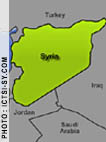
Syria

Syria

►►CIA agent who helped kill Che wants payout from Cuba. This is from the “news that isn’t” department: Gustavo Villoldo, a Cuban-born CIA operative, who helped track down and kill Che Guevara in Bolivia, has won $2.8 billion in damages from the Cuban government, for confiscating his family property after the 1959 revolution. But he is unlikely to ever collect the money because Cuba does not recognize US court rulings.
►►Cheney wanted Bush to destroy suspected Syrian nuke site. Former US Vice President Dick Cheney says in a new memoir that he urged President George W. Bush to bomb a suspected Syrian nuclear reactor site in June 2007. But, he wrote, Bush opted for a diplomatic approach expressed misgivings. Eventually Israeli jets bombed the site. Cheney’s account of the discussion appears in his autobiography, In My Time: A Personal and Political Memoir, which is to be published by Simon & Schuster next week.
►►South Korea indicts five for spying for North. Five South Koreans, including a former parliamentary aide, have been indicted for allegedly spying for North Korea, in connection with the Wangjaesan spy ring.

News you may have missed #577

Waihopai base

Waihopai base

►►Interview with Michael Hayden. The former director of the CIA and the NSA gave a lengthy interview in preparation for his keynote speech at the Raleigh Spy Conference. Among other things, he says that he does “not immediately conclude that senior levels of the Pakistani government knew about” Osama bin Laden’s whereabouts.
►►CIA denies helping police spy on NY Muslims. The Central Intelligence Agency is denying a news report that it helped the New York Police Department conduct covert surveillance on Muslims. The agency said suggestions that it engaged in domestic spying were “simply wrong” and that the report “mischaracterized the nature and scope” of the CIA’s support for the New York police.
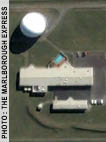
►►Spy base reservoir not a pool after all... A journalist at New Zealand’s Marlborough Express newspaper noticed what looked suspiciously like a swimming pool on a satellite photo (pictured) of the super-secret Waihopai listening base near Blenheim. Do spies go swimming on the base, he asked? It turns out they don’t. According to Government Communications Security Bureau Waihopai station chief Chris Farrow, the landmark is in fact a water reservoir, to be used in case of fire.

News you may have missed #575

IARPA logo

IARPA logo

►►Inquest into death of MI6 spy to go ahead. The inquest into the bizarre death of MI6 and GCHQ officer Gareth Williams will go ahead before Christmas without a jury, according to London-based newspaper The Express. The paper says that “12 spy chiefs will attend [the inquest] to explain the background to the case”.
►►Colombia’s ex-president denies role in spy scandal. Alvaro Uribe has denied, during a 3½-hour appearance before a Colombian congressional committee, that he ordered the country’s domestic intelligence agency to spy on judges, journalists and political foes. More than 20 agents of the DAS intelligence agency have been imprisoned for alleged roles in the spying. Two more have pleaded guilty in exchange for reduced sentences.
►►US spy research firm eyes stock market. IARPA, the US intelligence community’s research arm, plans to introduce a new program to develop tools to help analysts “quickly and accurately assess petabytes of complex anonymized financial data”. According to a conference presentation, the program would help spies “analyze massive amounts of data to spot indicators of market behavior, find relationships between seemingly unrelated transactions across hundreds of global markets, and provide insight into specific events and general financial trends”.

Western spies, security contractors, won Libyan war for rebels

Libya

Libya

By JOSEPH FITSANAKIS | intelNews.org |
As I write these lines, celebratory gunfire is being heard all across Tripoli and the rebel National Transitional Council is appointing civilians to replace the crumbling administration of longtime Libyan leader Muammar al-Gaddafi. But a handful of news outlets discreetly remind us that the rebels’ claim to victory rests on vital covert assistance provided by several Western intelligence services. British daily The Independent notes that the victorious rebels were assisted on all levels by “an army of [British] diplomats, spooks, military advisers and former members of the special forces”, all of whom allowed “London to influence events in Libya beyond the activities of warplanes and naval vessels”. Early indications of Britain’s substantial covert involvement in the Libyan civil war emerged in March, when a secret operation involving a team of 20 Special Air Service (SAS) personnel was disrupted by a group of Libyan rebels, who thought the foreigners were employed by the Libyan government. Eight captured SAS members were soon released by the red-faced rebels, but not before the botched operation had made headlines all over the world. That experience prompted British intelligence planners to rethink their methodology. Eventually, notes The Independent, the British government decided to prompt the rebel National Transitional Council to use British funds to hire teams of former special forces operatives working for private security firms. This, according to the paper, accounts for the “small groups of […] Caucasian males, many with British accents [and] equipped with sunglasses, 4×4 vehicles and locally acquired weaponry, who [were] seen regularly by reporters in the vanguard of the rebels’ haphazard journey […] towards Tripoli”. Read more of this post

News you may have missed #573 (analysis edition)

Clair E. George

Clair E. George

►►New report details gaps in US spy collaboration. Nearly 10 years after the 9/11 attacks, US intelligence agencies are still struggling to strengthen the information sharing networks that broke down in 2001, according to the latest report by the US Congressional Research Service. Among other things, the 33-page report (pdf) points out that “agencies that obtain highly sensitive information are reluctant to share it throughout the intelligence community out of a determination to protect their sources”.
►►CIA Iran-Contra figure Clair George dies. Clair E. George, a consummate spymaster who was convicted of lying to Congress about the Iran-Contra affair, has died. George was known for operating in what spies call the “night soil circuit” –the less desirable posts of the world. He worked in Africa, Asia, Europe and the Middle East. He was the CIA’s station chief in Beirut when civil war erupted there in 1975. He then volunteered to replace the CIA’s Athens station chief, who had just been assassinated by November 17 Revolutionary Organization.
►►Here’s why CIA ‘mind control’ lawsuit was thrown out. A very good and succinct analysis of why a federal lawsuit against the CIA by the Vietnam Veterans of America, for allegedly subjecting US military personnel to chemical, biological and mind control experiments, was thrown out of court earlier this month. It includes the CIA’s court filing in a pdf link, here.

News you may have missed #572

David Wise

David Wise

►►New Zealand spy service now welcomes online tip-offs. Ten years ago, the New Zealand Security Intelligence Service (NZSIS) introduced a free telephone number that people could ring if they suspected any suspicious intelligence activity. Now the spy service has entered the 21st century by changing its website so the public can provide details online.
►►Book claims Coco Chanel spied for Nazis. Frankly, who gives a damn? Is anyone surprised to hear that yet another member of French high society was pro-Nazi in the lead-up to World War II? It is disappointing to see how many news outlets are going over-the-top with this story, while mostly ignoring the truly important historical revelation of the last few days, namely the declassification of the CIA’s Official History of the Bay of Pigs Invasion.
►►David Wise on Sino-American spy wars. Longtime investigative journalist David Wise, who focuses on the intelligence community, talks to Democracy Now! and Amy Goodman about his new book Tiger Trap: America’s Secret Spy War with China.