Analysis: United States and Germany spy on each other

BND seal

BND seal

By JOSEPH FITSANAKIS | intelNews.org |
Newly released documents reveal that the Central Intelligence Agency has maintained an active program of espionage against Germany in the post-Cold War era, and experts say that Germany reciprocates the ‘favor’. According to an article in the latest issue of German newsmagazine Focus, the US intelligence community, led by the CIA, has been keeping tabs on Germany’s intelligence agencies since the 1950s, and continues to do so today. The magazine’s editors say they are in possession of internal government documents, which describe constant CIA monitoring on the Bundesnachrichtendienst (BND), Germany’s main external intelligence agency. The CIA’s spying extends to Germany’s counterintelligence agency, known as the Federal Office for Protection of the Constitution (Bundesamt für Verfassungsschutz). CIA operations against the Office have reportedly included the interception of telephone calls, some of which involved high-level conversations between German and British or French intelligence officials. Focus claims that CIA spying against the BND actually intensified following German reunification in 1990, as the American agency kept tabs on German intelligence officers with former Nazi or communist past. According to one report, the CIA was able to verify that at least two BND officers with service in the Nazi SS had joined a NATO sabotage unit. The magazine spoke to an unnamed former BND counterintelligence officer, who said he was not in the least surprised by the revelations. Commenting yesterday on the Focus report, Washington-based reporter Jeff Stein argued that a little friendly spying is to be expected among allied intelligence services. The veteran intelligence correspondent spoke to an unnamed former CIA officer, who told him that the espionage between Washington and Berlin has not been “a one-way street” —the BND also spies on the CIA and other American intelligence agencies. Read more of this post

News you may have missed #614

James Clapper

James Clapper

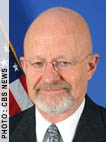
►►US spy chief proposes double-digit budget cuts. Director of National Intelligence James Clapper on Monday said he has proposed double-digit budget cuts in intelligence programs to the White House because “we’re all going to have to give at the office”. Clapper, in a speech at the GEOINT conference in Texas, said his office had “handed in our homework assignment” to the Office of Management and Budget, “and it calls for cuts in the double-digit range, with a B (for billion), over 10 years”.
►►French spy chief charged with snooping on reporter. France’s opposition on Tuesday called for the resignation of Bernard Squarcini, head of the country’s domestic intelligence agency, the DCRI, after he was charged over spying on a journalist with the daily Le Monde.
►►Researcher forecasts new virus similar to Stuxnet. The discovery of an espionage computer virus in Europe similar to the virus that attacked Iran’s nuclear plants last year suggests that a new, similar cyberattack is about to launch, computer virus researcher Mikko Hypponen says. The new virus, Duqu, was first reported by security company Symantec on its blog Tuesday. Its code is very similar to that of Stuxnet, the virus detected last year that was designed to sabotage equipment at Iranian nuclear plants.

News you may have missed #612 (analysis edition)

Cevat Ones

Cevat Ones

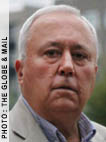
►►What is a senior CIA clandestine officer doing at NYPD? Three months ago, one of the CIA’s most experienced clandestine operatives started work inside the New York Police Department. His title is special assistant to the deputy commissioner of intelligence. On that much, everyone agrees. Exactly what he’s doing there, however, is much less clear.
►►Iranian plot shows even super spies have bad days. The alleged Iranian plot to assassinate the Saudi ambassador to the United States may have revealed the biggest secret of all –intelligence agencies mess up and do not always live up to the James Bond ideal.
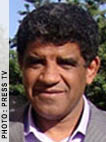
►►Former spy makes plea for peace in Turkey. Cevat Ones, former deputy chief of MİT, Turkey’s leading spy agency, speaks candidly to Canada’s Globe & Mail newspaper about the state of Turkey’s internal security and foreign policy.

Canada memos decry use of Canadian passports by Russian spies

Canadian passport

Canadian passport

By JOSEPH FITSANAKIS | intelNews.org |
In June of 2010 media headlines were dominated by news of a Russian spy ring in the United States that was busted by the Federal Bureau of Investigation. On June 27, eleven people, all sleeper agents of the SVR, Russia’s Foreign Intelligence Service, were arrested in early morning raids across several US states. The arrestees, who included media sensation Anna Chapman, were later exchanged for four alleged CIA agents serving time in Russian jails. What is less known however, is the fact that four of the members of the busted spy ring were claiming to be Canadian citizens. SVR operative Natalia Pereverzeva was caught using a forged Canadian passport under the fake name ‘Patricia Mills’. Two other SVR officers, Andrei Bezrukov and Elena Vavilova, were claiming Canadian nationality under the forged names Donald Heathfield and Tracey Foley. A fourth alleged member of the spy ring, ‘Christopher Metsos’, was apprehended in Cyprus, after using a forged Canadian passport to enter the Mediterranean island. He later disappeared, having skipped bail. Now, sixteen months after the arrests of the Russian spies, The Canadian Press has acquired several hundred pages of memoranda and internal emails from Canada’s Department of Foreign Affairs and International Trade (DFAIT). Substantial portions of the documents, which were acquired through Canada’s Access to Information Act, remain censored; but The Press reports that they show that employees of DFAIT’s Passport Canada office held “urgent meetings and high-level briefings” in the days following the FBI arrests, in order to address the revelations concerning SVR’s illegal use of Canadian passports. In the documents, Canadian officials opine that the use by Russian spies of forged Canadian travel documents poses a “troubling threat to the integrity of Canadian [passports] and identity security”. Read more of this post

News you may have missed #611

Kalevi Sorsa

Kalevi Sorsa

►►Diplomat says Finland’s ex-prime minister was Stasi agent. Finnish former diplomat Alpo Rusi said last week that Kalevi Sorsa, Finland’s longest serving prime minister, who led the country in the 1970s and 1980s, is on a secret list of 18 high-profile Finns with links to the Stasi, East Germany’s Cold-War security service. West German intelligence handed the file to its Finnish counterpart in 1990, but the Finnish Supreme Court ruled last year that the list would not be made public.
►►Nazi criminal spied for West Germany. A wiretap operation conducted in the early 1960s by the CIA against the BND, West Germany’s foreign intelligence service, revealed that the BND employed a senior Nazi war criminal, Franz Rademacher, to spy for it in Syria, CIA records show.
►►US government aims to build ‘data eye in the sky’. Social scientists are trying to mine the vast resources of the Internet — Web searches and Twitter messages, Facebook and blog posts, the digital location trails generated by billions of cell phones to “predict the future”.

US report links telecoms company to Chinese spy services

Sun Yafang

Sun Yafang

By JOSEPH FITSANAKIS | intelNews.org |
For the first time a United States government agency has openly linked one of China’s main telecommunications companies with the country’s intelligence services. The alleged link is provided in a new report by the US Open Source Center, which acts as the open-source intelligence (OSINT) arm of the Office of the Director of National Intelligence. The report concludes that the company, Huawei Technologies, relies on a series of formal and informal contacts with the Chinese People’s Liberation Army and the Ministry of State Security (MSS), which oversee and administer China’s military and civilian intelligence apparatus. Founded in 1987 to import Western office telephone systems to China, the company has become one of the country’s leading exporters of all kinds of communications hardware equipment, ranging from routers to cell towers and undersea cables. But Huawei’s export growth has been hampered in recent years by widely circulated suspicions that the company maintains close ties to the Chinese military and intelligence establishments. The Open Source Center report adds to these suspicions, by pointing out that Huawei’s current chairperson, Sun Yafang (pictured), was an employee of the MSS Communications Department prior to joining Huawei in 1989. It also says that, prior to joining the company, Sun utilized her personal contacts at MSS to “help Huawei through financial difficulties at critical moments when the company was founded in 1987”. The close contacts between the —ostensibly private— company and the Chinese government have persisted ever since, says the report, and points out that the Chinese state has funded Huawei with nearly a quarter-billion dollars for “research and development” projects in the past three years alone. This is not the first time that Huawei has been accused of maintaining close contacts with Chinese intelligence agencies. In 2009, the Australian Security Intelligence Organisation (ASIO) investigated one of Huawei’s Australian-based subsidiaries for links to Chinese intelligence operations. In the following year, the Indian government barred the company from operating in India, citing its allegedly “strong links with the Chinese military”. Read more of this post

News you may have missed #610

Charles S. Faddis

Charles S. Faddis

►►Australian agency warns spy cells ‘lie in wait’. In its annual report, Australia’s intelligence service, the ASIO, warns that foreign powers may be recruiting sleeper agents in Australia to carry out sabotage in future conflicts. The report further notes that, despite the rise of cyberespionage, there has not been a marked reduction in the intensity of more traditional forms of espionage.
►►US frees convicted Cuban spy but debate rages on. Few topics illustrate the gulf in perception between the governments of Cuba and the United States like the case of the Cuban Five. The five Cuban agents were arrested in Florida in the 1990s and convicted on espionage charges. US federal prosecutors said the men were trying to spy on military installations. But Cuba’s government has long maintained the men were trying to monitor Miami-based exile groups that were planning attacks on the island nation.
►►Analysis: It’s time for the Pakistanis to pick a side. Former CIA operations officer Charles Faddis (pictured) argues that the US government needs to immediately designate Pakistan’s proxy army, the Haqqani network, as a terrorist organization. It has avoided taking that action for far too long and only because of crass political concerns, says Faddis, but the time has come to change course.

News you may have missed #609

Ilan Grapel

Ilan Grapel

►►Questions over Chinese spy hang over Putin visit. The arrest of a Chinese spy in Moscow has cast a cloud over Vladimir Putin’s two-day visit to Beijing. Tong Shengyong was arrested last October for allegedly trying to buy plans to the Russian S-300 anti-aircraft missile system. But perplexingly, the news of his arrest only emerged last week, in what appears to have been a deliberate leak by Russia’s Federal Security Service (FSB).
►►Egypt steps up charges against suspected Israel spy. Egypt’s State Security Prosecutor has added additional criminal offenses against alleged Israeli spy Ilan Grapel. Meanwhile, there are indications that Egypt seeks the release of 78 Egyptian prisoners held in Israeli jails in return for Grapel. Israel may agree with the proposal.
►►CIA to be last out of Afghanistan. US Special Forces and the CIA are girding for the moment when Afghanistan’s security rests once again with them, working together with Afghan forces against the Taliban. Recent remarks from the White House suggest the CIA and special operations forces will be hunting al-Qaida and working with local forces long after most US troops have left.

Ex-CIA officer says US may be ‘dangerously wrong’ on alleged Iran plot

Robert Baer

Robert Baer

By JOSEPH FITSANAKIS | intelNews.org |
Robert Baer, who spent over two decades working for the CIA in the Middle East, has warned that the FBI may be “dangerously wrong” in its assessment that Iran is behind an alleged plot to assassinate the Saudi ambassador to the United States. The Obama administration said yesterday that two Iranian agents had been arrested for planning to kill Saudi diplomat Adel al-Jubeir in Washington, DC, with help by members of a Mexican drug cartel. The FBI said that the two Iranians, Manssor Arbabsiar and Gholam Shakuri, were operating on behalf of Iran’s Quds Force, a unit inside the Islamic Revolutionary Guard Corps’ (IRGC) specifically tasked with exporting the Iranian Revolution abroad. The arrests prompted a strong reaction from the United States, which said it will impose new punitive measures against the regime in Tehran —a move that is certain to further-ignite tensions between the two countries. But speaking on Australian national radio, Baer said that the alleged assassination plan does not appear to be connected with the IRGC or any other part of Iran’s state apparatus. The operation, as outlined by the FBI, does not fit the “modus operandi” of the Iranian security services, said Baer. The latter are “much better than this […]. They wouldn’t be sending money through an American bank; they wouldn’t be going to the cartels in Mexico to do this. It’s just not the way they work. I’ve followed them for 30 years and they’re much more careful. They always use a proxy between them and the operation, and in this case they didn’t”. Baer also spoke to the BBC World Service and to The Washington Post, where he is quoted as saying that there is “sloppiness about the case that defies belief”. The former CIA case officer urged the Obama administration to step back, re-examine its case, and avoid “retaliatory attacks [such as bombing] a Quds Force base in Tehran […], which would lead to a huge escalation”. Instead, he urged Washington to open “direct diplomatic channel with the Iranian regime or risk igniting an uncontrollable war”. Read more of this post

News you may have missed #607

Shakil Afridi

Shakil Afridi

►►Ex-worker sues US spy agency for anti-Islamic bias. Mahmoud Hegab, a former employee of the super-secretive US National Geospatial-Intelligence Agency, says he lost his security clearance because his wife attended an Islamic school and worked for a Muslim charity, Alexandria-based Islamic Relief USA.
►►Russia says China still spies the old-fashioned way. Russia’s Federal Security Service (FSB), issued a rare statement last week, claiming it had arrested Tong Shengyong, a Chinese citizen who, posing as a translator for official delegations, was working under the direction of the Chinese government in an attempt to buy state secrets from Russians about Russia’s S-300 missile system. It now says that the Tong case shows that China continues to employ an old standby in the tradecraft playbook: outright bribery.
►►Pakistan panel says doctor who aided CIA should face charges. Pakistani doctor Shakil Afridi, who ran a vaccination program for the CIA to help track down Osama bin Laden, should be put on trial for high treason, a Paksitani government commission said Thursday.

Computer virus found on CIA’s Predator drone remote-control system

Predator drone

Predator drone

By JOSEPH FITSANAKIS | intelNews.org |
The remote control cockpits of the US Central Intelligence Agency’s Predator drones have been infected by a potentially disastrous computer virus, which surreptitiously records every keystroke made by the pilots. Wired magazine’s Danger Room blog, which aired the exclusive report, said that the virus was discovered by the US Pentagon’s network security specialists less than two weeks ago. It also said that the virus has successfully resisted “multiple efforts” to remove it from the computers that guide the remote-controlled missions of the Agency’s unmanned drones. The blog cited a Pentagon computer specialist, who claims that he and his network security team “keep wiping it off and it keeps coming back”. The specialist also said that it is unclear at the present stage whether the computer virus is malicious or benign, in terms of its security implications. It also remains unknown whether the virus was introduced to the system intentionally or by accident, and how far it has spread into the system. It has been confirmed that the primary task of the virus is keylogging —recording all keystrokes made by users. But nobody at the Pentagon seems to know what happens to the keylogged data —that is, whether it remains within the Predator drone computer system, or whether it is clandestinely transmitted to individuals located outside the US military’s chain of command. The Wired report notes that there have been no reports of incidents relating to compromised information as a result of the keylogging virus. Read more of this post
News you may have missed #606

Gaza Freedom Flotilla raid

2010 Flotilla raid

►►N. Korea planned to trade nukes for full ties with US. North Korea in 2008 indicated it would retain its nuclear bombs until the end of the six-party talks as a final bargaining chip for attaining full diplomatic relations with the United States, according to US diplomatic cables leaked recently by the anti-secrecy group WikiLeaks.
►►Judge refuses to sanction CIA for destroying torture tapes. A federal judge won’t hold the CIA in contempt for destroying videotapes of detainee interrogations that included the use of a torture technique known as waterboarding, ruling instead that the spy agency merely committed “transgressions” for its failure to abide by his court order. The Obama administration has kept its promise to the CIA.
►►Turkey says NATO members will not share intelligence with Israel. Turkey has says it is certain that NATO member states will keep their promise of not sharing the Alliance’s intelligence within with Israel. Turkish-Israeli relations badly damaged last year, after Israeli naval commandos stormed a Turkish ship carrying humanitarian aid to Gaza to breach the naval blockade, killing nine Turkish civilians.

News you may have missed #605

Hamid Karzai

Hamid Karzai

►►French intelligence ‘spied on Socialist politician’. Hand-picked” French intelligence agents allegedly spied on the private life of François Hollande, the Socialist whom polls predict is best-placed to beat Nicolas Sarkozy in next year’s presidential elections. They are also said to have spied on Hollande’s partner, Valérie Trierweiler –-potentially France’s future first lady.
►►US to release Cuban spy under supervision. Rene Gonzalez, the first of five Cubans imprisoned in the United States as spies since 1998 will regain his freedom Friday but won’t be able to go home for three more years because of a court order requiring he remain under US supervision.
►►Afghan intelligence says it stopped plot to kill Karzai. A plot to kill Afghan President Hamid Karzai has been foiled by Afghan intelligence agents in Kabul who arrested six men with links to al-Qaeda and the Haqqani network. The discovery of the plot comes just two days before the 10th anniversary of the invasion of Afghanistan in retaliation for the September 11 attacks in the US and, had it been successful, would have plunged the country further into chaos.

News you may have missed #603

Syed Ghulam Nabi Fai

Syed Fai

►►Turkey has names of Israeli soldiers who attacked Gaza Flotilla. According to Turkish media, government officials succeeded in amassing the list of 174 names of officers and soldiers involved in the 2010 MV Mavi Marmara attack, by planting intelligence agents inside Israel. Turkish government officials have denied the reports.
►►Ex-MI5 chief to hear deportation case of alleged spy. A British judge has ruled that Sir Stephen Lander, former director of MI5, Britain’s domestic intelligence service, can help to decide whether Katia Zatuliveter should be deported from the UK for allegedly spying for Russia. Zatuliveter, a Russian citizen who worked as an assistant to former British Member of Parliament Mike Hancock, may be deported on the basis of espionage evidence gathered by MI5.
►►Analysis: Pakistan’s spy plot to influence Washington. Syed Ghulam Nabi Fai came to the US on Saudi money with hopes of helping people in the disputed Indian territory of Kashmir. But he found himself spending millions on behalf of Pakistan’s notorious Inter-Services Intelligence and, now, under arrest. An excellent article by The Atlantic‘s Kim Barker, Habiba Nosheen, and Raheel Khursheed.

News you may have missed #602 (Israel edition)

Ahmed Jamal Daif

Ahmed Jamal Daif

►►Lebanon arrests three suspected of spying for Israel. Lebanon has arrested three people suspected of spying for Israel and trespassing, the London-based Al-Hayat newspaper reported Tuesday. According to the report, an Egyptian citizen and his wife were arrested on suspicion of spying, and an Arab-Israeli man was arrested on suspicion of trespassing. The Israeli, Ahmed Jamal Daif (pictured), was found on Monday in a diving suit on a beach in the southern Lebanese border town of Naqoura, a Lebanese army source said.
►►Egypt may release alleged Israel spy. Agence France Presse is reporting that Cairo is considering the release of alleged Israeli spy Ilan Grapel, in exchange for “political and economic incentives” offered by the United States. Grapel was arrested by Egyptian state security officers in June, on charges of spying for Israel. According to one source, former CIA Director and current US Defense Secretary Leon Panetta is set to visit Egypt today and is supposed to “take Grapel with him at the end of his visit”.
►►Jordanian accused of spying for Israel pleads not guilty. A Jordanian telecommunications engineer, who is on trial in Egypt on charges of spying for Israel, pleaded not guilty on Sunday. Bashar Ibrahim Abu Zeid was detained in Egypt last April after intelligence information allegedly showed he was spying for the Mossad, with Ofir Herari, an alleged Mossad agent, being tried in absentia.