News you may have missed #628 (analysis edition)

Michael Scheuer

Michael Scheuer

►►Should intelligence agencies chase tax evaders? Three years ago, Germany’s foreign intelligence service, the BND, paid a whistleblower close to $7 million for DVDs containing information on thousands of secret accounts at a leading Liechtenstein bank. The discs contained data on 4,527 Liechtenstein foundations and financial entities, 1,400 of which were owned by Germans. But should a spy agency like the BND take part in the unglamorous and politically charged business of collecting information on tax cheats?
►►UK ex-spy chief says Google makes spies work harder. The rise of the web and Google means Britain’s spies have to work harder to produce genuinely secret intelligence, according to Sir David Pepper, the former director of GCHQ, Britain’s signals intelligence agency. He said “the Google effect” of so much information being readily available online had “very substantially” raised the “threshold for producing intelligence” for MI5, MI6 and GCHQ.
►►Ex-CIA official says America ‘creates its own enemies’. Americans are in the crosshairs of terrorists worldwide purely due to Washington’s policy in the Muslim world, according to former CIA officer Michael Scheuer, who spoke to Russia Today. Scheuer, author of Through Our Enemies’ Eyes, worked for the CIA for over 20 years and at one time was the chief of the agency’s ‘Bin Laden unit’.

News you may have missed #627

Omar Suleiman

Omar Suleiman

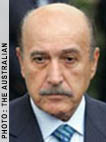
►►Egyptian ex-spy chief appointed security adviser to Saudi Crown Prince. Saudi Arabia’s Crown Prince Nayef bin Abdul Aziz has appointed Egypt’s former Director of General Intelligence, Omar Suleiman, as his security advisor. From 1986 until his forced resignation in spring this year, Suleiman had been the main conduit between Washington, Tel Aviv and the government of Hosni Mubarak.
►►Russia’s spy chief in rare interview. It is very rare that the men that run Russia’s powerful intelligence services give detailed interviews. But that’s just what Alexander Shlyakhturov, the head of military intelligence service, known as the GRU, did earlier this month with the Russian newspaper Rossiyskaya Gazeta.
►►US intel agencies brace for budget cuts. After seeing spending double over a decade, US intelligence agencies are bracing for about $25 billion in budget cuts over the next 10 years. “We’re going to have less capability in 10 years than we have today”, said Director of National Intelligence James Clapper, who sits atop the 16 departments, agencies and offices that comprise the US intelligence community and spend a combined $80 billion a year.

News you may have missed #626

Katia Zatuliveter

Katia Zatuliveter

►►Analysis: On largely forgotten CIA officer Jim Thompson. The CIA’s longtime man in Southeast Asia, Jim Thompson, fought to stop the agency’s progression from a small spy ring to a large paramilitary agency. He was in many ways unique, but by the 1950s and early 1960s he would become part of a larger, growing, and much less idealistic machine, one that would expose his naiveté –and punish him for it. Interesting historical analysis from Foreign Policy.
►►Court blocks naming NATO official who had affair with alleged Russian spy. We have written before that Katia Zatuliveter, who is accused by British MI5 of being a spy for Russia, has admitted having a four-year affair with Liberal Democrat MP Mike Hancock, as well as with a Dutch diplomat and a NATO official. The latter, a German diplomat, was pictured in a newspaper last week. However, his face was obscured because of the terms of a court order that means he cannot be identified.
►►Promises made about Colombia’s new spy agency. Colombia’s disgraced DAS intelligence agency has finally been dissolved. Now the government’s senior National Security adviser, Sergio Jaramillo, has said that Colombia’s new intelligence service will focus on combating “government infiltration by criminal organizations”. I guess it doesn’t hurt to be ambitious.

News you may have missed #625

Ahmed Al Hawan

Ahmed Al Hawan

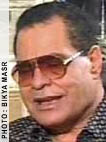
►►Egypt’s most famous spy dies at 74. Egypt’s most famed spy on Israel, Ahmed Al Hawan, 74, has died after a long fight with illness, local media reported on Wednesday. Al Hawan worked for the Egyptian intelligence service during the years that followed Egypt’s military defeat by Israel in 1967. He supplied the Israelis with mistaken and misleading information that was crucial in Egypt’s war with Israel in 1973.
►►Analysis: Dark days for Taiwan’s spies. When Taiwan’s government last month announced budget cuts in military intelligence, the Ministry of National Defense (MND) insisted operations against mainland China would not be affected. However, media paint a vastly different picture, suggesting Taiwan’s future leaders will be completely deaf and blind to secretive developments across the Taiwan Strait.
►►US cyberespionage report names adversaries. A US intelligence report released last week concluded China and Russia are “the most aggressive collectors” of US economic information and technology online. But the report also states that America’s “allies and partners“, including the “French and the Israelis” are also stealing the s vital industrial and commercial secrets by infiltrating computer networks.

Analysis: CIA Open Source Center monitors Facebook, Twitter, blogs

CIA HQ

CIA HQ

By JOSEPH FITSANAKIS | intelNews.org |
The Associated Press has been given unprecedented access to the United States Central Intelligence Agency’s Open Source Center, which is tasked with, among other things, monitoring social networking media. The Center, which was set up in response to the events of 9/11, employs several hundred multilingual analysts. Some are dispatched to US diplomatic missions abroad, but most work out of “an anonymous industrial park” in the US state of Virginia, which the Associated Press agreed not to disclose. The analysts, who are jokingly known in CIA OSINT (open-source intelligence) parlance as “ninja librarians”, engage in constant mining of publicly available information. The latter ranges from articles found in scholarly journals, to civilian television and radio station programs, as well as information available on the Internet. According to the Associated Press report, the Center began paying particular attention to social networking websites in 2009, when Facebook and Twitter emerged as primary organizing instruments in Iran’s so-called “Green Revolution”. The term describes the actions that Iranians opposed to President Mahmoud Ahmadinejad took to protest the disputed election results that kept him in power. Since that time, the CIA’s Open Source Center has acquired the ability to monitor up to five million tweets a day, and produces daily snapshots of global opinion assembled from tweets, Facebook updates and blog posts. Its executive briefings reportedly find their way to President Barack Obama’s Daily Brief on a regular basis. The Associated Press was given access to the Center’s main facility, and interviewed several of its senior staff members, including its Director, Doug Naquin. He told the news agency that the CIA Open Source Center had “predicted that social media in places like Egypt could be a game-changer and a threat to the regime”, but had been unable to foresee the precise development of Internet-based social activism in the Arab world. Read more of this post

News you may have missed #624

Viktor Bout

Viktor Bout

►►Russia angry at Viktor Bout’s US guilty verdict. Moscow has reacted angrily to the guilty verdict handed down to Russian arms dealer Viktor Bout by a court in the United States. Bout, a former Soviet military intelligence (GRU) officer, was arrested in a sting operation in Bangkok, Thailand, in March of 2008. At the time of his arrest, he and his two collaborators were negotiating a complex weapons deal with two informants posing as representatives of the Revolutionary Armed Forces of Colombia (FARC), Latin America’s largest leftist paramilitary group.
►►Symposium examined Reagan’s use of intelligence. The CIA released more than 200 declassified documents it prepared for US President Ronald Reagan during a symposium last week at the Ronald Reagan Presidential Library in Simi Valley, California. The CIA conference, entitled “Ronald Reagan, Intelligence, and the End of the Cold War“, included a discussion by American and Soviet former spies.
►►Suspected Chinese spy loses bid to rejoin Canada civil service. Haiyan Zhang, worked as a senior communications analyst with the Privy Council Office in Ottawa. She was fired when Canada’s spy agency questioned her “loyalty to Canada” over suspicion she was spying for China. Now she has lost her fight to return to the civil service.

Western companies provide Syrian regime with monitoring systems

Syria

Syria

By JOSEPH FITSANAKIS | intelNews.org |
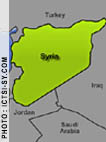
An Italian communications company is working with the Syrian government to provide it with a sophisticated email surveillance system, using equipment created by American, French and German firms. The Syrian regime has come under sustained pressure by Western governments in recent months. The latter urge Syria’s President, Bashar al-Assad, to stop using lethal violence against protesters, citing independent reports that over 3,000 civilians have been killed by government forces since March. But Bloomberg News Agency cites an unnamed insider who claims Area SpA, a telecommunications surveillance company based in Milan, Italy, has technicians in several Syrian cities working feverishly to provide the  Syrian authorities with a state-of-the-art email surveillance system. According to the unnamed source, when completed, the surveillance system will be able to “intercept, scan and catalog virtually every e-mail that flows through the country”. The project, which has been codenamed ASFADOR, is directed by senior Syrial intelligence officials, who are supervising the work of several Italian technicians working in Damascus and elsewhere. Bloomberg reports that numerous Area SpA technicians have been traveling to Syria “in shifts”, as the company is anxiously trying to accommodate pressures by Syrian officials, who say “they urgently need to track people”. The Italian company, known for providing Italian law enforcement with telephone surveillance hardware and software, is apparently using equipment by European and American firms, including France’s Qosmos SA, Germany’s Ultimaco Safeware AG, and America’s NetApp Inc. Bloomberg, which claims it has seen blueprints of the surveillance system, contacted Area SpA’s chief executive officer, Andrea Formenti, who refused to comment on the case, except to say that his company “follows all laws and export regulations”. Wondering where you’ve heard all this before? Read more of this post

News you may have missed #622

SVR seal

SVR seal

►►Russian spies in Germany focused on politics and military. A married couple arrested on suspicion of spying for Russia is believed to have been gathering information on political developments and military affairs, according to German newsmagazine Der Spiegel. The two have been identified as Andreas and Heidrun Anschlag. German prosecutors accuse them of spying for SVR, the successor to the KGB’s First Chief Directorate.
►►Israel releases spy who gave information to Iran. Israel has released Nahum Manbar, who was sentenced to 16 years in prison in 1997, after he was convicted of harming state security and selling information and supplies to create chemical weapons to Iran. Israel’s Attorney General Yehuda Weinstein approved the early release of Manbar on Monday, one and a half years before the end of his sentence. This was the third time Manbar had requested to be released early.
►►FBI releases Russian illegals’ photos and videos. Documents released Monday, including photos, videos and papers, offered new details about the FBI’s decade-long investigation into a ring of Russian sleeper agents who, US officials say, were trying to burrow their way into American society to learn secrets from people in power. The investigation was apparently code-named Operation GHOST STORIES because six of the 10 Russian agents had assumed the identities of dead people. If you are wondering what these spies are doing now, read this informative update from the Associated Press.

News you may have missed #621

Pakistan

Pakistan

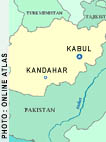
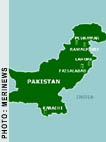
►►Pakistan denies spying on German forces in Afghanistan. Pakistani officials have rejected a German newspaper report that the country’s secret service spied on German security forces in Afghanistan. Without citing its sources, mass-selling weekly Bild am Sonntag reported on Sunday that Germany’s BND foreign intelligence agency warned its interior ministry that Pakistan had spied on 180 German police officers deployed in Afghanistan to train locals.
►►CIA expert says US government lacks security operating system. Industry is not providing the US government with the basic tools it needs to build a secure information infrastructure, according to Robert Bigman, chief of the CIA’s Information Assurance Group. “What we need is a secure operating system”, he said during a panel discussion at the Security Innovation Network showcase in Washington last month. “We gave up some time ago on the battle to build a secure operating system, and we don’t have one”.
►►US increased spy spending in 2011. The US Congress appropriated $54.6 billion for intelligence programs in the 2011 fiscal year, the Office of the Director of National Intelligence disclosed last week. The amount, which does not include what was spent on military intelligence, is a slight increase from the year before but could be the end of the upward trend, says CNN’s Security Clearance blog.

FBI ‘used Google Translate’ to indict alleged Syrian spy, claims lawyer

Mohamad Anas Haitham Soueid

Mohamad Soueid

By JOSEPH FITSANAKIS | intelNews.org |
The lawyer of a Syrian national accused by the United States of spying for Syria has accused the Federal Bureau of Investigation of resorting to Google to prepare the case against his client. Mohamad Anas Haitham Soueid was arrested last summer and charged with conducting political espionage against Syrian and American citizens participating in demonstrations against the regime of Syrian President Bashar al-Assad. The alleged espionage appears to have been organized by members of the Syrian embassy in Washington, DC. A few weeks prior to Soueid’s arrest, the US Department of State had communicated to Syria’s ambassador to Washington, Imad Moustapha, “a number of […] concerns with […] reported actions of certain Syrian embassy staff in the United States”. The concerns centered on confirmed sightings of Syrian diplomats conducting technical surveillance against Syrian opposition activists in several US cities. Soueid was subsequently arrested for allegedly gathering intelligence on protesters and planning an extensive intimidation campaign. But Soueid’s lawyer, Haytham Faraj, told the court last week that his client’s name, as transcribed in the FBI indictment, had been wrongly transliterated into English using Google Translate. He also wrote in a court filing that the prosecution had “demonstrated a serious deficit in its ability to translate recorded conversations from Arabic into English”. Soueid’s defense also argues that federal prosecutors appear “to have taken extensive liberties with a playful [telephone] conversation” between the accused and his wife back in Syria, eventually producing an English-language translation “that has no basis in fact”. In one case highlighted by the defense, the accused allegedly told his wife that the Syrian intelligence agency was monitoring telephone calls; but in English, the phrase was changed to say “this phone belongs to intelligence agency”. Read more of this post

News you may have missed #619 (WikiLeaks edition)

Peter Van Buren

Peter Van Buren

►►US suspends diplomat for linking blog to WikiLeaks. The State Department has suspended Peter Van Buren (pictured), a 23-year veteran foreign service officer, for writing a book critical of US policy in Iraq and blog posts that included a link to a WikiLeaks cable. Van Buren, who worked in human relations, said he was escorted out of the State Department on Monday and barred from returning for two days while officials there decide what to do next with him. They had stripped him of his top secret security clearance a few days earlier, he said.
►►Solomon Islands minister was CIA source. Classified US diplomatic cables from 2006, recently published by WikiLeaks, have revealed that the Solomon Islands’ former Foreign Affairs Minister and businessman Laurie Chan has acted as a reliable source of US and Australian intelligence in the Pacific island country.
►►Diplomatic cable sheds light on suicides of Bulgarian spies. A diplomatic following cable, sent by John Beyrle, US Ambassador to Bulgaria before going to Moscow, dated January 25, 2007, has been released by WikiLeaks. The cable sheds light on reshuffles in the leadership of the country’s intelligence services and the suicides of two high-ranking intelligence employees.

News you may have missed #618

Abdullah al-Senoussi

Al-Senussi

►►US Congressman urges expulsion of ‘Iranian spies’ at the UN. New York Congressman Peter King says the US should kick out Iranian officials at the UN in New York and in Washington because many of them are spies. Speaking at a hearing Wednesday, the Democrat said such a move would send a clear signal after the recent alleged Iranian plot to assassinate the Saudi ambassador in Washington.
►►Colombia’s intelligence chief denies knowledge of illegal wiretapping. Felipe Muñoz, the director of Colombia’s intelligence agency DAS has denied knowledge of illegal interception of unionists’ emails and phone calls by DAS employees, following the announcement that the Inspector General’s Office will be investigating these allegations. According to the allegations, Muñoz and other leading DAS officials were aware of the illegal interception.
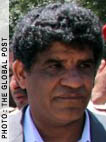
►►Gaddafi intelligence chief now in Niger. Moammar Gadhafi’s intelligence chief, Abdullah al-Senussi (pictured), who is wanted by the International Criminal Court, has slipped into the desert nation of Niger and is hiding in the expanse of dunes at the Niger-Algeria border, a Niger presidential adviser said last week. Meanwhile, Gaddafi’s former spy chief, Moussa Koussa, has denied claims made in a BBC documentary that he tortured prisoners.

News you may have missed #617

Ilan Grapel

Ilan Grapel

►►Analysis: Is the CIA Still an Intelligence Agency? Early September 2011, a former intelligence official commented to The Washington Post that, “The CIA has become one hell of a killing machine”. He then attempted to retract, but his words were on record. But is that really what it should be: a hell of a killing machine?
►►US National Security Agency helps Wall Street battle hackers. The National Security Agency, a secretive arm of the US military, has begun providing Wall Street banks with intelligence on foreign hackers, a sign of growing US fears of financial sabotage. While government and private sector security sources are reluctant to discuss specific lines of investigations, they paint worst-case scenarios of hackers ensconcing themselves inside a bank’s network to disable trading systems for stocks, bonds and currencies, trigger flash crashes, initiate large transfers of funds or turn off all ATM machines.
►►Israel okays deal with Egypt to free alleged spy. Israel’s security cabinet unanimously approved an agreement Tuesday for the release of Israeli-American law student Ilan Grapel (pictured), who has been in jail in Egypt since June 12 on spying allegations that were later reduced to incitement. In exchange, Israel will release 22 Egyptian prisoners, most of them Bedouin from the Sinai jailed for smuggling drugs or weapons.

Analysis: United States and Germany spy on each other

BND seal

BND seal

By JOSEPH FITSANAKIS | intelNews.org |
Newly released documents reveal that the Central Intelligence Agency has maintained an active program of espionage against Germany in the post-Cold War era, and experts say that Germany reciprocates the ‘favor’. According to an article in the latest issue of German newsmagazine Focus, the US intelligence community, led by the CIA, has been keeping tabs on Germany’s intelligence agencies since the 1950s, and continues to do so today. The magazine’s editors say they are in possession of internal government documents, which describe constant CIA monitoring on the Bundesnachrichtendienst (BND), Germany’s main external intelligence agency. The CIA’s spying extends to Germany’s counterintelligence agency, known as the Federal Office for Protection of the Constitution (Bundesamt für Verfassungsschutz). CIA operations against the Office have reportedly included the interception of telephone calls, some of which involved high-level conversations between German and British or French intelligence officials. Focus claims that CIA spying against the BND actually intensified following German reunification in 1990, as the American agency kept tabs on German intelligence officers with former Nazi or communist past. According to one report, the CIA was able to verify that at least two BND officers with service in the Nazi SS had joined a NATO sabotage unit. The magazine spoke to an unnamed former BND counterintelligence officer, who said he was not in the least surprised by the revelations. Commenting yesterday on the Focus report, Washington-based reporter Jeff Stein argued that a little friendly spying is to be expected among allied intelligence services. The veteran intelligence correspondent spoke to an unnamed former CIA officer, who told him that the espionage between Washington and Berlin has not been “a one-way street” —the BND also spies on the CIA and other American intelligence agencies. Read more of this post

News you may have missed #614

James Clapper

James Clapper

►►US spy chief proposes double-digit budget cuts. Director of National Intelligence James Clapper on Monday said he has proposed double-digit budget cuts in intelligence programs to the White House because “we’re all going to have to give at the office”. Clapper, in a speech at the GEOINT conference in Texas, said his office had “handed in our homework assignment” to the Office of Management and Budget, “and it calls for cuts in the double-digit range, with a B (for billion), over 10 years”.
►►French spy chief charged with snooping on reporter. France’s opposition on Tuesday called for the resignation of Bernard Squarcini, head of the country’s domestic intelligence agency, the DCRI, after he was charged over spying on a journalist with the daily Le Monde.
►►Researcher forecasts new virus similar to Stuxnet. The discovery of an espionage computer virus in Europe similar to the virus that attacked Iran’s nuclear plants last year suggests that a new, similar cyberattack is about to launch, computer virus researcher Mikko Hypponen says. The new virus, Duqu, was first reported by security company Symantec on its blog Tuesday. Its code is very similar to that of Stuxnet, the virus detected last year that was designed to sabotage equipment at Iranian nuclear plants.