CIA hid terrorism prisoners from US Supreme Court

CIA HQ

CIA HQ

By JOSEPH FITSANAKIS | intelNews.org |
The Central Intelligence Agency purposefully concealed at least four terrorism detainees from the US legal system, including the Supreme Court, according to an exclusive report by the Associated Press. The news agency has revealed that the CIA secretly transported the four to Guantánamo Bay Detention Camp on Cuba in 2003, two years before it publicly admitted their capture. It then secretly transferred them again to other sites in its black site prison network in various countries around the world, just three months before their prolonged stay at Guantánamo would entitle them to legal representation. While at Guantánamo, the four prisoners, Abd al-Nashiri, Mustafa al-Hawsawi, Ramzi Binalshibh and Abu Zubaydah, were kept at a facility known as ‘Strawberry Fields’, which is detached from the main prison site at the bay. By hiding the four, the Bush Administration managed to keep them under CIA custody while denying them legal representation for two years longer than allowed by US law. It also concealed their detention from national and international human rights monitoring bodies and from the US justice system, including the Supreme Court. Read more of this post

News you may have missed #412

Bookmark and Share

News you may have missed #411

  • Third Lebanese telecom worker charged with spying for Israel. A Lebanese prosecutor has charged a third state telecommunications employee with spying for Israel. Milad Eid, who worked at the state-owned fixed-line operator Ogero, is accused of “dealing with the Israeli enemy [and] giving them technical information in his position as head of international communications at the Telecommunications Ministry”.
  • Author Roald Dahl was British spy, new book claims. A new book by Donald Sturrock, entitled Storyteller: The Life of Roald Dahl, claims that children’s author worked for British Security Coordination (BSC), a 1940s secret service network based in the United States, and was ‘run’ from New York by Canadian industrialist William Stephenson.
  • Israeli nuclear whistleblower wants to leave country. Nuclear whistle-blower Mordechai Vanunu has been released from prison after serving a 10-week sentence for violating the terms of his parole by speaking to a foreign journalist. Upon his release, he asked that he be allowed to leave the country.

Bookmark and Share

Swapped spy says he is not Russian, wants to move to Peru

Mikhail Vasenkov

Mikhail Vasenkov

By IAN ALLEN | intelNews.org |
One of the 11 Russian spies arrested in the US in June, and later swapped with CIA assets held in Russian prisons, claims he is not Russian, speaks no Russian, and wants to move to Peru, where he lived in the 1970s. Juan Lazaro was arrested by the FBI on June 27, along with 9 other (and later one more) Russian deep-cover operatives, who had lived in the United States under false identities for up to three decades. Lazaro, who lived in Yonkers, New York, had a doctorate in Political Science, worked as an adjunct professor, and was married to Peruvian-born journalist Vicky Pelaez. But FBI investigators unmasked Lazaro’s real name, which is Mikhail Vasenkov, before deporting him and his wife, who is also accused of working for the Russian secret services, to Moscow. According to FBI records, Vasenkov assumed the Juan Lazaro identity and ‘legend’ (biographical narrative and supporting documentation for intelligence purposes) while living in Latin America in the 1970s, using the papers of the real Juan Lazaro, an Uruguayan child who died at age 3. But now Vasenkov’s American lawyer, Genesis Peduto, claims her client is not from Russia, speaks no Russian, but is in fact the real Juan Lazaro, and wishes to leave Russia for Peru. Read more of this post

News you may have missed #409

  • Probe unearths secrets of Bulgaria’s assassination bureau. Previously unknown details on Service 7, Bulgaria’s Cold War-era assassination bureau, have been unearthed by one of Bulgaria’s leading newspapers, following a probe into 5,000 pages of declassified archives from the country’s former communist intelligence service, the First Directorate of the Committee on State Security.
  • US Pentagon bars troops from reading WikiLeaks. Any citizen, any foreign spy, any member of the Taliban, and any terrorist can go to the WikiLeaks web site, and download detailed information. Members of that same military, however, are now banned from looking at those internal military documents, because “doing so would introduce potentially classified information on unclassified networks”.
  • Analysis: Chasing Wikileaks. “[W]hatever the imperfections of WikiLeaks as a startup, its emergence points to a real shortcoming within our intelligence community. Secrets can be kept by deterrence –that is, by hunting down the people who leak them […]. But there are other methods: keep far fewer secrets, manage them better –and, perhaps, along the way, become a bit more like WikiLeaks. An official government Web site that would make the implementation of FOIA quicker and more uniform, comprehensive, and accessible”.

Bookmark and Share

Iran factory blast coincides with reported bomb attack on Ahmadinejad

Ahmadinejad

By JOSEPH FITSANAKIS | intelNews.org |
Official Iranian denials of an alleged bomb attack on the life of President Mahmoud Ahmadinejad on Wednesday have been followed by reports of a simultaneous attack on a state-of-the-art Iranian petrochemicals complex. Specifically, on August 4, Reuters news agency cited an Iranian “presidential office source” in reporting a strong blast “500 meters from Ahmadinejad’s motorcade”. The blast, which Reuters attributed to either a hand grenade or a homemade explosive device, occurred as the Iranian President was being transported from the regional airport of Hamadan, in western Iran, to the city’s sports complex, where he was scheduled to deliver a speech. Reuters’ unnamed source said the President escaped unhurt, but subsequent reports indicated that several other passengers on the motorcade were injured. Interestingly, President Ahmadinejad’s office initially appeared to confirm the assassination attempt, but soon afterwards official state news agency IRNA attributed the blast on “an excited young man from Hamadan [who] exploded a firecracker in order to express his happiness”. Read more of this post

News you may have missed #408

  • Russian military spy supervised Czech prisons. Robert Rakhardzho, a Russian spy whose relationship with a Czech female Army major prompted the resignation of three senior Czech military officials, worked as a psychologist at the Czech Prison Service headquarters until last September. Rakhardzho is now hiding in Russia.
  • US undercover feds able to easily obtain fraudulent passports. Gregory Kutz, an investigator for the US Government Accountability Office, testified last week to a Senate panel about how his team of undercover Federal agents was able to get the State Department to issue five of the seven e-Passports it requested using fraudulent information. The government apparently failed to detect such basic red flags as a fake driver’s license.
  • Russia widens powers of KGB successor agency. Russian president Dmitry Medvedev has signed a law widening (again) the powers of the Federal Security Service, the KGB’s main successor agency. The new law allows the FSB to issue warnings to people suspected of preparing to commit “crimes against Russia’s security”. Perpetrators face fines or up to 15 days detention.

Bookmark and Share

News you may have missed #407

Bookmark and Share

Comment: Is Lebanon Using US Assistance to Capture Israeli Agents?

Lebanon

Lebanon

By JOSEPH FITSANAKIS | intelNews.org |
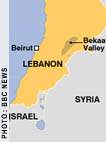
A minor revolution has been taking place in Lebanon over the past 16 months. Since April of 2009, Lebanese authorities have arrested nearly 100 individuals on charges of spying for Israel, three of whom have been sentenced to death. Judging by numbers alone, this may be one of the most astonishing coups in the annals of counterintelligence. There are several reasons why this is happening.

Read more of this post

News you may have missed #406

Bookmark and Share

CIA killed Chile Army commander, says Pinochet’s spy chief

Carlos Prats

Carlos Prats

By JOSEPH FITSANAKIS | intelNews.org |
The convicted former chief of Chile’s intelligence services during the dictatorship of Augusto Pinochet has accused the CIA of murdering the deposed leader of the Chilean army and former Vice-President of Chile, in 1974. General Carlos Prats González was a close political ally of Chilean President Salvador Allende, who was toppled by a CIA-assisted military coup in 1973, led by General Augusto Pinochet. General Prats managed to escape with his family to neighboring Argentina. It was there where, in 1974, he was killed along with his wife, Sofia Cuthbert, in a massive car bomb. A Chilean court has convicted General Manuel Contreras, who headed Pinochet’s feared DINA secret police, for the murder of General Prats and his wife. But Contreras, 81, who has been in prison since 1995, servicing over 100 years for several kidnappings and murders of anti-Pinochet dissidents, now accuses the CIA of the Prats murders. Read more of this post

News you may have missed #405

  • Democracy Now on Google-CIA partnership. Democracy Now has aired an interview with John Simpson, director of Consumer Watchdog’s Inside Google project, and Noah Shachtman, of Wired magazine’s Danger Room blog, who broke the story of the Google-CIA investment partnership.
  • Ex-CIA chief downplays cyberwar with China. Retired CIA chief Michael Hayden downplayed the notion that the US is in a raging “cyberwar” with China during a speech on Thursday at the Black Hat Technical Security Conference in Las Vegas.
  • Men held over parcel bomb sent to MI6. Two men have been arrested in north Wales, after parcel bombs were sent to the offices of the British government executive at 10 Downing Street, and the headquarters of MI6, Britain’s external intelligence agency. The two men, aged 52 and 21, are believed to be related and of Pakistani origin.

Bookmark and Share

US money transfer firms linked to Dubai killing of Hamas official

Mahmoud al-Mabhouh

Al-Mabhouh

By IAN ALLEN | intelNews.org |
Preliminary results of an ongoing international investigation into the January 2010 murder of a senior Hamas official show that US-based money transfer companies were used to finance the killing. The body of Mahmoud al-Mabhouh, co-founder of the Palestinian Izz ad-Din al-Qassam Brigades, Hamas’ military wing, was discovered by staff at Dubai’s luxury Al-Bustan Rotana Hotel, where al-Mabhouh was a guest, on January 20, 2010. His murder is widely believed to have been the work of a multi-member hit squad operating under the command of Israeli external intelligence agency Mossad. But, according to American newspaper The Wall Street Journal, the funds used by the Israeli hit squad members during the assassination operation came from fund transfers in the United States. Read more of this post

News you may have missed #404 (Wikileaks Afghan War Diary edition II)

  • Wikileaks posts mysterious ‘insurance’ file. WikiLeaks, the whistleblower website that recently published hundreds of thousands of classified Afghan War documents, has posted a mysterious encrypted file labeled “insurance”, whose size dwarfs the size of all the other files on the page combined. Cryptome, a separate anti-secrecy site, speculates that the file may be insurance in case something happens to the WikiLeaks website or to its founder, Julian Assange. In either scenario, WikiLeaks volunteers, under a prearranged agreement with Assange, could send out a password to allow anyone who has downloaded the file to open it.
  • Ex-CIA officer Baer comments on Wikileaks files. Robert Baer, the retired CIA field officer whose bestselling memoir, See No Evil, formed the basis of the 2005 motion picture Syriana, has called the quality of intelligence revealed in the Wikileaks Afghan War files “just awful. Basically, we don’t know who the enemy is”, says Baer, adding that “much of the information looks to be the result of walk-in informers –intelligence peddlers looking for a cash payment or some other reward for passing on gossip”.
  • Wikileaks informant suspect had help, says informer. Hacker-turned government informant Adrian Lamo, who is assisting the US government investigate thousands of leaked secret war records to Wikileaks, says Army intelligence analyst Bradley Manning, who is the suspected culprit of the leak, had civilian help.

Bookmark and Share

Documents detail history of previously unknown US spy agency

John V. Grombach

J.V. Grombach

By IAN ALLEN | intelNews.org |
A collection of tens of thousands of documents discovered in a barn in a small Virginia town, have brought to light the history and operations of a previously unknown US spy agency that competed for prominence with the CIA during the early stages of the Cold War. The secrecy-obsessed agency was known at various times as the Secret Intelligence Branch, the Special Service Branch, the Special Service Section, or the Coverage and Indoctrination Branch; but insiders referred to it simply as “the Lake” or “the Pond”. It was created in late 1942 by the then newly established US Department of Defense, whose officials did not approve of the civilian character of the Office of Strategic Services (OSS), forerunner of the CIA. In its 13-year existence, the Pond operated on a semi-autonomous base under the Departments of Defense and State, but maintained a poor relationship with the CIA, which it considered too “integrated with British and French Intelligence and infiltrated by Communists and Russians”. This information is contained in the files, which were stored in several safes and filing cabinets by the organization’s secretive leader, US Army Colonel John V. Grombach, who died in 1982. Read more of this post