Brazil’s new acting president was US embassy intelligence source in 2006
May 17, 2016 1 Comment
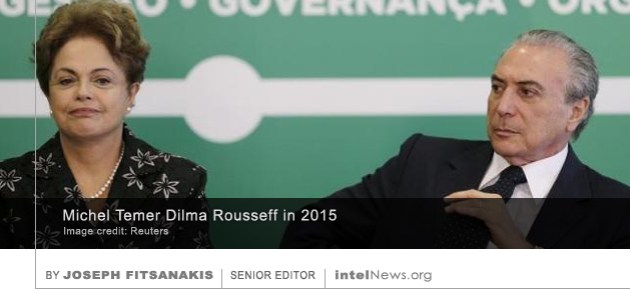 The new acting president of Brazil briefed American diplomats on sensitive political matters in 2006, according to cables published by the international whistleblower website WikiLeaks. Michel Temer is leader of the Brazilian Democratic Movement Party, known as PMDB. Although it is one of Brazil’s largest political parties, the PMDB has been unable to muster enough electoral support to govern the country on its own. As a result, under Temer’s leadership, the PMDB has been a partner of every governing coalition in Brazil since 1995. During the administration of leftwing President Dilma Rousseff, Temer held the post of Vice President.
But in March of this year, the PMDB dropped its support of Rousseff, accusing her of financial irregularities. In April, the speaker of Brazil’s Chamber of Deputies (the lower house of the Brazilian Parliament), Eduardo Cunha, who is himself a PMDB member, spearheaded impeachment proceedings against Rousseff. Eventually, these efforts were successful, leading to the suspension of the president, who is currently undergoing an impeachment trial. In the meantime, Temer assumed the role of president, as stipulated by the Brazilian constitution. This has led Rousseff to denounce the proceedings as a coup orchestrated by the PMDB.
Throughout this process, the United States, which has had a tense relationship with President Rousseff, and her predecessor, the leftwinger Luis Inacio Lula da Silva, has maintained a discrete silence. But two leaked cables produced by the US embassy in Brazil in 2006, show that Temer, who led the impeachment proceedings against Rousseff, was considered an intelligence informant by US diplomats. The cables, which were published on Friday by WikiLeaks, appear to show that Temer briefed US diplomats at length on sensitive matters relating to domestic Brazilian politics on at least two occasions. The cables, dated January 11 and June 21, 2006, are marked “sensitive but unclassified” and “Political Affairs—Intelligence” by their author, Christopher McMullen, who was then US consul general in Brazil. They detail the content of conversations that Temer, who was then a member of Congress, had with McMullen and an unnamed US official in the embassy’s political section.
There is no reason to assume from these cables that Temer was a paid informant, or that he was even a regular source of information for US diplomats. Nor is there any evidence that the US officials who met with Temer worked for US intelligence. However, it is clear in the cables that the Brazilian politician relayed sensitive information about his personal electoral plans, the plans of the PMDB, as well as the domestic politics of his party, which includes an analysis of various factions. Moreover, he appears to discuss matters of political strategy that are not meant for general consumption.
Ironically, the June 21 cable contains McMullen’s unfavorable assessment of Temer and the PMDB, which he describes as a “a group of opportunistic regional leaders” who have “no ideology or policy framework” and thus lack “a coherent national political agenda”. Temer was sworn in as president on May 12 and will remain in the post for no more than 180 days, during which time the outcome of the impeachment proceedings against Rousseff will be determined.
► Author: Joseph Fitsanakis | Date: 17 May 2016 | Permalink
 Authorities in Washington are preparing to launch an investigation into a dozen radio stations operating in major cities in the United States, which are allegedly owned by a subsidiary of the Chinese government. The investigation appears to have been sparked by a














 intelNews.org
US denies it plans to free top intelligence analyst who spied for Cuba
August 29, 2016 by Joseph Fitsanakis 1 Comment
Montes, who is the daughter of an American military doctor, grew up in Kansas. In 1985 she joined the Defense Intelligence Agency, a US Department of Defense body that collects and analyzes military-related information abroad. Montes quickly distinguished herself in the DIA, and by the mid-1990s she was seen as one of the US government’s most knowledgeable and capable Cuba experts. She was the main author of nearly every major assessment on Cuba that was produced by the US Intelligence Community in the 1990s. But on September 21, 2001, Montes was arrested by the Federal Bureau of Investigation and charged with having committed espionage for Cuba. During her trial, US government prosecutors argued that Montes had been recruited by Cuban intelligence before she joined the DIA, and that she eventually compromised every US intelligence collection program targeting the Caribbean island. The former DIA analyst was also accused of having given Havana the identities of US intelligence officers who had secretly operated in Cuba. In 2002, Montes was sentenced to 25 years in prison, after pleading guilty to having committed espionage throughout her 16-year career at the DIA.
But in recent months, there has been speculation that Montes could be released and allowed to relocate to Cuba. In return, Havana would reportedly extradite to the US Assata Shakur, a former member of militant black nationalist groups in the United States, who is wanted for the 1973 murder of a state trooper in the state of New Jersey. Shakur, whose birth name is JoAnne Deborah Byron, escaped from an American prison in 1979 and resurfaced in Cuba in 1984. The island’s socialist government gave Shakur political asylum, but the FBI has designated her a terrorist.
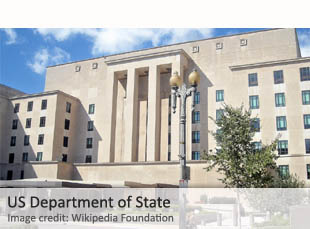
The rumors about a possible exchange between Montes and Shakur prompted US Representative Devin Nunes, a Republican from California, who chairs the House Permanent Select Committee on Intelligence, to voice concern. In a letter to US President Barack Obama, Nunes urged against Montes’ release. The Congressman described the imprisoned former intelligence analyst as “one of the most brazen traitors in US history” and remarked that she “richly deserved her 25-year prison sentence, and must serve every day of it”. According to El Nuevo Herald, Nunes received a written response from the US Department of State, which said that “the United States government has no intention of releasing or exchanging Montes”. According to the Florida-based, Spanish-language newspaper, the State Department letter “assured” Nunes that it was “responding on the president’s behalf”, suggesting that the Obama administration has no plans to release Montes.
► Author: Joseph Fitsanakis | Date: 29 August 2016 | Permalink
Filed under Expert news and commentary on intelligence, espionage, spies and spying Tagged with Ana Belen Montes, Assata Shakur, Cuba, Devin Nunes, DIA, imprisoned spy swaps, News, United States, US Department of State, US House of Representatives Permanent Select Committee on Intelligence