News you may have missed #637

Dmitri Bystrolyotov

D.A. Bystrolyotov

►►South African spy boss to quit. Director General of the State Security Agency Jeff Maqetuka, who has been entangled in a never-ending war with Minister Siyabonga Cwele, is expected to step down this week, according to South Africa’s Sunday Independent. The paper claims that that plans are afoot to expedite Maqetuka’s departure from the country’s intelligence infrastructure by placing him on summer leave and then making sure he would not return to work in 2012.
►►Slovakian defense minister resigns over wiretap scandal. The interception of journalists’ telephone calls by the Slovakian Defense Ministry’s counterintelligence arm has cost the country’s Defense Minister, Lubomír Galko, his job. The scandal involved Slovakia’s Military Defense Intelligence (VOS). It has also emerged that the VOS operation involved wiretapping of the head of TV news channel TA3 and two senior Defense Ministry employees, according to leaked documents obtained by Slovak media outlets.
►►Book on Soviet spy Dmitri Bystrolyotov. Excerpt from Emil Draitser’s book Stalin’s Romeo Spy: The Remarkable Rise and Fall of the KGB Most Daring Operative (Northwestern University Press, 2010), about one of the 20th century’s most outstanding undercover operatives. Bystrolyotov acted in Western Europe in the interwar period, recruiting and running several important agents in Great Britain, France, Germany, and Italy.

German government admits using Trojan to spy on private computers

CCC logo

CCC logo

By JOSEPH FITSANAKIS | intelNews.org |
The local government of at least one German federal state has admitted using specially designed computer software to spy on citizens, after a hacker group revealed the existence of the software. On Saturday, the German Chaos Computer Club (CCC), one of the world’s most reputable ‘white hat’ hacker groups, said that German authorities regularly employ the so-called ‘Bundestrojaner’ (‘Federal Trojan’) virus in order to spy on the users of targeted computers. Club member Frank Rieger told German newsmedia that the virus, which was revealed to the Club via an anonymous tipster, was developed by German police experts, and is used by government agents it to intercept electronic information during investigations. The Trojan is reportedly capable of surreptitiously taking screenshots of infected computers, keylogging, recording Skype conversations, and taking control of networked webcams or microphones, thus permitting physical eavesdropping of a person’s home or workplace. In doing so, the Trojan would appear to facilitate warrantless communications interception that exceeds legal limits set under German law. Moreover, according to CCC, the virus acts as a backdoor to infected systems, thus allowing the uploading and execution of unauthorized programs, and potentially may even facilitate the planting of incriminating evidence on targeted computers. Initially, German government officials denied the CCC’s allegations; on Monday, however, officials in the southern German state of Bavaria confirmed that local police forces have been using the Bundestrojaner virus since at least 2009. Read more of this post
News you may have missed #563 [updated]

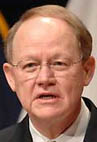
Mike McConnell

Mike McConnell

►►Colombia spy official imprisoned for illegal wiretapping. Gustavo Sierra Prieto, the former analysis chief of Colombia’s soon-to-be-dismantled DAS intelligence agency, has been sentenced to eight years and four months in jail for his role in the illegal wiretapping of government opponents, judges and journalists. But the main culprit in the wiretapping scandal, former DAS Director Maria Pilar Hurtado, is still hiding in Panama.
►►Cold War documents detail CIA interest of Canada. The CIA has declassified some of its Cold-War-era reports on Canada. The documents show that the Agency’s interest in America’s northern neighbor was mostly related to the its satellite R&D, as well as its economic sector, with a particular focus on Canada’s energy and minerals sector. There is also discussion in some documents of how to best utilize Canada’s energy resources in a possible war with the Soviet Union.
►►Ex-intel official says US must engage in cyberspying. Is it just me, or is there a calculated echo chamber developing by former senior US spy officials? Read more of this post

Nixon White House may have bugged Pentagon leadership

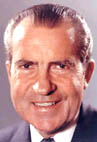
Richard Nixon

Richard Nixon

By JOSEPH FITSANAKIS | intelNews.org |
Everyone familiar with American political history knows about the ‘White House Plumbers’, a covert special investigations unit established during the Presidency of Richard Nixon, and tasked with spying on his political opponents. The unit’s bungled attempt to burgle the Watergate offices of the Democratic National Committee, in 1972, eventually led to Nixon’s resignation. But the Watergate burglary was but one of many operations conducted by the ‘Plumbers’, who were one of several ‘dirty tricks’ units managed by the Nixon White House. Now, nearly 40 years after the Watergate scandal erupted, veteran intelligence correspondent Jeff Stein provides new information that suggests the Nixon White House may have bugged the Pentagon telephones of senior American military officials. Stein managed to track down Dave Mann, a former member of the Pentagon’s Counterintelligence Force, who in 1971 stumbled upon a classified report claiming that listening bug signals had been detected emanating from offices in the Joint Chiefs of Staff. The signals had been picked up by a technical surveillance countermeasures (TSCM) team during a routine sweep of the Pentagon, in search of unauthorized interception devices. Mann run some tests to verify the TCM team’s report, and discovered that the bug signals originated from the personal office telephone line of General William Westmoreland, who was then the US Army’s Chief of Staff. He also discovered that the telephone of his assistant had been compromised, as well as the telephone lines belonging to the US Army’s assistant secretary, its logistics director, and at least one general. Mann’s personal conclusion was that the phone lines were most likely bugged with the cooperation of the Chesapeake and Potomac Telephone Company, which was at that the time considered an operational wing of the FBI, under Director J. Edgar Hoover. Read more of this post

News you may have missed #392

  • Soviet spy stood ready to poison DC’s water, says Ex-KGB general. A Soviet deep-cover agent, who was in the United States from around 1963 to 1965, had orders to poison Washington DC’s water and to sabotage its power supply if war with the United States became imminent, according to Oleg Kalugin, former chief of KGB operations in North America.
  • Two interesting interviews. George Kenney, of Electric Politics, has aired two interesting interviews, one with Dr. Thomas Fingar, former US Deputy Director of National Intelligence, touching on a variety of issues, and one with Philip Alston, the United Nations Special Rapporteur on extrajudicial killings, who comments on the CIA drone attacks in Afghanistan and Pakistan.
  • Lawyers who won NSA spy case want $2.63 million. Eight lawyers, who managed to prove that Saudi charity al-Haramain was illegally wiretapped by the US National Security Agency (see here for previous intelNews coverage), are demanding millions of dollars in damages from the US government.

Bookmark and Share

News you may have missed #370

  • Ukrainians ‘not spying any more’ on Russian FSB. Ukrainian counterintelligence services have stopped monitoring Russian Federal Security Service (FSB) officials stationed in Ukraine, according to a leading Ukrainian weekly. Ukrainian-Russian relations have dramatically improved since February, when Ukraine’s pro-Moscow leader Viktor Yanukovych was elected President.
  • US House votes to allow auditing of spy agencies. Despite several veto threats from the White House, the US House of Representatives has adopted an amendment to defense authorization bill HR 5136, which would give the Government Accountability Office the power to audit intelligence agencies.
  • Leading Turkish daily wiretapped. Turkish former deputy police chief Emin Aslan, who was arrested in 2009 in a drug trafficking investigation, says he was told in 2008 that the phone lines at Turkey’s leading daily Milliyet were wiretapped. The wiretapping appears to be connected to the notorious Ergenekon affair.

Bookmark and Share

Political wiretap scandal erupts in India

Outlook magazine

Outlook magazine

By IAN ALEN | intelNews.org |
A major scandal has erupted in India, with the revelation last weekend that government intelligence services have monitored the telecommunications of senior political figures since at least 2006. Indian newsmagazine Outlook, which is published nationwide, reported on Sunday that the left leaning government of the United Progressive Alliance and the Indian National Congress ordered intelligence officers to tap the telephone communications of several politicians. The list allegedly included Bihar state chief minister Nitish Kumar, Communist Party of India (Marxist) general secretary Prakash Karat, and minister for agriculture Sharad Pawar. According to Outlook, the government also used powerful communications interception hardware to “listen in on the conversations of opposition leaders during the July 2008 no-confidence motion on the Indo-US nuclear deal”. Read more of this post

News you may have missed #332

Bookmark and Share

News you may have missed #325

  • CIA investigator sentenced. CIA employee Kerry Gerdes, who falsified interview reports while performing background checks on CIA employees and potential employees, has been sentenced to two months in prison and six months of home confinement.
  • President Ford authorized warrantless wiretaps, memo shows. Even though he replaced Richard Nixon, who was forced to resign the US Presidency over intelligence abuses, Gerald Ford secretly authorized the use of warrantless domestic wiretaps soon after coming into office, according to a declassified document.
  • Yemeni court upholds alleged spies’ sentences. Three Yemenis, who were accused last year by the government of having “links to Israeli intelligence”, have had their sentences upheld by an appeal court.

Bookmark and Share

Situation report on the al-Haramain wiretap case

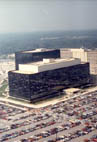
NSA Headquarters

NSA HQ

By IAN ALLEN | intelNews.org |
Max Fisher of The Atlantic Wire provides an excellent situation report on the recent decision by a US district court, which faulted the US government for unconstitutionally wiretapping a US-based Saudi charity. The charity, al-Haramain, was taken to court in September 2004 by the US government, which accused it  of having links to terrorist groups. But the charity has now successfully demonstrated that the National Security Agency (NSA) engaged in illegal spying against it, under the Bush administration’s STELLAR WIND warrantless spying program. Drawing from articles by a number of commentators, Fisher explains why the case took five years to conclude, pointing to the difficulty the plaintiffs had to prove that the NSA spied on the charity. Normally, this is close to impossible, as the NSA is not in the habit of disclosing information on its operations. Read more of this post

News you may have missed #320

  • Wikileaks alleges US government surveillance. British quality broadsheet The Guardian is one of a handful of mainstream media outlets to seriously examine the allegation of Wikileaks, that its editor and co-founder, Julian Assange, became the target of “half a dozen attempts at covert surveillance in Reykjavik”, by individuals who said they represented the US Department of State. The article, written by Joseph Huff-Hannon, also cites intelNews.
  • Saudi charity wins wiretap case against NSA. The Saudi-based charity Al-Haramain was taken to court in September 2004 by the US government, which accused it of maintaining terrorist links. But the charity has successfully demonstrated that the National Security Agency engaged in warrantless spying on it. However, the judge limited liability in the case to the government as an institution, rejecting the lawsuit’s effort to hold individual US government officials personally liable.
  • Kremlin accused of KGB-style honey-traps. The Kremlin has been accused of sanctioning a Soviet-style honey-trap campaign against opposition politicians and journalists using entrapment techniques based on money, drugs and women. The allegations follow the release of a string of videos on the web purporting to show an opposition politician, a political analyst and the editor of the Russian edition of Newsweek magazine in compromising situations.

Bookmark and Share

Analysis: Landrieu-Gate is Scary, but it’s No Watergate

Stan Dai

Stan Dai

By J. FITSANAKIS and I. ALLEN | intelNews.org |
The arrests by US Marshals of four self-described conservative activists, who were caught trying to tamper with the telephone lines of Democratic Senator Mary Landrieu’ New Orleans office, have caused outcry in liberal and silence in conservative blogs. Most political allies of the four young men have been scrambling to denounce them, and the few who haven’t, have tried to play off the case as an ill-conceived political prank that got out of hand. Considering that America’s political culture still reels from the effects of Watergate (1972-1974), and the far more serious COINTELPRO (1956-1971), it would be criminal neglect on behalf of the FBI to treat the Landrieu incident as a “prank”. At the same time, however, Landrieu-gate is no Watergate. Neither the target nor the operational tactics and institutional affiliations of the four men involved in the case resemble anything remotely akin to either Watergate or COINTELPRO. Keep reading →

Bookmark and Share

FBI wiretaps broke the law thousands of times from 2002 to 2006

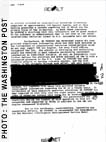
FBI memos

FBI memos

By JOSEPH FITSANAKIS | intelNews.org |
Considering the extent of illegal domestic telephone surveillance practiced by US intelligence agencies after 9/11, the disclosure of yet another wiretap scandal can hardly surprise anyone. But the latest revelation by The Washington Post points to an alarming collusion between FBI agents, their supervisors, as well as telephone industry employees, all of whom consciously disregarded even the severely lax standards of the USA PATRIOT Act. The paper says it acquired several internal FBI memos (.pdf), through “a government employee outside the FBI, who gained access to them”. These memos appear to show widespread abuse of more than 2,000 US telephone call records (but not content, it appears), which FBI agents obtained between 2002 and 2006, by presenting telephone companies with fake National Security Letters (NSLs). The NSLs claimed the records were required for emergency counterterrorism investigations. But in reality these investigations bore no connection to terrorism, and the NSLs were never followed up with actual subpoenas, as they were supposed to. Read more of this post

US court upholds NSA’s refusal to admit or deny wiretap data

Glomar Challenger

The Glomar

By IAN ALLEN | intelNews.org |
A US federal appeals court has concluded that the National Security Agency can refuse to admit or deny it possesses information about the US government spying on lawyers representing Guantánamo prison detainees. The decision by the 2nd US Circuit Court of Appeals in New York relates to a Freedom of Information Act (FOIA) request under a civil liberties lawsuit challenging post-9/11 warrantless surveillance operations by US agencies. The latter typically respond to most FOIA requests by confirming or denying possession of information relating to particular requests, and then by proceeding to either deny release, or release selected segments of the requested data. It is rare for an agency to refuse even to acknowledge the existence of information sought through FOIA. Read more of this post

US to stop funding scandal-prone Colombian spy agency

By IAN ALLEN| intelNews.org |
The US Congress has voted to stop subsidizing Colombia’s soon-to-be dismantled Administrative Department of Security (DAS) intelligence agency. The Colombian government recently decided to disband DAS, after it was found to have illegally wiretapped the phones of several public figures, including the chief of the Colombian National Police, the minister of defense, as well as those of former Presidents, Supreme Court judges, prominent journalists, union leaders and human rights campaigners. The activities of the scandal-prone agency had not, until now, affected US-Colombian relations, nor had they dampened US-Colombian intelligence cooperation. Read more of this post