News you may have missed #474

  • Israel jails Arab activist for spying. A court in Haifa has sentenced prominent Israeli Arab activist Ameer Makhoul to nine years in prison and another year suspended sentence for charges of spying and contacting a foreign agent from Lebanon-based Hezbollah.
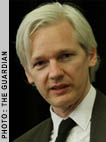
  • Assange used disguise to evade surveillance new book reveals. WikiLeaks editor Julian Assange disguised himself as an old woman in a wig for fear he was being followed by US intelligence, according to a book published this week by British quality broadsheet The Guardian. According to another book, to be published by journalists at German weekly newsmagazine Der Spiegel, Assange expressed private fears that the content of the US embassy cables was too explosive for his organization to withstand.
  • US Congressman wants to know who wants to know. Republican Representative Darrell Issa wants to know the names of hundreds of thousands of ordinary American citizens who have requested copies of federal government documents in recent years. Issa, the new chairman of the House Committee on Oversight and Government Reform, saying he simply wants to “make sure agencies respond in a timely fashion to Freedom of Information Act requests”. Hmmm…

News you may have missed #472

  • French spies become embroiled in Renault’s espionage saga (corrected). The Renault spying saga has taken a new turn with the carmaker accusing France’s domestic intelligence agency DGSE DCRI of sabotaging its reputation. Jean Reinhart, Renault’s lawyer, said that the DGSE DCRI had leaked details of the inquiry into accusations of industrial espionage.
  • Palestinian Authority documents leaked by ex-MI6 agent. Chief Palestinian negotiator Saeb Erekat said Wednesday in an interview that a US citizen, who worked in the US State Department, and a British former MI6 official, are responsible for leaking the so-called ‘Palestine papers‘.
  • NY Times editor calls Assange ‘spy-like’. WikiLeaks founder Julian Assange resembles a character from a detective novel and is “elusive, manipulative and volatile”, the executive editor of The New York Times says in an upcoming book. Open Secrets: WikiLeaks, War and American Diplomacy, a digital book featuring an introduction by Times executive editor Bill Keller and contributions from other Times reporters, goes on sale Monday.
News you may have missed #468

Ex-CIA officer faces up to 120 years for leaking secrets

James Risen

James Risen

By IAN ALLEN | intelNews.org |
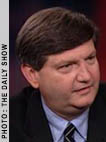
A former CIA officer, who sued the Agency after he was fired, was arrested last Thursday in St. Louis, Missouri n charges of leaking classified information about a botched CIA covert operation in Iran. There is no information on the indictment about the recipient of the information that was leaked by Jeffrey Alexander Sterling, who worked for the CIA from 1993 until 2002. But it is common knowledge Sterling spoke to James Risen, a Pulitzer Prize winning journalist for The New York Times. In 2002, Risen wrote an article about Sterling’s lawsuit, in which the plaintiff claimed he was told by his superiors that he was “too big and black” to operate covertly overseas. According to the indictment, in 2003, after Sterling’s lawsuit was thrown out on national security grounds, he started leaking information (presumably to Risen), which he had gathered while working for the CIA’s Iran Task Force. Risen reportedly tried to publish Sterling’s disclosures, but The New York Times declined to print them, after its editors were warned by the White House that they would be severely detrimental to national security. Read more of this post

Analysis: Understanding WikiLeaks

WikiLeaks

WikiLeaks

By JOSEPH FITSANAKIS| intelNews.org |
The WikiLeaks cablegate revelations appear to be subsiding in the new year, and so is the public debate about their meaning and consequences. And yet, as calmer moods prevail, now is the appropriate time to probe the WikiLeaks phenomenon. To do so constructively, it is necessary to move beyond a mere political assessment of WikiLeaks. The question of whether the website, its founder, and its hundreds of volunteers, are criminals, heroes, terrorists, or dissidents, cannot even begin to be answered until WikiLeaks is understood, first and foremost. By ‘understood’, I don’t mean empathize. I mean comprehending WikiLeaks as an ideological paradigm, a technological vehicle reflective of the personal philosophies of its members, but also representative of a much wider sociotechnical trend. Click here to read my analysis brief published today by the Research Institute for European and American Studies.

WikiLeaks revelations keep coming, but few pay attention

WikiLeaks

WikiLeaks

By JOSEPH FITSANAKIS | intelNews.org |
Most Western news outlets are now focusing almost exclusively on the fate of WikiLeaks founder Julian Assange. Few are paying attention to the details of Assange’s rape allegations in Sweden, which have sparked an interesting —though limited— debate about possible links between Assange’s accusers and American intelligence. Even fewer are paying attention to the actual US diplomatic cable revelations by WikiLeaks, which keep appearing daily, mostly in British quality broadsheet The Guardian (The New York Times has largely lost interest at this point). One such revelation, published on Monday, concerns allegations by the Director of the Shabat, also known as Shin Bet (Israel’s internal security service), that Palestinian group Fatah asked Israel to attack rival Palestinian group Hamas, in 2007. The leaked cable claims Shin Bet director Yuval Diskin told US diplomats that Fatah, the secular Palestinian nationalist faction that controls the West Bank, was “demoralized” and “desperate” to halt the rapid rise of Islamic Hamas, which controls the Gaza Strip. Diskin further told US officials that Fatah understood it could only survive with Israeli support, and had thus directly “asked us [Israel] to attack Hamas”. Perhaps more importantly, the leaked cable appears to confirm intense speculation among some intelligence observers that Fatah is “actively gathering information on behalf of Israeli intelligence”. Read more of this post

News you may have missed #460

Even more underreported WikiLeaks revelations

WikiLeaks

WikiLeaks

By JOSEPH FITSANAKIS | intelNews.org |
It appears increasingly likely that Sweden will extradite Julian Assange to the United States, where the WikiLeaks founder will face espionage charges. But the WikiLeaks revelations keep coming, although not all of them receive the worldwide media attention that they deserve. Take for instance the disclosure that at least three senior Australian Labour Party (ALP) politicians have operated as “protected sources” (diplomatic parlance for secret informants), providing regular updates on internal ALP politics to US embassy operatives in Canberra. According to internal US diplomatic cables released on Thursday, ALP politicians Bob McMullan, Michael Danby and Mark Arbib, who currently serves as the Australian federal government’s Minister for Sport, regularly held secret meetings with US embassy officials after 2004.  All three deny accusations that they acted as spies for the US. Another underreported WikiLeaks revelation concerns a 2008 proposal by the Saudi government to create an US- and NATO-backed Arab military force to invade Lebanon, seeking to obliterate Shiite paramilitary group Hezbollah, which controls large sections of the country. Read more of this post

More underreported WikiLeaks revelations

Julian Assange

Julian Assange

By JOSEPH FITSANAKIS | intelNews.org |
As the world’s media shift their attention to the consequences of the WikiLeaks revelations for its founder Julian Assange, as well as the reactions of American officials, the leaked diplomatic cables keep coming in, almost on an hourly basis. Some of the least noticed revelations include a 2009 dispatch from a US diplomat in Tel Aviv, which appears to confirm the close secret relations between Israel and the United Arab Emirates, despite the fact that these two countries have no official diplomatic connections. Another diplomatic cable reveals that Iranian intelligence officials approached their Canadian counterparts in 2008 and offered to share with them “information on potential attacks in Afghanistan”. Perhaps not surprisingly, the Canadians reacted guardedly, with Canadian Security Intelligence Service Director Jim Judd stating that his agency had “not figured out what they [the Iranians] are up to”. Read more of this post

Some underreported WikiLeaks revelations

WikiLeaks

WikiLeaks

By JOSEPH FITSANAKIS | intelNews.org |
There is little point in recapping here the bulk of disclosures contained in the ongoing WikiLeaks revelations. The news sphere is jam-packed with them —and perhaps this is the real story in the WikiLeaks revelations, namely the fact that espionage and intelligence issues have near-monopolized the global news cycle for the first time since the post-Watergate Congressional investigations of the 1970s. But it is worth pointing out a handful of news stories on the WikiLeaks revelations that have arguably not received the media coverage that they deserve. Undoubtedly the most underreported disclosure concerns a 2007 meeting between US officials and Meir Dagan, the then Director of Israel’s Mossad intelligence agency. During the meeting, Dagan apparently “presented US with five-step program to perform a coup in Iran“.  But there are other underreported disclosures. Take for instance the revelation that US Secretary of State Hillary Clinton personally authorized US diplomats to engage in all-out and indiscriminate spying on senior United Nations officials. Although there is nothing here that will surprise seasoned intelligence observers, the breadth of intelligence collection that US diplomats are instructed to engage in (which includes collecting credit card numbers and biometric data of UN officials) is astonishing and certainly unprecedented. Moreover, it should be noted that many senior UN officials are in fact American, which leads to the intriguing question of whether US diplomats are routinely required to engage in intelligence collection against American UN officials. Read more of this post

News you may have missed #448

  • Russian intel source threatens WikiLeaks. A Russian secret services expert has denied that whistleblower website WikiLeaks poses a threat to Russia, and warned that the “right team” of people could simply shut down WikiLeaks “forever” if it posts classified Russian government documents.
  • UK female spy gave rare interview about WWII exploits. It has emerged that British wartime spy Eileen Nearne, who died aged 89 in September, and whose exploits echoed the fictional character Charlotte Gray, gave an interview 13 years ago –in disguise– in which she told how she was tortured by the Gestapo.
  • Lebanon sentences 3 to death for spying for Israel. A Lebanese military court on Monday sentenced three people to death for spying for Israel. Two of the Lebanese nationals, Sami Farhat and Amar al-Halabi, were sentenced in absentia because they have fled the country. The third man, Jawdat el-Hakim, is held by Lebanese authorities. Dozens of alleged Israeli spy cells have been uncovered in Lebanon in the past year.

News you may have missed #447

  • UK MI6 chief speaks publicly for the first time. Sir John Sawers, the head of Britain’s Secret Intelligence Service, also known as MI6, has delivered what he said was the first public address by a serving chief of the agency in its 101-year history.
  • WikiLeaks to release secret Russia, China logs. Whistleblower website WikiLeaks, which has published hundreds of US war logs, is preparing to release secret files from Russia and China, Russian newspaper Kommersant said on Tuesday.
  • Renegade CIA agent’s papers acquired by NYU. The private papers of the late Philip Agee, the disaffected CIA operative whose unauthorized publication of agency secrets 35 years ago was arguably far more controversial than anything WikiLeaks has produced, have been obtained by New York University, which plans to make them public next spring.

News you may have missed #445

  • WikiLeaks files show Iranian involvement in Iraq. The latest WiliLeaks release of nearly 392,000 US military reports from Iraq shows, among other things, that Iran was a major combatant in the Iraq War. According to the documents, Tehran’s elite Quds Force trained Iraqi Shiite insurgents and imported weapons like Explosively Formed Projectile bombs into Iraq for use against civilians, Sunni militants and US troops.
  • WikiLeaks founder on the run. Julian Assange’s fate seems as imperiled as that of Private Bradley Manning, the 22-year-old former Army intelligence operative under detention in the US for leaking Iraq and Afghan war documents to WikiLeaks. Last Monday, Mr. Assange’s bid for a residence permit in Sweden was rejected. His British visa will expire early next year.
  • Money problems of US spies may threaten US security. Elizabeth Bancroft The executive director of the US Association of Former Intelligence Officers, has suggested that government agencies should monitor intelligence service employees with security clearances, who may have fallen into bankruptcy during the ongoing economic crisis. Spy agencies are worried that financial problems might leave these employees open to bribery or blackmail.

CIA sues former officer for publishing unauthorized book

The Human Factor book cover

The Human Factor

By IAN ALLEN | intelNews.org |
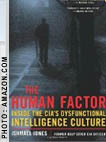
The US Central Intelligence Agency has announced a lawsuit against a former officer who authored a book without the Agency’s prior approval. The book, The Human Factor: Inside the CIA’s Dysfunctional Intelligence Culture (published in 2008), was written by a former CIA deep cover operative going by the pseudonym Ishmael Jones. Jones first submitted the book’s manuscript, which offers a highly unsympathetic account of the CIA, to the Agency’s review board. However, when it became clear that the board’s decision would have been unfavorable, he published the book without approval, thus breaking what the CIA claims is his legal obligation to abide by the review board’s decisions. The CIA filed a lawsuit against Jones in July, but only announced it this week. It seeks access to the financial proceeds of The Human Factor, as well as to prohibit further exposés from Jones. Read more of this post

Comment: What Can the US Do To Stop WikiLeaks?

Julian Assange

Julian Assange

By JOSEPH FITSANAKIS | intelNews.org |
Ever since whistleblower site WikiLeaks published 77,000 classified US military documents on the war in Afghanistan, several pundits have urged US government agencies, including the Pentagon, to take action. Late last week, former George W. Bush speechwriter Marc Thiessen urged the Pentagon to unleash its “cyber capabilities to prevent WikiLeaks from disseminating those materials”. Some columnists have even suggested that US intelligence services should “come up with an up-to-date photo of [WikiLeaks founder Julian] Assange and distribute it to […] SEAL sharpshooters”. Pentagon representatives have also stepped up their rhetoric, warning that “[i]f doing the right thing isn’t good enough for [WikiLeaks], we will figure out what alternatives we have to compel them to do the right thing”.

Read more of this post