Why is the US federal tax agency using phone interception devices?
October 27, 2015 Leave a comment
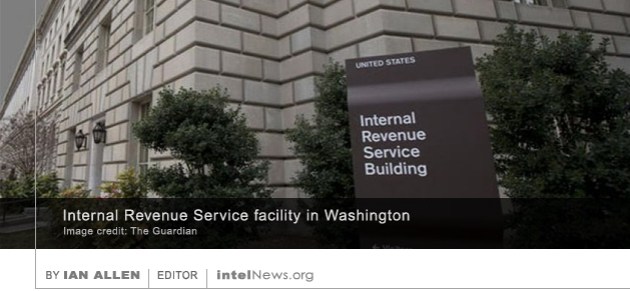 Documents acquired by a newspaper show that the Internal Revenue Service, which is the United States government’s agency responsible for collecting taxes, has purchased devices used to intercept cell phone messages. Founded in 1862, the IRS is the revenue service of the US state, and operates as a bureau of the Department of the Treasury. But it also maintains a number investigative components, including the Criminal Investigation Division. The latter consists of between 3,000 and 4,000 personnel and is tasked with investigating and helping build cases for the prosecution relating to tax evasion, money laundering and other financial crimes.
Historically, the Criminal Investigation Division’s scope and tactics have been limited and rarely relied on telecommunications interceptions. But according to British newspaper The Guardian, the IRS purchased a number of Stingray devices in 2009 and 2012. Known also as IMSI catchers, Stingrays are portable communications-interception devices, which mimic the operation of cell phone towers. They gather data, including the phone numbers dialed, duration of phone calls and location of users, from cell phones that communicate with them. Some Stingray models are said to be able to intercept the content of telephone calls made by unsuspecting cell phone users.
According to The Guardian, the IRS made an initial order to purchase Stingray equipment in 2009 and repeated the request in 2012. At least 12 US federal agencies and hundreds of local law enforcement agencies use Stingrays for communications-interception purposes. But the London-based paper says this is the first time that the IRS has been found to be using the devices. It is unclear, however, what the IRS uses the Stingrays for. The Guardian said it contacted an IRS spokesman who refused to respond to questions on the matter.
► Author: Ian Allen | Date: 27 October 2015 | Permalink













 intelNews.org
US government publicly admits existence of rogue phone-tapping devices in DC
April 4, 2018 by Joseph Fitsanakis 1 Comment
Many governments have expressed concerns about the use of these devices, which are known to be used by intelligence agencies to monitor cellular communications on foreign soil. Major cities around the world, including Washington, are major targets of cellphone-site simulators, which are frequently located inside foreign embassies. However, the US government has never publicly commented on this issue, despite intense rumors that government agencies headquartered in Washington are major targets of Stingray devices. This changed recently, however, after Senator Ron Wyden (D-OR) wrote a letter to the Department of Homeland Security seeking information about the use of such devices in Washington. Wyden received a written response from Christopher Krebs, who heads the DHS’ National Protection and Programs Directorate. In the letter, dated March 26, Krebs confirmed that the DHS detected a number of active Stingrays in the DC area in 2017, which he referred to as “anomalous activity consistent with Stingrays”. But he added that the DHS lacks both funding and equipment needed to detect the full number of the devices and the full spectrum of Stingrays that are active in the nation’s capital.
The Associated Press, which published Krebs’ letter, said it acquired it from Wyden’s office in the US Senate. The news agency noted that the letter from DHS did not provide the technical specifications of the cellphone-site simulators, and did not enter into speculation about who might be employing them. Additionally the letter did not provide the exact number of Stingrays detected in DC in 2017, nor did it provide the exact locations in DC where Stingray activity was traced. In response to Krebs’ letter, Senator Wyden’s office released a statement blaming the US Federal Communications Commission for having failed to hold the cellular telecommunications industry accountable for the lack of security against Stingrays. “Leaving security to the phone companies has proven to be disastrous”, Senator Wyden’s statement concluded.
► Author: Joseph Fitsanakis | Date: 4 April 2018 | Permalink
Filed under Expert news and commentary on intelligence, espionage, spies and spying Tagged with cellular telephony, Christopher Krebs, communications interception, News, Ron Wyden, Stingrays, United States, US Department of Homeland Security, warrantless communications interception, Washington DC, wireless communications interception