Western companies provide Syrian regime with monitoring systems

Syria

Syria

By JOSEPH FITSANAKIS | intelNews.org |
An Italian communications company is working with the Syrian government to provide it with a sophisticated email surveillance system, using equipment created by American, French and German firms. The Syrian regime has come under sustained pressure by Western governments in recent months. The latter urge Syria’s President, Bashar al-Assad, to stop using lethal violence against protesters, citing independent reports that over 3,000 civilians have been killed by government forces since March. But Bloomberg News Agency cites an unnamed insider who claims Area SpA, a telecommunications surveillance company based in Milan, Italy, has technicians in several Syrian cities working feverishly to provide the  Syrian authorities with a state-of-the-art email surveillance system. According to the unnamed source, when completed, the surveillance system will be able to “intercept, scan and catalog virtually every e-mail that flows through the country”. The project, which has been codenamed ASFADOR, is directed by senior Syrial intelligence officials, who are supervising the work of several Italian technicians working in Damascus and elsewhere. Bloomberg reports that numerous Area SpA technicians have been traveling to Syria “in shifts”, as the company is anxiously trying to accommodate pressures by Syrian officials, who say “they urgently need to track people”. The Italian company, known for providing Italian law enforcement with telephone surveillance hardware and software, is apparently using equipment by European and American firms, including France’s Qosmos SA, Germany’s Ultimaco Safeware AG, and America’s NetApp Inc. Bloomberg, which claims it has seen blueprints of the surveillance system, contacted Area SpA’s chief executive officer, Andrea Formenti, who refused to comment on the case, except to say that his company “follows all laws and export regulations”. Wondering where you’ve heard all this before? Read more of this post

News you may have missed #623

Erkki Tuomioja,

Erkki Tuomioja,

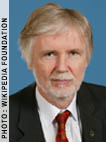
►►Finnish FM washes hands of CIA flights. Erkki Tuomioja, the Finnish foreign minister, said last week that Finnish officials had no means to investigate allegations that a number of CIA prisoner flights touched down in Finland during the so-called war on terrorism. Tuomioja urged human rights groups to take action instead.
►►Australian defense documents stolen by foreign intelligence. A report has revealed that secret documents of Major-General John Cantwell, Australia’s most senior commander in the Middle East, were stolen by a foreign intelligence service last year. The documents were apparently in an encrypted drive stored in an aide’s backpack –contrary to protocol– and was thought lost when a large amount of luggage went missing for several days from Islamabad airport.
►►US soldier arrested by FBI counterintelligence. William Colton Millay, of Owensboro, Ky., was arrested last week at Joint Base Elmendorf-Richardson in Anchorage in an investigation conducted by the US Army and FBI. For now, both agencies are withholding information about the spy case. But an Army spokesman said that Millay did not leak or send information using the Internet and did not harm US security.
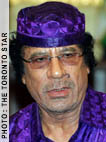
Were British-funded mercenaries protecting Gaddafi in his final moments?

Muammar al-Gaddafi

Gaddafi

By JOSEPH FITSANAKIS | intelNews.org |
The South African intelligence services are reportedly investigating reports that a British security company was providing protection for Muammar al-Gaddafi when he was killed by rebels. On October 20, the Libyan leader and his armed entourage were traveling from his hometown of Sirte toward the Libya-Niger border, when they were hit by NATO missiles. Colonel Gaddafi was later captured and lynched by armed rebels loyal to Libya’s National Transitional Council (NTC). But British newspaper The Daily Telegraph reports that an unnamed British security company was paid millions of dollars by the Libyan leader to smuggle him out of Sirte and into Niger. According to The Telegraph, the company is now under investigation by South African authorities, because one of its agents, a woman based in Kenya, allegedly recruited at least 19 South African mercenaries for the operation to exfiltrate Gaddafi from Libya. The 19 joined a group of approximately 50 mercenaries, who were sent to Libya and were with the Libyan leader when he was captured by the NTC rebels on October 20. The paper says that several members of the mercenary group were former associates of Simon Mann, a British former Special Forces (SAS) officer who was arrested in Zimbabwe in 2004 while planning a coup against Teodoro Obiang, longtime dictator of energy-rich Equatorial Guinea. The Telegraph article quotes Danie Odendaal, a former member of South Africa’s apartheid-era security services, who claims he was among Gaddafi’s armed entourage during his capture on October 20. Odendaal claims that many South Africans were injured and at least two were killed along with Gaddafi. Read more of this post

News you may have missed #622

SVR seal

SVR seal

►►Russian spies in Germany focused on politics and military. A married couple arrested on suspicion of spying for Russia is believed to have been gathering information on political developments and military affairs, according to German newsmagazine Der Spiegel. The two have been identified as Andreas and Heidrun Anschlag. German prosecutors accuse them of spying for SVR, the successor to the KGB’s First Chief Directorate.
►►Israel releases spy who gave information to Iran. Israel has released Nahum Manbar, who was sentenced to 16 years in prison in 1997, after he was convicted of harming state security and selling information and supplies to create chemical weapons to Iran. Israel’s Attorney General Yehuda Weinstein approved the early release of Manbar on Monday, one and a half years before the end of his sentence. This was the third time Manbar had requested to be released early.
►►FBI releases Russian illegals’ photos and videos. Documents released Monday, including photos, videos and papers, offered new details about the FBI’s decade-long investigation into a ring of Russian sleeper agents who, US officials say, were trying to burrow their way into American society to learn secrets from people in power. The investigation was apparently code-named Operation GHOST STORIES because six of the 10 Russian agents had assumed the identities of dead people. If you are wondering what these spies are doing now, read this informative update from the Associated Press.

News you may have missed #621

Pakistan

Pakistan

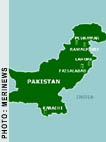
►►Pakistan denies spying on German forces in Afghanistan. Pakistani officials have rejected a German newspaper report that the country’s secret service spied on German security forces in Afghanistan. Without citing its sources, mass-selling weekly Bild am Sonntag reported on Sunday that Germany’s BND foreign intelligence agency warned its interior ministry that Pakistan had spied on 180 German police officers deployed in Afghanistan to train locals.
►►CIA expert says US government lacks security operating system. Industry is not providing the US government with the basic tools it needs to build a secure information infrastructure, according to Robert Bigman, chief of the CIA’s Information Assurance Group. “What we need is a secure operating system”, he said during a panel discussion at the Security Innovation Network showcase in Washington last month. “We gave up some time ago on the battle to build a secure operating system, and we don’t have one”.
►►US increased spy spending in 2011. The US Congress appropriated $54.6 billion for intelligence programs in the 2011 fiscal year, the Office of the Director of National Intelligence disclosed last week. The amount, which does not include what was spent on military intelligence, is a slight increase from the year before but could be the end of the upward trend, says CNN’s Security Clearance blog.

Did Australian bodyguard help Gaddafi’s son flee to Niger?

Gary Peters

Gary Peters

By JOSEPH FITSANAKIS | intelNews.org |
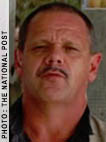
An Australian private security consultant is accused of having helped one of Colonel Muammar al-Gaddafi’s sons escape to relative safety in Niger. For several years, Gary Peters, who lives in Ontario, Canada, worked as a personal bodyguard for Al-Saadi al-Gaddafi, the third oldest son of Libya’s deceased former leader. A few days ago, Peters, who is now back in Canada, told the country’s National Post newspaper that he led “an international security team” tasked with exfiltrating Saadi Gaddafi to the African country of Niger, located immediately to the south of Libya. He also told the paper that he was injured when the three-car convoy carrying Gaddafi’s international security team came under fire as it returned to Libya from Niger. But he said he only “discovered” his injuries while onboard a flight back to Toronto, and was subsequently hospitalized in Canada. Now the paper hosts comments from Nada Basir, spokesperson of the Canadian Libyan Council, which has called for an official investigation into whether Peters broke international laws and sanctions imposed on Libya, by helping a member of the Gaddafi family escape abroad. As with other members of Libya’s former ruling family, Saadi Gaddafi is wanted by INTERPOL, which has issued an international arrest warrant in his name. Basir told The Post that it was an insult to have a Canadian resident apparently defy the NATO mission in Libya, to which the government of Canada is party; he added that Canada’s Libyan community hopes that the government takes this issue seriously. Peters previously told the newspaper that he had been interviewed by the Royal Canadian Mounted Police, but that no charges had been filed against him. Read more of this post

News you may have missed #620 (cyberespionage edition)

GCHQ

GCHQ

►►Canada government ‘warned prior to cyberattack’. Canada’s spy agency, CSIS, warned the government that federal departments were under assault from rogue hackers just weeks before an attack crippled key computers. A newly released intelligence assessment, prepared last November, sounded a security alarm about malicious, targeted emails disguised as legitimate messages —the very kind that shut down networks two months later.
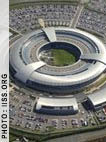
►►GCHQ warns cyber crime reaches ‘disturbing’ levels. Cyber attacks on the British government, the public and industry have reached “disturbing” levels, according to the director of Britain’s biggest intelligence agency. Iain Lobban, who runs the British government’s listening centre, GCHQ, has warned that the “UK’s continued economic wellbeing” is under threat.
►►Japanese parliament hit by cyber-attack. Alleged Chinese hackers were able to snoop upon emails and steal passwords from computers belonging to lawmakers at the Japanese parliament for over a month, according to Japanese daily Asahi Shimbun. The paper claims that computers and servers were infected after a Trojan virus was emailed to a Lower House member in July. The Trojan then allegedly downloaded malware from a server allegedly based in China —allowing remote hackers to secretly spy on email communications and steal usernames and passwords from Japanese lawmakers.

FBI ‘used Google Translate’ to indict alleged Syrian spy, claims lawyer

Mohamad Anas Haitham Soueid

Mohamad Soueid

By JOSEPH FITSANAKIS | intelNews.org |
The lawyer of a Syrian national accused by the United States of spying for Syria has accused the Federal Bureau of Investigation of resorting to Google to prepare the case against his client. Mohamad Anas Haitham Soueid was arrested last summer and charged with conducting political espionage against Syrian and American citizens participating in demonstrations against the regime of Syrian President Bashar al-Assad. The alleged espionage appears to have been organized by members of the Syrian embassy in Washington, DC. A few weeks prior to Soueid’s arrest, the US Department of State had communicated to Syria’s ambassador to Washington, Imad Moustapha, “a number of […] concerns with […] reported actions of certain Syrian embassy staff in the United States”. The concerns centered on confirmed sightings of Syrian diplomats conducting technical surveillance against Syrian opposition activists in several US cities. Soueid was subsequently arrested for allegedly gathering intelligence on protesters and planning an extensive intimidation campaign. But Soueid’s lawyer, Haytham Faraj, told the court last week that his client’s name, as transcribed in the FBI indictment, had been wrongly transliterated into English using Google Translate. He also wrote in a court filing that the prosecution had “demonstrated a serious deficit in its ability to translate recorded conversations from Arabic into English”. Soueid’s defense also argues that federal prosecutors appear “to have taken extensive liberties with a playful [telephone] conversation” between the accused and his wife back in Syria, eventually producing an English-language translation “that has no basis in fact”. In one case highlighted by the defense, the accused allegedly told his wife that the Syrian intelligence agency was monitoring telephone calls; but in English, the phrase was changed to say “this phone belongs to intelligence agency”. Read more of this post