Taiwanese spy operation led to Chinese official’s dismissal, claims leaked cable

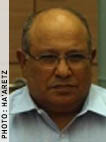
Jin Renqing

Jin Renqing

By JOSEPH FITSANAKIS| intelNews.org |
The puzzling resignation of China’s minister of finance was caused by his sexual involvement with a Taiwanese spy, who extracted classified information from him, according to a leaked American diplomatic cable. At the time of his 2007 resignation, Jin Renqing, a Communist Party bureaucrat with over 40 years of financial affairs experience, was regarded as Asia’s preeminent finance technocrat. His rise to China’s most powerful financial post, in the early years of our century, coincided with the country’s meteoric economic rise. When he quietly stepped down, a brief press statement by the Chinese government said Jin had resigned for “personal reasons”. But according to a diplomatic cable authored in September 2007 by a US State Department diplomat, Jin’s resignation was in fact a summary dismissal, caused by his sexual involvement with a much younger woman, who is now believed to have worked for Taiwanese intelligence. The cable, which has been leaked by whistleblower website WikiLeaks, describes the alleged Taiwanese spy as a “promiscuous socialite” and a “social butterfly”, who had successive affairs with a host of senior Chinese officials. The list included the country’s former Minister for Agriculture, Du Qinglin and Chen Tonghai, Director of China’s powerful Petroleum and Chemical Corporation, also known as Sinopec. Read more of this post

News you may have missed #523

  • Archbishop of Canterbury branded ‘subversive’ by MI5. A senior officer of MI5, Britain’s domestic intelligence agency, labeled Rowan Williams ‘a subversive’ in the 1980s, over his involvement with a group of leftwing campaigners.
  • Pakistan ambassador defends arrest of bin Laden informants. Pakistan Ambassador to the United States Husain Haqqani has defended his country’s decision to round up more than 30 people, some of whom may have helped US intelligence track down Osama bin Laden. Meanwhile, the US government is still bankrolling the Pakistani intelligence services. No changes there.
  • US weighs harsher penalties in wake of CIA/FBI hacker attacks. Under a new White House proposal, the 10-year maximum sentence for potentially endangering national security would double, and so would the five-year sentence for computer thefts up to $5,000. Also, the one year maximum for accessing a government computer —either to deface it or download an unimportant file— could become a three-year sentence.

Chinese telecoms manufacturer denies spying claims (again)

Huawei HQ

Huawei HQ

By IAN ALLEN| intelNews.org |
Huawei Technologies is one of China’s fastest-rising corporations. Founded in 1988 to import Western office telephone systems to China, the company today has become one of the country’s leading exporters, producing all kinds of hi-tech communications hardware equipment, ranging from routers to cell towers and undersea cables. But, as intelNews has indicated on several instances, Huawei’s export growth has been hampered in recent years by widely circulated suspicions that the company maintains close ties to the Chinese military and intelligence establishments. In 2009, the Australian Security Intelligence Organisation (ASIO) investigated one of Huawei’s Australian-based subsidiaries for links to Chinese intelligence operations. In the following year, the Indian government barred the company from operating in India, citing its allegedly “strong links with the Chinese military”. In August of 2010, several American senators called for an investigation into a proposed collaboration between Huawei and US-based Sprint-Nextel, arguing that the Chinese hardware manufacturer is “effectively controlled by China’s civilian and military intelligence establishment”. Further controversy erupted in the United States in February of this year, when another group of American Congress members accused Huawei of having supplied telecommunications equipment to Iran and the Afghan Taliban. The controversy around Huawei, which currently employs over 110,000 people in China and beyond, centers partly on its founder and chief executive owner, Ren Zhengfei. A former Director of the People’s Liberation Army’s Engineering Corps, Zhengfei founded Huawei a few years after retiring from his government job. His critics claim that he never truly retired from the PLA, and that he maintains routine links with the Communist Party of China, of which he is a member, as well as Chinese military intelligence. Read more of this post

News you may have missed #522 (European Union edition)

Ex-Mossad chief stripped of Israeli diplomatic passport

Meir Dagan

Meir Dagan

By IAN ALLEN| intelNews.org |
The former chief of Israel’s primary external intelligence agency has been told to return his diplomatic passport immediately, a move that has been described as “unusual” by Israeli media. According to news reports, Meir Dagan, who led the Mossad from 2002 until January of this year, had requested that he be allowed to use his diplomatic passport for a series of upcoming international trips. But the Israeli government turned down his request and ordered him instead to surrender his diplomatic passport, effective immediately. The move comes several weeks after Dagan launched a barrage of serious criticisms against Israel’s political leadership. Earlier this month, he told journalists that the country’s current government is led by “reckless and irresponsible” people, who will not hesitate to engage in military adventurism in Iran in order to ensure their political survival at home. In May, he warned that any military action against Iran would be “patently illegal under international law” and that it would probably not achieve its goals, since Iranian nuclear installations are deliberately dispersed in locations across that vast country.  Israel’s Channel 2 reported that it is usual practice to allow government officials to use their diplomatic passports until they expire, ever after they retire from their government positions. Read more of this post

News you may have missed #521 (Israel edition)

  • Lebanese officer gets 20 years for spying for Israel. Mansour Diab’s sentence marks the first time a Lebanese officer was convicted of spying for Israel. Meanwhile, Lebanon’s militant Shiite group Hezbollah has arrested several of its own members on suspicion of spying for Israel. Last weekend the Kuwaiti daily Al-Rai al-Aam reported that the group “was dumbfounded over the Israeli infiltration”, which appears to have been substantial.
  • Israel pressures US to temporarily release jailed spy. Several Israeli leaders on Sunday urged the United States to allow jailed Jewish-American spy Jonathan Pollard to attend his father’s funeral, after he was not granted permission to join him at his bedside before he died.
  • Israel seeks prisoner exchange for Ilan Grapel. Israel is pursuing a prisoner exchange for Ilan Grapel, a 27-year-old American-Israeli dual citizen, who was arrested by Egyptian state security officers at his downtown Cairo hotel last Sunday on charges of spying for Israeli intelligence. Meanwhile, both the US and Israel insist Grapel is no spy.

US Senate to review allegations CIA tried to smear professor

Juan Cole

Juan Cole

By IAN ALLEN | intelNews.org |
The Intelligence Committee of the United States Senate will review allegations, made on Friday by a former CIA officer, that the spy agency tried to gather derogatory information about an American university professor who is critical of the ‘war on terrorism’. According to its chairwoman, Senator Dianne Feinstein, the Committee may “take further action”, depending on its preliminary findings. The allegations surfaced last Friday in an article by New York Times reporter James Risen. Acting on a tip by an unnamed source, Risen spoke to former CIA officer Glenn L. Carle, who confirmed that the Agency “at least twice” displayed an interest in gathering discrediting information about University of Michigan history professor Juan Cole. Dr Cole, who specializes in Middle Eastern history and speaks fluent Arabic, Persian, and Urdu, has been consistently critical of US foreign policy in the Middle East through his writings on his influential blog, Informed Comment. Carle, who made the allegations to The New York Times, retired from the CIA in 2007, after a career that spanned two decades in the Agency’s National Clandestine Service. In the last few years of his public service, Carle was a senior counterterrorism official at the US National Intelligence Council, which operates under the Office of the Director of National Intelligence. Read more of this post

Russians ‘uncovered plan to kill Greek prime minister’

Kostas Karamanlis

K. Karamanlis

By JOSEPH FITSANAKIS | intelNews.org |
A Russian counter-surveillance team operating in Athens in 2008 confronted a foreign team from “a country allied to Greece”, which planned to kill Kostas Karamanlis, then Greece’s Prime Minister. The revelation, published in the current issue of Greek weekly newsmagazine Epikera, is allegedly based on a Russian briefing contained in a classified document authored by the Greek National Intelligence Service (EYP). According to the document, the assassination plot was code-named Pythia and was hatched by the intelligence agency of “a country allied to Greece”. It was aimed at preventing Athens from signing on to a series of energy pipeline deals with Moscow. The 19-member Russian counter-surveillance team mentioned in the EYP document had allegedly been set up a few months earlier by the FSB, Russia’s primary foreign intelligence agency. The team was deployed after the Russians realized that that Prime Minster Karamanlis’ telephone calls with Russian leader Vladimir Putin were being intercepted by foreign spies, at least two of which were allegedly British citizens. According to the Epikera article, between April 20 and 25, while shadowing the Greek Prime Minister in the Nea Makri area, just north of Athens, a four-member Russian counter-surveillance team faced off two spy operatives of “a country allied to Greece”. Read more of this post

News you may have missed #520

  • CIA director returns from Pakistan empty-handed. CIA Director Leon Panetta’s surprise visit to Pakistan last week yielded little, according to US officials. Panetta bypassed the protocol of first meeting with the president and prime minister, and instead met with Pakistan’s military and intelligence directors.
  • Chinese spying devices found in Hong Kong cars. A Hong Kong newspaper has alleged that the Chinese authorities have been secretly installing spy devices on all dual-plate Chinese-Hong Kong vehicles since July of 2007. Photographic evidence is here.
  • NSA releases over 50000 pages of documents. The US National Security Agency has announced that it has declassified and released to the US National Archives and Records Administration over 50,000 pages of historic records, covering a time-frame from before World War I through the 1960s.

Analysis: Arab revolutions cause blind spot for US spies

Christopher Dickey

Dickey

By JOSEPH FITSANAKIS | intelNews.org
An unusually blunt piece published in Newsweek magazine describes the Arab democratic revolutions in Egypt, Tunisia, Libya and elsewhere as serious detriments to US intelligence collection in the Muslim world. Written by Newsweek’s Middle East Regional Editor Christopher Dickey, the lengthy article argues that the ongoing political changes in several Arab countries make US counterterrorism professionals long for the days “when thuggish tyrants, however ugly, were at least predictable”. It even quotes an unnamed senior intelligence officer who denounces the celebration of democracy in the Arab world as “just bullshit”, and sees “disaster […] lurking” in the region. The reason for such vehement reaction is plain: US intelligence professionals are witnessing an elaborate network of informants across the Arab world, which they painstakingly built and cultivated since the late 1960s, crumble before their very eyes. These informants, who had senior government positions in secularist Arab dictatorships, “are either gone or going”, says Christopher Boucek, of the Carnegie Endowment for International Peace. Read more of this post

News you may have missed #519

  • Australian ex-spy wins right to compensation. The former spy, known only as FXWZ, worked for the Australian Security Intelligence Organisation for almost 15 years before leaving it in 1979. Now at 67, he has won the right to compensation claiming that his work for ASIO induced a mental disorder.
  • Eritrea releases UK citizens detained for espionage. The four British men, two of whom are former Royal Marines, were arrested in Eritrea last December on suspicion of espionage, after they were caught in possession of arms including 18 different types of snipers, ammunition and night vision equipment. They have been released after a months-long diplomatic row between Eritrea and Britain.
  • Pakistan to deport US national suspected of spying. Twenty-seven year-old Matthew Craig Barrett has been arrested for allegedly scouting nuclear facilities near the Pakistani capital Islamabad, and is expected to be deported soon.

Massive IMF cyberattack ‘was state-backed’, say sources

International Monetary Fund seal

IMF seal

By JOSEPH FITSANAKIS | intelNews.org
A massive and sophisticated cyberattack that targeted the computer systems of the International Monetary Fund last month was “linked to a foreign government”, according to sources familiar with the incident. The IMF, an international institution which oversees financial crises around the world, revealed the security breach in an internal email sent last week, but has yet to make a public announcement about the incident. Although the cyberattack was not publicly announced, it was revealed last weekend by The New York Times, which cited a “security expert […] familiar with the incident”. The paper notes that IMF’s computer databases function as “a repository of highly confidential information about the fiscal condition of many nations”, and that they contain “potentially market-moving information”. British daily The Independent adds that “internal political opponents and foreign intelligence services could […] find [in the IMF databases] explosive information about government dealings with the fund”. Intriguingly, the attack occurred in the weeks prior to the arrest of the Fund’s Director, Dominique Strauss-Kahn, who was detained on American soil on charges of sexually assaulting a female worker at his luxury New York hotel. Read more of this post

News you may have missed #518

  • Pakistan to intensify intel collaboration with China. Pakistan has assured China of full co-operation in providing intelligence about the activities of the East Turkestan Islamic Movement (ETIM), which aims to separate Xinjiang, an autonomous region, from China.
  • US spy community launches ‘Analytical Olympics’. This new competition for analysts to see who makes the best predictions, was outlined in a recent report by the US National Research Council, which suggests practical ways to apply insights from the behavioral and social sciences to the intelligence community.
  • UAE mercenaries say they have no Blackwater contacts. Michael Roumi, president of Reflex Responses, a company training foreign mercenary troops for the United Arab Emirates, has told the US State Department and members of Congress that Erik Prince, the former head of the security firm Blackwater Worldwide, plays no role in operating the business.

News you may have missed #517

  • New Zealand to launch new cybersecurity agency. The new National Cyber Security Centre will protect high-risk government agencies from attacks by cyber spies and criminals. It will also take on the functions of the Centre for Critical Infrastructure Protection, which helps protect critical national infrastructure such as the computer networks of banks and power companies.
  • New book on China-US spy wars. An extensive review by Joseph Goulden (author of SpySpeak: The Dictionary of Intelligence) of David Wise‘s new book, Tiger Trap: America’s Secret Spy War with China, which has been published by Houghton Mifflin Harcourt.
  • Over 1,000 cyber attacks against UK MoD last year. Criminals and foreign spy agencies launched more than 1,000 cyber attacks on Britain’s Ministry of Defence last year in an effort to steal secrets and disrupt services, Britain’s Defence Secretary Liam Fox has revealed.

One in four US hackers is FBI informant, says report

2600 magazine

2600 magazine

By JOSEPH FITSANAKIS | intelNews.org
Experienced observers with strong links in the American computer hacker community estimate that around 25 percent of its members are working as informants for the Federal Bureau of Investigation and other US government agencies. This according to an investigative report published in British quality broadsheet The Guardian, which claims that the large numbers of government operatives have spread unprecedented “paranoia and mistrust” inside the US computer hacker underground. According to the report, the authorities have made significant inroads, not by training their officers in hacking skills, but by employing the threat of lengthy prison sentences as a means of convincing captured hackers to turn into government informants. This technique is largely responsible for the creation of an “army of informants” operating “deep inside the hacking community” in the US. An example provided in the report is the infiltration of online forums used by the cybercriminal community as marketplaces for credit card, bank account, and other stolen identity information, which are often traded in bulk around the world. Read more of this post