Review of “Chinese Espionage Operations and Tactics” (Second Edition)
February 19, 2025 2 Comments
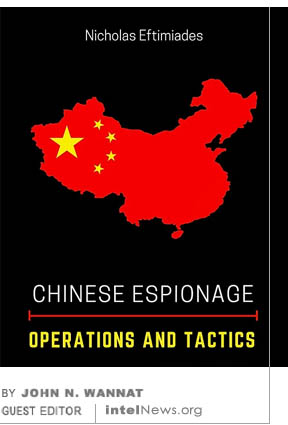 MUCH HAS HAPPENED IN the West and in China since Nick Eftimiades first published Chinese Espionage Operations in 1994. It was the first in-depth study of Chinese espionage operations, which for decades had been overshadowed by Soviet intelligence and their espionage operations.
Throughout much of the latter part of the 20th century, United States and other Western security services viewed Chinese intelligence and security services as being focused on their own internal security matters. They were not nearly as well-known or recognized as other adversarial intelligence and security services. Nick was one of first experts to shine a light on Chinese intelligence operations. Since that time, he has dedicated his career and untold time and efforts to better understand Chinese intelligence tactics and techniques.
In the second edition of the book, Nick provides a comprehensive analysis and assessment on how the espionage and intelligence threat from China has grown significantly over the past three decades. He explains this in very clear and unambiguous terms to anyone who seeks a better understanding of these threats. This book is a culmination of more 30 years of dedicated research and the analysis of hundreds of cases that involve China. It focuses, not only on traditional espionage cases and operations, but examines motives, techniques and tactics relating to economic espionage, the theft of trade secrets and the theft of academic research and development.
There are a number of detailed case studies and real-life examples in the book, which show it is not only Chinese government organizations that pose a significant threat to United States and Western interests, but also a multitude of actors —e.g., academia, business people and researchers, with access to universities, commercial entities and think tanks. Chinese intelligence operatives conduct activities in all these areas in order to help China fulfill its strategic information and technology requirements and objectives. Nick examines China’s Whole of Society approach to a number of recent traditional and non-traditional collection efforts.
Chinese Espionage Operations and Tactics is an absolute must-read for individuals who handle national security matters; for state and local officials who are engaged in discussions with Chinese officials; for American and other Western businesses who are, or who will be, doing business with Chinese counterparts; for those in academia and research institutes involved with technology research and development, and finally for those who seek a better understanding of the threats posed by China’s growing and expanding worldwide presence and intelligence apparatus.
► Author: John N. Wanat* | Date: 19 February 2025 | Permalink
- John N. Wanat retired as Assistant Director for Investigations, Office of Export Enforcement, Bureau of Industry and Security, Department of Commerce.
 LAST MONTH, ISRAEL ARRESTED two reservists following an investigation that lasted several months and centered on uncovering espionage for an Iranian state entity during wartime. The two reservists had completed their regular military service before joining the reserves.
 THE HEAD OF THE Federal Bureau of Investigation’s largest field office sent an email to his staff last night, urging them to “dig in” for “battle” after the White House began scrutinizing the Bureau’s investigation into the January 6 riots. James E. Dennehy, assistant director in charge of the FBI’s New York field office, sent a
 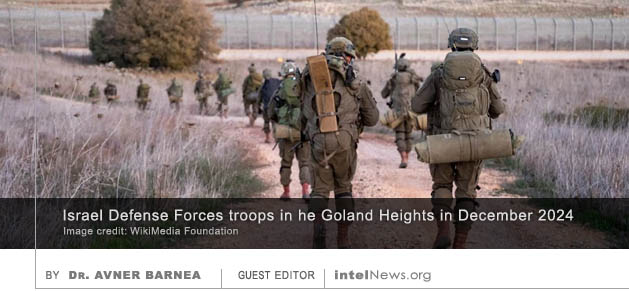 THE COLLAPSE OF THE regime of Syrian President Bashar al-Assad on December 8 caught the Israel Defense Forces (IDF) and Israel’s intelligence community —mainly Israel Military Intelligence (IMI) and the Mossad— by surprise. Assad’s collapse occurred much faster than Israel had estimated. Israel did not expect that the Syrian Arab Army would disintegrate so resoundingly, within 48 hours of the attack by the Syrian rebels.
 southern Syria, as well as what is happening at the Syrian and Russian military bases in Latakia and Tartus. Moreover, the IDF is monitoring the activities of Iranian elements in Syria, including on the border with Lebanon, to prevent the possibility of military equipment being transferred from Syria to Hezbollah.
 BLACK OPERATIONS, WHICH AIM to liquidate targeted individuals, are once again the subject of various reports. The primary focus tends to be on Russian intelligence agencies targeting alleged traitors worldwide. Michael Weiss, US publisher of The Insider,
  shady figures —typically apolitical— are
 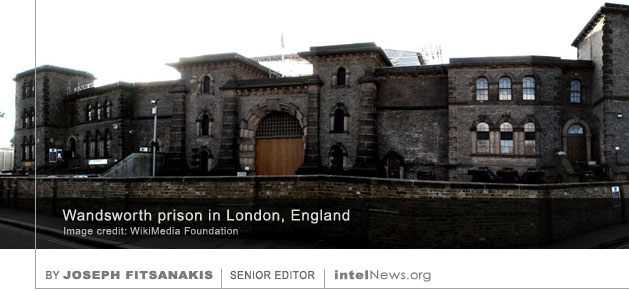 DANIEL KHALIFE, A BRITISH soldier who spied for Iran, has been found guilty of espionage and terrorism, in a case that has revealed serious vulnerabilities in the British security clearance-vetting system. The then-20-year-old Khalife was arrested in January 2022 while serving on active duty in Staffordshire, in Britain’s Midlands region. He was charged with violating the Official Secrets Act 1911 and the Terrorism Act 2000.
 RUSSIA’S NEED TO GATHER intelligence from Scandinavian targets has increased considerably since Finland and Sweden joined the North Atlantic Treaty Organization (NATO), prompting Moscow to seek nontraditional means of collecting intelligence, according to Finland’s spy agency. A new
 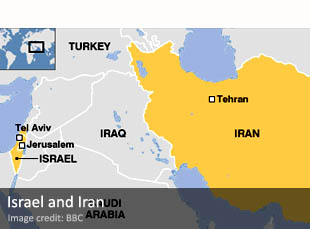 THE ISRAEL SECURITY AGENCY (ISA) recently
  THE ISRAELI SECURITY AGENCY (ISA) has announced the
  AN AFGHAN NATIONAL BASED in the United States, who was allegedly planning to carry out a terrorist attack during the upcoming Election Day, previously worked for the Central Intelligence Agency (CIA) as a guard, reports claim.
  LEAKED INFORMATION PUBLISHED BY leading German media outlets has revealed Russia’s plans for an influence campaign targeting Israel. The information was leaked earlier this month by the German newspaper Süddeutsche Zeitung and German television stations Norddeutscher Rundfunk (NDR) and Westdeutscher Rundfunk (WDR), as well as by
  parliament— would support a possible transfer of military aid to Ukraine.
 ON JUNE 26, THE longwinded case of Austria’s counter intelligence failure regarding a possible inside threat took yet another —quite surprising— turn: the state court of Vienna (Landesgericht Wien) released from pre-trial detention (Untersuchungshaft)
  Tatverdacht) against Ott, the reasons for his further detention were not sufficiently given. In the judges’ view, all activities that could carry a pre-trial detention were committed before Ott was arrested and released for the first time in 2021. Back then, Ott had also been released after a short detention, following a decision by the same court. Briefly summarized, in 2021 the Landesgericht concluded that Ott could no longer spy against Austria as he did not have access to classified information, having been removed from the domestic intelligence agency years earlier. Additionally, since the BVT was in the process of reorganization and reformation at that point, the judges
  TANG YUANJUN WAS
 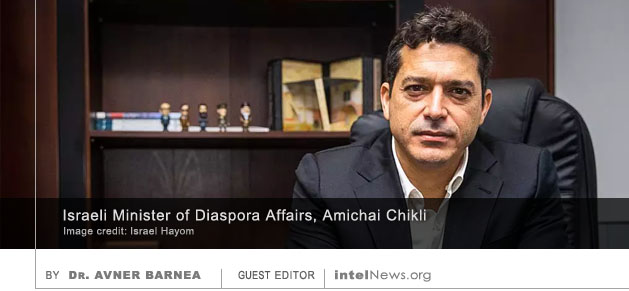 SEVERAL WEEKS AGO, ISRAEL’S Minister of Diaspora Affairs, Amichai Chikli, reportedly met with the chief executive officer (CEO) of Israeli private intelligence company Black Cube.








Before resigning, Israeli security official accuses Netanyahu of serious misconduct
May 5, 2025 6 Comments
Now Bar has submitted an open affidavit alongside a confidential one, alleging serious misconduct by Netanyahu, accusing him of attempting to use the ISA’s investigative powers against protestors and activists. He links this accusation to a number of conspiracies that are circulating in Israel, blaming the ISA for the October 7 intelligence failure. The veteran security official concludes his open affidavit by stating that he “will soon announce the date on which I will end my duties”. Last week, Bar said he would resign in June.
The ISA director also repeats earlier claims regarding the reasons behind Netanyahu’s statement that he “distrusts” him. Among other things, Bar claims that Netanyahu “expressed himself to me more than once in a way that sought to substantiate his expectation that the ISA should act against citizens involved in legal protest activities and demonstrations against the government”. Thus, Bar was asked to provide details about the identities of Israeli citizens, mostly protesting activists, because, according to Netanyahu, they were “following security targets”.
Furthermore, Bar claims he was asked to use the investigatory powers of the ISA to “monitor protest financiers”. He adds he was told during a conversation on the topic that, in the event of a constitutional crisis, he, as the head of the ISA, was required to take his orders from prime minister, and not from the High Court of Justice —another name for the Israeli Supreme Court. Bar notes that the full details of the matter will be provided to the Supreme Court in his confidential affidavit.
In his open affidavit, Bar clarifies that he established several criteria to address the question of whether the ISA should exercise its investigative powers without violating the constitutional right to protest. The criteria were largely based on the legal definition of subversion, defined as illegal activity involving clandestine aspects and has the potential for violence. According to Bar, actions that fail to meet this criterion are not a matter the ISA; rather, if any monitoring is warranted, the police should intervene in the interests of public order. “In borderline cases we consulted with the government’s legal counsel to ensure that the ISA’s broad powers would only be exercised within its designated framework and functions”, states Bar. He adds that “[t]he prime minister’s requests to act contrary to these criteria were refused. In quite a few cases, [Netanyahu] asked to discuss issues related to these issues at the end of working meetings, and after asking the military secretary and the typist, who operates the recording device, to leave the room with the clear goal that the exchange of words would not be recorded”. Read more of this post
Filed under Expert news and commentary on intelligence, espionage, spies and spying Tagged with Analysis, Avner Barnea, Benjamin Netanyahu, Israel, Israel Security Agency, Ronen Bar