A dramatic kidnap case in Malaysia may point to changes in Mossad’s tactics
October 24, 2022 2 Comments
 REPORTS FROM KUALA LUMPUR SUGGEST that Malaysian agents operating in the service of Israeli intelligence carried out the kidnapping of a Palestinian engineer, Omar al-Balbaisi, on September 28. According to the Malaysian newspaper The Straits Times, the kidnap operation was orchestrated by the Israeli external intelligence agency, the Mossad.
Omar al-Balbaisi completed a bachelor’s degree in computer science at the Islamic University in Gaza, where he allegedly joined the Izz-ad-Din Al-Qassam Brigades, specializing in hacking mobile phones. In or around 2020, al-Balbaisi left the Gaza Strip for Istanbul, where, according to reports, a Hamas secret intelligence and cyber unit was established in 2020. The unit allegedly operated on instructions from the Hamas leadership in Gaza, without the knowledge of the Turkish authorities.
When al-Balbaisi was kidnapped, he was reportedly returning from lunch with another Palestinian expatriate. According to the report, a white van drove toward the two men. Four people emerged from the van, grabbed al-Balbaisi and dragged him into the vehicle, while yelling at him: “our boss wants to talk to you”. The other Palestinian tried to help al-Balbaisi, but was warned to stay away from the scene. He subsequently filed a report at a police station, reportedly about 40 minutes after his friend was kidnapped.
According to the reports, the kidnapped Palestinian was taken bound and blindfolded to a safe house, where his Malaysian captors tied him to a chair. They then called two men, allegedly Israelis, who told the abductee: “you know why you are here”. According to another report, al-Balbaisi was interrogated, allegedly by two Israelis, believed to be Mossad agents, via a video call. However, the video call was disconnected when Malaysian police officers broke into the safe house.
Upon receiving the information about the kidnapping, Malaysian police immediately sought to locate al-Balbaisi. They subsequently managed to raid the house where the Palestinian was being held, while his interrogation was underway. A source told the Malaysian newspaper that “the Israelis wanted to know about [al-Balbaisi’s] experience in the field of software, about the strengths of Hamas in this field, and the members of the Izz ad-Din al-Qassam Brigades that he knew”. Read more of this post
 ON JUNE 16, THE Dutch General Intelligence and Security Service (AIVD)
  A WEEK AFTER POLAND
  ON MARCH 3, 2022, Dutch newspaper Volkskrant
 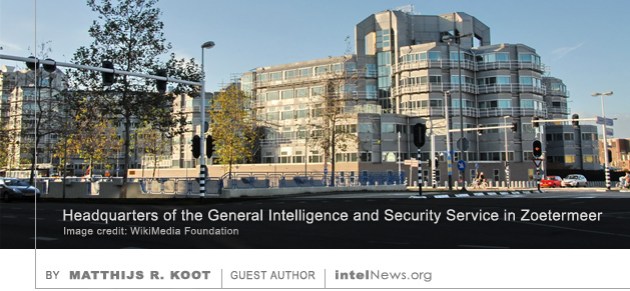 LAST WEEK, THE DUTCH General Intelligence and Security Service (AIVD) launched an awareness campaign dubbed ‘Check before connecting’. The purpose of the campaign is to inform the Dutch public about risks of foreign actors using fake accounts on social media, in efforts to acquire sensitive business information. According to the AIVD, such online campaigns frequently target and recruit employees of Dutch private sector companies. The
  Since 2008, when intelNews was launched, it has been our
  Since 2008, when intelNews was launched, it has been our
  Since 2008, when intelNews was launched, it has been our
 IN HIS NEW BOOK, We Never Expected That: A Comparative Study of Failures in National and Business Intelligence (Lexington Books), Dr. Avner Barnea has coined two new terms in the field of strategic surprise. One is diffused surprise and the other is concentrated surprise, two terms that help us to better understand why intelligence failures occur. In a diffused surprise there is difficulty in identifying the intelligence target and therefore the chance of a surprise increases; while in a concentrated surprise the intelligence target is usually a recognized organization. At the same time, the mistake lies in the assessment of the target’s abilities and intentions.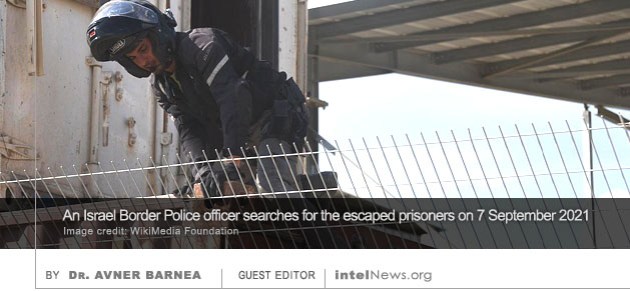
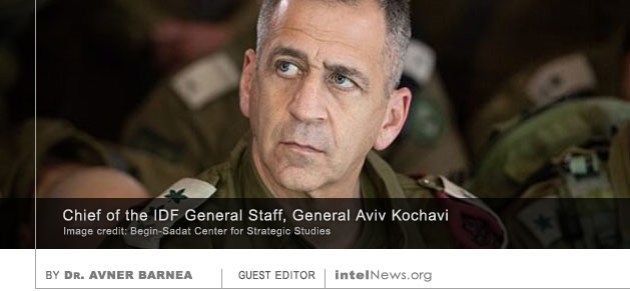
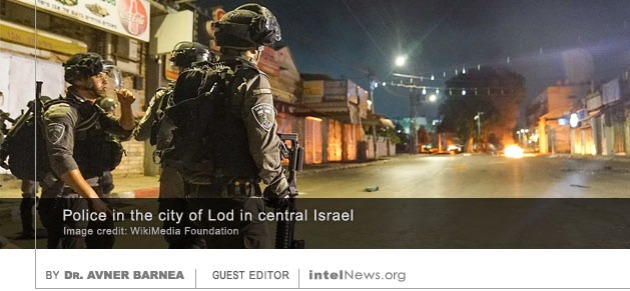
 surprised observers with its range of weapons, such as long-range missiles with a reach that is in excess of 150 miles. This constitutes a strategic surprise for Israel. So far (May 13, 2021), Hamas has fired about 1,500 missiles at Israel, most of which have been intercepted by Israel’s air defense system called the Iron Dome.






 intelNews.org
Probing the intelligence failure behind the assassination of Israeli PM Yitzchak Rabin
November 23, 2022 3 Comments
The failure that caused Rabin’s assassination was investigated by a National Inquiry Commission (known as the Shamgar Commission), which found the ISA responsible. In fact, it was deemed a double failure: the first by the personnel of the VIP Security Unit of the ISA, and the second by the intelligence personnel of the ISA, whose job it was to thwart in advance murderous intentions by extreme rightwing elements in Israel. The intelligence failure was not investigated in depth by the Shamgar Committee. It dealt mainly with the security failure and only partially with the intelligence failure. Its investigation focused on the activities of ISA agent Avishi Raviv (code name CHAMPAGNE) who was tasked by the ISA to infiltrate extreme rightwing groups. The Committee did not ask: could the ISA’s intelligence have prevented the murder?
It is also possible to ask: why was the mandate of the Shamgar Committee limited to investigating the area of security, and not intelligence? And why did its members refrain from extending their investigation to the issue of the intelligence failure? There are no answers to this question, even in the autobiographical book of the Committee’s chairman, the late Supreme Court Chief Justice Meir Shamgar.
A Key Piece of Intelligence
Smotrich referred to agent Raviv, who was indeed run in a deficient and unprofessional manner. Yet no malicious intentions can be attributed to the ISA. In any case, Raviv’s defense attorney convinced the court that Raviv did not know about the assassin’s intentions before the murder. The key piece of intelligence, which the ISA had received six months before Rabin’s murder, regarding Amir’s intentions, was handled extremely poorly: an asset of the IDF Central Command’s intelligence department told his commander that he had heard “a small, rotund and armed Yemeni” speaking at a bus stop about his intention to assassinate Rabin. The intelligence was immediately passed on to the head of the appropriate department in the ISA. Unfortunately, however, instead of the source being interrogated by trained ISA personnel, a police investigation was conducted that did not reveal any significant additional information. Read more of this post
Filed under Expert news and commentary on intelligence, espionage, spies and spying Tagged with assassinations, Avner Barnea, Israel, Israel Security Agency, Yitzhak Rabin