News you may have missed #795

Shakil AfridiBy IAN ALLEN | intelNews.org |
►►US ‘cannot verify authenticity’ of Afridi interview. The US says it cannot verify an alleged interview by Shakeel Afridi, a Pakistani medical doctor who helped the CIA find Osama bin Laden. In May, a Pakistani court sentenced Afridi to 33 years in jail after he was arrested following the killing by US troops of bin Laden in May 2011 at his compound in the town of Abbottabad. US television channel Fox News said Tuesday it had obtained an exclusive phone interview with Afridi from behind bars, in which he detailed months of torture by Pakistan’s shadowy Inter-Services Intelligence.
►►Evidence suggests US covered up Soviet massacre in Poland. New evidence appears to back the idea that the US administration of President F.D. Roosevelt helped cover up Soviet guilt for the 1940 Katyn massacre, in which more than 22,000 Poles were killed by the Soviets on Stalin’s orders. Historians said documents, released by the US National Archives, supported the suspicion that the US did not want to anger its wartime ally, Joseph Stalin. The documents show that American prisoners of war sent coded messages to Washington in 1943 saying that the killings must have been carried out by the Soviets, rather than the Nazis. Information about the massacre was suppressed at the highest levels in Washington, say historians.
►►Yemen President sacks intel agency heads. Yemeni President Abd-Rabbu Mansour Hadi has sacked the heads of the National Security Agency and  Military Intelligence, just a few hours after two suicide car bombs targeted the country’s Defense Minister in the capital Sana’a killing at least 12 people. The National Security Agency’s Ali Mohammed al-Anisi has been replaced with Ali Hassan al-Ahmadi, while the head of Military Intelligence, Mujahid Ali Ghuthaim, has been replaced with Ahmed Muhsin al-Yafiee. Hadi took office in February this year after year-long street protests forced former President Ali Abdullah Saleh to step down as part of an UN-backed power transfer deal in return for immunity from prosecution.

News you may have missed #794

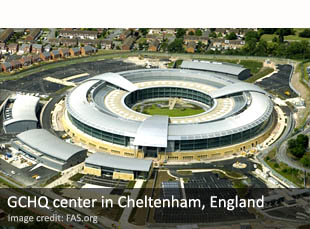
GCHQ center in Cheltenham, EnglandBy IAN ALLEN | intelNews.org |
►►Racism charge against GCHQ settled out of court. The British government’s SIGINT agency, GCHQ has been spared having its inner workings broadcast in public after a potentially embarrassing racism case was settled out of court at the last minute. The racial harassment and constructive dismissal lawsuit had been filed by Alfred Bacchus, a 42-year-old former employee. There are unconfirmed reports that, as part of the settlement, the plaintiff has signed a non-disclosure agreement banning him from revealing any more details about his complaints.
►►US spy agencies renew call for electronic surveillance rights. US intelligence officials had made a public plea on Tuesday, the 11th anniversary of the September 11, 2001, attacks, for quick Congressional action to extend a sweeping but controversial US electronic surveillance law. If the law, which expires at the end of 2012, is not extended, US spy agencies say they would lose access to what they describe as a “very, very important source of valuable intelligence information”. But at least one congressional critic of the surveillance law, Democratic Senator Ron Wyden, says he is willing to use legislative tactics to stall the bill, which has been passed by the House, unless the administration and other legislators agree to include stronger provisions to protect Americans’ civil liberties.
►►Yemen claims arrest of ‘Mossad agent’. Al-Nas, a Yemeni weekly associated with the Islamist Yemeni Reform Party, reported last weekend that an Israeli citizen, identified only by his initials and year of birth, 1982, was arrested in the southwestern city of Taizz. He reportedly admitted to smuggling children out of Yemen to neighboring countries and from there to Israel “through Zionist organizations”. Bizarrely, the man reportedly told his Yemeni interrogators that he “spent three years in a Greek prison for researching the biographies of well-known computer hackers”.
News you may have missed #793

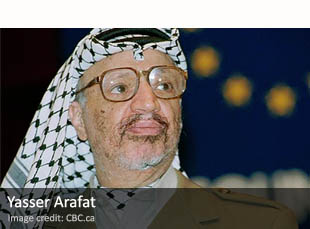
Yasser ArafatBy IAN ALLEN | intelNews.org |
►►Britain recruits tech start-ups for spy gadgets. British security services seem to have decided to widen the net for suppliers of state-of-the-art spyware for “covert surveillance”. Traditionally, British intelligence organizations including MI5 and GCHQ, have relied on a network of trusted contractors. But the change in approach represents an opportunity for burgeoning technology companies. According to a senior Whitehall official, who spoke to The Financial Times, these agencies “are appealing to a wide range of innovators, small and large, and saying: ‘Here are some problems we encounter. Can you solve them?’”.
►►French investigators to exhume Arafat’s remains. Three French investigating magistrates will travel to Ramallah in the West Bank to exhume the remains of the late Palestinian President Yasser Arafat so they can take tissue samples to determine what killed him. New evidence emerged from an investigation in July by the Al Jazeera television network when the Institut de Radiophysique, in Lausanne, Switzerland, said it had discovered significant traces of the rare radioactive element polonium-210 on the late leader’s clothing and toothbrush.
►►Panetta speaks out against book on bin Laden killing. As former US Navy SEAL Matt Bissonnette continues to make headlines about his book, No Easy Day, about the killing of al-Qaeda founder Osama bin Laden, US Defense Secretary Leon Panetta has spoken out publicly on the subject for the first time. The former Director of the CIA said “the American people have a right to know about this operation”. But, he added, “people who are a part of that operation, who commit themselves to the promise that they will not reveal the sensitive operations and not public anything […] when they fail to do that, we have got to make sure that they stand by the promise that they made to this country”.

News you may have missed #792 (US diplomatic attacks edition)

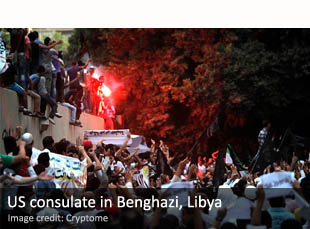
US consulate in Benghazi, LibyaBy IAN ALLEN | intelNews.org |
►►Attack on US diplomats ‘was intelligence failure’. James Corum, an American military historian and the author of several books on military history and counter-insurgency, argues that the mob attacks on US diplomatic facilities in Cairo, Benghazi and Sana’a marked “one of the worst intelligence failures in American history”. Either, he says, US intelligence agencies had no warnings of mass action against the embassies, or senior intelligence officers disregarded or downplayed the information received from field agents. Finally, he suggests that “the real explanation is probably the latter”.
►►Attack on consulate in Libya ‘may have been planned’. Senior US officials and Middle East analysts raised questions Wednesday about the motivation for the Benghazi attack, noting that it involved the use of a rocket-propelled grenade and followed an al-Qaeda call to avenge the death of a senior Libyan member of the terrorist network. Libyan officials and a witness said the attackers took advantage of a protest over the film to launch their assault. Libyan Deputy Interior Minister Wanis al-Sharif said the security force was outgunned by the attackers, who joined a demonstration of “hundreds” of people outside the consulate
►►What happened in Benghazi was a battle. “It was not a simple mob that attacked the US consulate in Benghazi on Tuesday, killing four Americans. Benghazi was the scene of a pitched battle, one in which unknown Libyan assailants besieged American diplomats with small-arms fire for over four hours, repelling several attempts by US personnel to regain control of it. Nor was what happened in Benghazi a simple story of Americans assaulted by the Libyans they helped to liberate from Muammar Gaddafi last year. Libyan security forces and a sympathetic local militia helped the Americans to suppress the attack and get the diplomats inside to safety”.

News you may have missed #791

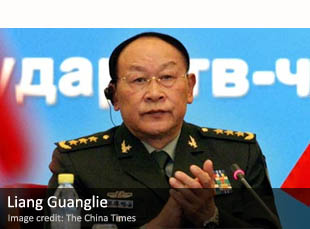
Liang GuanglieBy IAN ALLEN | intelNews.org |
►►India sees espionage behind Chinese cash payments to Indian pilots. According to Indian government sources, Chinese Defense Minister General Liang Guanglie gave two envelopes to the two Indian pilots, both wing commanders, who had flown him in a special Indian Air Force aircraft to New Delhi from Mumbai. After seeing off Liang, the pilots opened the sealed envelopes and found cash gifts inside. They immediately reported this to their superiors, who, in turn, informed the Indian Defense Ministry. India is now planning to lodge a protest with China over the incident.
►►NSA says foreign cyberattacks increasingly reckless. Debora Plunkett, of the secretive National Security Agency, whose responsibilities include protecting US government computer networks, has said that other nations are increasingly employing cyberattacks without “any sense of restraint”, citing “reckless” behaviors that neither the United States nor the Soviet Union would have dared at the height of Cold War tensions. She also predicted that Congress would pass long-stalled cybersecurity legislation within the next year. One wonders whether the Stuxnet incident is included in such “reckless” cyberattacks?
►►Taliban ‘using Facebook to lure Australian soldiers’. According to a review of social media by the Australian federal government, Australian soldiers are being warned by their commanders that enemies are creating fake Facebook profiles to spy on them. The report says that Taliban insurgents in Afghanistan are posing as “attractive women” on Facebook to befriend coalition soldiers and gather intelligence about operations. It adds that family and friends of soldiers are inadvertently jeopardizing missions by sharing confidential information online. This is not the first such warning in recent years.

News you may have missed #790

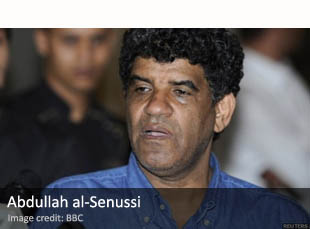
Abdullah al-SenussiBy IAN ALLEN | intelNews.org |
►►New report reopens CIA torture allegations. A report from Human Rights Watch, which was released last week, said that Libyan fighters opposed to Muammar Gaddafi’s regime were subjected to harsh interrogation techniques while in US custody overseas, during the administration of George W. Bush. The accusations, if substantiated, would suggest wider use of waterboarding than US officials have previously acknowledged. The report, which is based on documents and interviews in Libya after the fall of Gaddafi, includes a detailed description of what appears to be a previously unknown instance of waterboarding by the CIA in Afghanistan nine years ago.
►►Analysis: What does Gaddafi’s ex-spy chief know about Lockerbie? Abdullah al-Senussi became a hate-figure in his home country as head of an intelligence machinery responsible for the mistreatment of thousands of opponents of the regime of Muammar Gaddafi, his brother-in-law. He is nicknamed the “butcher” and known as Gaddafi’s “black box” because of the secrets he supposedly holds. The new Libyan regime had been negotiating for months with Mauritania where al-Senussi had fled following the fall of the Gaddafi regime last September. But now that al-Senussi has been flown back to Libya by private jet, he may at last be able to face questions by British police about Lockerbie.
►►Chinese hardware manufacturer denies spying allegations. The Chinese hardware-manufacturing firm Huawei has released a 24-page report, written by John Suffolk, a former British government chief information officer who has now turned Huawei’s global security officer, which states that protecting the network security of its worldwide customers is one of company’s “fundamental interests”. The report follows allegations in the United States, Australia, India, and elsewhere, that the company maintains close operational ties to China’s intelligence establishment.

News you may have missed #789

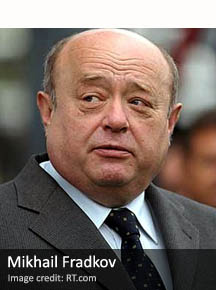
Mikhail FradkovBy IAN ALLEN | intelNews.org |
►►Putin adds spy chief to energy commission. Russian President Vladimir Putin has reinforced a presidential commission seen as Kremlin’s vehicle for vying for control over the country’s crucial oil and gas sector, by adding the country’s top police officer and senior spy to its ranks. They are Interior Minister Vladimir Kolokoltsev and Mikhail Fradkov, director of the Foreign Intelligence Service, formerly a department of the KGB. The commission is driven by Igor Sechin, a former KGB officer and close ally of President Putin.
►►US spy sat agency plans major expansion. The National Reconnaissance Office (NRO), America’s secretive spy satellite agency, operates a vast constellation of spy satellites in orbit. But these surveillance spacecraft have traditionally only been able to gaze down on a few small areas of the planet at a time, like flashlights probing the dark. And this, only with careful advance planning by human operators on the ground. Now the NRO wants to expand the current flashlight-like satellite deployment to a horizon-spanning, overhead spotlight that can illuminate vast swaths of the planet all at once. The agency also wants new spacecraft that can crunch the resulting data using sophisticated computer algorithms, freeing the satellites somewhat from their current reliance on human analysts.
►►GCHQ warns of ‘unprecedented’ cyberattack threat. The British government’s electronic eavesdropping and security agency, GCHQ, has warned the chief executives of Britain’s biggest companies about an allegedly “unprecedented threat” from cyber-attacks. “GCHQ now sees real and credible threats to cybersecurity of an unprecedented scale, diversity, and complexity”, said Ian Lobban, the agency’s director. The magnitude and tempo of the attacks pose a real threat to Britain’s economic security’, Lobban adds, but notes that about 80% of known attacks would be defeated by embedding basic information security practices.

News you may have missed #788

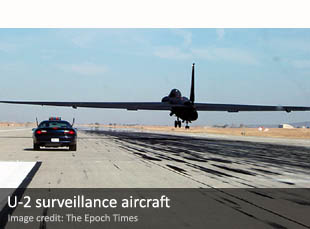
U-2 surveillance aircraftBy IAN ALLEN | intelNews.org |
►►US spy planes violated Israeli airspace in 1950s. American U-2 espionage planes repeatedly entered Israeli airspace in the 1950s for a series of secret spy missions, according to new information to be published by the Israel Air Force magazine next week, bringing to an end a decades-long mystery. At the time, Israel’s defense establishment was baffled by the entrance of high-flying crafts. For years, officials in IAF command disagreed on the identity of the mystery crafts, with some claiming that they were British Vickers-Valiants, and others saying they were American Vought F-8 Crusader planes, that had been stationed on a US aircraft carrier. According to documents to be published next week, it was the USSR that aided Israeli officials to expose the identity of the mystery planes, after a US U-2 espionage plane was shot down over Soviet soil.
►►US guard pleads guilty to espionage. A civilian guard at a new US consulate in China pleaded guilty on Thursday to attempting to sell Chinese security officials photographs and access to the compound so they could plant listening devices. According to a court proffer, Bryan Underwood had lost a significant amount of money in the stock market and hoped to make between $3 million and $5 million by supplying classified photos and information to China’s Ministry of State Security. Underwood, 32, appeared in federal court in Washington and pleaded guilty to one count of attempting to communicate national defense information to a foreign government.
►►CIA torture probe ends without any charges. The US Department of Justice has ended its investigation into the CIA’s interrogation program for terror detainees, without bringing charges. Attorney General Eric Holder said there was not enough evidence to “sustain a conviction beyond a reasonable doubt”. Jameel Jaffer, deputy legal director of the American Civil Liberties Union, said the investigation’s conclusions were a “nothing short of a scandal”. But CIA officials welcomed the decision. CIA Director David Petraeus thanked his staff for co-operating with the investigation. “As intelligence officers, our inclination is to look ahead to the challenges of the future rather than backwards at those of the past”, he said. No surprises here, surely.

News you may have missed #787

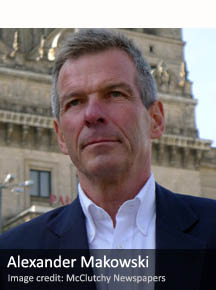
Alexander Makowski By IAN ALLEN | intelNews.org |
►►An interview with a senior Yemeni spy. Here’s something you don’t read every day: an interview with Ahmed Bin Mo’aili, 66 (pictured here), who worked as a spy for Yemen’s Political Security Organization (PSO) for more than 30 years. He says that, due to his “different duties in different countries”, which required him to travel in several Arab countries, he acquired “tens of wives” over the years. He is now upset with the PSO because the Organization has “separted him from his 31 children who live all around the Arab countries he has worked in and who are awaiting his return”.
►►Cyprus wants answers from UK over Syria spy claims. Dr. Erato Kozakou-Marcoullis, the Minister of Foreign Affairs of the Republic of Cyprus, has asked British authorities for “a full explanation” into media reports that UK military installations in Cyprus are providing intelligence to Syrian rebels. Earlier this month, The London Times claimed that two British military bases on Cyprus, located in Dhekelia and Akrotiri, were being used to collect signals intelligence on Syria. The data collected at the listening posts, operated by the General Communications Headquarters, Britain’s foremost signals intelligence agency, was passed on to the Free Syrian Army through Turkish intelligence operatives, said The Times. But the Cypriot Foreign Minister said that it was crucial that the bases were not being used for purposes not enshrined in the island’s Treaty of Establishment, which mandates the British Bases to be used for defensive purposes only.
►►CIA ‘turned down offer’ to kill bin Laden in 1999. In late 1999, two years before the 9/11 terrorist attacks, which killed nearly 3,000 people, a group of Afghan agents loyal to an anti-Taliban guerrilla leader proposed assassinating Osama bin Laden. In returne, they asked for the $5 million reward the Bill Clinton administration had offered for bin Laden’s capture. But the CIA rejected the plan, saying: “we do not have a license to kill”. This is according to the book Ferreting Out Bin Laden (not yet available in English), by Polish former spy Alexander Makowski (pictured), who claims he was the Afghans’ go-between on the plot. Makowski’s credentials are many: the son of a spy, he attended primary school in Great Britain, high school in the United States, and received a postgraduate law degree from Harvard. He graduated from the Polish military intelligence academy at Stare Kiejkuty before spending 20 years in Polish intelligence.

News you may have missed #771

Shawn HenryBy IAN ALLEN | intelNews.org |

►►Analysis: Ex FBI official says foreign spies biggest online threat. Former FBI executive assistant director Shawn Henry has warned that the biggest threat online comes not from terrorists or hackers, but from foreign intelligence organizations looking to steal intellectual property. “The threat from computer attack is the most significant threat we face as a society, other than a weapon of mass destruction”, he said in his opening keynote at the Black Hat 2012 conference in Las Vegas. “Everything we do —R&D, intellectual property, and corporate strategies— is stored or transmitted electronically. The DNA of companies is available to bad guys”.
►►Taiwanese officials jailed for espionage. Two Taiwanese former officials have been sent to prison by the Taiwan High Court for leaking state secrets to China. Presidential Office official Wang Ren-bing was jailed for two years after being found guilty of passing confidential information about President Ma Ying-jeou’s May 2008 inauguration to Chinese intelligence operatives. Chen Pin-jen, a former aide of Chinese Nationalist Party (KMT) Legislator Liao Kuo-tung, was sentenced to eight months in prison for delivering the confidential information Wang gave him to China. The two were arrested in 2009.
►►Germany charges suspected Syrian spy. A spokeswoman for federal prosecutors in Germany said Sunday that they have filed charges against suspected Syrian spy Akram O., one of two men arrested on suspicion of having spied on Syrian opposition activists in Germany for several years. The two were arrested in February during a sting operation involving over 70 German counterintelligence operatives, who searched the suspects’ apartments. The spokeswoman said she could not give further details before an official confirmation is issued that the suspect and the defense team have received the indictment.

News you may have missed #764

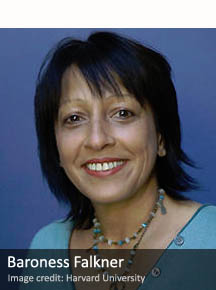
Baroness FalknerBy IAN ALLEN | intelNews.org |

►►US government agency spied on whistleblower scientists. The US Food and Drug Administration has been found operating a massive surveillance campaign targeting its own scientists for writing letters to journalists, members of Congress and President Barack Obama. The scientists were expressing their concern over the FDA’s approval of medical imaging devices for colonoscopies and mammograms that could endanger patients with high levels of radiation. The covert spying operation, which is most likely illegal, led the agency to monitor the scientists’ computers at work and at home, copying emails and thumb drives and even monitoring individual messages line by line as they were being composed in real time.
►►UK lawmaker tells MI6 chief to ‘stop bragging’. The head of Britain’s Secret Intelligence Service (MI6), Sir John Sawers, has been accused by Liberal Democrat parliamentarian Baroness Falkner of Margravine of demonstrating a “lack of judgment” for “bragging” about MI6’s role in slowing Iran’s nuclear program. Earlier this month, Sir John said in an interview that covert operations by British spies had prevented Iran from developing nuclear weapons as early as 2008. But Lady Falkner said in a speech at the House of Lords that “Sir John’s comments could almost be construed as bragging. In my view”, she continued, “it would be best for the veneer of silence to descend on the Secret Intelligence Service once again. There is such a thing as too much information”.
►►German domestic intel agency gets new director. The German government has appointed terrorism expert Hans-Georg Maassen to head the country’s domestic intelligence body, known as the “Verfassungschutz. Maassen’s appointment comes after several turbulent weeks for the agency that have resulted in three of its top officials stepping down amid a scandal connected to a series of murders by a Neo-Nazi group calling itself the National Socialist Underground.

News you may have missed #763

RedHack posterBy IAN ALLEN | intelNews.org |

►►Taiwan ex-colonel nabbed for spying for China. Cheng Lin-feng, a retired Lieutenant Colonel in the Taiwanese army, and civilian Tsai Teng-han, were taken in by Taiwanese police last week on suspicion of spying for China. Cheng was allegedly recruited by Chinese intelligence when he travelled to the mainland to do business, Taiwan’s Ministry of National Defense said in a statement, adding that he had been investigated ever since a tip-off in 2009. A court spokesman said that details of case will be held until the investigation is completed.
Russian law brands foreign-funded NGOs ‘foreign agents’. Russia’s Lower House of Parliament has approved a bill that brands non-governmental organizations receiving funding from abroad as “foreign agents”, a law that activists fear the Kremlin will use to target critics. The bill is almost certain to be approved by the Upper House before being signed into law by President Vladimir Putin, who last year accused the US State Department of funding protests against him. The bill is seen by many analysts as setting up a legal infrastructure for a crackdown on the opposition. Meanwhile, official statistics show that wiretapping in the Russian Federation has nearly doubled over the past five years. The main driver of the rise, analysts say, involves the myriad of Russia’s rival security services spying on each other.
►►Turkish hackers release names of police informants. Members of Turkey’s Marxist cyberactivist group RedHack have dumped online a 75-megabyte text file with thousands of emails from Turkish police informants. The group said it released the information in retaliation against ultra-nationalist hackers who have been threatening opposition academics and journalists. RedHack, which has been using ‘defacement hacking’ to promote a Marxist political agenda since its founding, in 1997, is included on the Turkish government’s list of terrorist organizations. In March of this year, RedHack stole data from the Turkish police’s network, forcing the police to shut down all its servers.

News you may have missed #762

Danni YatomBy IAN ALLEN | intelNews.org |
►►Italy postpones court decision on wanted CIA operatives. The Washington Post has published a useful update on Sabrina De Sousa, one of nearly two-dozen CIA operatives who were convicted in Italy in 2007 for the kidnapping four years earlier of Egyptian cleric Hassan Mustafa Osama Nasr. The Americans kidnapped Nasr, known as Abu Omar, from the streets of Milan without the consent of Italian authorities. The Italians, who were themselves carefully monitoring Nasr, responded by convicting all members of the CIA team in absentia, and notifying INTERPOL. But last Friday, the Supreme Court of Cassation in Rome postponed its verdict after a two-day hearing aimed at deciding whether to uphold or overturn the Americans’ convictions.
►►Ex-Mossad chief urges Israel to prepare for military action in Syria. In an interview with British news network Sky News, former Mossad Chief Danni Yatom said last week that Israel must be prepared for the possibility of military attacks on Syria, which may deteriorate into war.  He said his warning stems from the fear that Syria’s hundreds of tons of chemical weapons will fall into the hands of terrorists. “We would have to pre-empt in order to prevent it. We need to be prepared to launch even military attacks […] and military attacks mean maybe a deterioration to war”, said the former Mossad Director.
►►British spy agencies failed to predict Arab Spring. The Intelligence and Security Committee of the British Houses of Parliament has said in its annual report that British spy agencies had been surprised by the spread of unrest during the Arab Spring and failed to predict the dramatic uprisings that swept the region. The report also noted that the Arab Spring had exposed Britain’s decision to scale back intelligence assets in much of the Arab world, in favor of monitoring Iran and al-Qaeda. We at intelNews wrote about this in 2011.

News you may have missed #759 (analysis edition)

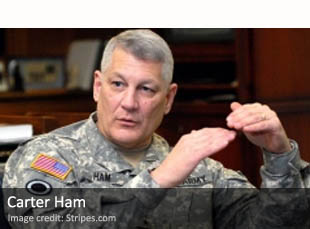
Carter HamBy IAN ALLEN | intelNews.org |
►►What goes on in the mind of a spy? An interesting article on the psychology of espionage operatives and those who handle them. It includes several insightful observations, including this one: “Just as they face outward physical dangers, agents face many inner psychological adversities. These pressures in the psyche are as taxing as physical hardships. Furthermore, while physical hazards and hardships disappear once the active espionage is over, the psychological toll can linger”. IntelNews has covered psychological and psychiatric issues around espionage before.
►►Researchers propose using decoys to detect leaks. A group or researchers working for the US Pentagon’s research wing have come up with a new plan for busting leakers: spot them by how they search, and then entice the secret-spillers with decoy documents that will give them away. Computer scientists call it it “fog computing”, and it is seen as part of a broader assault on so-called “insider threats”, launched by the Pentagon in 2010, after the WikiLeaks imbroglio. In a related development, the US federal government announced recently that it spent over $11 billion to protect its secrets last year, double the cost of classification a decade ago. The total does not include the costs incurred by the US Intelligence Community, which remains classified.
►►US General says US military spies ‘across Africa’. America’s top commander in Africa, General Carter Ham, has revealed that the US military has conducted spy operations all over the continent as part of the fight against international adversaries from al Qaeda-allied terror groups that target the homeland to suspected war criminals like Joseph Kony. “Do we collect information across Africa? Yes, we do”, the commander of US Africa Command said in a leadership conference at the Africa Center for Strategic Studies. Ham noted that US troops do at times go on “short-term deployments of capabilities” in various African nations, but always with the permission of the host country.

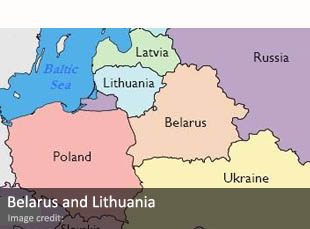
Belarus announces arrest of alleged Lithuanian spy ring members

Belarus and LithuaniaBy IAN ALLEN | intelNews.org |
The government of Belarus has announced the arrest of an espionage ring allegedly operating out of the Lithuanian embassy in Belarusian capital Minsk. It appears that the alleged ring consisted of at least one Lithuanian embassy official, identified only as “Mr. F” in Belarusian state documents, as well as an undisclosed number of Belarusian nationals. A brief statement published on the website of the Belarusian State Security Committee, the KGB, said that the Lithuanian official, who is said to be a military attaché at the embassy, was arrested along with several Belarusian members of the alleged spy ring. The arrests reportedly took place soon after members of the spy ring were caught in the act of exchanging information; the KGB press office added that “electronic equipment” and “spy gadgets” of an undisclosed nature were confiscated from the arrestees. Little is known at this point about the precise focus of the accused spies; the KGB claims that they were “engaged in efforts to gain information in the military sphere”. Media reports from Minsk suggest that the activities of the alleged ring were particularly focused on bilateral security arrangements between Belarus and Russia. Belarus, a former Soviet republic, is today one of Russia’s staunchest allies in Europe; since 1994, the country has been ruled by Russophile President Alexander Lukashenko, who often accuses other former Soviet republics —including Lithuania— of stooping to the West. Read more of this post