News you may have missed #649

María del Pilar Hurtado

María Hurtado

►►US-Russian tensions over stranded Kosovo aid convoy. A stranded aid convoy of more than 20 Russian trucks was stopped Tuesday by US soldiers at a Kosovo border with Serbia, increasing tensions in the volatile region. American forces say they believe the convoy’s cargo consisting of canned food, blankets, tents and power generators appears, is intended for minority Serbs, who reject Kosovo’s statehood, and have been blocking roads in the Serb-run north of the country to prevent Kosovar authorities from taking control.
►►IRA spy in Irish police was ‘open secret’. Former British army agent Kevin Fulton, also known as Peter Keeley, who infiltrated the IRA in the 1980s, has said it was an open secret in the IRA that it had a “friend” among the gardaí (Irish police) in Dundalk. Speaking to the Smithwick Tribunal, he named the “friend” as retired detective sergeant Owen Corrigan. See here for previous intelNews coverage of this issue.
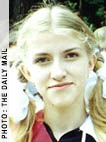
►►Colombia asks Panama to extradite ex-spy chief (again). Panama’s Foreign Ministry says Colombia has asked it to extradite former Colombian intelligence director Maria del Pilar Hurtado (pictured) to face conspiracy, wiretapping and abuse of authority charges. Hurtado headed Colombia’s now-defunct DAS domestic intelligence agency in 2007 and 2008.

News you may have missed #648

Academi HQ

►►IntelNews editor interviewed on RT. IntelNews senior editor, Dr Joseph Fitsanakis, was interviewed yesterday on the main news program of the popular international news channel RT. The interview, concerning the rebranding of private security company Xe Services (formerly Blackwater) to Academi, can be watched here (watch video at the bottom of the page).
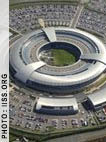
►►Contractors making a killing working in UK cyberdefense. Britain has spent more than £100 million ($160 million) in the past year on consultants to combat cyber espionage and the growing use of the internet by terrorists. Now, members of Parliament are investigating the soaring costs of employing private contractors, some paid the equivalent of £150,000 a year, three times the average wage at GCHQ, the UK’s signals intelligence agency.
►►Japan launches second spy satellite. Japan’s space agency, JAXA, has launched an intelligence-gathering satellite, its second this year. Japan launched its first pair of spy satellites in 2003, prompted by concerns over North Korea’s missile program. It currently has four optical information-gathering satellites in orbit. Officials refused to provide details of the capabilities of the most recently launched satellite.
News you may have missed #647

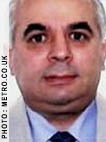
Ilir Nazmi Kumbaro

Ilir Kumbaro

►►Albanian ex-spy chief on the run in Britain. Albania’s former intelligence chief, Ilir Nazmi Kumbaro, who is wanted in his homeland for torture and kidnapping, failed to attend an extradition hearing on Thursday at Westminster magistrates’ court in London. He has reportedly left his home in Fulham, west London, and police believe he is being harbored by friends.
►►Secret CIA black site discovered in Romania. The hitherto secret location, code-named “Bright Light”, is said to have been one of the CIA’s notorious interrogation prisons in Eastern Europe. It has been traced to the basement of Romania’s National Registry Office for Classified Information, which lies in a busy residential district of the Romanian capital, Bucharest.
►►CIA leaves drone base in Pakistan. The US Central Intelligence Agency has vacated an air base in western Pakistan that it had been using for drone strikes against militants in the country’s tribal areas. Pakistan had ordered the CIA to leave the Shamsi air base in protest over NATO airstrikes that killed at least 25 Pakistani soldiers near the border with Afghanistan on November 26.

News you may have missed #645

Turki al-Faisal

Turki al-Faisal

►►Polish authorities arrest retired spy. The former head of Poland’s State Protection Bureau (1993-96) has been detained by officers of the country’s Central Anticorruption Bureau. Identified as Gromoslaw Cz., the arrestee is a retired general and intelligence officer, who participated in the extraction of CIA officers in Iraq in 1990. According to TVN 24 news, Gromoslaw Cz.’s detention is connected with events surrounding the privatization of the G-8 group of energy companies in the years 1994-2004, which eventually set up Energa concern in 2005.
►►Are China’s hotel rooms bugged? What could have been a dull security conference in Canada last week turned into a pretty interesting one, when former diplomat Brian McAdam claimed that “virtually all” hotels in China are rigged with hidden microphones and video cameras. The latter, he said, are used by the Chinese government to recruit many of its informants, by catching them in the act in carefully planned liaisons.
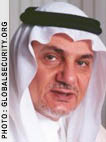
►►Ex-spy chief says Saudi Arabia may join nuke arms race. Saudi Arabia may consider acquiring nuclear weapons to match regional rivals Israel and Iran, its former intelligence chief Prince Turki al-Faisal said on Monday. “Our efforts and those of the world have failed to convince Israel to abandon its weapons of mass destruction, as well as Iran […]. Therefore it is our duty towards our nation and people to consider all possible options, including the possession of these weapons” Faisal told a security forum in Riyadh.

News you may have missed #644 (Pakistan edition)

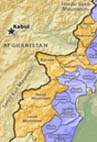
Afghan-Pakistani Border

AfPak border

►►US built its own secret Pakistani spy service. Deep within Pakistan’s Inter-Services Intelligence (ISI), America’s most reliable ally has been the spy service’s division known as the T Wing. It was created largely from scratch in 2006 and 2007, after the Americans mostly gave up trying to work with the ISI’s uncooperative leadership. US officials say their hope was that the T Wing might help to offset the pernicious influence of the ISI’s S Wing, the division in charge of managing the Pakistani government’s relationship with Islamic extremist groups such as the Kashmiri separatist Lashkar-e-Taiba and Afghanistan’s Taliban.
►►Pakistan ‘permanently’ shuts down resupply routes to Afghanistan. NATO recently literally shot itself in the foot, imperiling the resupply of International Assistance Forces (ISAF) in Afghanistan, by shooting up two Pakistani border posts in a “hot pursuit’ raid. Given that roughly 100 fuel tanker trucks along with 200 other trucks loaded with NATO supplies cross into Afghanistan each day from Pakistan, Pakistan’s closure of the border has ominous long-term consequences for the logistical resupply of ISAF forces, even as Pentagon officials downplay the issue and scramble for alternative resupply routes.
►►Analysis: The fiction of Pakistan as a US ally. Sixty percent of the supplies used by US forces in Afghanistan transit Pakistan. The logistical requirements of the American army in the Afghan theater are staggering. Leaving aside food, ammunition and a million other necessities, the US military in Afghanistan consumes 300,000 barrels of oil a day. Every drop of that oil has to be trucked in country. NATO so far keeps stressing that there is no immediate threat to continued operations, but that will be true for only so long. Wars consume mountains of supplies, and without fuel, food and bullets soldiers will not fight for long.

News you may have missed #643 (Israel edition)

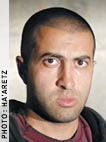
Mosab Hassan Yousef

Yousef/Joseph

►►Hezbollah uncovers more Israeli spy devices. Lebanese media reported on Friday that two people were wounded in a blast that occurred in the south of the country, between the towns of Srifa and Deir Kifa. According to some of the reports, the blast targeted espionage devices which were destroyed by Israel after being exposed by Hezbollah. This is not the first time such devices have been discovered in Lebanon: see here and here for previous such incidents.
►►PLO subpoenas Palestinian who spied for Israel. The Palestine Liberation Organization served Mosab Hassan Yousef, who says he is a former spy for Israeli domestic intelligence agency Shin Bet, with a subpoena in the United States last month. The Palestinian group says it wants his notes and details of his spy work for the Israeli government.
►►Analysis: The complex relationship between the Mossad and Israeli media. “Former Mossad chief Meir Dagan’s crusade this week against an Israeli strike on Iran took on a new dimension with his several media interviews. His campaign also reflects the Mossad’s attitude toward journalists, something along the lines of respect them, suspect them and use them. The degree shifts from one Mossad head to the next”. An enlightening analysis by veteran Israeli intelligence correspondent Yossi Melman.

News you may have missed #642

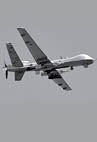
Predator drone

Predator drone

►►Australia concerned China using civilian satellites to spy. Concerns that China may use civilian satellite tracking stations to monitor Australian military operations have been dismissed by the Swedish Space Corporation. The company owns and operates two satellite tracking stations 400 km north of the West Australian capital, Perth. One was used by the China Satellite Launch Company last month in China’s first space docking operation.
►►Did Iran capture US stealth drone intact? For the second time this year, the Iranian government is claiming it forced down a stealthy US Air Force spy drone. Only this time, it says it bagged the RQ-170 “with little damage” by jamming its control signal —a potentially worrying development for American forces heavily reliant on remote-controlled aircraft. A US official, who asked not to be named, told Reuters that “there is absolutely no indication up to this point that Iranians shot down this drone”.
►►Canadian Mounties spied on native protest groups. Canada’s federal government created a vast surveillance network in early 2007 to monitor protests by First Nations, including those that would attract national attention or target “critical infrastructure” like highways, railways and pipelines, according to RCMP documents. The RCMP intelligence unit reported weekly to approximately 450 recipients in law enforcement, government, and unnamed “industry partners” in the energy and private sector. The news follows revelations last month of the RCMP’s largest-ever domestic intelligence operation, aimed against G8 and G20 protesters.

News you may have missed #641 (US edition)

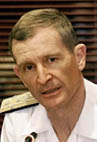
Dennis Blair

Dennis Blair

►► US Navy memo had warned Roosevelt of 1941 attack. Three days before the December 7, 1941, Japanese attack on Pearl Harbor, US President F.D. Roosevelt was warned in a memo from US naval intelligence that Tokyo’s military and spy network was focused on Hawaii. The 20-page memo has been published in the new book December 1941: 31 Days that Changed America and Saved the World, by Craig Shirley.
►►US spy agencies cut their holiday parties. Holiday gatherings have provided rare opportunities for US congressional staff, embassy aides, government officials, and the media to mix it up —off the record— with the spy set. But this year, agency budget Scrooges have taken aim at high-priced holiday merriment. The Director of National Intelligence has canceled holiday parties altogether, and the Central Intelligence Agency has drastically downsized its guest list and lavish spread by more than 50%.
►►Ex-DNI Blair wants Pentagon in charge of drone strikes. The United States’ former Director of National Intelligence Dennis Blair, who previously proposed scaling back the armed drone operation run in Pakistan by the CIA, is now urging that the program be publicly acknowledged and placed in the hands of the US military.

News you may have missed #640

Amos Yadlin

Amos Yadlin

►►Chinese defector says Canada right to worry about spying. Li Fengzhi, a former intelligence officer for China’s Ministry of State Security, who defected to Canada in 2003, has told a conference that Canada should be concerned about relationships between senior politicians and journalists from China, saying Beijing is targeting lawmakers everywhere. He was referring to the case of senior Conservative MP Bob Dechert, who was enveloped by controversy in September over amorous e-mails he sent to Shi Rong, a Chinese government journalist based in Toronto. After the Dechert controversy broke, the journalist recalled to Beijing to meet with her superiors and has not returned to her Canadian posting.
►►More intel officials warn against airstrikes on Iran. Meir Dagan, the former head of Israeli spy agency Mossad, is not alone in warning against the possibility of Israeli attacks against Iran’s nuclear program. He has now been joined by Major General Amos Yadlin, who until recently headed Israel’s Military Intelligence directorate. Speaking at Israel’s Institute for National Security Studies, Yadlin doubted that airstrikes could threaten Iran’s numerous, distant and well-defended nuclear facilities. Another intelligence official, Saudi Arabia’s Prince Turki al-Faisal, also cautioned last week against any attacks on Iran, saying that “there are other non- military policy alternatives, as yet unexplored, that could have the desired result without the unwanted consequences”.
►►GCHQ challenges code breakers via social networks. Britain’s signals intelligence agency, the General Communications Headquarters, has launched a code cracking competition to help attract new talent. The organization has invited potential applicants to solve a visual code posted at an unbranded standalone website. The challenge will also be ‘seeded’ to social media sites, blogs and forums. A spokesman said the campaign aimed to raise the profile of GCHQ to an audience that would otherwise be difficult to reach.

News you may have missed #639 (Katia Zatuliveter edition)

Katia Zatuliveter

Katia Zatuliveter

►►Russian woman accused of spying wins right to stay in UK. Katia Zatuliveter, 26, who was accused by British counterintelligence service MI5 of being a spy for Russia, has won a court appeal against her planned deportation. A panel of the UK’s Special Immigration Appeals Commission, which included the former MI5 director general Sir Stephen Lander, ruled that MI5’s suspicions about Zatuliveter had been reasonably held, but were wrong.
►►Zatuliveter espionage case reveals MI5 fears. MI5, the security service, will be hugely disappointed that the Special Immigration Appeals Commission has overturned the government’s attempt to deport Katia Zatuliveter on allegations that she spied for Russia. But senior figures at the domestic intelligence service will have no regrets about undertaking their yearlong attempt to secure the expulsion of an individual who has given them ample grounds for suspicion.
►►How big is the threat from Russian spies? There may well be Russian spies operating in Britain today, but Katia Zatuliveter –who has won an appeal against deportation– is not one of them, and the failure of the case against her is an embarrassing blow to a security service for whom the Russians were once the top target.

News you may have missed #639

GCHQ

GCHQ

►►GCHQ will sell cyberdefense tech to private firms. The GCHQ, Britain’s signals intelligence agency, is to market some of its security technologies to companies in the private sector, in an attempt to bolster defenses against the foreboding threat of cyberwarfare. The UK government’s “cyber security strategy”, which was unveiled this month, has earmarked £650 million in public funding to set up a four-year National Cyber Security Program, a percentage of which will be used to collaborate with private companies. Click here for an excellent analysis on the public-private cybersecurity collaboration in Britain.
►►Was there a coup attempt in Trinidad? Many in Trinidad and Tobago were expressing skepticism yesterday about an alleged assassination plot, which Prime Minister Kamla Persad-Bissessar said had been uncovered against her and several of her ministers. Police said nearly a dozen people had been arrested, including members of the army and police, but authorities have not given more details, citing the need to maintain security in operations to dismantle the plot.
►►US Senators resist $7 Billion in spending cuts for spy satellites. The Obama Administration wants to stop incessant spending by Defense Department contractors, especially those who have wasted billions of US taxpayers’ money in failed spy satellite projects. But the contractors’ friends in Congress, including lawmakers on the US Senate Intelligence Committee, are trying to stop the White House from cutting a $7 billion commercial satellite program being developed by GeoEye Inc. and DigitalGlobe Inc. What else is new?

News you may have missed #638 (analysis edition)

Dominique Strauss-Kahn

Strauss-Kahn

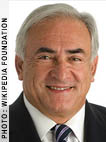
►►What really happened to Strauss-Kahn? Earlier this year, Dominique Strauss-Kahn lost his political career and his job as head of the International Monetary Fund after he was indicted in New York on sexual assault charges, which were later dropped. But investigative journalist Edward J. Epstein alleges that the French politician may have been the target of a deliberate attempt to destroy him as a political force. His allegations relate to a missing BlackBerry phone which is said to have been hacked by Strauss-Kahn’s political rivals.
►►Spy game revs up with Arab Spring. A broad –perhaps too broad– primer on espionage and intelligence operations in the Middle East, with quotes by several academics and former intelligence operatives. Parts of it are probably too basic for intelNews regulars, but worth a look nonetheless.
►►Why is UK police not investigating Climategate? The UK police force tasked with investigating the hacking of emails and documents from the Climatic Research Unit at the University of East Anglia (the debunked “Climategate“), seems to have quietly de-prioritized its investigation. According to documents released under the UK Freedom of Information Act, the amount spent on attempts to identify the hacker in the last year was just £5,649.09 (less than $8,000), suggesting police work on the investigation has ground to a halt.

News you may have missed #637

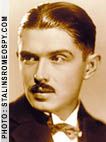
Dmitri Bystrolyotov

D.A. Bystrolyotov

►►South African spy boss to quit. Director General of the State Security Agency Jeff Maqetuka, who has been entangled in a never-ending war with Minister Siyabonga Cwele, is expected to step down this week, according to South Africa’s Sunday Independent. The paper claims that that plans are afoot to expedite Maqetuka’s departure from the country’s intelligence infrastructure by placing him on summer leave and then making sure he would not return to work in 2012.
►►Slovakian defense minister resigns over wiretap scandal. The interception of journalists’ telephone calls by the Slovakian Defense Ministry’s counterintelligence arm has cost the country’s Defense Minister, Lubomír Galko, his job. The scandal involved Slovakia’s Military Defense Intelligence (VOS). It has also emerged that the VOS operation involved wiretapping of the head of TV news channel TA3 and two senior Defense Ministry employees, according to leaked documents obtained by Slovak media outlets.
►►Book on Soviet spy Dmitri Bystrolyotov. Excerpt from Emil Draitser’s book Stalin’s Romeo Spy: The Remarkable Rise and Fall of the KGB Most Daring Operative (Northwestern University Press, 2010), about one of the 20th century’s most outstanding undercover operatives. Bystrolyotov acted in Western Europe in the interwar period, recruiting and running several important agents in Great Britain, France, Germany, and Italy.

News you may have missed #636

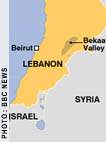
Lebanon

Lebanon

►►Careless codeword may have cost CIA its Lebanon network. Hezbollah have reportedly just rolled up the CIA’s network of spies in Lebanon. If so, it’s because of one of the stupidest, least secure code words in history. According to ABC News, Hezbollah operatives figured out that CIA informants, who had infiltrated the Iranian proxy group, were meeting with their agency handlers at a Beirut Pizza Hut. How could Hezbollah deduce that location? “The CIA used the codeword ‘PIZZA’ when discussing where to meet with the agents,” ABC reports.
►►UK spy chiefs to be publicly questioned for first time. The heads of British intelligence agencies are set to be questioned for the first time in public, under plans to make spies more accountable. The directors of MI5, MI6 and GCHQ will face Parliamentarians on the Intelligence and Security Committee. Although, they have recently begun to make rare public appearances, and deliver speeches, it will be the first time the intelligence agency heads will face public cross-examination over their activities.
►►Documents reveal largest domestic spy operation in Canadian history. Police organizations across Canada co-operated to spy on community organizations and activists in what the Royal Canadian Mounted Police called one of the largest domestic intelligence operations in Canadian history, documents reveal. Information about the extensive police surveillance in advance of last year’s G8 and G20 meetings in southern Ontario comes from evidence presented in the case of 17 people accused of orchestrating street turmoil during the summits.

News you may have missed #635

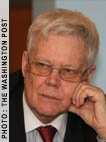
Vitaly Shlykov

Vitaly Shlykov

►►UK to support Colombia’s new intelligence agency. The UK has announced that it will provide help and advice on the implementation of Colombia’s new national intelligence agency. Colombian President, Juan Manuel Santos, along with National Security Adviser, Sergio Jaramillo, met with the director of Britain’s secret service MI6 to exchange experiences in intelligence to implement the new National Intelligence Agency of Colombia (ANIC). ANIC is supposed to replace the DAS, Colombia’s disgraced intelligence agency, which has been stigmatized by colluding with paramilitary groups and spying on union leaders, journalists and opposition politicians.
►►US intelligence to train analysts with videogames. The US intelligence community’s research group, the Intelligence Advanced Research Projects Agency (IARPA), has handed over $10.5 million to Raytheon BBN Technologies to start work on the Sirius program. The initiative aims to create a series of so-called “serious games” that would help intelligence analysts improve their objectivity and reasoned judgment when confronted with complex or culturally foreign scenarios.
►►Soviet spy who spent years in Swiss prison dies at 77. Vitaly Shlykov served for 30 years in the Main Intelligence Directorate of the Russian General Staff, known as GRU. During his career, he made frequent trips to the West on a false American passport. One of his duties was to maintain contacts with Dieter Felix Gerhardt, a senior officer of the South African Navy who was working as a Soviet spy. In 1983, Shlykov was arrested in Zurich while carrying about $100,000 in cash to hand over to Gerhardt’s wife. Soviet intelligence was unaware that Gerhardt and his wife had been arrested a few weeks earlier and had told interrogators about the meeting in Switzerland.