Somali officials divert arms to al-Qaeda-linked groups, UN says

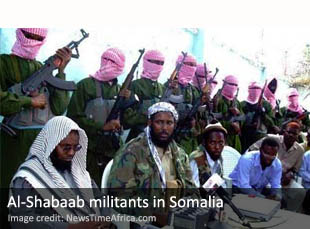
Al-Shabaab militants in SomaliaBy JOSEPH FITSANAKIS | intelNews.org
A confidential report by United Nations monitoring experts warns that senior members of Somalia’s federal government are systematically diverting weapons to al-Qaeda-linked groups operating in the country. In 1992, the United Nations Security Council imposed a weapons embargo on Somalia, in an effort to prevent weapons from reaching a multitude of warring tribes that had plunged the country into a bloody civil war. Last March, however, the Council agreed to ease the embargo following persistent appeals by the Federal Government of Somalia. The latter argued that the two decades-long arms embargo prevented it from adequately defending itself and its population from al-Shabaab, an al-Qaeda-linked militant group that controls large swathes of the Somali countryside. The easing of the embargo, which was supported by the United States, has allowed the government in Mogadishu to import much-needed military hardware such as rocket-propelled grenade launchers and automatic assault rifles. But a recent report from the UN’s Somalia and Eritrea Monitoring Group has found that a significant portion of the advanced weaponry imported by Somalia following the relaxation of the embargo rules is ending up in the hands of paramilitary groups, including al-Shabaab. The confidential 14-page report, which has been seen by Reuters, was authored by a team of independent experts who are tasked with evaluating the extent to which the government of Somalia complies with weapons sanctions. The report concludes that the UN should restore the full weapons embargo in order to prevent advanced weaponry from falling into the arms of al-Shabaab. Read more of this post

Comment: Nuland’s leaked phone call is ‘populist intelligence’

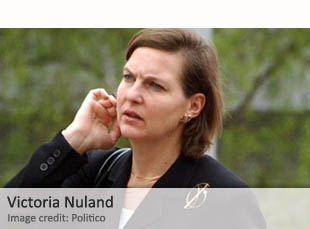
Victoria NulandBy JOSEPH FITSANAKIS | intelNews.org
My phone started ringing off the hook on Thursday evening, when a video appeared on YouTube containing a frank conversation between Victoria Nuland and Geoffrey Pyatt. Nuland, Assistant Secretary at the United States Department of State, and Pyatt, US Ambassador to Ukraine, were discussing US diplomatic moves on the political standoff in Ukraine. In the conversation, which was clearly meant to be private, Nuland expresses frustration with efforts by the European Union, which she deems weak and inadequate. In a shocking display of candor, Nuland tells Pyatt that the US should “help glue this thing and […] have the UN help glue it and, you know, f**k the EU”.

On Thursday night I spoke at the main news program of BBC television, where I agreed with most observers —some of the US government officials— that Russia was the obvious culprit behind the leaked conversation. The geopolitical interests of Washington and Brussels coincide almost completely when it comes to Ukraine, as both wish to detach the former Soviet republic from the Russian sphere of influence. So driving a wedge between the two allied sides is clearly to the benefit of Moscow. I added that the two American officials should have known better than to speak so frankly on the phone, given the constant monitoring of diplomatic communications by both adversary and friendly intelligence services, which is common knowledge in diplomatic circles. Read more of this post
Thatcher was warned about CIA activities in Britain, files show

Margaret ThatcherBy JOSEPH FITSANAKIS | intelNews.org
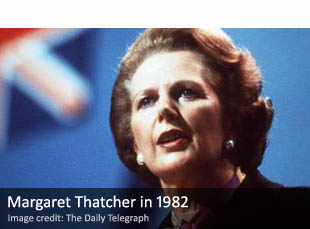
British Prime Minister Margaret Thatcher was warned in 1984 that American intelligence carried out operations in the United Kingdom without London’s consent. Although she dismissed the warnings, she authorized British counterintelligence to investigate the matter. A secret file from the British Foreign Office, which was declassified last month, shows that concerns about alleged American spy activity in the UK were communicated to the Tory Prime Minister by Paddy Ashdown —now Lord Ashdown— a Member of Parliament for Britain’s Liberal Party. In November of 1984, Ashdown notified Thatcher that he was concerned about a series of “clandestine activities” carried out by the United States Central Intelligence Agency (CIA) aimed at preventing communist countries from acquiring advanced computer technology developed by companies based in Britain. The written warning stated that CIA operatives had made “clandestine approaches” targetting individuals employed by leading British computer firms, inquiring about technology transfers to the Soviet Bloc. Ashdown added that the American intelligence agency had failed to provide the British government with advance notice of these activities, as was customary between the two allies. In his letter to Thatcher, the Liberal Party MP concluded that, based on his personal investigation into the matter, he was convinced the CIA operation was “still continuing”. The Prime Minister responded to Ashdown with an official letter explaining that there was “no evidence of improper activity by the CIA” or that British espionage laws had been violated by American intelligence personnel. She added that there was “close cooperation” between London and Washington on enforcing multilaterally agreed export controls, which included computer technology, and concluded that saw no need for an inquiry at that time. But London-based newspaper The Guardian, which accessed the declassified files on the case, said that Whitehall ordered the Foreign Office to investigate Ashdown’s allegations. The Foreign Office then tasked the Security Service (MI5) to find out whether the US had broken an agreement between the two countries to refrain from clandestine operations on each other’s territory unless the latter were authorized by both nations. Read more of this post

Israel jails Orthodox Jew who offered to spy for Iran

Neturei Karta membersBy JOSEPH FITSANAKIS | intelNews.org
An Israeli citizen, who belongs to an Orthodox anti-Zionist Jewish group that rejects the existence of the state of Israel, has been jailed for offering to spy for Iran. Yitzhak Bergel, 46, a father of eight, who resides in Jerusalem’s ultra-Orthodox Mea She’arim neighborhood, is a member of the Neturei Karta —which translates in English as “Guardians of the City”. The Jewish group opposes Zionism —the belief that a state-sanctioned Jewish homeland ought to be created in the territory described as “Land of Israel” in Jewish scriptural texts. The group, which was founded in the 1930s and has thousands of adherents in Israel, the United States and Europe, is one of several branches of conservative Judaism whose members believe that Jews are forbidden by the Torah to create their own state before the coming of the Jewish Messiah. Its members therefore oppose the existence of the current state of Israel and favor its dismantling as a Jewish state. According to his indictment, Bergel, who became religious 20 years ago, traveled to the German capital Berlin in January of 2011, intent on contacting Iranian diplomats. He walked into the Iranian embassy there and offered to collect intelligence on Israel on behalf of Iran, in return for regular payments. Israeli government prosecutors said Bergel remained in contact with his Iranian handlers until his arrest last summer. According to court documents, Bergel pleaded guilty to charges of contacting foreign agents with intent to commit treason and attempting to aid an enemy of Israel. Read more of this post

Coroner’s report sees Russian state behind ex-KGB spy’s death

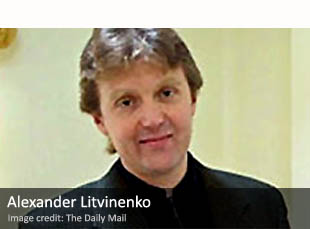
Alexander LitvinenkoBy JOSEPH FITSANAKIS | intelNews.org
A previously classified report by the British government official who certified the 2006 death of former KGB officer Alexander Litvinenko states that the Russian state was directly implicated in the murder. Litvinenko was an employee of the Soviet KGB and one of its successor organizations, the FSB, until 2000, when he defected with his family to the UK. He soon became known as a vocal critic of the administration of Russian President Vladimir Putin. In 2006, Litvinenko came down with radioactive poisoning soon after meeting former KGB/FSB colleague Andrey Lugovoy at a London restaurant. Many suspect that the Russian government is behind Litvinenko’s murder. In February of last year, Litvinenko’s family accused the British government of trying to block a probe into the murder case, after British Foreign Secretary William Hague limited the scope of a public inquest in to the matter on national security grounds. Supporters of Litvinenko have argued that White Hall has played down the Litvinenko murder case in order to preserve its trade ties with Russia’s government-owned energy companies. Members of the murdered spy’s family are now pushing for a full public inquiry into the incident, and are currently making the case before a specially appointed panel of judges at the High Court. In the course of this appeal, a previously classified document has emerged, which contains the report of Sir Robert Owen, the coroner who first examined the available evidence immediately after Litvinenko’s death. According to the document, which has been seen by the BBC, the coroner concluded that, based on “documents held by the UK government”, the “culpability of the Russian state in the death of Alexander Litvinenko” could be established “prima facie”. Read more of this post

Announcement: Conference on social media and intelligence

Social networkingBy JOSEPH FITSANAKIS | intelNews.org
During the past four years, this blog has reported several incidents pointing to the increasing frequency with which spy agencies of various countries are utilizing social networking media as sources of tactical intelligence. But are we at a point where we can speak of a trend? In other words, is the rapid rise of social networking creating the conditions for the emergence of a new domain in tactical intelligence collection? Some experts now contend that the growth of social networking has given rise to a new form of intelligence-gathering: social media intelligence (SOCMINT). There are even some who believe SOCMINT should become a separate entity altogether in the intelligence process. On March 7, 2014, the Netherlands Intelligence Studies Association (NISA) will be holding a one-day conference in Amsterdam, to discuss this new phenomenon and consider some of the practical, ethical and political dilemmas involved in SOCMINT. The conference will open with a keynote speech by Sir David Omand, former director of Britain’s’ signals intelligence agency, the GCHQ, who currently teaches at the War Studies Department at King’s College, London. Other speakers come from intelligence and security services in Holland and Belgium, as well as from a variety of academic centers and non-governmental organizations in Europe and the United States. Longtime readers of this website will be familiar with NISA. The group was founded in 1991 with a mission to help focus and streamline academic work on intelligence, security and law enforcement. Read more of this post

Confirmed: Secret talks between Assad officials and Western spies

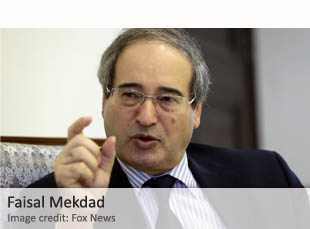
Faisal MekdadBy JOSEPH FITSANAKIS | intelNews.org
The BBC says it has confirmed that secret meetings have been held between Western intelligence officials and senior members of the Syrian government, aimed at “combating radical Islamist groups” in Syria. In a report aired on Wednesday, the British news agency cited “informed sources” in confirming that Western intelligence officials had visited Syrian capital Damascus. While there, said the report, the officials held meetings with security agents loyal to the government of President Bashar al-Assad. The confirmation came a day after Syria’s Deputy Foreign Minister, Faisal Mekdad, told BBC’s flagship Newsnight program that the Syrian government was cooperating with Western intelligence services against radical Islamist groups that have taken up arms against President Assad. The Syrian official told Newsnight that Western governments were “finally understanding” that there was “no alternative except al-Qaeda” to Assad’s rule in Syria, and that Western security officials were in secret contact with Damascus. Asked whether he was referring to officials from Western intelligence agencies, Mekdad said he would “not specify, but many of them have visited Damascus, yes”. He added that the al-Assad government was receiving regular requests from Western countries to have their diplomats —most of whom were withdrawn following the outbreak of the civil war— return to the Syrian capital. Read more of this post

US regular troops enter Somalia for the first time in 20 years

By JOSEPH FITSANAKIS | intelNews.orgAl-Shabaab militants in Somalia
For the first time since 1993, when American troops left Somalia following the infamous ‘Black Hawk down’ incident, the US army has secretly stationed a group of regular troops in the troubled African country. The last time United States troops were in Somalia, in support of a wider United Nations stabilization operation, the administration of US President Bill Clinton decided to abandon the operation. The decision has been largely attributed to an incident known as “The Battle of Mogadishu”, in which nearly 20 American soldiers were killed. Images of their bodies being dragged by Somali militiamen through the streets of the capital resulted in major policy shift in Washington, with successive US administrations avoiding prolonged military engagements in Somalia ever since. In the post-9/11 era, American military and intelligence planners have deployed Predator drones against Somali targets from a US base in neighboring Djibouti, while rare cases have involved US Special Forces entering the country for a few hours at a time. Washington has also spent hundreds of millions of dollars to fund the nascent Somali military. But American Presidents have avoided any long-term military or civilian presence on the ground; Washington does not even maintain an embassy in Mogadishu —though most observers agree that the Central Intelligence Agency has operated a base there for years. On January 12, however, The Washington Post published a statement by US Africa Command (AFRICOM) spokesman Army Colonel Thomas Davis, in which he confirmed that the Pentagon recently established a “military coordination cell” in Somalia that “is now fully operational”. Read more of this post

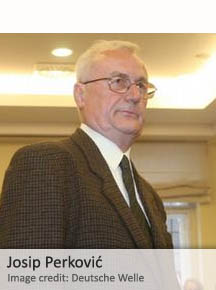
Croatian court authorizes extradition of ex-spy official to Germany

Josip PerkovićBy JOSEPH FITSANAKIS | intelNews.org
A court in the Croatian capital Zagreb has ruled in favor of the extradition of the country’s former spy chief to Germany, where he is wanted for the communist-era murder of a Yugoslav dissident. Josip Perković was a senior official in the Yugoslav State Security Service (known by its Serbo-Croatian acronym, UDBA) during the closing stages of the Cold War. He is a prime suspect in the murder of Stjepan Đureković, a Yugoslav defector who was killed by UDBA agents in 1983. Đureković, who was of Croatian nationality, defected from Yugoslavia to Germany in 1982, while he was director of the state-owned INA oil company. Upon his arrival in Germany, he was granted political asylum and began associating with Croatian nationalist émigré groups that were active in the country. He was killed on July 28, 1983, in Wolfratshausen, Bavaria, in a UDBA operation codenamed DUNAV. In 2009, following testimonies by several former UDBA agents, who were arrested in connection with the crime, the Office of the German Federal Prosecutor issued a European Arrest Warrant for Perković, who is believed to have authorized Đureković’s assassination. However, Croatia consistently refused to honor the warrant and allowed Perković to live in Zagreb. The reason, according to observers, was that the former spy official was instrumental in helping set up Croatia’s first post-independence intelligence agency, which he directed for the first few years of its existence. His contribution to the establishment of Croatia’s intelligence apparatus has contributed to his political legacy in the country, which effectively shielded him from extradition to Germany. Read more of this post

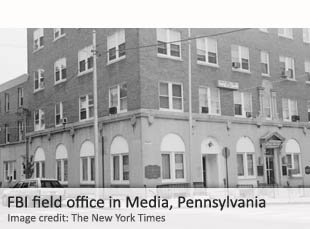
Leftist group behind 1971 burglary of FBI office comes forward

FBI field office in Media, PaBy JOSEPH FITSANAKIS | intelNews.org
Members of an American leftwing group, who in 1971 burgled a regional branch of the Federal Bureau of Investigation (FBI), stealing documents that revealed illegal government activities, have come forward. The mysterious group, which called itself The Citizens’ Commission to Investigate the FBI, is credited by historians as having unearthed the initial revelations that eventually led to the exposure of COINTELPRO. The acronym stood for COunter INTELligence PROgram; it incorporated a host of questionable and often illegal activities by the FBI, which were aimed at discrediting domestic political organizations considered ‘radical’ by longtime FBI Director J. Edgar Hoover. The program targeted mostly nonviolent antiwar groups and black civil rights organizations and leaders, including Dr. Martin Luther King, Jr., who was regarded by Hoover as a communist agent. In association with the Watergate scandal, the COINTELPRO revelations led to the creation of the Church and Pike committees in Congress, which radically restructured the oversight of the United States Intelligence Community. The burglary took place on the evening of March 8, 1971, in the town of Media, Pennsylvania. It resulted in the theft of over 1,000 documents, which were then reproduced and mailed anonymously to several national newspapers, including The New York Times and The Washington Post. Nearly half of the stolen documents concerned surveillance and disruption operations —mainly blackmail, intimidation and sabotage— against liberal groups. They also included a controversial directive by Director Hoover to place “an FBI agent behind every mailbox” in America. A furious Hoover placed as many as 200 agents on the burglary case; but the investigation got nowhere, and the Bureau was forced to close the case in March 1976, having failed to conclusively identify the burglars. But now a new book written by Betty Medsger, who at the time of the burglary was working for The Washington Post, has revealed for the first time the identities of four of the eight-member team that carried out the burglary. Read more of this post

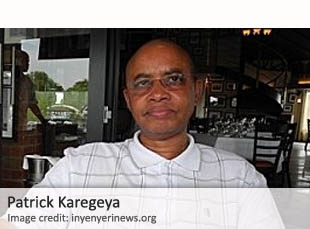
Exiled Rwandan ex-spymaster found murdered in South Africa

Patrick KaregeyaBy JOSEPH FITSANAKIS | intelNews.org
The former head of Rwanda’s external intelligence agency, who had been branded an ‘enemy of the state’ by the Rwandan government, was murdered last week in South Africa. Police in Johannesburg said the body of Patrick Karegeya, 53, was found in a room at the luxury Michelangelo Towers Hotel, where he had gone to meet a fellow Rwandan. His neck was abnormally swollen and showed signs of strangulation; a rope and a bloodied towel were found tucked inside the hotel room’s safe. Karegeya was a leading member of the Rwandan Patriotic Army (RPA), the armed wing of the Rwandan Patriotic Front (RPF), which was founded in 1987 in Uganda by Rwandan Tutsi refugees. In 1994, the RPA, led by Paul Kagame, took control of Rwanda, thus ending the genocide of up to a million Tutsis and moderate Hutus, which had taken place earlier that year. Soon afterwards, Karegeya was named Director General of External Intelligence in the RPA, which was renamed to Rwandan Defense Forces. In 2004 however, after falling out with Kagame, who had become President of Rwanda in 2000, Karegeya was arrested, stripped of his rank of colonel, and served 18 months in prison for “insubordination and desertion”. He fled the country in 2007 and received political asylum in South Africa. The Rwandan government later claimed that Karegeya had been a double spy for South Africa. In 2010, Karegeya teamed up with General Faustin Kayumba Nyamwasa, who used to head the Rwandan Army, and had also escaped to South Africa after falling out with President Kagame. The two formed a new Rwandan opposition party in-exile, called the Rwanda National Congress. The response from the government in Kigali was to try Karegeya and Nyamwasa in absentia in a military court. They were both sentenced to lengthy prison terms for “promoting ethnic divisions” in the country. In 2011, the Rwandan government issued international arrest warrants for the two former military men, but South Africa refused to extradite them. Since then, General Nyamwasa has survived two assassination attempts against him in South Africa. The BBC notes that other former allies of President Kagame, who have received political asylum in the West, have been warned by Western intelligence agencies that their lives may be in danger. Read more of this post

Czech police find weapons in house of late Palestinian diplomat

Palestinian diplomatic residence in PragueBy JOSEPH FITSANAKIS | intelNews.org
Authorities in the Czech Republic said they found several weapons in the residence of a Palestinian diplomat who died in a mysterious explosion on New Year’s Day. Jamal al-Jamal, who had assumed the post of Palestinian Ambassador to the Czech Republic in October, died in hospital on Wednesday, having suffered lethal injuries to his chest, abdomen and head. Czech authorities said the 56-year-old was killed by an explosion caused as he opened a safe that had been transferred to his residence from the old Palestinian Liberation Organization (PLO) offices in downtown Prague. Palestinian Minister of Foreign Affairs, Riyad al-Malki said on Wednesday the safe al-Jamal was trying to open at the time of the explosion had come from the old PLO offices in downtown Prague where “no one had touched it for 20 to 25 years”. He added that the blast was triggered just moments after al-Jamal opened the safe in order to record its contents. On Thursday, however, the Czech Ministry of Foreign Affairs said in a statement that several unregistered weapons had been found by police in the official residence of the late diplomat. The statement did not identify the weapons, but Czech government sources expressed concern that the discovery might suggest “a breach in diplomatic rules”. Czech law specifies that all firearms must be registered with the government and permits are compulsory for all who possess them. On Thursday afternoon, US-based news network CNN contacted Czech National Police, and was told by spokeswoman Andrea Zoulova that “several illegal firearms” had been seized by police in al-Jamal’s newly built apartment, located in Prague’s northern suburb of Suchdol. Diplomatic observers will be watching with interest for Prague’s response to these revelations, as the Czech Republic is considered among Israel’s closest allies in the European Union. During the communist era, Czechoslovakia was a staunch ally of the PLO. But successive Czech administrations have sided with Israel in recent years. Read more of this post

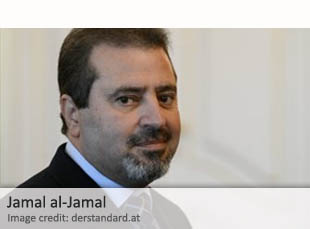
Bizarre explosion kills Palestinian diplomat in Prague

Jamal al-JamalBy JOSEPH FITSANAKIS | intelNews.org
The ambassador of Palestine to the Czech Republic was pronounced dead yesterday following injuries he sustained from a mysterious explosion at his residence. Czech police said Jamal al-Jamal died in hospital on New Year ’s Day, having suffered lethal injuries to his chest, abdomen and head. According to early indications, the 56-year-old diplomat was killed by an explosion caused as he opened a safe that had been transferred to his residence from the old Palestinian Liberation Organization (PLO) offices in downtown Prague. During the Cold War, the PLO, which al-Jamal joined in 1975, maintained close relations with most of the nations of the communist bloc, including what was then Czechoslovakia. The organization, which was led by Fatah leader Yasser Arafat, maintained an office in the Czechoslovakian capital. However, according to the Palestinian Minister of Foreign Affairs, Riyad al-Malki, the Palestinian National Authority is currently in the process of moving its diplomatic premises from downtown Prague to the northern suburb of Suchdol, adjacent to the two-story building that housed Ambassador al-Jamal and his family. Al-Maliki said that the safe al-Jamal was trying to open at the time of the explosion had come from the old PLO offices in downtown Prague where “no one had touched it for 20 to 25 years”. He added that the blast was triggered just moments after al-Jamal opened the safe in order to record its contents, prior to having it moved to the new premises of the Palestinian diplomatic mission next door. “After he decided to open [the safe], apparently something happened inside and [it] went off”, said the minister. Read more of this post

German magazine reveals more information on elite NSA spy unit

NSA headquartersBy JOSEPH FITSANAKIS | intelNews.org
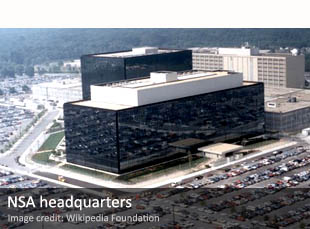
Last June, we reported on the existence of an elite cyberatack unit within the United States National Security Agency (NSA), which operates under the Agency’s Office of Tailored Access Operations. Veteran NSA watcher Matthew M. Aid, who made the initial revelation, said at the time that the Office, known at NSA simply as TAO, maintains a substantial “hacker army” that works in close cooperation with the Central Intelligence Agency (CIA) and the Federal Bureau of Investigation (FBI). Now German newsmagazine Der Spiegel says it viewed internal documents that confirm the existence of TAO as the NSA’s elite operational unit. The publication describes TAO as “something like a squad of plumbers that can be called in when normal access to a target is blocked”. It adds that TAO operatives are routinely detailed to a host of American intelligence agencies to help conduct intelligence operations ranging from traditional espionage to counterterrorism and cyberwarfare. Furthermore, TAO’s personnel, which are allegedly far younger than the average NSA officer, are experts in exploiting the technical deficiencies of the information-technology industry. They have therefore been able to compromise communications hardware and software produced by some of the world’s biggest IT companies and service providers, including Huawei, Cisco and Microsoft. The Spiegel article claims that TAO was established in 1997, several years before the Internet became a prominent engine of economic and cultural activity around the world. Its personnel, which initially consisted of a few select technical experts, was housed at the NSA headquarters in Fort George Meade, Maryland, but “in a separate wing, set apart from the rest of the agency”. Notably, Der Spiegel cites a paper produced by a former TAO unit head, which states that the program has produced “some of the most significant intelligence our country has ever seen” and urges for its continued growth. Read more of this post

Documents offer rare day-to-day insight into al-Qaeda’s finances

Al-Qaeda propaganda videoBy JOSEPH FITSANAKIS | intelNews.org
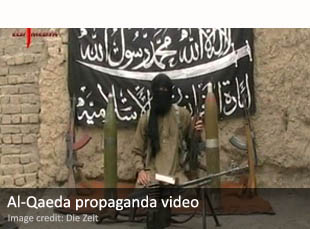
A remarkable set of documents found in western Africa offers a fascinating insight into the day-to-day running of al-Qaeda. The papers, obtained by the Associated Press (AP) earlier this year, reveal a highly bureaucratic organization that meticulously documents even the minutest expenses incurred by its members. The documents were produced and left behind by fighters belonging to the al-Qaeda in the Islamic Maghreb (AQIM) when they took over the city of Timbuktu, situated on the southern edge of the Sahara Desert in the West African nation of Mali. The AP had the documents, which include over 100 receipts written in Arabic, authenticated by experts, before posting them online, here. Analysts who spoke to the news agency said the papers show that al-Qaeda is the furthest thing from “a fly-by-night, fragmented terror organization” that conducts its financial affairs “on the back of envelopes”. Rather, they reveal a group that operates “like a multinational corporation”, with a “rigid bureaucracy” consisting of chief executives, directors’ boards, as well as clearly demarcated departments that include human resources and public relations. According to the AP, the AQIM documents found in Timbuktu include “corporate workshop schedules, salary spreadsheets, philanthropy budgets, job applications, public relations advice and letters from the equivalent of a human resources division”. Perhaps most impressively, while occupying Timbuktu, the AQIM militants appear to have gone out of their way to purchase, rather than expropriate, goods from local shopkeepers and merchants. Additionally, they went to great pains to record their cash flow, meticulously noting down purchases as small as a light bulb, a cake, or a bar of soap. The AP analysis suggests that the documents found in Timbuktu confirm what counterterrorism researchers have found in al-Qaeda’s other operational domains, in places such as Somalia, Iraq or Afghanistan. Read more of this post