Document confirms CIA role in 1953 Iran coup

Iran and its regionBy JOSEPH FITSANAKIS | intelNews.org |
Almost exactly 60 years ago, on August 19, 1953, a military coup d’état deposed Iran’s legally elected Prime Minister, Dr. Mohammed Mossadegh, and replaced him with General Fazlollah Zahedi. Mossadegh was placed under house arrest, while his senior government associates and thousands of his supporters were arrested. Many, including Hossein Fatemi, Iran’s Minister of Foreign Affairs and Mossadegh’s trusted friend, were tortured and eventually executed. The coup, which reinstated the Shah at the helm of Iran’s government, is believed to have been planned and executed by Britain’s Secret Intelligence Service (MI6) in cooperation with the United States Central Intelligence Agency (CIA). This, however, has never been publicly acknowledged by the CIA. The Agency has consistently refused comment on the matter, saying that most of the records of its involvement in Iran at the time were “lost or destroyed” in the mid-1960s. This policy of silence, however, appears to have changed this week, after the CIA released an official document that acknowledges the Agency’s leading role in the coup. The document, entitled The Battle for Iran, is part of an internal CIA historical report produced in the mid-1970s by an Agency historian. Parts of it were declassified in 1981, but its most important chapter, titled “Section III: Covert Action”, had been redacted prior to its public release. Sometime ago, George Washington University’s National Security Archive filed a Freedom of Information Act request for the complete release of the report. This was not granted; but the CIA did release a new public version of the document, which contains fewer redacted passages. Among the newly uncovered information is a brief description of the operational side of the August 1953 coup, which the CIA codenamed TPAJAX. Read more of this post

Report reveals secret US-India Cold War collaboration

U-2 surveillance aircraftBy JOSEPH FITSANAKIS | intelNews.org |
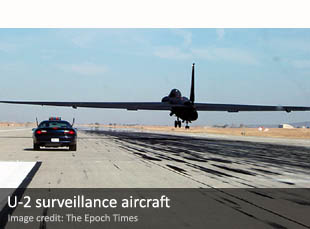
During much of the Cold War, India enjoyed a close diplomatic and military relationship with the Soviet Union. But a newly declassified document reveals that the South Asian country allowed the United States to spy on the Soviets using its airspace. The revelation is contained in a 400-page history of the American U-2 reconnaissance aircraft program authored on behalf of the US Central Intelligence Agency (CIA). The formerly classified document, written in 1992 by CIA historians Gregory Pedlow and Donald Welzenbach, is titled: The Central Intelligence Agency and Overhead Reconnaissance: The U-2 and OXCART Programs, 1954-1974. It was declassified last week in response to a 2005 Freedom of Information Act request filed by Jeffrey T. Richelson, Senior Fellow at George Washington University’s National Security Archive. The Central Intelligence Agency had been involved in U-2 reconnaissance missions since 1954, when the spy program began. Known officially as Project HOMERUN, the U-2 program was a joint effort by the CIA and the National Security Agency that surreptitiously gathered signals and photographic intelligence on Soviet military sites. The program, which has been described by some historians as one of the most successful intelligence projects in US history, relied on the U-2’s ability to fly beyond 70,000 feet over the Soviet Union, thus avoiding detection or attack by Soviet forces. That assumption, however, proved to have been false. In reality, Soviet radars had been able to detect nearly every U-2 flight over Soviet territory. Eventually, on May 1, 1960, Soviet forces managed to shoot down one of the U-2 flights using a surface-to-air missile. This led to the so-called ‘U-2 incident’, during which India sided firmly with the Soviet Union, criticizing the US for violating Soviet airspace. But New Delhi’s attitude to the U-2 program appears to have changed drastically following the Sino-Indian conflict on October 1962, when Chinese forces launched a series of armed incursions into Indian territory, killing over 1,000 soldiers. Read more of this post

CIA kept file on American academic Noam Chomsky, say experts

Noam Chomsky in 1970By JOSEPH FITSANAKIS | intelNews.org |
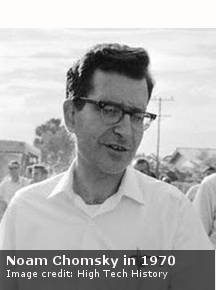
A 1970 communiqué between two United States government agencies appears to show that the Central Intelligence Agency (CIA) kept a file on the iconic American linguist and political dissident Noam Chomsky. Widely seen as a pioneer of modern linguistics, Chomsky adopted an uncompromisingly critical stance against the US’ involvement in the Vietnam War in the early 1960s. The US Intelligence Community’s systematic surveillance of antiwar and civil rights activists at the time prompted legal scholars and historians to deduce that Chomsky’s activities must have been routinely spied on by the American government. But a number of Freedom of Information Act (FOIA) requests in recent years turned up blank, with the CIA stating that it could “not locate any records” responsive to the requests. Scholars insisted, however, and a recent FOIA request unearthed what appears to be proof that the CIA did in fact compile a file on the dissident academic. The request was submitted to the Federal Bureau of Investigation (FBI) by attorney Kel McClanahan, executive director of National Security Counselors, a group specializing in “lawfully acquiring from the government material related to national security matters and distributing it to the public”. According to Foreign Policy magazine blog The Cable, McClanahan’s FOIA request revealed a memorandum sent from the CIA to the FBI on June 8, 1970. In it, the Agency seeks information about an upcoming trip by American antiwar activists to North Vietnam, which, according to the CIA, had received the “endorsement of Noam Chomsky”. The memo also asks the FBI for information on the trip’s participants, including Professor Chomsky. The Cable spoke to Marquette University Professor Athan Theoharis, domestic surveillance expert and author of Spying on Americans, who opined that the CIA request for information on Chomsky amounts to an outright confirmation that the Agency kept a file on the dissident academic. Read more of this post

High-level US-Russia meeting to go ahead despite Snowden row

Edward SnowdenBy JOSEPH FITSANAKIS | intelNews.org |

Senior United States officials will hold high-level talks with their Russian counterparts later this week, despite Moscow’s decision to grant asylum to an American intelligence defector. For many weeks, Washington pressured the Russian government to extradite Edward Snowden, a former computer expert for the Central Intelligence Agency (CIA) and the National Security Agency (NSA). But Snowden, who had sought refuge at Moscow’s Sheremetyevo International Airport, was granted temporary asylum by Russian authorities last week, prompting angry responses from the American side. According to reports, US President Barack Obama has been considering whether to cancel his attendance of a prearranged summit with Russian President Vladimir Putin in Moscow in September [20:00 GMT update: meeting has been cancelled] . But on Tuesday, the US Department of State confirmed an earlier report by news agency Reuters, which claimed that a series of meetings between American and Russian officials would still take place this week, despite the Snowden imbroglio. State Department spokeswoman Jen Psaki told journalists that Secretary of Defense Chuck Hagel and Secretary of State John Kerry would meet, as planned, with their Russian counterparts, in Washington on Friday. The Russian delegation will be visiting the US capital to discuss “pressing bilateral and global issues”, including Iran and Syria, Psaki said. In response to a question by reporters, the State Department spokeswoman said that the two sides would discuss the Snowden case. Read more of this post

Snowden leaks reveal GCHQ’s reliance on NSA money, data

GCHQ center in Cheltenham, EnglandBy JOSEPH FITSANAKIS | intelNews.org |
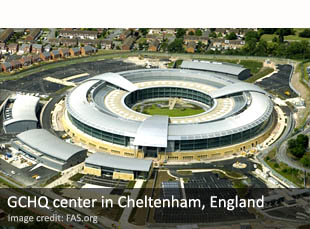
Information provided by American defector and former intelligence insider Edward Snowden shows that Britain’s signals intelligence agency is very much the junior partner in an uneven relationship with its American counterpart. Snowden, a former computer expert for the Central Intelligence Agency (CIA) and the National Security Agency (NSA), has been given political asylum in Russia. In June, he revealed a number of enormous intelligence-collection programs, including PRISM and TEMPORA. The latter is administered by the General Communications Headquarters (GCHQ), Britain’s signals intelligence organization. The program enables the agency to access communications traffic carried through fiber optic cables worldwide. But GCHQ also receives data from PRISM, a massive electronic surveillance program operated by the NSA, which provides access to millions of email and online chat exchanges facilitated by some of the world’s foremost Internet service providers. Because of these arrangements, GCHQ’s access to electronic data increased by 7,000 percent between 2008 and 2012, according to an internal GCHQ document provided to The Guardian newspaper by Snowden. The agency’s immense access to information has propelled it to a leading role within Britain’s intelligence establishment. It currently receives over half of Britain’s £1.9 billion annual intelligence budget, while its employee size is more than twice that of Britain’s domestic (MI5) and external (MI6) intelligence agencies combined. Its headquarters, the so-called “doughnut building” in Cheltenham, Gloucestershire, was Europe’s largest single construction project when it was being built in the early 2000s.  But the documents provided by Snowden show that, despite its considerable wealth and access to resources, GCHQ’s intelligence planners are deeply concerned about “being left behind by technology” in the fiber optic age. One internal report highlights “the pressure on the agency to deliver” and warns that “the complexity of [GCHQ’s] mission has evolved to the point where existing mission management capability is no longer fit for purpose”. Read more of this post

Germany ends spy treaty with US, UK, in response to Snowden leaks

Edward SnowdenBy JOSEPH FITSANAKIS | intelNews.org |

The German government has announced the termination of a Cold-War era surveillance cooperation treaty with the United States and the United Kingdom in response to revelations made by American defector Edward Snowden. Snowden, a former computer expert for the Central Intelligence Agency (CIA) and the National Security Agency (NSA), has been given political asylum in Russia. Earlier this summer, he told German newsmagazine Der Spiegel that the United States spies on the communications of Germany and other European Union countries with the same intensity it spies on China or Iraq. In an interview with British newspaper The Guardian, Snowden also revealed the existence of Project TEMPORA, operated by Britain’s foremost signals intelligence agency, the General Communications Headquarters (GCHQ). Snowden told the paper that GCHQ collected and stored massive quantities of foreign telephone call data and email messages, many of them from Germany, and shared them with its US counterpart, the NSA. On Friday, Germany’s Minister of Foreign Affairs, Guido Westerwelle, issued a statement saying that the government in Berlin had decided to scrap a longstanding surveillance cooperation agreement with Western countries in response to Snowden’s revelations. The agreement was signed in 1968 between the governments of West Germany, the US, UK, and France. It gave Western countries with military bases on West German soil the right to conduct surveillance operations in Germany in support of their military presence there. In the statement, Foreign Minister Westerwelle argued that the cancellation of the surveillance agreement was “a necessary and proper consequence of the recent debate about protecting personal privacy”. Read more of this post

New documents reveal massive NSA surveillance capabilities

General Keith AlexanderBy JOSEPH FITSANAKIS | intelNews.org |

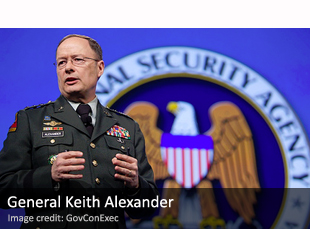
Documents provided by American former intelligence technician Edward Snowden show that the United States National Security Agency has unprecedented surveillance capabilities, which allow it to monitor nearly every online activity of targeted Internet users. Snowden, a self-styled whistleblower, who is currently in Russia, provided British newspaper The Guardian with an NSA training presentation. The visually based presentation explains the inner workings of an intelligence collection program called XKeyscore, which the NSA describes as its “widest-reaching” digital collection program. The system allows NSA data collectors to sift through massive online databases containing millions of individual users’ browsing histories, emails and chats —what the NSA calls digital network intelligence (DNI). According to the training presentation, authorized NSA analysts are able to target individual Internet users by entering their name, email address, IP address or telephone number. The presentation states that, upon entering the identifying information, an NSA analyst can tap into “nearly everything a typical user does on the Internet”, including the content and metadata of emails, website browsing and search terms used. Snowden told The Guardian that an NSA analyst only needs to know a user’s personal email address in order to “wiretap anyone [while] sitting at [his] desk, from you or your accountant to a federal judge or even the President”. What is more, it appears that NSA analysts are able to target individual Internet users by simply “filling in an […] on-screen form”, and by giving only a very broad justification for the probe. Additionally, individual digital collection operations are not approved by a court or senior NSA officers. According to Snowden, all an NSA analyst has to do is suspect that the targeted online user is in contact with “a foreign target”. Meanwhile, NSA Director Keith Alexander was jeered by participants during his keynote speech at the Black Hat Technical Security conference in Las Vegas on Wednesday. Read more of this post

Scotland sees Nordic spy agencies as post-independence models

United Kingdom and IrelandBy JOSEPH FITSANAKIS | intelNews.org |

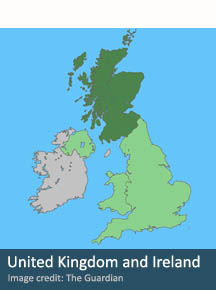
Government administrators in Scotland, which may soon become independent from the United Kingdom, are looking to possibly model their intelligence agencies after those of Scandinavian countries, according to sources. An agreement for an independence referendum, to be held in September 2014, was struck last year between the devolved Scottish Government and the British state. According to the agreement, residents of Scotland, which has been ruled by English-dominated Britain for over 700 years, will be asked whether they agree that the territory should form an independent country. In January of this year, Nicola Sturgeon, Deputy First Minister of Scotland, told the Scottish Parliament’s Committee on Foreign Affairs that an independent Scotland would have to build a domestic intelligence agency to combat security threats such as terrorism, organized crime and cyber attacks. Sturgeon, who is also Deputy Leader of the pro-independence Scottish National Party, opined that, even though a Scottish intelligence agency would serve the interests of the Scottish government and people, it would inevitably maintain “very close intelligence sharing with the rest of the UK”. But Committee members opposed to independence warned Sturgeon that Scottish intelligence agencies would have to prove that they were reliable and safe before they struck intelligence-sharing arrangements with British and American organizations. It appears that, in response to such criticisms, Scottish civil servants have initiated contacts with intelligence experts abroad, in an attempt to replicate the intelligence-agency model of Nordic countries. Read more of this post

S. Korea parliament probes spy agency’s elections meddling

Won Sei-hoonBy JOSEPH FITSANAKIS | intelNews.org |
A parliamentary probe began last week into whether South Korea’s main intelligence agency tried to steer voters away from the liberal candidate during the 2012 presidential election. The country’s National Intelligence Service (NIS) is accused of having deliberately leaked a classified document in order to embarrass the late South Korean President Roh Moo-hyun, who was also a member of the liberal Uri Party (now Democratic Party) of South Korea. IntelNews readers will recall that Won Sei-hoon, who headed NIS from 2008 to 2013, was recently indicted for meddling in the 2012 Presidential Election. According to the indictment, Won ordered a group of NIS officers to “flood the Internet” with messages accusing DP candidates of being “North Korean sympathizers”. Prosecutors allege that Won initiated the Internet-based psychological operation because he was convinced that “leftist adherents of North Korea” were on their way to “regaining power” in the South. The NIS affair has gripped South Korea’s media headlines for months, but fuel was added to the fire in June, when the NIS “mistakenly” declassified an internal document describing a series of secret North-South Korean negotiations. The document, from 2007, shows that the then-President of Korea, Roh Moo-hyun, from the Uri Party, had proposed to North Korean officials the establishment of a “maritime peace zone” along the disputed border between the two nations. Liberal politicians allege that, according to South Korean declassification laws, the document should have remained secret for many decades, and accuse the NIS of deliberately leaking it in order to promote the image of South Korean liberals as “North Korean sympathizers”. Meanwhile, another senior South Korean security official, former Seoul metropolitan police chief Kim Yong-pan, has also been indicted for allegedly hampering a police investigation into Won’s internet campaign. This series of apparently interlinked events is now at center stage in the parliamentary probe, as rival parties prepare to clash over the allegations. Read more of this post

Ex-MI6 head ‘might air memoirs’ to set Iraq War record straight

Sir Richard DearloveBy JOSEPH FITSANAKIS | intelNews.org |
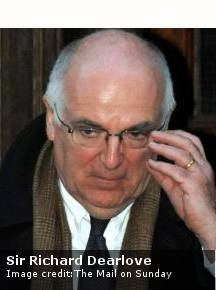
The former director of Britain’s external spy service has hinted he might publish his personal account of the decisions that led to Britain’s entry in the Iraq War, if he is criticized in a public inquiry on the subject. Sir Richard Dearlove led the UK’s Secret Intelligence Service, known as SIS or MI6, from 1999 until his retirement in 2004. He is currently on sabbatical from his post as Master of Cambridge University’s Pembroke College, in order to research and author his autobiography. The memoir is believed to be largely preoccupied with the intelligence that led to the British government’s decision to enter the United States-led 2003 war in Iraq. Sir Richard had previously indicated that he intended to make his memoirs posthumously available as a resource to academic researchers. But in an email to British tabloid The Mail on Sunday, he hinted he would consider publishing his personal account if he finds himself criticized by the Iraq Inquiry. Known in Britain as the Chilcot Inquiry, after its Chairman, Sir John Chilcot, the Iraq Inquiry was commissioned by the British government in 2009 to investigate the executive decisions that led the country to participate in the invasion of Iraq. One of the inquiry’s many goals was to evaluate the intelligence provided by MI6 to the government of Prime Minister Tony Blair. There have been rumors that the inquiry’s declassified findings, which are scheduled for publication soon, are critical of MI6’s performance and place particular blame on Sir Richard’s role in the debacle. Read more of this post

CIA finances geoengineering study on climate change

CIA headquartersBy JOSEPH FITSANAKIS | intelNews.org |
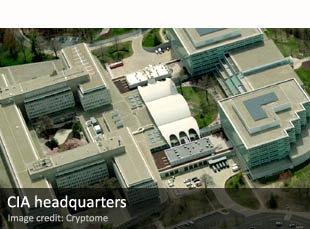
The United States Central Intelligence Agency (CIA) is among the principal funding bodies of a scientific research program on using geoengineering to slow down or halt climate change. The 21-month $630,000 study will be administered by the US National Academy of Science (NAS). Alongside the CIA, the project is funded by the National Oceanic and Atmospheric Administration (NOAA) and the National Aeronautics and Space Administration (NASA). The science of geoengineering encompasses techniques of large-scale intervention on the Earth’s climatic system, aimed at controlling solar radiation and removing carbon dioxide from the environment. Its ultimate goal is to reduce global warming by removing a portion of greenhouse gasses from the atmosphere and by causing the planet to absorb reduced amounts of solar radiation. The NAS study will be the first one of its kind at the Academy to be financially backed by an intelligence agency. In addition to exploring technical ways of altering the course of climate change, the study aims to evaluate the implications of geoengineering efforts on international security and American national security in particular. The CIA’s interest in climate science is not new. Since the middle of the last decade, intelligence agencies have shown interest in the national security ramifications of climate change, as well as in climate change negotiations between governments. In 2009, the CIA opened its Center on Climate Change and National Security, a small unit led by senior specialists from the Agency’s Directorate of Intelligence and the Directorate of Science and Technology. Read more of this post

Former CIA station chief arrested in Panama ‘has been released’

Panama-Costa Rica borderBy JOSEPH FITSANAKIS | intelNews.org |
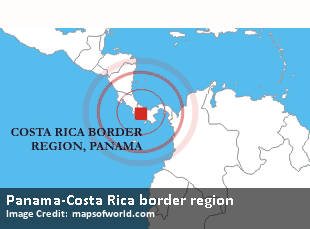
A former station chief for the Central Intelligence Agency, who was detained in Panama last week for his alleged role in the kidnapping of a Muslim cleric in Italy, returned to the United States on Friday. The US Department of State said Robert Seldon Lady had been released by Panamanian authorities 24 hours after he was detained near Panama’s border with Costa Rica. Lady was the CIA’s station chief in Milan in February 2003, when a team of 23 Americans, most of them CIA operatives, abducted Mustafa Osama Nasr. The CIA suspected the Egyptian-born Nasr, also known as Abu Omar, of working as a recruiter for a host of radical Islamist groups, including al-Qaeda. In 2005, Italian authorities, which had not authorized Nasr’s kidnapping, convicted Lady, along with 22 other Americans, of abduction. The convictions were delivered in absentia, as the Americans had earlier left the country. Washington has refused to extradite them to Rome. Lady was crossing from Panama into Costa Rica at a remote jungle border crossing early on Thursday, when, according to Costa Rican authorities, “a check on his passport triggered an INTERPOL alert”. Following negotiations between Costa Rican and Panamanian authorities, Lady was detained by Panamanian border guards, who alerted INTERPOL and Italy. Late on Friday, State Department spokeswoman Marie Harf declined to offer details on the case, but confirmed that Lady was “either en route or back in the United States”. A Panamanian foreign ministry source told Reuters that Lady was released because “Panama does not have an extradition treaty with Italy and because documentation sent by Italian officials was insufficient”. Read more of this post

Panama arrests ex-CIA chief of station wanted by INTERPOL

Panama-Costa Rica borderBy JOSEPH FITSANAKIS | intelNews.org |
A retired 21-year veteran of the United States Central Intelligence Agency, who is wanted by INTERPOL for participating in the abduction of a Muslim cleric in Italy, has been detained by police in Panama. Robert Seldon Lady was the CIA’s station chief in Milan in 2003, when a team of 23 Americans, most of them CIA officers, abducted Mustafa Osama Nasr. The CIA suspected the Egyptian-born Nasr, known also as Abu Omar, of working as a recruiter for a host of radical Islamist groups, including al-Qaeda. On February 17, 2003, Nasr was seized in dramatic fashion by a group of CIA operatives in broad daylight in Milan. He was stuffed into an unmarked white van and eventually ended up in Egypt, where he was tortured before being released. Nasr’s case helped raise awareness of the US government’s extraordinary rendition program. Under the controversial program, suspected terrorist operatives were secretly taken to third-party countries where they were subjected to aggressive interrogation techniques. Italian authorities were irritated by Nasr’s kidnapping, which they claimed took place without the consent of the Italian government. There are also reports that the Italian intelligence services were monitoring Nasr at the time and were trying to recruit him as a source, which might explain why they were incensed when the Egyptian was snatched by the CIA without their authorization. Read more of this post

US court dismisses lawsuit against CIA over scientist’s death

CIA headquartersBy JOSEPH FITSANAKIS | intelNews.org |
A United States federal court has dismissed a lawsuit filed against the Central Intelligence Agency over an alleged murder of an American Department of Defense scientist, which occurred in 1953. The lawsuit concerned the case of Dr. Frank Olson, a specialist in biological warfare working for the US Pentagon at Fort Detrick, Maryland. It appears that Olson, who studied the effects of toxic substances on the brain, participated —knowingly or unknowingly— in Project MKNAOMI/ MKULTRA. The project was a joint effort by the CIA and the US military to study the effects of substances such as heroin and LSD on the human brain. On November 28, 1953, Dr. Olson fell to his death from the window of his room on the 13th floor of New York City’s Statler Hotel. In an internal report that was declassified in 1975, the US government admitted that Dr. Olson had been assigned the task of military-scientific liaison with the CIA’s Technical Services Staff —the unit in charge of MKULTRA. Moreover, the report disclosed that the late scientist had been administered LSD by his CIA colleagues without his knowledge nine days prior to his sudden death. Ever since the report was aired, Dr. Olson’s family has maintained that the scientist did not voluntarily plunge from his hotel window on November 28, 1953. Rather, they claim, he was pushed to his death by CIA personnel, after he raised strong objections against the testing of chemical and biological substances on non-consenting human subjects by the Agency’s Technical Services Staff. But US District Judge James Boasberg ruled that, although the CIA had yet to come clean on the controversial history of MKULTRA, the lawsuit by Dr. Olson’s family had been “filed too late”; he added in his ruling that an earlier settlement between the dead scientist’s family and the US government effectively barred the possibility of a new lawsuit. Read more of this post

Russia ‘considering spy swap with Germany’

Andreas and Heidrun AnschlagBy JOSEPH FITSANAKIS | intelNews.org |
The Russian government has allegedly approached Germany with an offer to swap a number of jailed spies, including a couple of Russian sleeper agents sentenced for espionage earlier this month in Stuttgart. Russia’s Kommersant newspaper alleged on Monday that that the Russian intelligence services are pressing the Kremlin for the repatriation of Andreas and Heidrun Anschlag, a married couple who were arrested in Germany in October of 2011. The two were convicted on July 2, 2013, of having spied on Germany since at least 1990 for the Soviet KGB’s First Chief Directorate and its post-Soviet successor organization, the Foreign Intelligence Service (SVR). German federal prosecutors also accuse the couple of document forgery, since their Austrian passports, which they used to enter West Germany from Mexico in 1988 (Andreas) and 1990 (Heidrun) were shown to be counterfeit. In return for the Anschlags, Moscow would be prepared to hand over “at least one spy” convicted in Russia for spying for the West, said Kommersant. Possible candidates would be Andrei Dumenkov, who is currently serving a 12-year sentence for allegedly giving German military intelligence blueprints of Russian missile designs, and Valery Mikhailov, a Russian counterintelligence officer said to be one of the United States Central Intelligence Agency’s “most successful agents [in Russia] in recent years”.   Read more of this post