Interview with ex-Mossad director Meir Dagan

Meir DaganBy JOSEPH FITSANAKIS | intelNews.org |
The former director of Israel’s most revered intelligence agency has given an extensive interview on why he believes a military strike against the Iranian nuclear program “should be the last option” for Israel. In November 2010, Meir Dagan stepped down from his post as the head of the Mossad after having led the agency for over eight years —the longest tenure of any Mossad director. During his leadership, the Israeli intelligence agency augmented its notoriety by assassinating Imad Mughniyah, security chief of the Lebanese militant group Hezbollah, and allegedly killing Islamic Hamas weapons procurer Mahmoud al-Mabhouh. The Mossad is also said to have played a role in Operation ORCHARD, the 2007 Israeli air attack on what is thought to have been a secret nuclear reactor in Al-Kibar, Syria. However, when it comes to the Iranian nuclear program, the 67-year-old retired spy is adamant that the military option would be a strategic error of gigantic proportions. Last year, Dagan admonished calls by hawkish Israeli politicians to bomb Iran as “the stupidest idea” he had ever heard. In an interview with Reuters news agency published on Thursday, April 5, Dagan said the word “stupid” was “a harsh expression” and “not something [he is] very proud of”. But he insisted that the military option should be last on the table, and said that it would be a mistake for Israel to lead international action against the Iranian nuclear program. Instead, the “Iranian problem” should be “left in the hands of the international community”, said Dagan. The Mossad veteran went on to identify three main problems with the military option. To begin with, he said, military action, no matter how damaging in the physical sense, “cannot disarm the core factor of the Iranian program: knowledge” about how to build a nuclear device. Second, Dagan argued that, even if a military strike managed to eliminate a considerable portion of the Iranian nuclear program’s infrastructure —which is not at all assured— it would likely cause a significant backlash. That backlash would culminate in “a regional war” that would involve simultaneous actions by non-state forces allied with Iran, including Hamas, Islamic Jihad, and Hezbollah. Read more of this post

Why are al-Qaeda websites going off-line?

Shamukh al-IslamBy JOSEPH FITSANAKIS | intelNews.org |
It began late last month, and nobody seems to really know why:  one after another, the most popular pro-al-Qaeda websites around the world have been going off the air, in what appears to be coordinated fashion. For most of the past decade, a host of al-Qaeda-linked websites have acted as online platforms of outreach, propaganda, and communication between the group’s sympathizers around the world. Most fulfill the role of conduits for al-Qaeda’s media production arm, as-Sahab, as well as for al-Fajr Media, al-Qaeda’s online distribution network. These two outfits routinely rely on a collection of websites to deliver online content ranging from glossy periodicals to audio speeches and digital videos. But on March 23, two of the largest pro-al-Qaeda websites, Shamukh al-Islam and the Ansar al-Mujahidin Arabic Forum, simultaneously disappeared from the World Wide Web. Two days later, another popular site, al-Fida, also vanished. By March 30, two remaining pro-al-Qaeda forums had also gone off line. Two sites, the Shamukh al-Islam and the Ansar al-Mujahidin Arabic Forum, reappeared, but offered no concrete explanation of the reasons why they went off the air in the first place. Interestingly, nobody has claimed responsibility for the disappearance of the pro-al-Qaeda websites, and the US government has refused to state whether its operatives had been engaged in undermining them. But CNN’s Security Clearance blog contacted Brandeis University researcher Aaron Y. Zelin, who offered one possible explanation. Read more of this post

Israel ‘scales back covert operations in Iran’, says Time magazine

Israel and IranBy JOSEPH FITSANAKIS | intelNews.org |
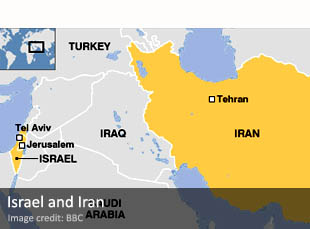
The Israeli government has instructed the country’s intelligence services to “scale back” their covert operations in Iran, according to Time magazine. The American publication quotes anonymous “senior Israeli security officials”, who argue that the Jewish state’s covert activities in Iran have been scaled down by “dozens of percent” in recent months. The alleged reduction is said to include “a wide spectrum of operations”, but has mostly affected some of Israel’s most high-profile covert actions. The latter include regular assassinations of Iranian nuclear scientists in Tehran and the alleged sabotage of Iranian missile bases. These are said to include a blast at an Iranian military base near the city of Isfahan, in central Iran, which is home to one of Iran’s most active nuclear facilities. They are also said to include a massive explosion in 2011 at an Iranian missile depot near Tehran, which killed at least 17 people, including Major General Hassan Moqqadam, described by Iran’s state media as the “founder of Iran’s missile program”. According to Time, the reduction in Israeli covert operations inside Iran was ordered by none other than Israeli Prime Minister Benjamin Netanyahu. The magazine quotes a “senior security officer” in Israel who claims that the Israeli leader is “worried about the consequences of an [Israeli] covert operation being discovered by Iranian counterintelligence”. There is also a sense in Tel Aviv, says Time, citing “Israeli officials”, that Mossad intelligence planners have largely exhausted their major targets inside Iran at this stage. Nevertheless, the decision to scale back intelligence operations on Iranian territory has reportedly “caused increasing dissatisfaction” inside the Mossad, Israel’s premier external intelligence agency, according to an unnamed Israeli official quoted in Time. Read more of this post

Senior Soviet KGB ex-official found dead in Moscow apartment

Leonid ShebarshinBy JOSEPH FITSANAKIS | intelNews.org |
Leonid Shebarshin, a retired General of the KGB, who was often referred to as “the last Soviet spy” was found dead in his downtown Moscow apartment over the weekend. Police said a pistol and an apparent suicide note were found next to his body. In a separate statement on Saturday, law enforcement investigators said Shebarshin had shot himself. Born in 1935, Shebarshin was posted as an interpreter at the Soviet embassy in Islamabad, Pakistan, shortly after graduating from the Moscow Institute of International Relations. He eventually became personal assistant to the Soviet Ambassador to Pakistan, who recommended him to the KGB. Shebarshin returned to Moscow in 1962 to attend the KGB’s training school, before being sent back to Pakistan in 1964, this time as an intelligence officer. In 1975, he moved to India, where he became rezident (station chief) of the KGB’s field station in New Delhi. Two years later he was transferred to the KGB’s field station in Tehran, Iran, which he headed through the 1979 Islamic Revolution. In 1982, however, his meteoric rise within the ranks of the KGB was temporarily halted by the defection of Soviet Vladimir Kuzichkin, a Major in the KGB, who escaped to Turkey with the help of the British Secret Intelligence Service —also known as MI6. The British brought Kuzichkin in contact with the CIA, which in turn passed along the defector’s debriefing notes to the government of Iran. This information led to the summary expulsion from Tehran of nearly 20 Soviet KGB field officers, including Shebarshin himself. After a brief period in Moscow, Shebarshin returned to the field, this time to Soviet-occupied Afghanistan, where he traveled at least 20 times. He was in Russia on August 19, 1991, during the so-called ‘August coup’, when a group of hardline communist officials took power in Moscow and temporarily arrested Soviet Premier Mikhail Gorbachev. But, even though he headed the KGB’s First Chief Directorate (now renamed to Foreign Intelligence Service), Shebarshin persisted in remaining neutral during the coup, and spent all of August 19 playing tennis at his summer residence. Read more of this post

Sweden set up front company to secretly export arms to Saudi Arabia

Swedish Defense Research AgencyBy JOSEPH FITSANAKIS| intelNews.org |
Long considered as one of the world’s most socially responsible nations, Sweden has stringent laws prohibiting the export of Swedish weapons to countries that fall short of elementary democratic standards. Which is why the Swedish electorate was shocked by news earlier this month that the Swedish government set up a front company to secretly export weapons to one of the world’s most repressive and brutal regimes: Saudi Arabia. According to Sveriges Radio, Sweden’s publicly funded national broadcaster, which first aired the story, the shell company, which is named SSTI, was founded in 2009. It was registered in Saudi Arabia by former employees of Sweden’s Defense Research Agency. Known simply as FOI, the Agency operates as the defense research arm of the Swedish government, and reports directly to Sweden’s Ministry of Defense. The Stockholm based broadcaster said that the former FOI employees were specifically selected by the Swedish government in order to prevent the appearance of links between the front company, SSTI, and the Swedish state. The deal with the Saudi government was to build a weapons factory in the oil-rich kingdom, which would covertly manufacture Swedish weapons for direct sale to the Saudi Arabian Armed Forces. The deal turned complex, however, and was almost derailed, by the requirement to use cash funds in order to set up SSTI. It was at that point, Sveriges Radio says, that the FOI turned to Swedish military intelligence for assistance. According to anonymous sources, FOI officials “borrowed cash” from Sweden’s Military Intelligence and Security Service (MUST), which was eventually transported in suitcases to Saudi Arabia “on several occasions”, in order to help set up the front company. MUST, a division of the Swedish Armed Forces Central Command, which employs both military and civilian staff, asked no questions. Read more of this post

French spy agency denies Toulouse gunman was an informant

Mohammed MerahBy JOSEPH FITSANAKIS| intelNews.org |
France’s domestic intelligence agency has denied allegations, made by its former Director, that it employed as an informant the militant Islamist who recently killed seven people in Toulouse. Yves Bonnet, who headed France’s DCRI between 1982 and 1985, made the allegation in an interview with La Dépêche du Midi, one of France’s largest regional newspapers, headquartered in Toulouse. He was speaking about Mohammed Merah, the self-confessed al-Qaeda militant who died in a police assault on his flat last week. He was traced there after he murdered seven people, including three children and three soldiers, in three separate attacks. Speaking to La Dépêche on Tuesday, Bonnet said that Merah “was known to the DCRI, not especially because he was an Islamist, but because he kept contact with a correspondent [officer] in domestic intelligence”. By “correspondent in domestic intelligence”, Bonnet meant that Merah had a handler inside the DCRI, who met with him on a regular basis. But Bonnet’s claim was forcefully rejected on the same day by Bernard Squarcini, the current Director of the DCRI —France’s equivalent of the United States Federal Bureau of Investigation. Squarcini confirmed that Merah did in fact meet with a DCRI officer in November in 2011. But he said that the meeting was arranged so that the DCRI officer could interview Merah about his trips to Afghanistan, which he entered in 2010 and 2011 using a tourist visa. Squarcini denied that this meeting designated Merah as an informant, and specifically stated that the self-styled al-Qaeda militant “was not employed as an informant by the DCRI or by any other French intelligence agency”. Read more of this post

Libya’s spy chief was lured by French-Mauritanian intelligence trap

Abdullah al-SenussiBy JOSEPH FITSANAKIS| intelNews.org |
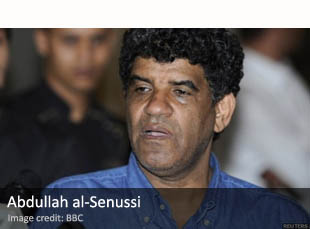
The arrest of Muammar al-Gaddafi’s spy chief in Mauritania last week was the culmination of a carefully planned French intelligence operation, which was secretly aided by the Mauritanian government, according to informed insiders. Abdullah al-Senussi, Colonel Gaddafi’s brother-in-law, who used to head the Mukhabarat el-Jamahiriya, Libya’s intelligence agency, was captured at the Nouakchott International Airport in the Mauritanian capital on March 17. He was detained as soon as he arrived there on a chartered flight from Mali. He had previously entered Mali from Niger, and was reportedly under the government’s protection. But the ongoing uprising of the pro-Gaddafi Tuareg in the north of the country, which has now resulted in a military coup in Bamako, caused the former Libyan spy chief to seek refuge elsewhere. According to a well-researched article by Reuters news agency, al-Senussi was gradually convinced to travel to Mauritania by the al-Me’edani clan, a pro-Gaddafi nomadic tribe that had previously worked for the Libyan security agencies and whose members had been given Libyan nationality by Colonel Gaddafi’s regime. The clan, says the Reuters article, was persuaded to turn its back on al-Senussi as part of a behind-the-scenes agreement between French and Mauritanian intelligence agencies. The deal was struck after a high-level agreement between the Nicolas Sarkozy government in Paris and the Mauritanian government of President Mohamed Ould Abdel Aziz. A career soldier and high-ranking officer, Abdel Aziz assumed power in the country in a 2008 military coup that was widely condemned by international bodies, including the United Nations. But the military regime in Nouakchott was pleased to see Paris engineer a thaw in relations between the two countries in 2009. Ever since then, the French government has publicly praised the regime of President Abdel Aziz as a “key partner” in combating terrorism. Mauritania’s decision to help France capture al-Senussi was a repayment to the country’s former colonial master for its support after the 2008 military coup, according to Reuters. Following his arrest, al-Senussi is believed to be held at the headquarters of the Mauritanian intelligence service in Nouakchott. Read more of this post

Breaking News: Russian troops land in Syria

Russian naval base in Tartus, SyriaBy JOSEPH FITSANAKIS| intelNews.org |

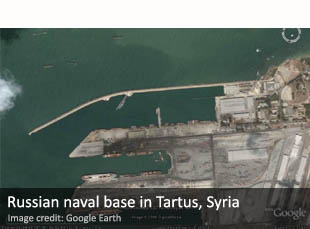
The Russian service of the BBC has confirmed that a contingent of Russian “antiterrorist special forces” have landed in Syria. The news first appeared on Monday on the websites of several Russian news agencies, including Interfax and RIA Novosti. The latter claimed that the Russian troops, who were said to be Marines, arrived in the Syrian port of Tartus onboard the tanker Iman, which is part of Russia’s Black Sea fleet. According to the report, the tanker is strictly tasked with performing “logistical tasks [including] the replenishment of fuel and food [and] providing maritime anti-piracy security in the Gulf of Aden”. According to a statement from the Russian Black Sea Command, the special forces had landed in Syria in order to “demonstrate the Russian presence in the turbulent region and possibly evacuate Russian citizens”. Shortly after the initial reports of the troops’ landing in Tartus, ABC News spoke to an anonymous source at the United Nations Security Council, who described the news as “a bomb” that was “certain to have serious repercussions” on the situation in Syria. Soon afterwards, however, an unnamed source in the Syrian Ministry of National Defense told the SANA news agency in Damascus that the reports of Russian troops landing in Syria were “completely devoid of truth” and said the presence of the Russian tanker was connected with an anti-piracy mission. The Russian Ministry of Defense also told reporters that the Iman is not a warship and that its crew is composed entirely of civilian personnel. But a separate report on the Russian-language service of the BBC claims that, although the vessel is indeed hydrographic —designed to collect undersea topographic data— it contains sophisticated dual-use hardware that can easily be used for intelligence collection. The BBC report repeats earlier claims by the Interfax news agency that the Russian ship arrived in Tartus with a large contingent of marine brigade and airborne assault battalion members. It also quotes sources from the Syrian opposition, which allege that Russian troops were indeed seen disembarking in Taurus. Read more of this post

Mossad, CIA, ‘agree Iran has no active nuclear weapons program’

Iran's Natanz nuclear enrichment facilityBy JOSEPH FITSANAKIS| intelNews.org |

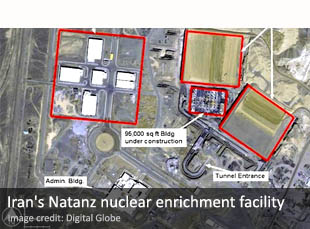
Quoting American intelligence sources, The New York Times reports that intelligence agencies from the United States and Israel agree that Iran suspended its nuclear weapons program years ago, and that Tehran is not currently attempting to revive it. As intelNews has been reporting consistently since 2009, the overwhelming consensus in the US intelligence community is that the Iranian regime suspended all efforts to build a nuclear bomb in 2003. Furthermore, the US intelligence community maintains that the decision to turn Iran into a nuclear power has yet to be conclusively taken in Tehran. This was first outlined in the 2007 US National Intelligence Estimate (NIE), an annual report cooperatively authored by the heads of all US intelligence agencies. This consensus appears even wider after Sunday’s New York Times report, which maintains that, even though many hawkish Israeli politicians advocate aggressive action against Iran, Israel’s intelligence agency, the Mossad, is in broad agreement with the premise of the 2007 NIE. The Times cites an anonymous “former senior American intelligence official”, who says that, although Israeli intelligence planners direct “very hard questions” to their American counterparts, the “Mossad does not disagree with the US on the [Iranian] weapons program”, and that “there is not a lot of dispute between the US and Israeli intelligence communities on the facts”. Undeniably, the 2007 NIE has its detractors, including some who accuse the US intelligence community of refusing to realize “that Iran now has the capability to change the balance of power in the Gulf”. The latest report in The Times does not deny that there are “significant intelligence gaps” in Washington’s ability to understand Iran’s intentions. Iran, argues the report —correctly— is “one of the most difficult intelligence collection targets in the world”. Read more of this post

State prosecutors probe alleged plot to kill Greek prime minister

Kostas KaramanlisBy JOSEPH FITSANAKIS| intelNews.org |

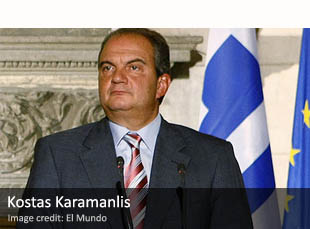
Government prosecutors in Athens have opened a criminal investigation into an alleged plot to kill the Prime Minister of Greece in 2008, which was reportedly uncovered by Russian intelligence. In June of last year, Greek media claimed that the country’s National Intelligence Service (EYP) had been briefed by the Russian Federal Security Service (FSB) about the assassination plot. According to the Russian briefing, the plot, codenamed PYTHIA, was hatched by the intelligence agency of “a country allied to Greece”, and was targeted at conservative Prime Minister Kostas Karamanlis, who governed Greece from 2004 to 2009. The Russians claimed that Operation PYTHIA was purportedly aimed at preventing Athens from signing on to a series of energy deals with Moscow, including the ambitious South Stream pipeline project, which aims to connect Russian gas fields to the European energy market. On Wednesday, court official Nikos Ornerakis told a press conference in Athens that, based on preliminary investigations, Greek prosecutors considered the case credible and had filed a felony count of conspiracy “against persons unknown”. The Associated Press, which reported on the story, spoke to former Ambassador Ioannis Corantis, who headed Greece’s EYP intelligence service during the discovery of the alleged assassination plot. Ambassador Corantis confirmed that the EYP had indeed been briefed on Operation PYTHIA “by an official of the [Russian] FSB”, and that the briefing concerned a suspected assassination plot against Prime Minister Karamanlis. Read more of this post

Irish government ‘refused cooperation’ with probe into IRA attack

Warrenpoint ambushBy JOSEPH FITSANAKIS| intelNews.org |
The government of the Republic of Ireland allegedly ordered senior police officials not to assist an investigation into a 1979 attack by the Provisional Irish Republican Army that killed 18 British soldiers in the UK province of Northern Ireland. The attack, known as the Warrenpoint ambush, took place in the afternoon of August 27, when a British military convoy was blown up by a remote-controlled 500-pound fertilizer bomb hidden in a lorry loaded with straw bales. It was soon followed by a second massive bomb blast at a nearby house, and resulted in the British Army’s greatest loss of life in a single incident during the Northern Ireland Troubles. Now a retired officer of the Royal Ulster Constabulary (RUC), as the British police body in Northern Ireland was then known, has told an official government inquiry that the Irish government refused to collaborate with the investigation into the Warrenpoint ambush, and even ordered its senior police officers to distance themselves from it. The man, who testified behind closed doors through a video link from Belfast, cannot be named and is instead referred to in tribunal documents as ‘Witness 68’. All that is known about him is that he is a retired detective and retired from the RUC with a rank of Deputy Assistant Chief Constable. He told the Smithwick Tribunal that the government of the Republic of Ireland instructed its intelligence and law enforcement personnel to view the Warrenpoint ambush as a political crime and to abstain from the British-led criminal investigation into the killings. Consequently, in April 1980, when British RUC officials met with senior officers from the Garda’s (Irish police) Criminal Intelligence Division in Dublin, the Irish delegation informed British officials that the Irish Prime Minister, Jack Lynch, had given specific instructions that “no assistance would be given to the RUC”. Subsequently, the RUC discovered that a site located in the Republic of Ireland, which the British suspected had been used to detonate the bomb that exploded a few yards away at Warrenpoint, had been destroyed before forensic teams were able to examine it. Read more of this post

US revokes Peruvian ex-defense minister’s visa over alleged spy links

Vicky Peláez and  Mikhail VasenkovBy JOSEPH FITSANAKIS| intelNews.org |
The United States has allegedly revoked an entry visa previously issued to the former Deputy Minister of Defense of Peru, over suspicions that he is connected to a major Russian espionage ring found operating in the United States. Fabián Novak had his visa revoked after he was allegedly included on a list drawn by the US Federal Bureau of Investigation, containing names of individuals connected to a Russian illegals program caught operating in the US in 2010. According to El Comercio, Peru’s oldest newspaper, Novak, who served as the country’s Deputy Defense Minster between 2006 and 2008, met repeatedly with two members of the 11-member Russian spy ring, which was busted in a series of coordinated raids across several US states in July of 2010. The Lima-based daily quotes an anonymous “high-level [US] government source” who claims that Novak directly contacted two of the 11 Russian spies, who entered the United States from Peru, using Uruguayan and Peruvian travel documentation. The two, Vicky Peláez, who posed as a journalist, and her husband Mikhail Anatolyevich Vasenkov (alias Juan Lazaro), an adjunct professor, were among nearly a dozen Russian illegals swapped less than two weeks after their arrests by the FBI with several CIA spies held in Russian prisons. The El Comercio source claimed that, according to the FBI, Novak met with two officials from the Russian embassy in Lima at least twice, in 2001 and 2006, to discuss the activities of Peláez and Vasenkov in the US. Read more of this post

Australian special forces secretly operating in Africa, says newspaper

Special Air Service RegimentBy JOSEPH FITSANAKIS| intelNews.org |
One of Australia’s most prominent newspapers suggested in a leading article yesterday that a secret Australian special forces squadron has been illegally conducting espionage operations in several African countries during the past year. According to Melbourne-based The Age, the 4 Squadron of Australia’s Special Air Service Regiment (SASR) has been deployed in “dozens of secret operations” during the past 12 months, in countries such as Kenya, Nigeria and Zimbabwe. Members of 4 Squadron have been operating dressed in civilian clothing, carrying forged identity papers, and with strict instructions to deny any connection with SASR if captured, said The Age. Although the existence of 4 Squadron has never been officially acknowledged, the unit is believed to have been established in 2004 or 2005, and is currently thought to be based at Swan Island in Victoria, north of the town of Queenscliff. Its initial mission was to provide armed protection to officers of the Australian Secret Intelligence Service (ASIS) whenever the latter are deployed in warzones or other exceptionally dangerous overseas environments. But 4 Squadron’s missions in Africa, which The Age says were authorized in 2010 by then Prime Minster Kevin Rudd, do not include ASIS officers, and instead require SASR members to act both in a military and civilian capacity in espionage assignments. According to the paper’s allegations, 4 Squadron missions have involved regular assessment and evaluation of inter-African border control standards, developing scenarios for evacuating Australians, mapping out landing sites for possible military interventions, and gathering first-hand intelligence on local politics and the activities of insurgents. The paper claims that the scope and breadth of 4 Squardon’s African assignments have raised concerns within the SASR, with some senior officials viewing the unit’s actions as “a possibly dangerous expansion of Australia’s foreign military engagement”. Read more of this post

Spies seen behind fake Facebook profile of senior NATO commander

James G. StavridisBy JOSEPH FITSANAKIS| intelNews.org |
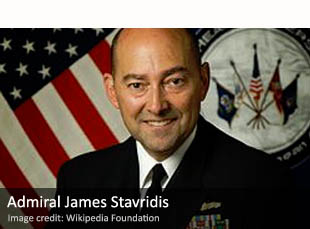
A Facebook account bearing the name of a senior commander of the North Atlantic Treaty Organization was set up by Chinese spies to siphon information from unsuspecting Western military officials, according to a British newspaper. The London-based Daily Telegraph said in an article that the fake Facebook account was discovered a year ago by NATO counterintelligence officers. It bore the name of United States Admiral James Stavridis, who serves as Supreme Allied Commander in Europe and currently leads the Organization’s mission in Libya. The account was reportedly used to befriend Western military officials, primarily in Britain and other European countries, probably in an attempt to collect personal information found on their personal pages on the popular social networking site. This sort of practice is known as ‘spear phishing’, and consists of messages sent to carefully targeted individuals, seemingly sent from a trusted source. The operation involving Admiral Stavridis appears to have been purposely targeted at high-ranking Western officials, a technique sometimes known as ‘whaling’. The London-based daily says NATO officials have been “reluctant to say publicly who was behind the attack”. But the paper claims it has been told that declassified briefings from NATO point to a series of Internet protocol addresses belonging to Chinese government facilities. Organization officials insist —correctly— that the individuals or government agencies behind the operation to falsify Stavridis’ social networking identity are unlikely to have acquired any actual military secrets. However, the information collected from Western military officials befriended online by Admiral Stavridis’ fake Facebook account could aid the compilation of personal and psychological profiles of these officials produced by foreign intelligence agencies. Read more of this post

Analysis: US spy agencies stil in the dark about Syria

Regional map of SyriaBy JOSEPH FITSANAKIS| intelNews.org |
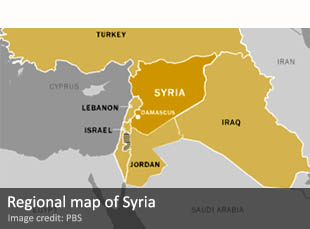
It has been almost a year since the ongoing anti-government uprising erupted in Syria. But intelligence agencies in the United States are still struggling to make sense of most aspects of the spiraling conflict. In February, the US Department of State closed down its embassy in the Syrian capital Damascus and recalled all of its diplomatic personnel, including US Ambassador to Syria, Robert Ford, to Washington. Since then, the Central Intelligence Agency, which conducted its operations in Syria largely out of the US embassy there, has been forced to rely on scattered fragments of its agent network in Damascus, as well as on the work of a handful of allied intelligence services, including those of Jordan, Turkey, Israel, and Saudi Arabia. Naturally, the closure of the US embassy in Syria has boosted the role of the signals intelligence collection and satellite reconnaissance. But, none of these intelligence collection channels have been able to compensate for the lack of adequate human intelligence collection from inside Syria. As a result, according to The Washington Post, which cites “senior US officials”, US intelligence-gathering on the situation in Syria is currently “fragmentary [and] out of focus”. Specifically, the US intelligence community remains unclear about the tactical and strategic intentions of the regime of Syrian President Bashar al-Assad, and has limited information about the makeup and strength of the opposition forces in the country. Perhaps more importantly, American intelligence analysts have little evidence on which to base any sort of firm conclusions about the extent of involvement of militant Islamists in the funding and operations of the Syrian opposition. Read more of this post