UAE cyber-hacking program spied on Michelle Obama’s emails, book claims

Michelle ObamaMICHELLE OBAMA HAD SOME of her personal emails intercepted by a group of American cyber-spies who were working for the government of the United Arab Emirates (UAE), according to a new book. The book, This Is How They Tell Me the World Ends, is written by Nicole Perlroth, who covers cybersecurity-related topics for The New York Times. It tackles what the author describes as the global “cyber-weapons arms race” and its impact on international security.

Among the topics discussed in the book is Project RAVEN, a highly intrusive cyber-espionage effort by the government of the UAE. The project was allegedly aimed at neutralizing domestic and international targets, which the UAE monarchy saw as threats to its survival. According to the Reuters news agency, which revealed the existence of Project RAVEN in 2019, its targets included foreign governments, officials of international bodies, as well as suspected terrorists and human rights activists.

As the dispute between the UAE and Qatar deepened, Project RAVEN increasingly targeted the island oil kingdom. In one notable instance, UAE cyber-spies hacked into the email accounts of officials at the International Federation of Association Football (FIFA) in an unsuccessful effort to sabotage Qatar’s bid to host the 2022 football World Cup. According to Reuters, the cyber-spies sought to unearth damaging and potentially embarrassing private information about Qatari officials, and leak them in order to damage Qatar’s candidacy for the high-profile sporting competition. According to the news agency, several American former employees of the National Security Agency were involved in Project RAVEN.

Now Perlroth’s book claims that Project RAVEN’s cyber-spies acquired a series of emails exchanged between Moza bint Nasser, wife of Qatar’s then-ruling Emir, Hamad bin Khalifa Al Thani, and Michelle Obama, when she held the position of America’s First Lady. The emails, which were intercepted in 2015, contained the US first lady’s personal thoughts, information on her security detail, and the travel details of her planned visit to Doha later that year. According to Perlroth, the inclusion of Obama’s emails into Project RAVEN’s targets caused at least one American involved in the effort, a former NSA analyst, to quit and leave the UAE. The Emirati monarchy has not commented on allegations about Project RAVEN.

Author: Joseph Fitsanakis | Date: 08 February 2021 | Permalink

Britain quietly expelled three Chinese spies posing as journalists, report claims

CGTN ChinaTHREE CHINESE NON-OFFICIAL cover intelligence officers, who were working in London under journalistic cover, were expelled from Britain in the past year, according to a new report. The claim was made on Thursday by The Telegraph newspaper, which cited an anonymous “government source”. The report alleges that the three expelled Chinese journalists were in fact employees of China’s Ministry of State Security.

The paper said that the three Chinese citizens were working as journalists for three different Chinese press agencies and media outlets. However, Britain’s counterintelligence agency, the Security Service (known also as MI5), allegedly uncovered the true identities of the spies, according to The Telegraph. They were then reportedly ordered by the British government to leave the country. The report did not provide details about when precisely the three Chinese citizens were expelled, saying only that the expulsions occurred at different times during the past year.

In a separate development, the British government yesterday rescinded the broadcast license of China’s television station, China Global Television Network (CGTN). The move followed an investigation by the Office of Communications (known as Ofcom), an independent government authority that regulates Britain’s broadcasting, postal and telecommunications industries. The decision marks a major setback for CGTN, which employs hundreds of reporters and considers London as one of its three major worldwide bases.

In a statement explaining its decision, Ofcom said that its investigators had concluded that CGTN was not editorially independent from the Chinese Communist Party. This meant, according to Ofcom, that the Chinese broadcaster was effectively an arm of the Chinese state. British law does not permit media entities that are controlled by governments to hold broadcasting licenses. It is believed that CGTN will now try to receive a license to broadcast by another European country.

Author: Joseph Fitsanakis | Date: 05 February 2021 | Permalink
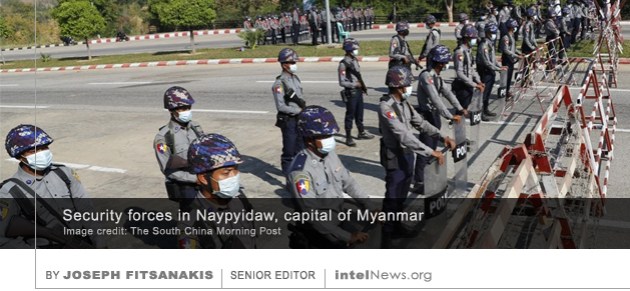
China denies claims it gave green light to Myanmar military coup plotters

MyanmarCHINESE GOVERNMENT OFFICIALS HAVE denied claims that Beijing consented to, and even supported, the coup that took place in Myanmar on Monday. The Southeast Asian country’s armed forces seized control of key government installations in the early hours of Monday, before announcing that parliament had been dissolved. Hundreds of politicians, including Myanmar’s State Counsellor Aung San Suu Kyi, have been arrested, and the fate of many of them remains unknown. The military claims that the general elections of November 8, 2020, which gave Aung San Suu Kyi’s National League for Democracy party 61 percent of the vote, were fraudulent.
Responding to a question by a reporter during a press conference on Wednesday, Wang Wenbin, a spokesman for China’s Ministry of Foreign Affairs, denied that Beijing had anything to do with the coup in Myanmar. “Relevant theories are not true”, he said. Observers have pointed to the meeting that took place in January between Chinese Foreign Affairs Minister, Wang Yi, and Senior General Min Aung Hlaing, who now heads Myanmar’s military government. China is also Myanmar’s largest trading partner, representing over 30 percent of Myanmar’s total trading volume. It is believed that Myanmar’s economy could not survive a systematic economic boycott by China.

But Beijing has been hesitant to decry the coup. On Tuesday, the 15 members of the United Nations Security Council met in New York to consider issuing a joint statement condemning the military takeover of the government in Myanmar. Several news outlets reported that the Russian and Chinese representatives effectively blocked the statement by “asking for more time” to consult with their respective governments. On Wednesday, the Chinese government expressed anger following these reports, stating that it was “baffled and shocked by the leak of internal documents under discussion at the Security Council”.

Author: Joseph Fitsanakis | Date: 4 January 2021 | Permalink

White House considers barring Donald Trump from receiving intelligence briefings

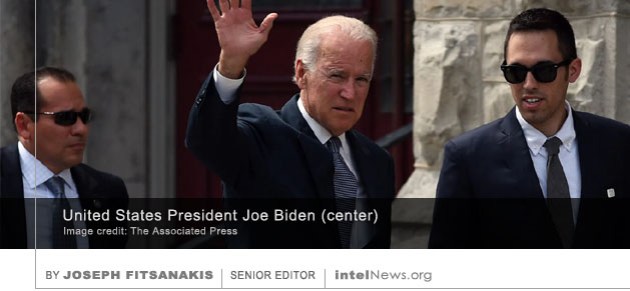
Joe BidenUNITED STATES PRESIDENT JOE Biden and his senior aides are “reviewing” the possibility of preventing his predecessor, Donald Trump, from receiving briefings containing classified information. Such an eventuality would constitute a dramatic break from the longstanding tradition of providing intelligence briefings to former American presidents, who wish to continue to receive them after leaving office.

The reasoning behind granting former American presidents access to classified information, even after leaving office, is that they usually maintain a visible diplomatic presence with worldwide influence. Many keep a busy schedule that involves regular meetings with foreign dignitaries, in which affairs of state are discussed. Intelligence briefings can therefore be useful in allowing them to speak with authority on various matters of domestic and international policy.

But Trump may not be granted that ability, according to reports in several American media. The reports were sparked by an answer given by White House press secretary Jen Psaki to a question asked by NBC reporter Geoff Bennett on Monday. Bennett asked Psaki if the Biden administration had decided whether Trump should continue to have access to classified information. Psaki responded by telling Bennett he had asked “a good question”, and added that the issue was “obviously under review”. However, “no determination” had been made yet, said Psaki.

Psaki’s confirmation that the matter is under review follows comments by the incoming White House chief of staff, Ron Klain, who said last month that the new president would make a decision following recommendations by his intelligence advisors. Some former senior security and intelligence officials have come out strongly in support of barring Trump from having access to intelligence. Among them are former Federal Bureau of Investigation director James Comey, as well as Susan M. Gordon, former principal deputy director of national intelligence, who briefed Trump regularly for two years. Gordon argued in an a Washington Post op-ed last month that Trump’s foreign liabilities and close associations with “foreign entities” render him a “potential national security risk”.

Author: Joseph Fitsanakis | Date: 02 February 2021 | Permalink

Iranian spymaster on trial in Belgium had contacts all over Europe, evidence shows

National Council of Resistance of IranAN IRANIAN DIPLOMAT, WHO in reality was the head of Iran’s European spy network, had contacts all over Europe, which are now being investigated by Western intelligence agencies, according to reports. Four Iranians are currently on trial in Belgium, accused of plotting to bomb the annual conference of the National Council of Resistance of Iran (NCRI) —an umbrella group of Iranian expatriates who are opposed to the government in Tehran. Participants at the high-profile conference, which took place in June 2018 in a Paris, included over 30 senior United States officials. Among them was the then-US President Donald Trump’s personal lawyer, Rudy Giuliani, who addressed the meeting. Stephen Harper, Canada’s former prime minister, also spoke at the conference.
According to Belgian authorities, the four members of the Iranian sleeper cell were planning to bomb the NCRI conference on instructions by the Iranian government. The leader of the cell was reportedly Assadollah Assadi, who was arrested in Germany on July 1, 2018. Prosecutors claim that Assadi was stationed under official cover at the Iranian embassy in Vienna. In reality, however, he was allegedly the Europe bureau chief for the Iranian Ministry of Intelligence. Prosecutors claim that Assadi traveled to Luxembourg, where he met two Belgium-based members of the cell, Amir Saadouni and Nasimeh Naami.

During their meeting at a Pizza Hut restaurant, Assadi reportedly gave Saadouni and Naami a bag with 500g of explosives, a USB stick with instructions on how to build a bomb, a new cell phone, and £16,000 in cash. The two spy cell operatives then built the bomb, placed it in a toiletry bag and handed it over to the fourth alleged member of the spy cell, Mehrdad Arefani, who was tasked with placing it inside the NCRI conference hall. However, German and Belgian security services foiled the plot, allegedly after a tip from Israeli intelligence.

Now a new report claims that Western spy agencies are combing through “a green notebook” found in the car that Assadi was driving when he was arrested in Germany. The notebook allegedly contains “289 places across 11 European countries”, where Assadi is thought to have met with Iranian spies operating in Europe. According to the report, the locations recorded in Assadi’s notebook include parks, hiking trails, tourist sites, restaurants, hotels and retail stores. They are located in countries like Germany, France, Italy, Holland, Sweden, Belgium, Switzerland, Hungary, the Czech Republic, and Luxembourg.

Assadi faces 20 years in prison, if convicted. The other three Iranians face between 10 and 15 years in prison. A judge in the Belgian city of Antwerp is expected to deliver the court’s verdict and impose sentence on the Iranians on Thursday of this week.

Author: Joseph Fitsanakis | Date: 1 February 2021 | Permalink

CIA tells retired personnel to refrain from working for foreign governments

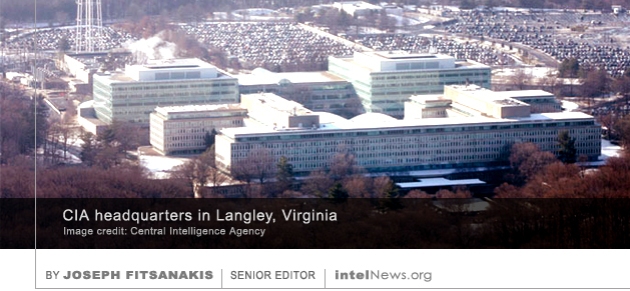
CIATHE CENTRAL INTELLIGENCE AGENCY has told its retired personnel to refrain from working for foreign governments, “either directly or indirectly”. This was communicated in a note that, according to The New York Times, was drafted several months ago, but was sent out this week by Sheetal Patel, who serves as assistant director for counterintelligence at the CIA.

In the note, Patel reportedly writes that the agency has been noticing a “detrimental trend” of former CIA employees being hired by “foreign governments”, whose goal is to “build up their spying capabilities”. She adds that former CIA personnel who are employed by foreign governments “either directly or indirectly” may effectively undermine the mission of the CIA and “benefit […] foreign adversaries”.

In her note, Patel also urges retired CIA personnel to limit their participation in the media, including television broadcasts, conference panels, podcasts and activity on social media platforms. Media activity by former CIA personnel embodies “[t]he risk of unintended disclosure of classified information or confirmation of classified information by our adversaries”, writes Patel. This risk “increases with each exposure outside of established US government channels”, she concludes.

The paper said it contacted CIA spokeswoman Nicole de Haay, who rejected the claim that Patel’s note was unusual in any way. The CIA “routinely reiterate[s] counterintelligence guidance to current and former CIA officers alike”, said de Haay, adding that “reading more into [Patel’s note] than that is a mistake”.

Author: Joseph Fitsanakis | Date: 27 January 2021 | Permalink

North Korean diplomat, related to top regime official, defected to South, say sources

Kuwait CityA NORTH KOREAN ACTING ambassador, who is believed to be the son of one of the most senior officials of the ruling Workers’ Party of Korea (WPK), reportedly defected with his family to South Korea, according to sources. Two South Korean news outlets, the Yonhap News Agency and the Maeil Business Newspaper, reported the alleged defection on Monday. They both cited sources in the South Korean government.
The alleged defector is Ryu Hyun-Woo, who was serving as acting charge d’affaires at the North Korean embassy in Kuwait City, Kuwait. He assumed his post in October 2017, when the Kuwaiti government expelled the North Korean ambassador from the country. The expulsion was ordered in response to a nuclear test conducted by Pyongyang in September of that year, which was in violation of a United Nations Security Council resolution barring the communist state from carrying out nuclear activities.

The government in Pyongyang attributes major significance to its embassy in Kuwait City, since it constitutes its sole diplomatic presence in the Gulf region. Personnel who serve at the embassy are carefully vetted and come from some the most loyal families in the inner circle of the WPK. However, it appears that Ryu, who headed the embassy after October 2017, defected with his wife and children in September 2019. The family reportedly flew to South Korea, where they requested asylum upon arrival. According to the Maeil Business Newspaper, Ryu said he defected in order “to provide his children with a better future”.

According to the South Korean reports, Ryu is the son-in-law of Jon Il-Chun, who formerly directed the Central Committee Bureau 39 —or Office 39— of the WPK. This is the agency tasked by the North Korean regime with securing highly-sought-after hard foreign currency for use by the ruling family and their closest aides. It has been described as the operational nerve center of the North Korean government. If the reports of Ryu’s defection are correct, they would mark a major incident of disloyalty to the regime by a member of the innermost circle of the ruling elite.

Last October it was reported that Jo Song-gil, North Korea’s ambassador to Italy, who disappeared without trace in 2018, was believed to have resettled in South Korea. If true, that would make him the most senior official to defect from North Korea in over 20 years, and it would make Ryu the second most senior official to defect during that time.

Author: Joseph Fitsanakis | Date: 25 January 2021 | Permalink

NSA places its Trump-appointed lawyer on administrative leave, pending probe

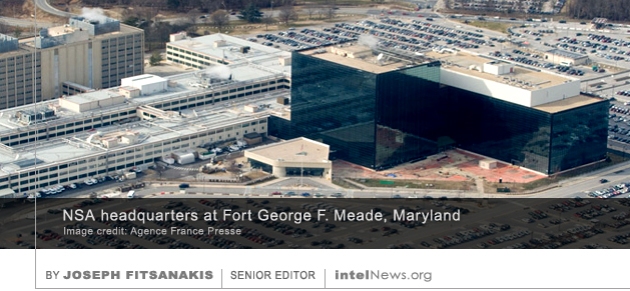
NSAAMERICA’S LARGEST SPY AGENCY, the National Security Agency, has reportedly placed on administrative leave its general counsel, who was installed on orders by the White House just hours before the end of Donald Trump’s presidency. Michael Ellis worked as an aide to Representative Devin Nunes (R-Ca) until 2017, when he joined the White House as the senior associate counsel to President Trump and deputy legal advisor to the National Security Council (NSC). In 2020 he was promoted to NSC’s senior director for intelligence.

Last November, days after losing the presidential election, Trump attempted to appoint Ellis as NSA general counsel —effectively the chief legal officer at the spy agency. There was speculation that Trump’s move was part of an effort to declassify documents that he believed would harm the reputation of his domestic political enemies. But the NSA resisted the move, with its director, General Paul Nakasone, allegedly dismissing it as “an attempt to burrow a political appointee [who is] not qualified for the post into a career civil service position”. The Trump administration persisted, however, and last week the then-acting Secretary of Defense Christopher Miller ordered General Nakasone to appoint Ellis, as instructed, effective by 6:00 pm on January 16. The NSA continued to stall the move, but it eventually appointed Ellis as its general counsel at 6pm on January 19.

Now, however, it appears that Ellis has been placed on administrative leave, pending an investigation into his NSA appointment, which has been launched by the Department of Defense’s Office of the Inspector General. According to The Washington Post, the investigation concerns “the circumstances of [Ellis’] selection” to serve as NSA’s general counsel. CBS News cites “a source familiar” with the case, who claims that Ellis is also facing allegations that he may have mishandled classified documents.

The NSA said it would not “comment on personnel matters”. The Department of Defense’s Office of the Inspector General said it would not confirm nor deny that Ellis was under investigation.

Author: Joseph Fitsanakis | Date: 22 January 2021 | Permalink

Trump pardons alleged recruiter of US Navy analyst who spied for Israel

Jonathan PollardDURING HIS LAST DAY in office, United States President Donald Trump issued a federal pardon for Aviem Sella, an Israeli former intelligence officer, who allegedly recruited Jonathan Pollard, an American who sold secrets to Israel. Pollard was released in November of 2015, after serving a 30-year sentence for being what US government prosecutors called “one of the most damaging spies in American history”. The convicted spy recently relocated to Israel, where many see him as a national hero.
In 1987, along with Pollard, the US government indicted Sella, accusing him of recruiting and helping handle Pollard on behalf of Israeli intelligence. Sella, who today is 75, was a fighter pilot in the Israeli Air Force. He allegedly began working for Israeli intelligence in the early 1980s. He left the US just days before Pollard was arrested while trying to enter the grounds of the Israeli embassy in Washington, seeking political protection. Israel refused to extradite him to the US and refused to charge him with a crime.

But in his last day in office yesterday, President Trump included Sella’s name in a list of 144 names of individuals to whom he granted last-minute federal pardons. In a statement, the White House explained Trump’s decision by saying that Israel had “issued a full and unequivocal apology [for Pollard’s spying], and has requested the pardon in order to close this unfortunate chapter in US-Israeli relations”. In a statement issued a few hours later, Pollard and his Israeli wife, Esther, said they were “truly happy” about Trump’s decision. They went on to day that pardoning Sella “puts an end to the affair’s bleeding wounds after 35 years”.

Author: Joseph Fitsanakis | Date: 21 January 2021 | Permalink | Thanks to A.B. for corrections

CIA chief ‘threatened to resign’ to prevent her replacement by Trump loyalist

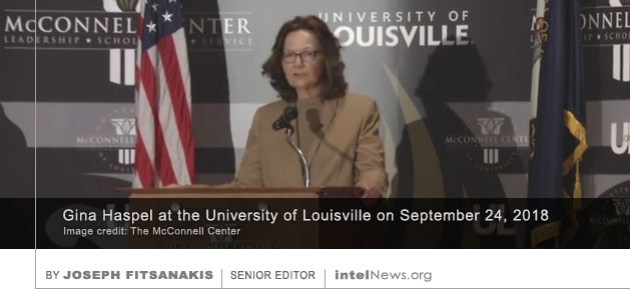
Gina HaspelTHE DIRECTOR OF THE United States Central Intelligence Agency, Gina Haspel, reportedly threatened to resign on the spot in order to prevent a plan by the White House to replace her with a loyal ally of President Donald Trump. This was reported on Saturday by the American news website Axios, which cited three anonymous “senior administration officials” with direct knowledge of the matter.
President Trump reportedly planned to fire the heads of several federal law enforcement and intelligence agencies, including CIA, if he was re-elected in November. Following his electoral defeat, he discussed with his closest aides the possibility of proceeding with his plan to fire senior security and intelligence officials, as a form of retaliation against a part of the federal government that he views as disloyal to him. In particular, the president appears to believe that the CIA is in possession of secret documents that, if declassified, would harm the reputation of his domestic political enemies.

On November 9, the president summarily fired Secretary of Defense Mark Esper and replaced him with Chris Miller, who until then was serving as director of the National Counterterrorism Center. He also installed Kash Patel as Miller’s chief of staff. Patel is an attorney whose rise within the ranks of the Trump administration has been nothing short of meteoric. In 2019, after serving as Principal Deputy to the Director of National Intelligence for a number of months, Patel became senior director of the Counterterrorism Directorate at the National Security Council. He was also a former aide to Representative Devin Nunes (R-Ca), and is believed to have been the main author of a memorandum issues by Nunes, which accuses the Department of Justice and the Federal Bureau of Investigation of participating in a conspiracy to destroy Trump.

This memorandum, claims Axios, convinced Trump that Patel would make a good acting CIA director. He therefore planned to replace the CIA’s current deputy director, Vaughn Bishop, with Patel. He then planned to fire Haspel, which would elevate Patel to acting CIA director, according to Axios. The website claims that the president instructed the White House chief of staff Mark Meadows to begin the process of replacing Bishop with Patel in early December. However, once Haspel was notified of the plan, she threatened to resign before Patel was installed at the CIA. Her resignation would mean that Trump would have to also fire Haspel’s replacement, Bishop, in order to place Patel at the helm of the agency.

By December 11, Trump had reportedly been convinced to keep Haspel as CIA director. A relatively amicable meeting between him and Haspel, followed by the counsel of his senior aides, allegedly contributed to his decisoin. Among those who spoke in Haspel’s favor was Vice President Mike Pence and Pat Chipollone, who serves as White House Counsel. At that time, said Axios, Meadows contacted Haspel to inform her that the president had reversed his decision, and canceled the paperwork for installing Patel at the CIA.

Author: Joseph Fitsanakis | Date: 18 January 2021 | Permalink

Analysis: Emergence of an armed insurgency is now a distinct possibility in the US

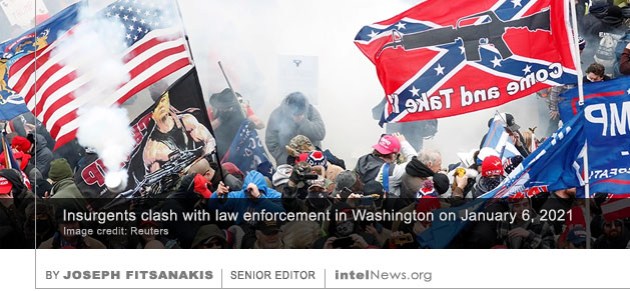
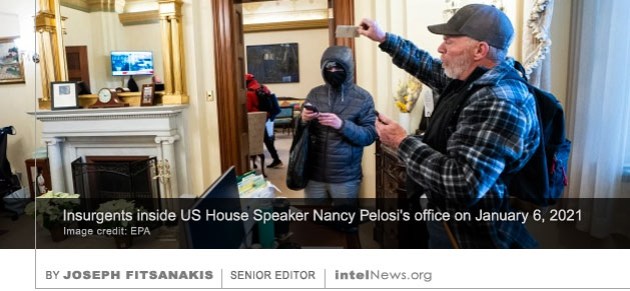
US CapitolWITH DOWNTOWN WASHINGTON RESEMBLING a large military encampment, a repeat of last week’s shocking assault on the Capitol Complex is highly improbable. But America could witness escalating levels of violence across many states, as supporters of the January 6 insurrection continue to organize themselves into a coherent armed movement. Their ability to threaten American national security will depend on whether they can overcome major internal divisions. It will also be determined by the speed with which United States authorities will respond to the rise of what is quickly becoming a dangerous militant movement.
Supporters of the nationalist insurrection that shook the nation on January 6 could possibly return to Washington in time to make a show of force during the Inauguration of Joe Biden. Intelligence reports by US federal agencies mention as many as 17 separate events being planned in the nation’s capital by a variety of militant groups. If these events materialize, the US is likely to witness the largest armed protests in its history. Other gatherings —many of them involving armed militants— are scheduled to take place in all 50 states between January 16 and 20.Q Quote 1

The militants who will descend on Washington in the coming days are unlikely to engage in all-out hostilities against as many as 20,000 members of the US National Guard. The latter have reportedly been given clear rules of engagement, which include the use of lethal force against assailants. The command and control capabilities that are needed to seriously threaten a 20,000-strong professional army, make it unlikely that the insurrectionists will attempt such a suicidal mission. Nevertheless, the possibility that one or more small groups of die-hard militants will descend on Washington determined to engage in direct combat against the US military should not be disregarded. Their chances of a martial victory are extremely slim, but victory can also be achieved through what their supporters will interpret as heroism and —ultimately— martyrdom.

What is far more likely to happen is that the insurrectionists will engage the forces of the government asymmetrically —that is, by resorting to strategies and tactics of unconventional warfare. Such scenarios are more likely to materialize in the coming months, or even years, in the countryside of so-called ‘red states’, where some supporters of President Donald Trump may be willing to help the insurgents by giving them protection and cover. Read more of this post

Analysis: Potential espionage aspects of attack on US Capitol must be considered

US CapitolTHE INSURGENTS WHO STORMED the United States Capitol Building Complex on January 6 may have unwittingly provided cover for teams of foreign spies, who could have stolen or compromised sensitive electronic equipment. This largely neglected security-related aspect of the attack is discussed in an insightful article by David Gewitz, a ZDNet and CNET columnist who writes about cybersecurity affairs.

Hundreds of unauthorized people entered the US Capitol last Wednesday. Many of them entered the offices of several members of Congress, some of whom are members of Congressional committees on intelligence, armed services, defense, and other sensitive matters. According to Gewitz, “there is absolutely no knowing what actions were taken against digital gear inside the building” by the intruders. Most of them were clearly members of disorganized mobs, who appeared to have no concrete plan of action once inside the Capitol. However, points Gewitz, it would have been easy for foreign actors to blend in with the crowd of wild-eyed rioters and surreptitiously entered the Capitol in order to steal or compromise sensitive electronic equipment.

In addition to stealing electronic equipment, foreign spies could have stolen sensitive documents, access codes and passcodes, says Gewitz. He adds that more sophisticated efforts could have included loading malware onto Capitol computer systems, or plugging surreptitious USB drives into the internal ports of tower PCs —a process that takes less than two minutes for someone who is equipped with an pocket-size electric screwdriver. Foreign actors could also have left dozens of “generic USB drives in various drawers and on various desks” around the Capitol, hoping that members of Congress or their aides will make use of them in the coming days or weeks. For all we know, says Gewitz, the place could now be riddled with USB chargers with built-in wireless key-loggers, devices that look like power strips but actually hide wireless network hacking tools, fake smoke detectors, electric outlets or switches that contain bugs, and many other surreptitious spying devices.

What should Capitol security personnel do to prevent the potential espionage fallout from the January 6 attack? Gewitz argues that, given the extremely sensitive nature of the information that is stored in the Capitol’s digital systems, federal cybersecurity personnel should “assume that ALL the digital devices at the Capitol have been compromised”, he writes. They will therefore need to resort to “a scorched Earth remediation effort”, meaning that they will have to “completely scrub” those systems, and even lock the USB drive slots of every PC in the building complex. This damage will take months, even years, to clean up, he concludes.

Author: Joseph Fitsanakis | Date: 12 January 2021 | Permalink

Afghans expel 10 Chinese spies who allegedly made contact with pro-Taliban group

The Afghan government reportedly expelled from the country 10 Chinese intelligence officers on Saturday, after they were found to have contacts with pro-Taliban groups. Meanwhile the White House was recently briefed about claims that Beijing offered Afghan militants bounties for killing American soldiers.
Several Indian news agencies reported last month that Afghanistan’s National Directorate of Security (NDS) arrested 10 Chinese nationals in Kabul on December 10, on suspicion of espionage. The 10 Chinese included at least one woman, and were believed to work for the Ministry of State Security (MSS), China’s primary intelligence agency.

According to reports in the Indian press, the Chinese nationals had used Kabul as a base to buld a fictitious chapter of the East Turkestan Islamic Movement (ETIM). Based in China’s heavily Muslim Xinjiang Province, ETIM is a sepratist armed group, which seeks to create an Islamic breakaway state for ethnic Uighurs. The purpose of the ruse was reportedly to entrap ETIM supporters and members who were operating in Afghanistan.

It is also alleged that at least two of the Chinese spies had contacts with the Haqqani network, a militant group that has pledged allegiance to the leadership of the Taliban, but maintains an independent command structure. Indian news networks named the two Chinese alleged spies with Haqqani Network contacts as Li Yangyang and Sha Hung. Interestingly, the arrests of the 10 Chinese nationals took place shortly before United States President Donald Trump was reportedly briefed about contacts between the MSS and pro-Taliban groups in Afghanistan. According to Axios, US intelligence agencies told the president that Chinese spies had offered Afghan militants bounty in exchange for killing American troops.

Citing “diplomats and security officials in Kabul” who are “familiar with the matter”, The Hindustan Times reported on Monday that the ten Chinese nationals had been released after 23 days in detention. They boarded a chartered airplane heading for China on Saturday, said the paper. None were formally charged. Their release was reportedly ordered by Afghan President Ashraf Ghani, following direct negotiations with Beijing.

Author: Joseph Fitsanakis | Date: 05 January 2021 | Permalink

Iran state media claims Britain and Germany helped US kill Soleimani

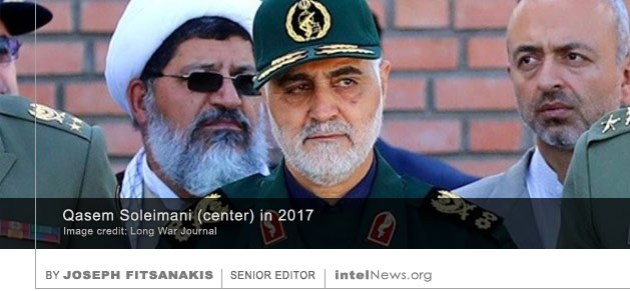
Qasem SoleimaniIRANIAN STATE MEDIA CLAIMED last week that several countries, including Britain and Germany, helped the United States assassinate its top paramilitary commander, Qassem Soleimani (pictured). The reports emerged on the one-year anniversary of the assassination of Soleimani, who led Iran’s Islamic Revolutionary Guard Corps (IRGC). He was killed by a drone strike on January 3, 2020, in Baghdad, Iraq. The same missile strike also killed Abu Mahdi al-Muhandis, who commanded the Popular Mobilisation Committee, an umbrella organization composed of about 40 pro-Iranian militias in Iraq.
Last week, Iran’s state-owned DEFA Press news agency reported that Tehran’s own investigation into the assassination operation showed that Washington was assisted by several countries, and even by some private security firms. According to the report, the Iranian government’s prosecutor, Ali Alqasimehr, stated that G4S, a security services contractor based in Britain, had “played a role” in Soleimani and al-Muhandis’ killing. He added that the US forces also made use of facilities at the Ramstein Air Base, located in southwestern Germany, to carry out the attack.

In addition to Britain and Germany, Iranian officials said that the governments of Qatar, Kuwait, Lebanon, Syria and Iraq assisted in the operation by providing logistical support and intelligence. According to DEFA Press, more countries are likely to be added to the Iranian government’s list of culprits, once Tehran concludes its investigation into the killing. Iranian officials have provided no evidence for such claims. It is also unclear whether Iran is considering launching revenge attacks against countries that allegedly assisted the US in its effort to kill the two paramilitary commanders.

Speaking during a commemoration event on Friday, Soleimani’s successor at the helm of the IRGC, Esmail Ghaani, said that Iran was “ready to avenge” Soleimani’s death. During the event, which was held at the University of Tehran, Ghaani warned that “someone who will retaliate for your crime […] may emerge from inside your own house”. He did not elaborate. Large commemorative gatherings to mark the one-year anniversary of the assassinations took place throughout Iran and Iraq, where Iran-backed paramilitary groups hold significant power.

Last January Iran issued a warning against Greece, saying that it would retaliate if the US used its military bases on Greek soil to attack the Islamic Republic. It was the first time that Iran had threatened to launch attacks against a member of the European Union in connection with the ongoing rise in tensions between Tehran and Washington.

Author: Joseph Fitsanakis | Date: 04 January 2021 | Permalink

George Blake, arguably the most prolific Soviet spy of the Cold War, dies at 98

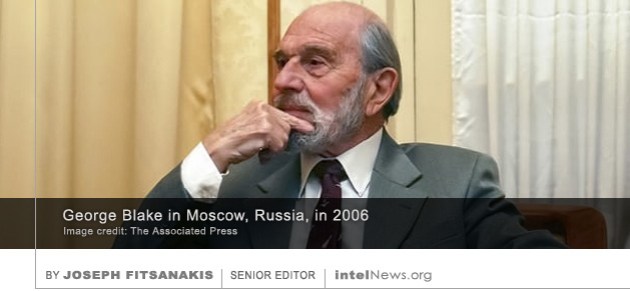
George BlakeGEORGE BLAKE, A DUTCH-born British intelligence officer, whose espionage for the Soviet Union gained him notoriety in the West and hero status in Moscow, has died aged 98. His death was announced on Saturday by the state-owned Russian news agency RIA Novosti. It was later corroborated by a spokesman for the Russian Foreign Intelligence Service (SVR), who said Blake “had a genuine love for our country”.

Blake was nearly 18 when German troops entered his native Holland, prompting him to join the local anti-Nazi resistance forces. A British subject thanks to his Egyptian Jewish father, who had acquired British citizenship by fighting in British uniform during World War I, Blake eventually made his way to London via neutral Spain and Gibraltar. Within two years, he had been recruited by the Secret Intelligence Service, or MI6, and by war’s end he was working in its Dutch Section.

Named after King George by his fiercely pro-British and royalist father, Blake drew no suspicion by his MI6 colleagues. He was hard-working and came across as a strict Calvinist, with strong religious leanings. But his view of the Soviet Union began to change at Cambridge University, where he had been sent by MI6 to learn Russian language and history. In 1950, while he was serving under official cover at the British embassy in Seoul, Korea, he was captured and detained for three years by North Korean forces. His ideological defection to communism appears to have taken place during his capture, during which he was given access to English-language Marxist literature and had long discussions with Soviet political instructors.

By 1953, when he was released by his captors and returned to a hero’s welcome in London, Blake was a committed communist. Less than a month following his release, he made contact with Nikolai Rodin (codename SERGEI) who was the KGB’s station chief in London. He began to spy for the Soviet Union, and did so for eight years, including during his stint as an MI6 case officer in Berlin. During that time, he is believed to have betrayed information that led to the detection of over 500 Western intelligence officers and assets operating behind the Iron Curtain, with as many as 44 of those losing their lives as a result. His career as a double spy ended in 1960, when he was betrayed by Polish defector Michael Goleniewski. Goleniewski’s debriefing by the United States Central Intelligence Agency helped Britain identify two Soviet moles inside its intelligence establishment, one of whom was Blake.

In 1960, after pleading guilty to espionage, Blake began serving a 42-year prison sentence in Britain’s Wormwood Scrubs maximum security prison complex. But in 1966 he was able to escape with the help of a group of Irish republican prisoners, and made contact with Soviet intelligence. He was eventually smuggled into East Germany and from there to Russia. Once there, he joined the KGB and served as a consultant and instructor until his retirement in the early 1990s. He learned to speak Russian fluently, married a Russian wife (his British wife having divorced him once he was convicted of espionage) and had a son.

Russian President Vladimir Putin issued a statement on Sunday, praising Blake’s espionage “in the cause of peace”, while the SVR described him as a model intelligence officer. A report published by RIA Novosti on Sunday said that the Moscow city council was considering a proposal to rename a street in the Russian capital after Blake.

Author: Joseph Fitsanakis | Date: 28 December 2020 | Permalink