Colombia and Russia expel diplomats over espionage allegations

SVR hqCOLOMBIA EXPELLED TWO RUSSIAN diplomats earlier this month, without publicly explaining why, according to news reports. Several Colombian news outlets reported on Tuesday that the two Russians were expelled after they were found engaging in espionage. Also on Tuesday, Colombian officials confirmed earlier reports that Moscow had expelled two Colombian diplomats in a tit-for-tat response.

At a press conference held in Bogota on Tuesday December 22, officials from Colombia’s Ministry of Foreign Affairs revealed that two Russian diplomats had been expelled from the Colombian capital on December 8. However, they refused to provide the reasons for the expulsions, other than to claim that the two Russians had “engaged in violations” of the Vienna Convention on Diplomatic Relations. In a separate interview, Colombian President Ivan Duque said that “to reveal more information at this moment would not correspond with the principal of continuing bilateral relations” between Colombia and Russia.

However, several leading Colombian newspapers, including El Tiempo and Semana claimed that the two Russians had engaged in espionage that targeted Colombia’s energy and minerals industry in the city of Cali. An urban center of 2.2 million inhabitants, Cali is known as southern Colombia’s leading economic hub, and is among Latin America’s fastest-growing local economies.

El Tiempo named the two Russians as Alexander Paristov and Alexander Belousov. Also on Tuesday, Colombia’s W Radio alleged that Paristov is an officer in the Russian Foreign Intelligence Service, which is the Russian equivallent of the United States’ Central Intelligence Agency. It added that Belousov is an officer in the Main Directorate of the Russian Armed Forces’ General Staff, which is known as GRU.

The Russian Ministry of Foreign Affairs and the Russian embassy in Bogota did not respond to questions by Colombian media about the diplomats’ expulsions.

Author: Joseph Fitsanakis | Date: 24 December 2020 | Permalink

White House seeks to split Pentagon cybersecurity functions from signals intelligence

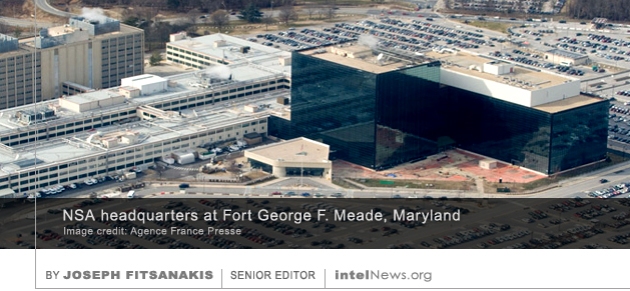
NSATHE WHITE HOUSE IS reportedly trying to implement what could be one of the most important changes in the United States Department of Defense in recent years, by separating the cybersecurity functions from its signals intelligence functions. Until 2009, the US National Security Agency (NSA) was in charge of protecting America’s cyber networks and combating online threats. But in 2009 the administration of US President Barack Obama determined that the online environment represented a new theater of war and established a brand new Cyber Command (CYBERCOM).

Since that time, these two agencies, NSA and CYBERCOM, have been operated in parallel and have been led by the same director, who is always a four-star military officer. Moreover, CYBERCOM has historically relied on NSA’s impressive technical infrastructure and cyber arsenal. But there are some in government, especially those who support a more offensive US cyber posture, who have championed the view that CYBERCOM should be removed from the NSA’s command structure, and should operate as a completely separate agency. The administration of US President Donald Trump pushed this idea in 2017, but strong resistance from the NSA prevented it from materializing.

Now, however, the Trump administration appears determined to implement this proposed split, despite strong resistance from NSA’s leadership. Citing anonymous US officials, Defense One reported last week that the White House had sent Chairman of the Joint Chiefs of Staff General Mark Milley and Acting Secretary of Defense Christopher Miller documents detailing the proposed split. The two men are required to consent to the proposal before its implementation is officially authorized.

Acting Secretary Miller is believed to be in support of the move, according to several sources. However, General Milley has previously voiced support for the logic behind the existing close operational relationship between NSA and CYBERCOM. Therefore, some believe he may decide to stall on the proposal, thus waiting for the Trump administration to transition out of power. On Sunday a spokesman for Milley said that the General had “not reviewed, nor endorsed, any proposal to split CYBERCOM and NSA”.

According to reports, there are some at the Pentagon who feel strongly that the decision to split CYBERCOM from NSA should be left to the incoming administration. Nevertheless, the Trump administration seems determined to demonstrate that it can enact sweeping changes in the Department of Defense, as demonstrated by its recent decision to scale down significantly America’s military footprint in Afghanistan, Iraq and Somalia.

Author: Joseph Fitsanakis | Date: 21 December 2020 | Permalink
Activist portrayed in movie Hotel Rwanda sues airline for alleged abduction

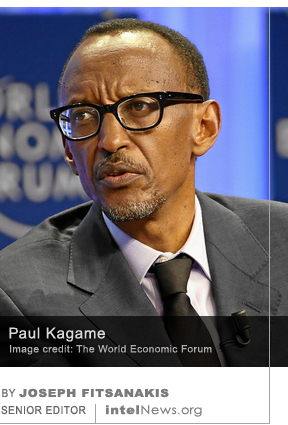
Paul KagameAn anti-genocide activist, whose story was made famous in the 2004 Hollywood film Hotel Rwanda, has sued an airline company for complicity in his alleged abduction from Dubai and eventual imprisonment in Rwanda. During the Rwandan genocide of 1994, Paul Rusesabagina was the manager of the Hôtel des Mille Collines in the Rwandan capital Kigali. The hotel catered largely to Westerners, and its grounds were seen as off-limits by the brutal armed gangs that perpetrated the genocide. Therefore, Rusesabagina used his position to shelter over 1200 displaced civilians from the warring militias.
After the end of the genocide, Rusesabagina, a Hutu, became a vocal critic of Rwanda’s Tutsi president, Paul Kagame (pictured). In 1996, Rusesabagina survived an assassination attempt, after which he went into self-exile in Belgium, of which he is a citizen. Eventually he obtained permanent residency to the United States and relocated to San Antonio, Texas. He continued to voice strong criticisms of President Kagame from exile, whom he accuses of dictatorial tendencies, corruption and mismanagement.

In August 2020, Rusesabagina boarded a chartered airplane in Dubai, United Arab Emirates, which he was told would transport him to Burundi. While there, he had agreed to do a lecture tour, hosted by a Christian group. However, according to Rusesabagina, the invitation was a trap designed to lure him to Rwanda. He was allegedly bound and gagged shortly after the plane took off from Dubai. He was then transported to Kigali, where he was arrested on August 31 on an international warrant issued by the Rwandan government.

Rusesabagina has remained in prison since his arrest, charged with terrorism, murder, kidnap, arson, and forming, as well as funding, terrorist organizations. He rejects these charges and claims he was abducted and subjected to extraordinary rendition for supporting groups that oppose President Kagame’s rule. He is awaiting trial, which is scheduled to take place on January 26, 2021.

On Thursday, Rusesabagina’s lawyers filed a lawsuit in the US state of Texas, claiming that GainJet, the charter airline company whose plane was allegedly used to transport him from Dubai to Kigali, was complicit in his abduction. According to the BBC, the airline, which is registered in Greece, agreed to participate in his abduction because of its close relationship with senior Rwandan government officials. Rusesabagina’s lawyers are expected to file a similar lawsuit against GainJet in Belgium.

Author: Joseph Fitsanakis | Date: 17 December 2020 | Permalink

Massive hacker attack triggers US National Security Council emergency meeting

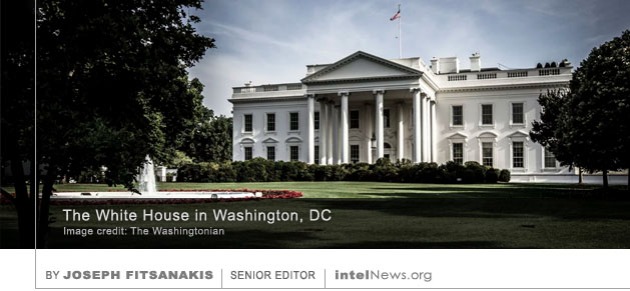
White HouseA large-scale cyberespionage attack targeting United States government computer systems, which some experts described as potentially being among “the most impactful espionage campaigns on record”, triggered an emergency meeting of the US National Security Council on Sunday, according to reports. Chaired by the US president, the National Security Council is the country’s most senior decision-making body.
Although it was only discovered last week, the cyberespionage campaign is believed to date to last spring, possibly as early as March. Sources called it a highly sophisticated operation that originated from a “top-tier” adversary –a term that refers to a handful of state actors that have access to the most elite cyber operatives and advanced technologies known to exist.

As of last night, US government officials had not publicly identified the state actor believed to be behind the cyberespionage campaign, which experts have coined the “2020 supply chain attack”. But several American and European news outlets pointed to Russia as the culprit, citing sources familiar with the investigation. The Washington Post said the Russian Foreign Intelligence Service, known as SVR, was behind the attack. The Russian government denied on Monday that its agencies had any role in the attacks.

The origins of the attack are believed to be in the private sector. It began when a sophisticated illicit cyber actor, known by the nickname Advanced Persistent Threat (APT) 29, or Cozy Bear, stole cyber tools used by two major government contractors, FireEye and SolarWinds. These cyber tools are used to detect and patch vulnerabilities in computer systems. These companies provide services to numerous US government customers, including the Departments of Defense, State, Treasury and Commerce. Other US government customers include the National Security Agency and the Office of the President, including the White House Situation Room. All of these entities have reportedly been affected by this cyber espionage operation.

By disguising their malicious software as software patches, the hackers were reportedly able to access and monitor, in real time, email traffic within and between government agencies. It is not known at this time whether US intelligence agencies, other than the National Security Agency, have been affected by this hack. All branches of the US military maintain intelligence components. Additionally, the Department of the Treasury operates the Office of Intelligence Analysis, while the Department of State is in charge of the Bureau of Intelligence and Research. The White House said yesterday that it had asked the Federal Bureau of Investigation and the Cybersecurity and Infrastructure Security Agency to probe the attack and evaluate the extent of the damage caused to US government operations.

Author: Joseph Fitsanakis | Date: 15 December 2020 | Permalink

US Pentagon signals it will stop supporting CIA’s counterterrorism mission

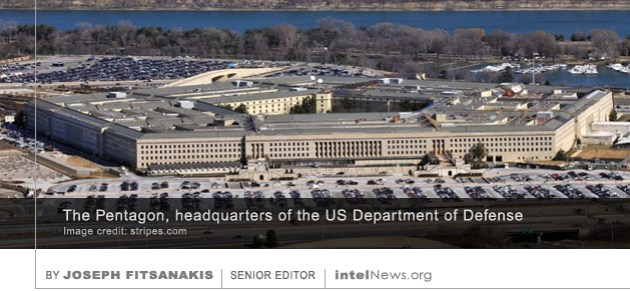
PentagonTHE UNITED STATES DEPARTMENT of Defense has reportedly notified the Central Intelligence Agency that it plans to terminate most of the military support it provides for the spy agency’s counterterrorism operations. Some of these changes may occur as early as January, according to reports published on Thursday in several US news outlets.
After the terrorist attacks of September 11, 2001, the CIA incorporated an increasingly expansive counterterrorist mission into its list of activities. But it has relied on Pentagon resources to support many of these activities, for things like transportation, physical security, logistics, and even execution. The Pentagon’s role in these activities tends to be crucial, given that they usually take place in active combat zones or other dangerous locations around the world. They therefore require heavy military protection.

However, President Trump has been implementing his plan to withdraw American military forces from warzones such as Somalia, Afghanistan and Iraq. These troops provide logistical and material support to CIA missions in some of the world’s most dangerous regions. Additionally, the Department of Defense has been signaling for quite some time its intention to focus less on counterterrorism and more on what experts refer to as “near-peer competitors” —namely China and Russia.

According to reports, Acting Defense Secretary Christopher Miller sent a letter to CIA Director Gina Haspel, in which he informs her of the Pentagon’s decision to make drastic changes to its support for the spy agency’s counterterrorism operations. It is believed that some of these changes will take place as early as January 5, 2021. It has also been reported that this decision marks the culmination of a so-called “pet project” of Acting Under-Secretary of Defense for Intelligence Ezra Cohen-Watnick, a Trump political appointee, who was placed in his current position by the president following November’s election.

Author: Joseph Fitsanakis | Date: 11 December 2020 | Permalink

Saudi crown prince dismisses US lawsuit brought by ex-spy official as ‘baseless’

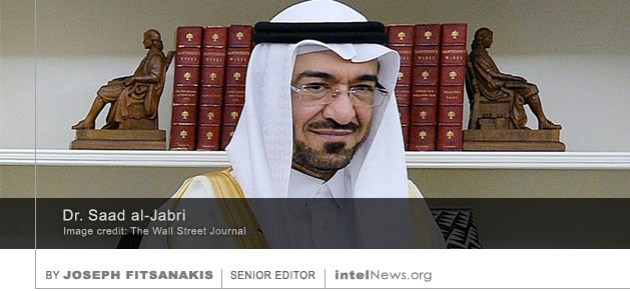
Saad al-JabriA LAWSUIT FILED IN a United States court by a Saudi former senior intelligence official, accuses Saudi Arabia’s crown prince Mohammed bin Salman of planning an illegal assassination on Canadian soil. But in a new court filing, the crown prince denies the accusation and claims that it is an attempt to distract attention from the alleged crimes carried out by the plaintiff.
The target of the alleged assassination attempt is Dr. Saad al-Jabri, who rose through the ranks of the Saudi aristocracy in the 1990s, under the tutelage of his patron, Crown Prince Muhammad bin Nayef. Prince bin Nayef is the grandson of Saudi Arabia’s founding monarch, King Abdulaziz, and until 2015 was destined to succeed King Abdullah and occupy the kingdom’s throne. Eventually, bin Nayef appointed Dr. al-Jabri as Minister of State and made him his most senior and trusted adviser on matters of security and intelligence.

But Dr. al-Jabri’s standing changed suddenly in 2015, when King Abdullah died and was succeeded by King Salman. Salman then quickly began to rely on his son, Mohammed bin Salman, who he eventually named as his successor. That meant that Dr. al-Jabri’s mentor and protector, Prince bin Nayef, was effectively usurped. Bin Salman abruptly fired Dr. al-Jabri in September of 2015. Less than two years later, bin Nayef was dismissed from his post as Minister of Interior and went under house arrest in Saudi Arabia’s coastal resort city of Jeddah. Fearing for his life, Dr. al-Jabri took his eldest son, Khalid, and escaped to Canada in the middle of the night. They remain there to this day.

In a 106-page lawsuit, filed in August with the United States District Court in Washington, DC, Dr. al-Jabri claims that bin Salman sent spies to conduct physical surveillance on him. The lawsuit also claims that bin Salman dispatched members of his “personal mercenary group”, known as the Tiger Squad, to Canada, in order to assassinate Dr. al-Jabri. The members of the squad allegedly arrived at Toronto’s Pearson International Airport sometime in mid-October 2018. The documents claim that the Tiger Squad members traveled to Canada just days after they were dispatched to Istanbul, Turkey, where they killed Saudi journalist Jamal al-Khashoggi. However, they were allegedly turned back by suspicious Canada Border Services Agency officers.

Dr. al-Jabri’s lawsuit relies on the 1991 Torture Victim Protection Act, which allows non-US citizens to file lawsuits in US courts for alleged human rights abuses that took place outside the US. But lawyers for the crown prince claim that he, along with his father, represent the top echelon of Saudi Arabia’s ruling family. As such, they claim, the crown prince is “entitled to status-based immunity from any suit in a US court”. Therefore, they argue, Dr. al-Jabri’s complaint “fails as a legal pleading”. The crown prince’s lawyers also accuse the plaintiff and his associates of having embezzled nearly $11 billion in funds belonging to the Saudi government.

Author: Joseph Fitsanakis | Date: 09 December 2020 | Permalink

Belgium says foreign spies have infiltrated its largest mosque

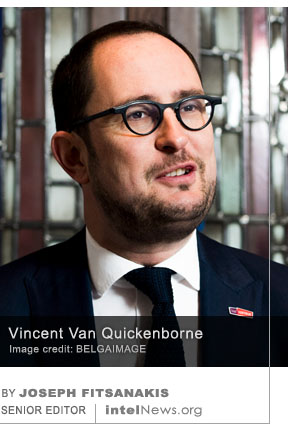
Vincent Van QuickenborneBELGIUM’S LARGEST MOSQUE has been infiltrated by Moroccan intelligence, according to the Belgian minister of justice, who allegedly consulted the country’s spy services in making that determination. The announcement has further-strained relations between the Belgian government and the country’s Muslims, which account for about 5% of the Belgian population.

Until recently, the Grand Mosque of Belgium had been operated by the Muslim World League (MWL), a Saudi Arabian missionary society that is primarily funded and controlled by Riyadh. The lease agreement was struck between the Saudi Arabia and Belgian governments in 1969. It stipulated that Saudi Arabia would supply Belgium with cheap oil, in return for the MWL operating the Grand Mosque without interference from the Belgian state. Since then, Saudi Arabia has been able to have a say in the selection of imams who preach at the mosque.

But the Belgian security services began to scrutinize the activities of the Grand Mosque following the 2016 Brussels bombings —three coordinated suicide attacks carried out by the Islamic State. The attacks killed 32 people and injured hundreds. Earlier this year, the Belgian government annulled the 1969 agreement with Saudi Arabia, claiming that the oil kingdom was using the mosque to spread the tenets of radical Wahhabi Islam. Belgian authorities said at the time that they would assume control over the Grand Mosque, in order to “terminate foreign interference in the teachings of Islam” in Belgium.

Last week, the Belgian government rejected an effort by the Grand Mosque to be officially recognized as a local community provider of faith services. The designation comes with substantial financial support from the Belgian state. Media reports suggested that the decision to deny the application was made by Belgium’s Minister of Justice, Vincent Van Quickenborne (pictured), following consultations with the country’s intelligence services. According to the reports, Belgium’s intelligence services have identified at least three members of the Grand Mosque’s clerical and administrative staff as members of the Moroccan intelligence services.

On Friday, the minister gave an interview to VRT Radio 1, Belgium’s Flemish-language public broadcaster, in which he justified his decision to turn down the mosque’s application. “I am unable to —and will not— accept that foreign agencies can hijack Islam for their own ideological and political goals”, said Van Quickenborne. He added that he saw it as his duty to stop those who attempt to “prevent Muslims in [Belgium] from developing their own progressive Islam”.

Author: Joseph Fitsanakis | Date: 08 December 2020 | Permalink

New report says ‘Havana Syndrome’ was caused by directed microwave radiation

US embassy in CubaA NEW REPORT BY the United States National Academies of Sciences, Engineering, and Medicine, has found that the so-called ‘Havana Syndrome’, which afflicted American and Canadian diplomats in Cuba and China in 2016 and 2017, was likely caused by directed microwave radiation. The study, which was commissioned by the US Department of State, is the latest in a long list of scientific assessments of the mysterious syndrome. The case remains a source of debate in the scientific, diplomatic and intelligence communities.
In 2017 Washington recalled the majority of its personnel from the US embassy in Havana, and at least two more diplomats from the US consulate in the Chinese city of Guangzhou. The evacuees reported experiencing “unusual acute auditory or sensory phenomena” and hearing “unusual sounds or piercing noises”. Subsequent tests showed that they suffered from sudden and unexplained loss of hearing, and possibly from various forms of brain injuries. In April of 2019 the Canadian embassy evacuated all family members of its personnel stationed in the Cuban capital over similar health concerns.

The latest study by the National Academies of Sciences resulted from the coordination of leading toxicologists, epidemiologists, electrical engineers and neurologists. The resulting 66-page report describes in detail the symptoms experienced by nearly 40 US government employees, who were examined for the purposes of the study. Its authors said they examined numerous potential causes, including psychological factors, infectious diseases, directed radio frequency energy, and even exposure to insecticides. Ultimately, the authors concluded that “many of the distinctive and acute signs, symptoms and observations reported by [US government] employees are consistent with the effects of directed, pulsed radio frequency (RF) energy”, according to their report.

However, the study does not attempt to answer the burning question of whether the symptoms experienced by the sufferers resulted from deliberate attacks, and if so, who may have been behind them. Some have accused the governments of Cuba and/or Russia of being responsible for the syndrome. However, the Cuban and Russian governments have strongly denied the accusations. The National Academies of Sciences report does state that the systematic study of pulsed radio frequency energy has a history of over half a century in Russia and the Soviet Union.

Author: Joseph Fitsanakis | Date: 07 December 2020 | Permalink

US wants to share sensitive intelligence with Honduras to combat drug traffickers

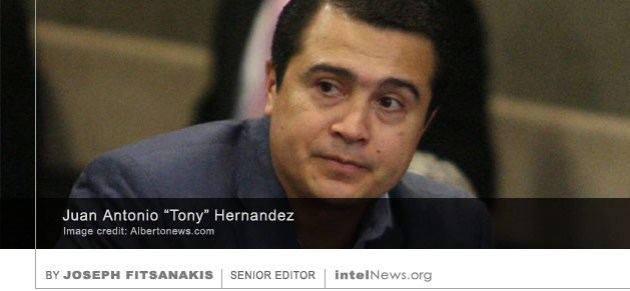
Tony HernandezA PROPOSED MEMORANDUM OF understanding could enable the sharing of extremely sensitive intelligence between the United States and Honduras, as part of an effort by Washington to stop the impoverished Central American country from becoming a drug-trafficking stronghold. However, some in the US intelligence community are concerned that the sensitive intelligence given to the Honduran government may be passed on to the drug cartels by paid informants.

According to the Reuters news agency, American and Honduran officials are currently finalizing a proposed memorandum of understanding between the two nations’ intelligence communities. The memorandum would allow the US to provide the Honduran government with information about secret flights carrying drugs, which are known to regularly enter the Honduran airspace. The drugs are then trafficked north and subsequently enter the US through Mexico. Reuters said that, although the memorandum of understanding is in the drafting stage, the Honduran government appears to be willing to accommodate its conditions. The latter include provisions allowing for planes that do not identify themselves and are believed to be carrying drugs to be shot down by military aircraft.

There are, however, concerns among some in the US intelligence community that the Honduran government and its institutions cannot be trusted with sensitive intelligence. They argue that the corruption at all levels of the Honduran government and intelligence establishments is so extensive, that the drug traffickers will be able to access the information provided by the US government. It should be noted that last year a court in New York convicted one of Central America’s most notorious cocaine traffickers, Juan Antonio “Tony” Hernandez (pictured), who is the brother of Honduras’ current president, Juan Orlando Hernandez. During the trial, it was repeatedly alleged that President Hernandez provided protection to his brother and other drug traffickers in Honduras.

But Honduran officials, including the country’s ambassador to the US, Luis Fernando Suazo Barahona, point out that those receiving sensitive intelligence form the US would be carefully vetted —and presumably polygraphed— prior to being given access to the information. Reuters reports that the US Department of State says it is “taking steps to resume information-sharing [with the government of Honduras] for aerial interception upon the successful negotiation and conclusion” of the memorandum of understanding that is currently being drafted.

Author: Joseph Fitsanakis | Date: 03 December 2020 | Permalink

Mossad helped Syrian intelligence official flee to Austria, despite alleged crimes

BVT AustriaA SYRIAN INTELLIGENCE OFFICIAL, who was denied political asylum in France due to claims he committed serious war crimes, received protection from Austria with assistance from Israel, according to a report. This was revealed on Sunday by British newspaper The Telegraph, which said it had been given the information by “a judicial source”.

The Syrian official in question is Khaled al-Halabi, a former Brigadier General in the Syrian Military Intelligence Directorate (MID). He served as head of the MID in the northern Syrian city of Raqqa amidst the Syrian Civil War, which began in 2011. But in 2013, as the civil war became fiercer, al-Halabi defected from Syria and took his family to France, where applied for political asylum.

Two years later, al-Halabi was notified by the French authorities that his application for political asylum had been denied, due to serious concerns that he had been involved in criminal acts against opponents of the regime of Syrian President Bashar al-Assad. However, soon after being notified that his application for asylum had been rejected, al-Halabi mysteriously disappeared from France, and was never seen there again.

According to The Telegraph, while waiting for a decision from the French authorities in regards to his application for asylum, al-Halabi was negotiating with the Israeli external intelligence agency, the Mossad. The Israeli spy agency allegedly whisked al-Halabi away from France and took him to nearby Austria. Once there, al-Halabi went into the custody of the Office for the Protection of the Constitution and Counterterrorism (BVT), Austria’s primary intelligence agency.

In December of 2015, al-Halabi was granted asylum in Austria, and today he is believed to live in Vienna, in a four-bedroom apartment provided to him by the Austrian government. The decision by the Austrian government to give the former Syrian spy official asylum made headlines in Austria in October, causing significant controversy. This is because at least one lawsuit has been filed against al-Halabi for his alleged participation in war crimes and crimes against humanity during the Syrian Civil War, according to The Telegraph.

But the alleged involvement of the Mossad in al-Halabi’s case was not known until last Sunday. If true, the Mossad’s role in this case could signify that al-Halabi had established a relationship with the Israeli spy agency prior to his defection from Syria in 2013. According to the Austrian press, al-Halabi denies that he was involved in war crimes and crimes against humanity.

Author: Joseph Fitsanakis | Date: 02 December 2020 | Permalink

Iranian authorities said to have photos of assassins of leading nuclear scientist

Mohamed AhwazeREPORTS IN BRITAIN AND Israel claim that Iranian authorities have visually identified the assassins who were allegedly involved in the killing of Mohsen Fakhrizadeh, a nuclear scientist believed to have led Iran’s nuclear program. Fakhrizadeh was a brigadier general in the Islamic Revolutionary Guard Corps (IRGC), Iran’s elite paramilitary force. He was accused by the United States and Israel of leading the Islamic Republic’s nuclear weapons program, whose existence Tehran strongly denies.

Fakhrizadeh was killed on Friday during an armed assault that took place in the eastern outskirts of Tehran. He was attacked by assailants using automatic rifles, as he and his wife were traveling to Absard, a town located 60 miles east of the Iranian capital. His wife is also believed to have been killed in the attack, which lasted no more than 3 minutes and took place in broad daylight. Iranian leaders have accused Israel of the attack, and some believe the Israelis may have been provided with assistance from the United States. Israeli and American officials have not confirmed or denied that they were involved in Fakhrizadeh’s assassination.

Late on Sunday, Mohamed Ahwaze (a.k.a. Mohamed Majed), an Iranian-born reported based in Britain, tweeted photographs of four men, who are allegedly believed by the Iranian authorities to have been involved in Fakhrizadeh’s assassination. Ahwaze said that Iranian officials were busily distributing the photographs of the four men at various hotels and restaurants across Iran, and were asking for information about the alleged culprits. A few hours prior to Ahwaze’s tweet, a report from the state-owned FARS news agency in Iran claimed that the country’s Ministry of Intelligence had confirmed the identities of the assassins and that the details would soon be released to the public.

Earlier on Sunday, Ahwaze claimed on Twitter that over 60 intelligence operatives were involved in Fakhrizadeh’s killing, with the vast majority having a logistical role in the operation. He added that Iranian military units and IRGC forces had deployed along the Iranian border with Iraqi Kurdistan, believing that Fakhrizadeh’s assassins would try to exit Iranian territory by crossing the border on foot. Numerous Israeli media outlets are now reporting the information tweeted by Ahwaze on Sunday. However, the Israeli government has refused to comment on the claims.

Author: Joseph Fitsanakis | Date: 30 November 2020 | Permalink

A CIA paramilitary officer was killed in Somalia, reports claim

CIA memorial wallA PARAMILITARY OPERATIONS OFFICER serving in the United States Central Intelligence Agency (CIA) has reportedly been killed in Somalia. This is a rare occurrence for the clandestine agency, which has lost about 140 officers in its 73-year history. The New York Times, which first reported the news on Wednesday, said the officer had joined the CIA after serving in the US Naval Special Warfare Development Group, which is commonly known as SEAL Team Six. Upon joining the CIA, the late officer served in the Special Activities Center (formerly Special Activities Division), which is the Agency’s paramilitary section.

The identity of the officer has not been released, and it is unlikely that it will become known in the future. It is believed that the officer’s family has been notified. Citing “current and former US officials”, The Times said it was not known whether the officer had been killed while participating in a counterterrorism raid, or whether he had been targeted by al-Shabaab, the al-Qaeda affiliate that is active in the Horn of Africa. Neither al-Qaeda nor al-Shabaab, have said anything about the alleged incident.

The US has been participating in a low-intensity war against Islamist militants in the region for over a decade. There are currently over 700 American military personnel in Somalia, most of whom provide training for the Somalian Armed Forces. But the CIA, as well as US Special Operations Forces personnel, are also known to carry out raids throughout the country. Additionally, the CIA, in association with the Department of Defense and the Office of the Director of National Intelligence, has carried out dozens of drone strikes in Somalia in recent years.

In September of this year, Yahoo News reported that the CIA had lost four paramilitary operations officers in 2008. The four men allegedly died during a secret maritime operation off the coast of the Philippines, and their bodies were never recovered. According to the report, the four men were members of the CIA’s Maritime Branch, one of the three branches of the Special Operations Group, which works under the Special Activities Center. The agency never spoke publicly about the officers’ deaths, but allegedly notified their families, who were also invited to Langley for a private ceremony attended by the CIA’s leadership.

Author: Joseph Fitsanakis | Date: 25 November 2020 | Permalink

Afghan spy chief warns drone warfare is Taliban’s new fighting method

TalibanTHE DIRECTOR OF AFGHANISTAN’S main intelligence agency warned on Monday that the Taliban are for the first time resorting to using drones in order to carry out attacks against the Afghan government. Groups such as the Islamic State in Syria, and Houthi rebels in Yemen, have been using modified drones to drop makeshift bombs on enemy targets since at least 2016. But the Taliban have not previously been known to make use of such weapons.
The information was shared by Ahmad Zia Shiraj, director of Afghanistan’s National Directorate of Security (NDS), during an address to the Afghan parliament. Headquartered in Kabul, the NDS is Afghanistan’s primary domestic and foreign intelligence agency. It forms part of Afghanistan’s National Defense and Security Forces, along with the branches of the Armed Forces and the police. Its director reports directly to the Office of the President of Afghanistan.

Speaking during a parliament session on Monday, Shiraj said that the Taliban have begun to use drones to drop explosives on targets. These are commercially available hobby drones, which are equipped with video cameras and designed for filming. The Taliban purchase these drones and modify them so that they can carry and release explosives, said Shiraj. He added that Taliban forces had used drones to carry out attacks in the northern Afghan province of Kunduz, as well as in Paktia, on the Afghan-Pakistani border.

Media reports in October claimed that the Taliban used a drone to drop a bomb on the headquarters of the Kunduz governorate, killing at least four people. The New York Times noted at the time that, if true, the use of a drone to carry out an attack could be the first in the 19-year war between the Taliban and the American-supported Afghan government, and called it “a worrisome shift” in tactics. On Monday, Shiraj did not mention specific attacks, but he did say that there had been more than one such incidents. He said that the NDS would pressure the Afghan government to stop the importation of commercial drones.

Author: Joseph Fitsanakis | Date: 24 November 2020 | Permalink

British SIGINT agency criticized for ‘vanity project’ that went 83% over budget

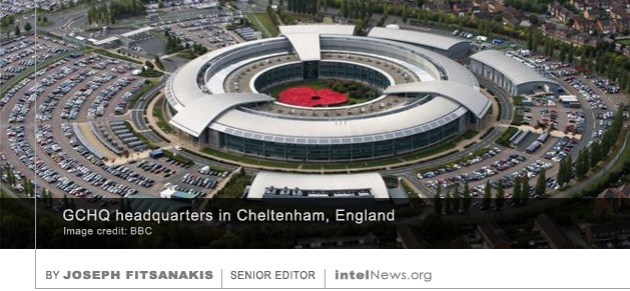
GCHQBRITAIN’S SIGNALS INTELLIGENCE AGENCY has been severely criticized in a report for undertaking a pointless “vanity project” that exceeded its allocated funds by 83 percent and needlessly cut into its operational budget. The agency, known as the Government Communications Headquarters (GCHQ) is responsible for collecting signals intelligence (SIGINT) and protecting the information systems of the British government and Armed Forces.

In 2015, the country’s Conservative government announced the establishment of the National Cyber Security Centre (NCSC), under the GCHQ, whose mission would be to protect Britain from cyber-espionage, cyber-terrorism and cyber-sabotage, among other cyber-security goals. Soon after the announcement was made, the then-Chancellor of the Exchequer, George Osborne, appointed a planning committee whose chief priority was to decide where to house the NCSC. The decision was made to house it in London, rather than the GCHQ’s Cheltenham base in southwestern England, so as to place it in close proximity to government and business centers.

But the planning committee rejected an initial plan to house the NCSC in Canary Wharf, one of London’s primary business districts, located on the Isle of Dogs. The reasons were that Canary Wharf is not close to the Palace of Westminster —Britain’s seat of government— and that Canary Wharf would be “very unpopular” with NCSC personnel. Instead, the committee chose Nova South, a luxury building situated near London’s Victoria station, which is one of the world’s most expensive urban areas. The government’s National Security Adviser, Mark Lyall Grant, rejected the Nova South option, arguing it would be too costly without adding any real benefits to the NCSC’s operations. But in May of 2016 Osborne overruled Grant’s decision and unilaterally decided to house the NCSC at Nova South.

Now a report (.pdf) from the British Parliament’s Intelligence and Security Committee has described Osborne’s role in the decision-making process as “highly unsatisfactory”, and his choice to house the NCSC at Nova South as “unacceptable”. According to the report, Osborne viewed the NCSC’s location as “a pet project” that prioritized image over cost and operational effectiveness. The result was that the NCSC housing project “considerably over-shot the funds originally allocated”, by over 80 percent. What is worse, according to the report, the money shortfall has been affecting the GCHQ’s operational budget by nearly £3 million ($4 million) a year since 2016.

Author: Joseph Fitsanakis | Date: 20 November 2020 | Permalink

North Korean leader Kim Jong-un’s half-nephew is in CIA custody, report claims

Kim Jong-nam murderTHE HALF-NEPHEW OF North Korean leader Kim Jong-un, who disappeared in 2017 and has not been seen since, is in the custody of the United States Central Intelligence Agency (CIA), according to a new report. The missing man’s name is Kim Han-sol. He is the son of the late Kim Jong-nam (pictured), the eldest son of Kim Jong-il and grandson of Kim Il-Sung, who founded the Democratic People’s Republic of Korea in 1948. A critic of North Korea’s rulers, Kim lived in self-exile in the Chinese territory of Macau, and split his time between China, Singapore and Malaysia.


In February of 2017, Kim Jong-nam was assassinated in audacious attack at a busy airport in Malaysia by two women who used a poisonous substance to murder him in broad daylight. Suspicions fell immediately on the North Korean government, and many assumed that his two children and wife would be next. The family, who lived in Macau at the time, frantically made plans to leave for the West and seek political asylum there. To make it more difficult for potential assassins to find them, Kim Jong-nam’s family members made the decision to separate and take different routes to Europe.

As intelNews has reported before, Kim Jong-nam’s eldest son, Kim Han-sol, sought and received protection from an obscure North Korean dissident group, which calls itself Cheollima Civil Defense and is also known as Free Joseon. Cheollima Civil Defense, whose members support on principle anyone who challenges the regime in Pyongyang, helped Kim’s family relocate to the West, allegedly with assistance from China, the United States and Holland.

However, unlike Kim Jong-nam’s wife and youngest son, Kim Han-sol never made it to Europe, and his whereabouts remain unknown. Now a new report in The New Yorker magazine claims that Kim Han-sol flew from Macau to Taiwan, escorted by Cheollima Civil Defense members. From there, he was scheduled to take a flight to Amsterdam’s Schiphol Airport, where Cheollima Civil Defense members and Dutch activists were waiting for him. But he never emerged from the arrivals gate. According to The New Yorker, that was because a team of CIA officers intercepted Kim Han-sol in Taiwan and took him under US custody.

The magazine claims Kim Han-sol remains under US custody to this day, but does not clarify whether that is a voluntary arrangement on the part of the North Korean exile. It is also not clear if Kim Han-sol’s mother and brother are with him, or if they are aware of his whereabouts. It is believed that Kim Jong-nam’s income came from a North Korean government slush fund that he was managing in Macau, and that much of the fund came from illicit sources. It is possible that Kim Han-sol was also involved in running that fund, which would explain the CIA’s interest in him.

Author: Joseph Fitsanakis | Date: 18 November 2020 | Permalink