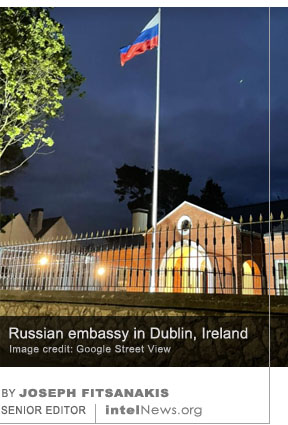
Ireland halts issuances of Russian diplomatic visas due to espionage concerns

Russian embassy IrelandAUTHORITIES IN IRELAND ARE systematically “freezing” applications for Russian diplomatic visas from Moscow over concerns that the Kremlin is using its embassy in Dublin as a base for espionage activities. In 2018, the Irish government introduced emergency legislation that canceled a previously approved expansion of the Russian diplomatic compound in the Irish capital, allegedly due to concerns about espionage activities by Russian diplomats. Three years later, reports emerged that Irish government officials were concerned about the expanding size of Russia’s diplomatic presence in Dublin.
In April 2022, Ireland expelled four Russian diplomats, which it claimed were undercover intelligence officers. A subsequent report by the London-based Times newspaper alleged that a major reason Dublin had expelled the diplomats was their “efforts to cultivate contacts with dissident republicans and loyalist paramilitaries” in the Republic of Ireland and in Northern Ireland, which is British soil. The report added that at least one of the four expelled Russian diplomats was believed to be an intelligence officer for the Main Intelligence Directorate of the General Staff of the Russian Armed Forces —widely known by its Cold War-era initials, GRU.

On February 10, The Irish Times alleged that the Irish government was “refusing to allow Russia to replace diplomats assigned to its Dublin embassy […] due to concerns over espionage”. The article went on to claim that Russia’s diplomatic presence in Ireland had “dropped by half” and was causing a “tense standoff” between Ireland and Russia. It also quoted a spokesman from the Russian embassy in Dublin, who decried Ireland’s “unacceptable visa and accreditation policy”. The Russians told the paper that their embassy was staffed by just eight administrative staff and six diplomats.

On February 17, The Irish Times said it had corroborated the Russian officials’ claims by speaking with Micheál Martin, Ireland’s Deputy Prime Minister and Minister for Foreign Affairs. Martin was approached by the newspaper’s reporters in Germany, where he attended the Minich Security Conference. Martin told The Irish Times that the Irish Department of Foreign Affairs was  carefully “scrutinizing” every new application for a diplomatic visa by the Russian government. The reason for the careful scrutiny, said Martin, was a number of advisories issued by Ireland’s intelligence services, suggesting “that other activities were underway” at the Russian embassy and that some embassy staff “were not actually diplomats but were performing intelligence functions”. Martin added that the Irish government had determined “15 diplomats should be adequate for [Russia’s] needs” in Ireland.

Author: Joseph Fitsanakis | Date: 18 February 2024 | Permalink

Alleged Afghan-born Russian spy tries to regain revoked British citizenship

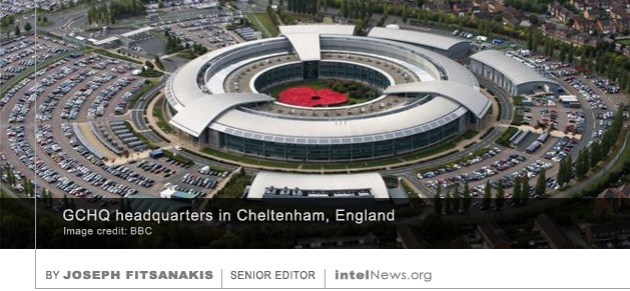
GCHQAN AFGHAN-BORN MAN, who became a naturalized British citizen and worked for British intelligence for over a decade, is attempting to regain his British citizenship, which was revoked after he was accused of being a Russian spy. The man, who is identified in court documents only as “C2”, was born in Afghanistan and grew up under the Soviet occupation in the 1980s. When the Soviets withdrew from Afghanistan he left the country alongside the Russian forces and resettled in Russia, where he attended university and married a Russian woman.

By 2000, when he entered the United Kingdom as an Afghan asylum seeker, he was in possession of Russian citizenship due to his marriage to a Russian citizen. He was eventually granted asylum in Britain and began to work as an interpreter for the Foreign Office and the Government Communications Headquarters (GCHQ), Britain’s signals intelligence agency. His fluency in Russian, Dari, and Pashto, made him invaluable to British intelligence as the United States-led ‘war on terrorism’ escalated in Afghanistan. In the late 2000s, the British Foreign Office sent C2 to Afghanistan, where he worked to build ties between the nascent post-Taliban Afghan government and the British diplomatic corps stationed in the country.

It was in Afghanistan, according to Britain’s Security Service (MI5), that C2 began to develop contacts with Russian intelligence officials. The agency claims that two Russian military attaches stationed in the Afghan capital Kabul, identified in court documents as “Boris” and “Dimitri”, recruited C2 on behalf of the Main Directorate of the Russian Armed Forces’ General Staff, which is commonly known as GRU. The British government claims that, following his recruitment by GRU, C2 traveled to Russia at least six times and once to Cyprus, where he continued to hold regular meetings with his Russian handlers.

On 2019, after he had left government service, MI5 began to question C2 about his alleged connection to Russian military intelligence. He consistently denied that he was a Russian spy. Eventually, MI5 took him “to the roof of a hotel” in London, where he was administered a polygraph examination. A few weeks later, by which time he had returned to his base in Kabul, C2 was informed that his British citizenship would be revoked due to his espionage work for the Russians.

Ironically, the British government evacuated C2 from Afghanistan in 2021 as part of Operation PITTING, during which 15,000 Afghan nationals were transported to the United Kingdom as the Taliban descended on Kabul. Upon arriving in the United Kingdom, C2 was arrested and eventually released on bail. Last week he formally appealed against the British government’s decision to strip him of his citizenship. His case was heard in secrecy at a special hearing of the United Kingdom’s Special Immigration Appeal Commission (SIAC). The SIAC is expected to rule in March or April.

Author: Joseph Fitsanakis | Date: 12 February 2024 | Permalink

India arrests Moscow embassy security employee for spying for Pakistan

Embassy of India in RussiaAUTHORITIES IN INDIA HAVE arrested a security employee at the Indian High Commission in Russia, accusing him of spying for Pakistani intelligence. The embassy of India in Moscow is one of its largest in the world and is viewed as critical to New Delhi’s strategic relations with Russia. Employees that staff the Moscow embassy are highly vetted and typically represent the cream of the crop of India’s Ministry of External Affairs. It follows that news of the arrest of a Moscow embassy security employee on espionage charges must have raised eyebrows in India.
The employee in question has been identified in news reports as Satendra Siwal, a resident of the village of Shahmahiuddinpur, located in the Hapur district of Uttar Pradesh. He is believed to have been employed as an India-Based Security Assistant (IBSA) at the Indian embassy in Moscow since 2021. Siwal reportedly belongs to the embassy’s Multi-Tasking Staff (MTS), a broad job title that encompasses a variety technical support specialists working at India’s diplomatic facilities worldwide.

According to reports, Siwal was arrested by members of the Anti-Terrorist Squad (ATS) in the northern Indian city of Meerut, 250 miles northeast of New Delhi. He was charged with participating in “anti-India activities”, which included providing government secrets to Pakistan’s Inter-Services Intelligence (ISI) Directorate. According to the ATS, the secrets given to the ISI by Siwal included information about strategic planning by the Indian Ministry of Defense, the Ministry of External Affairs (Siwal’s direct employer), and the Indian military. Siwal allegedly spied for the ISI in exchange for financial compensation.

Indian authorities said the case against Siwal was built with the help of “electronic surveillance” and other “evidence collection”, but did not provide details. In a statement issued on Monday, the ATS said Siwal had allegedly “confessed to his crime” during questioning. The espionage suspect is now facing charges under India’s Official Secrets Act.

Author: Joseph Fitsanakis | Date: 5 February 2024 | Permalink

North Korean radio station known for sending coded messages to spies goes silent

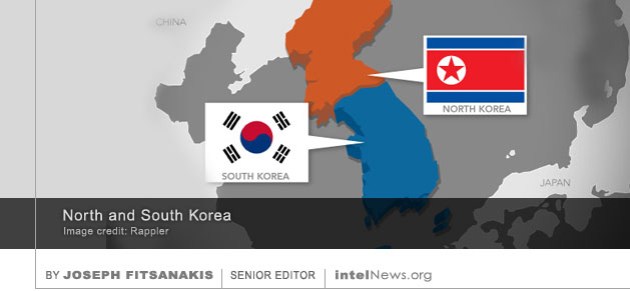
North South KoreaNORTH KOREA APPEARS TO have suspended a long-standing radio station, known for broadcasting content targeted at South Koreans, which also aired encrypted messages intended for North Korean spies abroad. Radio Pyongyang was founded by Korean communist forces in the 1940s. In 1950 it formed part of the North Korean state’s official media propaganda arm.
Throughout the Cold War, Radio Pyongyang aired hundreds of hours of news and cultural content every week. The broadcasts were in various languages and were exclusively aimed at international listeners. However, most of the station’s output was targeted at South Koreans. In 2002, the station was renamed Voice of Korea. Around that time, possibly owing to a temporary rapprochement between North and South Korea, the station curtailed much of its political programming. However, broadcasts featuring political content were resumed in 2016, as relations between the two warring sides began to deteriorate once again.

For much of its existence, the Voice of Korea has also been known to operate as a so-called numbers station. The term denotes shortwave radio stations, usually sponsored by a government entity, that regularly air broadcasts consisting of formatted number sequences. These sequences are widely believed to be encrypted communications addressed to intelligence officers operating abroad. They contain operational instructions and other directives that are typically undecipherable without the use of an encryption protocol. These stations also broadcast certain types of music, which function as codewords and are believed to signal specific directives to spies.

But the Voice of Korea unexpectedly fell silent last week. Its website, which features content in several languages, also appears to have been taken down. The sudden changes occurred days after North Korea’s Supreme Leader, Kim Jong-un, delivered a key address during the year-end plenum of the ruling Workers’ Party of Korea (WPK) in Pyongyang, on December 31. In his speech, which became public on January 6, the North Korean leader declared that the reunification of Korea under communist principles —a longstanding goal of the WPK—had been rendered “impossible” due to widening differences in approach between the two Koreas.

The North Korean strongman also called for “a fundamental change” in the WPK’s policy on inter-Korean affairs. Finally, he discussed a series of steps for the “reorganization of entities” that govern North Korea’s relations with South Korea. Several North Korean government websites focusing on the reunification of Korea, including the Voice of Korea website, have since been taken down. North Korea observers suggest that the daily radio broadcasts of the Voice of Korea appear to be part of the reorganization declared by Kim Jong-UN on December 31.

Author: Joseph Fitsanakis | Date: 15 January 2024 | Permalink

Canadian judge bars Chinese PhD student from entering, citing espionage concerns

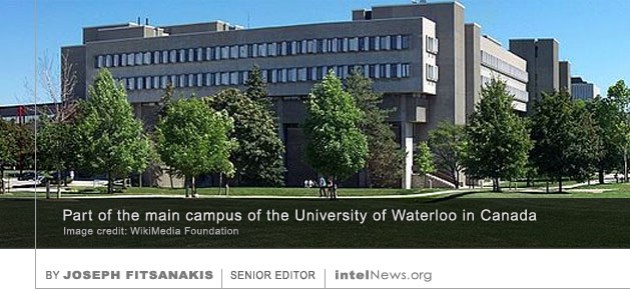
University of WaterlooIN AN UNPRECEDENTED AND potentially highly consequential decision, a judge has barred a Chinese PhD student from entering Canada over concerns he might be pressured to spy by the government of China. The case could have “ripple effects” on universities across Canada and possibly even all of North America, according to legal experts.

The central figure in the case is Yuekang Li, a citizen of China, who was accepted into the Mechanical and Mechatronics Engineering PhD program of the University of Waterloo. Li stated in his application that his goal was to return to his home country after receiving his PhD and work to “improve its public health system”. However, when Li applied for a graduate student visa, his application was denied by an officer of Immigration, Refugees and Citizenship Canada (IRCC), the government department that oversees applications for entry visas into the country.

In deeming Li inadmissible to Canada, the IRCC officer in charge of his case reportedly cited the student’s strong interest in microfluidics, a niche branch of nanotechnology with a wide range of applications in the biopharmaceutical industry. The IRCC officer also noted growing concerns in the West about the use of students and researchers as “non-traditional collectors of information” by the government in Beijing. In a number of such cases, Chinese students and researchers have been given permission by the Chinese state to work abroad with the understanding that they will deliberately collect information that will benefit China’s military-industrial complex.

Li promptly challenged the IRCC’s decision, which ended up being heard in Federal Court. Li’s legal representatives argued that the rejection of his application for a student visa relied on “an overly broad definition of espionage” and engaged in “speculation”, rather than factual evidence. But on December 22, Federal Court Chief Justice Paul Crampton sided with the IRCC.

In his decision, which was made available late last week, the judge agrees with the IRCC’s view that the graduate research Li proposed to carry out at the University of Waterloo would fall under the definition of “non-traditional espionage”. He referred to China as a “hostile actor” and cautioned that such actors “increasingly make use of non-traditional methods to obtain sensitive information in Canada or abroad, contrary to Canada’s interests”. Given that new reality, Canada’s legal understanding of what constitutes “espionage” must evolve”, Judge Crampton argues in his decision.

Author: Joseph Fitsanakis | Date: 08 January 2024 | Permalink

Analysis: Killing of Hamas leader in Lebanon marks a new phase in Israel’s war

Dahiyeh BeirutMIDDLE EAST OBSERVERS WERE hardly surprised by yesterday’s news of the apparent assassination of Hamas leader Saleh al-Arouri in Lebanon. Not only was al-Arouri a senior Hamas official, but he also headed the militant group’s contact team with Lebanese Hezbollah and its Iranian patrons. He was likely at the top of Israel’s permanent assassination list even prior to Hamas’ bloody assault on Israel last October 7. Yet, within the explosive content of the ongoing Israel-Hamas war, Tuesday’s assassination signals the opening of a new and highly unpredictable phase in an already uncertain conflict.

The vague statements issued by Israeli officials in response to the news of al-Arouri’s assassination did little to dispel the broadly accepted view that Israel’s intelligence services were behind the killing. Headed by its external intelligence agency, the Mossad, Israel’s intelligence services have a long history of extrajudicial assassinations. In his seminal book Rise and Kill First, the Israeli investigative journalist Ronen Bergman discusses in detail the history of these assassinations, which predate the postwar establishment of the state of Israel. Bergman’s data-rich research reveals that the Israeli intelligence services have performed approximately 2,700 extrajudicial assassinations in their history —more than any Western state.

Given such a prolific history of targeted killings, al-Arouri’s assassination in Beirut can be described as both expected and unremarkable. Indeed, Israeli officials have stated repeatedly since October 7 that Hamas’ senior leadership will be targeted worldwide. In a leaked recording that emerged last month, Ronen Bar, director of the Israeli Security Agency, was heard announcing to members of Israel’s Knesset that Hamas’ senior leadership would be targeted “in Gaza, in the West Bank, in Lebanon, in Turkey, in Qatar, everywhere”.

At the time the recorded conversation leaked, nobody thought that Bar, a seasoned intelligence officer, was bluffing. Indeed, the operational capabilities and reach of the Mossad are well understood by everyone in the Middle East. That al-Arouri was assassinated in southern Beirut’s Dahiyeh suburb is significant. An undisputed Hezbollah stronghold, Dahiyeh is tightly controlled by the Shiite militant group, which prides itself on ensuring the safety of its residents. Yesterday’s assassination at the very heart of Hezbollah’s lair was nothing short of a demonstration of the Mossad’s competency in special operations.


If Israel is truly intent on neutralizing the leadership of Hamas, Mossad’s competency will be increasingly tested in the coming months, as the Jewish state will have to strike repeatedly beyond its borders. This is because, unlike the beleaguered Gazans, who are currently experiencing the most destructive bombing campaign of the 21st century, most leaders of Hamas live in relative luxury in Doha, Ankara, Beirut, Damascus, and other Middle Eastern metropolitan centers. It is there, and not in the razed neighborhoods of Khan Yunis and Jabalia, that Israeli assassination teams will need to operate with increasing dexterity. Read more of this post

China’s spy agency emerges as formidable adversary to CIA, according to report

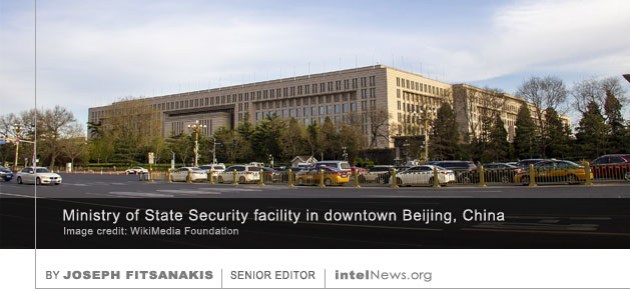
United States ChinaTHE UNITED STATES CENTRAL Intelligence Agency (CIA) has sharply stepped up its activities on China, but Chinese espionage operations remain formidable and continue to pose challenges for American decision-makers, a new report claims. Citing “interviews with more than two dozen current and former American officials and a review of internal Chinese corporate documents and public [Chinese government] documents”, the New York Times said last week that China’s main intelligence agency the, Ministry for State Security (MSS) is “now going toe-to-toe with the CIA in collection and subterfuge around the world”.

The unprecedented growth of the MSS, according to the paper, is occurring despite the fact that the CIA has doubled its budget on China under the presidency of Joe Biden. The American spy agency also launched a new China Mission Center under its current director, William J. Burns. A major concern for the CIA is reportedly the intense Chinese focus on cutting-edge technologies, such as artificial intelligence, quantum computing, and advanced semiconductor design and manufacture. For this reason, the CIA’s China Mission Center works closely with the agency’s Technology Intelligence Center, claims the paper.

Through these and other efforts, American intelligence officials have reportedly concluded that the “urgency and intensity of technological espionage” by Chinese spy agencies has increased beyond parallel. According to the New York Times, the technological advancements taking place in the state-supported Chinese private sector and the military, known as the People’s Liberation Army, “are surprising the US government”. For this reason, the CIA has focused intensely on “rebuilding a network” of assets within China, a decade after Chinese counterintelligence managed to neutralize CIA operations on Chinese soil.

But the MSS is also increasing its output and “making its own aggressive moves abroad”, says the paper. Unlike Russian intelligence agencies, the MSS does not have a tradition of planting undercover spies inside the United States. Instead, MSS operatives prefer to operate online through front companies with innocuous-sounding names. They use these companies to recruit assets among Chinese expatriates, ethnic Chinese Westerners, and Americans without any ethnic connection to China. Many targets for Chinese intelligence recruitment are members of the scientific, academic, and business communities, the New York Times reports.

Author: Joseph Fitsanakis | Date: 01 January 2024 | Permalink

Veteran Belgian politician was a spy for Chinese intelligence, report alleges

MSS ChinaA LONGTIME BELGIAN POLITICIAN worked as a spy for Chinese intelligence for at least three years, according to a joint investigation by a consortium of European news media. Until last week, the politician, Frank Creyelman, 62, was a leading member of Vlaams Belang, a far-right separatist party that draws nearly the entirety of its support from northern Belgium’s Dutch-speaking Flemish regions. In addition to seeking to separate Flanders from Belgium, Vlaams Belang opposes immigration and multiculturalism, with much of its criticism directed at Islam.

From 1995 until 2014, Creyelman served as a member of the Flemish Parliament or the Belgian Senate, representing the Antwerp Province. During that time, he became known for his pro-Russian views, which he continued to propagate in retirement. In 2021, he voiced strong skepticism against the Belgian government’s efforts to provide diplomatic, financial, and military support to Ukraine. Following his retirement from frontline politics, Creyelman became an honorary member of the Flemish Parliament. He also remained chairman of Vlaams Belang in his home city of Mechelen, a Dutch-speaking stronghold.

Last week, however, a joint investigation by the British newspaper The Financial Times, French newspaper Le Monde and German newsmagazine Der Spiegel, claimed that Creyelman worked as a spy for China for at least three years. Citing unnamed “intelligence officials from four Western countries”, the investigation claimed that Creyelman had been recruited by Daniel Woo, a case officer for China’s Ministry of State Security. Woo is believed to work out of the MSS branch in China’s far-eastern province of Zhejiang, though he has also served tours in Europe under diplomatic cover, including in Romania and Poland.

It is not known how the MSS recruited Creyelman. It appears that most of his communication with his alleged MSS handler took place via text messages. However, it is claimed that in 2019 Creyelman traveled to Sanya, a popular tourist resort in China’s Hainan Island, where he allegedly met Woo and possibly other MSS operatives. Notably, the journalists behind the investigation into Creyelman claim that they have accessed incriminating messages exchanged between Creyelman and Woo. The text messages span the period between early 2019 and late 2022.

In the text messages, Woo asks Creyelman to try to influence senior-level discussions in Belgium and elsewhere concerning China’s treatment of its ethnic Muslim populations in the Xinjiang Province. The far-right politician was also instructed to find ways to vilify and discredit European researchers and academics who were documenting China’s treatment of ethnic Muslims in Xinjiang. Woo also asked Creyelman to try to quell criticism of China’s crackdown of the pro-democracy movement in Hong Kong. In one message, Woo explained that China’s purpose was “to divide the US-European relationship”.

Last Friday, just hours after the allegations about Creyelman’s alleged espionage emerged, Vlaams Belang announced that it had expelled him from its ranks. In a social media post, the party’s leader, Tom Van Grieken, denounced Creyelman’s espionage as going “against the purpose and essence, even the name, of our party”. He added: “The only loyalty for nationalists can only be to their own nation”.

Author: Joseph Fitsanakis | Date: 18 December 2023 | Permalink

A senior American diplomat spied for Cuba for 42 years. How serious is this case?

Victor Manuel RochaLAST WEEK THE UNITED States Department of Justice announced the arrest of Victor Manuel Rocha, 73, a former senior American diplomat, whose career included stints as ambassador and advisor to the National Security Council and the United States Southern Command. Cuban intelligence allegedly recruited Rocha when he was a student in the 1970s and inspired him to spend his entire professional life in search of opportunities to supply intelligence to Cuba —and possibly Russia and China. United States Attorney General Merrick Garland said Rocha’s case was “one of the highest-reaching and longest-lasting infiltrations” of the US government by a foreign agent. This may be an understatement.

A STORIED CAREER IN GOVERNMENT

Rocha was born in Colombia in 1950, but grew up in New York City after his mother emigrated to the United States. In 1965, the studious Rocha earned a full-ride scholarship to a prestigious boarding school in Connecticut. This enabled him to earn an undergraduate degree from Yale University in 1973, before completing master’s degrees in public administration and foreign affairs from Harvard University and Georgetown University.

After receiving his security clearance from the Department of State, Rocha relied on his advanced social skills and native command of the Spanish language to quickly rise through the ranks of the diplomatic corps. Within a decade he had served prestigious assignments in Argentina, Honduras, Italy, Mexico, and the Dominican Republic, where he held the post of deputy chief of mission. In the mid-1990s, Rocha served as deputy principal officer in the United States Interests Section in Cuba —effectively the second-in-command in Washington’s de facto embassy in Havana.

Rocha’s diplomatic career culminated with the post of ambassador to Bolivia, from which he abruptly resigned in 2002. He did so reportedly in order to pursue employment in the private sector and raise funds for his children’s college education. Prior to the end of his State Department career, however, Rocha had managed to hold posts as a Latin America adviser to the National Security Council, which is the highest executive decision-making body of the United States government. He had also served as an adviser to the United States Southern Command (USSOUTHCOM), which oversees all activities of the Department of Defense in Central and South America, including the Caribbean.

FORMING REVOLUTIONARY LEFTIST IDEALS

By 1978, when he became a United States citizen, the young Rocha had spent time in Chile. While there, he witnessed first-hand the turbulence of Chilean politics in the lead-up to the military coup of 1973, which cut short the presidency of leftist icon Salvador Allende. Washington’s role in the coup, and in the ensuing junta of General Augusto Pinochet, appears to have steered Rocha’s politics decisively to the left. It was in fact in Chile where, according to the Federal Bureau of Investigation (FBI), Rocha was recruited by the Dirección de Inteligencia (DI, also referred to by its former acronym, DGI). Read more of this post

US is helping Israel detect intelligence blind spots and locate Hamas leaders: report

UNITED STATES INTELLIGENCE AGENCIES are actively assisting Israel identify the intelligence blind spots that led to the security failure of October 7, and locate senior Hamas leaders, according to the chair of the House Permanent Select Committee on Intelligence. Representative Mike Turner (R-OH) said during an interview on Sunday with CBS’s Face the Nation that American intelligence agencies are “working closely” with the Israeli intelligence community.

The purpose of the collaboration is to find intelligence “gaps” and identify the “institutional bias that resulted in” Israeli intelligence officials dismissing warnings about a potential attack by Hamas in the months leading to October 7. The United States is also providing Israel with “selective […] information” about Hamas targets, including senior Hamas officials. Turner noted that “we are not just providing direct access to our intelligence” and that “caution” is being used in determining the types of intelligence that United States agencies are sharing with Israel.

Turner’s comments come less than a week after The New York Times reported that Israeli intelligence had managed to obtain Hamas’ detailed battle plan for the October 7 attack in 2022. It was a 40-page document, written in Arabic, which allegedly contained the precise details of Hamas’ attack plan, but did not specify a date. Senior intelligence officials dubbed the battle plan “Jericho Wall”, but dismissed it as purely aspirational and thought it too elaborate to be carried out in practice.

On November 27, Israel’s Channel 12 television revealed a series of leaked emails from officers in Israel’s 8200 Intelligence Corps unit of the Israel Defense Forces. The emails reportedly raised concerns about an impending attack by Hamas in southern Israel. According to Channel 12, the Unit 8200 emails provided a “highly detailed warning” about Hamas’ plans to take over Israeli villages near the Gaza Strip and kill hundreds of Israelis. However, senior military officials dismissed the plans as “an imaginary scenario”.

Author: Joseph Fitsanakis | Date: 04 December 2023 | Permalink

Italy investigating suspicious cash withdrawals by Russian embassy staffers in Rome

Embassy of Russia in ItalyAUTHORITIES IN ITALY ARE investigating a series of suspicious cash withdrawals that were made from accounts belonging to the Russian embassy in Rome, according to reports in the Italian press. On November 14, the Rome-based daily La Repubblica reported that the Financial Intelligence Unit (UIF) of the Bank of Italy had launched a probe to uncover out exactly who made the cash withdrawals and who the money might have gone to.

According to the Italian newspaper, Russian diplomatic personnel withdrew nearly €4 million ($4.35 million) in cash from two accounts belonging to the Russian embassy in Rome. Russian embassy staffers reportedly withdrew the €4 million on 21  separate instances, sometimes in portions amounting to €100,000 at a time. The withdrawals drew the attention of the UIF, which is now reportedly investigating the withdrawals.

La Repubblica said that UIF investigators are anchoring their probe on several hypotheses. These include the possibility that the cash withdrawals were meant to bypass the progressively stricter financial sanctions that the European Union has been imposing on Moscow. The bulk of these sanctions began shortly February 2022, when Russia launched its full-scale invasion of Ukraine. Notably, Russian embassy staffers started to withdraw the funds almost immediately after Russia’s full-scale invasion of Ukraine began.

The correlation between the Russian invasion of Ukraine and the cash withdrawals has led Italian authorities to entertain another hypothesis, namely that Rome embassy staffers have been using the cash to pay Russian intelligence personnel working without a diplomatic cover in Italy and elsewhere in Europe. A third hypothesis is that Russian intelligence personnel have been using the cash to support information operations that target European audiences. According to La Repubblica, the cash could have been used for “paying influencers to espouse the Kremlin’s cause in Italy, thus influencing public opinion”.

Author: Joseph Fitsanakis | Date: 20 November 2023 | Permalink

France accuses Russia of disinformation campaign using Star of David graffiti in Paris

Star of David graffitiTHE FRENCH GOVERNMENT HAS accused Russia of carrying out a disinformation campaign using stenciled images of Stars of David that mysteriously appeared in the streets of Paris late last month. The stars, between 60 and 80 in number, were found in the 14th arrondissement of the French capital, as well as in several Parisian suburbs in the early hours of October 31. The stars (see accompanying picture) are all blue and all have the same size. They appear to have been hurriedly stenciled and have no accompanying text.

A statement issued on November 8 by the prosecutor for the city of Paris, Laure Beccuau, said that police had identified and arrested a man and a woman in connection with the graffiti. Referencing surveillance camera footage, Beccuau’s statement said the two suspects had stenciled the stars overnight, working in unison with a third individual who took photographs of the graffiti. The statement added that the alleged perpetrators of the graffiti may have contacts with another couple, consisting of an unnamed 28-year-old Moldovan woman and a 33-year-old Moldovan man. Police had arrested the Moldovans in Paris on October 27, for painting the same stenciled Start of David on a building in Paris.

The statement by the Paris prosecutor alleges that both couples had been in contact “with the same third party”, a Russian-speaking individual who had offered to pay them in exchange for graffitiing the stars. “It therefore cannot be ruled out that the tagging of the blue Stars of David in the Paris region was carried out at the explicit request of a person living abroad”, the statement concludes. Some reports speculated that the graffiti may have been part of a campaign by a “foreign actor trying to undermine French social cohesion”.

Last Thursday, the French Ministry for Europe and Foreign Affairs openly accused Russia for carrying out a disinformation campaign aimed at amplifying the Star of David graffiti on social media, allegedly in order to discredit France. The ministry said the disinformation campaign reflected “a persisting opportunistic and irresponsible strategy of using international crises to create confusion and tensions in the public debate in France and in Europe”. Later on the same day, the Embassy of the Russian Federation in Paris issued a statement on social media, condemning France’s “groundless attempts to seek out a ‘Russian connection’ in events having no connection with our country and pin responsibility on Russia with the sole aim of discrediting it”.

Author: Joseph Fitsanakis | Date: 13 November 2023 | Permalink

China accuses ‘foreign governments’ of installing fake weather stations to collect data

Chinese Ministry of State SecurityBEIJING HAS ACCUSED “FOREIGN governments” of collecting data on China through hundreds of fake meteorological stations that have been illegally installed throughout Chinese territory. The announcement appears to form part of a broader “people’s anti-espionage war” that the Communist Party of China launched in 2015 in order to create a “positive atmosphere of national security” across the nation.

On Tuesday of last week, China’s civilian spy agency, the Ministry of State Security (MSS), shared information about the alleged fake meteorological stations on its WeChat social media account. The agency said it had discovered hundreds of fake stations in over 20 Chinese provinces. The discovery resulted from an investigation of 10 firms that specialize in installing meteorological stations, which was broadened to include a probe of over 3,000 “foreign-linked” meteorological stations across China.

The MSS claims that some of the foreign companies involved in installing meteorological stations had not obtained the required administrative licenses. Furthermore, some of the stations had been placed in the vicinity of food-production hubs or defense-related installations, allegedly in order to record geolocational data. The latter were transmitted abroad in real time, the MSS said.

According to the spy agency, some of the fake meteorological stations were “directly funded by foreign governments”. However, there was no mention in the statement of the specific governments that allegedly funded these stations. Instead, the statement noted that “the illegal collection and cross-border transmission of meteorological data endangers China’s sovereignty, security, and development interests”.

It is rare for the reclusive and secrecy-prone MSS to make any public announcements relating to counter-espionage. In the past year, however, it has announced the arrests of several Chinese officials who allegedly spied on China for the United States Central Intelligence Agency. There is no information about whether the alleged fake meteorological stations are connected to prior arrests of Chinese officials for espionage.

Author: Joseph Fitsanakis | Date: 06 November 2023 | Permalink

Ex-Russian spy can sue British government for revealing his identity, court rules

High Court UKA FORMER SOVIET KGB officer, who now lives in the United Kingdom under witness protection, can sue the British state for revealing his identity to Latvian authorities, which may have put his life in danger, a judge has ruled. Boris Karpichkov, 64, joined the Soviet KGB in 1984, but became a defector-in-place for Latvian intelligence in 1991, when the Soviet Union disintegrated.

He then allegedly spied on Latvia for one of the KGB’s successor agencies, the Federal Security Service, before switching sides again and spying on Russia for the Latvians. He also claims to have spied on Russia for French and American intelligence. In 1998, carrying two suitcases filled with top-secret Russian government documents, and using forged passports, he arrived with his family in Britain, where he has lived ever since. Shortly after he was granted asylum, the British government issued Karpichkov with a new identity to protect him from the Russian security services. In 2018, Karpichkov claimed that, despite the British government’s efforts to protect him, Russian intelligence had tried to kill him three times since 2006.

Since Karpichkov’s relocation to the United Kingdom, Latvian authorities have twice attempted to have him extradited there. A High Court judge rejected the first extradition request, ruling that Karpichkov’s life would be in danger if he were to be handed over to Latvia. But in 2018 the Latvian authorities issued a follow-up request for Karpichkov’s extradition. At that time the United Kingdom’s National Crime Agency (NCA), which manages the UK Protected Persons Service, shared information about Karpichkov’s protected identity with the Latvians. A judge later quashed that extradition request too, warning that the former KGB intelligence officer had “an abundance of dangerous enemies in both Latvia and Russia”.

Karpichkov claims that the information that the NCA shared with the Latvians during the extradition negotiations, resulted in him receiving death threats from his enemies abroad. The NCA claims it was under a European Arrest Warrant legislation mandate to disclose Karpichkov’s protected identity to the Latvian authorities. On Friday, however, a High Court judge ruled that Karpichkov had the right to sue the NCA for unlawfully disclosing Karpichkov’s details in violation of data protection rules. This means Karpichkov is now entitled to file a lawsuit against the British government for allegedly misusing his private information.

Author: Joseph Fitsanakis | Date: 30 October 2023 | Permalink

Ukraine’s spy services are using assassinations as weapons or war, report claims

Security Service of Ukraine SBUTHE GROWING LIST OF assassinations of prominent Russians and Ukrainian separatists shows that the Ukrainian intelligence services are using “liquidations” as a weapon of war, according to The Washington Post. Citing “current and former Ukrainian and United States officials”, the paper said on Monday that funding and training by the Central Intelligence Agency (CIA) explains much of the success of Ukraine’s covert operations against Russia. However, the CIA is not involved in Ukraine’s state-sponsored assassination efforts at the operational level, and some US officials are uneasy about these activities.

A CIA Spy Directorate in Ukraine

In 2014, when Russia invaded Crimea, Ukrainian intelligence services were in an almost paralytic state. Like most of Ukraine’s state sector, the intelligence agencies were endemically bloated and closely resembled Soviet-style bureaucracies in sluggishness and corruption. More importantly, they were “riddled with Russian spies, sympathizers and turncoats”, according to observers. Few were surprised when, almost as soon as Russia annexed Crimea, the local head of the domestic security agency, the Ukrainian Security Service (SBU) defected to Russia.

According to The Washington Post, immediately after the Russian invasion of Crimea, the CIA sought to prevent further Russian encroachment in Ukraine. That is why in 2015 it built the SBU’s Fifth Directorate. That entirely new directorate was —and today remains— insulated from the rest of the SBU. The CIA also reportedly built a new division, complete with a brand-new headquarters building, inside Ukraine’s Main Directorate of Intelligence (GUR), which operates as the intelligence wing of the Ministry of Defense.

Active-Measures Training

Seeing the GUR as a more agile and flexible agency than the SBU, the CIA began to train GUR paramilitary “spetsnaz” divisions in “active measures” —a term that describes methods of political warfare, ranging from propaganda, sabotage operations, and even assassinations. However, The Washington Post claims that the CIA training focused on “secure communications and tradecraft” with an eye to enabling GUR teams to operate covertly behind enemy lines using clandestine maneuvers. Targeted assassinations were not included in the training. Read more of this post