French security services investigate Russian role in yellow vests movement
December 17, 2018 Leave a comment
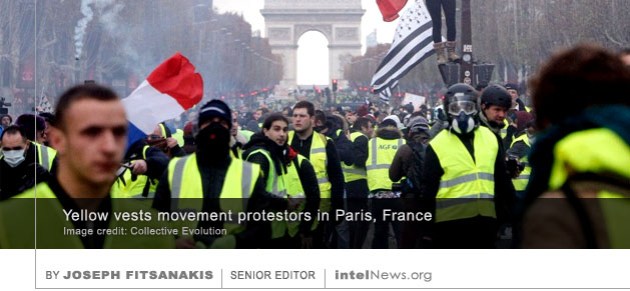 Intelligence and security services in France are investigating whether Russian involvement on social media and other platforms is playing a role in amplifying the so-called ‘yellow vests’ movement. Known in French as le mouvement des gilets jaunes, the campaign began online in May of this year as a popular protest against rising fuel prices and the high cost of living in France. In mid-November, the movement made its first public appearance with large demonstrations that have continued every weekend since then. Yellow vest protestors claim that tax increases are disproportionally affecting working- and middle-class people and that everyday life is becoming economically unsustainable in France. Some of the demonstrations have turned violent, and so far at least eight people have died as a result. The ensuing crisis has become the most significant threat to the government of Emmanuel Macron, as the protests are increasingly evolving into an anti-Macron rallies.
So far, the yellow vests campaign has been largely bipartisan, bringing together protestors from the entirety of the French political spectrum. Additionally, there are no identified leaders or coordinators of the movement. However, some suspect that Russian government operatives may be further-inflaming an already incensed protest movement. On Friday, The Wall Street Journal said that French security agencies were investigating potential involvement by the Kremlin in the yellow vests campaign. The paper quoted an unnamed French government cybersecurity official as saying that “there has been some suspect activity [and] we are in the process of looking at its impact”. The official was referring to the online activity of some leading social-media accounts involved with the yellow vests, which appear to also be “promoting Russian-backed coverage” of French politics. The Journal also cites Ryan Fox, a cybersecurity expert for the Texas-based firm New Knowledge, who claims that “several hundred accounts on Twitter and Facebook” that are involved in the yellow vests movement “are very likely controlled by Moscow”.
However, there is disagreement among cybersecurity experts about the extent of the Kremlin’s involvement in the yellow vests. Paris has previously accused Moscow of trying to influence the direction of French politics. In February of 2017, France’s Directorate-General for External Security warned that Russia had launched a secret operation to try to influence the outcome of that year’s French presidential election in favor of the far right. However, if such an effort existed, it failed to stop the rise to power of Emmanuel Macron. Since assuming the country’s presidency, Macron has been a leading international critic of Russia’s domestic and foreign policies. The Kremlin, therefore, has strong reasons to want to see a premature end to Macron’s presidency.
This does not necessarily mean that Moscow has been able to anticipate —let alone influence— the yellow vests movement, whose energy has surprised even the most experienced French political observers. The Journal notes that many leading Western cybersecurity bodies, including the Atlantic Council’s Digital Forensic Research Lab, have “not seen significant evidence of state-sponsored interference” in the yellow vests movement, whether by Russia or any other government. Facebook also said that its monitors have not uncovered any evidence of an organized campaign by Moscow to coax the yellow vests protests. The paper also cited Dimitri Peskov, a spokesman for the Kremlin, who categorically denied allegations that Russia was in any way involved in directing yellow vests activists.
► Author: Joseph Fitsanakis | Date: 17 December 2018 | Permalink
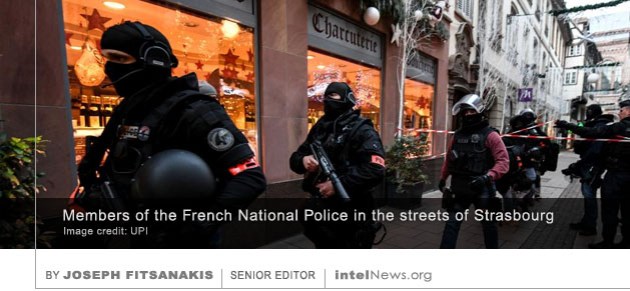 The terrorist attack in the French city of Strasbourg on December 11 raises important security concerns for Europe’s ability to defend itself against a
  Russia “paved the way” for last November’s seizure of Ukrainian Navy ships by launching a major cyber attack and disinformation campaign aimed at Ukraine, according to a cyber security firm and the European Union. In what has become known as the Kerch Strait incident of November 25, border service coast guard vessels belonging to the Russian Federal Security Service (FSB) opened fire on three Ukrainian Navy ships that were attempting to enter the Sea of Azov through the Kerch Strait. All three Ukrainian vessels, along with crews totaling 24 sailors, were captured by the Russian force and remain in detention. Ukraine condemned Russia’s action as an act of war and declared martial law in its eastern and southern provinces. But Moscow said the incident had been caused by a provocation by the Ukrainian government, in a desperate effort to increase its popularity at home. Meanwhile, the three Ukrainian ships and their crews remain in Russia.
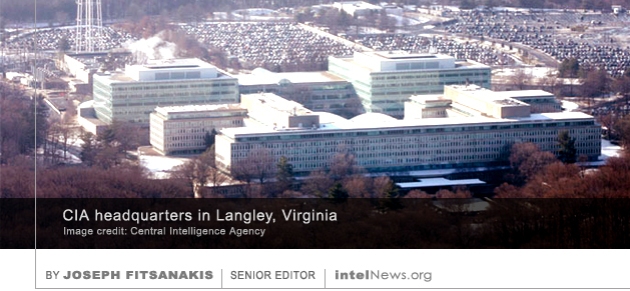 In a surprising departure from established practice, the United States Central Intelligence Agency has publicized the name of its incoming head of operations. Beth Kimber, a 34-year veteran of the Agency, will become the first woman in the CIA’s 70-year history to lead the Directorate of Operations. Officers in the Directorate of Operations, formerly known as the National Clandestine Service, spend their careers recruiting foreign agents to spy for the United States, while also carrying out covert operations around the world. This is also the first time that the CIA has chosen to publicly identify its Deputy Director for Operations —Kimber’s official title, abbreviated as DDO. Previous DDO have been undercover officers whose namse have remained undisclosed. Kimber’s promotion was
  A Russian former police officer, who is serving a prison sentence in Russia for having spied for the United States Central Intelligence Agency, has written an open letter to President Donald Trump, asking to be freed. Yevgeny A. Chistov was arrested by the Russian Federal Security Service (FSB) in 2014 on charges of spying for Washington. During his trial, he admitted having been recruited by the CIA when he worked as an officer in the police, Russia’s federal law-enforcement agency, which operates under the Ministry of Internal Affairs. Russian state prosecutors accused him of having established contact with the CIA in 2011. In 2015, he was
 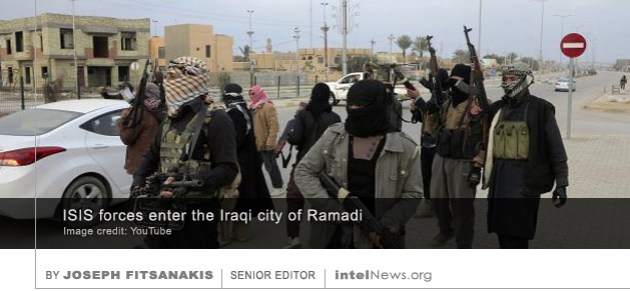 A report from the United States Department of Defense warns that the Islamic State is swiftly returning to its insurgent roots, as observers in Iraq and Syria caution that the group is witnessing a revival. It has been four years since the Islamic State —known then as the Islamic State of Iraq and Syria, or ISIS— conquered much of eastern Syria and more than a third of Iraq’s territory. But by the end of 2017, virtually the entirety of ISIS’ self-styled ‘caliphate’ had been obliterated by an ‘unholy alliance’ of US-backed Iraqi government forces, Iranian-supported Shiite militias, Kurdish guerillas and Western airpower.
 The daughter of the founder of Huawei Technologies, one of the world’s leading telecommunications hardware manufacturers, has been arrested in Canada, reportedly at the request of the United States. Meng Wanzhou (pictured, also known as Sabrina Meng) serves as Huawei’s deputy chair and chief financial officer. She is the daughter of Ren Zhengfei a former officer in the Chinese People’s Liberation Army, who established the company in 1988 and has since amassed a personal fortune estimated at $3.5 billion. By virtue of her family background and position in Huawei, Meng is often
 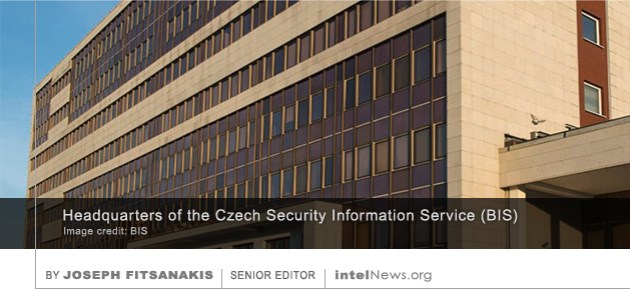 The main domestic intelligence agency of the Czech Republic has accused Russia of “the most serious wave of cyberespionage” to target the country in recent years. The claim was made on Monday in Prague by the Security Information Service (BIS), the primary domestic national intelligence agency of the Czech Republic. Details of the alleged cyberespionage plot are included in the BIS’
 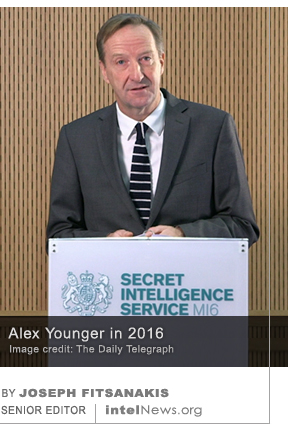 The director of Britain’s Secret Intelligence Service —known as MI6— has outlined the parameters of a new, “fourth generation of espionage”, which he said is needed to combat the “threats of the hybrid age”. Alex Younger, 55, is a career intelligence officer who joined MI6 in 1991, after serving in the British Army. He served as chief of global operations —considered the number two position at MI6— before being
  Saudi Crown Prince Mohammed bin Salman sent at least eleven text messages to the man in charge of the 15-member hit team that killed journalist Jamal Khashoggi last month, according to a classified report produced by the United States Central Intelligence Agency. The CIA report was leaked to The Wall Street Journal, which said in a
  The United States government plan to impose tighter visa restrictions and wider background checks on Chinese nationals studying at American universities, over espionage concerns. The news follows reports earlier this year that the administration of US President Donald Trump considered banning all Chinese nationals from studying at American universities. In October of this year, The Financial Times
  The Australian government has proposed a new law that would give intelligence officers broader powers to use firearms during undercover operations abroad. If it is approved by parliament, the new law would apply to the Australian Secret Intelligence Service (ASIS), a civilian intelligence agency that carries out covert and clandestine operations abroad. Modeled after Britain’s Secret Intelligence Service (MI6), ASIS was established in 1952, but its existence was not officially acknowledged by the Australian government until 25 years later, in 1977.
 A senior North Korea expert in the United States Central Intelligence Agency, who has been instrumental in the ongoing negotiations between Washington and Pyongyang, has tendered his resignation, according to sources. The official was
  A senior civil servant in the upper house of the French parliament has been arrested on suspicion of spying for North Korea, according to prosecutors. The news of the suspected spy’s arrest was first








Analysis: Iraq’s revenge campaign against Sunnis fuels new pro-ISIS wave
December 18, 2018 1 Comment
Today, after the destruction of the Islamic State’s self-declared caliphate, Iraq’s Shiite-dominated security and intelligence services have returned to Sunni-majority regions that were once ruled by ISIS. But their systematic campaign of human-rights violations against Sunnis, whom they see as ISIS collaborators, is playing into Islamist propaganda and fueling a new wave of rebellion against Baghdad, according to a new report by the Washington-based Pulitzer Center on Crisis Reporting. The report, authored by The New Yorker staff writer Ben Taub, warns that the Iraqi government has no strategy on how to reach out to Iraq’s disaffected Sunni Arabs. Even worse, a state-sanctioned campaign of revenge and intimidation is taking place throughout western Iraq, in which “hundreds of thousands of civilians are suffering at the hands of their liberators”, says Taub.
In areas that until a few months ago were ruled by ISIS, anyone —regardless of age or sex— perceived as having previously supported ISIS is outright killed or sent to concentration camps. For Iraqi security forces, says Taub, civilians who did not flee ISIS are seen as inherently suspicious. Bearded men are often viewed as displaying evidence of ISIS support, even though the militant group had a policy of punishing any man who did not grow a beard in accordance with Quranic directives. Most of these people, says Taub, are fired from their jobs, sent to prison, or worse are executed by the dozens and even hundreds. A handful are tried in a court of law each month, but these are usually show trials with a conviction rate of 98 percent, he adds. Family members of the accused rarely show up in court, fearing immediate arrest and imprisonment, which appears to be a regular occurrence. It is “not uncommon for relatives [of accused ISIS supporters] to be rounded up by the security forces and sent to remote desert camps, where they are denied food, medical services, and access to documents”, reports Taub.
These arbitrary arrests are happening alongside an untold number of battlefield executions —many captured on video by jubilant Shiite soldiers and militia members— and killings of prisoners in detention centers. Taub quotes an anonymous senior official in the Iraqi intelligence services who says that “this is not just revenge on ISIS. It is revenge on Sunnis”. The widespread criminality and brutality of the Iraqi security and intelligence forces “plays directly into the jihadis’ narrative”, says Taub, by convincing Sunni Arabs that they “cannot live safely under a government dominated by Shiites”. Ultimately, what is at stake is “whether the Iraqi government can win over the segment of the population for whom ISIS seemed a viable alternative”, concludes Taub, and warns of the possibility of another armed rebellion against Baghdad by what is left of Iraq’s Sunni minority.
► Author: Joseph Fitsanakis | Date: 18 December 2018 | Permalink
Filed under Expert news and commentary on intelligence, espionage, spies and spying Tagged with Analysis, corruption, Iraq, Islamic State, Islamist extremism