Ukrainian military intelligence commander killed in Kiev car explosion
June 28, 2017 1 Comment
 A senior military intelligence officer, who commanded a Ukrainian special-forces unit that fought against the Russians in eastern Ukraine, was killed on Monday when his car exploded in broad daylight in Kiev. Initially, the Ukrainian government sources simply said that the dead driver of the car was a member of the Ministry of Defense’s Main Directorate of Intelligence. Later, the casualty was identified as Colonel Maksim Shapoval, a senior commander of the Main Directorate of Intelligence, who led an elite special-forces unit. Subsequent media reports said that Colonel Shapoval’s unit had fought against Russian-backed guerillas in eastern Ukraine in the past year.
A police report said that Colonel Shapoval died instantly when his car exploded at an intersection in central Kiev. The explosion took place at 8:15 a.m. local time on Monday, and was reportedly caused by a powerful bomb that had been attached to the outer floor of the vehicle, right below the driver’s seat. A video taken at the scene of the explosion showed the charred frame of a silver-colored sedan in the middle of a city street, surrounded by debris.
A Ukrainian government spokesman said on Tuesday afternoon that Kiev was treating the incident as an act of terrorism. When asked about possible suspects, the spokesman said that Colonel Shapoval’s killing appeared to be the work of professionals. He added that investigators were looking for possible evidence of Russian state involvement in the attack. Authorities in Ukraine have repeatedly accused Russia of involvement in the extrajudicial killings of Ukrainian leaders or Russian dissidents since 2014, when Moscow illegally annexed the Ukrainian province of Crimea. Since then, the Kremlin is believed to be secretly supporting pro-Russian rebels who have taken over several regions of southeastern Ukraine. Ukraine’s Chief Military Prosecutor alleged on Tuesday that the killings of Colonel Shapoval and others were perpetrated by Russian intelligence operatives. He added that his office would launch a detailed investigation into Colonel Shapoval’s killing.
► Author: Joseph Fitsanakis | Date: 28 June 2017 | Permalink
 American intelligence services have made use of a little-known confidentiality exception to spy on the financial activities of foreign banks who have accounts with the United States Federal Reserve, according to Reuters. Established in 1913, the Federal Reserve System is the central banking structure of the US. It oversees and regulates the nation’s financial institutions, and is tasked with —among other things— maintaining the stability of the American financial system. Additionally, however, the Federal Reserve offers a host of financial services to official (government-owned or sanctioned) foreign institutions. Thus, over 250 foreign banks (typically central banks) from dozens of countries have deposited nearly $3.3 trillion in assets at the Federal Reserve Bank of New York, one of 12 Federal Reserve Banks in the US. Depositing assets at a US Federal Reserve Bank, allows these foreign ‘depository institutions’ to use the US Federal Reserve as a ‘custodial institution’. Through it, they get direct and immediate access to American debt markets, where they can trade directly in dollars — the reserve currency of the global economy.
 General Yuri Ivanovich Drozdov, who held senior positions in the Soviet KGB for 35 years, and handled a global network of Soviet undercover officers from 1979 until 1991,
 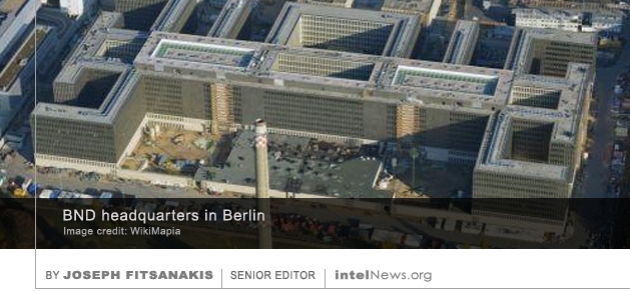 The foreign intelligence service of Germany spied on at least 4,000 targets in the United States from 1998 until 2006, according to a leaked document published yesterday by leading German newsmagazine Der Spiegel. The German investigative weekly said that the surveillance was carried out by the German Federal Intelligence Service, known as BND. The Hamburg-based magazine claimed to have in its possession a list of approximately 4,000 “selector keywords”, unique distinguishing terms, addresses or numbers that identify individual targets for surveillance. The list allegedly includes names, telephone or fax numbers, and email addresses of people that the BND had identified as worthy of individual attention between 1998 and 2006.
 The Mossad, Israel’s primary intelligence agency, is preparing to launch a technology investment fund that will support Israeli-based hi-tech startups, with an eye to utilizing cutting-edge technologies in its spy operations. Israeli spy services are known internationally for their advanced use of technology in intelligence collection and special operations. But the planned investment fund is expected to systematize the Mossad’s use of cutting-edge technological solutions to intelligence challenges. It is
 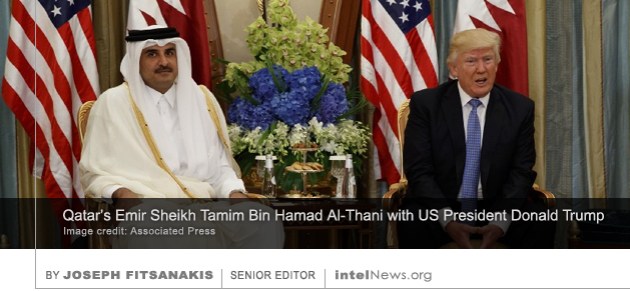 A former director of Qatar’s intelligence agency broke ranks with the government of Qatar and accused Doha of supporting terrorism. He also warned that the United States, which has a base in Qatar, would not allow the presence of foreign troops there.
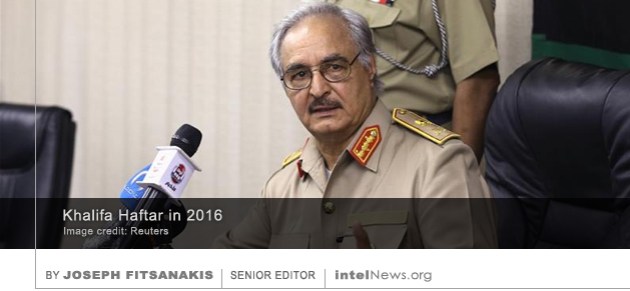 Secret military assistance from the United Arab Emirates and Saudi Arabia, which violates United Nations sanctions, is helping Libya’s eastern-based rebels prevail in the civil war there, according to a new report. Libya has remained in a state of anarchy since 2011, when a popular uprising backed by the West and its allies led to the demise of the country’s dictator, Muammar Gaddafi. Currently the strongest faction in the post-2011 Libyan Civil War is the eastern-based Tobruk-led Government, which is affiliated with the Libyan National Army (LNA). The commander of the LNA is Field Marshal Khalifa Haftar, an old adversary of Colonel Gaddafi, who lived in the US under Washington’s protection for several decades before returning to Libya in 2011.
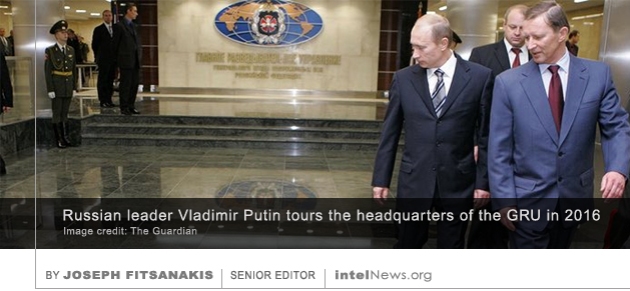 New information about carefully targeted attempts by Russian operatives to compromise the November 2016 presidential elections in the United States have emerged in a newly published intelligence document. The document, which dates from May of this year, was produced by the US National Security Agency and
  The security map of the Middle East changed within a few hours on Wednesday, when the Islamic State managed to strike Iran for the first time. Six assailants —five men and a woman— stormed the Islamic Consultative Assembly, which serves as the parliament of Iran, and the mausoleum of the founder of the Islamic Republic, Ayatollah Khomeini. By the time they killed themselves, or were killed by security forces, the six had murdered 12 people and injured over 60. The Islamic State, which carried out the attack, had warned for several months that it would launch a direct assault at the heart of
  the world’s largest Shiite state. It tried to do so before, several times, and failed. But
 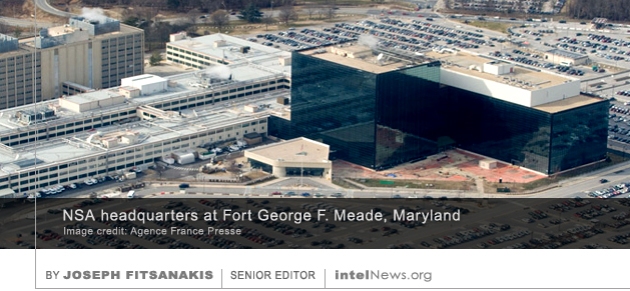 At first sight, the case of Reality Leigh Winner, a United States federal contractor who has been
  between leakers based on their motives. It does, however, distinguish between simple leakers and whistleblowers. If a US government employee uncovers evidence of abuse of power, or becomes aware of a specific and critical threat to the security of Americans, he or she is required to notify his or her superiors. If the latter refuse to take action, then the employee is justified under the law in taking all necessary actions to warn the public of impending peril. That is precisely the function of the 1989 Whistleblower Protection Act, which affords protection to insiders who expose abuses of authority, or a concrete and critical threat to public safety.
  Russian espionage in the United States has become increasingly sophisticated and brazen, and American counterintelligence professionals are finding it difficult to contain it “after years’ worth of inattention” according to sources.
  Ukrainian security service personnel raided the offices of a Russia-based internet search engine firm in two cities on Tuesday, as part of a treason investigation. The probe is reportedly related to the ongoing dispute between Kiev and Moscow, which intensified after 2014, when Russia unilaterally annexed the Russian district of Crimea. The Ukrainian government also accuses the Kremlin of clandestinely supporting pro-Russian insurgents in southeastern Ukraine, something that Moscow denies.
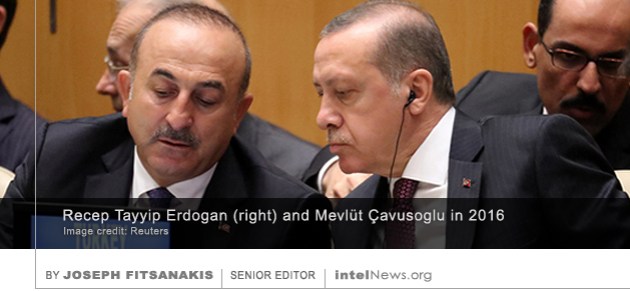 In a further sign of worsening relations between Turkey and the West, Turkey’s foreign minister has accused Western countries of secretly employing journalists to spread “terrorist” propaganda against his country. His claims come just days after European leaders strongly criticized Ankara for imprisoning foreign journalists without trial. During a meeting of North Atlantic Treaty Organization (NATO) leaders in Brussels last week, the German Chancellor Angela Merkel protested the arrest of Deniz Yücel, a reporter for German newspaper Die Welt, who was arrested in Turkey in February. Yücel, who is a German citizen, has remained imprisoned without trial for more than three months. Germany’s protests were
 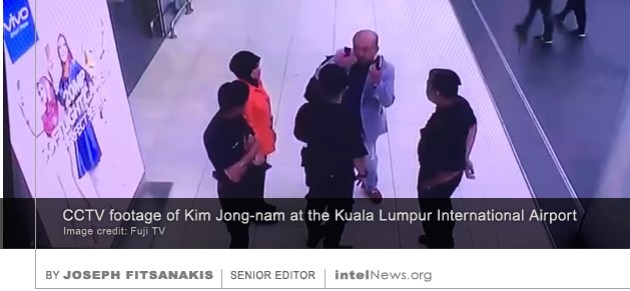 The exiled half-brother of North Korea’s leader, who was assassinated in Malaysia in February, is thought to have met with a man believed to be an American intelligence officer shortly before he was killed, according to reports. Kim Jong-nam the grandson of North Korea’s founder Kim Il-Sung,







North Korea secretly imports Russian oil through Singapore, says defector
June 29, 2017 2 Comments
From the mid-1990s until his 2014 defection, Ri spent nearly three decades in senior positions inside the DPRK. These included the chairmanship of the board of the Korea Kumgang Group, a state-managed firm that oversees large-scale economic activity in North Korea, such as constructing energy networks and commissioning oil and natural-gas exploration. Between 1998 and 2004, Ri lived in the Chinese city of Dalian, where he headed the local branch of the Korea Daesong Trading Corporation. The Pyongyang-based company facilitates North Korea’s exports to China in exchange for Chinese goods and products.
But Ri’s mentor, Kim Jong-il, died in 2011. His son and successor, Kim Jong-un, engaged in a brutal campaign to remove his father’s advisers and replace them with his own people. During that time, said Ri, thousands of senior and mid-level officials were purged, some physically. Frightened and disillusioned, Ri defected with his family to South Korea in October 2014; fifteen months later, in March 2016, he arrived in the United States. On Tuesday, the Voice of America published Ri’s first public interview since his defection.
Among other things, the former Bureau 39 official said that the North Korean regime sustains itself with the help of oil it imports from nearby countries. One of the regime’s main sources of energy is Russia, which supplies Pyongyang with between 200,000 and 300,000 tons of oil every year. But the trade does not occur directly, said Ri. Moscow sells the oil to energy-trading companies in Singapore. These mediators then sell the oil to the DPRK through separately agreed contracts, so that Russia does not appear to be providing Pyongyang with desperately needed oil. The so-called “Singapore line” was established by North Korea in the 1990s, said Ri, and appears to still be active. In addition to Russian oil, the DPRK imports approximately 500,000 tons of oil per year from China, through pipelines, according to Ri.
► Author: Joseph Fitsanakis | Date: 29 June 2017 | Permalink
Filed under Expert news and commentary on intelligence, espionage, spies and spying Tagged with Bureau 39 (North Korea), defectors, energy resources, News, North Korea, Ri Jong-ho, Russia, Singapore