US Special Forces carry out 100 missions ‘at any given time’ in Africa
May 23, 2017 Leave a comment
 Teams of United States Special Forces are carrying out “nearly 100 missions at any given time” in the continent of Africa, according to American military documents released to the media. Operating under the US Special Operations Command (USSOCOM), US Special Forces are trained to carry out missions using unconventional tactics. Much of their work is classified. However, a Freedom of Information Act request by the New York-based Vice News has revealed extensive deployment of US Special Forces in Africa in recent times.
Information provided to Vice News by the USSOCOM appears to show that operations by US Special Forces in Africa have seen dramatic growth in recent years, possibly more than any other region of the globe. According to documents, US Special Forces in Africa represented just over 1 percent of all US Special Forces personnel stationed abroad in 2006. By 2010, that number had risen to approximately 3 percent —a significant increase but still relatively low in comparison to USSOCOM deployment in other regions of the world. But by 2016, over 17 percent of US Special Forces stationed abroad were based in Africa. Information unearthed by Vice News shows that 1,700 US Special Forces troops were stationed in 20 different African countries in 2016. This number indicates that there are now more US Special Forces troops stationed in Africa than in any other region of the world barring the Middle East.
Vice News said it obtained a report by US Special Operations Command Africa (SOCAFRICA), which states that US Special Forces were deployed in “at least 32 African nations in the 12 months of 2016”. Only the Middle East saw more deployments of US Special Forces than Africa. The report’s author, General Donald Bolduc, the commander of SOCAFRICA, wrote that the increasing presence of US Special Forces in the continent reflects the significance of the region for the US. “Africa’s challenges could create a threat that surpasses [that faced] from conflict in Afghanistan, Iraq and Syria”, wrote General Bolduc. The report does not specify how many missions USSOCOM carries out per year. The US Department of Defense did not respond to questions on the subject.
► Author: Joseph Fitsanakis | Date: 23 May 2017 | Permalink
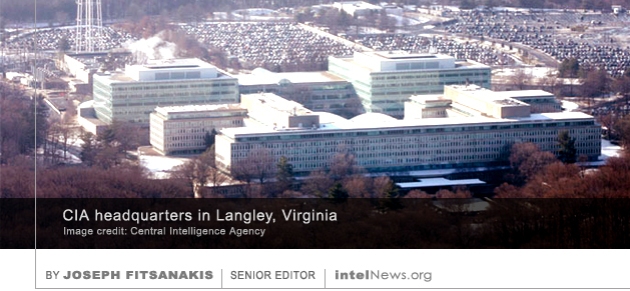 A few years ago, China busted an extensive network of secret operatives run by the United States Central Intelligence Agency. The CIA has yet to recover from the massive blow to its operations, say sources. The CIA has devoted substantial resources to gathering intelligence in China in recent years, and has painstakingly built a network of spies. The latter are Chinese nationals recruited by CIA officers to spy on Beijing on behalf of the United States. But,
 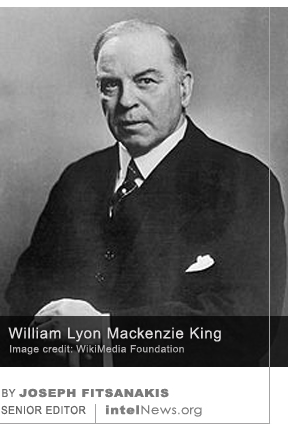 Canadian officials speculated that Soviet spies stole a missing volume from the private diary collection of William Lyon Mackenzie King, Canada’s longest-serving prime minister, who led the country in the run-up to the Cold War. A liberal anticommunist, Mackenzie King was Canada’s prime minister from 1925 to 1948, with a break from 1930 to 1935. He is known for having led the establishment of Canada’s welfare state along Western European standards.
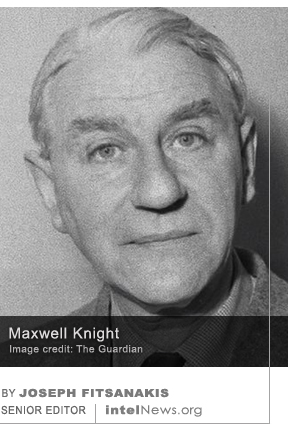 A new biography of famed British Security Service spymaster Maxwell Knight reveals that a number of prominent British communists were secret government agents in the 1930s. After serving in the British Royal Navy during World War I, Knight was recruited by the Security Service, Britain’s domestic intelligence agency, which is commonly known as MI5. He eventually rose to lead the agency’s Section B5(b), which was responsible for using agents to infiltrate political groups deemed radical by the authorities. During the interwar years, under Knight’s leadership, Section B5(b) focused largely on British
 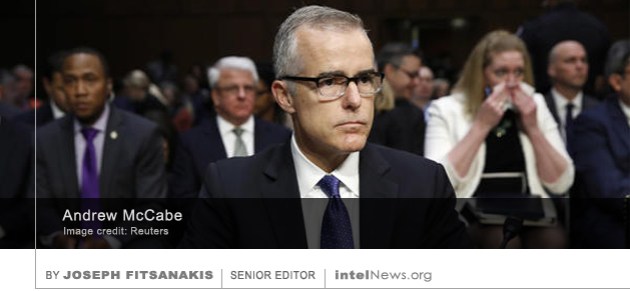 The interim director of the Federal Bureau of Investigation has told an intelligence panel in the United States Senate that he will not hesitate to report any attempts by the White House to interfere with an official investigation into Russia’s role in the 2016 presidential election. Andrew McCabe assumed the leadership of the FBI on Tuesday, after US President Donald Trump abruptly fired the Bureau’s director, James Comey. A trained lawyer who joined the FBI in 1996, McCabe amassed significant experience in countering organized crime and terrorism before being appointed Deputy Director of the Bureau in 2016.
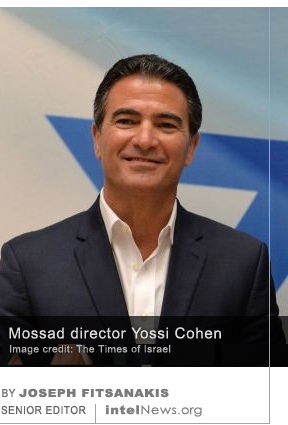 The combined budget of the two primary intelligence agencies of Israel, the Mossad and the Shin Bet, has doubled in the past decade, according to a report issued by the Israeli Ministry of Finance. Shin Bet is Israel’s domestic intelligence service, and is primarily responsible for counterterrorism and counterintelligence. The Mossad is Israel’s primary intelligence service, which means that it collects intelligence from foreign targets. The secretive agency also conducts covert and clandestine operations when authorized to do so by Israel’s government. The two agencies tend to work together with varying degrees of succces, but have distinct budgets.
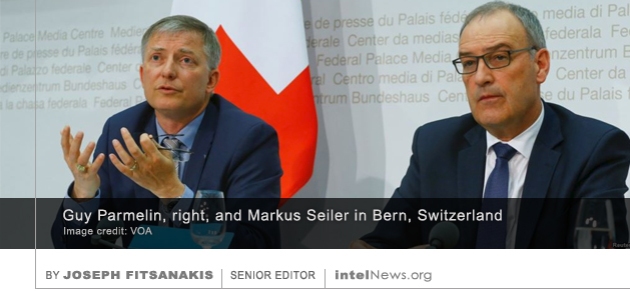 Senior Swiss government officials, including the defense minister and the director of the country’s intelligence agency, have defended Switzerland’s right to spy on European tax-fraud investigators who meddle in Swiss affairs. Earlier this week, German authorities
  Authorities in Germany have announced the arrest of a Swiss national who was allegedly spying on the activities of German tax-fraud investigators in Frankfurt. According to prosecutors in the German state of Hesse, of which Frankfurt is the largest city, the Swiss man was arrested on Friday and is currently in custody. He has been identified only as Daniel M., and is believed to be in his mid-50s. According to news reports, German counterintelligence officers had been monitoring the suspect for over a year. They were issued a warrant for his arrest in December of last year, but waited until he was on German soil to arrest him. He was arrested at Frankfurt Airport.
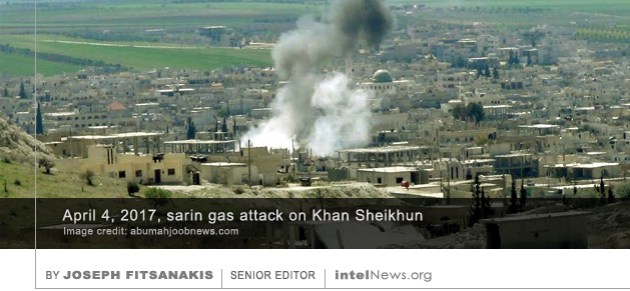 A comprehensive report released yesterday by the French Intelligence Community concludes with certainty that the government of Syrian President Bashar al-Assad was behind the April 4 sarin gas attack in northwestern Syria. The report, a “national evaluation” based on France’s own intelligence sources and scientific analysis of samples collected from the site of the attack, indicates that the poison gas used in the attack came from stockpiles that belong to the Syrian government.
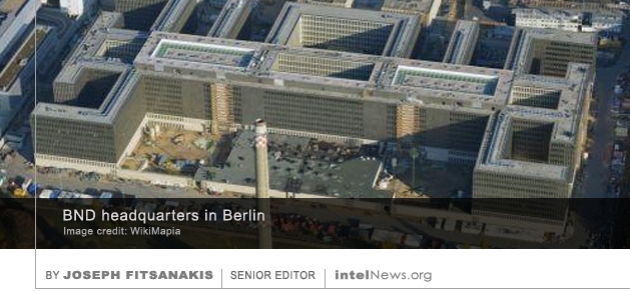 Iranian intelligence operatives are the second most active in Germany after Russian spies, with much of their activity focusing on Israeli targets in the country, according to the German Interior Ministry. The information is contained in a report that was issued in response to a request by a member of Germany’s Bundestag last week. It states that Iranian spies have engaged in nearly two dozen known intelligence operations on German soil since 2007, and have even targeted individuals for assassination.
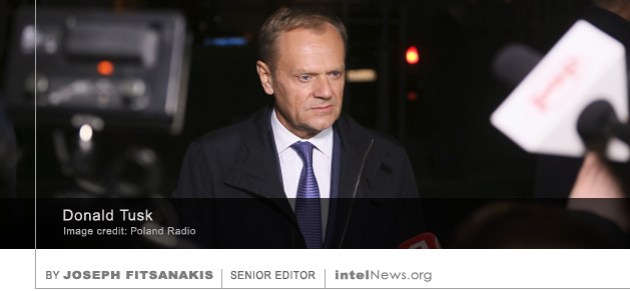 Senior European Union official Donald Tusk was grilled for several hours on Wednesday, in the context of a Polish government probe into an intelligence agreement between Warsaw and Moscow. But Tusk, who is the current president of the European Council, and served as Poland’s prime minister from 2007 to 2014, dismissed the probe as politicized and said it was deliberately designed to harm his political career. The investigation was launched by the government of Poland earlier this year. Its stated goal is to investigate an agreement that was struck in late 2013 between Poland’s Military Counterintelligence Service (MCS) and the Federal Security Service (FSB) of the Russian Federation. The agreement allegedly took place in secret, but was never implemented. The government of Poland canceled it in 2014, after accusing Moscow of illegally annexing the Ukrainian region of Crimea.
 The director of Nigeria’s powerful intelligence agency has been suspended on orders of the president, after a massive stash of cash totaling $43 million was found in an apartment in Lagos. The money was discovered by investigators working for the Nigerian Economic and Financial Crimes Commission (EFCC). Based in Abuja, the EFCC is a high-profile body that was created in 2003, in response to accusations by the international community that Nigeria is used as a major base for global money-laundering schemes.
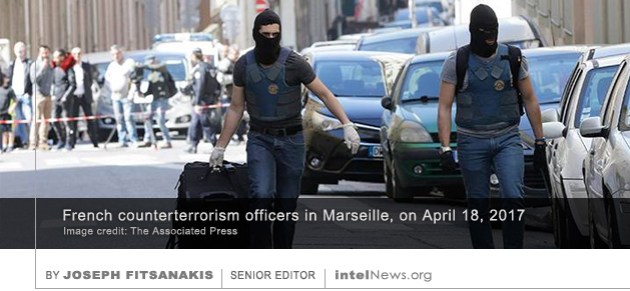 A tip from British intelligence helped French counterterrorist officials arrest two men who are thought to have been in the final stages of planning a large-scale terrorist attack, according to French media. Government sources in Paris say officers from the country’s domestic intelligence agency, DGSE,
 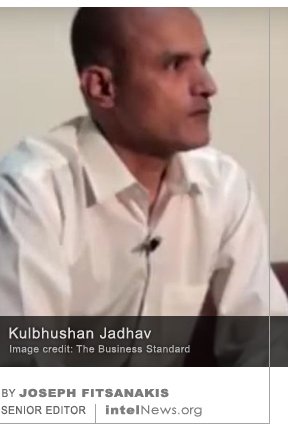 Analysts warn that South Asia may witness its worst crisis since the 2008 Mumbai attacks if Pakistan carries out its threat to execute an Indian former naval officer whom it accuses of espionage. Authorities in Islamabad say Kulbhushan Jadhav (pictured) worked for the Indian Navy until 2003, when he was recruited by India’s Research and Analysis Wing (RAW), a government intelligence agency that conducts operations abroad. The Pakistanis claim that Jadhav was arrested in southwest Pakistan in 2016, where he was engaged in funding and training secessionist militants from Pakistan’s Baluch minority. The Baluch are an Iranic people, most of whom live in a region known as Baluchistan, which is split between Iran and Pakistan. There are populous Baluch communities in the southern city of Karachi, one of Pakistan’s most populous ports. Some members of the Baluch community have secessionist aspirations and are accused of terrorism by Iranian and Pakistani authorities.








Israel revises intel-sharing rules with US, after alleged disclosure to Russians
May 25, 2017 1 Comment
During the meeting, the US President allegedly gave the two Russians details about plans by the Islamic State to smuggle explosives onboard airplanes, by hiding them inside laptop computers. However, according to reports in the American press, the information shared by Mr. Trump originated from Israel, which had voluntarily shared it with US intelligence. What is more, Tel Aviv had not authorized Washington to share the precise details behind this intelligence with other countries. Some reports in the US media suggest that Mr. Trump shared the Israeli-derived intelligence with the Russians in such a way as to expose ‘sources and methods’ —that is, the most sensitive aspects of the intelligence business, which intelligence agencies typically never disclose to adversaries. Additionally, even though the US president claims he never disclosed the source of the information, American media reports suggest that the Russians could easily determine that it came from Israel.
Israeli sources allegedly complained strongly to Washington, claiming that the intelligence shared by the US president “had put an [Israeli] agent’s life in peril”. Tel Aviv’s reaction appears to have been swift. On Wednesday, Israel’s Defense Minister Avigdor Liberman said in an interview that Tel Aviv promptly “did our checks” and “clarified [things] with our friends in the United States”. Speaking to Israel Army Radio, the official radio station of the Israel Defense Forces, Mr. Liberman said that Israel had done “a spot repair”, prompting the Voice of America to claim that the Jewish state had altered its intelligence-sharing methods with the US. Liberman was asked by the Israel Army Radio to clarify, but refused to specify what changes had been made in the Israel-US intelligence-sharing arrangements. He only added that “there is [now] unprecedented intelligence cooperation with the United States”.
► Author: Joseph Fitsanakis | Date: 25 May 2017 | Permalink
Filed under Expert news and commentary on intelligence, espionage, spies and spying Tagged with Avigdor Lieberman, intelligence cooperation, Israel, News, Russia, sources and methods, United States