UK charges three Bulgarians with spying for Russia in ‘major national security’ case
August 15, 2023 4 Comments
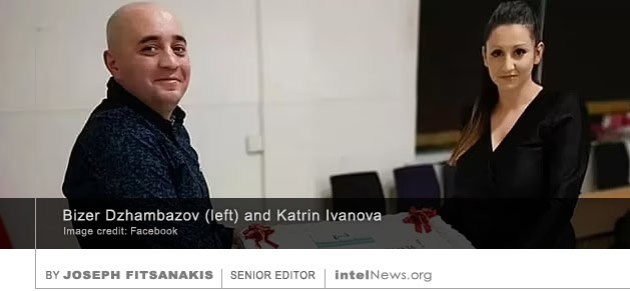 AUTHORITIES IN BRITAIN HAVE charged three Bulgarian nationals with spying for Russia, as part of “a major national security investigation” that led to at least five arrests as early as last February. Two of the Bulgarians appear to be legally married. They have been identified as Bizer Dzhambazov, 41, and Katrin Ivanova, 31, who live in Harrow, a northwestern borrow of Greater London. The third Bulgarian, Orlin Roussev, 45, was arrested in Great Yarmouth, a seaside town in the east coast identity dof England. None of the suspect appears to have a formal diplomatic connection to either Bulgaria or Russia.
The Bulgarians were reportedly arrested in February of this year by the Counter-Terrorism Command of the Metropolitan Police, whose law enforcement mandate includes working on counterespionage cases. Two other individuals who were arrested at the time have not been charged or named. The three suspects have been charged under Section 4 of the United Kingdom’s Identity Documents Act 2010, which prohibits the possession of fake identity documents with “improper intention” and with the owner’s knowledge that they are fake. According to British government prosecutors, the suspects possessed forged passports and identity cards for Spain, France, the United Kingdom, Croatia, Italy, Greece, Bulgaria, the Czech Republic, and Slovenia.
Dzhambazov and Ivanova are believed to have moved to the United Kingdom as a couple in 2013. Both worked in the British healthcare sector —Ivanova as a laboratory assistant for a private company and Dzhambazov as a driver for a hospital. Roussev moved to the United Kingdom in 2009 and worked on the technical side of the financial services industry. He claims to have worked as an adviser for the Ministry of Energy of Bulgaria. He also claims to have previously owned a private company that operated in the area of signals intelligence (SIGINT), which involves the interception of electronic communications.
Bulgaria was one of the Soviet Union’s closest allies during the Cold War. Relations between Bulgaria and Russia plummeted in the 2000s, but pro-Russian sentiments continue to survive among some nationalist segments of the Bulgarian electorate. In June of this year, Kiril Petkov, the leader of Bulgaria’s We Continue the Change party, which today backs Bulgaria’s Prime Minister, Nikolai Denkov, spoke publicly about “Moscow-backed agents” operating inside Bulgaria’s intelligence services. Petkov proposed an ambitious plan to reform the Bulgarian intelligence services in order to “diminish the influence of Russia”. He proposed to do this through the administration of “integrity and ethical tests” to intelligence personnel.
► Author: Joseph Fitsanakis | Date: 15 August 2023 | Permalink
 A CHINESE GOVERNMENT EMPLOYEE gave “core information” about China’s military to the United States, after he was recruited by a Central Intelligence Agency (CIA) officer in Italy, a Chinese state agency has said. The allegation was made in a statement that was issued on Friday by China’s civilian intelligence agency, the Ministry of State Security (MSS), on its WeChat social media account.
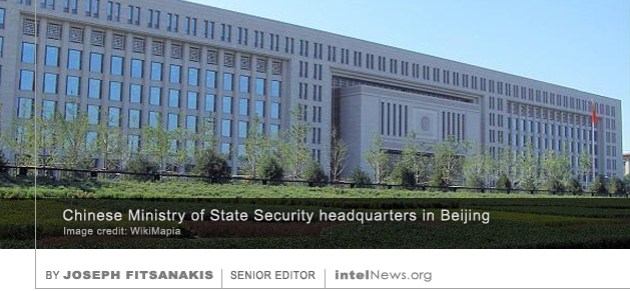 THE MODERNIZATION OF CHINA’S intelligence community is without parallel in recent history and has even outpaced the funding increases given to the Chinese military, a British government report has concluded. According to the same report, the Chinese government spends more on what it perceives as domestic threats than on external targets involving Western countries and their allies.
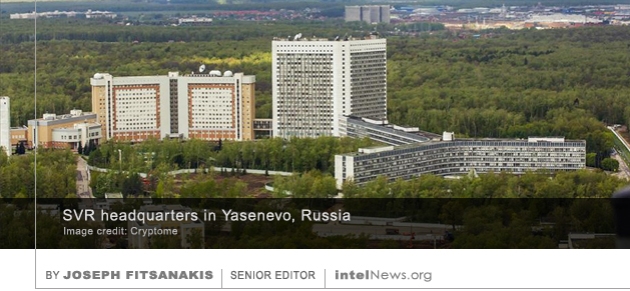 MEMBERS OF A PROLIFIC hacker group that many associate with Russian intelligence impersonated Microsoft technicians in order to compromise nearly 40 government agencies and companies around the world. Microsoft security researchers
  THE BRAZILIAN GOVERNMENT IS blocking requests from the United States and Russia to extradite an alleged Russian deep-cover spy, whose forged Brazilian identity papers were discovered by Dutch counterintelligence. Sergey Cherkasov was
 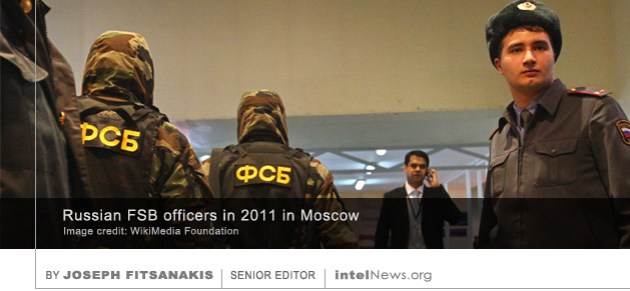 AN INVESTIGATIVE REPORT BY the Wall Street Journal discusses a little-known Russian counterintelligence unit that targets foreign diplomats in ways that often “blur the lines between spycraft and harassment”. Among other activities, this secretive unit is likely behind a string of operations targeting American citizens, which have led to the arrest of at least three of them since 2018. These include the Wall Street Journal correspondent Evan Gershkovich, who earlier this year became the first American reporter to be held in Russia on espionage charges since the Cold War.
 CONTRARY TO EARLIER CLAIMS that the German intelligence agencies failed to anticipate last month’s showdown between PMC Wagner and the Kremlin, German intelligence did in fact have foreknowledge of the mercenary group’s uprising, a new investigative report has concluded. The report further claims that German intelligence had unique and real-time insights into the negotiations between Wagner PMC leader Yevgeny Prigozhin and Belarussian President Aleksandr Lukashenko, who intervened in the dispute.
 AUTHORITIES IN BRAZIL HAVE launched a nationwide probe into the abuse of the country’s citizenship documentation system by Russian spies, who are allegedly using it to build forged identities.
 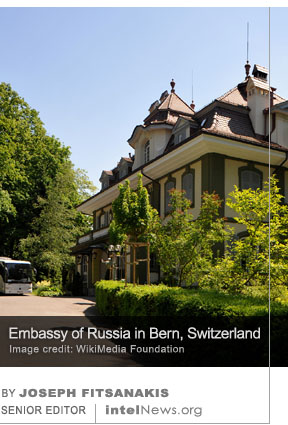 INTENSIFYING COMPETITION BETWEEN THE superpowers has turned Switzerland into an espionage battlefield, with more foreign spies being active there than in most other European countries, according to a new report. The
 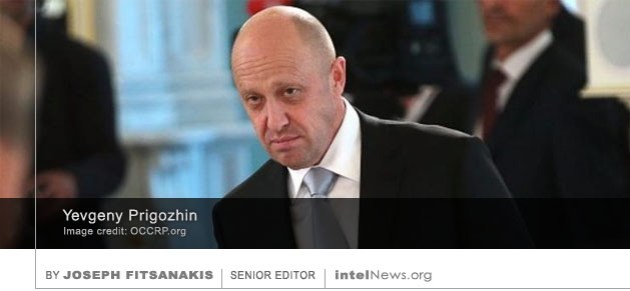 IN THE EARLY HOURS of June 23, PMC Wagner leader Yevgeny Prigozhin declared the launch of an armed campaign against the Ministry of Defense of the Russian Federation. Within hours, several thousand soldiers belonging to Wagner, one of the world’s largest private military companies, had abandoned their positions in eastern Ukraine and were en route to Moscow. Their mission, according to Prigozhin, was to arrest Minister of Defense Sergei Shoigu and Chief of the General Staff Valery Gerasimov, and try them for mismanagement and corruption.
 Wagner leader has repeatedly expressed his dismay at being viewed as an outsider by the Ministry of Defense, which it views as an elitist and incompetent bureaucracy. His experience in Ukraine, where Wagner’s forces faced stiff resistance from the local population and the Ukrainian military alike, added fuel to his rage against a host of Russian defense officials. Prigozhin has been voicing his denunciations of the way these officials have managed the war since March of 2022, just two weeks into the invasion of Ukraine.
 THE RUSSIAN INTELLIGENCE SERVICES planned to assassinate a Russian former intelligence officer, who had defected to the United States and was living in an apartment complex in Florida, according to a new report. The alleged assassination plan is discussed in the forthcoming book Spies: The Epic Intelligence War Between East and West (Simon and Schuster), authored by Harvard University academic Calder Walton.
 THE FORMER DEPUTY DIRECTOR of Luxembourg’s intelligence service, who is wanted by the United States for his role in a $4 billion cryptocurrency scam, reportedly vanished last month while under house arrest in France. Frank Schneider, 53, a citizen of Luxembourg, served as deputy director for operations in Luxembourg’s spy agency, the Service de Renseignement de l’État Luxembourgeois (SREL). In 2008, he left that post to start his own security and consultancy firm, Sandstone. His name came up frequently in the context of a
  THE 49-PAGE GRAND JURY indictment, filed last week in Florida by the United States Department of Justice, contains 37 criminal charges against former president Donald Trump. The charges can be summarized into a two-fold accusation: Trump is alleged to have stolen more than 300 classified documents upon leaving the White House in January 2021. Moreover, he allegedly schemed with a group of advisors and aides in order to obstruct efforts by the government to retrieve the stolen documents. Both accusations are spelled out in stark detail in
 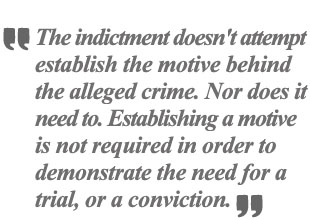 does it need to. Establishing a motive is not required in order to demonstrate the need for a trial, or indeed a conviction. Given the high stakes of this case, however, establishing a motive can provide much-needed clarity in the public sphere.
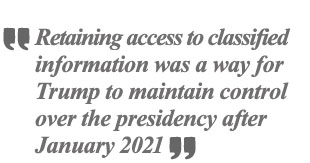 his determination to keep them in close proximity to his office and sleeping quarters.
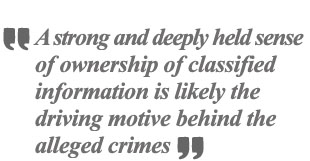 more pugilistic desires”, according to the paper. His attitude was not a show. It was sincere. Moreover, there is no reason to believe that it has subsided since his indictment.
 A SERIES OF COORDINATED drone strikes that struck Moscow last week were not random, but may in fact have targeted the homes of senior Russian intelligence officials, according to a new report by an American television network, which cited knowledgeable sources and data by an open-source research firm.








Eighth person detained in sprawling Taiwanese probe of Chinese spy ring
August 21, 2023 1 Comment
On January 6 of this year, a retired Taiwanese Air Force colonel, identified only by his last name, Liu, was arrested for spying. According to court documents unsealed at the Taiwan High Court branch in Kaohsiung, Liu retired from the Air Force 2013. Soon afterwards, he began business dealings in China. It was during one of his trips to China when Liu was allegedly recruited by the Chinese government. He then carried out espionage operations on behalf of Beijing for approximately eight years.
Throughout his espionage activities, Liu allegedly used his military contacts to recruit six active-duty Taiwanese Air Force and Navy officers to carry out espionage, in return for monetary payments. The six active-duty military officers were arrested along with Liu on January 6. In April of this year, all seven individuals were formally charged with spying for China, in violation of Taiwan’s Classified National Security Information Protection Act.
Taiwanese government prosecutors alleged that each member of the spy ring received between NT$200,000 and NT$700,000 (approximately US$6,500-23,000) for agreeing to spy for Beijing. As the principal agent, Liu received individual bonuses of between NT$30,000 and NT$100,000 (US$1,000-3,200) each time he gave his Chinese handlers information gathered by one of the members of the spy ring.
On August 16, the Taiwanese government announced that one more individual, referred to as “a field officer” was detained on suspicion of spying for China. The suspect was identified only by his last name, Cheng. He was reportedly arraigned in the Taiwan High Court branch in Kaohsiung, the same court that last January delivered espionage charges against the other seven suspects involved in the spy ring investigation. All eight suspects have been denied bail. Their trial has not yet been set.
► Author: Joseph Fitsanakis | Date: 21 August 2023 | Permalink
Filed under Expert news and commentary on intelligence, espionage, spies and spying Tagged with China, espionage, HUMINT, military intelligence, News, Taiwan