Crisis looms over Pakistan’s impending execution of alleged Indian spy

Kulbhushan JadhavAnalysts warn that South Asia may witness its worst crisis since the 2008 Mumbai attacks if Pakistan carries out its threat to execute an Indian former naval officer whom it accuses of espionage. Authorities in Islamabad say Kulbhushan Jadhav (pictured) worked for the Indian Navy until 2003, when he was recruited by India’s Research and Analysis Wing (RAW), a government intelligence agency that conducts operations abroad. The Pakistanis claim that Jadhav was arrested in southwest Pakistan in 2016, where he was engaged in funding and training secessionist militants from Pakistan’s Baluch minority. The Baluch are an Iranic people, most of whom live in a region known as Baluchistan, which is split between Iran and Pakistan. There are populous Baluch communities in the southern city of Karachi, one of Pakistan’s most populous ports. Some members of the Baluch community have secessionist aspirations and are accused of terrorism by Iranian and Pakistani authorities.

Soon after Jadhav’s arrest in March 2016, the Pakistani military released excerpts of an alleged videotaped confession by the Indian former naval officer. In it, Jadhav can be seen confessing to having worked on instructions by the Indian government to inflame ethnic divisions in Pakistan, from 2013 until his arrest. Last month, a secret military court in Pakistan sentenced Jadhav to death on charges of espionage. India, however, has rejected Pakistan’s allegations, saying that Jadhav’s confession was extracted through torture. The Indians claim that Jadhav was kidnapped by Pakistani operatives in Iran and brought to Pakistan by force. Indian officials dismissed Islamabad’s claim Jadhav was carrying his Indian passport when the Pakistanis captured him, saying that no undercover intelligence officer operating abroad would be carrying an Indian passport. New Delhi has warned of “serious consequences” if Pakistan engages in “premeditated murder” by executing Jadhav.

Some observers have noted that Jadhav was tried by a secret court martial, which signifies a radical break from standard practice. Moreover, the public announcements about his fate were made by the Pakistani military, rather than the civilian government, which is unprecedented. This leads some analysts to the conclusion that the Jadhav case is being handled solely by the military, which is trying to use Jadhav’s case to dissuade the government in Islamabad from reaching out to India with an offer for negotiations. There are also suggestions that the timing of Jadhav’s sentence might indicate that Islamabad hopes to exchange him for one or more of its intelligence officers that are being held by India.

Author: Joseph Fitsanakis | Date: 17 April 2017 | Permalink

Pristine Cold War-era wiretapping rooms uncovered in Slovenian hotel

Hotel JamaFour hidden communications-surveillance compartments which are believed to date back to the Cold War, have been found in one of the most prestigious hotels of the former Yugoslavia. The discovery was made during an extensive renovation project that was recently completed in the Hotel Jama. The hotel is located in the southeastern Slovenian city of Postojnska, near the Italian border. For over a century, Postojnska has been famous for its network of limestone caves, which are among the largest in the world. Eager to cater to Italian, Austrian and other Western tourists, the government of Yugoslavia began construction on Hotel Jama in 1969. The hotel opened its doors in 1971, amidst much publicity and fanfare. It eventually became known as one of the most luxurious hotels in the communist world.

As the hotel’s reputation soared, the government of Yugoslavia began hosting foreign dignitaries there. Though socialist, the government of Yugoslavia never became an integral member of the communist bloc, preferring a policy of nonalignment. Because of that, it was courted by both East and West, with many Western leaders and other officials visiting the country regularly. On many occasions, they would use Hotel Jama as a retreat. Numerous world leaders stayed there with their entourage, escorted by Yugoslavia’s longtime communist leader Josip Broz, known commonly as Tito.

Today the hotel is situated on the territory of Slovenia, a small mountainous state of two million people, which declared its independence from Yugoslavia in 1991. The regional instability caused by the Yugoslav Wars of the 1990s nearly demolished Slovenia’s tourism industry, and Hotel Jama was forced to declare bankruptcy. In 2010, under new ownership, the hotel underwent major renovations. These were completed in 2016, when the hotel opened its doors to the public once again. It was during these renovations that construction crews discovered the surveillance rooms. The four compartmented rooms were found behind a large door made of steel at the back of the hotel, and are adjacent to a network of limestone caves, for which the area is famous.

News reports said the four rooms feature 1970s-era wiretapping equipment, most of which appears to be in pristine condition. There is a thick layer of dust over all the surfaces, which indicates that the rooms have not been used in several decades. The construction crews also found sets of cables that run from the surveillance compartments to several guest rooms in the hotel’s original wing that dates to the early 1970s.

Experts suggest that the rooms were built in the early stages of the hotel’s construction in the late 1960s. The equipment was probably operated by the State Security Service (SDB), Yugoslavia’s internal security police. It is believed that the surveillance facilities were used to facilitate the systematic wiretapping of foreign dignitaries and delegations that frequented the hotel during the Cold War. Hotel Jama’s administration said on Wednesday that there are plans to turn the surveillance rooms into part of an exhibit on the Cold War history of the establishment.

Author: Joseph Fitsanakis | Date: 13 April 2017 | Permalink
Mystery compound in Nicaragua shows Russia’s resurgence in Americas, say experts

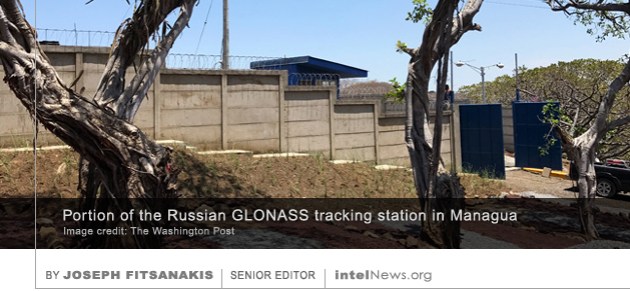
GLONASS ManaguaA Russian facility built on a hillside facing the United States embassy in the Nicaraguan capital Managua is seen by some experts as symptomatic of Russia’s renewed presence in the Americas. The official Russian explanation for the heavily protected facility, which is surrounded by high walls, is that it is meant to operate as a tracking station for GLONASS, Russia’s version of the global positioning system (GPS). The Russians do not use GPS, because it is owned by the US government and operated by the US Air Force. But some believe that only part of the compound is dedicated to GLONASS activities, and that a major portion is a Russian listening base that sweeps US communications from throughout the region.
Nicaragua has a long Cold War legacy that culminated in the 1980s. In 1979, a leftist insurgency toppled the country’s longtime dictator, Anastazio Somoza. The rebels, who called themselves the Sandinista National Liberation Front (known widely as the Sandinistas), alarmed the government of US President Ronald Reagan. Consequently, the White House authorized a series of covert operations against Nicaragua’s leftist government. They centered on the Contras, an anti-communist counter-insurgency that was largely funded by Washington throughout the so-called Contra war that dominated the country’s politics in the 1980s. But the war also affected politics in the US, and almost toppled the Reagan administration when the Iran-Contra affair (illegal arms sales to Iran by the US government, which then used the proceeds to secretly fund the Contras) was revealed in the media.

In an article published last week, The Washington Post reported that, under the Presidency of Vladimir Putin, Russia has reemerged as a force in Latin American politics. Moscow now regularly supplies weapons to several countries in the hemisphere, including Ecuador, Peru, Argentina and Venezuela. It has also expanded its influence through the banking sector and via government loans in countries such as Brazil and Mexico. But Nicaragua, says The Post, has emerged as Russia’s closest ally in the region. For over a decade, the country’s political landscape has been dominated by the Sandinistas, who returned to power in 2006 and continue to govern the country today. The party was supported by the Soviet Union during the Cold War and thus retains strong historical links with Moscow. The Post reports that, according to some analysts, Russia seeks to cement its presence in America’s traditional backyard as a form of response to the eastward expansion of the US-led North Atlantic Treaty Organization.

Author: Joseph Fitsanakis | Date: 10 April 2017 | Permalink

Analysis: US launches strikes against Syrian regime in major policy shift

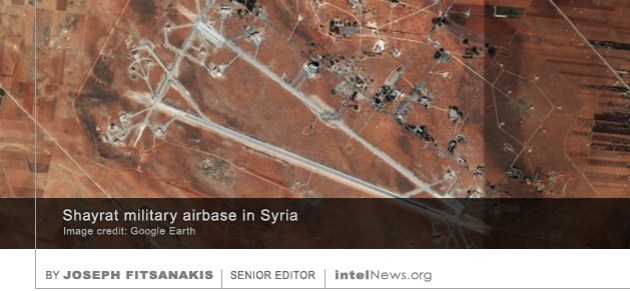
Shayrat SyriaThe nearly 60 Tomahawk missiles that the United States fired at Syria in the early hours of Friday local time were not the first. Nor were they the first that struck a Syrian government installation. In September of 2016, for example, a United States airstrike hit a military base in the eastern Syrian city of Deir el-Zour, killing 62 and wounding over 100 government soldiers. However, the Pentagon claimed that the strike was in error and had been intended to hit Islamic State militants. In fact, the entirety of America’s previous military strikes on Syrian soil has been aimed at the Islamic State. The missiles that last night on the Syrian military airbase of Shayrat marked Washington’s first intentional attack on the government of Syrian President Bashar al-Assad. Consequently, the US is now an official belligerent in one of our time’s most complex and intractable armed conflicts.
Since the missile attacks were confirmed, all eyes have concentrated on Russia, President Al-Assad’s primary supporter, without whom Damascus would now probably be run by a consortium of Sunni militias. There is no question that Shayrat hosts a significant contingent of Russian military personnel and large quantities of Russian-supplied military equipment, ranging from airplanes to radar facilities. Moscow’s response to the American attack will largely depend on whether any of its personnel are among the casualties in Shayrat. There is also concern about China’s response, given that Washington’s attack took place during the official visit to the United States by Xi Jinping, premier of China, another strong Syrian ally. Finally, it is worth considering possible Iranian responses to the US attack, especially if Iranian citizens end up on the casualty list.
The attention paid by observers to Russia, China and Iran is understandable given the clout of these countries on the world stage. But the most important response may come from Syria itself. According to the US Pentagon, the strike on the Shayrat airbase was intended “to deter the [Syrian] regime from using chemical weapons again”. But what if it does not? Last time Washington responded to rumors of a chemical attack in Syria, President Obama warned his counterpart in Damascus not to cross the red line of chemical warfare. Which, of course, was precisely what Mr. Assad did, successfully calling Washington’s bluff. He may do so again. Last night’s American attack may therefore result in an intensification of chemical warfare by the Syrian regime. At that point, US President Donald Trump will have no choice but to deepen America’s involvement in an increasingly chaotic and unpredictable war, where he will find Russia on the opposite side.

Few supporters of President Trump, who campaigned promising to disengage America from foreign wars and focus on domestic concerns, could have imagined even a month ago that the White House would be entering the Syrian Civil War. And yet this is precisely what is happening. The US now has over 500 troops stationed on Syrian soil, and has just attacked the country’s government with dozens of missiles. The reaction to that attack by the government in Damascus may draw Washington even deeper into the Syrian war. Many observers in America have suggested that the only way to truly evaluate the Trump administration will be by observing its performance during a major international crisis. It appears that they may soon get their wish.

Author: Joseph Fitsanakis | Date: 07 March 2017 | Permalink

Werner Stiller, one of the Cold War’s most notable defectors, dies

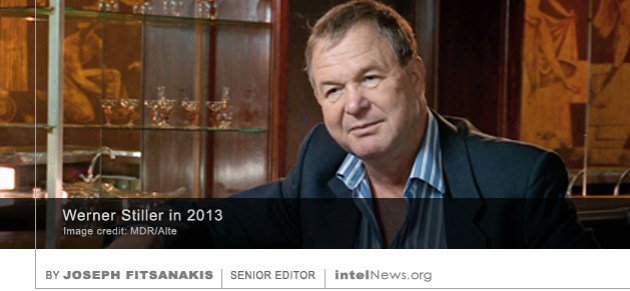
Werner StillerWerner Stiller, also known as Klaus-Peter Fischer, whose spectacular defection to the West in 1979 inflicted one of the Cold War’s most serious blows to the intelligence agency of East Germany, has died in Hungary. Stiller, 69, is believed to have died on December 20 of last year, but his death was not reported in the German media until last week. Born in 1947 in the German Democratic Republic, Stiller excelled in the sciences from an early age and eventually studied physics at the University of Leipzig, which was known at the time as Karl Marx Universitat. Shortly after graduating, he joined the GDR’s Ministry of State Security, commonly known as the Stasi. Within a few years, he was working as a case officer for the Main Directorate for Reconnaissance, the Stasi’s foreign intelligence division, where he was in charge of scientific espionage in the West. By the late 1970s, Stiller was handling nearly 30 spies —most of them abroad— who were regularly providing him with intelligence relating to nuclear research, weapons technologies, and biomedical research.

However, the Stasi vehemently disapproved of Stiller’s promiscuous lifestyle —he was married five times in his life and was reputed to have had many more affairs— which was one of the reasons why he decided to seek a new life in the West. In January of 1979, with the help of a waitress he was having an affair with, Stiller defected to West Germany along with a packet of microfiche containing hundreds of classified Stasi documents. He later helped the waitress escape to the West with her young son and an estimated 20,000 more pages of classified documents. The West German Federal Intelligence Service (BND) eventually shared the information from Stiller’s defection with the United States Central Intelligence Agency. It led to the dramatic arrests of 17 Stasi agents and officers in Europe and the US, while at least 15 others escaped arrest at the last minute, after being urgently recalled back to East Germany. The Stasi is believed to have recalled an additional 40 operatives from several Western countries as a precaution in response to Stiller’s defection. The information that Stiller gave to the BND also helped visually identify the longtime director of the Stasi’s Main Directorate for Reconnaissance, Markus Wolf. Previously, Western intelligence services had no photographs of Wolf, who was known as ‘the man without a face’, due to the many decades he spent as an undercover officer.

In 1981, Stiller moved to the US, where the CIA provided him with a new identity, using the fake name Klaus-Peter Fischer, a Hungarian émigré. He studied economics at Washington University in St. Louis, Missouri, before working as an investment banker for Goldman Sachs in the US and eventually an exchange broker for Lehman Brothers in Germany. It is believed that the Stasi kept looking for Stiller until the dissolution of the GDR in 1990, with the intent of abducting him or killing him. In 1999, Stiller moved to Hungary, where he stayed until the end of his life. He is survived by a son and a daughter.

Author: Joseph Fitsanakis | Date: 04 April 2017 | Permalink

Trump trying to assert control over intelligence agencies, say sources

Dan CoatsRelentless bureaucratic skirmishes between the White House and the United States Intelligence Community are occurring daily, with administration officials attempting to “seize the reins” of agencies, according to sources. The Associated Press reports that senior officials around US President Donald Trump continue to “deep[ly] distrust” the Intelligence Community”. This tendency is reportedly more prevalent among those of Mr. Trump’s senior political advisers who are “government newcomers” and have never before been privy to classified information or intelligence programs.
According to the Associated Press, the US president has been trying various ways to “seize the reins” of the Intelligence Community. The news agency cites unnamed “US officials” who claim that Mr. Trump and his senior advisers have requested that they be given access to raw intelligence. At the same time, they have expressed little interest in being exposed to the analysis of raw intelligence produced by intelligence professionals. Typically, White House officials will rely primarily on the expert opinions of intelligence analysts and will not seek to access the raw data that these opinions rest on. But it appears that Mr. Trump and his team of advisers do not think highly of the analytical assessments of the Intelligence Community, preferring instead to make up their own mind based on their own reading of raw intelligence reports. According to the Associated Press report, that appears to be one of the ways in which the White House has been trying to assert its power over the Intelligence Community.

Meanwhile, Mr. Trump’s advisers are pressing on with a comprehensive review of the structure and operations of the Intelligence Community. The review is now being led by Dan Coats, a Congressman from Indiana and former US Ambassador to Germany, who last month was confirmed to serve as the Director of National Intelligence. According to sources, Coats resisted initial plans by the White House to abolish the Office of the Director of National Intelligence, which was set up after the 9/11 attacks to coordinate the work of the Intelligence Community. The Trump team still plans to “trim and optimize” the Intelligence Community, but probably will not outright dismantle agencies like the Office of the Director of National Intelligence, according to the Associated Press.

Author: Joseph Fitsanakis | Date: 03 April 2017 | Permalink | Research credit: SF

Analysis: Unease in Europe as Turkey intensifies espionage abroad

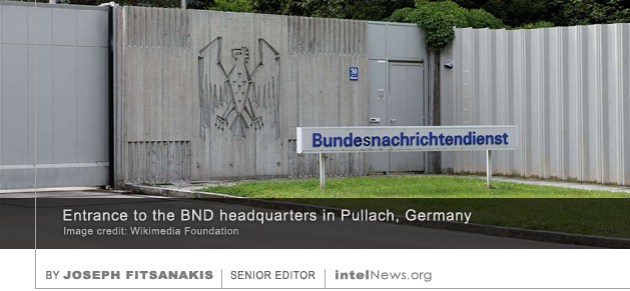
BND GermanyEarlier this week, it was revealed that the German government rejected a request by the head of Turkish intelligence to spy on Turks living in Germany. The rejection was an important moment in German-Turkish relations and highlights the growing unease in high-level exchanges between Turkey and the European Union.

On Monday, Germany’s Süddeutsche Zeitung newspaper alleged that the head of Turkey’s National Intelligence Organization (MİT), gave his German counterpart a list containing the names hundreds of Turks living in Germany, and asked him to spy on them. According to the newspaper, the list was given by MİT chief Hakan Fidan to Bruno Kahl, head of the Bundesnachrichtendienst, Germany’s Federal Intelligence Service, known as BND. The two men reportedly met at a security conference held in Munich last February. The Süddeutsche Zeitung claims that the list given to Kahl included 300 individuals and approximately 200 groups and organizations that the MİT wanted the BND to monitor.

It is extremely uncommon for information of this kind to be communicated informally between directors of intelligence organizations. Typically the exchange of information between cooperating intelligence agencies happens in a very formal and prescribed environment, not circumstantially during a conference. The episode described by the Süddeutsche Zeitung demonstrates a degree of amateurism on behalf of Turkey’s MİT. It is also symptomatic of the pressure that the agency is under by the Turkish government, following last July’s failed military coup in Ankara and Istanbul.

The government of Turkish President Recep Tayyip Erdoğan accuses members of the so-called Gülen movement of orchestrating the failed coup, which included an armed attack on the country’s parliament and the murder of over 200 people across Turkey. The Gülen movement consists of supporters of Muslim cleric Fethullah Gülen, who runs a global network of schools, charities and businesses from his home in the United States. The government of Turkey has designated Gülen’s group a terrorist organization and claims that its members have stealthily infiltrated state institutions since the 1980s. In responding to the post-coup security pressures, MİT has been stretched to its limit. Asking the BND for assistance illustrates the Turkish agency’s limitations, especially when it comes to spying abroad. Read more of this post
Germany publicly rejects Turkish spies’ request to monitor dissidents

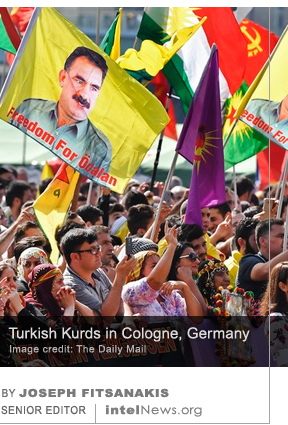
KurdsGerman intelligence and security agencies have publicly rejected a direct request made by Turkey’s intelligence chief to gather information on Turks who are living in Germany and are critical of the Turkish government. The request reportedly relates to attempts by the Turkish government to round up its critics, following a failed military coup in July of last year. The government of Turkish President Recep Tayyip Erdoğan accuses members of the so-called Gülen movement of orchestrating the coup, which included an armed attack on the country’s parliament and the murder of over 200 people across Turkey. The Gülen movement consists of supporters of Muslim cleric Fethullah Gülen, who runs a global network of schools, charities and businesses from his home in the United States. The government of Turkey has designated Gülen’s group a terrorist organization and claims that its members have stealthily infiltrated state institutions since the 1980s.

Since the end of the failed coup, the Turkish state has initiated a nationwide political crackdown against alleged supporters of the coup. Over 100,000 people have been fired from their jobs, while hundreds of thousands have been demoted, censured or warned. Another 41,000 are believed to be in prison, charged with supporting the failed coup or being members of the Gülen network. But many observers in Europe view the coup as a catalyst that was exploited by the government in Ankara neutralize its political opponents.

On Monday, Germany’s Süddeutsche Zeitung newspaper claimed that Turkey’s National Intelligence Organization, known as MİT, gave its German counterpart a list containing the names hundreds of Turks living in Germany, and asked him to spy on them. According to the newspaper, the list was given by MİT chief Hakan Fidan to Bruno Kahl, head of the Bundesnachrichtendienst, Germany’s Federal Intelligence Service, known as BND. The two men allegedly met at a security conference held in Munich last February. The Süddeutsche Zeitung claims that the list given to Kahl included 300 individuals and approximately 200 groups and organizations that the MİT wanted the BND to monitor.

But instead of spying on these targets, the BND wrote to them and warned them that the Turkish state was after them. The German spy agency also warned them to stay away from any contact with Turkish authorities in Germany and to refrain from traveling to Turkey. On Tuesday, Germany’s Interior Minister, Thomas De Maiziere, confirmed the Süddeutsche Zeitung article and warned Turkey to respect Germany’s territorial sovereignty. “Here German jurisdiction applies”, said De Maiziere, “and citizens will not be spied on by foreign countries”.

Author: Joseph Fitsanakis | Date: 29 March 2017 | Permalink

Sophistication of Hamas official’s killing points to Mossad, say sources

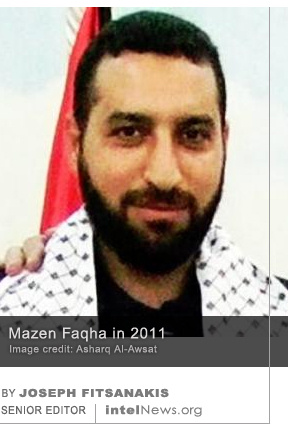
Mazen FaqhaThe sophistication behind the killing of a senior Hamas official, who was assassinated in his home in the Gaza Strip on Friday evening, points almost certainly to Israel, according to observers. Mazen Faqha, 38, helped plan several lethal operations by the Palestinian militant group, including a 2002 suicide bombing that killed nine and wounded over 50. Following an extensive manhunt, Israeli authorities arrested Faqha in the West Bank and in 2003 convicted him to nine life sentences. But in 2011, Faqha was among 1,027 Palestinian and Arab-Israeli prisoners that Israel released in exchange for Gilad Shalit, a soldier in the Israel Defense Forces, who was held prisoner by Hamas. Since that time, Faqha had lived in the Gaza Strip, the Hamas-controlled Palestinian enclave that has been under strict Israeli blockade since 2006.
Last Friday, March 24, Faqha was found dead inside the garage of his apartment block in Tel el-Hawa, a densely populated neighborhood in southwestern Gaza City. Initial reports stated that the Hamas official had been shot dead by a team of assailants outside his home. But subsequent accounts revealed that several gunmen were waiting for Faqha inside the car garage located on the bottom floor of the building that houses his apartment. It now appears that the assailants had been hiding in the garage for several hours before Faqha entered it with his car. Minutes earlier, his wife and young daughter had exited the car and made their way to the front door of their apartment. As soon as Faqha drove his car to the garage and closed the garage’s electric door, the gunmen shot him four times in the head from point-blank range and vanished. There was hardly a sound, because the assailants used weapons equipped with silencers. Faqha’s body was not discovered until 7:30 in the evening, a full 90 minutes after he was shot dead. His wife apparently thought that he was talking to their neighbors.

Investigators who are looking into Faqha’s murder say that his killers were intimately familiar with the architectural details of the apartment building where he lived, and had studied his daily routine. They also made sure to leave no traces behind. Consequently, their identity remains a mystery despite the presence of security cameras around the building. Hamas security officials say they believe that Faqha’s killers entered and exited the Gaza Strip by boat. The Palestinian militant group lost little time in blaming the murder on the Mossad, Israel’s primary external intelligence agency, which has targeted several Hamas officials for assassination in the past. Khalil al-Haya, Hamas’ second-in-command in the Gaza Strip said that Israel was the only beneficiary of Faqha’s demise. Khaled Mashal, who chairs Hamas’ Political Bureau, said Israel had “changed the rules of the game” by killing Faqha, adding that Hamas would “accept the challenge”. There has been no official comment from Israel in regards to Faqha’s killing.

Author: Joseph Fitsanakis | Date: 28 March 2017 | Permalink | Research credit: SF

North Korea is now robbing banks, says US intelligence official

North KoreaComments made by a senior American intelligence official on Tuesday appeared to suggest that the North Korean government was behind an attempt to steal nearly $1 billion from a Bangladeshi bank last year. The heist took place in February of 2016, when a computer malware was used to issue several requests to transfer funds from Bangladesh Bank —the state-owned central bank of Bangladesh— using the SWIFT network. The hackers were able to transfer five separate sums of $101 million each to a linked Bangladesh Bank account at New York’s Federal Reserve Bank. However, when further requests were issued, Federal Reserve Bank employees contacted Bangladesh Bank and blocked further transactions. Eventually, most of the transferred funds, which neared $1 billion, were recovered; but the hackers managed to get away with approximately $81 million worth of funds.
Forensic investigators described the heist as technically advanced. The antivirus company Symantec said it identified a piece of code in the malware that is known to have been used by North Korean government hackers in the past. Not everyone agreed with the claim that Pyongyang was behind the bank heist. But those who did, said that it was unprecedented in scope and aggressiveness. Some even said that the heist showed that North Korea’s cyber capabilities were among the most sophisticated and powerful in the world.

Meanwhile the United States government did not comment on the matter. However, this past Tuesday the deputy director of the National Security Agency appeared to confirm reports that North Korea was behind the Bangladesh Bank heist. Rick Ledgett, a 30-year veteran of the NSA, who is due to retire in 2018, was speaking at a public event hosted by the Aspen Institute in Washington, DC. He reminded the audience that private researchers had connected the malware code used in the Bangladesh Bank heist with that used in previous hacking attempts launched by North Korea. “If that linkage […] is accurate”, said Ledgett, it “means that a nation state is robbing banks”. When asked by the moderator whether he believes that to be the case, Ledgett responded “I do. And that’s a big deal”. Foreign Policy magazine reached out to Ledgett following his talk and asked him for clarification about his comments regarding the Bangladesh Bank heist. But the NSA official simply said that “the public case [about the heist] was well-made”. Foreign Policy also contacted the NSA, but the agency said it preferred not to comment on the matter.

Author: Joseph Fitsanakis | Date: 23 March 2017 | Permalink

Israel’s chief of staff says Hezbollah killed its own commander in Syria

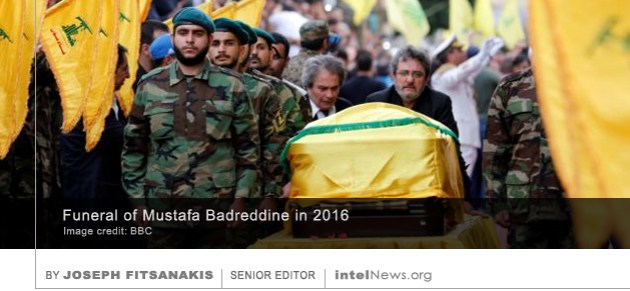
Mustafa Amine BadreddineAn Israeli military official has repeated claims in the Arab media that the Lebanese Shiite group Hezbollah killed its own military commander in Syria, following a dispute with Iran. Mustafa Amine Badreddine, 55, an expert in explosives and former bomb-maker, was a senior military commander in the military wing of Hezbollah. He rose through the ranks of the organization to become a trusted adviser to Hezbollah’s Secretary General, Hassan Nasrallah. In 2011, the Special Tribunal for Lebanon, set up by the United Nations, charged Badreddine with organizing the assassination of Lebanese Prime Minister Rafik Hariri. Hariri was killed with over 20 other people in a massive bomb blast in Beirut, in February of 2005.
Soon after the outbreak of the Syrian Civil War, the leadership of Hezbollah dispatched Badreddine to the Syrian capital Damascus. His stated mission was to command thousands of Hezbollah troops, who fought under Iranian guidance in support of the Syrian President Bashar al-Assad. But on May 13, 2016, Badreddine was reportedly killed in Damascus, causing observers to describe his death as the biggest setback for the Shiite militant group since the 2008 assassination of its leading commander, Imad Mughniyeh. Initial reports in Hezbollah-controlled Lebanese media suggested that Badreddine might have been killed in an Israeli air attack. But a press statement issued later by Hezbollah said the commander had been killed as a result of an armed attack by Sunni rebels. However, on March 8 of this year, the Saudi-owned pan-Arab television network al-Arabiya said it had conducted its own investigation into Badreddine’s death, and had concluded that he was killed by Hezbollah itself. The network claimed that Hezbollah’s Secretary General Nasrallah had ordered Badreddine’s killing, after the Iranians demanded it. Apparently the Iranians wanted him killed because he disputed the authority of Major General Qasem Soleimani, commander of Iran’s Revolutionary Guard Corps, who is often credited with having saved the Syrian government from demise during the Civil War.

The claim that Badreddine was killed by Hezbollah was echoed on Tuesday by Lieutenant General Gadi Eisenkot, Chief of the General Staff of the Israel Defense Forces. Speaking to the Associated Press, Lt Gen Eisenkot said that reports from Arab media that Badreddine was killed by his own forces agreed “with intelligence we have”, referring to the Israeli military. It is worth noting that Israeli officials rarely comment on intelligence operations, including assassination operations, choosing instead to adhere to a “refuse to confirm or deny” policy.

Author: Joseph Fitsanakis | Date: 22 March 2017 | Permalink

US politics in uncharted waters as FBI announces probe into Russian activities

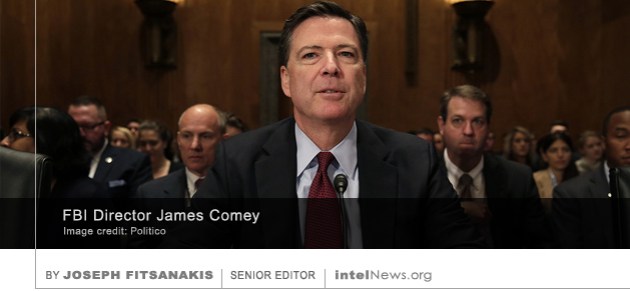
James ComeyMonday’s official announcement that an investigation is underway into alleged Russian involvement in the 2016 United States presidential election was an important moment in American political history. It exposed the chaotic state of American politics and added yet another layer of complexity in an already intricate affair, from which the country’s institutions will find it difficult to recover for years to come. This is regardless of the outcome of the investigation, which is being conducted by the Federal Bureau of Investigation. Even if it fails to produce a ‘smoking gun’, the very fact that the country’s chief counterintelligence agency is examining the possibility that a US president was elected with help from Russia, is an astonishing development without parallel in modern American history.

It is important to recognize that the FBI would never have initiated such a controversial and politically charged investigation without having concrete proof of Russia’s interference in last year’s presidential election. No agency of the US federal government would choose to dedicate enormous resources and personnel, and risk the political fallout that such a probe inevitably entails, without first having amassed indisputable evidence that necessitates it. Moreover, the FBI is not acting alone; its investigation almost certainly encompasses and incorporates similar probes carried out by other American security agencies, and possibly by agencies in allied countries, including the United Kingdom. It follows that the FBI investigation will undoubtedly confirm the existence of a systematic Russian intelligence operation that was aimed at influencing the outcome of last year’s American election.

As the present author has previously stated, it would be “extremely unusual and highly uncharacteristic of Russian spy agencies if they did not launch at least a rudimentary covert campaign to target the 2016 US presidential election […]. Indeed, the opposite would have been strange”. The central question, of course, is: what types of activities were part of the Kremlin’s covert campaign? Did it mostly involve the methodical production and dissemination of so-called ‘fake news’? Did it involve substantial funding of individual candidates or political parties? Or were there perhaps instances of extortion and blackmail of targeted individuals? These questions must be answered in full, and their inherent complexity explains fully why the FBI Director James Comey would not discuss details of the investigation on Monday.

Crucially, the FBI probe will have to answer conclusively the question of whether members of the administration of US President Donald Trump, or indeed the president himself, were implicated in the Kremlin’s actions. Did the president and his senior campaign team know that the Kremlin was —allegedly—assisting their efforts? If so, how did they know? And if not, did they deliberately ignore concrete warnings pointing to the contrary?

Every American, regardless of political persuasion, who genuinely cares about his or her nation’s political stability, hopes that the FBI probe finds no collusion between the Kremlin and the Trump campaign. However, there is an important sense in which, no matter the outcome of the investigation, serious damage has already been done. The reputation of American political institutions as a whole has been severely shaken, and mistrust between American civil society and its political institutions continues to rise exponentially. Meanwhile, it is safe to say that it will take months for the FBI’s probe to conclude. By then, the current chaotic state of American politics could be the a new permanently reality in Washington, a city that has witnessed much tumult in its history, though perhaps never as perplexing as the current crisis.

Author: Joseph Fitsanakis | Date: 21 March 2017 | Permalink

China has 5,000 spies in Taiwan, says official amidst espionage arrests

China and TaiwanA Taiwanese government official has alleged that China maintains an army of more than 5,000 spies in Taiwan, many of whom have infiltrated the highest levels of government and industry. The allegation came after two sensational arrests were made in Taiwan last week, of people accused of spying for Beijing. Taiwanese counterintelligence officers reportedly arrested a bodyguard of Annette Lu, Taiwan’s former vice president. The bodyguard, who has been identified in Taiwanese media as Wang Hong-ju, has been charged with receiving payments from his Chinese intelligence handler in return for providing information about Mrs. Lu. This incident followed another arrest, made earlier in the week, this time of a Chinese man who is believed to have initially come to Taiwan as a student. Zhou Hong-xu is accused of trying to recruit officials in the Taiwanese government by offering them money.
Following reports of the arrests, Taiwanese media quoted an official, who spoke on condition of anonymity, as saying that Beijing maintains “about 5,000 individuals” who spy in Taiwan. These agents are allegedly tasked with “collecting state secrets” in the island country, over which China claims ownership. The anonymous Taiwanese official said that authorities in Taipei had uncovered no fewer than 60 espionage plots linked to China since 2002. Less than a third of those were uncovered before 2009, said the official. The year is important, because it marks the time when communications and transportation systems between the two nations were reestablished after decades of mutual isolation. The ease with which people from the two countries can travel in each other’s territory has increased exponentially since 2009. But so have instances of espionage by China, said the Taiwanese official.

Asked about the alleged targets of Chinese espionage in Taiwan, the official said that nearly 80 percent of identified cases of espionage by Beijing’s agents were aimed at military targets, with only 20 percent focusing on the civilian sector. However, the apparent disparity in numbers does not mean that China shows more interest in Taiwanese military secrets. Rather, the Taiwanese military has better counterintelligence defenses and thus a higher detection rate than the country’s civilian sector, said the anonymous source.

Author: Joseph Fitsanakis | Date: 20 March 2017 | Permalink

Russian special forces troops seen in Egypt and Libya, say reports

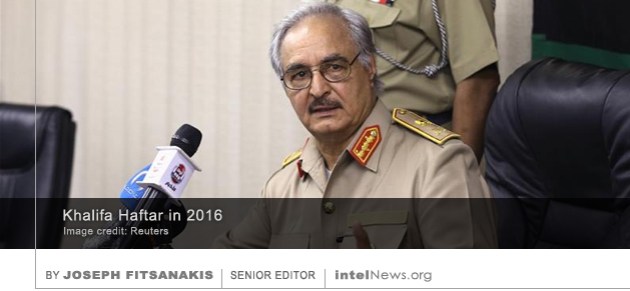
Khalifa HaftarRussia may have become the latest country to deploy special forces soldiers in Libya, according to news reports citing anonymous United States officials. Late on Tuesday, the Reuters news agency reported that Russian special forces troops had been seen on the border between Libya and Egypt. The news agency said that the information came from “two US officials, who spoke on condition of anonymity”. The same article cited unnamed “Egyptian security forces”, who said that a 22-member Russian paramilitary team had set up an operations base in the Egyptian town of Sidi Barrani, which is located 60 miles from Libyan territory.

Libya has descended into a state of complete anarchy since the demise of the country’s dictator, Colonel Muammar Gaddafi. The Libyan strongman was killed in 2011, as a result of a popular uprising backed by Western powers and the North Atlantic Treaty Organization. Arguably the strongest faction in the ongoing Libyan Civil War is the so-called Tobruk-led Government, which is affiliated with the Libyan National Army. The commander of the Libyan National Army is Field Marshal Khalifa Haftar, an old adversary of Colonel Gaddafi, who lived in the US under Washington’s protection for many decades before returning to Libya in 2011 to participate in the war. The Tobruk-led Government is ostensibly supported by the US. However, its military wing, led by Haftar, operates semi-autonomously, and some believe that Haftar has aspirations to lead his own armed faction in Libya. Last November, Haftar visited Moscow, where he met with senior government officials, including Russian Foreign Minister Sergei Lavrov. There are reports that the Russian special forces troops alleged seen in Egypt are operating in support of Haftar.

Earlier this week, a spokesman for the Tobruk-led government told Russian media that Moscow had promised to provide it with funding and military aid. Earlier this year, it was confirmed that a number of Russian private security contractors were in Libya and were providing services to Haftar’s militias. But there are no confirmed reports of the presence of Russian government troops on the ground in Libya. On Tuesday, Moscow denied the Reuters report and accused “certain Western mass media” of “spreading false information from anonymous sources” in order to “smear Russia”.

Author: Joseph Fitsanakis | Date: 16 March 2017 | Permalink

FBI launches criminal investigation into WikiLeaks’ CIA disclosures

WikiLeaksThe United States federal government has launched a criminal investigation into the public disclosure of thousands of documents that purportedly belong to the Central Intelligence Agency. The documents were released on Tuesday by the anti-secrecy website WikiLeaks. They reveal what appear to be technical collection methods used by the CIA to extract information from digital applications and electronic devices, ranging from flash drives to smart screen televisions. WikiLeaks named the collection “Vault 7”, and said that it consists of nearly 8,000 web pages and 1,000 attachments. It also said that its editors redacted hundreds of pages of computer code, in order to prevent the public release of advanced cyberweapons allegedly used by the CIA to sabotage electronic devices and systems.

On Wednesday, former director of the CIA Michael Hayden told the BBC that the disclosure appeared “incredibly damaging”, because it revealed some of the methods that the CIA uses to acquire information. But some cybersecurity experts said that the techniques contained in the leaked documents did not appear to be uniquely advanced, and most focused on exploiting technical vulnerabilities that were generally known. Still, The New York Times reported on Wednesday that the CIA had begun to assess the damage caused by the release. The agency was also trying to contain the extent of the damage, and had even “halt[ed] work on some projects”, said The Times. Officials from the CIA are reportedly in communication with the Federal Bureau of Investigation, which on Wednesday launched a criminal investigation into the “Vault 7” release.

The main purpose of the FBI investigation is to find out how WikiLeaks acquired the files. The website said that the documents were leaked by a CIA contractor, which would imply that they were accessed from a server outside the CIA’s computer network. However, federal investigators are not excluding the possibility that the leaker of the information may be a full-time CIA employee. Reports suggest that the FBI is preparing to conduct hundreds, and possibly thousands, of interviews with individuals who are believed to have had access to the documents that were released by WikiLeaks. Meanwhile, neither the FBI nor the CIA have commented on the authenticity of the information contained in “Vault 7”. WikiLeaks said that Tuesday’s release, which it codenamed “Year Zero”, was the first part of several installments of documents that will be released under its Vault 7 program.

Author: Joseph Fitsanakis | Date: 09 March 2017 | Permalink