Analysis: Time for Western spy agencies to refocus on Russia?

Pro-Russian celebrations in CrimeaBy JOSEPH FITSANAKIS | intelNews.org
During the Cold War, Western intelligence agencies relied on legions of Soviet specialists to make sense of the Kremlin’s policy maneuvers. The American Intelligence Community in particular was almost exclusively engaged in collecting information on the USSR. To the extent that American intelligence collectors were active in countries other than the USSR, it was primarily in order to monitor Soviet activity. The implosion of the Soviet Union brought about a relaxation of Western intelligence collection efforts against Russian targets, a process that was further fueled by the 9/11 attacks. The latter turned the attention of Western intelligence collectors on Islamist-inspired militancy in the Middle East and other predominantly Muslim regions. The legions of Western Sovietologists and Russia specialists saw their careers stagnate, as counterterrorism became the predominant buzzword in intelligence circles. But the recent invasion and annexation of Crimea by Russia is prompting a reexamination of intelligence collection priorities among Western spy agencies. A recent analysis piece by the Reuters news agency suggests that some Western intelligence planners view the events in Crimea as “demonstrating a dramatic need for renewed focus” on Russia. There is concern among intelligence specialists, says Reuters, that no signals chatter was detected in Russia in the weeks prior to the invasion of Crimea to indicate an imminent Russian takeover of Ukrainian territory. This alleged weakness is coupled by concerns among some foreign-policy planners that the West is potentially entering “a new era of […] confrontation with Moscow”, argues Reuters. If this is true, then Western intelligence agencies will need to replenish their level of expertise on Russia, which, according to some intelligence insiders, “has diminished drastically” in the last decade. Read more of this post

US created fake social network firm to foster dissent in Cuba

Cell phone user in CubaBy JOSEPH FITSANAKIS | intelNews.org
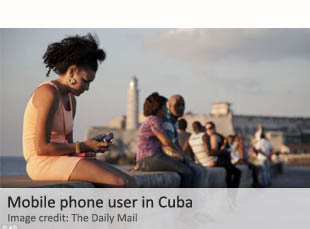
A United States government agency secretly created a bogus social networking platform in order to foment political unrest in Cuba, according to a report by the Associated Press. Over 40,000 subscribers regularly used the ZunZuneo social networking service that began operating in the communist Caribbean island in 2009. The service, dubbed “Cuba’s Twitter” was based on SMS messages sent via mobile telephone subscribers. Its rapid success was attributed to the strict controls over Internet usage that are in place in Cuba, as well as the population’s relative lack of access to networked computers. But The Associated Press revealed on Thursday that ZunZuneo was in fact a secret program devised by the US Agency for International Development (USAID), which is a federal body operating under the Department of State. The news agency reported that the US government was able to conceal its role in building and sustaining the network by operating through a complex system of front companies set up in the Cayman Islands and in Spain. The latter were used to register ZunZuneo’s parent company and to pay the company’s bills, as well as to route millions of subscribers’ text messages without the involvement of servers based on US soil. The report stated that ZunZuneo’s corporate website even carried “bogus advertisements” strategically placed to give the site a realistic corporate look. It is worth noting that the social networking service suddenly stopped working in 2012, without providing a warning or an explanation to its tens of thousands of subscribers. But the Associated Press said the reason the service was terminated was that the US taxpayer’s money used to sustain the program simply run out. The news agency argued in its report that the program was covert in nature and should have been subjected to Presidential authorization and Congressional scrutiny. Read more of this post
Senate report: CIA misled US government about torture

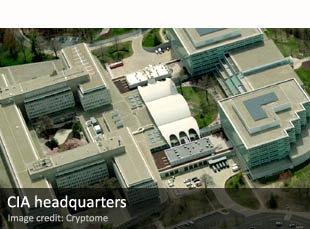
CIA headquartersBy JOSEPH FITSANAKIS | intelNews.org
A United States Senate report on the use of torture to extract intelligence from terrorism detainees accuses the Central Intelligence Agency of severely overstating the usefulness of the information gained. Details of the long-awaited report, produced after a four-year investigation by the Senate Select Committee on Intelligence, have been leaked to The Washington Post. The paper reports that the probe is a damning indictment on the CIA’s ‘enhanced interrogation’ program, implemented during the administration of President George W. Bush. The report contains over 20 different conclusions. But the most critical are that the CIA misled the government and the American public by: (a) understating the severity of the interrogation methods used; and (b) overstating the actionable intelligence extracted through torture. The Post cites unnamed “US officials” who have reviewed the Senate report as stating that the CIA’s ‘enhanced interrogation’ program “yielded little, if any, significant intelligence”. According to one source, in some cases the Agency proceeded to waterboard terrorism detainees after recognizing that all actionable intelligence had already been extracted from them. In one instance, says the paper, nearly all valuable intelligence gained from al-Qaeda operative Abu Zubaida was extracted by CIA interrogators before he was subjected to waterboarding nearly 100 times. Notably, the Senate report also highlights deep divisions within the CIA, as many units protested the practices employed under the Agency’s interrogation program. But The Post also quotes “current and former officials” who are critical of the Senate report for containing “factual errors” and “misguided conclusions”. One CIA veteran told the paper that the 6,300-page document reflected “Federal Bureau of Investigation biases”, and that CIA officials are critical of the fact that one of the report’s main authors is a former FBI analyst.
Read more of this post

NSA ‘high-target’ list includes names of 122 world leaders

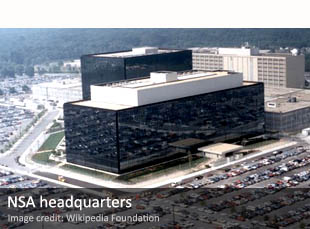
NSA headquartersBy JOSEPH FITSANAKIS | intelNews.org

A list of high-priority intelligence targets published over the weekend includes the names of over a hundred current and former heads of state, who were systematically targeted by the United States National Security Agency (NSA). The list appears to be part of a wider “Target Knowledge Base” assembled by the NSA in order to help produce “complete profiles” of what the NSA calls “high-priority intelligence targets”. The list is contained in a classified top-secret briefing created by the NSA in 2009. It was published by German newsmagazine Der Spiegel, which said it acquired it from American intelligence defector Edward Snowden. Snowden, a former computer expert for the NSA and the Central Intelligence Agency, is currently living in Russia, where he has been offered political asylum. The leaked briefing explains the function of an extensive NSA signals intelligence (SIGINT) collection program codenamed NYMROD. The computer-based program is allegedly able to sift through millions of SIGINT reports and collate information on individual targets from the transcripts of intercepted telephone calls, faxes, as well as computer data. The list provided to Der Spiegel by Snowden contains 122 names of international political figures, said the newsmagazine, adding that all of them were “heads of foreign governments”. It includes the name of German Chancellor Angela Merkel, Syrian president Bashar al-Assad, Ukraine’s Yulia Tymoshenko, as well as Belarussian strongman Alexander Lukashenko. Colombia’s former President, Alvaro Uribe, and Malaysia’s Prime Minster from 2003 to 2009, Abdullah bin Haji Ahmad Badawi, also figure on the list. Interestingly, the leaders of Malaysia, Somalia, the Palestinian Authority and Peru top the NSA’s list of high-value executive targets. Read more of this post

Leader of Ukrainian ultra-nationalists killed by security forces

Oleksandr MuzychkoBy JOSEPH FITSANAKIS | intelNews.org

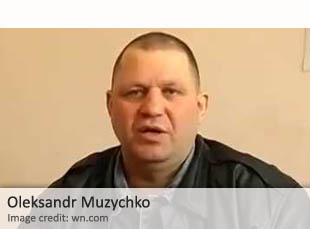
A senior official of Ukraine’s largest far-right group, which played a central role in anti-government protests earlier this year, has been shot dead by security forces, according to reports. The official, Oleksandr Muzychko, was the chief coordinator in western Ukraine of the Right Sector, known locally as Pravyi Sektor. The organization, which was founded in November of 2013, operates as an alliance of far-right Ukrainian nationalist groupings, whose ideological leanings range from ultra-conservative to openly neo-Nazi. The group’s active membership is estimated at below 10,000. However, its well-organized paramilitary wing was instrumental in helping demonstrators fight against government forces in the streets of Ukraine during the Euromaidan civil unrest that toppled the government earlier this year. Despite his vocal stance in favor of the anti-government demonstrators, Muzychko, who had in the past expressed strong anti-Russian and anti-Semitic views, was viewed as an embarrassment by Ukraine’s pro-Western authorities. The latter routinely referred to him as “a criminal” and “extortionist” —referring to his sting in prison following his conviction for extortion in 1999. Earlier this month, Russian authorities issued an arrest warrant for Muzychko, whom they accuse of having been part of a group of Ukrainian ultra-nationalists that fought alongside Muslim Chechen rebels against Russian forces in the Russian Caucasus. According to Ukraine’s Ministry of Interior, Muzychko, known locally as ‘Sashko Bily’, died during a shoot-out with Ukrainian security forces in a restaurant in the northwestern Ukrainian city of Rivne, which is considered a stronghold of the Right Sector. In a press conference on Tuesday, Ukraine’s Deputy Interior Minister, Vladimir Yevdokimov, said security forces had gone to the restaurant to arrest Muzychko and “three other gang members”. According to Yevdokimov, the high-profile Right Sector official was gunned down after he opened fire at the security forces, injuring one, and then tried to escape. But Ukrainian parliamentarian Oles Doniy told journalists that Muzychko had been killed under custody, after he was kidnapped by unknown assailants. Doniy said Muzychko’s body was later found “dumped with his hands tied behind his back and two bullet wounds in his heart”. Authorities in Kiev said the three “gang members” arrested at the site of the shootout had been taken in for questioning. Meanwhile, members of the Right Sector have threatened revenge for Muzychko’s killing.

Afghan officials see foreign spy agency behind bloody hotel attack

AfghanistanBy JOSEPH FITSANAKIS | intelNews.org

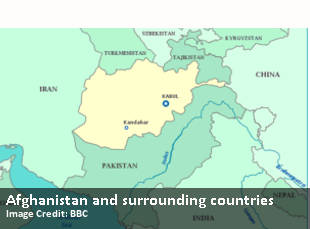
Afghanistan’s intelligence community believes a foreign spy agency was behind last week’s bloody attack on a luxury hotel that left nine people dead. Last Thursday evening, a group of young men entered the five-star Serena Hotel, located a few blocks away from the Presidential Palace and key government ministry buildings in Afghan capital Kabul. Three hours later, the men, who had hidden handguns in their shoes, entered the hotel restaurant and shot indiscriminately at patrons. They were eventually shot dead by Afghan Special Forces, but not before they had managed to shoot over a dozen people at point blank range, killing nine, including two Canadians, an American and a Paraguayan. Four children and a senior reporter with Agence France Presse were among the dead, while the wounded included an Afghan member of parliament. Many blamed the attack on the Taliban or the Haqqani network, an Islamist militant group responsible for countless high-profile attacks in Kabul and other Afghan cities. Soon afterwards, the Taliban issued a statement claiming responsibility for the attack, which they said was aimed at demonstrating the ease with which Afghan government security measures could be evaded. On Monday, however, a press release issued by the Office of the Afghan President said a “foreign intelligence service”, rather than an indigenous militant group, was behind the attack. The press release, which bore the signature of Afghanistan’s President, Hamid Karzai, said intelligence officials from the National Directorate for Security had briefed Afghanistan’s National Security Council about the findings of an investigation on the attack. In the statement, which was issued in both Pashto and English, the President’s Office said that neither the Taliban nor the Haqqani network “were even aware” that the attack at the Serena Hotel was going to take place. Instead, the operation “was a direct attack by an intelligence service outside the country”, said the statement. A subsequent announcement released by the Afghan government placed blame on Pakistani intelligence services, saying they were directly involved in the attack. It also stated that an unnamed “Pakistani diplomat” had been seen filming inside the Serena Hotel “a while ago”. Pakistan’s Ministry of Foreign Affairs rejected Kabul’s allegations, saying it was “highly disturbing that attempts are being made to somehow implicate Pakistan in this terrorist incident”.


CIA places Iran operations division chief on administrative leave

CIA headquartersBy JOSEPH FITSANAKIS | intelNews.org
The chief of Iran operations at the United States Central Intelligence Agency has been placed on paid administrative leave, allegedly for creating a hostile work environment that ended up impeding the Agency’s output. According to The Los Angeles Times, many members of the CIA’s Iran operations division had launched an “open rebellion” against their 46-year-old chief, which the paper identified by name. In an article published on Saturday, The Times stated that the veteran intelligence officer, who has now been removed from the CIA’s headquarters in Langley, Virginia, had previously served at CIA stations in Iraq, Russia and the Balkans. The paper added that, in 2010, the CIA had to pull out the officer from Pakistan, after he was publicly named as the Agency’s station chief in Islamabad. Some American officials have identified Pakistan’s intelligence services as the source of the leak that led to the officer’s public exposure, which was allegedly intended as retribution to a series of previous drone attacks by the CIA on Pakistani soil. The Times quoted “three former officials” who accused the chief of the Iran division of exercising a divisive and abusive management style, which led many of the division’s senior employees to request to be transferred elsewhere in the CIA. One unnamed source told the paper that, as a result of the division chief’s treatment and the open rebellion by his staff, the Iran office “was not functioning”. The veteran officer was “sent home” two weeks ago, after an internal investigation by the Office of the CIA Inspector General found that he had essentially lost the trust and respect of the division’s staff. Read more of this post

Obama comments on Senate-CIA dispute, fails to mention Feinstein

Chuck Hagel, Barack Obama, John BrennanBy JOSEPH FITSANAKIS | intelNews.org
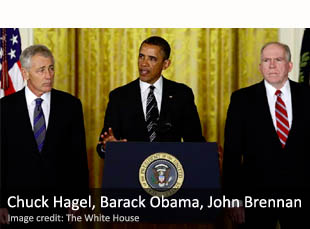
Yesterday in a radio interview I opined that I would not be surprised if the White House stepped in to mediate the ongoing dispute between the Central Intelligence Agency (CIA) and the Senate Select Committee on Intelligence. Today, President Barack Obama broke his silence “with respect to the issues that are going back and forth between the Senate committee and the CIA”, as he said. But he refused to take sides —or did he? On Wednesday afternoon, the President responded to a question on the matter by a White House pool correspondent. The question related to the increasingly heated public spat between the CIA and the Senate Intelligence Committee. The latter is tasked, along with its sister body in the House of Representatives, with exercising legislative oversight of the Intelligence Community. Many members of the Committee, which is currently investigating the CIA’s use of enhanced interrogation against terrorism detainees, believe that, not only was the CIA’s use of harsh interrogation methods illegal, but that it also failed to generate useful intelligence. The CIA, however, denies this, and has been quite possessive of documents relating to the issue, which the Committee believes has a right to access. The Agency has now asked the Federal Bureau of Investigation (FBI) to look into whether Congressional staffers illegally removed classified documents from the CIA’s archives that were beyond the scope of the Committee’s investigation. The Committee has in turn asked the Bureau to investigate whether the CIA illegally searched the computers used by staffers to carry out their research into CIA files.

Read more of this post

Comment: The significance of the spat between Congress and the CIA

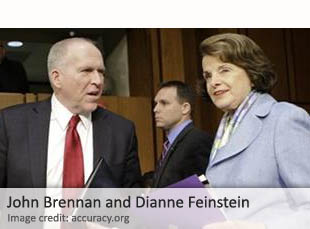
John Brennan and Dianne FeinsteinBy JOSEPH FITSANAKIS | intelNews.org
Dianne Feinstein, the chair of the United States Senate Select Committee on Intelligence, had gone out of her way in recent days to avoid commenting on the ongoing quarrel between her Committee and the Central Intelligence Agency (CIA). That ended yesterday, when she gave a press conference accusing the CIA of illegally spying on her Committee’s Congressional staffers. Her stunning announcement came shortly after her tense meeting with the Director of the CIA, a bad-tempered John Brennan. She told the media that at the meeting she requested from Brennan an apology and acknowledgement that the alleged CIA spying was “inappropriate”. By her own account, she failed to get either, so she decided to go public. In an interview I gave yesterday to Michigan’s WILS 1230 AM’s Capital City Recap, I argued that the quarrel between the two government bodies is not in itself important. What is important, I told radio host Mike Cohen, is that the dispute has entered the public arena. A routine ‘push and shove’ mêlée has turned into an all-out fistfight in full view of the media. One Republican Senator, Lindsay Graham, told the Associated Press on Tuesday that the time had come for “the legislative branch [to] declare war on the CIA”. In response to the Committee’s accusations, the CIA has apparently instructed the Department of Justice to investigate the alleged removal by Congressional staffers of classified documents that were “protected by executive privilege [and were] beyond the scope of the Committee’s investigation”.

Read more of this post

IRA ‘tried to kill Queen’s husband’ during Australia visit

Prince Philip and Queen Elizabeth in 1973By JOSEPH FITSANAKIS | intelNews.org
The Provisional Irish Republican Army tried to assassinate Prince Philip, the Duke of Edinburgh and husband of Queen Elizabeth II, during an official Royal visit to Australia in the early 1970s, according to a new book. The claim is detailed in the book Shadow of a Spy, written by Warner Russell, a veteran Australian reporter and retired military intelligence officer. The alleged assassination attempt was uncovered in Sydney on March 15, 1973, during the Prince’s two-day visit to Australia. While there, the Queen’s husband attended a conservation meeting and led an official opening ceremony of a Royal Australian Air Force war memorial in capital city Canberra. According to Russell, two “crude explosive devices” were discovered in Sydney at locations that had been scheduled to be visited by the British Royal entourage. The first device was detected in a trash can in Dowling Street, in Sydney’s downtown Potts Point neighborhood. The second device was found inside a luggage locker at Sydney’s Central Station, a few miles away from the location of the first bomb. The book claims that the two other “suspicious packages” were found, one in a local government building located across the street from an officer’s club that the Prince was due to visit, and another in a trash can at Taylor Square, less than a mile from Central Station. Eventually, the two “suspicious packages” were determined to be “decoys”, says Russell. But the other two devices contained explosive material and were defused by an Australian Army bomb disposal team before being secretly taken to a forensic laboratory for examination. Russell claims that the bombs were defused just minutes before Prince Philip’s group arrived at the two Sydney locations, and Australian authorities were so nervous that they ordered the Prince’s motorcycle escort and protection team to “take evasive action” as they approached Dowling Street. Read more of this post

Israeli reports accuse US of denying entry visas to Israeli spies

US Department of StateBy JOSEPH FITSANAKIS | intelNews.org
Articles in the Israeli media have accused the United States of quietly instituting a policy of denying entry visa requests from members of Israel’s security and intelligence agencies. In an article published on Tuesday, centrist newspaper Maariv cited “senior security personnel” who have allegedly been barred from entering the US. The centrist Hebrew-language daily said the past 12 months have seen “hundreds of cases” of employees in the Israeli intelligence community who have been told by US consular officials that they could not step foot on US soil. The paper said the visa rejections appear to affect mostly members of the Shin Bet, Israel’s domestic security agency, and the Mossad, which conducts covert operations abroad. Visa bans have also affected employees in Israel’s defense industries, said the article. The report suggests that the targeting of Israeli security and intelligence personnel appears to be deliberate, adding that it applies even to those Israeli intelligence or security officers that are already stationed on US soil. In what seems to be a change in policy, the latter are now being issued short-term visas, rather than multiyear entry permits. As a result, the paper says they are “forced” to cross from the US into Canada at regular intervals, in order to apply to have their visas renewed. However, many of them are now having their visa renewal applications rejected, or are made to wait “several weeks” before having their entry permits renewed by American consular staff. The paper quoted a “senior [Israeli] security expert”, who said he had been denied an entry visa to the US this past January, for the first time in his career, despite having visited the US numerous times in the past “without trouble”. He told Maariv that he had “traveled to the US dozens of times in the past for my job and never faced issues getting a visa” on time. Read more of this post

British spies infiltrated Nazi sympathizer groups, wartime files show

Page from MI5's Jack King filesBy JOSEPH FITSANAKIS | intelNews.org
A British counterintelligence agent managed to neutralize an extensive network of Nazi sympathizers in the United Kingdom by pretending to represent the German government, newly released files show. The documents, which were released this week by the British National Archives, identify the agent only as “Jack King”, which was the operational codename given to him by his handlers in the British Security Service, commonly known as MI5. Senior officials at the agency, which is tasked with counterintelligence, described “King” as “a genius” at luring in Nazi sympathizers in the UK. The files show that “King’s” work helped MI5 identify hundreds of residents in Britain —most of them British citizens— as committed Nazis who were prepared to pass national secrets to Berlin. The MI5 operative utilized his pro-German contacts in the southeast of England and was able to infiltrate pro-Nazi circles operating in and around London. He did so by posing as an agent of the Gestapo, Nazi Germany’s secret police. He quickly gained the trust of some of the most fervent pro-German activists operating in the British Isles. These included Edgar Whitehead, Hilda Leech and Marita Perigoe, a Swedish resident of the UK, who was so fervently pro-Nazi that she once dismissed Oswald Mosley’s British Union of Fascists as “insufficiently extreme”. Many of these Nazi supporters pledged to “King” that they could be relied on to assist in the event of an invasion of Britain by Nazi forces. The files released by the National Archives show that “King” was well connected with British Nazis by 1942. Read more of this post

Police ‘error’ reveals secret deal between IRA, UK government

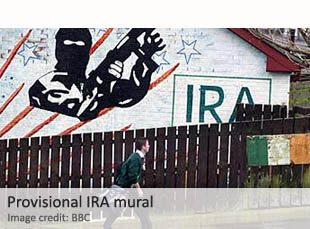
Provisional IRA muralBy JOSEPH FITSANAKIS | intelNews.org
An alleged police error, which has prompted the release from custody of a former Provisional Irish Republican Army (PIRA) volunteer accused of killing British soldiers, has revealed a secret agreement between the PIRA and the British government. British authorities have long suspected John Downey of involvement in a 1982 bomb explosion in London’s Hyde Park, which killed four British soldiers and injured scores of bystanders. But Downey was released from custody yesterday, after a judge was shown a letter that the suspect had been provided by the British government, assuring him that he was not wanted for outstanding crimes related to PIRA operations. The letter was given to Downey in 2007 by Britain’s Northern Ireland Office; it stated that the former PIRA volunteer would be able to travel outside Northern Ireland “without fear of arrest”. British authorities said that the letter had been sent “in error” and that it should have been withdrawn prior to Downey’s recent detention. But the case has exposed what appears to be a “discreet agreement” between the British government and republican paramilitaries. The agreement is undoubtedly connected to the 1998 Good Friday Agreement. The multi-party accord permitted —among other things— power-sharing between Northern Ireland’s loyalist and republican political parties, in exchange for the decommissioning of weaponry held by paramilitary groups on both sides. But it also stipulated that all prisoners held for crimes related to sectarian violence in Northern Ireland were to be freed. By 2000, most of these prisoners had been released, based on the British government’s belief that paramilitary groups on both sides were unlikely to refrain from violence while many of their members remained in prison. However, there was nothing in the Good Friday Agreement to cover the cases of those “on the run”, namely paramilitaries —most of them republican— who were at large and wanted by the British state for crimes connected with paramilitary activity. Read more of this post

Are Israeli arms merchants selling weapons to Iran?

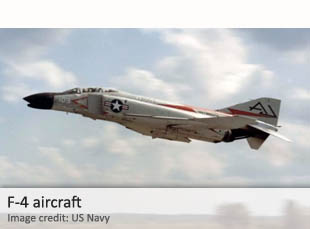
F-4 aircraftBy JOSEPH FITSANAKIS | intelNews.org
A leaked report by American and Greek investigators suggests that an intercepted shipment of military hardware intended for Iran probably originated in Israel. Greek broadsheet Kathimerini said on Sunday it had in its possession a copy of the classified report, which describes the interception of a large shipment of spare parts for military use. The parts are believed to have been intended for use by the Islamic Republic of Iran Air Force (IRIAF). The shipment allegedly contained spare parts for F-4 Phantom aircraft, which were originally built in the United States in the 1960s for use by the US Navy. The Islamic Republic still maintains a sizable fleet of F-4s, which Iran bought from the US in the 1970s, when the two countries were close allies. But a US-imposed embargo on Iran, which has been in effect since the 1979 Islamic Revolution, has prevented Tehran from easily acquiring spare parts for its aging fleet of F-4s. The Kathimerini report said that the intercepted shipment had been detected following a joint operation by the Greek Financial Crimes Squad and the US Department of Homeland Security. According to the paper, the secret operation began was underway in late 2012 and concluded in April of 2013. But the most shocking part of the report is that the illegal shipment appears to have originated from Binyamina-Giv’at Ada, a small Israeli town located 30 miles south of Haifa. Investigators said the illicit transfer had been facilitated via a Greek firm registered in the Athens district of Votanikos, called “Tassos Karras SA”, which appears to be a front company. Is it possible that Israeli arms merchants are supplying military spare parts to Iran? The Israeli government has refused comment on the case. Read more of this post

Australia spied on US law firm representing Indonesia in trade talks

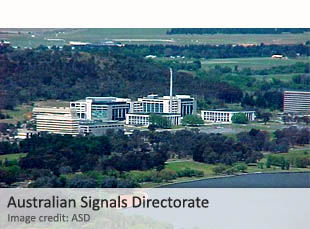
Australian Signals DirectorateBy JOSEPH FITSANAKIS | intelNews.org
Australian intelligence spied on an American law firm representing the government of Indonesia in a trade dispute with the United States, according to leaked documents. The documents, from February 2003, show that the Australian Signals Directorate (ASD) specifically targeted the law firm because it represented the commercial interests of the Indonesian state. The ASD is Australia’s intelligence organization responsible for signals intelligence and information security. The leaked documents also show that that the Australian spy agency offered to share the intelligence collected from the operation with its American counterpart, the National Security Agency (NSA). The New York Times, which published the leaked information, said the operation appeared to have been aimed strictly at subverting the Indonesian government’s international commercial interests and had nothing to do with national security. The paper said it acquired the documents from Edward Snowden, an American intelligence defector currently living in Russia, who used to work for the NSA and the Central Intelligence Agency. The leaked papers do not specify the precise trade negotiations between Washington and Jakarta, which appear to have been targeted by the ASD. Nor do they identify the American law firm spied on by the Australians. But the paper suggested that Mayer Brown, one of the world’s largest law firms, with offices in over 22 cities around the globe, was acting as the Indonesian government’s legal consultant at the time the leaked documents were drafted. A memorandum included in the leaked documents notes that the ASD had “been able to continue to cover the [trade] talks [between the US and Indonesia], providing highly useful intelligence for interested US customers”. Read more of this post