Analysis: Will 2013 Be the Year of the Unmanned Drone?

Predator droneBy JOSEPH FITSANAKIS | intelNews.org |
As United States President Barack Obama prepares to enter his fifth year in office, one may be excused for thinking that his administration’s response to insurgency warfare essentially boils down to one thing: the joystick. This is the means by which Washington’s unmanned aerial vehicle (UAV) fleet is remotely guided, usually from the safety of ground control stations located thousands of miles away from selected targets. Even prior to last November’s Presidential election, Obama administration officials declared in every possible way that the drone campaign would remain a permanent feature of the White House’s counterinsurgency campaign. Not only that, but it seems increasingly apparent that when, on November 19, 2012, Defense Secretary Leon Panetta announced that America’s UAV fleet would expand, he meant it both in terms of raw numbers and geographical reach. Africa appears now to be high on the list of UAV targets. The US is currently busy establishing a large network of small air bases located in strategic locations throughout the continent, in what US observers have termed a “massive expansion” of US covert operations in Africa. Read more of this post

Revealed: German neo-Nazi who helped Palestinians was CIA agent

Willi Pohl, a.k.a. Willi VossBy JOSEPH FITSANAKIS | intelNews.org |
A German far-right militant, whose animosity against Jews led him to aid Palestinians kill Israeli athletes in the 1972 Munich massacre, says he was later recruited by the United States Central Intelligence Agency. Willi Pohl, also known as Willi Voss, 68, was arrested by German authorities a few weeks after Palestinian terrorist group Black September stormed the Olympic village in Munich and took hostage 11 Israeli athletes. All of them were eventually killed by their captors during a botched escape attempt at the nearby Fürstenfeldbruck airport. Voss, who was a known neo-Nazi activist at the time, was charged with possession of weapons and providing logistical support to the Black September militants. However, after his sentence was suspended, Voss managed to secretly emigrate to Beirut, Lebanon, where he was recruited as an agent of Jihaz el-Razd, the intelligence service of the Fatah, the main group in the Palestine Liberation Organization. But in 1975, while on a PLO mission in Belgrade, Yugoslavia, he decided to switch sides. He made the decision after discovering that the car he and his girlfriend were transporting on behalf of the PLO from Beirut to Belgrade contained weapons and highly unstable explosives. He says that the PLO had apparently failed to mention the existence of the hidden items when they asked him to transport the car to Europe. According to Voss’ new book, which has just been published in Germany under the title UnterGrund (Underground), the guns and explosives were discovered by customs officers in Romania (then Rumania); but because at that time the communist country was an ally of the PLO, Voss and his girlfriend were allowed to travel to Belgrade, minus the car and the weapons. Read more of this post

Year in Review: The 10 Biggest Spy-Related Stories of 2012

Happy New YearBy J. FITSANAKIS and I. ALLEN | intelNews.org |
Ever since we launched this website in 2008, we have been monitoring daily developments in the highly secretive world of intelligence and espionage, striving to provide an expert viewpoint removed from sensationalism and conspiratorial undertones. In the past year, we witnessed our fair share of significant intelligence-related stories, some of which made mainstream headlines, while others failed inexplicably to attract the attention of the news media industry. In anticipation of what 2013 may bring, we decided to take a look back to the year that just ended by compiling a list of what we think are the ten most important security- and intelligence-related developments of the past 12 months. The stories below are listed in reverse order of importance. Do you agree with our choices? Have we missed something important? Share your thoughts.

10. South African spy officials faked threats to increase budget. The historical tendency of spy agencies to overstate security threats in order to secure governmental funds is hardly novel. But officials in the South African Secret Service appear to have gone a step further: they allegedly paid some of their informants to make bogus threats against the government, in order to prompt an increase in counterterrorist funding. The bogus threats were allegedly aimed at creating “a false impression of imminent, unprecedented attacks on black people and African National Congress (ANC) members”. Incredibly, or perhaps predictably, nobody from the Secret Service has been fired in connection with this scandal.

Read more of this post

News you may have missed #821 (civil liberties edition)

Bernard SquarciniBy IAN ALLEN | intelNews.org |
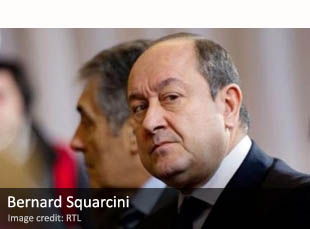
►►French domestic spy chief cleared of snooping charges. Back in October of 2011, intelNews reported that Bernard Squarcini, who then headed France’s domestic intelligence agency, the DCRI, had been charged with spying on a journalist with the daily Le Monde. The accusation was part of a wider case of domestic snooping, in which Squarcini was believed to have been trying to detect the source of government leaks to the press, allegedly on orders by then-President Nicolas Sarkozy. Earlier this month, however, an appeals court in Paris rejected two of three charges against the former DCRI chief. Squarcini could face up to five years in prison if convicted of the remaining charge.
►►FBI documents termed Occupy movement as ‘terrorism’. A number of heavily redacted US government documents, released following a Freedom of Information Act request, reveal that the FBI organized a nationwide law enforcement investigation and monitoring of the Occupy Wall Street movement beginning in August of 2011. In some documents, the FBI refers to the Occupy Wall Street protests as a “criminal activity” and “domestic terrorism”.
►►Wiretapping by Russian spy agencies doubled in five years. Wiretapping by Russia’s intelligence agencies has nearly doubled over the past five years, according to The Moscow Times. In Western countries, intelligence agencies were given wider powers after the 9/11 terrorist attacks. But in Russia, the exponential growth of wiretapping began after 2007, when terrorism by Islamic-inspired separatists was already on the decline. A federal law passed in 2010 expanded the legal grounds for wiretapping Russian citizens. Now, intelligence officers can wiretap someone’s phones or monitor their Internet activity simply because they allegedly received reports that an individual is preparing to commit a crime.

News you may have missed #820

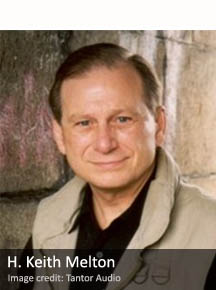
H. Keith MeltonBy IAN ALLEN | intelNews.org |
►►World’s best known spy collector displays his home. And now for something completely different. Most intelNews readers will be aware of H. Keith Melton, the author of more than 25 nonfiction works on espionage (including The Ultimate Spy Book) and the world’s largest private collector of spy memorabilia. The question is, where does he keep all this stuff? The 68-year-old author invited Forbes magazine to his Boca Raton house, which includes his two-story private spy museum. The article is here, a photo gallery here, and a video of the house (but not the museum) is here.
►►Acting CIA director criticizes ‘Zero Dark Thirty’. IntelNews has ignored the commentary that has flooded the Web about Zero Dark Thirty, the feature film fictional account of the assassination of al-Qaeda founder Osama bin Laden. But when the Director of CIA, the agency behind the real-life operation to kill bin Laden, publicly comments, it is time to pay attention. Michael J. Morell, who took over as CIA Director from General David Petraeus last month, has criticized the film, saying it exaggerates the role of coercive interrogations in producing clues to bin Laden’s whereabouts.
►►British police says MI6 expert ‘killed himself’. British police say MI6 cryptology expert Gareth Williams, who was found dead inside a sports bag in August 2010, probably locked himself into the sports bag, where his naked body was found, and was not the victim of a hit by the security services. Williams, 31, worked for Britain’s secret eavesdropping service GCHQ but was attached to MI6 when his remains were found inside the bag in a bathtub at his London apartment.

Soviets used civilian airliners to gather intelligence, documents show

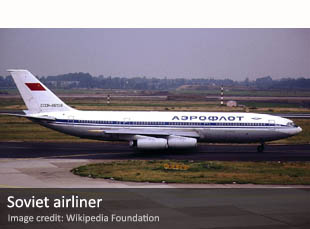
Soviet Aeroflot airlinerBy JOSEPH FITSANAKIS | intelNews.org |
Soviet spy agencies routinely used civilian airplanes to collect aerial intelligence over Western military installations, according to newly declassified documents. The revelation is contained in British government files from 1982 that were declassified on Friday, following the expiration of the United Kingdom’s 30-year classification rule. According to Bloomberg’s Robet Hutton and Thomas Penny, who accessed the files, they include a detailed memorandum addressed to Conservative Party politician Margaret Thatcher, who was serving as Britain’s Prime Minister at the time. The memorandum, which was authored by then Secretary of State for Defence, John Nott, informed Mrs. Thatcher that the airborne behavior of airliners belonging to Aeroflot, the Soviet Union’s state-owned civilian air carrier, appeared suspicious. Secretary Nott wrote in the memo that Britain’s Royal Air Force had “established that some [Soviet] aircraft deviated from their flight-plan routes” when flying over Western military bases. He goes on to describe an “incident of particular interest”, in which an Aeroflot Ilyushin IL62 airplane descended without authorization from 35,000 feet to 10,000 feet right above the village of Boulmer. Located in Northumberland, England, Boulmer is adjacent to a Royal Air Force base, which at the time featured a newly modernized radar system. The same Aeroflot airplane behaved in similar fashion while flying over a United States Navy base in Groton, Connecticut, which at the time hosted the first US submarine equipped with Trident Ballistic Missiles. The memorandum states that the circumstances surrounding the flight patterns of Aeroflot airliners had led the Royal Air Force to assume that the Soviet airplanes “were gathering intelligence” on Western military targets. Read more of this post

Who wiretapped Turkish Prime Minister’s office, home?

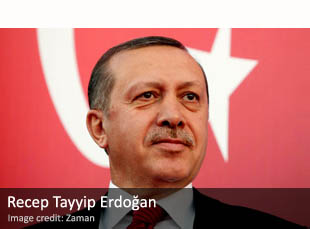
Recep Tayyip ErdoğanBy JOSEPH FITSANAKIS | intelNews.org |
During a televised interview on December 21, Turkish Prime Minister Recep Tayyip Erdoğan revealed that four unauthorized wiretapping devices had been detected in his parliamentary office and government car. A subsequent report from the Office of the Prime Minister on December 25 said that one more device had been found in Mr. Erdoğan’s home-office at this residence in Turkish capital Ankara. Who is behind the operation? In his December 21 interview, the Prime Minister told a nationwide audience that the bugs had been planted by “elements of a deeper state” within Turkey. “A deeper state exists in nearly every country”, he said, adding: “we try a lot but unfortunately it is impossible to [completely] eradicate the deeper state”. The term ‘deep’ or ‘deeper state’, which is used frequently in Turkey, is meant to signify a covert collaboration of convenience between organized crime and members of the country’s intelligence services.

One example of the Turkish ‘deep state’ that comes to mind is Ergenekon, a clandestine ultra-nationalist organization with secularist and anti-Western objectives. Its membership, which is reportedly drawn primarily from Turkey’s military and security establishments, is involved in both criminal and political activities aiming to preserve the political power of Turkey’s armed forces, while subverting the rise of Islamism and keeping Turkey out of the European Union. The existence of this mysterious organization was revealed in 2001 by Tuncay Güney, an operative of Turkey’s National Intelligence Organization (MİT), who was arrested for petty fraud. In 2009, an investigation into Ergenekon uncovered a clandestine network of safe houses in Ankara, as well as in the Turkish-occupied northern Cyprus, for the sole purpose of wiretapping the communications of targeted individuals and organizations. The safe houses were reportedly equipped with wiretapping systems purchased in Israel, some of which were portable and were thus moved to various cities and towns in Turkey, in accordance with Ergenekon’s mission directives. But are Ergenekon’s tentacles powerful enough to reach into the Turkish Prime Minister’s residence? Read more of this post

Revealed: The CIA bodyguard unit that protects officers and spies

Raymond Allen DavisBy JOSEPH FITSANAKIS | intelNews.org |
The popular view of Central Intelligence Agency operations officers as gun-brandishing martial arts experts who can kill an adversary using their bare hands could not be further from the truth. Typically, CIA operatives are trained to avoid attracting attention while establishing useful, long-lasting relationships with foreign assets. Broadly speaking, guns are rarely used in day-to-day intelligence work. Increasingly, however, CIA case officers operating on counterterrorism assignments in the post-9/11 environment find themselves in warzones with a level of physical risk rarely encountered during the Cold War. CIA operations planners believe that case officers cannot properly run foreign assets while constantly having to worry about their personal safety, as well as the safety of their recruits. To address this problem, the CIA put together a new unit shortly after 9/11, which goes by the name Global Response Staff (GRS). An article published yesterday in The Washington Post provides the most detailed public examination of this new unit to date. The Post’s Greg Miller and Julie Tate, who authored the article, suggest that the GRS currently has around 250 members, about half of whom are detailed to CIA stations around the world at any given time. Most are contracted by the Agency as retired Special Forces officers, and only work three to four months a year for around $140,000. Recruitment is done largely by word of mouth. The Post quotes an unidentified former US intelligence official, who says that GRS recruits are not required to operate within the typical CIA operational framework: unlike their CIA colleagues, “they don’t learn languages, they’re not meeting foreign nationals and they’re not writing up intelligence reports”. Instead, they are expected to conduct “area familiarization” work, that is, mapping escape routes from places where CIA case officers meet their assets. Read more of this post

CIA helped senior Syrian defector escape to Washington, say sources

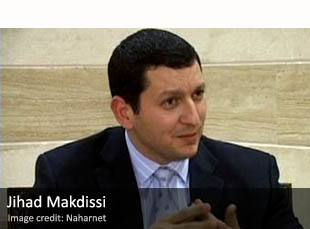
Jihad MakdissiBy JOSEPH FITSANAKIS | intelNews.org |
American intelligence operatives helped facilitate the escape of a senior Syrian government official, who is now allegedly assisting the Central Intelligence Agency’s operations in Syria, according to a British newspaper. The sudden disappearance last November of Jihad Makdissi, official spokesperson of Syria’s Foreign Affairs Ministry, caused widespread speculation that he might have defected. Makdissi, a career diplomat, had been a close collaborator of senior Syrian cabinet officials, including Minister of Foreign Affairs Walid al-Moallem, and Dr. Adnan Hassan Mahmoud, Minister of Information. Initial reports claimed that Makdissi, who is a Christian and is fluent in English and French, had crossed into Lebanon and was hiding in a Christian Beirut neighborhood. But London-based newspaper The Guardian said on Monday that the diplomat had been assisted by “US intelligence officials”, who organized his escape into Lebanon, along with his wife and two children, before secretly transferring them to Washington, DC, “almost one month ago”. If The Guardian’s claim is true, it would mean that US intelligence has secured the cooperation of one of the Syrian regime’s most prominent defectors in recent times. Some argue that Makdissi’s importance as a defector is second only to that of Syria’s former Prime Minister, Riyad Farid Hijab, who escaped with this immediate family to Jordan in August. Read more of this post

News you may have missed #819 (UKUSA edition)

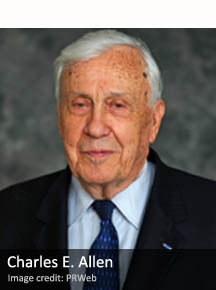
Charles E. AllenBy IAN ALLEN | intelNews.org |
►►Aussie spies’ exemption from Freedom of Information laws to end? Currently, all Australian intelligence agencies are exempt from the operation of federal Freedom of Information (FOI) legislation that allows the public and journalists to seek access to government records. But now Australian Information Commissioner John McMillan has called for the intelligence agencies to no longer be exempted from FOI laws. Professor McMillan and FOI Commissioner James Popple have made the recommendation in a 97-page submission to the review of FOI laws by former Defence Department secretary and diplomat Allan Hawke.
►►US spy agencies move towards single super-cloud. The US intelligence community is developing a single cloud computing network to allow all its analysts to access and rapidly sift through massive volumes of data. Now in its eighth month, the goal of the effort is to connect the Central Intelligence Agency’s existing cloud to a new cloud run by the National Security Agency. This NSA-run network consists of five other intelligence agencies and the FBI. Both of these clouds can interoperate, but the CIA has its own unique needs because it must work with human intelligence, which necessitates keeping its cloud slightly separate, according to Charles Allen, formerly Undersecretary of Homeland Security for intelligence and analysis.
►►Canadian Army struggles with intelligence-gathering. The Canadian Army is trying to hold on to its intelligence-gathering capability and its ability to disrupt spying in the face of budget strain, according to documents from the Canadian Department of National Defence. The Canadian Press, which obtained the documents, says the Army is “anxious to protect HUMINT network and to better resource its counterintelligence abilities”, but is worried that its shrinking budget in the post-Afghanistan War era will cause “degradation” in those disciplines.

Fascinating profile of the Soviet KGB’s little-known tech wizard

US Ambassador Henry Cabot Lodge, Jr., displays the Soviet KGB's Great Seal bug at the United NationsBy JOSEPH FITSANAKIS | intelNews.org |
It is often suggested by intelligence researchers that one major difference between Western and Soviet modes of espionage during the Cold War was their degree of reliance on technology. It is generally accepted that Western espionage was far more dependent on technical innovation than its Soviet equivalent. While this observation may be accurate, it should not be taken to imply that the KGB, GRU, and other Soviet intelligence agencies neglected technical means of intelligence collection. In a recent interview with top-selling Russian newspaper Komsomolskaya Pravda, Russian intelligence historian Gennady Sokolov discusses the case of Vadim Fedorovich Goncharov. Colonel Goncharov was the KGB’s equivalent of ‘Q’, head of the fictional research and development division of Britain’s MI6 in the James Bond films. A veteran of the Battle of Stalingrad, Goncharov eventually rose to the post of chief scientific and technical consultant of KGB’s 5th Special Department, later renamed Operations and Technology Directorate. According to Sokolov, Goncharov’s numerous areas of expertise included cryptology, communications interception and optics. While working in the KGB’s research laboratories, Goncharov came up with the idea of employing the principles behind the theremin, an early electronic musical instrument invented by Soviet physicist Léon Theremin in 1928, in wireless audio surveillance. According to Sokolov, the appropriation of the theremin by the KGB under Goncharov’s leadership “changed the world of intelligence”. Read more of this post

US wants immunity for Pakistanis implicated in attacks that killed 166

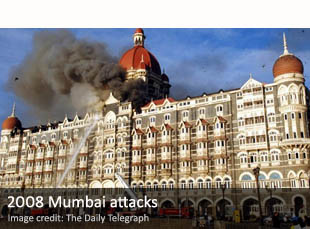
2008 Mumbai attacksBy JOSEPH FITSANAKIS | intelNews.org |
The United States government has argued in court that current and former officials of Pakistan’s intelligence service should be immune from prosecution in connection with the 2008 Mumbai attacks. At least 166 people, including 6 Americans, were killed and scores more were injured when members of Pakistan-based militant group Lashkar-e-Taiba stormed downtown Mumbai, India, taking the city hostage between November 26 and 29, 2008. The Indian government has openly accused Pakistan’s Inter-Services Intelligence directorate (ISI) of complicity in the attack, which has been described as the most sophisticated international terrorist strike anywhere in the world during the last decade. Using evidence collected by the Indian government, several Americans who survived the bloody attacks sued the ISI in New York earlier this year for allegedly directing Lashkar-e-Taiba and the Mumbai strikes. But Stuart Delery, Principal Deputy Attorney General for the US Department of State, has told the court that the ISI and its senior officials are immune from prosecution on US soil under the US Foreign Sovereign Immunities Act. According to the 12-page ‘Statement of Interest’ delivered to the court by Delery, no foreign nationals can be prosecuted in a US court for criminal actions they allegedly carried out while working in official capacities for a foreign government. The affidavit goes on to suggest that any attempt by a US court to assert American jurisdiction over current or former Pakistani government officials would be a blatant “intrusion on [Pakistan’s] sovereignty, in violation of international law”. It appears that nobody has notified the US Department of State that the US routinely “intrudes on Pakistan’s sovereignty” several times a week by using unmanned Predator drones to bomb suspected Taliban militants operating on Pakistani soil. Washington also “intruded on Pakistan’s sovereignty” on May 2, 2011, when it clandestinely sent troops to the town of Abbottabad to kill al-Qaeda founder Osama bin Laden. Read more of this post

Are Kremlin’s spies targeting Russian scientists with foreign links?

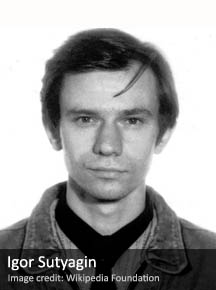
Igor SutyaginBy JOSEPH FITSANAKIS | intelNews.org |
Back in November, we reported on the case of Valentin Danilov, a Russian physicist who spent nearly a decade in prison, allegedly for spying on his country on behalf of China. What is interesting about Danilov is that, even after his release from prison, following a pardon issued by the administration of Russian President Vladimir Putin, he fervently maintains his innocence. He is not alone; many Russian scientists and human rights campaigners have argued for years that Danilov should never have been convicted. In some cases, activists accuse the Kremlin of persecuting Danilov for political reasons, namely to reinforce Russian President Vladimir Putin’s “attempts to intimidate academics with ties to other countries”. A well-written analysis by Time magazine’s Simon Shuster argues that Danilov’s story is not unique in Russia. There have been at least a handful of similar cases in the last decade, all involving Russian scientists with links to foreign countries or organizations. Shuster mentions the example of nuclear expert Igor Sutyagin, former division head in the Russian Academy of Sciences’ USA and Canada Institute, who served 11 years of a 15-year sentence for allegedly passing state secrets to a CIA front company. Sutyagin, who now lives in London, United Kingdom, was one of four jailed Russians expelled to the West in exchange for the repatriation of ten Russian illegals captured by the FBI in the summer of 2010. But he maintains he was never a spy, and claims that all of the information he gave to the two Americans who employed him, in return for money, came from open sources. Undoubtedly, observers are free to draw different conclusions about either Danilov or Sutyagin. But the question that Shuster poses is, at a time when virtually no field of scientific research can develop without international collaboration, is Moscow being overly suspicious of its academics, and is this hampering Russian science as a whole? Read more of this post

News you may have missed #818 (USA edition)

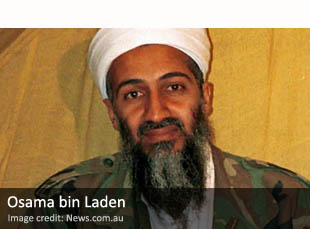
Osama bin LadenBy IAN ALLEN | intelNews.org |
►►The real-life female CIA officer who helped track bin Laden. The Washington Post has a good article on the real-life career of a female CIA officer who helped the Agency track al-Qaeda founder Osama bin Laden. It is disappointing, however that the article, authored by Greg Miller and Toby Warrick, is headlined “In Zero Dark Thirty she’s the hero; in real life, CIA agent’s career is more complicated”. The CIA employee in question is not an “agent”; she is an officer. In the CIA, agents are assets, people recruited and handled by CIA officers. Amazing that The Post, with its experienced journalists and editors would confuse such a basic operational distinction.
►►US spy agencies to detail cyber-attacks from abroad. The US intelligence community is nearing completion of its first detailed review of cyber-spying against American targets from abroad, including an attempt to calculate US financial losses from hacker attacks based in China. The National Intelligence Estimate, the first involving cyber-espionage, will also seek to determine how large a role the Chinese government plays in directing or coordinating digital attacks aimed at stealing US intellectual property, according to officials who spoke on the condition of anonymity to discuss a classified undertaking.
►►CIA begins LGBT recruiting. As part of the CIA’s efforts to diversify its workforce, the spy agency is reaching out to a group that once was unable to get security clearance: lesbians and gay men. CIA officials have held a networking event for the Miami gay community sponsored by the Miami-Dade Gay and Lesbian Chamber of Commerce and the CIA. “This is the first time we’ve done a networking event of this type with any of the gay and lesbian chamber of commerces in the United States,” says Michael Barber, a self-identified “straight ally” and the spy agency’s LGBT Community Outreach and Liaison program manager.

News you may have missed #817 (assassinations edition)

Patrick FinucaneBy IAN ALLEN | intelNews.org |
►►British PM apologizes in killing of IRA lawyer. The Prime Minister of the United Kingdom, David Cameron, has apologized after a government report found that British intelligence officials had colluded with loyalist paramilitaries in the 1989 killing of lawyer Patrick Finucane in Belfast, Northern Ireland. Finucane, who had represented members of the Irish Republic Army in court, was shot dead by two gunmen from a Protestant paramilitary group while having a Sunday dinner at his home with his wife and three children.
►►Behind the plot to kill Afghanistan’s spy chief. On December 11, we reported that the Afghan government accused Pakistani intelligence of having played a role in the assassination of Assadullah Khaled, who heads Afghanistan’s National Directorate for Security. But how was the attempt on Khaled’s life carried out, and how did the aspiring assassins get so close to the controversial intelligence chief? Time magazine reports that it was Khaled’s self-confidence “bordering on recklessness” that almost got him killed. Sources say that, even after taking over the NDS, Khalid frequently drove around without bodyguards.
►►How Mossad bid to kill Hamas leader ended in fiasco. Khaled Mashal’s recent presence in the Gaza Strip will have rudely reminded Benjamin Netanyahu, the Israeli Prime Minister, of one of the greatest fiascos in the history of special operations, writes The Daily Telegraph‘s David Blair. Fifteen years ago, Netanyahu authorized a risky attempt to assassinate Mashal in the Jordanian capital, Amman. Everything went wrong. The Jordanian security forces responded to this brazen daylight attack, arresting two of the Israeli operatives and forcing three to hide in their country’s embassy, which was promptly surrounded by troops.