Little-known Russian spy unit is behind alleged Ukraine ‘kill/capture list’

FSB - JFA LITTLE KNOWN SPY unit, which experts have described as a mysterious “third espionage agency” inside the Russian intelligence apparatus, is said to be behind a “kill/capture list” that Moscow allegedly plans to put to use in Ukraine. United States government officials insisted on Monday that such a list exists, despite strong denials from Russia. American officials claimed that the purpose of the list is to minimize popular resistance by Ukrainians to an invading Russian army, and to destabilize the government in Kiev, so that a pro-Russian government can eventually replace it.
The alleged list reportedly contains the names of senior Ukrainian politicians, Ukraine-based critics of the Russian and Belarusian governments, journalists and other activists. These individuals are to be captured or killed in the event of an invasion of Ukraine by Russian forces, according to Washington. Speaking on Monday on behalf of the Kremlin, Russian spokesperson Dmitry Peskov called the list “a fake” and insisted that it does not exist. Moscow also stressed that the United States did not provide details about the alleged list, nor did it cite the sources of its information.

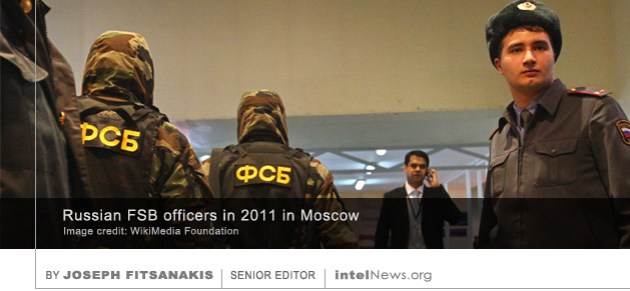
According to the United States government, the alleged kill/capture list is maintained by the foreign intelligence arm of the Russia’s Federal Security Service. Known as FSB, the agency’s primary mission is to carry out counterintelligence and counterterrorism tasks inside the borders of the Russian Federation. But the FSB includes a little-known intelligence unit, known as the Service for Operational Information and International Communications—or the Fifth Service, in short.

The Fifth Service was created in 1992 to fill the vacuum left by a host of no-spy agreements, which were signed between Moscow and the governments of former Soviet Republics. These agreements prevent Russia’s Foreign Intelligence Service (SVR) to spy inside the territories of former Soviet states. By 1995, the Fifth Service had become known as the foreign spy wing of the FSB. It grew in size drastically after 1999, and some claim that it “graduated into [Russian President Vladimir] Putin’s imperial gendarme”. Today it is led by close Putin ally Sergei Beseda, who is a colonel general in the FSB. Its Ukraine wing is believed to have grown to over 200 officers in recent years.

The main task of the Fifth Service is political action of a covert nature, aimed at electoral subversion, political influence campaigns, psychological operations, and the undermining of groups or movements that oppose Russia’s continuing influence in the territories of the former Soviet Union. Some Western news sources have recently alleged that the Fifth Service has been tasked with coordinating activities between the Russian government and pro-Russian groups inside Ukraine, as well as “engineering [mini] coups in Ukraine’s major cities”.

Author: Joseph Fitsanakis | Date: 22 February 2022 | Permalink

British military warns 50% of Russia’s entire ground force has now encircled Ukraine

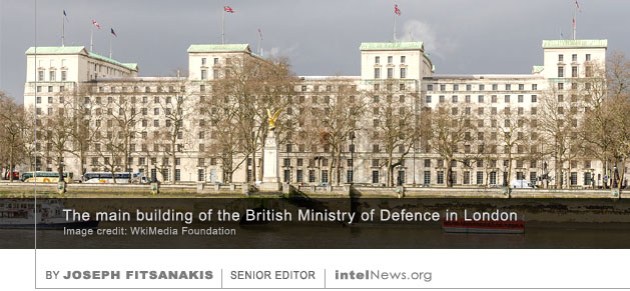
UK Ministry of DefenceIN A VIDEO MESSAGE described by observers as “extraordinary”, the British Ministry of Defence has warned that at least half of the Russian military’s ground combat units have now encircled much of Ukraine. The report describes this as “the largest gathering of Russian troops” anywhere in the world since 1991—the year when the Soviet Union collapsed.
The video, titled “intelligence update”, was posted on Thursday on the social media application Twitter by the United Kingdom’s Ministry of Defence. It appears to be an example of what some observers are viewing as a “new front of information war” between Western and Russian intelligence agencies. As intelNews reported last week, American intelligence agencies have been instructed by the White House to release raw intelligence directly to the public about Russia’s intentions on Ukraine. This new method of public intelligence reporting has been described as “highly unusual” and even “unprecedented”.

British newspaper The Guardian called the two-minute video by the Ministry of Defence “extraordinary” in its candor and its attempt to communicate directly with the public. It includes visuals, such as satellite imagery, as well as graphics that show possible routes that Russian forces could take to invade Ukraine. The video warns that the scale of the Russian military presence along the Ukrainian border with Russia and Belarus is “far beyond that needed for a large-scale training exercise”. It concludes that a Russian invasion of Ukraine could take place “within days”.

The paper observes that Western spy agencies appear to be trying to use their intelligence information to “shape the narrative” about the crisis in Ukraine, before Moscow is able to use its formidable disinformation capabilities to set the agenda.

Author: Joseph Fitsanakis | Date: 21 February 2022 | Permalink

Venezuelan diplomat accused of corruption was US ‘law enforcement source’

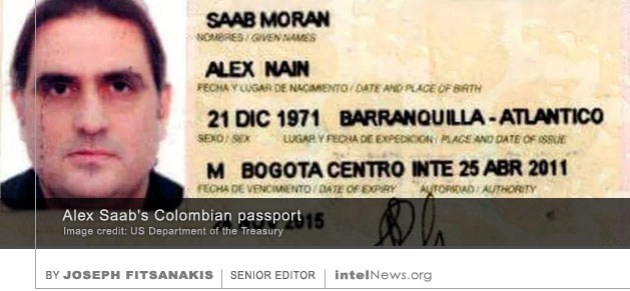
Alex SaabA WEALTHY BUSINESSMAN AND close ally of Venezuelan President Nicolás Maduro, who is being tried in the United States on money-laundering charges, was a “law enforcement source” for the Drug Enforcement Administration, according to documents unsealed this week in a Florida court. The businessman, Alex Nain Saab Moran, 51, comes from a Colombian family of Lebanese descent. For the past decade, he has been one of a number of international investors who have done extensive business with the government of Venezuela.
Saab’s loyalty to the Venezuelan government was rewarded with numerous state contracts by the government of President Maduro. Maduro eventually appointed Saab deputy ambassador of Venezuela to the African Union. Critics claimed that Saab’s diplomatic appointment was meant to shield him from warrants for his arrest for money-laundering, which had been issued by numerous countries. The United States, in particular, accused Saab of helping to organize a sophisticated network of shell companies, in order to launder money on behalf of the Venezuelan government.

In June of 2020, as his private airplane was refueling at the island nation of Cape Verde, Saab was arrested by the local police, pursuant to an Interpol “red notice”, which identified him as an individual wanted by the United States government. Saab was on his way back to Venezuela from Iran, where he had traveled as a Venezuelan diplomat. For several months following Saab’s arrest, a team of Venezuelan government lawyers attempted to prevent his extradition to the United States. They failed, however, and the businessman was extradited on October 16, 2021. Read more of this post

US strategy of revealing raw intelligence on Russia seen as ‘unusual’, ‘unprecedented’

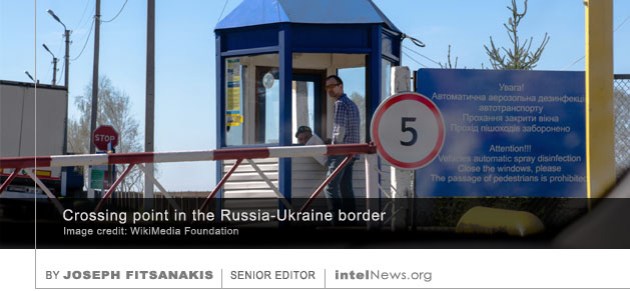
Ukraine Russia borderTHE DECISION BY UNITED States officials to release what appears to be raw intelligence about Russia’s intentions on Ukraine is being described by observers as “highly unusual” and even “unprecedented”. Two weeks ago, American officials said they were in possession of intelligence about an alleged Russian false-flag operation targeting Ukraine. The operation revolved around a fake video, allegedly using paid actors, which would be used by Moscow as evidence of a campaign of ethnic cleansing by Kiev against eastern Ukraine’s Russian population.
More recently, the United States government claimed that Russia was potentially preparing to attack Ukraine on Wednesday, February 16. Such specific intelligence about an adversary’s intentions is rarely released to the public, especially during periods of international tension like the present. The decision by the US government to release this intelligence on an almost daily basis is being described by observers as “unprecedented”. It is broadly seen as one of the most aggressive “transparency-as-strategy” campaigns by American intelligence agencies since at least the Cuban Missile Crisis of 1962.

One such observer, Thomas Rid, Professor of Strategic Studies at Johns Hopkins University’s School of Advanced International Studies, calls this novel approach by the US Intelligence Community “ambitious”. It is too early to say, however, whether this approach has actually helped prevent a conflict that the Russians were otherwise determined to see erupt in Ukraine. It is even more difficult to say whether this strategy will prove successful for the US government and the US Intelligence Community in the long run.

This is especially pertinent in relation to “sources and methods”—namely the precise source or sources that are presumably providing Washington with actionable intelligence from Russian President Vladimir Putin’s inner circle. Douglas London, a recently retired Central Intelligence Agency case officer, points out that, the more Washington reveals precise details about the Kremlin’s intentions, the more it risks helping the Russians narrow in on the potential mole that is supplying America with intelligence. This tactic might provide the US with “a short-term gain right now in the Ukraine”, says London; however, it runs the risk of blinding American intelligence agencies “in the future to what the Russians are planning there and elsewhere”, he warns.

Author: Joseph Fitsanakis | Date: 17 February 2022 | Permalink

Dutch intelligence service warns public about online recruitment by foreign spies

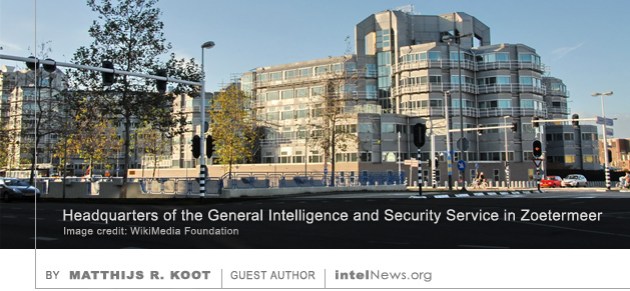
AIVD HollandLAST WEEK, THE DUTCH General Intelligence and Security Service (AIVD) launched an awareness campaign dubbed ‘Check before connecting’. The purpose of the campaign is to inform the Dutch public about risks of foreign actors using fake accounts on social media, in efforts to acquire sensitive business information. According to the AIVD, such online campaigns frequently target and recruit employees of Dutch private sector companies. The awareness campaign is carried out via Twitter, Instagram and LinkedIn. It is aimed at raising awareness in society at-large. The AIVD will publish a number of fictitious practical examples over time, in order to educate the public.
AIVD director-general Erik Akerboom told Dutch newspaper Het Financieele Dagblad that Dutch and other Western secret services have been surprised by the sheer number of cases in which private sector employees disclosed sensitive information, after being blackmailed or enticed with money to share information. After foreign intelligence operatives make initial contact with their target via LinkedIn, the relationship quickly turns more “personal”, according to Akerboom. The new contact acts flatteringly about the unsuspecting target’s knowledge and competence. “You are asked to translate something. This can be followed by a physical meeting”, he says.

Potential targets are “ranked” by their position in an organization, position in a business network, and level of access to sensitive information. “The rankings determine which persons are prioritized for recruitment attempts”, according to Akerboom. This sometimes involves the creation of fake human resource recruitment agencies, as British, Australian and American intelligence agencies have warned about in the past.

While not a new phenomenon, the scope and effectiveness of foreign infiltration attempts have now reached a scale that has prompted the AIVD to warn the public. China and Russia have made attempts to acquire advanced technology in Western countries, including the Netherlands, via corporate takeovers, digital espionage, and human intelligence operations. Last year, the Netherlands expelled two Russian spies who successfully recruited employees at a number of Dutch high-tech companies. One of the Russians created fake profiles posing as a scientist, consultant and recruiter. The AIVD did not disclose the names of these companies. Read more of this post

Mossad targeted cell phones ‘unofficially’ with Pegasus software, report alleges

NSO GroupISRAEL’S EXTERNAL INTELLIGENCE AGENCY, the Mossad, made unofficial use of the Pegasus spyware, whose developer has been sanctioned by the United States government, according to a report from Israel. NSO Group Technologies was one of two Israeli firms that were placed on a US Department of Commerce sanctions list last November. According to a statement issued by the US Department of Commerce, the two firms engaged “in activities that are contrary to the national security or foreign policy interests of the United States”.

The move followed revelations about a spy software known as Pegasus, which is marketed by NSO Group. Pegasus is able to install itself on targeted telephones without requiring their users to click a link or download an application. Upon installation, the software provides the spying party with near-complete control of a targeted telephone. This includes the ability to browse through the device’s contents, such as photographs and videos, record conversations, as well as activate the telephone’s built-in microphone and camera at any time, without its user’s consent or knowledge.

Now a report by Haaretz, one of Israel’s leading newspapers, alleges that, under its previous director, Yossi Cohen, the Mossad worked closely with NSO Group Technologies. Citing NSO Group “employees, who asked to remain anonymous”, Haaretz alleges that Mossad officials “frequently visited the company headquarters in Herzliya”, in the northern outskirts of Tel Aviv. Initially, the Mossad officials sought to learn about the uses and capabilities of the spy software, according to Haaretz. Later, however, they began to bring with them foreign officials from countries like Saudi Arabia and Angola, whose governments were interested in acquiring the software.

On “several occasions”, the Mossad officials asked NSO Group to make use Pegasus in order to “hack certain phones” on behalf of the Mossad. It is not known whether this was because NSO Group’s spyware was more advanced than the Mossad’s spyware, or whether the spy agency was engaged in “unofficial intelligence gathering”, says Haaretz. The paper adds that, under its current director, David Barnea, the Mossad has distanced itself from NSO Technologies.

Author: Joseph Fitsanakis | Date: 14 February 2022 | Permalink

Russia gives indirect support to Western far-right groups: US intelligence report

Pro-Russian forces in UkraineTHE KREMLIN IS PROVIDING “indirect and passive support” to Western neo-Nazi, white supremacist and other far-right groups, in an effort to subvert Western security, according to a leaked report produced by United States intelligence agencies. The report is titled “Russian Federation Support of Racially and Ethnically Motivated Violent Extremists”. It was produced in July of 2021 by the Office of the Director of National Intelligence (ODNI), with information provided by the Federal Bureau of Investigation and the Central Intelligence Agency.

According to Yahoo News, which obtained a copy of the unclassified report, it “stops short” of claiming that the government of Russia is giving direct financial and other material assistance to Western far-right groups. The report admits that US intelligence agencies do not have “indications of direct Russian government support” for such groups. However, it claims that Moscow appears to tolerate “some private Russian entities’ support” for American and European far-right organizations.

A number of Russian far-right groups are “actively training foreign white nationalists” and are engaged in efforts to recruit Western far-right extremists. These recruits come from countries such as Germany, Canada and the United States. They regularly travel to Russia, where they receive paramilitary training. Upon returning to their home countries, they help Russian far-right groups to “expand their reach into the West, increase membership and raise money”, the report claims.

The report cites the example of the St. Petersburg-based Russian Imperial Movement (RIM), which is known to have provided paramilitary training to Western white supremacists and neo-Nazis. In 2020 the US Department of State designated the RIM a Specially Designated Global Terrorist (SDGT) group. The designation marked the first time in history that the US Department of State had formally applied the label of terrorist to a white supremacist organization. The ODNI report also cites the case of the neo-Nazi Rusich Reconnaissance and Sabotage Group, which has links with Russia’s Wagner Group, a private military contractor with significant presence in Ukraine, Africa and elsewhere.

Author: Ian Allen | Date: 11 February 2022 | Permalink

Foreign spies target Australians on dating websites, messaging apps, report warns

ASIO AustraliaAUSTRALIAN CITIZENS WITH ACCESS to sensitive information are being targeted for recruitment by foreign spies, who are increasingly using social media platforms, including dating applications, according to a new government report. The report, known as the Annual Threat Assessment, was issued on Wednesday by the Australian Security Intelligence Organisation (ASIO), which operates as the nation’s counter-terrorism and counterintelligence agency.

Speaking in conjunction with the release of the Annual Threat Assessment, ASIO Director Mike Burgess said on Wednesday that foreign intelligence operatives are carefully cultivating online relationships with Australian citizens, who are believed to have access to sensitive information. These individuals are then targeted with “innocuous approaches” on social media, which can lead to actual recruitment pitches. These techniques have become more elaborate and wider in scope during the COVID-19 pandemic, Burgess said.

According to the Annual Threat Assessment, the ASIO has been detecting systematic “suspicious approaches” on a variety of messaging platforms, such as WhatsApp, which Burgess described as an “easy way for foreign intelligence services to target employees of interest”. However, relationships with carefully targeted Australians are also cultivated through dating platforms, such as Tinder, Hinge and Bumble, according to ASIO.

Other social media platforms, such as LinkedIn, are used to target “current and former high-ranking government officials, academics, members of think-tanks, business executives and members of diaspora communities”, Burgess said. Pitches begin with “seemingly innocuous approaches”, such as offers for well-paid consultancies or even full-time employment. The job offers then progress to “direct messaging” on various encrypted platforms, such as WhatsApp. In some cases, these approaches lead to in-person meetings, “where a recruitment pitch is made”, said Burgess.

Author: Joseph Fitsanakis | Date: 10 February 2022 | Permalink

Even Russian military commanders don’t know what Putin’s plans are on Ukraine

Vladimir PutinEVEN RUSSIAN MILITARY COMMANDERS and intelligence officials on the ground near the Ukrainian border are in the dark about whether the Kremlin intends to invade Ukraine in the coming weeks, according to a report. The American news network CNN reported on Monday that Russian “intelligence and military operatives” stationed near the Ukrainian border are “not really understanding what the game plan is”.

Citing “four people familiar with the intelligence” on the matter, the news network said United States spy agencies had intercepted communications between Russian military and intelligence officials on the ground near Ukraine. The intercepts suggest that at least some Russian government personnel are concerned that the Kremlin may have miscalculated the tactical, financial and logistical challenges of a possible full-scale invasion of Ukraine.

The CNN report noted that Russian military commanders on the ground are unlikely to oppose, or even hesitate to carry out, a direct order to invade Ukraine by the government in Moscow. However, there is reportedly concern among the Russian military and intelligence forces at the border that logistical support remains inadequate. It is currently believed that the size of the Russian military force along the Ukrainian border remains about 30 percent below what is needed to mount a full-scale military invasion of Ukraine.

Nevertheless, there are now indications that crucial supply lines needed to provide frontline Russian troops with war materiel, fuel, medicine, food, and other supplies, are being assembled. These supply lines could potentially allow the Kremlin’s forces to persist during a protracted conventional war through the upcoming spring and summer months. However, the intentions of Russian President Vladimir Putin remain a mystery, even to most Russian government officials. American intelligence agencies have “insights into the Russian military and foreign ministry”, according to CNN. However, they still lack adequate access to Putin’s inner circle, whose members remain firmly in control of plans for a possible invasion of Ukraine.

Author: Joseph Fitsanakis | Date: 08 February 2022 | Permalink

North Korea uses stolen cryptocurrency to fund its missile program, UN report claims

Kim Jong-un North Korea DPRKTHE NORTH KOREAN MISSILE program has developed rapidly in the past year, partly due to an influx of stolen cryptocurrency, which has now become “an important revenue source” for Pyongyang, according to a United Nations report. The confidential report was produced for the United Nations’ Security Council, by a committee tasked with monitoring the impact of the supranational body’s sanctions on the North Korean economy.

The United Nations imposed sanctions on North Korea in 2006, in response to its announcement that it possessed nuclear weapons. These sanctions have increased over the years, as Pyongyang has continued to advance its nuclear and ballistic missile programs. The sanctions have targeted the communist country’s export industry sectors, including fisheries, textiles, raw materials such as iron, lead and coal, as well as refined energy products.

Now a new report, produced for the United Nations Security Council, suggests that, not only have the sanctions failed to degrade Pyongyang’s nuclear and missile weapons programs, but that the latter actually saw a “marked acceleration” in 2021. The report was delivered last week to the United Nations Security Council by a committee tasked with monitoring the effects of international sanctions on North Korea. According to the Reuters news agency, which accessed the confidential report, it states that North Korea has been able to demonstrate “increased capabilities for rapid deployment, wide mobility (including at sea), and improved resilience of its missile forces”.

Much of this ability comes from funding derived through “cyberattacks, particularly on cryptocurrency assets”, which have now become “an important revenue source” for the North Korean government. These cyberattacks are conducted by North Korean hackers, who regularly target “financial institutions, cryptocurrency firms and exchanges”. According to the report, North Korean hackers were recently able to steal cryptocurrency valued at over $50 million, by attacking just three cryptocurrency exchanges in a period of just 18 months.

The United Nations report comes in the heels of another report, published last month by cybersecurity firm Chainalysis, which alleged that Pyongyang was able to acquire digital assets worth nearly $400 million in 2021 alone. That made 2021 one of the most successful years for North Korean government-sponsored hackers, according to the report. To this one must add cyberattacks that do not target cryptocurrency, which also generate foreign cash supplies for the North Korean government. These generate several hundred million dollars each year, according to research.

Author: Joseph Fitsanakis | Date: 07 February 2022 | Permalink

Ukraine relies on expanded intelligence relationship with the US, sources claim

Ukraine Russia borderUKRAINE IS INCREASINGLY RELIANT on its close intelligence relationship with the United States, which has grown dramatically in depth and intensity since Russia’s annexation of Crimea in 2014, according to a new report. The report, authored by Zach Dorfman, national security correspondent for Yahoo News, cites “more than half a dozen former US intelligence and national security officials”. It suggests that the intelligence relationship between Ukraine and the US has been “mutually advantageous” in recent years, and is “as robust […] as just about [any other] in Europe”.

On the American side, the intelligence cooperation effort is led by the Central Intelligence Agency and the National Security Agency, two agencies that frequently exchange information with their Ukrainian counterparts. The information, which includes intelligence obtained from intercepted communications, has largely concentrated as of late on Russian military operations and activities. The two agencies have also participated in intelligence exchanges with the Ukrainians, with officials from the two sides engaging in reciprocal visits “to swap information” and provide training.

According to Yahoo News, CIA paramilitary operations officers have been training Ukrainian special operations forces personnel, as well as Ukrainian intelligence officers, since 2015. The training takes place “at an undisclosed facility in the southern United States”, the report states. Moreover, the NSA has engaged in offensive cyber operations against Russian government targets jointly with Ukrainian government agencies. This collaboration is especially lucrative for the NSA, whose collection capabilities in Eastern Europe are relatively limited.

Lastly, the Ukrainians have been providing US government agencies like the Department of the Treasury with financial intelligence on Russian efforts to evade economic sanctions. This information often includes data on the collusion between Russian and Ukrainian oligarchs, as many of the latter have close ties to the Russian government.

Author: Joseph Fitsanakis | Date: 03 February 2022 | Permalink

Taliban have executed over 100 ex-security forces personnel, UN report says

TalibanTHE AFGHAN TALIBAN HAVE executed over 100 members of the now-defunct Afghan government, with a majority of those killed consisting of security forces personnel and Afghan employees of Western military forces. This information is included in a confidential report by the United Nations Political Mission in Afghanistan, which was produced earlier this month.

The Taliban completed their swift take-over of Afghanistan on August 15 of last year. On that day, they entered the Afghan capital Kabul, facing almost no resistance by the Afghan National Army and the country’s security forces. Shortly afterwards, senior Afghan officials pledged that their regime would extend a “general amnesty” to government employees, including Afghans who worked with the United States-led International Security Assistance Force (ISAF).

But according to a confidential report produced earlier this month by the United Nations, the Taliban have executed at least 100 Afghan former government employees since taking power. The report was authored by staff of the United Nations Assistance Mission in Afghanistan (UNAMA), which is the Afghan branch of the United Nations’ Political Mission office. Established in 2002, the UNAMA is among the very few international bodies that have remained on the ground in Afghanistan since the Taliban took control the country.

The report was produced for the United Nations Security Council. According to the Associated Press, which accessed a copy of the report, it contains “credible allegations” that most of those who were executed did not receive even a rudimentary form of trial. Instead, their deaths were the result of “extrajudicial killings”, which were carried out “by the Taliban or its affiliates”. In addition to those killings, the United Nations report contains “credible allegations” of at least 50 extrajudicial killings of alleged members of the Islamic State-Khorasan Province. The Taliban have been engaged in a brutal war against the Islamic State branch in Afghanistan since 2015.

The report also details what it describes as systematic violent actions by Taliban against civil society activists. These include enforced disappearances, temporary arrests and detentions, physical beatings, as well as systematic threats and various forms of intimidation issued against growing numbers of Afghans. A substantial portion of the targets of these activities are former members of Afghanistan’s security forces and ISAF employees, according to the report.

Author: Joseph Fitsanakis | Date: 01 February 2022 | Permalink

Lawyers of alleged Venezuelan coup mastermind claim CIA knew about his activities

Cliver Alcala CordonesLAWYERS FOR A FORMER Venezuelan military officer, who tried to topple President Nicolás Maduro in 2020 with the help of American former soldiers, have claimed that senior officials in the United States Central Intelligence Agency were aware of his activities “at the highest levels”. The court case centers on Major General Clíver Alcalá Cordones, a retired member of Venezuela’s Bolivarian Army, who is being tried in a Manhattan court. Alcalá is accused of being a member of a drug smuggling ring that worked closely with Colombian terrorist organizations to smuggle over 250 metric tons of cocaine to the US.

Prior to his arrest for drug trafficking, Alcalá had been living in Colombia since at least 2019, from where he allegedly masterminded the so-called “enfrentamiento en El Junquito” (“El Junquito raid”), or “Operación GEDEÓN”. GEDEÓN refers to a failed coup plot against Maduro, which was carried out on May 3 and 4 by a group of up to 60 armed men. It is alleged that the coup was launched from Colombia with the support of Silvercorp USA, a private security group led by Jordan Goudreau, a Canadian-born former sergeant in the US Green Berets. At least six coup plotters, who participated in the first phase of the operation, are believed to have been killed by the Venezuela military. Many more were arrested before being able to reach a network of safe houses that had allegedly been set up their supporters inside Venezuela. At least two of the arrestees, Airan Berry and Luke Denman, are American citizens and former soldiers.

On January 28, the Associated Press reported that lawyers for Alcalá have filed a letter that claims his “efforts to overthrow the Maduro regime have been well known to the United States government”. This is because these activities were “reported to the highest levels of the Central Intelligence Agency, National Security Council, and the Department of the Treasury”, according to Alcalá’s lawyers. The letter provides no details about which officials in the US government allegedly knew about Alcalá’s activities. In an accompanying document, however, the lawyers for the accused are seeking “documents and information” containing relevant communications between a number of US officials, including former Attorney General William Barr, former Secretary of State Mike Pompeo, senior White House officials, as well as the CIA station in Colombia.

According to the news agency, Alcalá’s lawyers hope that, by providing proof that the US government knew about their client’s paramilitary activities, his argument that he was not operating illegally will be bolstered. More broadly, however, the accusation raises fresh questions about what the administration of US President Donald Trump knew about the coup plot in Venezuela, which involved several American citizens. The government of the United States has consistently rejected allegations by the Venezuelan government that the coup was planned with American assistance or knowledge. The Associated Press said it contacted the CIA for comment, but received no response.

Author: Joseph Fitsanakis | Date: 31 January 2022 | Permalink

America’s most senior intelligence officer says its classification system is broken

Avril HainesTHE MOST SENIOR INTELLIGENCE officer in the United States has said in a letter that the nation’s system of classification is flawed and undermines its national security. This view was expressed by Avril Haines, who heads the Office of the Director of National Intelligence, the body that directs and coordinates America’s 18 intelligence agencies. Haines, 52, was appointed to the position last year by President Joe Biden, and is seen as a potential reformist of the US intelligence community.

Haines stated her view on classification in a letter sent to two Senators, Jerry Moran (R., Kan.) and Ron Wyden (D., Ore.). The letter was in response to a formal query submitted by the two members of Congress. The query concerns the mounting backlog of classified information that is currently awaiting declassification on historical or ‘right-to-know’ legal processes. The latter require government agencies to release information to the public domain.

Some of the contents of Haines’ letter, marked “for official use only”, were reported on Thursday by The Wall Street Journal. According to the paper, Haines opined that “deficiencies in the current classification system undermine our national security, as well as critical democratic objectives, by impeding our ability to share information in a timely manner”. This affects the work of policy makers, the public’s perception of the American system of government, and the nation’s ability to share critical information with its allies, said Haines.

What is more, ongoing efforts to limit the “exponential growth” of classified information in government vaults “are simply not sufficient”. This is “a fundamentally important issue that we must address”, said Haines. In an essay she authored shortly before becoming Director of National Intelligence, Haines had criticized the government’s tendency to overclassify information, claiming that “it actually encourages leaking”. In response to Haines’ letter, Senators Moran and Wyden issued a statement saying the DNI “clearly recognizes that the current broken classification system harms US national security while eroding the public’s trust in government”.

Author: Joseph Fitsanakis | Date: 28 January 2022 | Permalink

British state uses rare ‘breach of confidence’ clause to stop spy’s media exposure

High CourtTHE BRITISH GOVERNMENT IS citing a rarely used “breach of confidence” clause in an effort to stop the country’s public broadcaster from revealing the identity of a British intelligence officer working abroad. According to reports, this is the first time the “breach of confidence” clause has been cited by British government lawyers since the so-called Spycatcher affair of 1987. The term refers to the memoir authored by Peter Wright, senior intelligence officer for the Security Service (MI5), which the government of Prime Minister Margaret Thatcher tried to stop from being published.

As intelNews reported on January 24, British newspaper The Telegraph revealed that Britain’s attorney general was seeking an injunction against the British Broadcasting Corporation (BBC). The purpose of the injunction was to stop the BBC from airing a story that would  “allegedly identify […] a spy working overseas”. No information has emerged about the details of the case. On Wednesday, however, a High Court of Justice judge in London heard from lawyers representing the two sides in the dispute. According to The Telegraph, a lawyer representing the government argued before Justice (Martin) Chamberlain that the BBC’s attempt to air the news story involved “matters of national security and breach of confidence”.

Lawyers for the BBC, however, asked the judge to oppose the injunction sought by the attorney general, and asked for future hearings on the case to take place in public, rather than behind closed doors. They also censured the efforts by the government’s lawyers, describing them as “a departure from the open justice principle”. Justice Chamberlain concluded the hearing by saying that he was personally committed to the case being heard in public to the maximum extent possible. He also warned the government’s lawyers that he would not order to the case to be moved behind closed doors unless “secrecy is compellingly justified” by the constraints of national security. An interim hearing has been scheduled for March 1 and 2 in London.

Author: Joseph Fitsanakis | Date: 27 January 2022 | Permalink