Ex-intelligence officials warn against building new casino near US spy agencies

ODNI DNIA GROUP OF FORMER United States government officials have warned against plans to build a new casino in a part of northern Virginia that is home to several intelligence agency facilities. The proposed casino would be built in Tysons, also known as Tysons’ Corner, an unincorporated community of about 30,000 residents, located between McLean and Vienna, west of the nation’s capital.

Part of the Washington metropolitan area, Tysons is adjacent to the Office of the Director of National Intelligence and the National Counterterrorism Center headquarters. It is also only a handful of miles from the headquarters of the Central Intelligence Agency (CIA), which is located in nearby Langley, Virginia. Several major government contractors have offices in Tysons, including BAE Systems, Northrop Grumman, Palantir Technologies, and Deloitte.

A bipartisan group of local lawmakers, headed by State Senate Majority Leader Scott A. Surovell (D-Fairfax), have proposed a bill that seeks to examine the possibility of building a casino complex in Tysons. The casino would be part of a mixed-use development that would include upscale apartments, a luxury hotel, and a concert venue. Supporters of the bill argue that the proposed development would bring jobs to the area and would elevate the quality of life of Tysons residents.

But the proposed plan is being resisted by a group calling itself National Security Leaders for Fairfax. The newly formed group is reportedly led by Anne Gruner, former deputy director of the CIA’s Weapons Intelligence, Nonproliferation and Arms Control Center, and Sally Horn, who served as a senior director in the Office of the Secretary of Defense. Last December, the group authored a letter [PDF] to local government officials, arguing that the existence of a casino in Tysons could potentially aid the machinations of foreign spies.

The letter decries “[t]he proximity of a Tysons casino to a significant population of government, military, and contract officials with access to highly secretive government intelligence, diplomatic, and defense information”. It cautions that, not only would a casino “attract organized crime —casinos always do— but also adversarial intelligence services looking to recruit those with such access whom they hope to blackmail”.

Gambling addiction has long been considered a vice that could endanger holders of security clearances, because it poses risks to their financial stability and personal integrity. Excessive gambling can lead to debt, which may make individuals vulnerable to coercion, bribery, or exploitation by adversaries seeking access to classified information. The behaviors associated with problem gambling —such as deception, secrecy, or desperation to recover losses— can potentially undermine the trustworthiness and reliability required for maintaining a security clearance.

But those who support the plan for the casino complex dismiss such claims. They argue that there are already several other casinos in the area and that building one more in Tysons would not alter the security dynamics. State Senator Surovell told The Washington Post, which reported about the proposed casino last week: “We already have a massive slots parlor 45 minutes west in West Virginia, [an] MGM [casino] right over the river [in Maryland] and sports gaming on every phone in the state”.

Author: Joseph Fitsanakis | Date: 27 January 2025 | Permalink

Is Trump signaling possible CIA covert operations against drug cartels?

CJNGTHERE WERE REPORTS LATE on Monday that United States President Donald Trump was considering authorizing covert operations by the Central Intelligence Agency (CIA) against drug cartels. During his inaugural address on Monday afternoon, Trump said he would be “designating the cartels as foreign terrorist organizations”. Later the same day, the incoming president signed an executive order to that effect.

According to US law, the Foreign Terrorist Organization (FTO) designation may be applied to non-US organizations which participate in activities that fall under the US Department of State’s definition of terrorism. Historically the FTO list has included leftwing militant groups, armed nationalist or separatist organizations, as well as Islamist violent extremist groups.

In some cases, FTO organizations have actively participated in the manufacture and distribution of illicit drugs. However, they are distinguished from purely criminal organizations by the overarching political motives that guide their activities. In contrast, drug cartels are primarily motivated by financial profit and tend to engage in politics only to the extent that doing so will boost their money-making ability.

While signing his executive order on Monday evening —one of nearly a hundred he signed that day— President Trum said he would instruct his administration “to use the full and immense power of federal and state law enforcement to eliminate the presence of all foreign gang criminal networks” from the US and Mexico.

According to some observers, the FTO designation is “a strong indication” that the new US president plans to issue a presidential finding —a classified directive issued by the commander-in-chief— authorizing the CIA to engage in covert action targeting the drug cartels. A number of Trump allies have reportedly compiled a list of targeted cartels, which are located mostly in Mexico. They include notorious criminal organizations, such as the Cartel Jalisco Nueva Generación (CJNG), the Sinaloa Cartel, and the Gulf Cartel.

Additionally, the FTO designation might constitute the first step toward an American military presence inside Mexico, or missile strikes directed against designated FTO strongholds, including drug production and storage facilities. In November of last year, there were reports in the American media claiming that key figures in the incoming Trump administration were contemplating launching a military invasion of northern Mexico.

Author: Joseph Fitsanakis | Date: 21 January 2025 | Permalink

Italian spy chief’s sudden resignation described as ‘seismic development’

Elisabetta BelloniTHE SUDDEN RESIGNATION OF Italy’s spy chief last week was described by some news outlets as a “seismic development” in the domestic political scene of the Group of Seven (G7) member state. In May 2021, the  then-Prime Minister Mario Draghi appointed Elisabetta Belloni to lead the Department of Information for Security (DIS). The widely respected career diplomat thus became the first woman to lead an Italian intelligence agency.

Previously Belloni held positions in the Directorate-General for Political Affairs and Security of the Ministry of Foreign Affairs of Italy. She also served in several Italian embassies in Europe, notably Bratislava and Vienna. Belloni is commonly viewed as a career civil servant who has successfully served under various political administrations, without expressing any political preferences. Throughout her career, Belloni has refused to espouse partisan political views, which has only increased the respect with which she is viewed.

There is no known history of friction between Belloni and Giorgia Meloni, a rightwing populist who emerged as Italy’s first woman prime minister in October 2022. On the contrary, Belloni was viewed as an administrator who had gained Meloni’s trust. However, a report last week by the center-left La Repubblica newspaper claimed that Belloni detested Meloni’s constant interference in security affairs and found it difficult to truly gain the prime minister’s trust. The newspaper claimed that the spy chief tended her resignation on a phone call with the prime minister, telling close associates that she “couldn’t take it any more”.

In a subsequent interview published in the Corriere della Sera newspaper, Belloni said that “last few months of her mandate [had] been a real war of attrition”. Given the key position that Belloni held in the Italian cabinet, her sudden resignation has reignited the discussion about the phenomenon of executive overreach in Italian politics, as non-political career officials are resigning or being pushed out and are replaced by political appointees.

Meanwhile the prime minister announced last Thursday that she would appoint Vittorio Rizzi as Belloni’s successor in the DIS. A law enforcement official with a background in cybersecurity, Rizzi is currently serving as deputy director of the Internal Intelligence and Security Agency (AISI), the domestic security agency of Italy. He was appointed to that role by Meloni in September 2024.

Author: Joseph Fitsanakis | Date: 13 January 2025 | Permalink

Germany charges three dual German-Russian nationals with espionage

Grafenwoehr Training Area GermanyTHE OFFICE OF THE Federal Prosecutor in Germany has charged three dual German-Russian citizens with acts of espionage on behalf of Russia, with the intent of harming the national security of the German state. In compliance with German privacy laws, the three espionage suspects have been publicly identified only by their first names and last name initials. They are: Dieter S.,  Alex D., and Alexander J.

Dieter S. appears to be the central suspect in this case. Following his arrest by the German Federal Criminal Police Office, he was found to have participated in military operations of the secessionist Donetsk People’s Republic in Ukraine. By that time, German authorities had already charged him with being in contact with an individual known to be a member of Russian intelligence, who operated as his handler.

According to the indictment, throughout his interactions with his Russian handler, Dieter S. repeatedly made it known that he was willing and able to carry out acts of sabotage against security-related installations in Germany, on behalf of the Russian Federation. He also offered to carry out arson attacks and use explosives against transportation facilities and infrastructure, such as railway lines, which were used by the German state to transport military supplies to Ukraine.

Subsequently, Dieter S. was instructed by his Russian handler to collect intelligence about potential targets in southeastern Germany. He thus engaged in systematic surveillance activities targeting the Grafenwoehr Training Area, a United States Army military training base located near Grafenwöhr, in eastern Bavaria. Grafenwöhr is the largest training facility maintained by the United States in Europe. Since 2022, it has been used to instruct Ukrainian troops on how to operate American-built tanks.

Dieter S. is also believed to have conducted surveillance at several loading stations used by the German and American militaries, as well as the facilities of private-sector contractors to the German military. In his surveillance operations, Dieter S. was assisted by Alex D. and Alexander J. All three men took photographs and videos of the targeted facilities. The collected material was eventually passed on to Dieter S.’s Russian handler.

Official charges against the three suspects were filed before the State Security Senate of the Munich Higher Regional Court on December 9. They were publicized by the office of the Federal Public Prosecutor General on December 30. A trial date is now pending.

Author: Joseph Fitsanakis | Date: 06 January 2025 | Permalink

Report claims India behind ‘methodical’ assassination campaign deep inside Pakistan

Research and Analysis Wing RAW IndiaA NEW REPORT IN The Washington Post newspaper claims that the Indian government is behind a “methodical assassination program” that has been targeting individuals deep inside India’s nuclear arch-rival Pakistan. According to the report, which was published on Tuesday, the covert assassination program is the work of the Research and Analysis Wing (RAW), India’s primary external intelligence agency. It was allegedly authorized by India’s popular and controversial Prime Minister Narendra Modi, who has also been overseeing its implementation since he was re-elected to office in 2021.
Since 2023, intelNews has covered/ the high-level dispute between India and Canada, after Ottawa uncovered an extensive Indian assassination program targeting Sikh separatist leaders on Canadian soil. Last month, intelNews guest editor Dr. Stephan Blancke analyzed the mounting concern across the European Union about Indian covert activities that target members of the Indian expatriate community on European soil. But The Washington Post report touches on a potentially new dimension of India’s assassination program, which focuses on Pakistan.

According to the report, Prime Minister Modi has been fully supporting RAW’s targeted killings program since at least 2021. In the ensuing years there have been six assassinations inside Pakistan that bear the hallmarks of RAW operations. These operations have been carried out through a “sophisticated network” of intermediaries in the Middle East —particularly in Dubai— who command compartmented teams of surveillance operatives, hitmen, as well as logisticians. Payments are allegedly facilitated through informal hawala networks managed by Middle Easterners, Afghans, and others.

Many of those killed have been current and former members of militant Pakistani-aided groups like Jaish-e-Muhammad and Lashkar-e-Taiba, who have been designated terrorist organizations by most Western nations. For this reason, the West, including the United States, have been hesitant to accuse India of breaking international law. The Washington Post report claims that the Pakistanis have expressed their frustration to the United States, through Nadeem Anjum, director general of the Inter Services Intelligence (ISI) Directorate, Pakistan’s primary intelligence agency. In 2022, Anjum reportedly informed William Burns, director of the United States’ Central Intelligence Agency, about the Indian assassination program. However, no notable action was taken by the United States in response to Anjum’s revelations, the article claims.

Author: Joseph Fitsanakis | Date: 02 January 2025 | Permalink

Analysis: Assad’s collapse in Syria was a strategic surprise to Israel

Syria IsraelTHE COLLAPSE OF THE regime of Syrian President Bashar al-Assad on December 8 caught the Israel Defense Forces (IDF) and Israel’s intelligence community —mainly Israel Military Intelligence (IMI) and the Mossad— by surprise. Assad’s collapse occurred much faster than Israel had estimated. Israel did not expect that the Syrian Arab Army would disintegrate so resoundingly, within 48 hours of the attack by the Syrian rebels.
Israeli intelligence assessed that, despite the shocks it had suffered in recent months, the so-called Axis of Resistance against Israel —mainly Hezbollah, Syria, and Iran— was stable. A scenario of rapid collapse of the government in Syria had not been assessed as a possibility, or even given a low probability tag. That was primarily because the Assad family had governed Syria for almost 60 years.

Following the Assad regime’s collapse, the focus of Israel’s intelligence is on analyzing the intentions of the major rebel organization, Hayat Tahrir al-Sham, and understanding how —if at all— it will lead the new administration in Syria. Israel is also examining developments in southern Syria, as well as what is happening at the Syrian and Russian military bases in Latakia and Tartus. Moreover, the IDF is monitoring the activities of Iranian elements in Syria, including on the border with Lebanon, to prevent the possibility of military equipment being transferred from Syria to Hezbollah.
It is clear to Israel that Turkey stands behind the Hayat Tahrir al-Sham organization and that Ankara armed and supported the group for a significant period. What is less clear is whether and how Turkey’s involvement in Syria could threaten Israel’s interests, given that Israel’s relations with Turkey have deteriorated dramatically in recent years.

Assad was a key member of the pro-Iranian Axis of Resistance. Following his fall from power, Iran and Hezbollah could lose their main logistical hub for producing, transferring, and storing weapons, as well as training their forces and militias. Additionally, Syria under Assad constantly posed the threat of turning into yet another battlefront against Israel. Without Assad, Russia could lose its grip on Syria —the only country in the Middle East where Russian influence dominates that of the United States. The Russians could also lose access to their military bases in Syria, which offered the Russian Navy access to the waters of the Mediterranean.

Despite the fall of the bitter enemy that was Assad’s Syria, and the deep shock suffered by the Iranian-led Axis of Resistance camp that has been dominant in the Middle East in recent decades, Israeli intelligence is not optimistic about the emerging situation in post-Assad Syria. Syria is a collection of minorities —Druze, Kurds, Alawites, and Christians— that have been artificially joined together despite carrying bitter, bloody scores. The latter may erupt sharply, especially against the Alawites. Concepts such as liberal politics, civil society, or a cohesive nation-state, have never existed inside Syria.

It follows that Israel is very concerned about the emerging uncertainty in Syria. Immediately after the fall of Assad, the IDF strengthened its defenses on the Golan Heights border to ensure that the chaos in Syria did not spill over into Israel. Meanwhile, Israel is in contact —both directly and through intermediaries— with several Syrian rebel groups, including Hayat Tahrir al-Sham. The Israeli message at this stage is a demand that the rebels not approach the border, along with a warning that, if they violate the separation of forces agreement, Israel will respond with force.

And a final note: assessments in relation to the Syrian regime’s collapse continue to emerge in the IDF and the Israeli intelligence community. These assessments concern the extent to which the lessons of October 7 have been sufficiently analyzed and assimilated within Israel. Specifically, there are questions about whether this new intelligence surprise in Syria may stem from the fact that an in-depth investigation into the lessons of October 7 has yet to be carried out during the 14 months of the war with Hamas.

Author: Avner Barnea* | Date: 20 December 2024 | Permalink

Dr. Avner Barnea is research fellow at the National Security Studies Center of the University of Haifa in Israel. He served as a senior officer in the Israel Security Agency (ISA). He is the author of We Never Expected That: A Comparative Study of Failures in National and Business Intelligence (Lexington Books, 2021).

Israel reportedly trying to recover spy’s remains from Syria

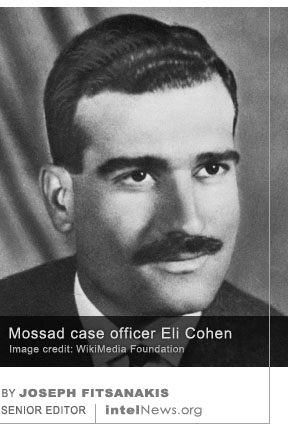
Eli CohenISRAELI OFFICIALS ARE REPORTEDLY trying to recover the remains of Eli Cohen, an Israeli spy who was hanged in Syria in 1965, after his espionage activities were discovered. Born in Alexandria in 1924, Cohen was an Egyptian Jew, whose family immigrated to Israel after 1949. After joining the Mossad, Israel’s primary external intelligence agency, Cohen became a katsa, or case officer.

The spy agency utilized Cohen’s fluency in Arabic and Spanish and sent him to Argentina, where he built his intelligence cover under the name Kamel Amin Thaabet. He pretended to be a Syrian businessman whose family had immigrated to Argentina in the 1920s. While in Argentina, Cohen became an active member of the Arab and Syrian diasporas and joined the Syrian Ba’ath Party.

In 1962, shortly before Ba’athist officers seized power in Syria, the Mossad instructed Cohen to relocate to Damascus. While there, Cohen became a well-known socialite with close connections to the administration of Syrian President Amin al-Hafiz. However, in 1965, Cohen’s espionage was uncovered by Syrian counterintelligence, who utilized technical countermeasures provided by Soviet intelligence. Cohen was convicted of espionage and publicly executed by hanging in Damascus on May 18, 1965.

Since Cohen’s execution, the Syrian state has rejected requests to reveal the location of his tomb and the whereabouts of his remains. On at least two instances, Israel, which views Cohen as a national hero, has offered to exchange Syrian and other Arab prisoners of war in return for the spy’s remains, but Damascus has rebuffed these offers. There are rumors that Syrian authorities regularly relocate Cohen’s remains so as to prevent Israel from covertly retrieving them.

According to reports from Middle Eastern media, since the fall of the administration of former Syrian President Bashar al-Assad, Israeli officials have been in negotiations to gain access to Cohen’s remains. The negotiations are allegedly taking place between Israeli government representatives and former members of the Assad regime, who have knowledge of the whereabouts of the late spy’s remains. In a television interview last week, Eli Cohen’s widow, Nadia, implied that Mossad Director David Barnea is personally involved in the ongoing negotiations.

Author: Joseph Fitsanakis | Date:16 December 2024 | Permalink

Mounting concern in the EU about Indian black operations targeting dissidents

BLACK OPERATIONS, WHICH AIM to liquidate targeted individuals, are once again the subject of various reports. The primary focus tends to be on Russian intelligence agencies targeting alleged traitors worldwide. Michael Weiss, US publisher of The Insider, spoke in a recent interview of “more than 60 mysterious deaths of Putin’s enemies in Russia and Europe since the Ukraine war began”.
Somewhat-less-black operations, in which individuals —usually living abroad— are not killed, but intimidated, persecuted, threatened, or roughed up, appear to be increasingly utilized as a tool by certain states that have little tolerance for domestic political opposition. Ken McCallum, Director General of Britain’s Security Service (MI5), stated on 8 October 2024 that, “since January 2022, with police partners, we have responded to twenty Iran-backed plots presenting potentially lethal threats to British citizens and UK residents”.

Back in September 2023, The Guardian reported having spoken to 15 Iranian activists living in the United Kingdom, France, Germany, Spain, Switzerland and Sweden, who were being persecuted and intimidated, or had been threatened in various ways by the Iranian regime’s henchmen and its intelligence services. There are numerous similar examples of journalists and dissidents who have been a thorn in the side of the Turkish government for several years now. In addition to threats and violence, there are reports of abductions by Turkey’s National Intelligence Organization (MIT). In recent years, China too has increasingly relied on intimidation directly in the West, and has also engaged Western investigators and helpers for this purpose.

One concerning development is the fact that these states are apparently increasingly resorting to the help of members of Outlaw Motorcycle Gangs (OMCG), members of drug cartels, and other criminals. Regardless of whether it is for purposes of sabotage, threats, or assassinations, shady figures —typically apolitical— are undertaking missions on behalf of the intelligence agencies of authoritarian states on European soil.

The Case of India

Another country that has been in the spotlight for some time is India, which has historically maintained a low profile in the West, in terms of black operations. Western intelligence agencies could have predicted that there would be an escalation —i.e. Indian black operations on Western soil— which could lead to the liquidation of alleged or actual terrorists. If one observes the reports of Indian intelligence agencies and analysts on the activities of its mortal enemy, Pakistan, and its intelligence agency, the Inter-Services Intelligence (ISI), it quickly becomes apparent that India is less and less willing to tolerate what it regards as terrorism sponsored by Pakistan. This applies particularly to individuals and organizations operating from abroad. Read more of this post

Analysis: The fate of Russia’s military bases in Syria seems highly uncertain

Khmeimim Air Base SyriaTHERE ARE CONFLICTING REPORTS about the fate of Russia’s military bases in Syria, following the complete collapse of the 54-year-long Assad dynasty. Late on Sunday it was announced on Russian state media that the Kremlin had extended Bashar al-Assad and his family political asylum “on humanitarian grounds”. Attention quickly turned to the fate of the Russian embassy in the capital Damascus and the Russian military facilities in Tartous and Khmeimim.
It is difficult to overstate the strategic significance of the Russian military facilities in Syria, some of which date as far back as 1971, when Hafez al-Assad, Bashar al-Assad’s father, assumed power in the country. The Russian naval base in Tartous is currently the only Russian military facility outside of the former Soviet Union. Furthermore, it constitutes the sole warm-port fueling and repair facility that is exclusively available to the Russian Navy. It is home to the Russian naval group in Syria, which consists of a submarine and five warships.


Likewise, the Khmeimim Air Base in Syria’s Latakia province is home to dozens of Russian fighter jets, which have been stationed there since 2015, ostensibly in order to protect the Syrian government from the Islamic State. However, Russia regularly uses the Khmeimim Air Base to transport troops and war materiel to Africa, and to project air power in the Mediterranean, through the presence of several bomber aircraft. The latter can be found, not only in the Khmeimim Air Base, but also in the Syrian military airports of Homs and Palmyra.

But these two military airports are now in the hands of the Hayʼat Tahrir al-Sham (HTS) forces that have captured much of Syria in the past two weeks. It is doubtful that the Russian Aerospace Forces will be able to use them from now on. Moreover, there are reports that Moscow will be forced to engage in a strategic withdrawal of the entirety of its military forces from Syria within hours, if not days.

On Sunday, the Russian Ministry of Foreign Affairs issued a dismissive statement claiming that, although Russian troops in Syria had been placed on high alert, “no serious threat to their security” had been detected. According to the Reuters news agency, the Russian government had been in communication with the leadership of the HTS leadership for several days. As a result of this communication, an agreement had allegedly been struck, which guaranteed “the safety of Russian military bases and diplomatic institutions in Syria”. Read more of this post

British soldier who spied for Iran found guilty of espionage and terrorism

Wandsworth prisonDANIEL KHALIFE, A BRITISH soldier who spied for Iran, has been found guilty of espionage and terrorism, in a case that has revealed serious vulnerabilities in the British security clearance-vetting system. The then-20-year-old Khalife was arrested in January 2022 while serving on active duty in Staffordshire, in Britain’s Midlands region. He was charged with violating the Official Secrets Act 1911 and the Terrorism Act 2000.

Prior to his arrest, Khalife was reportedly seen by his fellow soldiers and superiors as a promising soldier. Having joined the British Army at 16, he was quickly promoted to lance corporal (the lowest ranking of a non-commissioned officer) and cleared to work in the area of signals intelligence. He had also expressed a strong interest in joining the Special Air Service (SAS), which are the British Army’s special forces.

However, on November 9, 2021, Khalife voluntarily called the national security concerns hotline of the British Security Service (MI5). He told the operator on the other end of the line that he was a British soldier who had been spying for Iran for “more than two years”, but had now decided to become a double agent by cooperating with the British government. Khalife called again, and although he did not identify himself during the telephone conversations, MI5 was able to track him.

It has since become known that Khalife began spying for Iran when he was just 17 years old, shortly after joining the British Army. Over the next two years, Khalife provided his Iranian handlers with information about the identities of SAS personnel, military computer systems, as well as government surveillance programs and hardware, including unmanned aerial vehicles. Throughout that time, he communicated with his Iranian handlers via the Telegram instant messaging service, or via dead drops in Britain, as well as during trips abroad.

Shockingly, Khalife was temporarily able to escape justice twice following his arrest. In January 2023, he disappeared while on bail. He was found after nearly a month, living in a stolen van, which he had converted into a rudimentary camper. In September of that year, Khalife escaped from Wandsworth prison (pictured) in southwest London, by hiding beneath a delivery vehicle. He was captured three days later and eventually taken to court, where he was convicted and is now awaiting sentencing.

According to reports, British authorities are still unable to piece together the entirety of the information that Khalife shared with the Iranians. Consequently, the full extent of the damage he caused to British national security remains unknown. What is clear is that the Khalife case has exposed serious vulnerabilities in the security clearance-vetting process, which is “lacking in a lot of ways” —not least in the fact that it relies largely on self-reporting, as one expert told The Guardian newspaper on Saturday.

Author: Joseph Fitsanakis | Date: 02 December 2024 | Permalink

White House holds emergency meeting with telecoms over ‘massive’ Chinese breach

VerizonTHE WHITE HOUSE HELD an emergency meeting on Friday with senior telecommunications industry officials to discuss the fallout from a Chinese cyber espionage operation described as “massive” by experts. The existence of the operation was revealed last month by Microsoft engineers, who claimed that it was orchestrated by Salt Typhoon, a Chinese government-linked hacker group.

On Thursday, following a briefing provided by intelligence officials, Senator Mark Warner (D-VA), who chairs the United States Senate’s Select Committee on Intelligence, referred to the Chinese breach as “far and away the most serious telecom hack in [American] history”. Warner added that the volume of data the Chinese hackers were able to collect on “important American officials” was alarming, but that the extent of the intrusion was significantly broader than initially thought and compromised the privacy of telephone users across the United States.

According to reports, the breach affected a host of American telecommunications service providers (TSPs), including the three largest —T-Mobile, Verizon, and AT&T. The initial breach compromised the system employed by the TSPs to facilitate communications interception requests by government agencies following the issuance of court warrants. Eventually, however, the hackers were eventually able to exploit antiquated software and hardware in the United States’ national telecommunications network in order to target a wide array of users.

The extent of the damage caused by the breach remains unknown, as very little about it has been shared by the White House or the telecommunications industry. Nevertheless, it appears that the hackers selected telephone service users with senior current or former posts in government, including President-Elect Donald Trump. The hackers were reportedly able to access the metadata, and even content, of all unencrypted telephone calls and text messages to and from these users.

Friday’s meeting at the White House was reportedly convened by National Security Adviser Jake Sullivan and co-led by Anne Neuberger, who is serving as Deputy National Security Adviser for Cyber and Emerging Technology. The names of telecommunications industry executives that attended the closed-door meeting were not provided to the media.

Author: Joseph Fitsanakis | Date: 25 November 2024 | Permalink

Russia using nontraditional means to gather intelligence, Finland warns

SUPO FinlandRUSSIA’S NEED TO GATHER intelligence from Scandinavian targets has increased considerably since Finland and Sweden joined the North Atlantic Treaty Organization (NATO), prompting Moscow to seek nontraditional means of collecting intelligence, according to Finland’s spy agency. A new report by the Finnish Broadcasting Company (Yle) relays a warning by the Finnish Security and Intelligence Service (SUPO) that Russian spies are increasingly operating in Scandinavia without relying on diplomatic protection.

Human intelligence (HUMINT) operations are typically carried out of diplomatic facilities by intelligence officers who enjoy various degrees of diplomatic immunity. Such protections are seen as crucial for the safety of intelligence personnel, who tend to engage in illegal activities while stationed abroad. However, the number of Russian intelligence officers who are based in diplomatic facilities in Finland and elsewhere in Scandinavia has “significantly decreased” in recent years, according to the Yle report.

The reason for the decline in numbers rests with the numerous expulsions of Russian diplomatic personnel —which include intelligence officers— that took place throughout Europe in the months following Russia’s February 2022 invasion of Ukraine. Since then, Finland is one of dozens of European countries that have repeatedly denied Russia’s requests for the issuance of diplomatic visas. As a result, Russian embassies and consulates in Finland remain understaffed and mostly devoid of intelligence personnel.

In response to this new reality, the Kremlin has been experimenting with using nontraditional HUMINT collectors. The latter are not based in diplomatic facilities and are not protected by diplomatic immunity. Such nontraditional intelligence collectors operate as “journalists or researchers”, according to SUPO. At the same time, Russian intelligence agencies increasingly target for recruitment Finns who life in Russia, or try to recruit them while they are traveling elsewhere in Europe.

Lastly, Russian intelligence agencies are systematically hiring criminals to carry out specific tasks on behalf of the Kremlin, in return for money. Such criminals include computer hackers, who are attracted by the Russian state. Indeed, the Russian government is systematically “providing favorable conditions” for computer hackers to operate out of Russian territory. They receive money and protection in return for letting the Russian state use them as a cover for cyber espionage, sabotage, and influence operations.

Author: Joseph Fitsanakis | Date: 18 November 2024 | Permalink

Israeli couple who spied for Iran made ample use of digital applications

Israel and IranTHE ISRAEL SECURITY AGENCY (ISA) recently announced the arrests of an Israeli couple of Azeri origin on suspicion of spying for Iran. The couple, both 32 years old, were allegedly recruited by an Iranian handler of Azeri origin named Elshan Agheev. As part of their activities, and for about two years, the couple gathered intelligence on critical infrastructure and security sites in Israel, and even conducted surveillance on an academic working for the Institute for National Security Studies, allegedly in order to kill her.

The case demonstrates how software that is easily accessible on the Internet makes it possible to encrypt information communicated between a handler and an agent, as well as how money is transferred to the agent. The official indictment reveals details about the couple’s modus operandi, including the identity of the particular software the spies used to communicate with their Iranian handler.

One of the applications the couple used is Zangi, which facilitates the exchange of encrypted instant messages. According to the company’s website, Zangi offers voice and video calling, text messaging, and file transfer services “without registration and without data collection”. In fact, according to Zangi, the data is saved on the user’s device only. In addition to using the Zangi application, the couple also appear to have used the Zolotaya Korona money-transfer platform. The couple allegedly used the platform in order to receive payments by their Iranian handlers, and to transfer funds to other parties involved in Iranian-led espionage activities inside Israel.

Another application allegedly used by the couple is Ecos Dos, a digital wallet for storing and transferring digital currencies. Ecos Dos is a software wallet that can be installed on a computer or mobile phone. It supports a wide variety of crypto-currencies and is used to store and transfer cryptocurrencies. It is known for its simplicity of use and friendly interface. It is popular among users who wish to maintain anonymity when transacting in digital currencies. It does not require identifying a user’s details when operating, so anyone can create an account and receive funds anonymously.

The suspects are also believed to have used a software called Encryptor in order to encrypt information. This software allows files and folders to be encrypted so that only those who have the encryption key can open them. The couple allegedly used Encryptor to encrypt the information they collected before passing it on to their Iranian handlers, thus making it difficult for Israeli authorities to decipher the information.

The use of these applications attests to the sophistication of the Iranian spy network that was recently busted in Israel, and its efforts to hide its activities inside the Jewish state. The recent indictment against the couple details a collection of serious security offenses, including aiding the enemy in war and providing information to the enemy to harm the security of the state. Iran is clearly stepping up its efforts to recruit Israeli citizens for espionage and terrorist activities.

Author: Avner Barnea | Date: 11 November 2024 | Permalink

Dr. Avner Barnea is research fellow at the National Security Studies Center of the University of Haifa in Israel. He served as a senior officer in the Israel Security Agency (ISA). He is the author of We Never Expected That: A Comparative Study of Failures in National and Business Intelligence (Lexington Books, 2021).

Review calls for Europe-wide intelligence agency to prevent hybrid attacks

European Commission report coverA HIGHLY ANTICIPATED REVIEW of the European Union’s intelligence readiness to face conventional and hybrid threats has called for the establishment of a dedicated Europe-wide intelligence agency. Such an agency must rely on EU member states “trust[ing] each other” in order to confront increasingly aggressive espionage, sabotage, and other types of threats by outside actors like Russia, the report said.

Ursula von der Leyen, who presides over the EU’s powerful executive branch, known as the European Commission, assigned the review last March. It was led by Sauli Niinistö, former president of Finland, who was tasked with providing a set with proposals aimed to enhance the resilience of the EU in the face of current threats in the tactical and strategic domains. The final report, available here in PDF, was made publicly available in Brussels on Wednesday.

Among several recommendations, the report proposes the establishment of a “fully fledged intelligence cooperation service at the EU level”, which could serve the EU’s urgent “strategic and operational needs”. Such needs include countering espionage threats within EU institutions, as well as devising Europe-wide networks of defense against sabotage targeting EU critical infrastructure. Part of the new agency’s mission should be to prevent foreign intelligence services from operating “anywhere in the EU”, the report said.

In her public statement upon receiving the report, President von der Leyen stated that the EU should begin to think pre-emptively, rather than reactively, about conventional and unconventional threats to its security. Such a process should begin through “improving the flow of information gathering and intelligence gathering”, initially through existing EU-wide security bodies, such as the European Union Intelligence and Situation Centre (EU-IntCEN) and the European Centre for Information Policy and Security (ECIPS).

Author: Joseph Fitsanakis | Date: 04 November 2024 | Permalink

Israeli citizens arrested on suspicion of working for Iranian intelligence

Ronen Bar Israeli Security AgencyTHE ISRAELI SECURITY AGENCY (ISA) has announced the arrest of 18 Israeli citizens suspected of working for Iranian Intelligence. Among them are seven Israelis, who immigrated to Israel from Azerbaijan, and are suspected of having been in contact for two years with Iranian intelligence. Some of the seven were caught carrying out surveillance against a senior Israeli Air Force officer, whom they were reportedly planning to assassinate.

Israeli authorities accuse the suspects of photographing and collecting information on military bases and facilities, including Air Force bases, Iron Dome battery sites, a power plant, and other energy infrastructure facilities. The suspects are also accused of having received from their Iranian handlers a set of maps of Israeli strategic sites, including the Golani Brigade’s training base, where four Israeli soldiers were killed by a drone attack last week. In over two years, the suspects allegedly performed approximately 600 missions under the direction of two handlers from Iranian intelligence. They did so in return for hundreds of thousands of shekels, which were paid to them in cash and various crypto-currencies.

Another Israeli citizen, who was arrested on suspicion of spying for Iranian intelligence in return for payments, has been named as Vladimir Varehovsky, 35, from Tel Aviv. Among other tasks, Varehovsky is suspected of gathering information about an Israeli scientist, whom he agreed to murder in exchange for a $100,000 payment. The suspect had reportedly acquired weapons for the assigned task, but the ISA arrested him before he could carry it out.

In another counterintelligence operation, the ISA arrested seven young Palestinians from the east of Jerusalem, who have been charged with working for Iranian Intelligence. The main suspect recruited the other six to carry out tasks for a fee. Tasks included setting cars on fire, gathering information about a city mayor in Israel, and plotting to assassinate one of the country’s top scientists. The suspects used social media for recruitment purposes. They were reportedly arrested before they were able to execute their missions. Read more of this post