Austria issues international arrest warrant for alleged Russian spy
July 26, 2019 1 Comment
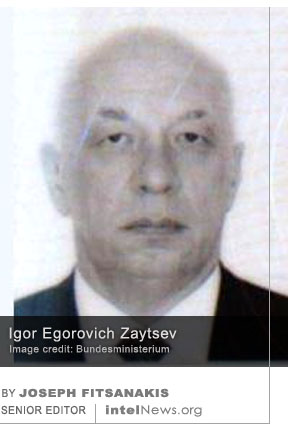 The Austrian government has issued an international arrest warrant for a Russian man who allegedly recruited a retired colonel in the Austrian Federal Army to spy for Moscow. The arrest warrant was issued on Tuesday by the public prosecutor’s office in the city of Salzburg. It identifies the Russian man as Igor Egorovich Zaytsev. Austrian officials allege that the Moscow-born Zaytsev is in fact an intelligence officer for the Main Directorate of the General Staff of the Russian Armed Forces. Known as GRU, the organization is Russia’s primary military-intelligence agency.
In an accompanying press statement issued on Tuesday, the Austrian Ministry of the Interior said that Zaytsev had facilitated the “betrayal of state secrets” and that his actions had been “to the detriment of the Republic of Austria”. The arrest warrant accuses Zaytsev of having participated in the “intentional disclosure of a military secret”, but does not provide details. However, in a subsequent statement, Austrian police directly linked the search for Zaytsev with an espionage case that was reported in the Austrian media last year. The statement said that Zaytsev is believed to have recruited a man known as “Martin M.” to spy on Austria. This appears to refer to the arrest last November of a 70-year-old colonel in the Austrian Army, who was stationed in Salzburg. He is believed to have spied for Russia from at least 1992 until his arrest. Austrian media reported that the accused spy was believed to have given Russia information on a range of weapons systems used by the Austrian Army and Air Force, as well as the personal details of high-ranking officers in the Austrian Armed Forces.
Soon after the arrest of “Martin M.”, Austrian authorities arrested a second man, identified only as “O.”, who is also suspected on having spied for Russia. According to the Vienna Public Prosecutor’s Office, “O.” was an employee of the Austrian Office for Protection of the Constitution and Counterterrorism, known as BVT. He had been investigated on suspicion of espionage for more than a year prior to his arrest. The man’s arrest took place alongside simultaneous raids at two residential addresses associated with him, according to reports. No further details have been made available since the arrest. It is not known whether Zaytsev’s is also connected with the case of “O.”.
► Author: Joseph Fitsanakis | Date: 26 July 2019 | Permalink
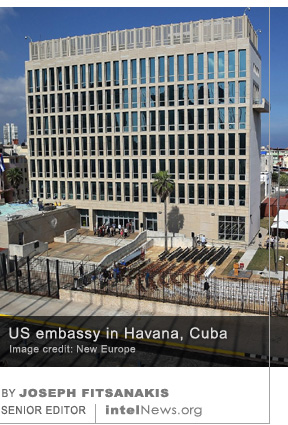 A series of alleged “sonic attacks” by a mysterious weapon may have caused the brains of American diplomats who served at the United States embassy in Cuba to shrink, according to a new scientific study. In 2017 Washington
 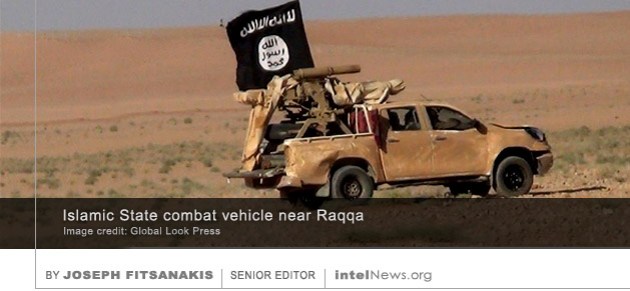 About 1,000 Islamic State fighters have returned to Iraq in recent months and are waging a low-level insurgency that threatens to destabilize rural areas and may be the forerunner of a new sectarian war, an expert has warned. Thousands of fighters belonging to the Islamic State —known also as the Islamic State of Iraq and Syria, or ISIS— crossed into Syria in late 2017. In December of that year, the Iraqi government of Prime Minister Haider al-Abadi declared victory in the war against the militant Sunni group. Since then, however, many of these fighters have been slipping back into Iraq from Syria and are now picking up arms again against the Iraqi state, which they see as being dominated by Iran-allied Shiites.
 If the announcements from Tehran are to be believed, the United States Central Intelligence Agency lost at least 17 spies in Iran in the months leading up to March 2019. According to Iran’s Ministry of Intelligence, the Islamic Republic busted an alleged “CIA network” operating in sensitive private sector companies and government agencies that relate to defense, aerospace and energy. At least some of the 17 alleged spies have reportedly been sentenced to death, though their exact number remains unknown.
 made to look like rocks, which were located “in parks and other mountainous areas” in Iran and elsewhere in the Middle East, according to Iranian officials. Some of the assets communicated with their handlers while attending science conferences through- out Europe, Africa and Asia.
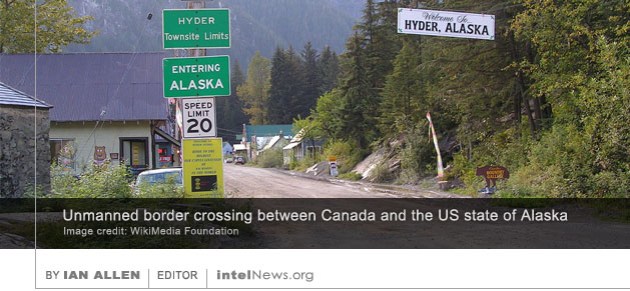 Since the election of President Donald Trump, the issue of border security between the United States and Mexico has been a major topic of national debate. But is the incessant focus on America’s southern border by the news media and politicians ignoring security concerns emanating from the country’s northern neighbor, Canada? In a thought-provoking
 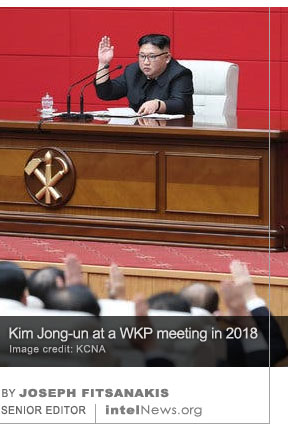 The spy agency of South Korea has dismissed media reports that North Korea had several of its top nuclear negotiators executed or sent to labor camps, but has not rejected rumors of a major reshuffle in Pyongyang. In early June, media reports in Seoul claimed that North Korea had executed at least five of its senior nuclear negotiators and imprisoned several others. Prior to these reports, rumors of executions of North Korean nuclear negotiators had circulated in international diplomatic circles since February, but no specific allegations had surfaced in the news media. That changed when Chosun Ilbo, South Korea’s highest-circulation newspaper, alleged that at least
  A Swiss court has ordered the extradition to the United States of the brother of one of the world’s leading biochemists, who spied on a British pharmaceutical firm to help a Chinese startup. The extradition is part of a large corporate espionage case centered on Yu Xue, a Chinese scientist described by US federal prosecutors as “one of the world’s top protein biochemists”. Yu specializes in drug research for cancer and other serious terminal illnesses. From 2006 until 2016 he worked in the US for GlaxoSmithKline (GSK), a leading British pharmaceutical group.
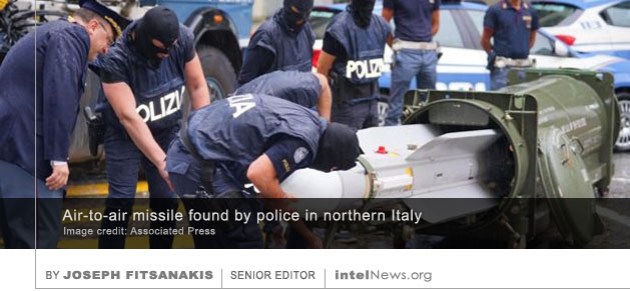 Police in Italy have found an air-to-air missile in “perfect working order” alongside dozens of guns during raids on homes belonging to members of far-right groups. The raids took place in several northern Italian cities and were coordinated by the Digos, a special unit of the Turin Municipal Police that deals with organized crime and terrorism. Aside from Turin, synchronized raids took place in Varese, Novara, Forli and Milan. According to
  A spy novel written by the granddaughter of Kim Philby, the British senior intelligence officer who secretly spied for the Soviet Union, will be published this week.
 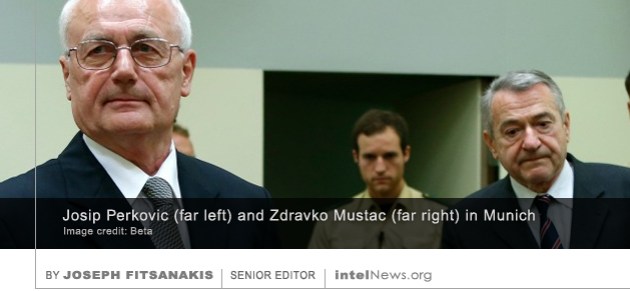 Germany has extradited a former senior official of the Yugoslav intelligence service to Croatia, where he is expected to serve a 30-year prison sentence for organizing the assassination of a dissident in Munich in 1983. Josip Perković is a former senior official in the Yugoslav State Security Service, known as UDBA. In 2014, he was extradited to Germany from Croatia alongside another former UDBA officer Zdravko Mustać. The two men were tried in a German court in the Bavarian capital Munich for organizing the assassination of Stjepan Đureković on July 28, 1983. Đureković’s killing was carried out by UDBA operatives in Wolfratshausen, Bavaria as part of a UDBA operation codenamed DUNAV. Đureković, who was of Croatian nationality, was director of Yugoslavia’s state-owned INA oil company until 1982, when he suddenly defected to West Germany. Upon his arrival in Germany, he was granted political asylum and began associating with Croatian nationalist émigré groups that were active in the country. It was the reason why he was killed by the government of Yugoslavia.
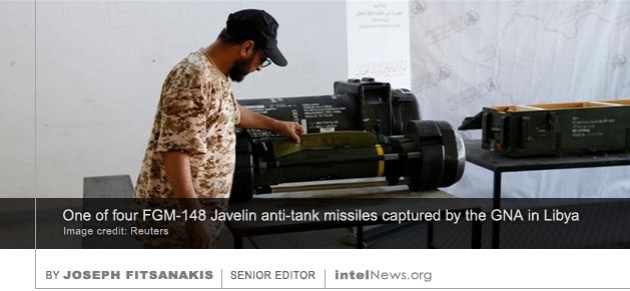 The French government has admitted that four anti-tank missiles found in a Libyan rebel camp belonged to its Special Forces units, but denied accusations that it deliberately breached the United Nations-imposed weapons embargo on Libya. Libya’s UN-recognized government, the Government of National Accord (GNA), which is headed by Fayez al-Sarraj, announced in June that it discovered a cache of FGM-148 Javelin portable anti-tank missiles during a raid on a rebel camp. The camp belonged to forces loyal to Khalifa Haftar, a rogue Libyan warlord who is supported by a group of Western-led nations that includes the United States, France, Israel, Egypt and the United Arab Emirates.
 The Polish government has authorized the release on bail of a former counterintelligence officer who was charged in January of this year with spying for China. The man has been identified in media reports as Piotr Durbajlo and is believed to have served as deputy director of the Internal Security Agency, Poland’s domestic counterintelligence service. A cyber security expert, Durbajlo also served in Poland’s Office of Electronic Communications with a top security clearance and unrestricted access to classified systems of Poland and the North Atlantic Treaty Organization, of which Poland is a member.
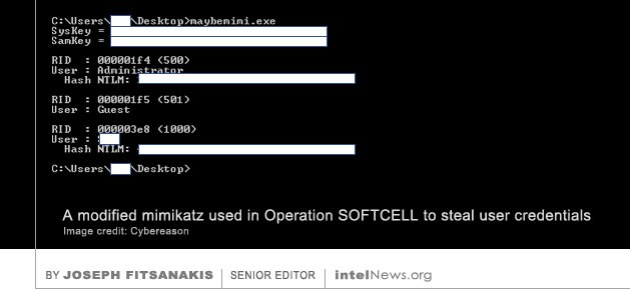 A hacker attack of impressive magnitude targeted specific individuals of interest to the Chinese government as they moved around the world, in what appears to be the first such operation in the history of cyberespionage. The attack was revealed late last month by Cybereason, an American cybersecurity firm based in Boston, Massachusetts. Company experts
 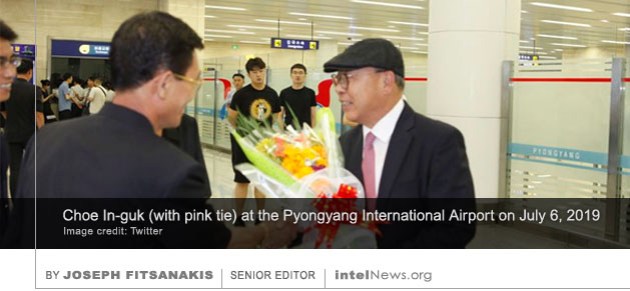 The son of a South Korean former cabinet minister has defected to North Korea, marking a rare instance of a citizen of South Korea switching his allegiance to the North. It is even rarer for such high-profile South Korean citizens to defect to North Korea. The defector is Choe In-guk, son of Choe Deok-sin, who served as South Korea’s minister of foreign affairs in the 1970s under the South Korean dictator Park Chung-hee. Choe was an American-trained army officer who served under United States command in the Korean War. He then served as a member of the cabinet and as South Korea’s ambassador to West Germany.






 intelNews.org
Many countries, not just Russia, are trying to influence US elections, experts warn
July 29, 2019 by Joseph Fitsanakis 6 Comments
The majority of foreign information operations take place on social-media platforms such as YouTube, Twitter, Instagram and Facebook. But there are also campaigns to influence more traditional American media, for instance by tricking newspapers into publishing letters to the editor that are in fact authored by foreign intelligence operatives. Analysts from FireEye, Graphika and other cybersecurity and network-analysis firms told The Post that some information operations are difficult to detect, because the presence of a state security service is not always apparent. However, the messages that are communicated in tweets, Facebook postings, online videos, etc., tend to echo —often word for word— the rhetoric of foreign governments, and promote their geopolitical objectives. As can be expected, these objectives vary. Thus, Russian, Israeli and Saudi information operations tend to express strong political support for US President Donald Trump, arguably because these governments see his potential re-election as a development that would further their national interest. In contrast, Iranian information operations tend to lambast Trump for his negative stance on the Iranian nuclear deal and for his support for Saudi Arabia’s intervention in the Yemeni Civil War.
The Washington Post article notes that all major social-media companies employ teams of screeners whose mission is to detect and eliminate disinformation campaigns by both state and non-state actors. However, experts remain skeptical about their ability to combat the phenomenon, given that the quantity and sophistication of disinformation campaigns is constantly increasing. Many countries —including Israel and the United States— now maintain advanced information operations targeting national elections on several continents. There are also many governments —such as Qatar, the Philippines and Turkey— that use these techniques on their own voters and could potentially use them in the near future to target foreign populations, including Americans. The 2020 presidential election in the US is expected to be the most hotly contested in many decades, so it is certain that numerous foreign spy agencies will try to influence it in numerous ways, says The Post.
► Author: Joseph Fitsanakis | Date: 29 July 2019 | Permalink
Filed under Expert news and commentary on intelligence, espionage, spies and spying Tagged with disinformation, News, propaganda, social networking, United States