Opinion: Saudi Arabia will not go to war with Iran, but it may pay others to do so
September 25, 2019 1 Comment
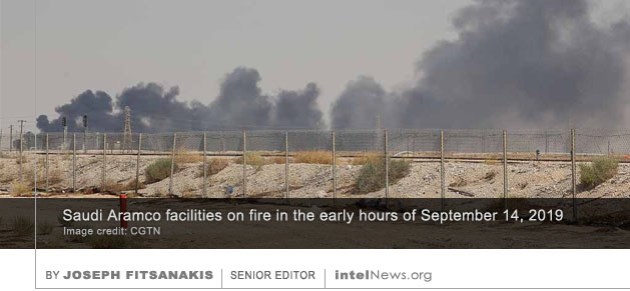 Ever since a barrage of drone and missile attacks struck Saudi Arabia on September 14, many have wondered whether the oil kingdom will go to war with Iran. Riyadh has directly accused the Islamic Republic of being behind the attacks. But the speculation about a possible war is baffling, argues Nesrine Malik in a well-argued article published last Sunday in Britain’s Guardian newspaper. Saudi Arabia does not “go to war”, she says —it pays others to do so on its behalf.
The war in Yemen is a perfect example, argues Malik. Even though the Saudi monarchy is leading the foreign military involvement in that war, Saudi Arabia is supplying almost no ground troops in that war. There are only Saudi commanders who are managing groups of mercenaries from Morocco, Jordan and Egypt. A large portion of the Saudi-led force consists of Sudanese child soldiers, whose families are paid handsomely for supplying the oil kingdom’s force in Yemen with what Malik describes as “cannon fodder”. The Saudi commanders communicate their battle orders to their hired troops via satellite phones and use unmanned drones and high-flying planes to attack the predominantly Shiite Houthi rebels. That largely explains the high civilian toll in that war.
Meanwhile, the United States government announced last week that it will be sending several hundred troops to the oil kingdom and will be beefing up its air defense systems. But Malik wonders why it is that Saudi Arabia, which has been the world’s largest weapons importer since 2014, and whose 2018 arms purchases accounted for 12 percent of global defense spending last year, requires the presence of American troops on its soil for its protection. The answer is simple, she says: the Saudi regime purchases weapons, not to use them, but to make Wester defense industries dependent on its purchasing power. In other words, the Saudi monarchy buys Western weapons for political reasons. These purchases enable it to get away with its abysmal human-rights record at home, as well as its kidnappings and assassinations abroad.
In the meantime, says Malik, if Saudi Arabia goes to war against Iran, it will do so the way it always does: it will hire proxies —including the United States— to fight on its behalf.
► Author: Joseph Fitsanakis | Date: 25 September 2019 | Permalink
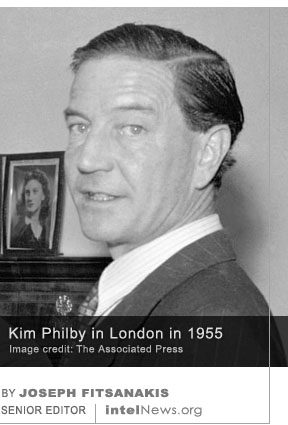 Extensive extracts from the confession of Kim Philby, one of the Cold War’s most prolific double spies, are scheduled to be released today for the first time by Britain’s
 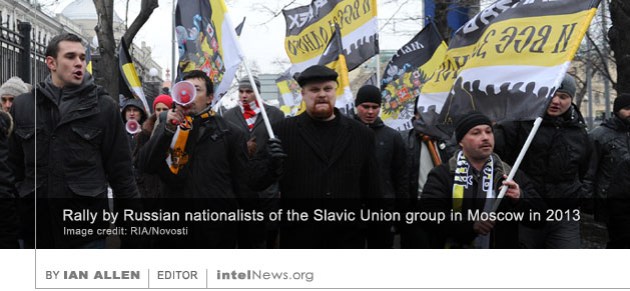 Threats posed by white supremacist and other far-right groups are now global in nature and are increasingly backed by state actors, according to a Congressional testimony by an American former counterterrorism official. The testimony was delivered by Joshua Geltzer, former senior director for counterterrorism at the United States National Security Council. Geltzer, who now directs the Institute for Constitutional Advocacy and Protection at Georgetown University in Washington, DC, testified on Friday before two subcommittees of the US House of Representatives. The Subcommittee on National Security and the Subcommittee on Civil Rights and Civil Liberties held a joint hearing entitled “Confronting Violent White Supremacy”.
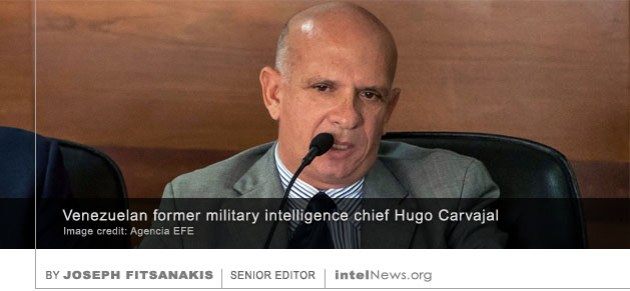 Spain has refused to extradite Venezuela’s former spy chief to the United States, where he is wanted for drug-running. The decision is also an intelligence setback for Washington, as the former spy, Hugo Carvajal, is reputed to possess a “treasure trove” of inside information on the Venezuelan government. Carvajal is a retired general, a former diplomat, and a member of the late Venezuelan President Hugo Chávez’s inner circle. From 2004 to 2011, under Chávez’s tutelage, Carvajal headed the Directorate General of Military Counterintelligence (DGCIM). In 2008 the US named Carvajal as a major facilitator of international drugs trafficking and imposed financial sanctions on his assets around the world. Washington accused Carvajal of assisting the paramilitary group known as the Revolutionary Armed Forces of Colombia (FARC) transport drugs from Latin America to Mexico and from there to the US.
 Russian authorities announced on Tuesday that a gas explosion had damaged a section of a medical facility in Siberia that houses live samples of viruses such as Ebola and smallpox, but added that there was no need to declare a biomedical emergency. The explosion reportedly took place on Monday at the State Research Center of Virology and Biotechnology, known as Vector. The six-floor concrete and steel facility is located in the isolated Siberian town of Kotsovo, near the city of Novosibirsk, 600 miles from the Mongolian border.
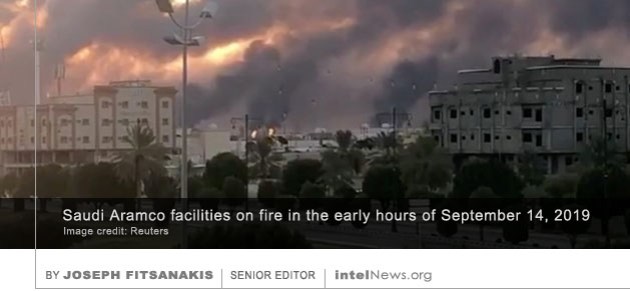 United States officials are considering increasing substantially America’s intelligence-sharing with Saudi Arabia following last weekend’s drone attacks that halved the Kingdom’s oil production and shook global markets. The attacks occurred in the early hours of Saturday, September 14, at two refineries located in eastern Saudi Arabia. The refineries are owned by Aramco, Saudi Arabia’s government-owned oil conglomerate, and are part of the world’s largest crude oil processing facility. The massive fires caused by the attacks were contained within hours and no casualties were reported. But the facilities had to cease operation so that repairs could be completed. This cut Saudi Arabia’s oil production by close to 50 percent, which amounted to a 5 percent reduction in global oil production. The impact on the world’s financial markets was immediate: by Monday morning, oil prices had seen their most significant one-day surge since the 1991 Gulf War.
 The Russian government reportedly fired a number of officials over the defection of a senior Kremlin aide, who alleged worked as an American spy. Meanwhile, Moscow has filed a search request with INTERPOL about the alleged defector’s whereabouts. News of the defection was
 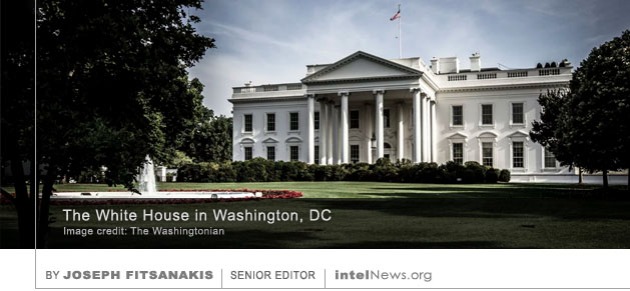 The intelligence services of Israel planted surveillance devices around the White House in an attempt to spy on United States President Donald Trump and his senior advisors, according to a report published on Thursday. The
 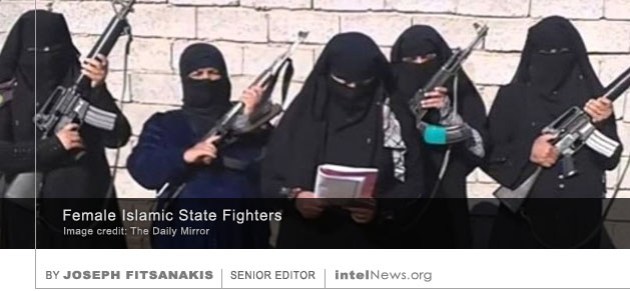 Tens of thousands of supporters of the Islamic State, many of them women and children, are re-radicalizing inside vast Kurdish-run prison camps with inadequate security and almost no infrastructure or provisions. In a
 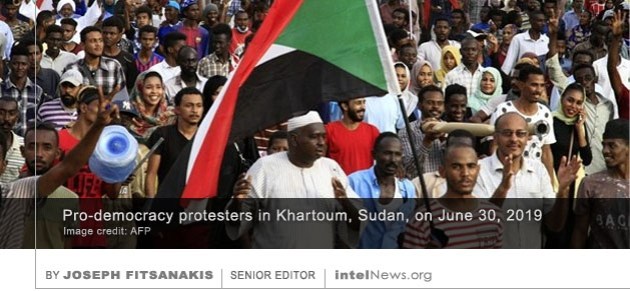 Facebook has shut down a well-funded online campaign to support Sudan’s military regime, which some say is part of wider efforts by Egypt, the United Arab Emirates and Saudi Arabia to stop democratic reforms in Sudan. The northeast African country has experienced civil unrest for more than a year. In February Sudan’s longtime strongman, Omar Hassan al-Bashir, fell from power after 30 years, following prolonged popular protests. But the new military junta that succeeded him launched a
 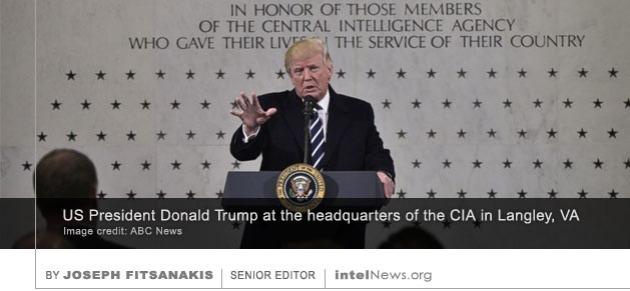 The United States Central Intelligence Agency has questioned the accuracy of a media report, which claimed that “repeated mishandling” of intelligence by President Donald Trump resulted in the exfiltration of a high-level source from Russia. According to the American news network CNN, the CIA carried out the exfiltration operation in 2017. Despite the success of the operation, the removal of the asset has left the US without this high-level source at a time when it is most needed, said CNN. The network
 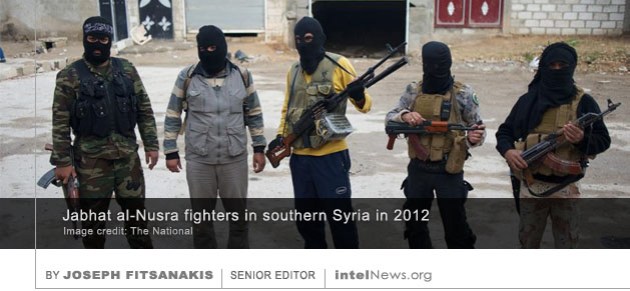 In an effort to remain relevant, al-Qaeda has shifted its strategic focus from Yemen to Syria but continues to pursue a globalist agenda by seeking ways to attack Western targets, according to an expert report. Following the meteoric rise of the Islamic State in 2014, al-Qaeda found it difficult to retain its title as the main representative of the worldwide Sunni insurgency. But in an
 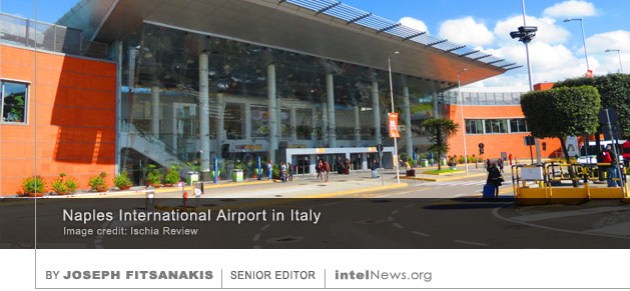 Italy has arrested a Russian business executive and former foreign ministry official who is wanted by the United States for carrying out espionage against an American aviation firm. Alexander Yuryevich Korshunov, 57, who is a former official in Russia’s Ministry of Foreign Affairs, was reportedly
 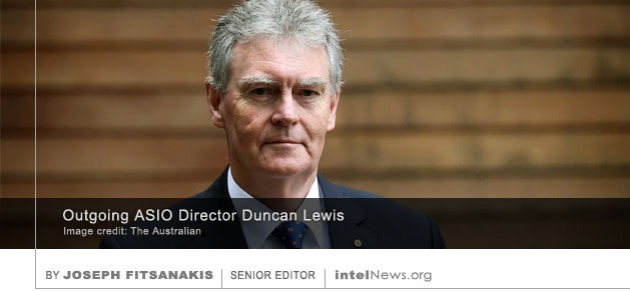 The director of Australia’s main national security agency has warned in a public speech that the threat from espionage —including cyber espionage— is greater than terrorism, and poses an “existential” danger to established states. Duncan Lewis was appointed director of the Australian Security Intelligence Organisation (ASIO) in 2014, having already served for more than four decades in the Australian military and civilian government sectors. On Wednesday, Lewis gave a rare







Executive of Danish bank implicated in massive money laundering found dead
September 26, 2019 by Ian Allen Leave a comment
But the reputation of the Estonian banking sector was tarnished last year, when a criminal investigation was launched into an alleged money laundering scandal. The investigation focused on customers from Russia and other Eastern European countries who allegedly used Danske Bank’s subsidiary in Estonia to launder billions of dollars in illicit funds. The probe prompted Danske Bank to pull out of the Baltic countries. Meanwhile, the probe extended to Sweden, Germany and the United States. Deutsche Bank, one of the world’s largest financial institutions, is currently being investigated for allegedly helping facilitate Danske Bank’s customers launder money by converting it into United States dollars. The criminal probe has damaged the previously spotless reputation of the Scandinavian banking sector and has made Central European banks hesitant to do business in the Baltics. Some financial observers have even warned that the Danske Bank scandal could drag the Baltic economies into a prolonged recession.
Rehe was not involved in the money laundering scandal. However, much of the money laundering took place between 2007 and 2015, when he was in charge of the Estonian subsidiary of Danske Bank. Under his leadership the bank’s operations were allegedly marred by “deficiencies in controls and governance”, which allowed for criminal activity to occur unnoticed, according to an internal Danske Bank investigation into the money laundering affair. Rehe had been missing from his home since Monday, having apparently left without taking his wallet and cellphone. His body was discovered on Wednesday in the garden of his home in the Estonian capital. Police have ruled his death an apparent suicide and believe that no foul play was involved.
► Author: Ian Allen | Date: 26 September 2019 | Permalink
Filed under Expert news and commentary on intelligence, espionage, spies and spying Tagged with Aivar Rehe, corruption, Danske Bank, Denmark, Estonia, money laundering, suicides