Austria: Arrest raises broader questions about counterintelligence capabilities
April 10, 2024 6 Comments
 ON GOOD FRIDAY, MARCH 29, Egisto Ott, a former member of Austria’s now-dissolved domestic intelligence agency, the Federal Office for the Protection of the Constitution and Counterterrorism (BVT), was arrested in his house in Carinthia, Austria’s southernmost state. Ott had frequently been at the center of media attention in the past year, in connection with the network surrounding the fugitive financier and alleged spy Jan Maršálek, as well as alleged misconduct relating to carrying out illegal investigations of persons. Ott also seems to have been involved in an alleged attempt to create an intelligence unit, or even an entire shadow intelligence service, embedded inside Austria’s foreign ministry. Now the veteran police and intelligence officer stands accused by the state attorney of abusing his authority and of being part of an “intelligence activity to the disadvantage of Austria” —the only form of spying that is illegal under § 256 of the Austrian criminal code.
Ott’s arrest came several years after intelligence was first shared with Austria by Western partner services —allegedly the Central Intelligence Agency— that reportedly date from as early as November 2017. Back then, Ott allegedly received classified material from his service’s email address to his personal Gmail account. However, Peter Gridling, director of the BVT from 2008 until its dissolution in 2021, stated in a recent interview that the ensuing investigations did not yield actionable results that could be used in criminal proceedings. This statement is highly interesting, as Gridling filed accusations about Ott with the State Prosecutor’s Office himself, and would hardly have done unless he had access to hard evidence. Ott was consequently removed from the BVT and placed in Police Academy Austria (SIAK), which is responsible for training police officers and conducts research related to police and domestic security.
Nevertheless, according to media reporting, Ott seems to have kept and illegally used certain forms of identification that presented him as a police officer. He is also alleged to have maintained access to several police databases and to have retained his network of trusted informants that provided him with intelligence.  These included contacts in friendly foreign police services, whom Ott knew from his time as a liaison officer in Italy and Turkey. According to Gridling, these contacts were unaware that Ott had been removed from the BVT under suspicion of being unreliable and potentially even working for Russia. They therefore continued to help him when asked. Ott allegedly deceived his contacts by claiming that he needed information on cases relating to different kinds of extremism. As it turned out, according to the leaked arrest warrant, several of the individuals referred to by Ott as “suspects” in terrorism investigations were in fact Russian dissidents or intelligence defectors who were living as protected persons in Austria and elsewhere outside Russia.
It appears highly probable that Ott also had people inside the Austrian bureaucracy, including former colleagues in the BVT, who continued to provide him with information and assistance, even after the first allegations against him arose in 2017. As of now, at least one other officer from LVT Vienna (the state unit of the BVT) has been found to have illegally provided Ott with Information. It is likely, given the publicly available descriptions of Ott’s activities, that other individuals may be implicated. It also remains to be seen whether individuals involved in this case were able to join the BVT’s successor agency, the new Directorate of State Protection and Intelligence (DSN). Read more of this post
 ON MARCH 23, CHANNEL 12 of Israeli television aired a remarkable interview with Sassi Elya, the former director of technology at the Israel Security Agency (ISA). Better known by the acronyms Shin Bet or Shabak, the ISA is Israel’s domestic security service. The interview had initially been scheduled for broadcast as part of the evening news on October 7, 2023. However, its airing was canceled due to the attack on Israel by Hamas, which occurred that morning.
 NO COUNTRY HAS BETTER intelligence on the Islamic State-Khorasan Province (known as ISIS-K) than the United States. American forces have faced ISIS-K almost from the moment the group was founded in 2015 in Pakistan, just a few miles from the Afghan border. It was there that a group of disaffected members of the Tehreek-e-Taliban-e-Pakistan (TTP, commonly referred to as the Pakistani Taliban) began turning their backs on al-Qaeda, which they saw as a failing brand, and joined the Islamic State of Iraq and Syria (ISIS).
 not being taken into consideration by the group’s primary targets, namely Afghanistan, Iran, and Russia. Indeed, despite the Washington’s best efforts, its warnings about pending ISIS-K attacks have been ignored by the group’s primary targets. A few days after an ISIS-K attack killed nearly 100 people in Kerman, Iran, The Wall Street Journal
  FEW THINGS ARE AS valuable in the field of intelligence studies as delving into historical case work. Indeed, the study of intelligence history is indispensable for anyone wishing to engage in the contemporary setting of this often esoteric -yet critical- field. As an academic specializing in intelligence, I find Bill Mills’
  AGENTS OF THE CUBAN government have “penetrated virtually every segment of the United States national security structure,” enabling Havana to share actionable intelligence with Russia and China, according to a new report. Citing former United States and Cuban intelligence officers, The Wall Street Journal
  SINCE OCTOBER 7, 2024, when Israel was caught off guard by a sudden and highly damaging attack from Hamas, more information has surfaced regarding why there was no prior warning about the attack and the failures of Israeli intelligence in this regard.
 capabilities. Another important insight is that the counterintelligence structures inside Hamas were successful in preventing Israeli intelligence from recruiting agents who were close enough to Sinwar to be able to alert Israel about the impending attack. Furthermore, Israel’s collection and analysis of signals intelligence was unproductive, possibly because Hamas was successful in countering Israel’s ability to produce effective intelligence from signals intercepts.
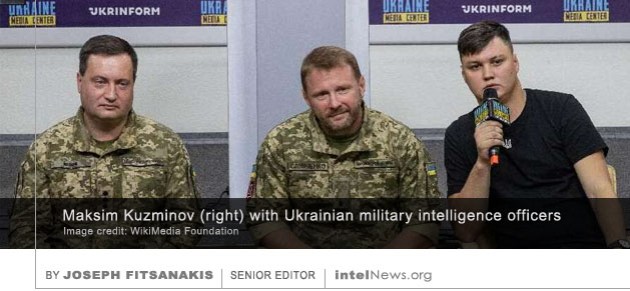 THE RUSSIAN INTELLIGENCE SERVICES have been “bolstering the[ir] architecture” aimed at stopping potential defectors and “liquidating” those who have already defected and are living in exile, according to a new report. In a
 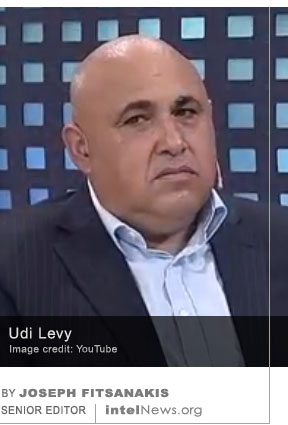 A RETIRED SENIOR MOSSAD official has alleged that Israeli Prime Minister Benjamin Netanyahu repeatedly ignored, and even frustrated, efforts to stop the flow of hundreds of millions of dollars to Hamas. This inaction may have enabled the Palestinian militant group to plan, organize and execute Operation Al-Aqsa Flood, which killed over 1400 Israelis on October 7, 2023, and sparked the current war between Israel and Hamas.
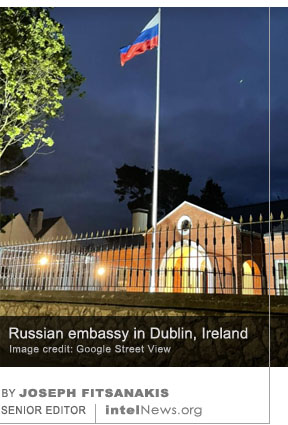 AUTHORITIES IN IRELAND ARE systematically “freezing” applications for Russian diplomatic visas from Moscow over concerns that the Kremlin is using its embassy in Dublin as a base for espionage activities. In 2018, the Irish government introduced emergency legislation that canceled a previously approved expansion of the Russian diplomatic compound in the Irish capital, allegedly due to concerns about espionage activities by Russian diplomats. Three years later,
  AN AFGHAN-BORN MAN, who became a naturalized British citizen and worked for British intelligence for over a decade, is attempting to regain his British citizenship, which was revoked after he was accused of being a Russian spy. The man, who is identified in court documents only as “C2”, was born in Afghanistan and grew up under the Soviet occupation in the 1980s. When the Soviets withdrew from Afghanistan he left the country alongside the Russian forces and resettled in Russia, where he attended university and married a Russian woman.
 AUTHORITIES IN INDIA HAVE arrested a security employee at the Indian High Commission in Russia, accusing him of spying for Pakistani intelligence. The embassy of India in Moscow is one of its largest in the world and is viewed as critical to New Delhi’s strategic relations with Russia. Employees that staff the Moscow embassy are highly vetted and typically represent the cream of the crop of India’s Ministry of External Affairs. It follows that news of the arrest of a Moscow embassy security employee on espionage charges must have raised eyebrows in India.
 WILLIAM BURNS, DIRECTOR OF the United States Central Intelligence Agency (CIA), reportedly visited in secret at least two East African nations last week, amidst growing tensions and instability in the region. The trip was confirmed by both the Kenyan and Somali governments after Burns had already returned to the United States.
 NORTH KOREA APPEARS TO have suspended a long-standing radio station, known for broadcasting content targeted at South Koreans, which also aired encrypted messages intended for North Korean spies abroad. Radio Pyongyang was founded by Korean communist forces in the 1940s. In 1950 it formed part of the North Korean state’s official media propaganda arm.
 THE OCTOBER 7 ATTACK on Israel was a total surprise. There was no warning. There were very few signs of a possible attack. Israeli intelligence evaluated these signs as elements of a routine military exercise by Hamas, and even assessed them as parts of an imaginary scenario. It therefore gave no warning to those Israeli Defense Forces (IDF) units that were stationed on the border with Gaza. Meanwhile, what we know about the intelligence failure of October 7 will likely pale before what the commission of inquiry will reveal once it is established. That was precisely what happened in the case of the Agranat Commission of Inquiry, which made significant revelations while investigating the intelligence failings of the IDF in the run up to the 1973 Yom Kippur War.
 time, in the first two days of the conflict the IDF was confused and acted without direction, in the apparent absence of relevant action plans for what to do in the event of a massive invasion. The IDF was clearly not ready for such a scenario.
 for those conclusions to become public. What is to be done in the meantime? There is public pressure to launch the inquiry soon.






 intelNews.org
Poland and Germany charge Russian operatives with assassination, sabotage plots
April 22, 2024 by Joseph Fitsanakis 4 Comments
Polish and Ukrainian authorities announced last week the arrest of Paweł K., a Polish citizen, who is believed to have been engaged in collecting information about the security of the Rzeszów-Jasionka Airport. Located in southeastern Poland, Rzeszów-Jasionka is a relatively small provincial airport. Its proximity to the Ukrainian border has made it central to efforts by Kyiv’s allies to supply it with war materiel following the expansion of Russia’s occupation of Ukraine in February 2022. Military supplies are transported to Rzeszów-Jasionka from across the world and then transferred across the Ukrainian border with trucks. Additionally, many high-level meetings between Ukrainian and Western officials take place at the airport. The United States military is currently providing security at the Rzeszów-Jasionka Airport.
Polish authorities said last week that Paweł K. was part of a Russian intelligence collection operation that was “intended to assist in the planning of a potential assassination of a foreign state leader”, namely President Zelenskyy. The Security Service of Ukraine (SBU) said it informed its Polish counterpart agency about the assassination plot, which had been foiled “as a result of the close co-operation” between Ukrainian and Polish intelligence. Paweł K. is not a diplomat and thus has no immunity from prosecution in Poland. If convicted, therefore, he could face up to eight years in prison.
In a seemingly unconnected development, police in the southeastern German state of Bavaria arrested two dual German-Russian nationals, who have been charged with planning to sabotage military and industrial facilities on German soil. The plot appears to be part of broader Russian efforts to disrupt the production and delivery of military aid to Ukraine. At least one of the locations that the suspects are accused of targeting is a local military base under the command of the United States. The two suspects have been identified as Dieter S., 39, and Alexander J., 37. Both were arrested in the small city of Bayreuth.
Germany’s Federal Foreign Office, led by Minister Annalena Baerbock, summoned Sergei Nechayev, Russian Ambassador to Berlin, shortly after the arrest of Dieter S. and Alexander J. Some media reports noted the “unusually hasty” way Nechayev was summoned, which may indicate that German authorities have acquired “unequivocal proof of the link between the plot and the Kremlin”. An announcement made by the Russian embassy in Berlin confirmed that Nechayev had been summoned in connection to the arrests, but added that the ambassador had been presented with “no proof” that the two suspects were connected with Russian intelligence or that they had planned acts of sabotage.
► Author: Joseph Fitsanakis | Date: 22 April 2024 | Permalink
Filed under Expert news and commentary on intelligence, espionage, spies and spying Tagged with 2022 Russian invasion of Ukraine, assassinations, Germany, GRU, GRU Unit 29155, News, Poland, Russia, Rzeszów-Jasionka Airport, sabotage, SBU (Ukraine), Ukraine