Judge rules that Trump’s tweet did not disclose top-secret CIA operation in Syria
July 4, 2018 Leave a comment
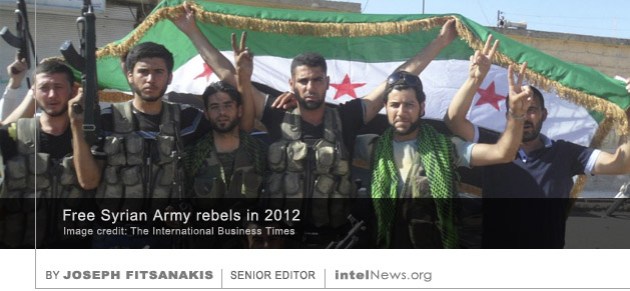 A United States federal judge ruled on Monday that a tweet by President Donald Trump did not inadvertently disclose a top-secret program by the Central Intelligence Agency to aid rebel groups in Syria. The lawsuit, brought by The New York Times, centered on news reports published in 2017 by Reuters, The Washington Post, and others, claiming that the US president had terminated an extensive CIA program that provided assistance to rebel forces engaged in the Syrian Civil War. The program was reportedly initiated by US President Barack Obama, who in 2015 instructed the CIA to assist armed groups operating under the umbrella of the Free Syrian Army. Aside from training, the CIA assistance reportedly included the provision of light and heavy ammunition, such as antitank missiles, mines and grenades.
But President Trump allegedly terminated $1 billion program soon after he took office. Last July, the president openly disputed an account by The Washington Post’s Greg Jaffe and Adam Entous, which claimed that Trump had ended the program as a concession to Russia. In a tweet, Trump said: “The Amazon Washington Post fabricated the facts on my ending massive, dangerous, and wasteful payments to Syrian rebels fighting Assad”. Shortly afterwards, another newspaper, The New York Times, filed a Freedom of Information Act (FOIA) request, arguing that the president’s tweet had effectively disclosed the existence of the covert CIA program and seeking full details from the government. But the CIA rejected the The New York Times’ rationale, at which point the paper took the case to court.
But on Monday, US District Court Judge Andrew Carter Jr. dismissed the paper’s argument. In a 20-page decision, posted online by the US-based news website Politico, Judge Carter said that President Trump’s tweet had been too vague and ambiguous to be considered as effectively declassifying the secret CIA program. At no point did the US president “make an unequivocal statement, or any statement for that matter, indicating that he was declassifying information”, said the judge. Additionally, Trump’s tweet and other public statements on the matter did not undermine the legal authority of the US government to continue to keep details about the CIA program under wraps. According to Politico, which reported on Judge Carter’s decision, this development will make it difficult for other FOIA filers to use Trump’s tweets as justification for seeking information about secret government programs. Meanwhile, The New York Times said on Monday that it would seek to appeal Judge Carter’s decision.
► Author: Joseph Fitsanakis | Date: 04 July 2018 | Permalink
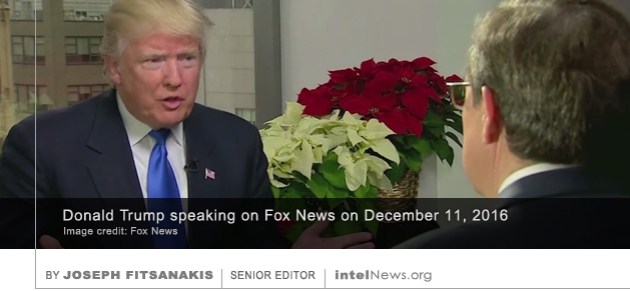 With nearly 53 million Twitter followers, United States President Donald Trump could easily be described as the most social-media-friendly American leader in our century. It is clear that Trump uses Twitter to communicate directly with his followers while circumventing mainstream media, which he views as adversarial to his policies. However, according to former Central Intelligence Agency analyst Nada Bakos, foreign intelligence agencies are among those paying close attention to the president’s tweets. Bakos spent 20 years in the CIA, notably as the Chief Targeter of the unit that tracked down Abu Musab al-Zarqawi, the founder of al-Qaeda in Iraq, which later evolved into the Islamic State of Iraq and Syria. In a June 23
 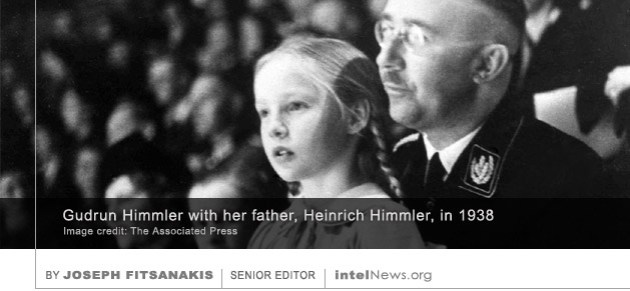 The daughter of Heinrich Himmler, who was second in command in the German Nazi Party until the end of World War II, worked for West German intelligence in the 1960s, it has been confirmed. Gudrun Burwitz was born Gudrun Himmler in 1929. During the reign of Adolf Hitler, her father, Heinrich Himmler, commanded the feared Schutzstaffel, known more commonly as the SS. Under his command, the SS played a central part in administering the Holocaust, and carried out a systematic campaign of extermination of millions of civilians in Nazi-occupied Europe. But the Nazi regime collapsed under the weight of the Allied military advance, and on May 20, 1945, Himmler was captured alive by Soviet troops. Shortly thereafter he was transferred to a British-administered prison, where, just days later, he committed suicide with a cyanide capsule that he had with him. Gudrun, who by that time was nearly 16 years old, managed to escape to Italy with her mother, where she was captured by American forces. She testified in the Nuremberg Trials and was eventually released in 1948. She settled with her mother in northern West Germany and lived away from the limelight of publicity until her death on May 24 of this year, aged 88.
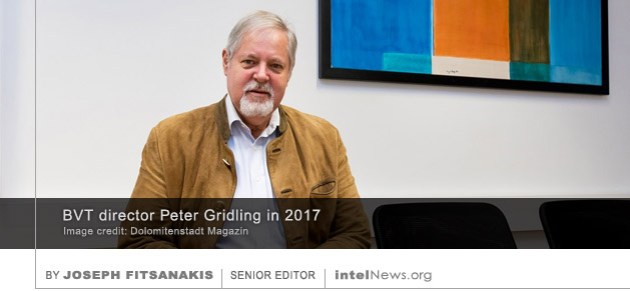 The head of Austria’s counterintelligence agency has said that Brussels has now replaced Vienna as Europe’s spy capital. For nearly a decade, this blog has published expert commentary that points to the Austrian capital being the world’s busiest spy den. In 2009, German broadsheet Die Welt
 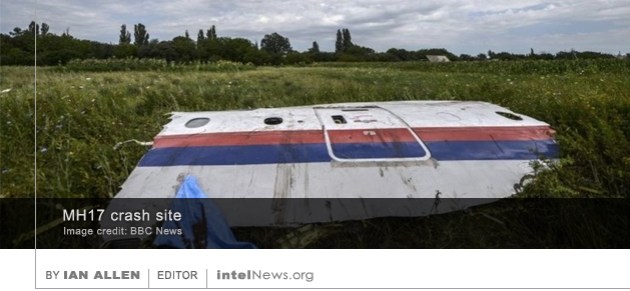 Dozens of Dutch security officers, legal experts, diplomats and other civil servants were systematically spied on by Ukrainian and Russian intelligence services while probing the aftermath of the MH17 disaster, according to a report on Dutch television. Malaysia Airlines Flight 17, a scheduled passenger flight from Amsterdam to Kuala Lumpur, was
  The Norwegian National Security Authority (NSM) has warned the country’s information technology firms to prioritize national security over cutting costs when outsourcing their operations abroad. The warning follows what has come to be known as the “Broadnet affair”, which, according to the Norwegian government, highlighted the dangers of extreme cost-cutting measures by Norway’s heavily privatized IT industry. The incident is named after Broadnet, Norway’s leading supplier of fiber-optic communications to the country’s industry and state sectors. Among Broadnet’s customers is Nødnett, an extensive digital network used by agencies and organizations that engage in rescue and emergency operations, including police and fire departments, as well as medical response agencies. Although 60% of the Nødnett network is owned by the Norwegian government, Broadnet is a member of the Nødnett consortium, and is thus supervised by Norway’s Ministry of Transport and Communications.
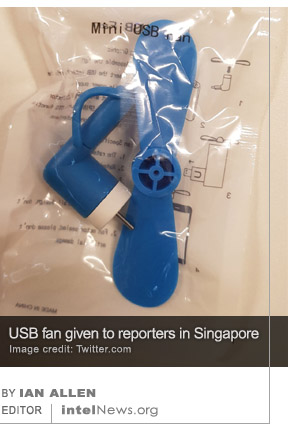 Singaporean officials have dismissed reports that a promotional item given away for free during the June 12 summit between the leaders of the United States and North Korea contained an espionage device. Over 2500 reporters from nearly every country covered the meeting between US President Donald Trump and North Korean Supreme Leader Kim Jong-un. Upon arriving in Singapore’s Sentosa Island, where the summit took place, journalists were given a free promotional packet that included novelty items such as pens, notepads, a water bottle, and a USB fan. The USB fan consisted of blades connected to a miniature electric motor, which was in turn connected to a USB cable. The cable allowed the device to be powered by a computer or other electronic device with a built-in USB port.
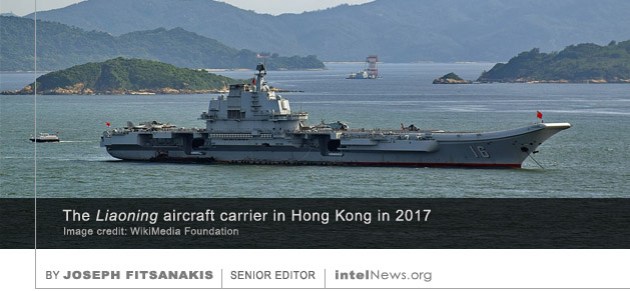 One of China’s most senior shipbuilding executives, who has not been seen in public for nearly two weeks, has been charged with giving secrets about China’s aircraft carriers to the United States. Sun Bo, 57, is general manager of the China Shipbuilding Industry Corporation (CSIC), China’s largest state-owned maritime manufacturer, which leads nearly every major shipbuilding project of the Chinese navy. Most notably, Sun headed the decade-long retrofitting of the Liaoning, a Soviet-built aircraft carrier that was commissioned to the Chinese Navy’s Surface Force after the collapse of the Soviet Union.
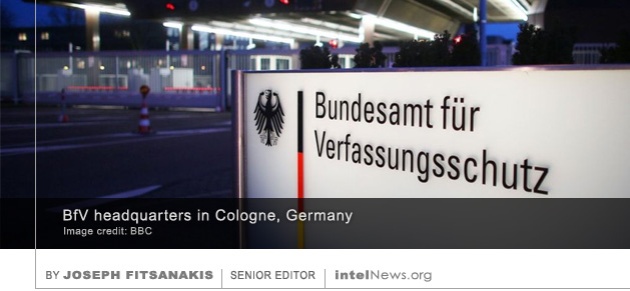 The head of Germany’s domestic security agency has publicly blamed the Russian government for a large-scale cyberattack that has targeted German energy providers. The comments follow a June 13 announcement on the subject by Germany’s Federal Office for Information Security (BSI), which is charged with securing the German government’s electronic communications. According to the BSI, a widespread and systematic attack against Germany’s energy networks has been taking place for at least a year now. The attack, which the BSI codenamed BERSERK BEAR, consists of various efforts by hackers to compromise computer networks used by German companies that provide electricity and natural gas to consumers around the country.
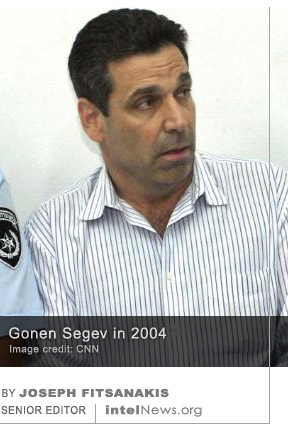 Israel has charged Gonen Segev, who served as the Jewish state’s Minister of Energy and Infrastructure, with spying for its archenemy, Iran. Segev, 62, was reportedly detained last month during a trip to Equatorial Guinea following a request by Israeli officials. He was then extradited to Israel and arrested as soon as he arrived in Tel Aviv last month, according to a statement by the Shin Bet, Israel’s domestic security service. On Monday it emerged that Israeli authorities had imposed a gag order on the case, forbidding Israeli media from reporting any information about it. The order appears to have now been lifted.
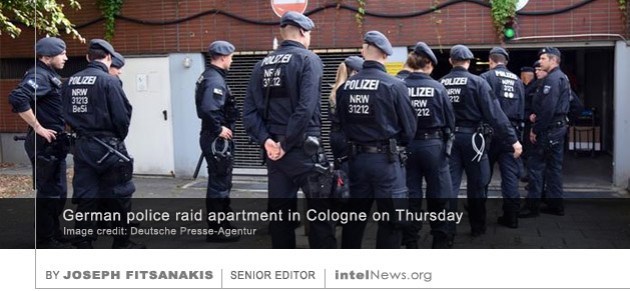 German authorities have charged a Tunisian citizen with building a biological weapon, after finding significant quantities of the highly toxic substance ricin in his apartment. The 29-year-old man is referred to in public reports only as “Sief Allah H.”, in compliance with German law that forbids the naming of suspects until they are found guilty in court. German officials said last Thursday that the man remains in custody and has been charged with violating Germany’s War Weapons Control Act (known as Kriegswaffenkontrollgesetz) and “preparing a serious act of violence against the state”.
 Belgium will investigate whether Spanish intelligence spied on Carles Puigdemont, the separatist Catalan leader who escaped to Brussels after launching an unsuccessful independence bid last year. Puigdemont, 56, served as president of the Spanish region of Catalonia from January 2016 until October 2017. He was forcibly removed from office by the Spanish government, after he led the government of Catalonia in a unilateral declaration of independence from Spain. As soon as the Catalan Parliament declared that the region was independent, Madrid dissolved it, imposed direct rule on the country’s easternmost province, and declared fresh elections.
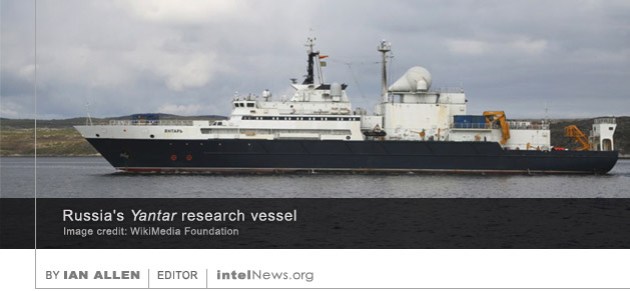 The United States has for the first time imposed economic sanctions on a number of Russian companies, which it says helped the Kremlin spy on targets in North America and Western Europe. On Monday, the US Department of the Treasury said it would apply severe economic restrictions on a number of Russian firms that work closely with the Kremlin. One of the companies was
 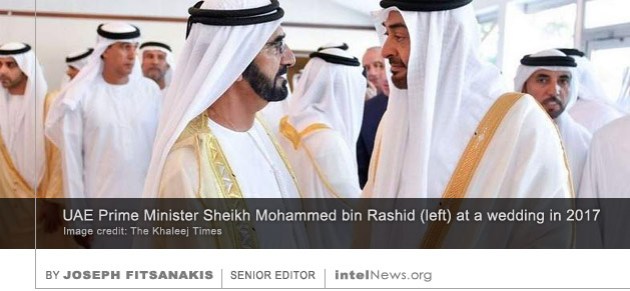 A lengthy exposé by a leading American newsmagazine has claimed that Israel and the United Arab Emirates, two countries that officially have no relations, have been secretly collaborating for more than two decades. Their secret cooperation has been extremely tight and has included clandestine weapons sales and intelligence-sharing, according to the exposé, which was published on the website of The New Yorker on Monday and will feature in the magazine’s print edition on June 18. The lengthy piece, which deals with the changing geopolitics of the Middle East, is written by Adam Entous, national security correspondent for The Washington Post, who has previously reported for more than two decades for Reuters and The Wall Street Journal.






 intelNews.org
Iran sleeper cell agents, including diplomat, arrested in three European countries
July 6, 2018 by Joseph Fitsanakis Leave a comment
The operation against the alleged sleeper cell began on Saturday, June 30, when members of Belgium’s Special Forces Group stopped a Mercedes car in Brussels. The car was carrying a married Belgian couple of Iranian descent, named in media reports as Amir S., 38, and Nasimeh N., 33. According to the Belgian Ministry of the Interior, Nasimeh N. was found to be carrying 500 grams of triacetone triperoxide (TATP) explosive and a detonator inside a toiletries bag. On the following day, Sunday, July 1, German police arrested Assadollah A., an Iranian diplomat stationed in Iran’s embassy in Vienna, Austria. According to reports, the diplomat was driving a rental car in the southeastern German state of Bavaria, heading to Austria. On the same day, a fourth person, who has not been named, was arrested by authorities in France, reportedly in connection with the other three arrests.
The four detainees were in contact with each other and were allegedly working for the Iranian government. All four have been charged with an alleged foiled plot to bomb the annual conference of the National Council of Resistance of Iran (NCRI) that took place last Saturday, June 30, in a Paris suburb. The National Council of Resistance of Iran is a France-based umbrella group of Iranian dissidents, led by Mujahedin-e Khalq (MEK), a militant group that has roots in radical Islam and Marxism. Between 1970 and 1976, the group assassinated six American officials in Iran and in 1970 tried to kill the United States ambassador to the country. It initially supported the Islamic Revolution of 1979, but later withdrew its support, accusing the government of Ayatollah Khomeini of “fascism”. It continued its operations from exile, mainly from Iraq, where its armed members were trained by the Palestine Liberation Organization and other Arab leftist groups.
Until 2009, the European Union and the United States officially considered the MEK a terrorist organization. But the group’s sworn hatred of the government in Iran brought it close to Washington after the 2003 US invasion of Iraq. By 2006, the US military was openly collaborating with MEK forces in Iraq, and in 2012 the group was dropped from the US Department of State’s list of foreign terrorist organizations. Today the group enjoys open protection from the EU and the US. According to Belgian authorities, the four members of the Iranian sleeper cell were planning to bomb the MEK-sponsored NCRI meeting in Paris under instructions by the Iranian government. Conference participants included over 30 senior US officials, including US President Donald Trump’s personal lawyer, Rudy Giuliani, who addressed the meeting. Stephen Harper, Canada’s former prime minister, also spoke at the conference.
Speaking in Brussels this week, Belgium’s Interior Minister Jambon praised the country’s intelligence, security and law enforcement agencies for foiling the alleged bomb plot in Paris. But Mohammad Javad Zarif, Iran’s Minister of Foreign Affairs, dismissed claims of an Iranian sleeper cell as “fake news” and described reports of a foiled bomb attack as “a sinister false flag plot”.
► Author: Joseph Fitsanakis | Date: 06 July 2018 | Permalink
Filed under Expert news and commentary on intelligence, espionage, spies and spying Tagged with Belgium, France, Germany, Iran, Iranian embassy in Austria, Mujahedeen-e Khalq, National Council of Resistance of Iran, News, Newstex, sleeper agents