German ex-spy chief tells West to stop sharing intelligence with Austria
August 23, 2018 Leave a comment
 A former director of Germany’s foreign intelligence service has warned Western officials to stop sharing intelligence with the government of Austria, because of its alleged proximity to the Kremlin. August Hanning served as chief of Germany’s Federal Intelligence Service, known as BND, from 1998 to 2005. He went on to serve as the most senior civil servant in the Ministry of the Interior until his retirement in 2009. In an interview published on Wednesday in Germany’s Bild newspaper, Hanning argued that “caution is necessary with [an intelligence] service [like that of Austria,] which cannot protect its own secrets or the sources and sensitive information of its partners”. He went on to add that “there is […] now extreme caution when sharing information] with the Austrian intelligence services.
Hanning’s statement came less than a week after The Washington Post claimed in a major article that most Western intelligence services had stopped sharing sensitive information with the Austrian government. The newspaper alleged that the disruption in intelligence cooperation between Austria and other Western countries was sparked by an unprecedented police raid on the headquarters of Austria’s spy agency in February of this year. On February 28, Austrian police raided the central offices of the Office for the Protection of the Constitution and Counterterrorism (BVT), which operates as Austria’s domestic intelligence agency. By that evening, thousands of classified documents had been removed from the BVT’s headquarters and stored in police facilities in Vienna. Austrian officials claimed that the raid was sparked by allegations made by South Korean intelligence that blank Austrian passports had been acquired by the North Korean government.
However, according to The Post, the raid was politically motivated by Austria’s far-right Freedom Party, which is part of the country’s ruling coalition. The purpose of the raid, said the article, was to neutralize the BVT, whose mission includes defending the Austrian constitution from domestic threats from the far left and the far right. Many Western services were alarmed by the February 28 raid on the BVT and immediately stopped sending sensitive information to the agency’s Vienna headquarters, according to The Post. It also said that Western European powers are concerned by the seemingly close relations between some members of Austria’s government and the Kremlin. Last week, Russian Premier Vladimir Putin traveled to Austria to attend the wedding of Karin Kneissl, Austria’s Minster of Foreign Affairs, who is politically close to the Freedom Party. The Russian leader said that he attended Kneissl’s wedding on a “purely private” capacity. But that did little to appease European Union leaders.
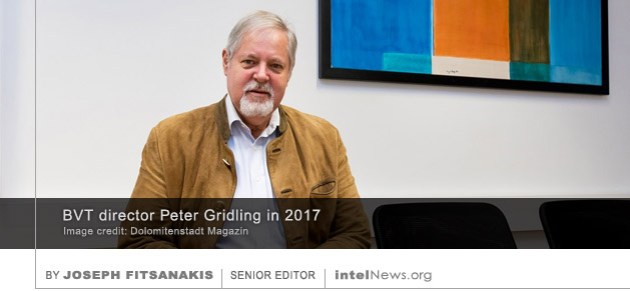
On Monday, the BVT rejected the claims made by The Post. In a statement issued to the media, BVT director Peter Gridling (pictured) said that “cooperation [between the BVT and] partner intelligence services continues to work well in key areas such as the fight against terrorism”.
► Author: Joseph Fitsanakis | Date: 23 August 2018 | Permalink
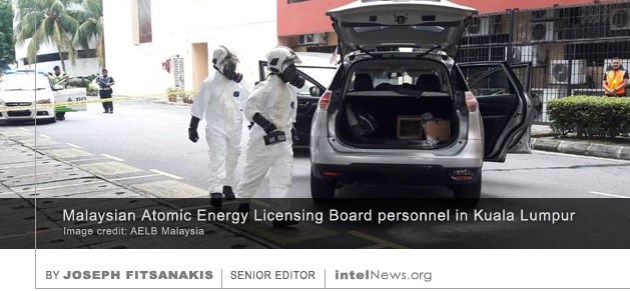 A highly radioactive device used by an energy company has gone missing in Malaysia, sparking a nationwide emergency for fear that it might have been stolen by a militant group. According to Malaysia’s Straits Times newspaper, a radioactive dispersal device (RDD), which is used for the industrial radiography of oil and gas supplies, disappeared during transit on August 10. The device, which weighs approximately 50 pounds, or 23 kilograms, disappeared from the back of a company truck in the early hours of the morning while it was being transported by two technicians. They were
  Authorities in the United States have announced the arrests of two men who have been charged with spying on American soil on behalf of the Islamic Republic of Iran. The men were reportedly arrested on August 9, but information about them was only released on Monday by the US Department of Justice. In a
 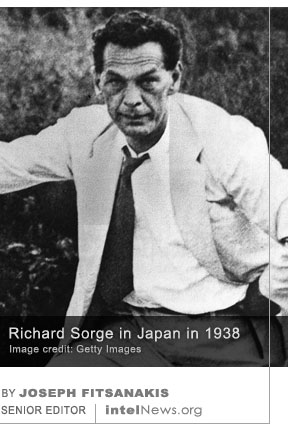 Japan has released secret documents from 1942 relating to the Tokyo spy ring led by Richard Sorge, a German who spied for the USSR and is often credited with helping Moscow win World War II. The documents detail efforts by the wartime Japanese government to trivialize the discovery of the
 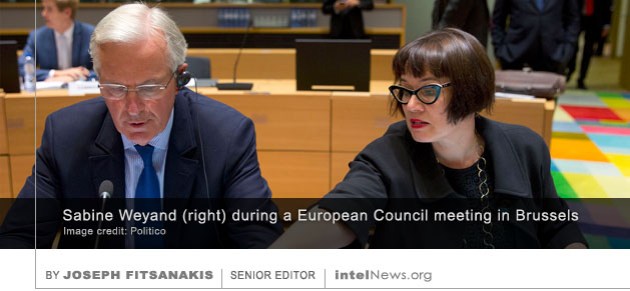 Relations between the European Union and the United Kingdom hit a new low on Thursday, as the European Council refused to comment on claims that British spy agencies have spied on Brexit negotiators in Brussels. Consultations between the two sides have progressed at an alarmingly slow pace ever since June 23, 2016, when voters in the island nation elected to leave the EU during a nationwide referendum. In March of 2017, London officially invoked Article 50 of the EU Treaty, which requires that Britain’s withdrawal from the multinational body be completed within two calendar years. But there are many who think that a mutual agreement will not be reached between the two sides.
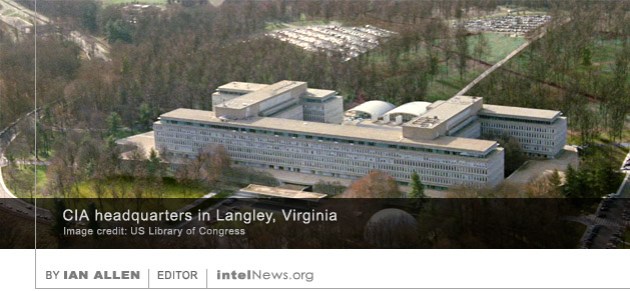 An online fundraising campaign is seeking to secure the release of over 4,000 pages of documents relating to a controversial mind control program developed by the United States Central Intelligence Agency. The project, referred to as MKNAOMI/MKULTRA in US government files, was a joint effort by the CIA and the US Department of Defense to study the effects of substances such as heroin and LSD on the human brain. It began in 1953 and over the years involved the work of hundreds of scientists, many of whom were not aware they were working on a CIA project. But it was hurriedly shut down in 1976, once post-Watergate investigations by the US Congress revealed that it led to the
 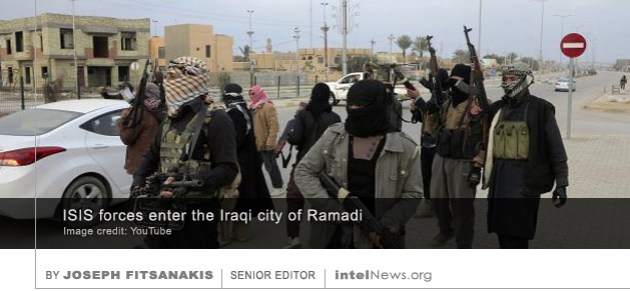 The Islamic State has recovered from some of its recent defeats in the battlefield and has as many as 30,000 committed members in Iraq and Syria, according to two reports by American and United Nations experts. Last month, the Iraqi government announced that the war against the group, which is also known as the Islamic State of Iraq and Syria (ISIS) had been won. The statement was
  Two Canadian brothers, whose Russian-born parents fraudulently acquired Canadian citizenship before being arrested for spying on the United States for Moscow, are not entitled to Canadian citizenship, according to the government of Canada. Tim and Alex Vavilov are the sons of Donald Heathfield and Tracey Foley, a married couple arrested in 2010 under Operation GHOST STORIES, a counterintelligence program run by the US Federal Bureau of Investigation (FBI). Following the couple’s arrest, their sons, who allegedly grew up thinking their parents were Canadian,
 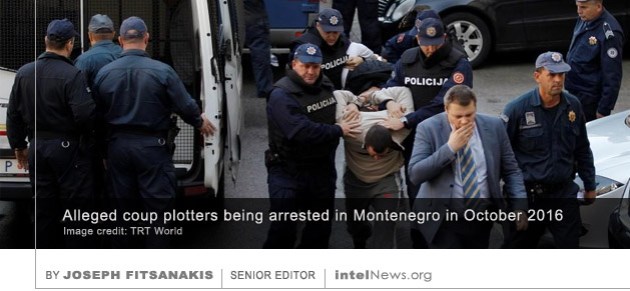 Government prosecutors in Montenegro, the youngest member of the North Atlantic Treaty Organization, claim that a former officer of the United States Central Intelligence Agency helped pro-Russian plotters organize a coup in 2016. In October of that year, authorities in Montenegro accused “nationalists from Russia and Serbia” of staging a failed plot. Their goal was allegedly to kill the country’s then-Prime Minister Milo Dukanović, spark a pro-Russian coup in the country, and prevent its entry into NATO. The allegations surfaced after 20 Serbians and Montenegrins were
  In a move that has stunned Vietnamese society, authorities in Hanoi have arrested one of the country’s most powerful security officials, allegedly for helping a business tycoon and former intelligence agent escape abroad. The move, which observes described as “unprecedented” in modern Vietnamese history, signals a widening of the anti-corruption campaign that started in 2016 and is now affecting Vietnam’s powerful intelligence agencies. Vietnam boasts one of Asia’s fastest-growing economies, but its economic performance is severely hampered by corruption, which is endemic in the communist country of 93 million. In its most recent Corruption Perceptions Index, Transparency International ranked Vietnam 107th out of the world’s 180 countries, behind nations like Colombia, Albania and Zambia. Two years ago, the Vietnamese government launched an
 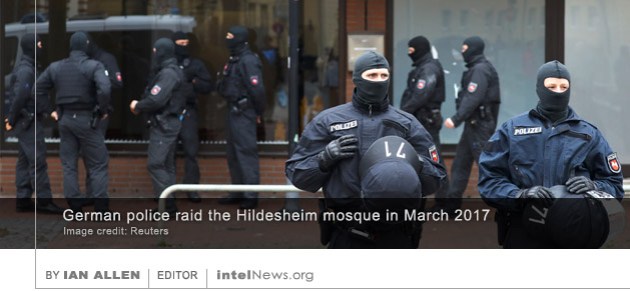 Authorities in Germany announced yesterday the arrest of a German national who is accused of spying on a central German mosque on behalf of Jordan, according to media reports. The man was reportedly arrested on Tuesday at an unknown location by officers of Germany’s domestic intelligence agency, the Federal Office for the Protection of the Constitution (BfV). In a press statement, the agency said the man is a 33-year-old German national named “Alexander B.”. German privacy rules forbid the public identification of crime suspects prior to their conviction in a court of law.
 Yemeni militias backed by Saudi Arabia, the United States and the United Arab Emirates are actively paying off al-Qaeda-allied factions to abstain from the fighting, and are recruiting al-Qaeda members to fight against Shiite rebels, according to a new investigative report. Ever since 2015, when the civil war in Yemen broke out, the US, along with its Arab allies UAE and Saudi Arabia, has supported Sunni troops in their war against Shiite Houthi rebels. The latter are believed to be supported by Iran, and the US-backed coalition is engaged in an effort to curtail what it sees as Iranian expansionism in the Middle East.
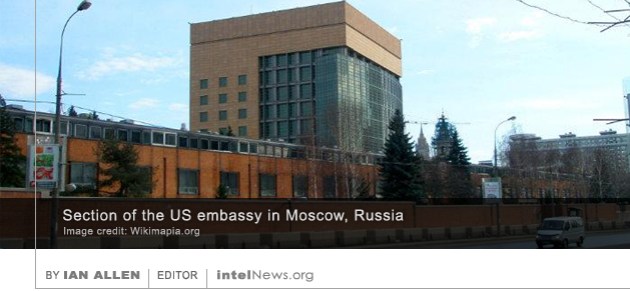 A female Russian national who worked for the United States Secret Service in Moscow was quietly dismissed in 2017, amidst concerns that she was spying for Russia. British newspaper The Guardian, which
 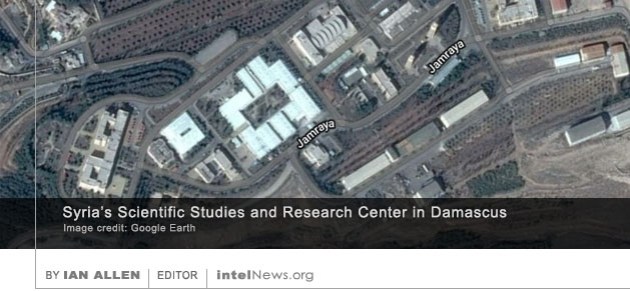 One of Syria’s leading pro-government newspapers has said that Israel was behind a bomb blast in Hama province that killed a senior scientist working for the country’s missile program. Aziz Azbar was reportedly a senior research director at the Syrian Scientific Studies and Research Center, known as CERS. The Damascus-based agency is thought to be at the center of the Syrian government’s formidable chemical weapons program. Last year, the United States Department of the Treasury imposed economic sanctions on nearly 300 CERS employees, after Washington accused them of being directly responsible for the Syrian government’s repeated use of chemical weapons against rebels and civilians. The European Union, as well as the French and British governments, also imposed sanctions on CERS and its staff.








Russia is looking for nuclear missile that went missing, US sources claim
August 24, 2018 by Joseph Fitsanakis 2 Comments
According to observers, the recently announced Russian weapon has been in development for more than 15 years. It is based on gasoline-powered engines that are used during the missile’s takeoff. But soon afterwards, they give way to a nuclear-powered engine that guides the missile to its eventual destination. However, despite Putin’s claims, the weapon has never been successfully tested according to American intelligence sources. The Americans claim that the Russian military tested these missiles at least four times between November of 2017 and February of this year, and that all four missiles crashed long before they reached their intended destination. The idea of indefinite flight, therefore, which Putin boasted about earlier this year, remains unrealized, according to American sources. Moscow, however, denies that the missiles crashed during the testing stage.
Now the American news network CNBC has said that Russia is preparing to launch a large-scale search operation for one of the nuclear-powered missiles that went missing in the Arctic Ocean in November of 2017. It is believed that the missile crashed in the Barents Sea, a vast expanse of water located off the northern coasts of Russia and Norway. Citing anonymous individuals “with direct knowledge of a US intelligence report” on the subject, CNBC said on Tuesday that the Russian search mission will consist of three vessels, at least one of which will be specially equipped to handle radioactive material from the missing missile’s nuclear core. The American news network said that the Russian search mission has no definite timeline. The Russian government has not commented on CNBC’s allegations.
► Author: Joseph Fitsanakis | Date: 24 August 2018 | Research credit: A.G.B. | Permalink
Filed under Expert news and commentary on intelligence, espionage, spies and spying Tagged with cruise missiles, military intelligence, News, nuclear weapons, Russia, Russian nuclear arsenal