Latvia warns of ‘hybrid war’ as central bank corruption probe widens
February 26, 2018 1 Comment
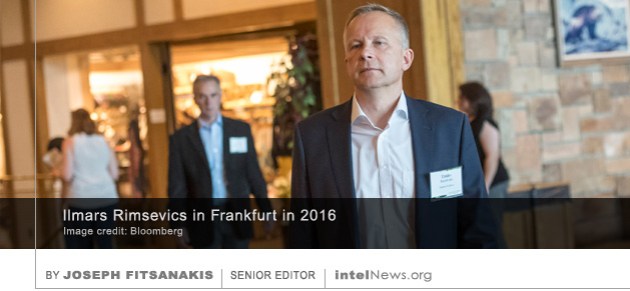 Latvian defense officials have hinted that Russia is trying to destabilize Latvia’s economy, as a Western-backed anti-corruption probe at the highest levels of the Baltic country’s banking sector deepens. Developments have progressed at a high speed since Monday of last week, when Latvia’s Corruption Prevention and Combating Bureau arrested Ilmars Rimsevics, the longtime Governor of the Bank of Latvia —the country’s central bank. Bureau investigators said Rimsevics’ arrest related to charges that he received bribes in order to facilitate money laundering from Russia.
Rimsevics became deputy governor of the Bank of Latvia in 1992, just months after the country seceded from the Soviet Union. In 2001 he was promoted to governor, a post that he has held onto ever since. When the small Baltic country joined the European Union, in January 2014, Rimsevics automatically became a member of the Governing Council of the European Central Bank (ECB), which directs the Eurozone’s monetary policy and monitors the performance of the euro. But last week the Latvian government rescinded Rimsevics’ security clearance and a scheduled meeting of the ECB in Frankfurt took place without him.
This dramatic development underscores the troubled state of Latvia’s banking sector, which is a notorious reputation as one of Europe’s most lucrative money-laundering hubs. Soon after it gained its independence, the small country of 2 million became an attractive conduit for Russia’s nouveau riche seeking to funnel their money westward. The country’s sizeable Russian-speaking minority allowed the local banking sector to offer highly sought-after services in the Russian language, which further-facilitated its contacts with wealthy Russian clients. This was further-enhanced by Latvia’s integration into the economic structure of the European Union in 2014. But Western countries began voicing concerns about close links between Latvia’s banking sector and Russian oligarchs in 1996. By 2011, the United States Department of the Treasury had identified numerous Latvian banks as serious violators of laws designed to prevent money laundering. In 2014, and again in 2017, the Organized Crime and Corruption Reporting Project identified Latvia as part of an extensive international money-laundering scheme dubbed “the Russian Laundromat”.
Notably, Rimsevics was arrested less than a week after Washington vowed to impose penalties on ABLV, Latvia’s third largest bank, for “institutionalizing money laundering” and violating a host of financial sanctions imposed by the United Nations, including sanctions against North Korea’s nuclear program. There is no question, therefore, that Rimsevics’ dramatic arrest was designed to combat what The Financial Times recently called “a banking scandal on the Baltic”. In the past few hours, reports from Riga indicate that ABLV may be on the brink of collapse, being unable to withstand the financial effects of the public scandal that emerged in recent days.
But things are never simple in the Baltic region. Soon after Rimsevics’ release on bail, reports in the Latvian media pointed to alleged efforts by Russia to defame him, in an effort to further-tarnish the already damaged reputation of Latvia’s banking sector. On Tuesday of last week, the Latvian Ministry of Defense said it had evidence that Rimsevics was targeted in a “disinformation operation” directed from abroad. It added that there was a “high probability that [a] massive information operation” had been launched for “foreign centers” aimed at destabilizing Latvia’s banks. No evidence or further information about the allegation was revealed. But the Defense Ministry’s allegations seemed to be supported by an analysis of the relevant news reporting by the Atlantic Council’s Digital Forensics Research Lab in Washington.
On February 23, Latvia’s Prime Minister, Maris Kucinskis, and President, Raimonds Vejonis, seemed to endorse the Defense Ministry’s allegations. Despite the fact that both politicians have urged Rimsevics to resign “for the sake of the financial system”, they also warned that Latvia was under attack in an information war. The two men did not make specific allegations, but said that the information attacks experienced by Latvia were “identical” to those seen in recent years in France, Germany, and the United States. Meanwhile, shortly after his release, Rimsevics held a press conference in Riga, where he denied all charges against him. He accused Latvia’s private banks of conspiring against him and said he was the victim of “death threats” to destabilize the country. On the same day Moscow, Kremlin spokesman Dmitry Peskov said that Russia had no comment on the situation in Latvia. “This is an internal political matter for our Latvian comrades [and] we wouldn’t want to get involved”, he said.
► Author: Joseph Fitsanakis | Date: 26 February 2018 | Permalink
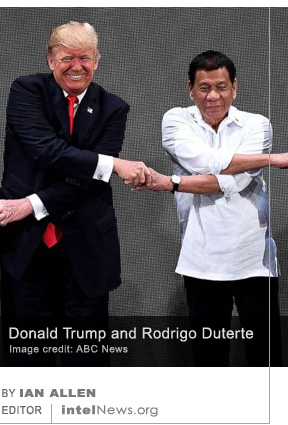 A wide-ranging assessment by the United States Intelligence Community views the President of the Philippines, Rodrigo Duterte, as a major threat to democracy and human rights in Southeast Asia. The report, published on February 13, represents a joint assessment of worldwide challenges to the interests of the United States. It is compiled annually by all 16 member agencies that make up the US Intelligence Community. This year’s report warns that democratic governance and human rights would continue to be “fragile” in 2018, because of the autocratic governing style of several national administrations. Many Southeast Asian governments were also corrupt and displayed nepotistic tendencies, says the report. It singles out the government of Myanmar, which has been widely criticized for its inhuman treatment of the country’s Muslim Rohingya minority. It also mentions the autocratic government of Thailand, which recently changed the country’s constitution, giving increased legislative powers to the country’s armed forces.
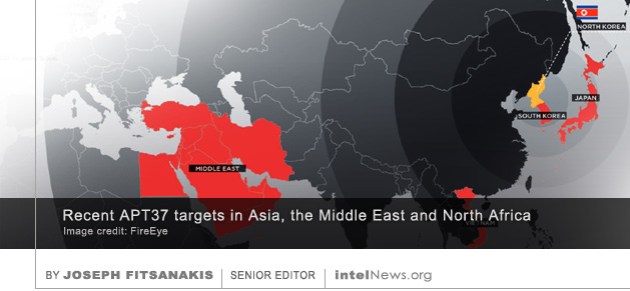 A little-known North Korean cyber espionage group has widened its scope and increased its sophistication in the past year, and now threatens targets worldwide, according to a new report by a leading cyber security firm. Since 2010, most cyber-attacks by North Korean hackers have been attributed to a group dubbed “Lazarus” by cyber security specialists. The Lazarus Group is thought to have perpetrated the infamous Sony Pictures attacks in 2014, and the worldwide wave or ransomware attacks dubbed WannaCry by experts in 2017. It is widely believed that the Lazarus Group operates on behalf of the government of North Korea. Most of its operations constitute destructive attacks —mostly cyber sabotage— and financial criminal activity.
 ►►
►►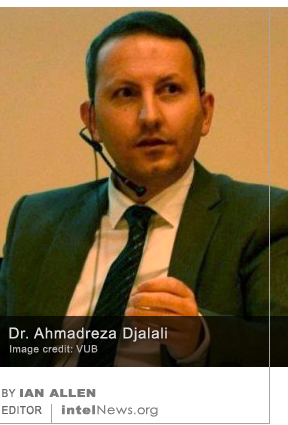 The government of Sweden has granted citizenship to an academic who is on death row in Iran for allegedly helping Israel kill Iranian nuclear scientists. Sweden’s Foreign Affairs Ministry confirmed on Saturday that Ahmadreza Djalali, who lives in Sweden and has lectured at Stockholm’s renowned Karolinska Institute, is now a Swedish citizen. IntelNews has
 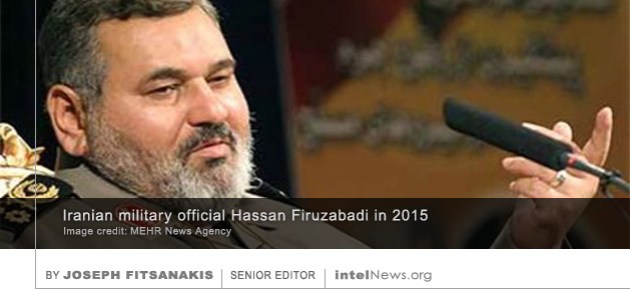 The former chief of staff of Iran’s Armed Forces has said that foreign governments used different species of lizards, including chameleons, to spy on the Iranian nuclear program. The claim was made by Hassan Firuzabadi, a veteran Iranian military official, who from 1989 to 2016 served as the chief of staff of the Iranian Armed Forces —the most senior military post in the Islamic Republic. Since his retirement in 2016, Firuzabadi has served in a number of key consultancy roles and is currently a senior military advisor to Ayatollah Ali Khamenei, Iran’s reform-minded supreme leader.
 A high-profile presidential candidate in Mexico accused the government of political policing after he caught an agent of the country’s intelligence agency trailing him during a campaign trip. The candidate, Ricardo Anaya, is a rising rightwing politician who previously served as president of Mexico’s Chamber of Deputies and leader of the largest opposition group in the country, the National Action Party. In December of last year, Anaya announced his candidacy for the presidency, for which he will compete in July. His primary opponents are the center-leftist Andres Manuel Lopez Obrador, and José Antonio Meade of the ruling Institutional Revolutionary Party (PRI).
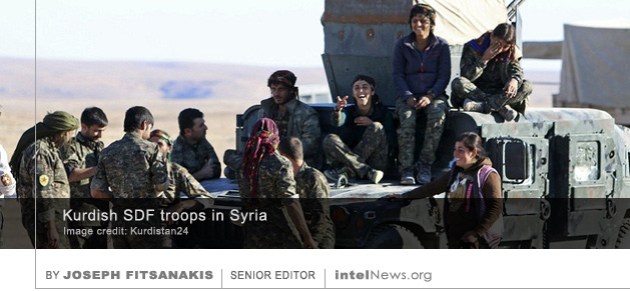 There are conflicting reports of Russian and Ukrainian fighters having been killed by American forces in northeastern Syria, with some sources claiming that up to 200 Russians and Ukrainians, most of them private contractors working for the Syrian government, were left dead in clashes last week. If such reports are accurate, they could point to the most lethal American-Russian confrontation since the end of World War II.
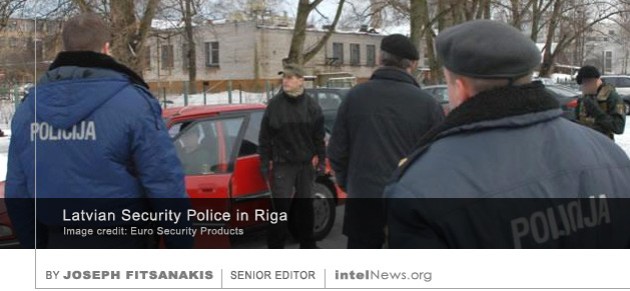 The Latvian Security Police have announced the arrest of a man who is suspected of spying for a foreign country, with some reports claiming it is Russia. The Latvian state-owned news agency, LETA,
  Indian authorities have arrested an Indian Air Force officer for allegedly giving classified documents to two Pakistani spies on Facebook, who posed as women interested in him. The officer has been named as Arun Marwaha, a wing commander stationed at the Indian Air Force headquarters in Delhi. Marwaha, 51, is a para-jumping instructor who trains members of India’s Garud Commando Force —the Special Forces unit of the Indian Air Force. He was reportedly due to retire in 2019.
 The United States Immigration and Customs Enforcement (ICE) is reportedly seeking to join the Intelligence Community, which includes the Central Intelligence Agency, the Defense Intelligence Agency, and other intelligence-focused arms of the federal government. Currently, ICE is a federal law enforcement that operates under the umbrella of the Department of Homeland Security. It consists of two components: Homeland Security Investigations, which probes cross-border criminal activity, including drugs and weapons trafficking, money laundering and cybercrime; and Enforcement and Removal Operations, whose mission is to find and capture undocumented aliens.
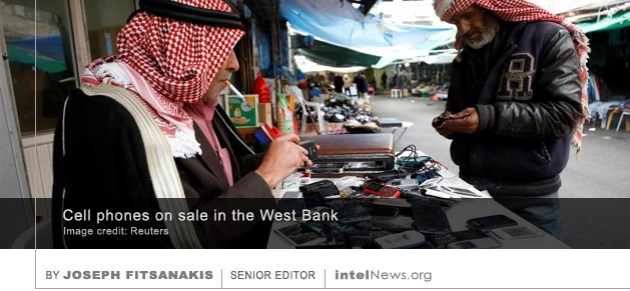 The former head of the Palestinian Authority’s spy agency claims that the Palestinian government in the West Bank worked with the United States Central Intelligence Agency to wiretap thousands without court authorization. Tawfiq Tirawi, who headed the Palestinian General Intelligence from its founding in 1994 to 2008, has filed an official complaint against the Palestinian Authority and is calling for a criminal investigation into the alleged wiretaps. The complaint has also been signed by Jawad Obeidat, who is the president of the West Bank’s Bar Association. It is based on a leaked 37-page document that surfaced last month on the social networking application WhatsApp. The document was leaked by an anonymous individual who claims to have worked for a surveillance unit in the Palestinian Preventive Security Service, the Palestinian Authority’s domestic security service.
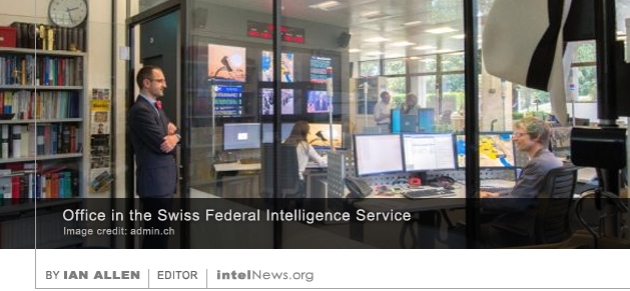 Officials in Switzerland say new laws enacted in recent months will help them change their country’s image as one of Europe’s most active spy venues. For decades, the small alpine country has been a destination of choice for intelligence officers from all over the world, who use it as a place to meet assets from third countries. For example, a case officer from Britain’s Secret Intelligence Service (MI6) will travel to Switzerland to meet her Algerian agent. She will exchange money and documents with him before she returns to Britain and he to Algeria, presumably after depositing his earnings into a Swiss bank account.
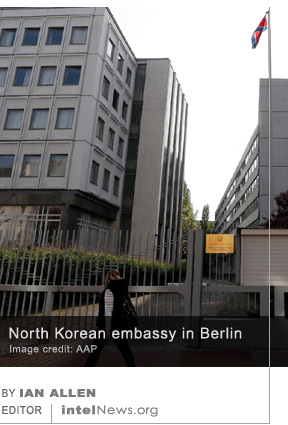 North Korea used its embassy in Berlin to acquire technologies that were almost certainly used to advance its missile and nuclear weapons programs, according to the head of Germany’s counterintelligence agency. For many decades, Pyongyang has used a sophisticated international system of procurement to acquire technologies and material for its conventional and nuclear weapons programs. These secret methods have enabled the country to evade sanctions placed on it by the international community, which wants to foil North Korea’s nuclear aspirations.






 intelNews.org
Discovery of cocaine in Russian diplomatic luggage leads to numerous arrests
February 27, 2018 by Joseph Fitsanakis Leave a comment
The 14-month probe dates to December of 2016, when Victor Koronelli, Russia’s ambassador to Argentina, and thee members of Russia’s Federal Security Service, discreetly approached Argentinian authorities. They informed the Argentinians that they had discovered 16 pieces of luggage filled with drugs inside an annex of the Russian embassy in Buenos Aires. Argentinian authorities were given permission to secretly enter the embassy grounds and inspect the suitcases. They confirmed that they contained more than 850 pounds (390 kilos) of cocaine, with a street value of more than $60 million. The suitcases were intended for transfer to Russia via a diplomatic flight. Cargo transferred on diplomatic flights cannot be searched by international customs officials due to the privilege of diplomatic immunity.
According to Bullrich, diplomatic counter-narcotics officers secretly transferred the bags to a separate location, where they replaced the cocaine with flour and fitted the suitcases with GPS tracking devices, before returning them to the Russian embassy annex. The luggage was eventually transferred to Russia via airplane in December 2017, a year after it was bugged by the Argentinians. Several Argentinian customs officers traveled to Russia to monitor the transfer of the shipment, in coordination with Russian authorities. The latter arrested two Russian citizens who tried to collect the suitcases. Another Russian citizen, and former staff member of the Russian embassy in Argentina, Alia Abyanov, was arrested in Moscow. Officials said Abyanov helped plan the transfer of the suitcases to Russia.
Two Argentines with dual Russian citizenship were also arrested in Buenos Aires. One of them has been named as Iván Blizniouk, a police officer, who is believed to have mediated between the drug smugglers and corrupt Argentine customs officers. A seventh suspect, identified only as “Señor K.” by the Argentine authorities, remains at large. He is believed to be living in Germany and is currently wanted by Interpol pursuant to an international warrant that has been issued for his arrest.
► Author: Joseph Fitsanakis | Date: 27 February 2018 | Permalink
Filed under Expert news and commentary on intelligence, espionage, spies and spying Tagged with Alia Abyanov, Argentina, corruption, diplomatic immunity, FSB, Iván Blizniouk, narcotics trade, News, Patricia Bullrich, Russia, Russian embassy in Argentina