Gaddafi’s spy chief could be executed before revealing Libya’s terror past
August 5, 2015 Leave a comment
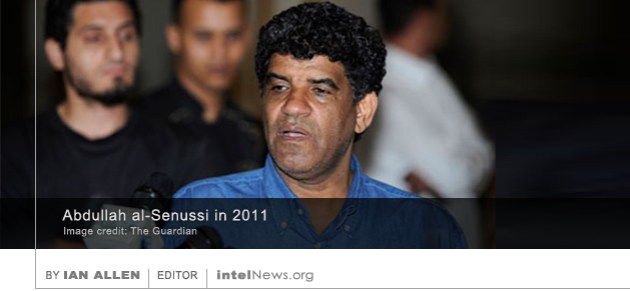 A group of American, British and Irish citizens are pressuring their respective governments to prevent the impending execution of Libya’s former intelligence strongman. Abdullah al-Senussi, 65, led Libya’s intelligence services during the regime of the country’s late dictator Muammar al-Gaddafi. Last week, however, he was sentenced to death by a court in Tripoli for his role in “inciting genocide” during the 2011 civil war that toppled Gaddafi’s regime. American, British and Irish officials are being urged to intervene to stop Senussi’s execution, so that he can help shed light on Libya’s role in international terrorist plots in the 1980s and 1990s.
Senussi rose rapidly through the ranks of Gaddafi’s regime in the 1970s after marrying the Libyan leader’s sister-in-law. Eventually, he became one of Gaddafi’s most trusted aides, escorting him on most international trips and seeing to the medical needs of the dictator. Throughout that time he is believed to have led at various times Libya’s internal security agency, its external spy organization, and the country’s military intelligence agency. It is unclear however, whether he actually held any official posts in the Libyan government, especially after 1977, when Gaddafi abolished official titles and declared that his country was a Jamahiriya —a “state of the masses” not ruled by officials, but by “revolutionary” popular councils and communes.
During Senussi’s reign, especially in the 1980s, Libya deepened its connections with militant groups in Africa, the Middle East and Europe, prompting some European and American officials to describe him as “the world’s most wanted man”. On Tuesday of last month, Senussi was among nine former Gaddafi aides and officials to be sentenced to death by a court in the Libyan capital. They include one of Gaddafi’s sons, Seif al-Islam al-Gaddafi, as well as the late Libyan dictator’s Prime Minister, Baghdadi al-Mahmoudi. Ironically, the sentence imposed on Gaddafi’s son cannot be implemented, as he is being kept prisoner by a militia in western Libya, which has refused to surrender him to the central government in Tripoli since 2011. Senussi however, is being held in Tripoli, having been captured at the Nouakchott International Airport in Mauritanian in March 2012 in what is believed to have been a successful French-led intelligence operation.
Critics of Libya’s past dealings with terrorist groups believe that the jailed former spy director is aware of crucial details relating to the bombing of Pan Am flight 103 over Lockerbie, Scotland, which killed 270 people in 1988. He is also thought to possess information relating to Libya’s support for the Provisional Irish Republican Army. The militant group is said to have received training, weapons and cash from the Libyan government in the 1980s and 1990s. Victims of IRA operations and their families have continued to pressure London to intervene to prevent Senussi’s execution since his extradition to Libya from Mauritania in 2013. The Libyan government has said that it intends to execute Senussi in September.
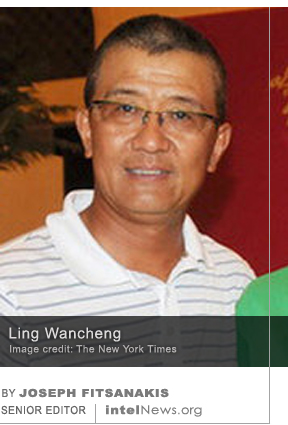 A well-connected Chinese businessman, described by officials as potentially one of the most damaging defectors in the history of modern China, is reputed to have requested political asylum in the United States. Ling Wancheng, 54, is the multimillionaire brother of Ling Jihua, a close aide of China’s former premier, Hu Jintao, who rose through the ranks of the Communist Party of China to eventually lead its Central Committee’s General Office. With the help of his brother’s connections and political influence, Ling Wancheng transformed himself from a journalist to an entrepreneur in the early 2000s. Soon after receiving his graduate degree in business administration, he founded an investment firm and joined China’s nouveau riche elite. His wealth, which is estimated to be in the hundreds of millions of dollars, coupled with his older brother’s senior position within the Communist Party, made him one of China’s most politically connected entrepreneurs.
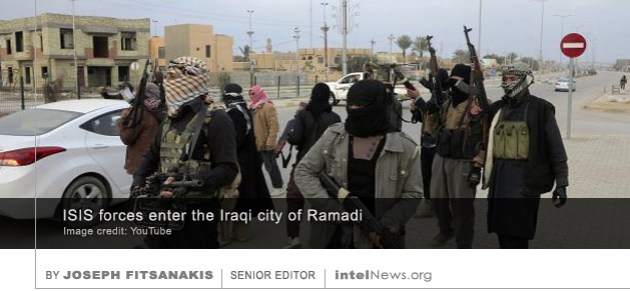 Internal reports by American intelligence agencies say that the Islamic State remains strong in Iraq and Syria, and that the group has been able to effortlessly replace its 10,000 fighters who have been killed in the past year. Despite the over $1 billion spent in the war against it by the Syrian and Iraqi governments, as well as by the West, the militant group is “fundamentally no weaker” than it was a year ago, when the United States began a bombing campaign targeting Islamic State strongholds, according to the reports. The Associated Press, which
  In 2007 I wrote in my “
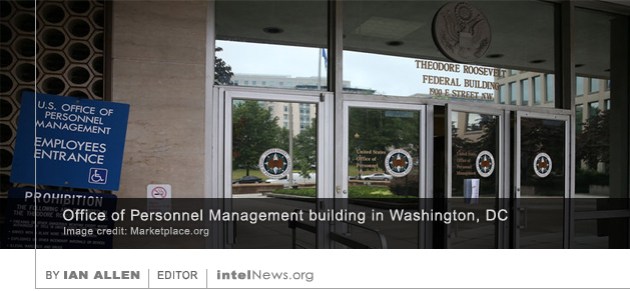 A United States Congressional review into last month’s cyber theft of millions of government personnel records has concluded that its impact will go far “beyond mere theft of classified information”. Up to 21 million individual files were
  Lawyers for Jonathan Pollard, an American with Israeli citizenship who spied on the United States for Israel in the 1980s,
  The German and Dutch governments allegedly joined forces to investigate a Russian supercomputer specialist, who studied in Germany and Holland, suspecting him of passing technical information to Russian intelligence. German weekly newsmagazine Der Spiegel, which published the report in its current issue, identified the physicist only as “Ivan A.” and said that the 28-year-old man was a member of a physics laboratory affiliated with the Max Planck Institute in the western German city of Bonn.
  A United States Navy intelligence analyst, who is serving a life sentence for spying on America for Israel, may soon be set free in an effort by Washington to quieten Israeli criticism of a recently struck international agreement on Iran’s nuclear program. Many in US counterintelligence
 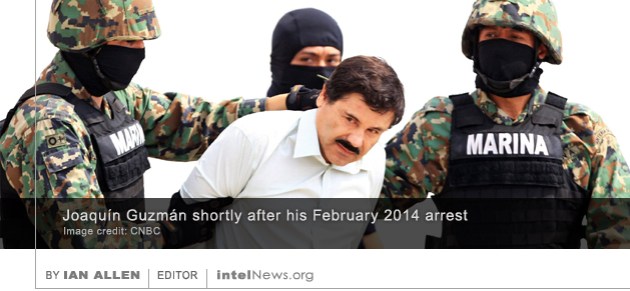 The notorious drug lord Joaquín ‘El Chapo’ Guzmán captured the attention of the world’s media a few weeks ago, when he
  Officials in China think that United States spy agencies are using casinos in Macau to entrap Chinese government employees, according to a report produced on behalf of an American-owned casino chain in the former Portuguese colony. The report was produced by a private investigator and was commissioned by Sands China, the Macau branch of a casino venture owned by American gambling magnate Sheldon Adelson. Its goal was to investigate why the Chinese-appointed authorities in Macau were hostile to the gambling industry in general and Sands China in particular.
 A government prosecutor in France has urged that a probe looking into whether the late Palestinian leader Yasser Arafat was poisoned with a radioactive substance should be dropped, because evidence shows he died of natural causes. Arafat was the founder of Palestinian nationalist group Fatah and led the Palestine Liberation Organization for over three decades before becoming the first president of the Palestinian Authority. He died in November 2004 at the Percy military hospital in Paris, France, weeks after being transferred there from his headquarters in Ramallah, West Bank. His official records indicate that he died from a stroke, which he suffered as a result of a blood disorder known as disseminated intravascular coagulation.
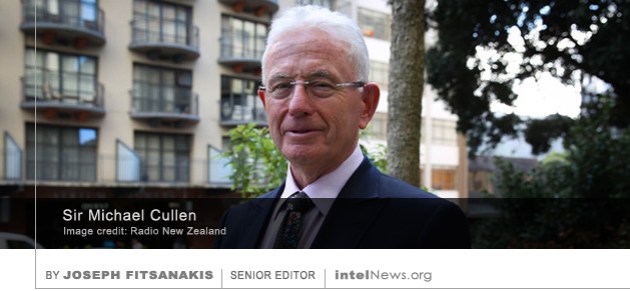 A former deputy prime minister of New Zealand, who is heading a major review of intelligence practices in the country, has said in an interview that spy agencies hurt their mission by practicing excessive secrecy. Sir Michael Cullen served as finance minister, education minister and attorney-General before serving as deputy prime minister of New Zealand, from 2002 to 2008. He was recently appointed by the government to co-chair a broad review of state intelligence agencies, with particular focus on updating the applicable legislative framework and evaluating the oversight exercised by lawmakers and the executive. The review is expected to affect the work of New Zealand’s two most visible intelligence agencies, the Security Intelligence Service and the Government Communications and Security Bureau.
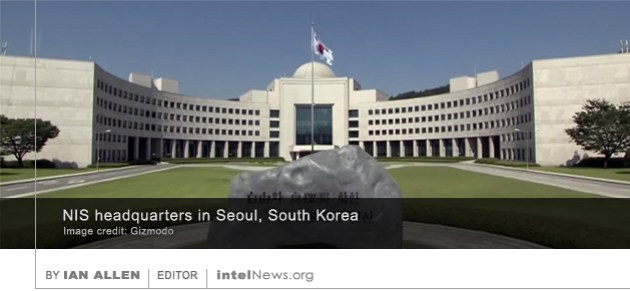 A suicide note found next to the body of a South Korean intelligence officer mentions a phone hacking scandal that has caused controversy in the country. The 45-year-old man, identified only as “Lim” by South Korean authorities, worked for the country’s primary intelligence organization, the National Intelligence Service (NIS). He was found dead late on Saturday morning inside his car, which had been parked on a deserted rural road on the outskirts of South Korean capital Seoul. According to local reports, authorities found a metal plate with burnt-out coal inside his car, which had been locked from the inside. Finding no apparent marks on his body, the police have ruled his death a suicide.
 The final piece of sealed testimony in one of the most important espionage cases of the Cold War has been released, 64 years after it was given. The case led to the execution in 1953 of Julius and Ethel Rosenberg, an American couple who were convicted of spying for the Soviet Union. The Rosenbergs were arrested in 1950 for being members of a larger Soviet-handled spy ring, which included Ethel’s brother, David Greenglass. Greenglass agreed to testify for the US government in order to save his life, as well as the life of his wife, Ruth, who was also involved in the spy ring. He subsequently fingered Julius Rosenberg as a courier and recruiter for the Soviets, and Ethel as the person who retyped the content of classified documents before they were surrendered to their handlers. That piece of testimony from Greenglass the primary evidence used to convict and execute the Rosenbergs.






 intelNews.org
CIA’s internal watchdog post remains vacant despite mounting calls to fill it
August 6, 2015 by Joseph Fitsanakis Leave a comment
According to Michael Isikoff, chief investigative correspondent of Yahoo News, there are “mounting concerns on Capitol Hill” about the failure of the White House to nominate a replacement for Buckley, more than six months following his departure. Isikoff wrote that Senator Diane Feinstein (D-Ca), who chairs the Senate’s Select Committee on Intelligence, wrote to President Obama in June urging him to nominate a new CIA inspector general “as soon as possible”. In her letter, Feinstein expressed alarm over the delay, which could adversely affect a growing list of sensitive internal probes at the Agency. But the White House has yet to respond to Feinstein, let alone nominate a candidate for the position, said Isikoff.
Several government watchdogs and observers told Yahoo News that the situation at the CIA inspector general’s office is “hardly unique” and noted that the process for appointing inspector generals for US government agencies usually “takes too long”. Moreover, the Agency’s office of the inspector general is not headless; it is led by interim inspector general Christopher R. Sharpley, a government lawyer who worked under Buckley. However, many wonder whether the delay stems from the President’s inability to find an individual with a reputation for impartiality and the determination to handle one of the US Intelligence Community’s most challenging posts.
► Author: Joseph Fitsanakis | Date: 06 August 2015 | Permalink
Filed under Expert news and commentary on intelligence, espionage, spies and spying Tagged with Christopher Sharpley, CIA, CIA Inspector General, David Buckley, Dianne Feinstein, intelligence oversight, News, Obama Administration, United States