Mystery surrounds CIA spy ‘of Cuban origin’ released last week
December 25, 2014 Leave a comment
 By JOSEPH FITSANAKIS | intelNews.org
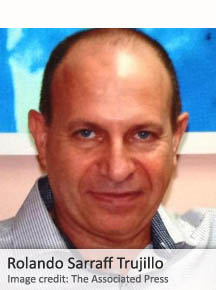
Almost nothing is known about a Cuban intelligence officer who spied for the United States and is now believed to be on American soil following his release from a Cuban prison last week. His release was part of a wider exchange between Washington and Havana of persons held in each other’s prisons on espionage charges. It included the release of Alan Gross, a contractor for the US Agency for International Development, who was imprisoned in the Caribbean island in 2009 on charges of political subversion. The deal also involved the release of the remaining three members of the so-called “Cuban Five”, a ring of Cuban intelligence officers operating on American soil, who were convicted in 1998 of spying on anti-Castro exile groups on behalf of Havana. But the ample media coverage has shied away from another prisoner who was exchanged as part of the deal, a spy for the Central Intelligence Agency who was described by US President Barack Obama as one of the most important intelligence assets that America has ever had in Cuba. The initial piece of information came from Cuban President Raul Castro himself, who on December 17 announced that an American spy “of Cuban origin” was to be released. Castro did not identify the spy. But later on that same day, Newsweek’s Jeff Stein said his name was “Rolando ‘Roly’ Sarraff Trujillo”, a former cryptographer in the Cuban Ministry of Interior’s Directorate of Intelligence. Trujillo was allegedly recruited by the CIA in the 1980s and spied for Washington until 1995, when he was arrested by Cuban counterintelligence, charged with espionage and sentenced to 25 years in prison. One source told Stein that the damage that Trujillo had caused Havana was so great that “the only thing that saved him from execution was the fact that both his parents were retired senior intelligence officers”. In a report published last Thursday, The Washington Post’s Adam Goldman said Trujillo’s release had been “a major priority for the [US] Intelligence Community” and would have been part of any spy swap with the Cuban government. Both Stein and Goldman claim that Trujillo was instrumental in the capture by the FBI of the Cuban Five, as well as in the 2009 arrest of State Department analysts Walter and Gwendolyn Myers, who spied on America for Cuba for 30 years. He is also said to have had a role in the capture of Ana Belen Montes, the top Cuba analyst in the Defense Intelligence Agency, who was convicted in 2002 of spying for Cuba. All this is speculative, however, as no official confirmation has been issued on Trujillo from either Washington or Havana. One former senior CIA official told The Post that the Agency had another spy in Cuba, alongside Trujillo, codenamed TOUCHDOWN. But, unlike Trujillo, he managed to defect to the US in the late 1980s, before getting captured by the Cubans.














Shiite rebels abduct, then release, Yemen’s intelligence chief
December 26, 2014 by Ian Allen Leave a comment
Shiite rebels, who are in control of most of Yemeni capital Sana’a, released the country’s intelligence chief a few hours after abducting him from his home, according to local sources. The chief, Major General Yehia al-Marani, directs Yemen’s Political Security Organization (PSO), and is regularly referred to as the second most powerful security official in the country, after the director of the country’s National Security Bureau. The Associated Press reported early on Thursday that about 20 armed militia members appeared outside al-Marani’s home in Sana’a at daybreak and demanded that the general come with them. The PSO chief ordered his bodyguards to lay down their weapons and then went away escorted by the rebels. Al-Marani’s kidnappers were almost certainly Houthi militiamen, who are members of a Shiite militant group known as Ansarullah. The Houthis, who come from western Yemen, have been engaged in a secessionist armed struggle since 2004 against the Sunni-dominated Yemeni government. Last September, they took advantage of the power-vacuum created by the collapse of the regime of longtime dictator Ali Abdullah Saleh and stormed the Yemeni capital, easily taking control of it within a few days. Their official reason for the takeover was their expressed desire to force President Abed Rabbo Mansour Hadi, who succeeded Saleh, to dissolve Yemen’s Sunni-led government, which the Houthis said was closely connected with al-Qaeda in the Arabian Peninsula (AQAP). After a period of prolonged negotiations with the rebels, President Hadi dissolved the government and replaced it with a more inclusive group of non-partisan technocrats. But the rebels refused to disband and disarm, and have since intensified their armed campaign, taking over a number of Yemeni cities and several major roads across the country. The Houthi leadership claims that they need to remain armed in order to fight militant Sunni groups operating in the country, and to battle corruption. Al-Marani was released by the rebels late on Thursday, with no explanation given as to his earlier abduction. It is believed that, before his appointment as head of PSO, the General served for 15 years as the Organization’s regional director in Sa’dah province, a Shiite stronghold where the Houthi insurgency has its roots. Some speculate that the rebels intended to settle old scores with al-Marani. Yemen government officials have refused to confirm or deny the reports of the Generals’ abduction and release.
Filed under Expert news and commentary on intelligence, espionage, spies and spying Tagged with abductions, Houthi rebellion, News, Political Security Organization (Yemen), Sa'dah Conflict, Yehia al-Marani, Yemen