Germany is prepared for projected increase in Russian spy activity, says BfV director
January 3, 2023 1 Comment
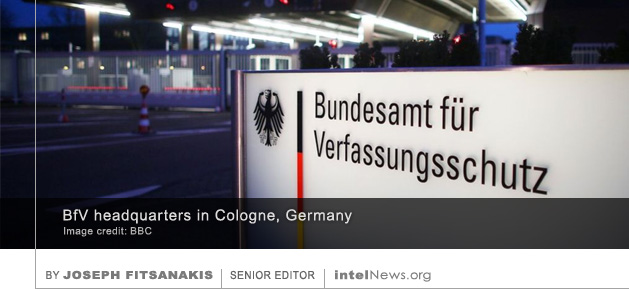
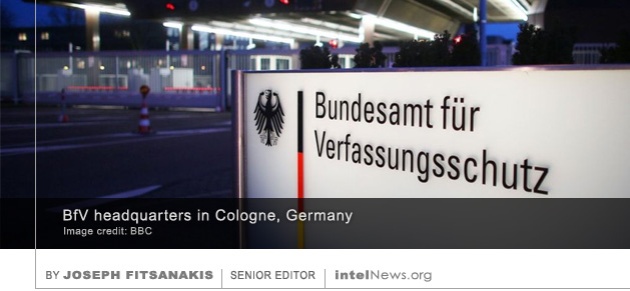 RUSSIAN FOREIGN INTELLIGENCE ACTIVITIES in Germany have increased exponentially since the start of the war in Ukraine, and are projected to further-increase in 2023, according to the head of German counterintelligence. In an interview on Monday with the German Press Agency (DPA), Thomas Haldenwang, director of the Federal Office for the Protection of the Constitution (BfV), also warned that China, Iran and Turkey are intensifying their intelligence activities inside Germany.
In April of last year, the German government expelled 40 members of the diplomatic staff from Russia’s embassy in Berlin. It is believed that the majority of those expelled were intelligence officers operating under official cover. According to Haldenwang, the Kremlin has taken steps to compensate for the loss of its intelligence presence in Germany. This is largely being done in two ways: first, with “traveling operatives”, i.e. intelligence officers who are stationed in third countries and travel to Germany to carry out specific operations; second, with non-official-cover officers, i.e. intelligence operatives who have no overt relations with the Russian government. Moreover, Russia has been mounting its cyber-attacks and foreign-influence operations against Germany, according to Haldenwang.
In response to the Kremlin’s actions, German counterintelligence is making “great efforts to prevent […] people who may be connected to Russian intelligence from entering Germany” with valid visas, Haldenwang said. The BfV has hired more personnel and has “organizationally redesigned” its defensive and offensive counterintelligence capabilities, as well as cyber-defense expertise. As a result, the BfV “feels sufficiently prepared for the current challenges”, Haldenwang said. He also disputed allegations in Western media that the BfV had been relatively passive in countering Russian intelligence operations prior to the war in Ukraine.
Finally, Haldenwang cautioned that Iran and Turkey maintained a significant intelligence presence in Germany, and that the stormy domestic politics in those countries would “have an impact in Germany”, as “internal political conflicts [in those countries] are fought here”. This also applies to China, whose intelligence collection targets are no longer primarily economic, but are moving into the political domain. According to Haldenwang, a “pan-European solution is needed to reverse this trend, at least for the European [Union] states”.
► Author: Joseph Fitsanakis | Date: 03 January 2023 | Permalink
 THE CRIMINAL CORRUPTION SCANDAL known as Qatargate, which has rocked the European Parliament in recent weeks, involves covert influence operations by Moroccan spies, in addition to Qatari intelligence operatives, according to news reports.
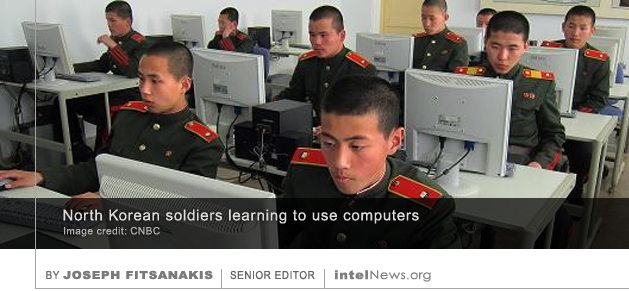 A NOTORIOUS NORTH KOREAN hacker group is believed to be behind a “sophisticated” effort to elicit the views of international experts on issues that are of concern to Pyongyang, according to an investigation by Reuters. The news agency
 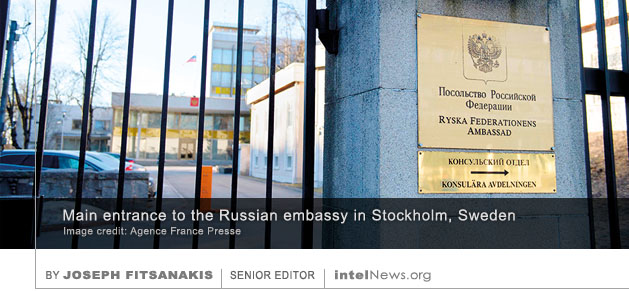 NUMEROUS UNANSWERED QUESTIONS SURROUND the arrest of a Russian married couple in Sweden, on charges of espionage. The arrest took place in dramatic fashion in the early hours of Tuesday, November 22.
  ISRAELI AUTHORITIES HAVE STEPPED up measures to protect its senior intelligence and security figures, over concerns they may be targeted by agents of the Iranian state, according to news reports. The news comes amidst widespread concerns that the ongoing shadow conflict between Israel and Iran is escalating in the shadow of the Russo-Ukrainian war.
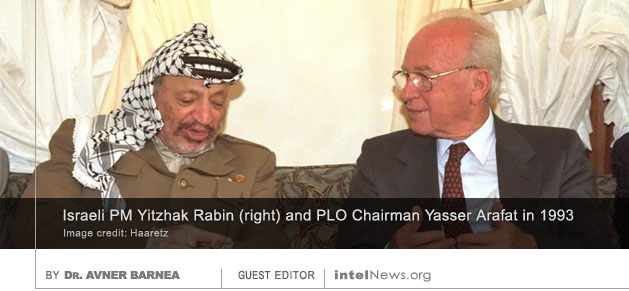 LAST WEEK, THE CHAIRMAN of the Israeli Religious Zionist Party, Bezalel Smotrich, who will soon be appointed as a cabinet minister, alleged that the Israel Security Agency (ISA) encouraged the killer of the late Israeli Prime Minister, Yitzhak Rabin. Smotrich’s allegation shocked many Israelis, because of the unfortunate timing —it was uttered close to the annual Remembrance Day for Prime Minister Rabin, who was assassinated by radical rightwing activist Yigal Amir 27 years ago. But also because of the unacceptable content, which echoes conspiracy theories that have accompanied Rabin’s assassination for many years. To counter these conspiracy theories, it is fitting to discuss the failure to defend Rabin that did occur under the responsibility of the ISA.
 ISA to infiltrate extreme rightwing groups. The Committee did not ask: could the ISA’s intelligence have prevented the murder?
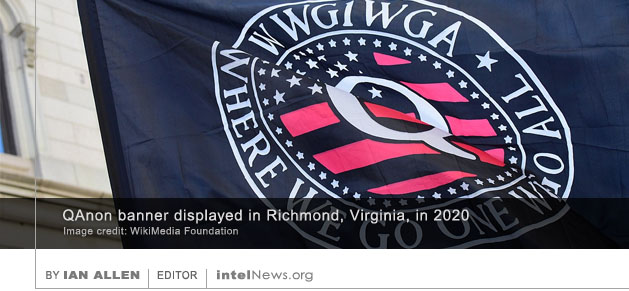 FEMALE TARGETS OF CONSPIRACY theories propagated by QAnon adherents face up to 10 times more online harassment and abuse than male targets, a behavioral study of pro-QAnon online users has found. QAnon refers to an American-rooted conspiracy theory that views former United States President Donald Trump as a central figure in a behind-the-scenes battle against a sinister cabal of enemies, known as the “deep state”. According to QAnon adherents, “deep state” elites (politicians, entertainment figures and other celebrities) consist of Satan-worshiping cannibals who traffic children for sex. QAnon adherents also believe that these elites will be routed during “The Storm”, a final reckoning between Trump and the “deep state”, which will result in the arrest and physical extermination of all elites.
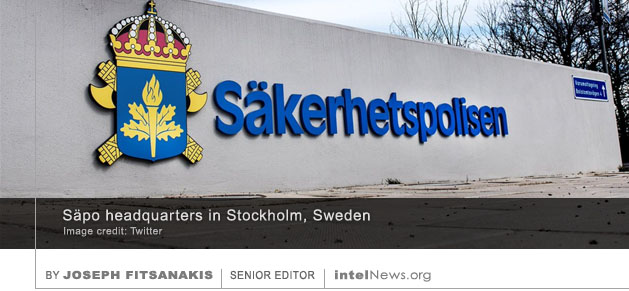 AUTHORITIES IN SWEDEN HAVE charged two brothers, one of whom worked in a highly secretive Swedish intelligence unit, with spying for Russian military intelligence for a decade, according to news reports. The charges resulted from a six-year investigation led by the Swedish Security Service (SAPO), which is the country’s counterintelligence agency. SAPO reportedly launched the probe in 2017, based on suspicions that it harbored a spy in its personnel ranks.
 IT IS DIFFICULT TO argue against the widely shared view that clandestine human intelligence (HUMINT) is replete with ethical dilemmas. These are inherent in the process of gathering intelligence via the use of human sources or covert agents. Yet it is possible —indeed desirable— for intelligence agencies to implement well-regulated ethical approaches to clandestine HUMINT, according to Dr. Stephan Lau, a junior professor of psychology and member of the Faculty of Intelligence at the Federal University of Administrative Sciences in Berlin, Germany.
 AN ALLEGED RUSSIAN DEEP-cover intelligence operative, who was arrested by Norwegian police last week, spent years building his fake cover in Canada, while studying there as a Brazilian citizen, according to reports. Norway’s Police Security Service (PST)
  REPORTS FROM KUALA LUMPUR SUGGEST that Malaysian agents operating in the service of Israeli intelligence carried out the kidnapping of a Palestinian engineer, Omar al-Balbaisi, on September 28.
  As intelNews
 LAST SUMMER, GERMAN EMBASSY staff in Russia issued an entry visa to a Russian national, despite warnings by at least two European security agencies that he was a known intelligence officer, according to a report. The incident has fueled persistent allegations that Berlin’s counterintelligence posture against Russia is ineffective.






 intelNews.org
Congo accuses Rwandan spy cell of plot to shoot down president’s plane
January 4, 2023 by Joseph Fitsanakis Leave a comment
The DRC has long accused Rwanda of training and equipping members of the so-called March 23 Movement (M23), who have been engaged in a decade-long conflict with the Congolese state in the North Kivu province. Since March of last year, DRC government forces have been engaged in a major offensive against the M23, but the rebel group continues to control several strategic towns and villages in North Kivu. Meanwhile, Rwanda has accused the DRC of using the offensive as a pretext to invade Rwanda. Late last year, the Rwandan Defense Forces (RDF) captured Congolese territory, in what authorities in Kigali described as an attempt to create a buffer zone between Rwanda and the DRC military offensive. In response, the DRC suspended a host of bilateral agreements with Rwanda and expelled the Rwandan ambassador from Kinshasa.
Last Thursday, the DRC’s Deputy Minister of the Interior, Jean-Claude Mandongo, posted a video on social media, announcing the arrest of several members of an alleged Rwandan spy ring. According to Mandongo, the spy ring consisted of two alleged Rwandan spies and two Congolese accomplices. The two Rwandans have been identified in DRC media reports as Dr. Juvenal Nshimiyimana and Moses Mushabe, who is allegedly a serving intelligence officer in the RDF. According to Mandongo, the two Rwandans were stationed in the DRC in a non-official-cover capacity, as employees of a humanitarian non-governmental organization called African Health Development Organization (AHDO).
Authorities in the DRC seem to believe that the AHDO serves as a proprietary cover for Rwandan intelligence, although they have provided no evidence for this claim. Officials in Kinshasa also claim that Rwandan spies are operating in other AHDO branches across the DRC. Statements from the Ministry of the Interior suggest that more arrests of alleged Rwandan spies are imminent. According to DRC officials, AHDO facilities were strategically located adjacent to the N’djili International Airport in Kinshasa, in order to monitor the movements of the presidential air fleet. In a report published on Tuesday, DRC authorities claimed that the alleged Rwandan spy cell planned to assassinate DRC President Félix Tshiskedi, by shooting down his presidential jet. The Rwandan government has rejected these claims.
► Author: Joseph Fitsanakis | Date: 04 January 2023 | Permalink
Filed under Expert news and commentary on intelligence, espionage, spies and spying Tagged with Africa, Democratic Republic of the Congo, espionage, M23, March 23 Movement, News, Rwanda