Ex-Mossad official denies Zygier compromised intelligence operation

Ben ZygierBy JOSEPH FITSANAKIS | intelNews.org |
A former Mossad official has dismissed as “nonsense” suggestions that an Australian-born Israeli spy, who killed himself in 2010, had been jailed for inadvertently compromising an Israeli secret mission. Ben Zygier was an officer in Israel’s covert-action agency Mossad for several years before he was placed in solitary confinement following his arrest in Israel, in February of 2010. Known to the outside world only as ‘Prisoner X’, he allegedly killed himself in his cell a few months later. In March, German newsmagazine Der Spiegel alleged that Zygier was arrested by Israeli intelligence after contacting a Lebanese Hezbollah operative without Tel Aviv’s authorization. The Australian-born spy was allegedly trying to recruit the operative on his own initiative and without permission from his superiors. In order to prove his Mossad credentials, Zygier is said to have given the man several names of Israel’s double agents operating inside Hezbollah. But the Lebanese recruit surrendered Zygier’s information to Hezbollah, which promptly arrested many of Israel’s informants inside the organization. Those arrested included Ziad al-Homsi, who at the time was believed to be one of the Mossad’s most lucrative assets inside the Lebanese militant group. On Tuesday, the Australian Broadcasting Corporation said that, at the time of his arrest in Lebanon, al-Homsi was preparing to assist the Mossad in recovering the bodies of three Israeli soldiers that had been killed in Syria during the 1982 Lebanon War. Read more of this post

News you may have missed #835 (Americas edition)

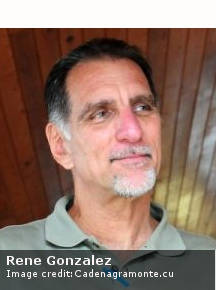
Rene GonzalezBy IAN ALLEN | intelNews.org |
►►‘Cuban Five’ spy member renounces US citizenship. Cuban intelligence officer Rene Gonzalez, who was a member of the “Cuban Five” spy group in South Florida, was released from a US prison in 2011, after serving 10 years for espionage. He was required to serve three years’ probation in the US. But on Friday US District Judge Joan Lenard ruled that Gonzalez, who had already been allowed to temporarily return to Cuba for his father’s funeral, could stay there if he renounced his US citizenship. Gonzalez is the first of the Cuban Five to return to the island. The other four men continue to serve lengthy sentences in US federal prisons.
►►US Defense Intelligence Agency contemplates austerity. Since 2001, intelligence agencies have had just about all money they wanted, but not anymore, as the cuts mandated by the Budget Control Act are hitting even previously inviolable spook accounts. In a reflection of this new reality, the Defense Intelligence Agency plans a conference with industry at its headquarters on June 27, 2013. Agency leaders will focus on “current and emerging challenges in the context of an increasingly austere fiscal posture”.
►►Report says Canada spies caught off guard by Arab Spring. The 2011 Arab Spring uprising in the Middle East came as a surprise to the Canadian government, which risks getting caught off-guard again without a new approach to gathering intelligence. This is according to a new report by Canada’s Intelligence Assessment Secretariat, a unit of the Privy Council’s Office, the bureaucratic arm of the Office of the Canadian Prime Minister. On the other hand, the report states, “there is no reason to believe that [Canadian intelligence agencies] did any worse than other allied agencies in its analysis of the Arab Spring, and in a few areas it appears to have done somewhat better”.

MI5 wants secret court session over IRA informant’s lawsuit

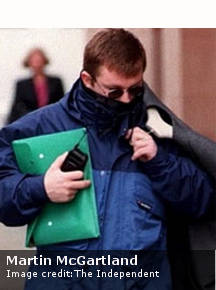
Martin McGartlandBy JOSEPH FITSANAKIS | intelNews.org |
Britain’s domestic intelligence agency, MI5, has requested a secret court hearing to deliberate a lawsuit from a high-profile spy who infiltrated the Provisional Irish Republican Army, commonly known as IRA. The mole, Martin McGartland, of Belfast, Northern Ireland, was recruited by the Special Branch of the Royal Ulster Constabulary in the 1980s. The information he supplied to the security agencies over several years is widely credited with having saved the lives of at least 50 British police officers and soldiers. His autobiographical experiences formed the basis of the 2008 motion picture 50 Dead Men Walking, written and directed by Kari Skogland and starring Jim Sturgess as Martin and Ben Kingsley. McGartland’s cover was dramatically blown in 1991, when the IRA began suspecting that he might be an MI5 mole. After several hours of interrogation by the IRA’s Internal Security Unit, McGartland managed to escape his captors and throw himself out of a third-floor window. He survived serious injuries and was taken into hiding by MI5, living in a series of safe houses across Britain for nearly a decade. However, in 1999 the IRA caught up with him at an MI5 safe house in North Tyneside, in the northeast of England, where he was shot by an IRA hit team while walking to his car one morning and left for dead. McGartland is now suing MI5 and its institutional patron, the British Home Office, claiming that they failed to support him after he was shot by the IRA. In his lawsuit, McGartland claims that government funding he was receiving for treatment for post-traumatic stress disorder was withdrawn after he publicly criticized the British government’s counterterrorism policies. Read more of this post

Alongside CIA, British spies also bankrolling Afghan government

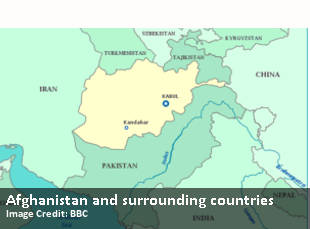
AfghanistanBy JOSEPH FITSANAKIS | intelNews.org |
British officials have publicly admitted that senior members of the Afghan government receive “direct cash payments” from London on a regular basis. British newspaper The Daily Telegraph reported over the weekend that the funds have been delivered to Afghan cabinet members “periodically” ever since 2001, when British troops entered Afghanistan alongside their American colleagues. The revelation comes only a week after the publication of a New York Times exposé, which disclosed that the United States Central Intelligence Agency (CIA) had delivered “tens of millions of dollars [in] off-the-books cash” to Afghanistan’s governing elite. The newspaper added that there was little evidence that such bribes had helped promote Washington’s interests in the country in any substantial way. According to British officials, London has channeled “a smaller fraction” of the amount paid by the CIA. The British funds are delivered to senior members of the government of Hamid Karzai by MI6, Britain’s foremost external intelligence agency. The funds are then allegedly spent on what Afghan government officials call “special projects”, implying that they are used as bribes to pacify local warlords, many of which are ethnic Pasthuns and belong to the Taliban. Last week, following The New York Times revelations, Mr. Karzai told the loya jirga —Afghanistan’s grand assembly— that there was “nothing unusual” about the CIA funneling money to his government. He added that he had implored the CIA’s Station Chief in Afghan capital Kabul to continue making regular payments despite popular concern in the US, as the funds were vital to the stability of the government: “we really need it”, he said. Read more of this post

News you may have missed #834

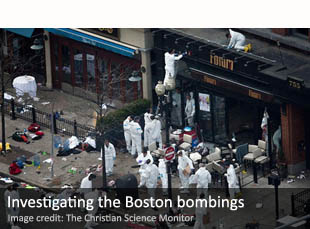
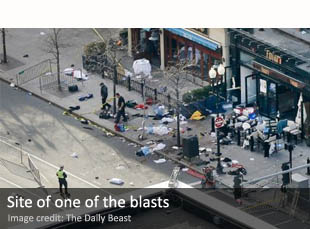
Site of one of the Boston Marathon blastsBy IAN ALLEN | intelNews.org |
►►Why FBI and CIA didn’t connect the dots on Boston bombers.  The FBI and the CIA are being criticized for not keeping better track of Tamerlan Tsarnaev in the months before the Boston Marathon bombings. How could they have ignored such a dangerous person? How do we reform the intelligence community to ensure this kind of failure doesn’t happen again? Legendary security expert Bruce Schneier says the idea of connecting the dots is a bad metaphor, and focusing on it makes us more likely to implement useless reforms.
►►Korean spy’s deportation reveals web of intrigue. Relations between Australia and South Korea have been strained after the East Asian economic powerhouse was caught soliciting sensitive information from public servants, and the deportation of a South Korean spy for espionage in 2009 was disclosed. New details of South Korean espionage in Australia were revealed in an unfair dismissal case before the Fair Work Commission brought by a former intelligence officer with the Australian Federal Police, Bo-Rim “Bryan” Kim.
►►Secret US court approved all domestic spying requests in 2012. The United States Foreign Intelligence Surveillance Court (also known as FISA court) quietly rubber-stamped nearly 2,000 government requests to search or electronically monitor people in the United States last year, according to a Justice Department report. The agency, which oversees requests for surveillance warrants against suspected foreign intelligence agents on US soil, released the report to Senate majority leader Harry Reid (D-Nevada), showing that by approving the 1,856 inquiries “for foreign intelligence purposes”, it had granted every single government request in 2012.

Revealed: South Korean intel officers caught spying on Australia

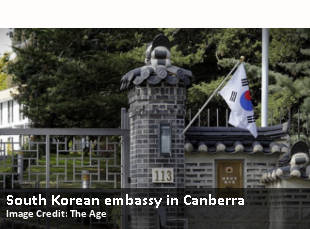
Embassy of South Korea in AustraliaBy JOSEPH FITSANAKIS | intelNews.org |
A court in Australia has released information about “inappropriate activities” allegedly conducted by South Korean intelligence officers targeting trade negotiations between Seoul and Canberra. The 2011 case involved operatives of South Korea’s National Intelligence Service (NIS), who purportedly tried “to obtain sensitive information” from Australian civil servants. The documents, released Tuesday by Australia’s Federal Court, reveal that an Australian government official, Dr. Yeon Kim, was sacked and had his security clearance revoked, for allegedly holding clandestine meetings with South Korean NIS officers. The Australian government accused Kim, who worked for the Bureau of Agricultural and Resource Economics and Sciences, of meeting repeatedly with Hoo-Young Park, an employee of the South Korean embassy in Canberra, who had been declared to the Australian government as an NIS liaison officer. According to the court documents, three other NIS officers serving under diplomatic cover in Australia, Bum-Yeon Lee, Sa-Yong Hong, and a man named Kim, were involved in collecting intelligence on Australian trade secrets. According to the Australian Security Intelligence Organisation (ASIO), which detained Kim, he willingly participated in the “foreign interference” operation by the NIS. It is worth noting, however, that there were no expulsions of South Korean intelligence officers or diplomats following Kim’s detention. On the contrary, ASIO appears to have gone to great lengths to prevent disclosure of the spy affair and even protect the identities of the NIS officers involved. In a move interpreted by some as an attempt by Canberra to safeguard its good relations with Seoul, the Australian government warned in a memo that any disclosure of the South Korean intelligence operation would have “a detrimental impact” on bilateral relations between the two nations. Read more of this post

News you may have missed #833

Dawn MeyerriecksBy IAN ALLEN | intelNews.org |
►►Report states Switzerland increasingly targeted by spies. Cyber attacks and abductions of Swiss abroad were two of the main security challenges faced by Switzerland last year, according to report released on Tuesday by the alpine country’s Federal Intelligence Service (FIS). “Switzerland continues to be no priority for jihadist motivated attacks,” the report said. However, presenting the report, FIS head Markus Seiler said an Islamist attack on Swiss soil could not be ruled out. And Swiss nationals abroad were “more threatened than in the past by politically and terrorist motivated abductions”, he said.
►►Prosecutors raid South Korean spy agency. State prosecutors raided the headquarters of the National Intelligence Service of South Korea on Tuesday to investigate accusations that the spy agency used its agents and hired bloggers to influence the presidential election in December. The raid, which started in the morning and continued into the evening, was highly unusual, dealing a blow to the reputation of the spy agency. Such a raid would have been unthinkable decades ago when the agency had served as the main tool of political control for South Korea’s military dictators.
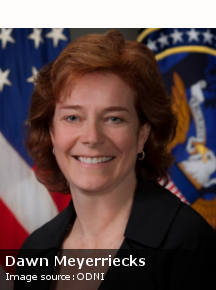
►►Former AOL VP to lead CIA tech and science division. The CIA has appointed Dawn Meyerriecks, former AOL Senior Vice President for Product Technology, as its new Chief of Science and Technology. According to Wired, Meyerriecks is the first internet executive to ever take a top-tiered position in the CIA. Some of the things Meyerriecks has done in the past include working as a Jet Propulsion Lab engineer for NASA, working as a Assistant Director of National Intelligence for Acquisitions and Technology, working as a Chief Technology Officer and Technical Director for the Joint Interoperabillity and Engineering Organization (JIEO), establishing an in-house app market for both spies and analysts, encouraging the US government to use open source software, and much more.

Is US-Mexico anti-drug intelligence cooperation about to end?

Enrique Peña NietoBy JOSEPH FITSANAKIS | intelNews.org |
Some senior American officials believe that the anti-drug intelligence cooperation between the United States and Mexico is in its closing stages, following tens of thousands of deaths in the past decade. Intelligence cooperation between the two countries reached unprecedented levels in the post-9/11 era, following the establishment of the US Office of the Director of National Intelligence (ODNI). In the past decade, cooperation between Mexico’s Center for Research and National Security (CISEN) and ODNI, as well as the Central Intelligence Agency, resulted in what some observers call “unprecedented bilateral action” directed against Latin American narcotics cartels. This arrangement culminated under the administration of Mexico’s President Felipe Calderón, when the CIA —and to a lesser extent the US Drug Enforcement Administration and the National Security Agency— were given unprecedented access to Mexican territory and civilian communications networks. However, in an extensive article published Sunday, The Washington Post says the close operational connection between Mexican and US intelligence agencies is quickly winding down. Citing interviews with over “four dozen current and former US and Mexican diplomats, law enforcement agents, military offices and intelligence officials”, the paper suggests that Mexico City is wary about Washington’s involvement in the so-called ‘war on drugs’. The major change on the Mexican side, says The Post, occurred last December with the inauguration of Mexico’s new President, Enrique Peña Nieto, of the Institutional Revolutionary Party (PRI), which has returned to power after 13 years in opposition. Under Nieto’s administration, the Mexican security establishment, worn out by over 60,000 deaths and as many as 25,000 forced disappearances in the past few years, is intent on shifting its priorities. Instead of focusing on so-called ‘beheading operations’ —arresting or otherwise neutralizing the leadership of drug cartels— it has decided to stabilize the situation by containing —rather than eliminating— the operations of drug networks. Read more of this post

CIA bankrolling Afghan government officials ‘on a vast scale’

AfghanistanBy JOSEPH FITSANAKIS | intelNews.org |
The United States Central Intelligence Agency (CIA) has delivered “tens of millions of dollars [in] off-the-books cash” to Afghanistan’s governing elite, but there is little evidence that such bribes have helped promote Washington’s interests in the country, according to a new exposé published over the weekend in The New York Times. The paper cites “current and former advisers to the Afghan leader” Hamid Karzai, who allege that, for over a decade, the CIA has secretly delivered to the presidential palace in Afghan capital Kabul monthly payments ranging “from hundreds of thousands to millions of dollars”. According to Khalil Roman, who was President Karzai’s Chief of Staff for four years until 2005, Afghan officials called the CIA funds “ghost money” because “it came in secret [and] left in secret”. The article suggests that the cash given to the Afghan government appears to be handled outside the CIA’s standard financial assistance programs, which are typically subject to restrictions and oversight from administrators both inside and outside the Agency. Some American officials, who spoke to The Times on condition of anonymity, said the CIA’s goal in funding the inner circle of the Afghan government is to maintain access to its members and to “guarantee the Agency’s influence at the presidential palace”. But there is little evidence that the funds, which are handled exclusively by a “small clique at [Afghanistan’s] National Security Council” have bought the CIA the political influence it seeks. Read more of this post

Second US government official indicted in Cuba espionage case

Ana Belen MontesBy IAN ALLEN | intelNews.org |
The United States has publicly unsealed for the first time the indictment of an American government official accused of spying for Cuba, in connection with former senior US military intelligence analyst Ana Belen Montes, who was jailed in 2002 for spying for Havana. Marta Rita Velazquez, a Puerto Rican-born American citizen, was originally indicted in 2004 for conspiracy to commit espionage as an unregistered agent of a foreign power. A graduate of Princeton University and Georgetown University Law School, Velazquez first met Montes while they were both studying at the Johns Hopkins University’s School of Advanced International Studies in Washington, DC. In 2002, when the Federal Bureau of Investigation ended Montes’ 17-year espionage career on behalf of Cuba, it was told that Velazquez helped the Cuban Intelligence Directorate recruit Montes. The military analyst told her FBI interrogators that Velazquez introduced her to a Cuban intelligence officer in New York; she then traveled with her to Cuba, where Montes received “operational training”, before helping her obtain a job with the US Defense Intelligence Agency. At the time, Velazquez was already working with for the US Department of State as a legal officer attached to the US Agency for International Development. In that position, which she held for over a decade, Velazquez had a top-secret security clearance; she also completed tours at the US embassies in Guatemala and Nicaragua. In 2004, a grand jury in Washington, DC, indicted Velazquez for espionage, accusing her of exchanging encrypted information with Cuban intelligence officers and traveling abroad to receive operational training while secretly in the service of Cuba. Read more of this post

Israel spy agency has presence in Syria, says senior rebel general

Regional map of SyriaBy JOSEPH FITSANAKIS | intelNews.org |
Israel is one of several countries that maintain a significant intelligence presence inside Syria, according to the top commander of the Syrian rebel forces. General Salim Idriss, Chief of Staff for the Free Syrian Army, told CNN’s Christiane Amanpour that the Jewish state has “many, many” intelligence officers in various parts of Syria. The Arab country has been rocked since 2011 by a violent civil war, which has cost the lives of at least 60,000 people. Idriss was responding to comments made earlier this week by Brigadier General Itai Brun, senior intelligence analyst for the Israel Defense Forces (IDF). Brun, who heads the Division for Research and Analysis of the IDF’s Military Intelligence Directorate, was speaking at a conference hosted in Tel Aviv, Israel, by the Institute for National Security Studies. He told an audience of intelligence experts that the IDF was “quite certain” that the Syrian government headed by President Bashar al-Assad had resorted to the use of chemical weapons against rebel forces on at least one instance. According to Brun, footage obtained by the IDF of rebel casualties from a March 19 attack by Syrian government forces, pointed to the use of sarin nerve gas. He referred to evidence such as the victims’ dilated pupils and “the foam coming out of their mouths” as strong proof of the use of weaponized sarin nerve gas in the battlefield. Responding to Brun’s allegations, General Idriss suggested that Syrian government forces had used chemical weapons repeatedly in a variety of locations, including Aleppo, Homs, and the outskirts of capital Damascus. Read more of this post

Diplomat jailed in biggest Dutch spy affair in recent times

Raymond PoeterayBy JOSEPH FITSANAKIS | intelNews.org |
A court in the Netherlands has sentenced a diplomat to 12 years in prison for spying for Russia, in what security observers have called one of the worst espionage scandals in recent Dutch history. Raymond Poeteray, who had worked for Holland’s Ministry of Foreign Affairs since 1978, was convicted on Tuesday of spying for the Russian Foreign Intelligence Service (SVR). Poeteray was arrested in June of 2012 at Amsterdam’s Schiphol International Airport, following an extensive investigation by German counterintelligence. The diplomat was captured as he was boarding a flight to Vienna, Austria, the first leg in a return journey to Bangkok, Thailand. Dutch prosecutors claimed during Poeteray’s trial that he had arranged to meet his Russian handlers in Bangkok and give them three USB drives loaded with classified information, which were found on in his possessions upon his arrest at Schiphol. The three-judge panel that sentenced Poeteray at The Hague said he had spied on Holland “for years [while] on assignment from the Russian Foreign Intelligence Service”, in the course of which he damaged the interests of his home country in a “substantial” way. The Dutch prosecutor’s office said Poeteray had provided Moscow with sensitive information, including military and political intelligence on the European Union, inside material on the North Atlantic Treaty Organization, as well as documents belonging to the Dutch Foreign Affairs Ministry. The court heard that, in recent years, the diplomat had given the SVR information about Dutch involvement in the Libyan Civil War, classified data from European-Union-sponsored fact-finding missions in the Republic of Georgia, as well as intelligence on Dutch peacekeeping operations in Afghanistan, Kosovo, and elsewhere. Read more of this post

News you may have missed #832 (foiled Canada terror plot)

Toronto, CanadaBy IAN ALLEN | intelNews.org |
►►Two arrested in Canada terror plot. Chiheb Esseghaier, 30, and Raed Jaser, 35, who live in Montreal and Toronto, were planning to derail a Via Rail passenger train in Toronto  with support from “al-Qaeda elements located in Iran”, Canadian police said Monday. “This is the first known al-Qaeda planned attack that we’ve experienced in Canada”, Superintendent Doug Best told a news conference. Police said the men did not receive financial support from al-Qaeda, but declined to provide more details. There was no apparent reason to think the planned attacks were state-sponsored.
►►Canada foils ‘al-Qaeda inspired’ terror attack on train. The Royal Canadian Mounted Police (RCMP) said the surveillance operation leading to the arrests of the two suspects was “a result of extensive collaborative efforts”. Chief Spt Jennifer Strachan said the two men had sought to target “a specific route, but not necessarily a specific train”. At the same time, the RCMP said they believed the plot was in the planning stage and “there was no imminent threat to the general public”.
►►Tip from Muslim community ‘helped foil’ al-Qaeda plot. Canadian lawyer Hussein Hamdani told CTV News Channel that a tip from the Muslim community helped investigators foil the alleged al-Qaeda plot. “This goes to show the partnership between the Muslim community in Canada and the RCMP and all the police services,” said Hamdani. It might not be well known but collaboration between Muslims and government agencies —like the RCMP, CSIS, Canadian Border Services Agency and the Department of Justice— is quite common, according to Hamdani.

News you may have missed #831 (Boston Marathon bombings)

Site of one of the Boston Marathon blastsBy IAN ALLEN | intelNews.org |
►►Russia had warned FBI Tsarnaev had radical links. The Russian FSB intelligence security service shared with the FBI in early 2011 information that Tamerlan Tsarnaev, one of the brothers suspected in the Boston marathon bombings, was a follower of radical Islam. The Russians allegedly told the FBI that Tsarnaev, 26,  had changed drastically since 2010 as he prepared to leave the US to join unspecified underground groups.
►►FBI interviewed dead Boston bombing suspect years ago. The FBI admitted Friday they interviewed the now-deceased Boston Marathon bombing suspect Tamerlan Tsarnaev two years ago but failed to find any incriminating information about him. The FBI probe culminated in a sit-down interview where they probably asked him a lot of questions about his life, his contacts, his surroundings. All of this was then written in a report.
►►Ex-CIA/FBI official says Boston bombings were not terrorism. Counterterrorism expert Philip Mudd, with experience in the CIA and the FBI, told Fox News: “What I fear is that people too quickly categorize this as terrorism. This looks more to me like Columbine than it does like al Qaeda. Two kids who radicalized between themselves in a closed circle and go out and commit murder. I would charge these guys as murderers, not terrorists”.
►►Ex-US Attorney General says Boston bombings were terrorism. Michael Mukasey, Attorney General of the United States from 2007 to 2009, says that the Boston attack “was obviously a suicide operation –not in the direct way of a bomber who kills all his victims and himself at the same time by blowing himself up, but in the way of someone who conducts a spree, holding the stage for as long as possible, before he is cut down in a blaze of what he believes is glory. Here, think Mumbai”.

Is Ana Montes ‘the most important spy you’ve never heard of’?

Ana Belen MontesBy IAN ALLEN | intelNews.org |
An extensive article published today in The Washington Post Magazine revisits the largely forgotten case of Ana Belen Montes, a senior United States military intelligence analyst who was convicted in 2002 of spying for Cuba. Montes, who was arrested by the Federal Bureau of Investigation in Washington, DC, on September 20, 2001, underwent trial and sentencing in the shadow of 9/11, which might help explain the relative obscurity of her case. Still, as The Post article by Jim Popkin states, many intelligence observers view her as one of the most damaging double spies in recent American history. She entered government work as a clerk typist at the Department of Justice, and quickly received top-security clearance. It was from there that she moved to the Defense Intelligence Agency, America’s premier military intelligence organization, in September 1985. She rose meteorically through the ranks of the DIA, eventually becoming the Agency’s top Cuba analyst. Montes’ former colleagues report that she was known as “the Queen of Cuba”, a witty label that rested on her indisputable reputation as one of America’s most capable intelligence analysts on Cuba. She also came from a family with strong conservative credentials and strong connections with the US counterintelligence community. Her brother and sister were both FBI agents, and her former long-term boyfriend was a Cuban intelligence specialist for the Department of Defense. Read more of this post