Jailed US spy gave Israel information on Pakistan nuclear program
December 18, 2012 2 Comments
 By JOSEPH FITSANAKIS | intelNews.org |
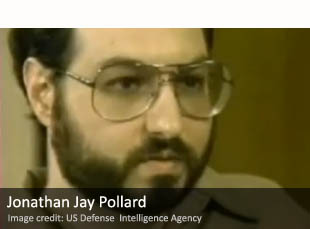
An American intelligence analyst, who was jailed in 1987 for spying for Israel, gave his spy handlers information on Pakistan’s nuclear weapons program, according to declassified documents. Former United States Navy intelligence analyst Jonathan Jay Pollard is currently serving a life sentence for selling classified information to the Israeli government between 1985 and 1987. On December 14, the Central Intelligence Agency declassified its official damage assessment of Pollard’s espionage, who some counterintelligence officials believe was the most prolific mole that ever spied on the US government for a foreign country. This was the second time that the CIA declassified the document, titled The Jonathan Jay Pollard Espionage Case: A Damage Assessment, following an appeal by George Washington University’s National Security Archive. Even though this latest version of the declassified document is still heavily redacted, it contains some new information. One new revelation is that Pollard’s Israeli handlers specifically asked him to acquire intelligence collected by the US government on the Pakistani nuclear weapons program. In a section titled “Implications of Compromises: What Israel Gained from Pollard’s Espionage”, the CIA assessment states that Pollard focused on “Arab and Pakistani nuclear intelligence” and gave his Israeli handlers information on a secret Pakistani “plutonium reprocessing facility near Islamabad”. Further information in the declassified report about this subject is completely redacted. The question is, what kind of information on Pakistan’s nuclear weapons program did Tel Aviv acquire from Pollard? According to A.Q. Khan, the so-called father of the Pakistani nuclear bomb, Islamabad was able to detonate a nuclear device “within a week’s notice” by as early as 1984. Read more of this post

















News you may have missed #817 (assassinations edition)
December 19, 2012 by Ian Allen 1 Comment
►►British PM apologizes in killing of IRA lawyer. The Prime Minister of the United Kingdom, David Cameron, has apologized after a government report found that British intelligence officials had colluded with loyalist paramilitaries in the 1989 killing of lawyer Patrick Finucane in Belfast, Northern Ireland. Finucane, who had represented members of the Irish Republic Army in court, was shot dead by two gunmen from a Protestant paramilitary group while having a Sunday dinner at his home with his wife and three children.
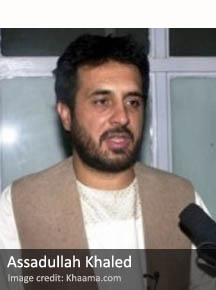
►►Behind the plot to kill Afghanistan’s spy chief. On December 11, we reported that the Afghan government accused Pakistani intelligence of having played a role in the assassination of Assadullah Khaled, who heads Afghanistan’s National Directorate for Security. But how was the attempt on Khaled’s life carried out, and how did the aspiring assassins get so close to the controversial intelligence chief? Time magazine reports that it was Khaled’s self-confidence “bordering on recklessness” that almost got him killed. Sources say that, even after taking over the NDS, Khalid frequently drove around without bodyguards.
►►How Mossad bid to kill Hamas leader ended in fiasco. Khaled Mashal’s recent presence in the Gaza Strip will have rudely reminded Benjamin Netanyahu, the Israeli Prime Minister, of one of the greatest fiascos in the history of special operations, writes The Daily Telegraph‘s David Blair. Fifteen years ago, Netanyahu authorized a risky attempt to assassinate Mashal in the Jordanian capital, Amman. Everything went wrong. The Jordanian security forces responded to this brazen daylight attack, arresting two of the Israeli operatives and forcing three to hide in their country’s embassy, which was promptly surrounded by troops.
Filed under Expert news and commentary on intelligence, espionage, spies and spying Tagged with 0 Behind the plot to kill Afghanistan’s spy chief, 0 British PM apologizes in killing of IRA lawyer, 0 How Mossad bid to kill Hamas leader ended in fiasco, Afghanistan, Amman (Jordan), Assadullah Khaled, assassinations, David Cameron, Hamas, Israel, Jordan, Khaled Mashal, Mossad, News, news you may have missed, Northern Ireland, Patrick Finucane, Provisional IRA