Danish Muslim convert claims he was CIA’s mole inside al-Qaeda

Morten StormBy JOSEPH FITSANAKIS | intelNews.org |
A Danish citizen who converted to Islam in the early 2000s claims he was a spy for the United States Central Intelligence Agency and helped track down an American-born Islamist cleric who was killed by a drone strike in 2010. The man, who goes by the name Morten Storm, told Danish newspaper Jyllands-Posten that he converted to Islam while living in the United Kingdom. But he quickly grew disillusioned, he said, and in 2006 he was recruited by the Danish Police Intelligence Service (PET). In subsequent years, he traveled several times to Yemen on PET missions, and gradually managed to gain the trust of members of the al-Qaeda in the Arabian Peninsula (AQAP). Eventually, he said, he grew close to one of AQAP’s central figures, the American-born Yemeni cleric Anwar al-Awlaki. At that point, claims Storm, the PET turned him over to the CIA, who allegedly used him to gather information on al-Awlaki. The Danish Muslim convert claims that his role as a CIA informant was so important that US President Barack Obama knows his name. He also told the paper that it was his information that eventually helped the CIA track and assassinate the charismatic cleric. According to Storm, the CIA supplied him with a memory stick that contained a stealth Global Positioning System tracking device. He sent the memory stick to al-Awlaki, who used it on his computer, thus allowing the CIA to track him down. In April 2010, President Obama ordered that al-Awlaki’s name be included on a list of individuals that the CIA was officially authorized to kill. Little less than a year later, on September 30, 2011, the cleric and three other suspected members of AQAP were killed when their car was hit by two Hellfire missiles in Yemen’s northern al-Jawf province. Read more of this post

Norway, Sudan, expel diplomats over spying allegations

PST headquarters in OsloBy JOSEPH FITSANAKIS | intelNews.org |
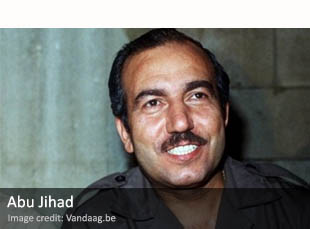
Norway and Sudan have announced tit-for-tat diplomatic expulsions over allegations of espionage. On Tuesday, the Norwegian Ministry of Foreign Affairs announced that a Sudanese diplomat stationed in the Norwegian capital Oslo would be expelled. The diplomat, whose name and position at the Sudanese embassy were not disclosed, allegedly engaged in “activities incompatible with his status under the protection of the Vienna Convention” —standard diplomatic lingo for espionage. The Reuters news agency reported that the diplomat was expelled after Norway’s main counterintelligence intelligence agency, the Police Security Service (PST), arrested and charged a 38-year-old Sudanese immigrant with espionage. The unnamed man, who was arrested in Trondheim, said he had been instructed by Sudanese embassy personnel to spy on the activities of the Sudanese expatriate community in Norway. He had previously been observed by the PST having a meeting with the same Sudanese diplomat who was subsequently expelled from Norway. Both men were arrested on Tuesday. While the unnamed diplomat has been expelled, the 38-year-old immigrant remains imprisoned in Oslo on espionage charges. According to a statement from the Norwegian Ministry of Foreign Affairs, Tuesday’s arrests marked the first case of ‘immigration intelligence’-related charges in the Scandinavian country since the 1970s. Early on Wednesday, the Sudanese Ministry of Foreign Affairs announced that it was expelling a Norwegian diplomat in response to Oslo’s move on the previous day. Read more of this post

News you may have missed #801

Alan TuringBy IAN ALLEN | intelNews.org |
►►Israel charges Arab man with spying for Hezbollah. Israel has charged Milad Khatib, a 26-year-old Arab Israeli truck driver, who was arrested a month ago, with spying for Hezbollah, making contact with a foreign agent, conspiring to aid the enemy and belonging to an illegal group. According to the indictment, Khatib was in contact with a man named Barhan, a Hezbollah agent who operated in various European locations. The two allegedly met several times between 2007-2009 in Barhan’s home in Denmark, with all of Khatib’s expenses, including food, hospitality and entertainment, covered by Barhan.
►►Britains’ GCHQ praises Alan Turing legacy. In a rare public speech, Iain Lobban, the Director of GCHQ, Britain’s signals intelligence agency, has praised the legacy of British mathematician and codebreaker Alan Turing. Widely considered the father of computer science and artificial intelligence, Turing committed suicide in 1954, after the British government prosecuted him for being a homosexual. In 2009, British Prime Minister Gordon Brown offered a public apology for Turing, who is also credited with cracking the Nazi Enigma code —a vital part of the Allied effort in World War II.
►►Canada’s SIGINT agency to get new headquarters. Canada’s electronic spy organization believes that the state-of-the-art headquarters now being built in an Ottawa suburb will make it a leader among its allies and attract the best and brightest of spies, according to newly released Canadian government documents obtained by The Ottawa Citizen. When finished in 2015-16, the Canadian Communications Security Establishment’s new $880-million spy campus in Gloucester is expected to be home to more than 1,800 employees.

Former CIA senior analyst argues in favor of US deal with Iran

Paul R. PillarBy JOSEPH FITSANAKIS | intelNews.org |
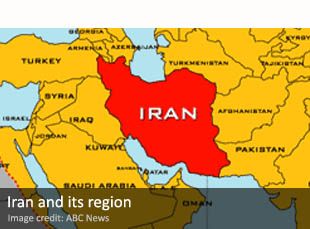
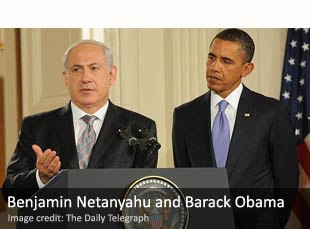
A former senior analyst in the United States Central Intelligence Agency has come out in support of a bilateral compromise between Iran and the West on Tehran’s nuclear program. In an article published last week, Georgetown University professor Paul R. Pillar, who spent nearly three decades with the CIA, dismissed the widespread view that the differences between Iran, Israel, and the West are insurmountable. Commenting on news of a nine-step negotiation plan offered by Tehran in early October, but dismissed by Washington as “unworkable”, Pillar said the offer provided the initial steps of an “eminently achievable agreement” between the interested parties. The CIA veteran, who rose to be one of the Agency’s top analysts prior to his retirement in 2005, argued that a possible outcome of bilateral negotiations would be for Iran to curtail its enrichment of uranium to the 20 percent level in exchange for the lifting of most economic sanctions imposed on Iran by Western countries. “An agreement along these lines makes sense”, he added, “because it would meet the major concerns of each side” in the dispute. He cautioned, however, that, under such an agreement, Tehran would not only be prohibited from continuing its uranium enrichment process, but would also be required to surrender all quantities of uranium previously enriched to a level above 20 percent. Such an agreement, claimed Pillar, would mean that neither Iran nor Israel and the West would receive everything they wanted at once. Instead, the process would depend on a gradual implementation of several bilateral agreements in stages, “each side giving something and getting something at each stage”. Read more of this post

News you may have missed #800

MI6 headquartersBy IAN ALLEN | intelNews.org |
►►British MI6 spy agency feeling shaken not stirred. Analysis on Salon.com about the current state of MI6, Britain’s external intelligence agency, featuring comments by intelNews‘ own Joseph Fitsanakis. The article, written by former CNN and BBC correspondent Barry Neild, argues that MI6 is feeling the heat caused by a series of recent allegations which threaten to disrupt its clandestine operations. The agency, he suggests, is thus undergoing one of the most troubling periods of its hundred-year existence.
►►Germany charges couple with spying for Russia. German government prosecutors say the couple, who called themselves Andreas and Heidrun Anschlag, worked in Germany for Russia’s foreign intelligence service for more than 20 years, gathering information on European Union and NATO strategy. The pair entered Germany in 1988 and 1990, claiming to be Austrian citizens of South American origin. They were arrested in October 2011. German media said it is the first such case in Germany since the end of the Cold War.
►►US allegedly widens covert operations in North Africa. The Associated Press quotes “three US counterterror[ism] officials and a former intelligence official” as saying that the United States is in the process of building “a new military task force” in the North African region. But by the time the US consulate in the east Libyan city of Benghazi was attacked last month, the new task force consisted only of “liaison officers who were assigned to establish relationships with local governments and US officials in the region”.

Belgium suspends senior diplomat on suspicion of spying for Russia

Belgian embassy in CopenhagenBy JOSEPH FITSANAKIS | intelNews.org |
The Belgian government has admitted suspending one of its senior diplomats following allegations in the press that he had spied for the Soviet Union and Russia for over two decades. According to Flemish-language Belgian magazine MO, the diplomat, identified only as “O.G.”, has been “suspended in the interest of the [Belgian diplomatic] service” and is currently under investigation by the Office of the Federal Prosecutor. Citing “sources in the Belgian State Security Service”, the SV/SE, the article said the subject was stationed at the Belgian embassy in Danish capital Copenhagen when he was recalled to Brussels late last year. The man is said to have spent nearly three decades as an employee of the Belgian Ministry of Foreign Affairs, having served in several Belgian embassies and consulates in Japan, India, Algeria, Nigeria, Portugal, and the United States, prior to arriving in Denmark. However, according to the MO article, he was accosted by the Soviet KGB in the late 1980s, shortly after he arrived at the Belgian embassy in Tokyo, Japan, for his first-ever diplomatic posting. Since that time, said the magazine, “O.G.” has spied for the KGB and its successor, the SVR, having stayed in contact with “several different Russian handlers”. Prior to 2011, when he ceased contact with Russian intelligence, the Belgian diplomat was allegedly tasked with providing the FSB with information that could be used to concoct false identities belonging to deceased Belgian citizens. The Russians would then use these identities to supply their intelligence operatives with high-quality Belgian identity papers and travel documentation. Late last week, another Belgian publication, The EU Observer, contacted the Belgian Foreign Ministry to inquire about “O.G.”. A Ministry spokesperson told the paper: “we can confirm that an official from our ministry was suspended from his functions a bit over one year ago, following indications of a security breach”. Read more of this post

Moscow denies knowledge of alleged Russian spy ring busted in Texas

Alexander FishenkoBy JOSEPH FITSANAKIS | intelNews.org |

Government officials in Moscow have denied knowledge of an alleged Russian spy ring, which is accused by United States authorities of procuring sensitive microelectronics technology on behalf of the Russian military. Early on Wednesday morning, the Federal Bureau of Investigation conducted pre-dawn raids at several locations in Houston, Texas, and arrested eight members of the alleged spy ring. Four of the arrestees are allegedly Russian citizens, while the remaining five are from Kazakhstan, Azerbaijan and Ukraine. Four are naturalized American citizens. They include Alexander Fishenko, chief executive officer of Apex System LLC, which is accused by the FBI of having exported over $50 million in dual-use microelectronic devices to Russia since 2008. US federal prosecutors allege that three more spy-ring members are currently in Moscow; they include Yuri Savin, Director of Marketing at a company called Artrilor, which is said to have been at the receiving end of Apex System’s export operations. According to the indictment, Arc Electronics told its US suppliers that the microelectronics technologies were intended for use in various types of streetlights. But in reality, said the FBI, the company gave the hi-tech supplies to the Russian Ministry of Defense for use in airborne surveillance systems, as well as in remote weapons guidance systems, among other military applications. The FBI says it has in its possession extensive audio intercepts of the suspects communicating with Russian intelligence, as well as conferring among them about how to hide incriminating documents from US federal authorities. But Sergei Ryabkov, Russia’s Deputy Minister of Foreign Affairs, told Russian reporters on Thursday that the charges against the 11 individuals were “of a criminal nature” and had “nothing to do with intelligence activity”. Read more of this post

FBI raids alleged Russian front-company, indicts 11 on spy charges

Russian Ministry of DefenseBy JOSEPH FITSANAKIS | intelNews.org |

The United States has indicted employees of an alleged Russian front-company in Texas, accused of procuring sensitive microelectronics technology for use by Russian military and intelligence agencies. Public prosecutors in New York said yesterday that the Federal Bureau of Investigation conducted raids in locations around Houston, Texas, which included the headquarters of Arc Electronics, Inc. The export firm is accused of having shipped over $50 million-worth of military-grade microelectronics since 2008. The supplies were received in Moscow, Russia, by a mysterious procurement company called Apex System LLC. Counterintelligence investigators in the US claim both firms are part of an elaborate scheme set up by Russian military intelligence, aimed at stealing dual-use electronics hardware created by American firms. According to the indictment, Arc Electronics told its US suppliers that the microelectronics technologies were intended for use in various types of streetlights. But in reality, said the FBI, the company gave the hi-tech supplies to the Russian Ministry of Defense for use in airborne surveillance systems, as well as in remote weapons guidance systems, among other military applications. Federal prosecutors said that, for over four years, Arc Electronics engaged in a prolonged “surreptitious and systematic” scheme to circumvent US government export controls, thus seriously damaging US national security. Following the early-morning raids, the FBI unsealed indictments against 11 Arc Electronics employees, most of whom were charged with “acting as unregistered agents of the Russian Federation in the United States” —legal jargon for espionage. Read more of this post

News you may have missed #799

Russell TiceBy IAN ALLEN | intelNews.org |
►►Is NSA using UK spy base to guide predator drones? Surrounded by farmland and sheep, hundreds of National Security Agency staff go to work every day at RAF Menwith Hill, where they eavesdrop on communications intercepted by satellite dishes contained in about 30 huge golf ball-like domes. Menwith Hill has been used by the NSA since the 1960s; but lately there is growing disquiet in Britain over whether intelligence gathered at the base is being used to help with the CIA’s controversial clandestine drone strikes. And the British government is keeping mum.
►►Aussie envoy seduced by spy feared her phone was bugged. Former senior Austrade commissioner to Hanoi Elizabeth Masamune, who recently admitted before an Australian court that she had sexual relations with a Vietnamese intelligence officer, told police she feared her Hanoi offices were bugged. In her statement during the trial of eight former Reserve Bank company executives on bribery charges, she said that after receiving a call from a journalist she recalled “being concerned of the level of information which she had. I was also more concerned about whether my phone was being monitored”, she said.
►►NSA whistleblower describes beating polygraph test. Russell Tice, the National Security Agency whistleblower who helped blow the lid open on warrantless wiretapping conducted by the federal government on US citizens post-9/11, says that he took between 12 and 15 polygraph tests during his nearly 20-year-long government career. The tests mellowed over time, Tice says, and they may have also gotten easier to beat. Tice, who is no longer at the NSA, says he, along with those still in contact with at the agency, marvel at how easy it is to beat the lie detector.

Did French intelligence agent kill Libyan leader Muammar Gaddafi?

Nicolas Sarkozy and Muammar GaddafiBy JOSEPH FITSANAKIS | intelNews.org |
Nearly a year after the sensational death of Colonel Muammar Gaddafi, sources in Libya have claimed that a French intelligence agent killed the Libyan leader acting under orders by the French government. The Libyan dictator was captured by armed fighters of the Libyan National Liberation Army on October 20, 2011, after his convoy was reportedly bombed by North Atlantic Treaty Organization aircraft. Videos showed Gaddafi being taken aboard a van alive; mysteriously, however, he was pronounced dead a few hours later. The Libyan National Transitional Council blamed the Libyan leader’s death on overzealous militia members, but this explanation did not satisfy the United Nations, which called for an investigation into the incident. But Mahmoud Jibril, a National Transitional Council member who was Libya’s interim Prime Minister during most of 2011, has said in an interview that Gaddafi was killed by a French intelligence officer. Speaking yesterday on Egyptian television, Jibril said that the agent “mixed with the revolutionary brigades” and killed Gaddafi by shooting him twice in the head from close range. Jibril’s comments came two days after one of Italy’s most reputable newspapers, Corriere della Sera, published a report claiming that the alleged French intelligence agent was acting under direct instructions by the French government. The paper said that the order had come down from the office of French President Nicolas Sarkozy. According to the article, Sarkozy was eager to prevent the possibility of Gaddafi standing trial, particularly after the Libyan leader had threatened to expose his alleged financial dealings with the French President. These refer to persistent rumors in France that the Libyan dictator had contributed millions of dollars to Sarkozy’s 2007 election campaign. Read more of this post

Russian court upholds 15-year prison sentence for alleged CIA spy

Igor SutyaginBy JOSEPH FITSANAKIS | intelNews.org |

Russia’s highest court has upheld a lengthy prison sentence given to a Russian arms control and nuclear weapons expert, who Moscow alleges was a spy for the United States. The Russian government accuses Igor Sutyagin of collaborating with Alternative Futures, a British-registered consulting company alleged by Moscow to be a front for the United States Central Intelligence Agency. Before his 1999 arrest, Sutyagin was Division Chairman on the Russian Academy of Sciences’ USA and Canada Institute. His indictment, prepared by the Russian Federal Security Service, said that he shared with the CIA “classified technical information” about nuclear submarine technology. Sutyagin maintained his innocence throughout his trial, and Human Rights Watch as well as Amnesty International classified him as a political prisoner. The two groups brought the accused spy’s case before the European Court of Human Rights, which ruled that Russian government prosecutors had violated Sutyagin’s right to a fair trial. Moreover, the Court ruled that Sutyagin’s pre-trial detention, which lasted five years, was illegal. Eventually, Moscow complied with the Court’s ruling and a retrial was ordered, to the delight of Sutyagin’s family. In the retrial, which ended last week, Russia’s Supreme Court agreed with the European Court of Human Rights that Sutyagin’s pre-trial detention had been unlawful; but the court upheld Sutyagin’s 15-yeard sentenced as “entirely legitimate”. Sutyagin was tried in absentia, however, because in the summer of 2010 he was released and fled to the West, as part of the largest postwar spy-exchange between Russia and United States. Sutyagin was one of four men behind bars in Russia, who were swapped for 10 Russian non-official-cover intelligence operatives that had been arrested in a sting operation by the Federal Bureau of Investigation. Read more of this post

Irish police uncover Real IRA surveillance ring

Real IRA paradeBy JOSEPH FITSANAKIS | intelNews.org |

Police in the Republic of Ireland have arrested two men suspected of spying on the operational headquarters of the Garda Siochana (Irish Police) in Dublin. The two men, aged 41 and 32, who have not been named, were arrested after one of them was recognized by police officers as a known member of the Real Irish Republic Army. The Real IRA, or RIRA, is an Irish republican paramilitary organization formed in 1997, following a split in the Provisional IRA — the armed wing of Sin Fein. It seeks to bring about a united Ireland, but is considered a terrorist group by the United Kingdom and the United States, among other countries. Gardai officers discovered that the Real IRA suspect had used a false name to book a room in a hotel directly overlooking the regional headquarters of the Gardai on Harcourt Street. The building houses, among other police units, the Gardai’s Special Branch and the Criminal Assets Bureau, both of which are used to investigate paramilitary activity in the Republic. Upon searching the room, Gardai officers reportedly found “hi-tech surveillance equipment”, including parabolic microphones and digital cameras. Anonymous Gardai sources claim the equipment was used to eavesdrop on conversations held inside the Gardai building across the street, and to record the license tags of private vehicles belonging to Gardai personnel. Read more of this post

Decision to evacuate eastern Libya divides US Intelligence Community

US consulate in Benghazi, LibyaBy JOSEPH FITSANAKIS | intelNews.org |
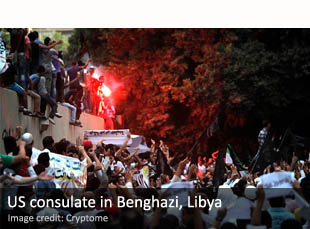
On September 12, just hours after heavily armed militia groups stormed the United States consulate in Benghazi, Libya, Washington made the decision to pull out its diplomats and intelligence officers from Eastern Libya. As US government envoys, spies and contractors started arriving at the Benina International Airport in Benghazi, many Libyans noted the “surprisingly large number” of Americans that came out of the woodwork. According to reports, at least a dozen of the American evacuees were in fact Central Intelligence Agency personnel. Their evacuation, which has essentially ended the presence of the CIA in eastern Libya’s most important city, is dividing the US Intelligence Community. On the one hand, some US intelligence insiders argue that the attack on the US consulate, which killed four US personnel, including Ambassador J. Christopher Stevens, necessitated the decision to evacuate. A number of former US government officials told The Los Angeles Times this week that the evacuation was “justified, given the dangers in Benghazi” for US personnel. Another current official told The New York Times that the evacuation of the CIA station in Benghazi does not necessarily mean that the US has lost its intelligence collection capabilities in eastern Libya. Washington can still intercept telephone calls and emails and conduct satellite reconnaissance in the North African region, said the official. Others, however, leveled sharp criticism against the decision of the White House to evacuate its diplomats and spies from Benghazi, arguing that the move marked “a major setback in [US] intelligence-gathering efforts” in the country. Robert Baer, a retired CIA officer with decades of experience in the Middle East, called the move “disastrous for US intelligence-gathering capabilities”. Writing in Time magazine, Baer said that shutting down the CIA station in Benghazi would make it “almost impossible to collect good human intelligence” in the region, and described the move as a sign of “America’s declining position” there. Read more of this post

News you may have missed #798

Alexander LitvinenkoBy IAN ALLEN | intelNews.org |
►►Britain to hold inquest over death of ex-KGB officer. Britain and Russia appear to be on a collision course over the death of Alexander Litvinenko, a former Russian intelligence officer who died in 2006 after ingesting polonium-210, a rare radioactive isotope. Britain’s Crown Prosecution Service has accused Andrei Lugovoi and Dmitry Kovtun, both former KGB agents, for the death of Litvinenko. Russia has refused British requests to extradite the two, leading to a row with Moscow and the tit-for-tat expulsion of Russian and British diplomats. Until now, the British Foreign Office had attempted to limit the scope of an inquest into the death of Litvinenko, fearing further diplomatic fallout. But coroner Sir Robert Owen said last week that he endorsed a previous ruling by his predecessor in the case, Andrew Reid, that there should be an “open and fearless” investigation into the matter.
►►Ex-CIA operative who illegally sold arms to Libya dies. Edwin P. Wilson, a former CIA officer who was convicted in 1983 for illegally shipping 20 tons of C4 plastc explosives to Libya, has died aged 84. In his trial he claimed he had shipped the weapons to Libya at the request of the CIA, because, as he said, the agency was trying to establish good relations with the Libyan government. But the court did not buy his story, so he spent over 20 years in prison, mostly in solitary confinement, until his release in 2004. He maintained his innocence to the very end.
►►Analysis: Libya an opportunity for CIA if it sticks around. The attack in Benghazi, Libya, that killed four Americans, including a US ambassador and two former Navy SEALs, has led Americans to vacate Benghazi for their safety, even though various militant groups continue their operations. It is a disaster for US intelligence efforts in the region, especially since the attack has made brutally clear how real the jihadi threat in eastern Libya remains. But there may be the smallest of silver linings to this black cloud, if American operatives are able to capitalize on it. The aftermath of the attack shows widespread displeasure with Benghazi’s jihadist groups, with thousands marching in protest. That is an opportunity the CIA could use to rebuild its intelligence gathering.

News you may have missed #797

Mohamed MorsiBy IAN ALLEN | intelNews.org |
►►Egypt names new intelligence chief. Egyptian President Mohamed Morsi last week issued a decree naming Mohammed Raafat Shehata the country’s new head of intelligence, after the former spy chief was forced into retirement. Shehata had been acting director of the Egyptian General Intelligence Services Directorate since August 8, when his predecessor Murad Muwafi was sacked, after after gunmen killed 16 Egyptian border guards in Sinai.
►►Ex-Blackwater firm to teach US spies survival skills. The Defense Intelligence Agency announced on Thursday evening it would award six private security companies a share of a $20 million contract to provide “individual protective measures training courses” for its operatives. Among them is Academi, the 3.0 version of Blackwater, now under new ownership and management. The US military’s intelligence service is hiring the firm, along with five others, to train its operatives to defend themselves as they collect information in dangerous places.
►►Turkey court convicts 326 of coup plotting. A Turkish court on Friday convicted 326 military officers, including the former air force and navy chiefs, of plotting to overthrow the nation’s Islamic-based government in 2003, in a case that has helped curtail the military’s hold on politics. A panel of three judges at the court on Istanbul’s outskirts initially sentenced former air force chief Ibrahim Firtina, former navy chief Ozden Ornek, and former army commander Cetin Dogan, to life imprisonment but later reduced the sentence to a 20-year jail term because the plot had been unsuccessful. The trial of the high-ranking officers —inconceivable in Turkey a decade ago— has helped significantly to tip the balance of power in the country in favor of civilian authorities.