Newspaper discloses names of Russian alleged spies expelled from Belgium
July 14, 2022 1 Comment
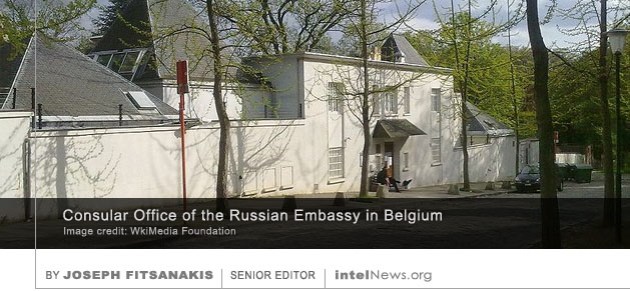 A BRUSSELS-BASED NEWSPAPER has publicized the names and backgrounds of nearly two dozen Russian diplomats, who were recently expelled by the Belgian government on suspicion of espionage. A total of 21 Russian diplomats were expelled from Belgium in April, in co-ordination with dozens of European governments. The move was part of a broader European wave of diplomatic expulsions of Russian diplomatic personnel, in response to the Russian invasion of Ukraine.
Like other governments in Europe, the Belgians carried out the expulsions of Russian diplomats in secret, and employed a “no comment” policy in response to media requests. Such an approach is customary when it comes to diplomatic expulsions. It allows the government ordering the expulsions to expect a similar level of discretion if and when its own  diplomats are expelled in a possible tit-for-tat move by an adversary. It is therefore highly unusual for information concerning expelled diplomatic personnel to be made public. And yet that is precisely what happened earlier this week, when the EUObserver, an English language newspaper based in Brussels, published information about the names and backgrounds [PDF] of the 21 expelled Russian diplomats. The paper said the information was leaked by a source, but did not elaborate.
According to the newspaper, all 21 expelled diplomats were men. It further alleged that 10 of them were intelligence personnel of the Main Directorate of the Russian Armed Forces’ General Staff. A further nine diplomats worked for the Foreign Intelligence Service (SVR, Russia’s equivalent to the United States Central Intelligence Agency), while two were employees of the external service of the Russian Federal Security Service (FSB). Most were in their 40s, though at least one was in his early 60s and one was in his late 20s. The  EUObserver said that some of the information about the alleged spies was unearthed by The Dossier Center, a British-based open-source information outlet, which is similar to Bellingcat. The Dossier Center is funded by the oligarch Mikhail Khodorkovsky, who is a critic of the Russian President Vladimir Putin. Read more of this post
 MORE THAN HALF OF all terrorist groups fail within a year, while 95 percent of them are extinct within a decade. Yet al-Shabaab, Somalia’s al-Qaeda-affiliated terrorist outfit, has been projecting strength in the Horn of Africa for over 15 years, despite having faced much stronger opponents. Today, with an operational presence in both Somalia and Kenya, the group maintains a force of between 5,000 and 10,000 full-time fighters. Pointing to its longevity, some observers view it as the most successful terrorist group of the 21st century.
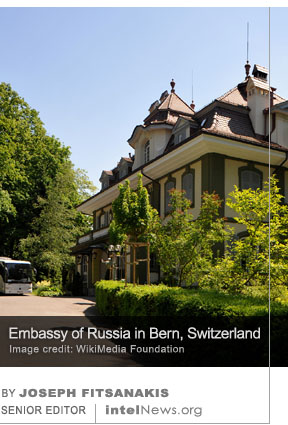 SINCE LATE FEBRUARY, WHEN Russian troops invaded Ukraine, over 500 Russian diplomats have been expelled from Western countries. Even former Russian allies have contributed to the growing list of expulsions —most recently Bulgaria, which
  IN THE OPENING STAGES of the Russian invasion of Ukraine, there was a widespread
  related legislation” with Western standards, as well as aligning them with NATO standards, so that Ukrainian cyber-warfare units can make use of advanced technologies and systems. Could it be, therefore, that Ukraine has improved its cyber-security posture enough to be able to defend itself against relentless Russian cyber-attacks?
 RUSSIANS ARE AWARE OF the phrase “there is no such thing as a former chekist”. The term “chekist” dates from the Bolshevik-era All-Russian Extraordinary Commission (VChK, pronounced “cheka”), which was formed in 1917 as the first Soviet-era state security agency. By the 1940s, intelligence posts had come to be seen as life-long relationships between chekists and the Soviet government, which continued even after one’s retirement. In
  with reference to three Russian intelligence agencies, all of which trace their origins to the Soviet-era Cheka —namely the Foreign Intelligence Service (SVR), the Federal Security Service (FSB), and the Federal Protective Service (FSO).
 AT A TIME WHEN dozens of countries are routinely expelling
  Naturalization Service, which detained Cherkasov upon his arrival at Amsterdam’s Schiphol International Airport. The Dutch government declared the alleged GRU officer persona non grata and promptly expelled him back to Brazil “on the first flight out”.
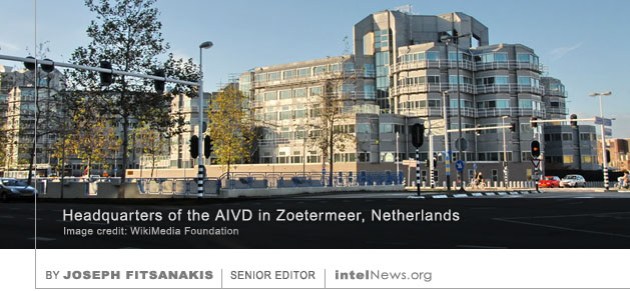
 ON JUNE 16, THE Dutch General Intelligence and Security Service (AIVD)
 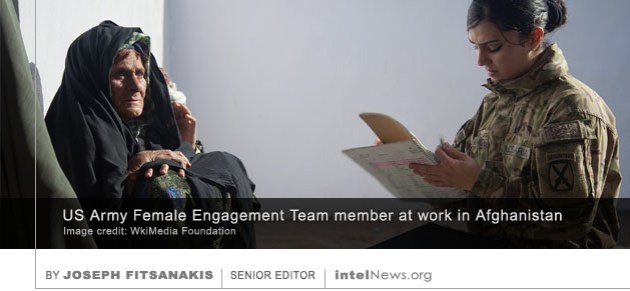 ALTHOUGH INTELLIGENCE IS A traditionally male-dominated profession, the integration of women into the field has grown exponentially in our time. The area of human intelligence (HUMINT), i.e. the use of human handlers to extract secrets through the use of human agents, is among the areas of the profession that remain most resistant to the incorporation of women. Now new research from Germany is shedding light into the understudied topic of female approaches to HUMINT.
 A GROWING NUMBER OF security observers point to Israel as the most likely culprit behind the assassination of a leading member of the Islamic Revolutionary Guard Corps (IRGC), Iran’s powerful paramilitary force. Brigadier General Hassan Sayyad Khodaei, who was killed in broad daylight in Tehran on May 22, served as deputy director of the Quds Force, a major branch of the IRGC. The mission of the Quds Force is to carry out unconventional warfare, especially in support of IRGC operations against adversaries abroad.
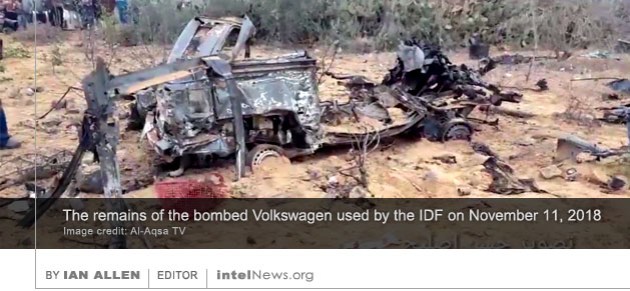 IN A RARE MOVE, Israel released the identity last weekend of a special operations officer who was killed by Islamic Hamas during a 2018 covert mission in the Gaza Strip. As intelNews
  WEST GERMAN SPIES INFILTRATED the trial of Adolf Eichmann, one of the architects of the Holocaust, in order to limit its damage on the reputation of senior West German politicians who had a Nazi past. Eichmann was the lead author of the system of mass deportation of Jews from ghettos in Nazi-occupied Europe to extermination camps, where millions of them were brutally killed. In 1960, after years of hiding, he was captured in Argentina by agents of the Mossad, Israel’s covert-action agency, and secretly transported to Israel, where he was put to trial and eventually hanged.
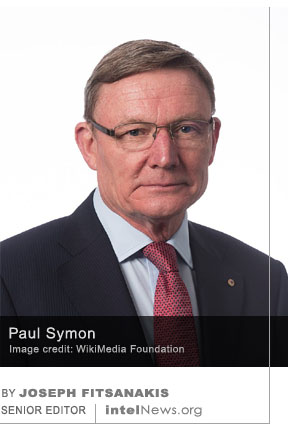 AUSTRALIAN INTELLIGENCE MUST recruit foreign spies with more urgency than at any time since the opening years of the Cold War, according to the head of Australia’s main foreign intelligence agency. Paul Symon, director of the Australian Secret Intelligence Service (ASIS), was speaking at a public event to mark the 70th anniversary of the organization’s history. It was a rare public speech by the head of Australia’s secretive main foreign intelligence service.
 A NEWLY DISCOVERED CYBER-espionage group appears to target the senior leadership of private corporations involved in large-scale financial transactions, but employs skills and methods that are usually associated with state-sponsored threat actors. The group has been termed “UNC3524” by the American cybersecurity firm Mandiant, which says it discovered it in December of 2019. In a detailed






 intelNews.org
Ukraine war prompts European Union to overhaul counter-surveillance practices
July 18, 2022 by Ian Allen 1 Comment
According to EUObserver, EU member states have agreed to establish a so-called “CSC-TSCM Expert Group,” which will spearhead the formation of this new unit. In security parlance, TSCM stands for technical security counter-measures, a method of counter-surveillance. In their most basic form, TSCM operations are carried out by teams of technical experts trained in the use of anti-bugging equipment. These are able to detect radio emissions, which are generated by most surveillance devices —commonly referred to as ‘bugs’.
The internal memorandum stipulates that the “CSC-TSCM Expert Group” will be officially set up after July 25. It will consist of experts from several EU states. The resulting unit’s mission will be to “prevent, detect and potentially neutralise eavesdropping of information in any physical or electronic form,” the memorandum states. Counter-measures operations will include regular inspections of “facilities and vehicles and the protection of classified meetings” in buildings that house the EU Council, EU Parliament, and the European Commission.
The forthcoming formation of the “CSC-TSCM Expert Group” appears to be closely linked to news, published earlier this month, relating to the construction of a new facility. The new facility is described in the media as an EU “secure bunker.” According to the EUObserver, the €8 million ($8.07 million) enclosed space will operate as a designated EU sensitive compartmented information facility (SCIF). The term denotes a secure area within a larger building, which is used to discuss sensitive topics and process classified information. Read more of this post
Filed under Expert news and commentary on intelligence, espionage, spies and spying Tagged with Belgium, Brussels, communications surveillance, European Union, News, SCIF, TSCM