News you may have missed #672
January 27, 2012 Leave a comment
 By IAN ALLEN | intelNews.org |
►►Russian military intelligence to ‘change tactics’. Russian military intelligence is adjusting its work methods in response to the “worsening international situation”, Igor Sergun, the head of GRU —the country’s largest espionage agency— has told President Dmitry Medvedev. Currently, the GRU’s main focus is on “hot spots where terrorist and extremist groups are acting, regions with crisis situations, and also the sources and possible routes of illegal proliferation of nuclear materials and the components of weapons of mass destruction”, Sergun told Medvedev.
►►Norway spy chief quits in secrecy gaffe. Norway’s head of intelligence Janne Kristiansen has handed in her resignation because she said too much during a parliamentary hearing. According to a transcript, Ms Kristiansen, who until now headed the country’s Police Security Service (PST), told the hearing that Norway had agents working in Pakistan. According to reports Pakistan has asked the government of Norway to explain Kristiansen’s remarks.
►►Review of Australia’s spy community released. Public findings of the first independent review of Australia’s intelligence community in eight years were released on January 25. The 2011 Independent Review of the Intelligence Community acknowledges and justifies the Australian spy agencies’ unprecedented growth since September 11, which saw some agencies increasing their funding almost 500 per cent in a decade. Meanwhile, David Irvine, Director of the Australian Security Intelligence Organization, said in a rare public talk that future Australian spies would be recruited “from within our newly arrived migrant communities”.













 intelNews.org
News you may have missed #673
January 27, 2012 by Ian Allen Leave a comment
►►Canada arrest shows spy times have changed in Russia. There are aspects of the spy case of Canadian Sub-Lt. Jeffery Delisle that differ substantially from spy cases dating back to Cold War espionage waged by the now-defunct Soviet system. As a sign of changing times, the Russian media has acknowledged Delisle was allegedly spying for them —something that would never be admitted in Soviet times when the KGB and GRU were in ascendency.
►►US court upholds S. Korean ex-spy’s asylum ruling. Kim Ki-sam, who left South Korea’s state spy agency in 2000, applied for asylum in the US in 2003, saying he would face persecution and prosecution if he was forced to return to South Korea because he had revealed information about secret operations to help then-President Kim Dae-jung win the Nobel Peace Prize. A US court has now upheld a 2008 ruling to grant him political asylum.
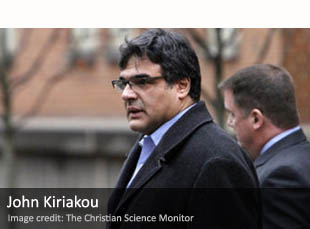
►►Kiriakou’s wife resigns from CIA. Heather Kiriakou, who has served as a top analyst at the Agency, resigned Tuesday amid accounts that she had been pressured to step down after her husband —John Kiriakou, a former agency employee— was charged with leaking classified information to the press. Two sources in direct contact with the Kiriakous told The Washington Post that Heather had submitted her resignation under pressure from superiors at the CIA.
Filed under Expert news and commentary on intelligence, espionage, spies and spying Tagged with 0 Canada arrest shows spy times have changed in Russia, 0 Kiriakou's wife resigns from CIA, 0 US court upholds S. Korean ex-spy's asylum ruling, Canada, CIA, defectors, espionage, Heather Kiriakou, Jeffrey Paul Delisle, John Kiriakou, Kim Dae-jung, Kim Ki-sam, News, news you may have missed, Nobel Award, political asylum, resignations, Russia, South Korea, United States