US report links telecoms company to Chinese spy services

Sun Yafang

Sun Yafang

By JOSEPH FITSANAKIS | intelNews.org |
For the first time a United States government agency has openly linked one of China’s main telecommunications companies with the country’s intelligence services. The alleged link is provided in a new report by the US Open Source Center, which acts as the open-source intelligence (OSINT) arm of the Office of the Director of National Intelligence. The report concludes that the company, Huawei Technologies, relies on a series of formal and informal contacts with the Chinese People’s Liberation Army and the Ministry of State Security (MSS), which oversee and administer China’s military and civilian intelligence apparatus. Founded in 1987 to import Western office telephone systems to China, the company has become one of the country’s leading exporters of all kinds of communications hardware equipment, ranging from routers to cell towers and undersea cables. But Huawei’s export growth has been hampered in recent years by widely circulated suspicions that the company maintains close ties to the Chinese military and intelligence establishments. The Open Source Center report adds to these suspicions, by pointing out that Huawei’s current chairperson, Sun Yafang (pictured), was an employee of the MSS Communications Department prior to joining Huawei in 1989. It also says that, prior to joining the company, Sun utilized her personal contacts at MSS to “help Huawei through financial difficulties at critical moments when the company was founded in 1987”. The close contacts between the —ostensibly private— company and the Chinese government have persisted ever since, says the report, and points out that the Chinese state has funded Huawei with nearly a quarter-billion dollars for “research and development” projects in the past three years alone. This is not the first time that Huawei has been accused of maintaining close contacts with Chinese intelligence agencies. In 2009, the Australian Security Intelligence Organisation (ASIO) investigated one of Huawei’s Australian-based subsidiaries for links to Chinese intelligence operations. In the following year, the Indian government barred the company from operating in India, citing its allegedly “strong links with the Chinese military”. Read more of this post

News you may have missed #610

Charles S. Faddis

Charles S. Faddis

►►Australian agency warns spy cells ‘lie in wait’. In its annual report, Australia’s intelligence service, the ASIO, warns that foreign powers may be recruiting sleeper agents in Australia to carry out sabotage in future conflicts. The report further notes that, despite the rise of cyberespionage, there has not been a marked reduction in the intensity of more traditional forms of espionage.
►►US frees convicted Cuban spy but debate rages on. Few topics illustrate the gulf in perception between the governments of Cuba and the United States like the case of the Cuban Five. The five Cuban agents were arrested in Florida in the 1990s and convicted on espionage charges. US federal prosecutors said the men were trying to spy on military installations. But Cuba’s government has long maintained the men were trying to monitor Miami-based exile groups that were planning attacks on the island nation.
►►Analysis: It’s time for the Pakistanis to pick a side. Former CIA operations officer Charles Faddis (pictured) argues that the US government needs to immediately designate Pakistan’s proxy army, the Haqqani network, as a terrorist organization. It has avoided taking that action for far too long and only because of crass political concerns, says Faddis, but the time has come to change course.

News you may have missed #609

Ilan Grapel

Ilan Grapel

►►Questions over Chinese spy hang over Putin visit. The arrest of a Chinese spy in Moscow has cast a cloud over Vladimir Putin’s two-day visit to Beijing. Tong Shengyong was arrested last October for allegedly trying to buy plans to the Russian S-300 anti-aircraft missile system. But perplexingly, the news of his arrest only emerged last week, in what appears to have been a deliberate leak by Russia’s Federal Security Service (FSB).
►►Egypt steps up charges against suspected Israel spy. Egypt’s State Security Prosecutor has added additional criminal offenses against alleged Israeli spy Ilan Grapel. Meanwhile, there are indications that Egypt seeks the release of 78 Egyptian prisoners held in Israeli jails in return for Grapel. Israel may agree with the proposal.
►►CIA to be last out of Afghanistan. US Special Forces and the CIA are girding for the moment when Afghanistan’s security rests once again with them, working together with Afghan forces against the Taliban. Recent remarks from the White House suggest the CIA and special operations forces will be hunting al-Qaida and working with local forces long after most US troops have left.

Ex-CIA officer says US may be ‘dangerously wrong’ on alleged Iran plot

Robert Baer

Robert Baer

By JOSEPH FITSANAKIS | intelNews.org |
Robert Baer, who spent over two decades working for the CIA in the Middle East, has warned that the FBI may be “dangerously wrong” in its assessment that Iran is behind an alleged plot to assassinate the Saudi ambassador to the United States. The Obama administration said yesterday that two Iranian agents had been arrested for planning to kill Saudi diplomat Adel al-Jubeir in Washington, DC, with help by members of a Mexican drug cartel. The FBI said that the two Iranians, Manssor Arbabsiar and Gholam Shakuri, were operating on behalf of Iran’s Quds Force, a unit inside the Islamic Revolutionary Guard Corps’ (IRGC) specifically tasked with exporting the Iranian Revolution abroad. The arrests prompted a strong reaction from the United States, which said it will impose new punitive measures against the regime in Tehran —a move that is certain to further-ignite tensions between the two countries. But speaking on Australian national radio, Baer said that the alleged assassination plan does not appear to be connected with the IRGC or any other part of Iran’s state apparatus. The operation, as outlined by the FBI, does not fit the “modus operandi” of the Iranian security services, said Baer. The latter are “much better than this […]. They wouldn’t be sending money through an American bank; they wouldn’t be going to the cartels in Mexico to do this. It’s just not the way they work. I’ve followed them for 30 years and they’re much more careful. They always use a proxy between them and the operation, and in this case they didn’t”. Baer also spoke to the BBC World Service and to The Washington Post, where he is quoted as saying that there is “sloppiness about the case that defies belief”. The former CIA case officer urged the Obama administration to step back, re-examine its case, and avoid “retaliatory attacks [such as bombing] a Quds Force base in Tehran […], which would lead to a huge escalation”. Instead, he urged Washington to open “direct diplomatic channel with the Iranian regime or risk igniting an uncontrollable war”. Read more of this post

News you may have missed #608 (analysis edition)

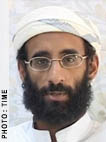
Anwar al-Aulaki

Anwar al-Aulaqi

►►Spying on the United Nations. “Here is one of the well-known but seldom spoken truths about the United Nations: The international organization, which was founded in the name of peace and security, is also a hotbed of spying and clandestine operations, where someone might very well be listening to your conversations and monitoring your emails —-or perhaps reading your speeches in advance […]. The CIA is prohibited from domestic intelligence-gathering but, since the United Nations is considered foreign soil, it is authorized to run covert actions there”.
►►Secret panel can put Americans on ‘kill list’. American militants like Anwar al-Aulaqi, who was killed by a CIA drone strike in Yemen late last month, are placed on a kill or capture list by a secretive panel of senior US government officials, which then informs the President of its decisions, according to officials. There is no public record of the operations or decisions of the panel, which is a subset of the White House’s National Security Council.
►►Blowback from CIA’s bin Laden vaccination ruse gets worse. If it wasn’t clear before, it is now: the fake vaccination program that the CIA set up before the Osama bin Laden raid really went awry. Not only did this plan not work –no bin Laden family DNA was obtained– but it also hobbled polio immunization drives and forced Save the Children to evacuate staffers from Pakistan out of fear of a backlash.

German government admits using Trojan to spy on private computers

CCC logo

CCC logo

By JOSEPH FITSANAKIS | intelNews.org |
The local government of at least one German federal state has admitted using specially designed computer software to spy on citizens, after a hacker group revealed the existence of the software. On Saturday, the German Chaos Computer Club (CCC), one of the world’s most reputable ‘white hat’ hacker groups, said that German authorities regularly employ the so-called ‘Bundestrojaner’ (‘Federal Trojan’) virus in order to spy on the users of targeted computers. Club member Frank Rieger told German newsmedia that the virus, which was revealed to the Club via an anonymous tipster, was developed by German police experts, and is used by government agents it to intercept electronic information during investigations. The Trojan is reportedly capable of surreptitiously taking screenshots of infected computers, keylogging, recording Skype conversations, and taking control of networked webcams or microphones, thus permitting physical eavesdropping of a person’s home or workplace. In doing so, the Trojan would appear to facilitate warrantless communications interception that exceeds legal limits set under German law. Moreover, according to CCC, the virus acts as a backdoor to infected systems, thus allowing the uploading and execution of unauthorized programs, and potentially may even facilitate the planting of incriminating evidence on targeted computers. Initially, German government officials denied the CCC’s allegations; on Monday, however, officials in the southern German state of Bavaria confirmed that local police forces have been using the Bundestrojaner virus since at least 2009. Read more of this post

News you may have missed #607

Shakil Afridi

Shakil Afridi

►►Ex-worker sues US spy agency for anti-Islamic bias. Mahmoud Hegab, a former employee of the super-secretive US National Geospatial-Intelligence Agency, says he lost his security clearance because his wife attended an Islamic school and worked for a Muslim charity, Alexandria-based Islamic Relief USA.
►►Russia says China still spies the old-fashioned way. Russia’s Federal Security Service (FSB), issued a rare statement last week, claiming it had arrested Tong Shengyong, a Chinese citizen who, posing as a translator for official delegations, was working under the direction of the Chinese government in an attempt to buy state secrets from Russians about Russia’s S-300 missile system. It now says that the Tong case shows that China continues to employ an old standby in the tradecraft playbook: outright bribery.
►►Pakistan panel says doctor who aided CIA should face charges. Pakistani doctor Shakil Afridi, who ran a vaccination program for the CIA to help track down Osama bin Laden, should be put on trial for high treason, a Paksitani government commission said Thursday.

Computer virus found on CIA’s Predator drone remote-control system

Predator drone

Predator drone

By JOSEPH FITSANAKIS | intelNews.org |
The remote control cockpits of the US Central Intelligence Agency’s Predator drones have been infected by a potentially disastrous computer virus, which surreptitiously records every keystroke made by the pilots. Wired magazine’s Danger Room blog, which aired the exclusive report, said that the virus was discovered by the US Pentagon’s network security specialists less than two weeks ago. It also said that the virus has successfully resisted “multiple efforts” to remove it from the computers that guide the remote-controlled missions of the Agency’s unmanned drones. The blog cited a Pentagon computer specialist, who claims that he and his network security team “keep wiping it off and it keeps coming back”. The specialist also said that it is unclear at the present stage whether the computer virus is malicious or benign, in terms of its security implications. It also remains unknown whether the virus was introduced to the system intentionally or by accident, and how far it has spread into the system. It has been confirmed that the primary task of the virus is keylogging —recording all keystrokes made by users. But nobody at the Pentagon seems to know what happens to the keylogged data —that is, whether it remains within the Predator drone computer system, or whether it is clandestinely transmitted to individuals located outside the US military’s chain of command. The Wired report notes that there have been no reports of incidents relating to compromised information as a result of the keylogging virus. Read more of this post

News you may have missed #606

Gaza Freedom Flotilla raid

2010 Flotilla raid

►►N. Korea planned to trade nukes for full ties with US. North Korea in 2008 indicated it would retain its nuclear bombs until the end of the six-party talks as a final bargaining chip for attaining full diplomatic relations with the United States, according to US diplomatic cables leaked recently by the anti-secrecy group WikiLeaks.
►►Judge refuses to sanction CIA for destroying torture tapes. A federal judge won’t hold the CIA in contempt for destroying videotapes of detainee interrogations that included the use of a torture technique known as waterboarding, ruling instead that the spy agency merely committed “transgressions” for its failure to abide by his court order. The Obama administration has kept its promise to the CIA.
►►Turkey says NATO members will not share intelligence with Israel. Turkey has says it is certain that NATO member states will keep their promise of not sharing the Alliance’s intelligence within with Israel. Turkish-Israeli relations badly damaged last year, after Israeli naval commandos stormed a Turkish ship carrying humanitarian aid to Gaza to breach the naval blockade, killing nine Turkish civilians.

South Korea charges North Korean agent caught carrying ‘poison-tipped needle’

Park Sang-hak

Park Sang-hak

By JOSEPH FITSANAKIS | intelNews.org |
The South Korean government has formally pressed charges against a North Korean defector, whom it accuses of trying to kill an outspoken anti-Pyongyang activist living in the South, with the use of a poison-tipped needle. As intelNews reported last month, a man identified only as ‘Ahn’ was arrested at a subway station in southern Seoul, as he tried to assassinate Park Sang-Hak. The alleged target of the assassination is a high-profile North Korean defector known for spearheading an imaginative —and often controversial— propaganda campaign directed against the government of North Korea. In one recent case, Park, along with his wife and children, employed dozens of inflatable helium balloons to smuggle thousands of leaflets, dollar bills, solar-powered radios, and DVDs into North Korea. According to the Korean Central Prosecutor’s Office in Seoul, Park’s activities prompted Pyongyang to employ ‘Ahn’, a North Korean former Special Forces commando, to try to kill the anti-communist propagandist. According to South Korean officials, ‘Ahn’, has operated as a North Korean sleeper agent ever since his relocation to Seoul, in the late 1990s. In the summer of 2011, ‘Ahn’ contacted Park and eventually managed to arrange a meeting with him at a suburban subway station in the South Korean capital for September 3. However, several days prior to the arranged rendezvous, Park received notice from South Korea’s National Intelligence Service (NIS) that ‘Ahn’ was out to either kidnap or kill him. The alleged North Korean agent was arrested at the subway station at the time of his meeting with Park. South Korean government prosecutors claim that NIS agents found a poison-tipped needle in ‘Ahn’s’ possession, which they plan to use as evidence at his upcoming closed-door trial. Read more of this post

News you may have missed #605

Hamid Karzai

Hamid Karzai

►►French intelligence ‘spied on Socialist politician’. Hand-picked” French intelligence agents allegedly spied on the private life of François Hollande, the Socialist whom polls predict is best-placed to beat Nicolas Sarkozy in next year’s presidential elections. They are also said to have spied on Hollande’s partner, Valérie Trierweiler –-potentially France’s future first lady.
►►US to release Cuban spy under supervision. Rene Gonzalez, the first of five Cubans imprisoned in the United States as spies since 1998 will regain his freedom Friday but won’t be able to go home for three more years because of a court order requiring he remain under US supervision.
►►Afghan intelligence says it stopped plot to kill Karzai. A plot to kill Afghan President Hamid Karzai has been foiled by Afghan intelligence agents in Kabul who arrested six men with links to al-Qaeda and the Haqqani network. The discovery of the plot comes just two days before the 10th anniversary of the invasion of Afghanistan in retaliation for the September 11 attacks in the US and, had it been successful, would have plunged the country further into chaos.

Russia reveals arrest of Chinese national on spy charges

FSB officer

FSB officer

By JOSEPH FITSANAKIS | intelNews.org |
Russian counterintelligence officials have revealed the arrest of an alleged Chinese intelligence operative, who has reportedly been imprisoned in Moscow for nearly a year and is awaiting trial on espionage charges. Russia’s FSB domestic intelligence agency said on Wednesday that it arrested Chinese national Tong Shengyong on October 28 last year. In a press statement, the FSB said that Tong’s professional cover was that of an “interpreter for official delegations”, but that in reality he was operating in Russia on an assignment from China’s Ministry of Public Security. The Ministry is the principal police and security authority of the People’s Republic of China, and is considered one of the world’s largest intelligence organizations. The FSB claims that Tong allegedly used his high-level contacts in Moscow and elsewhere to routinely solicit Russian nationals, offering to purchase from them information relating to Russian missile systems. According to the FSB, Tong was particularly interested in the S-300 long-range surface-to-air missile system, which developed for the Soviet Air Defense Forces as protection against American aircraft and cruise missiles. The Soviet-era system has since been replaced by the more advanced S-400, but China, which has historically been Russia’s largest weapons procurer, is already in possession of several S-300s, which it purchased from Moscow in the 1990s. Beijing is therefore desperate to access classified manuals that would allow it to repair and modify S-300s currently in its possession, without giving in to Russia’s insistence to upgrade to the post-Soviet S-400. Moreover, during the past decade, China has begun developing its own missile system technology, which some say is loosely based on Russian blueprints. Read more of this post

News you may have missed #604 (CIA edition)

Raymond Allen Davis

Raymond Davis

►►Aid agency leaves Pakistan following CIA vaccination scheme. Fears that a fake CIA vaccination scheme, created to hunt Osama bin Laden, has compromised the operations of aid agencies in Pakistan have intensified, after it emerged that Save the Children, a major NGO, was forced to evacuate its staff following warnings about their security.
►►CIA contractor arrested in car park brawl. A CIA contractor Raymond Davis, who was freed by Pakistani authorities after the families of two men he killed in a shootout agreed to accept more than $2.34 million in blood money, has been arrested after a brawl over a car parking space, according to police in the US state of Colorado.
►►Judge approves secret evidence for CIA leak trial. A federal judge has ruled that prosecutors pursuing a leak case against former CIA officer Jeffrey Sterling may use a controversial procedure known as the “silent witness rule” to present evidence to the jury that will not be seen by the public. Sterling is accused of leaking CIA secrets to New York Times journalist James Risen.

News you may have missed #603

Syed Ghulam Nabi Fai

Syed Fai

►►Turkey has names of Israeli soldiers who attacked Gaza Flotilla. According to Turkish media, government officials succeeded in amassing the list of 174 names of officers and soldiers involved in the 2010 MV Mavi Marmara attack, by planting intelligence agents inside Israel. Turkish government officials have denied the reports.
►►Ex-MI5 chief to hear deportation case of alleged spy. A British judge has ruled that Sir Stephen Lander, former director of MI5, Britain’s domestic intelligence service, can help to decide whether Katia Zatuliveter should be deported from the UK for allegedly spying for Russia. Zatuliveter, a Russian citizen who worked as an assistant to former British Member of Parliament Mike Hancock, may be deported on the basis of espionage evidence gathered by MI5.
►►Analysis: Pakistan’s spy plot to influence Washington. Syed Ghulam Nabi Fai came to the US on Saudi money with hopes of helping people in the disputed Indian territory of Kashmir. But he found himself spending millions on behalf of Pakistan’s notorious Inter-Services Intelligence and, now, under arrest. An excellent article by The Atlantic‘s Kim Barker, Habiba Nosheen, and Raheel Khursheed.

Germany releases Mongolian spy master wanted for abduction, torture

Bat Khurts

Bat Khurts

By JOSEPH FITSANAKIS | intelNews.org |
On May 15, 2003, Mongolian refugee and political-asylum seeker Enkhbat Damiran was kidnapped outside a McDonald’s restaurant in Le Havre, France. According to Amnesty International, Damiran was apprehended by a team of officers of the General Intelligence Agency of Mongolia (GIAM), who kicked him, drugged him and beat him with electric batons, before ushering him to the Mongolian embassy. From there, Damiran was illegally smuggled into Germany, where he stayed for a few days, before being transported to Mongolia, through Belgium. Once back in his homeland, Damiran effectively ‘disappeared’ in the custody of GIAM, where he was allegedly subjected to systematic torture by his captors. The latter believe him to be connected with the 1998 assassination of Zorig Sanjaasürengiin, Mongolia’s former Minister of Infrastructure. Following complaints about the abduction from the European Union, the Mongolian government apologized to the governments of France, Germany and Belgium. But Damiran’s abduction has continued to be at the root of a diplomatic rift between Europe and Mongolia, which has widened in recent years. Things became even more heated in September 2010, when British intelligence, acting on a Europe-wide arrest warrant, captured Bat Khurts, former Director of GIAM, who is believed to be responsible for Damiran’s abduction and torture. Khurts was arrested in London, after being lured there in a carefully planned and executed intelligence operation. This past July, the British government decided to extradite Khurts to Germany, where was scheduled to be tried on abduction charges on October 24. So it was a bit of a surprise to say the least, when, yesterday, the Mongolian former spymaster was unexpectedly released by German authorities, after having all charges against him dropped. Read more of this post